Are River Cruises Wheelchair Accessible? An Honest Accessible River Cruise Guide
A river cruise can be accessible for some wheelchair users and a poor fit for others, even when both travelers book the same cruise line. The answer depends on the named ship, cabin, mobility device, gangway, berth arrangement, transportation, and the amount of physical assistance a traveler needs.
That is less tidy than a yes or no, but it is the honest starting point. River ships are compact, ports may be improvised, water levels change, and an itinerary built around historic towns can introduce steps and cobblestones long after the ship itself has been checked.
My quick take
I would never book a river cruise on the strength of a salesperson saying, “We have an elevator.” That answer tells you nothing about which decks the elevator reaches, whether a wheelchair fits inside, how you cross a rafted ship, or whether the excursion coach has a lift.
The safest approach is to describe your actual needs in writing and require ship-specific answers before paying a nonrefundable deposit. If the operator cannot supply dimensions or explain the boarding route, treat uncertainty as part of the product you are buying.
Quick Facts
- Short answer: Some river cruises work for some wheelchair users, but access is ship-specific and itinerary-specific
- Elevators: Coverage varies and may exclude the lowest cabin deck, sun deck, or split-level spaces
- Accessible cabins: Limited or absent on some European vessels and more commonly advertised on certain United States riverboats
- Mobility scooters: Acceptance varies by operator, region, dimensions, weight, storage, and battery type
- Rafting: Ships may tie alongside one another, requiring guests to cross neighboring vessels to reach shore
- Gangways: Slope, width, thresholds, and stability change with the berth and water level
- Excursions: A gentle walking rating does not necessarily mean step-free transportation or surfaces
- Crew assistance: Guidance and steadying are different from lifting, carrying, pushing, or personal care
- Companion: An operator may require a capable travel companion when a guest needs physical or personal assistance
- Best evidence: Written confirmation for the named ship, exact cabin, device, transfer, and itinerary
Start with your functional needs, not a label
“Limited mobility” can mean walking slowly with a cane, using a rollator for distance, transferring from a manual chair, or being unable to stand at all. Those situations create completely different requirements on a gangway, staircase, coach, and cabin.
Write down what you can do safely and what you cannot. Include whether you can manage steps, how far you can walk, whether you can transfer, whether you need support on slopes, and whether a companion can provide physical help.
Do not round your needs down to sound easygoing. A booking team can only evaluate the trip you describe, and an optimistic description made months earlier becomes a serious problem at a moving gangway.
The elevator question is more complicated than it sounds
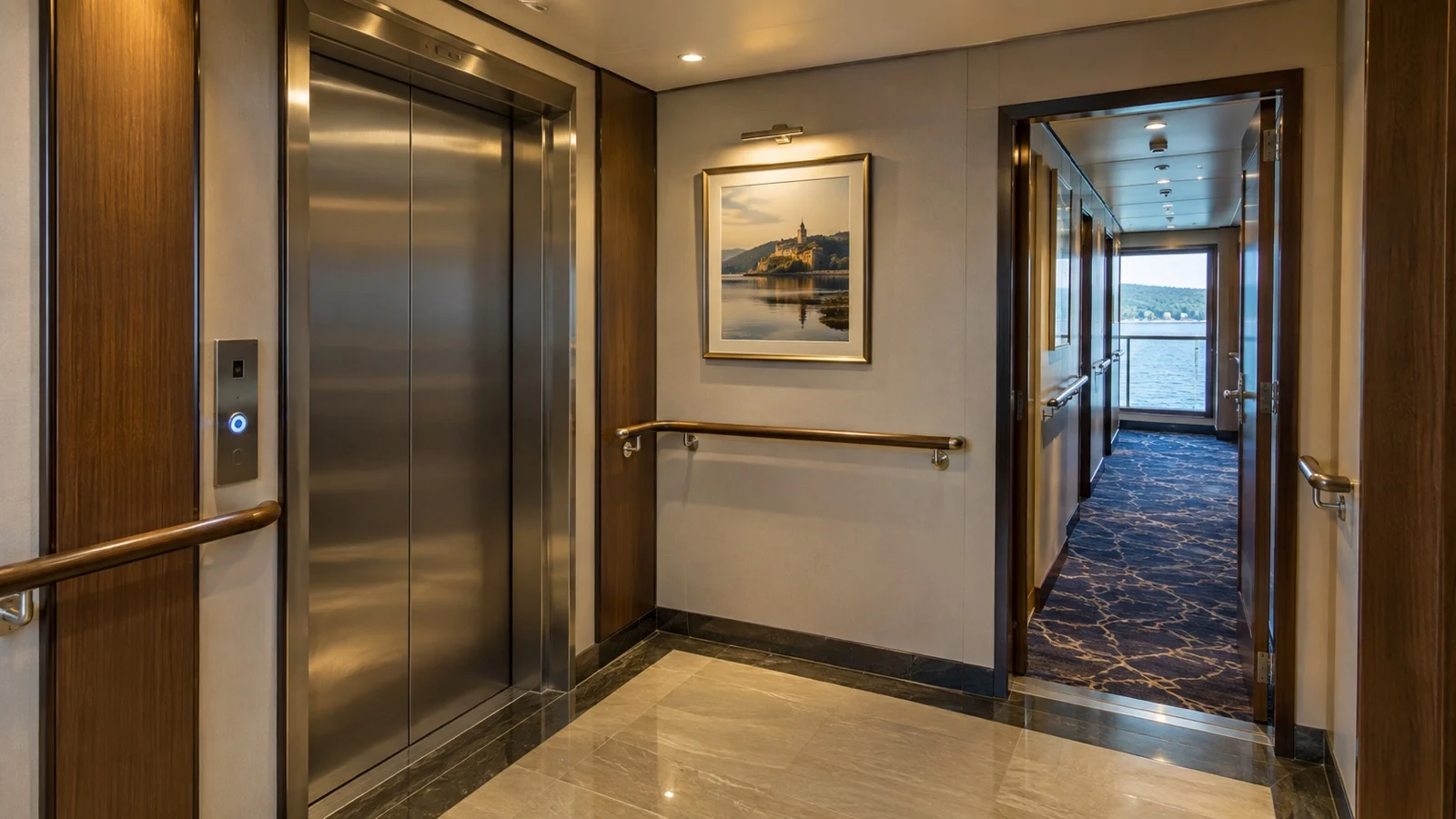
River ships have to pass beneath bridges and fit inside locks, so their dimensions shape every deck plan. An elevator may connect only selected interior decks while the sun deck remains reachable by an outdoor staircase.
Some vessels have split levels, raised thresholds, or a lowest deck that the elevator does not serve. A cabin can be close to an elevator on the plan and still require a step between the elevator landing and the lounge or restaurant.
Ask the operator to name every passenger deck served by the elevator on your exact ship. Then ask for the elevator door width, interior dimensions, weight limit, turning space outside the doors, and what happens during a power or mechanical failure.
Also ask whether the ship assignment can change before departure or during a disruption. If low or high water causes a vessel swap, the replacement may not have the same layout or accessible cabin.
A cabin called accessible still needs measurements
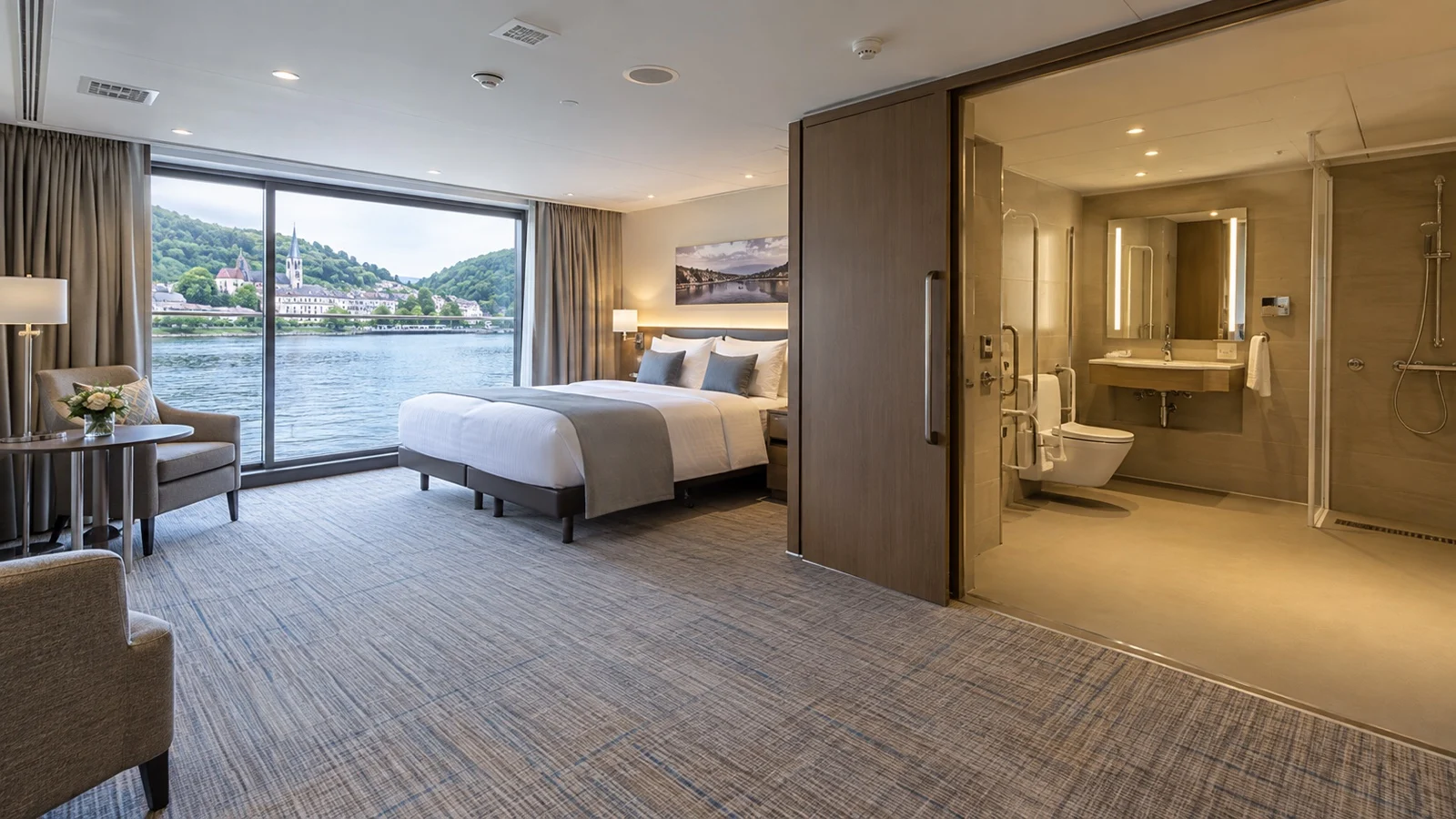
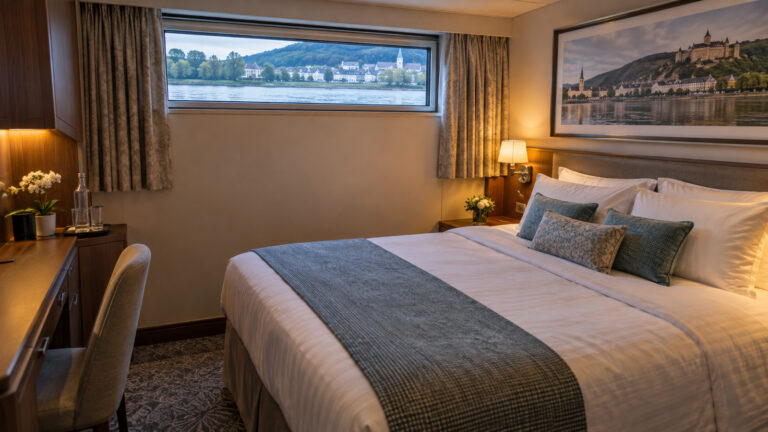
The word “accessible” is useful only when it matches your body and equipment. Door width, bathroom threshold, turning radius, bed height, toilet position, grab bars, shower access, and storage for a chair or scooter are the details that determine whether the room works.
Request the cabin number and written dimensions, then compare them with your device at its widest point. Remember to include hand rims, joystick controls, footrests, and any attachment that adds width or length.
Ask whether the bathroom has a true roll-in shower or simply a low lip, and whether water drains safely when a shower chair is used. Confirm whether the bed can be separated, whether furniture may be moved, and whether an electrical outlet is reachable for charging.
A standard cabin may work for someone who can transfer and fold a chair, but that does not make it wheelchair accessible. Do not allow a wider doorway alone to substitute for the bathroom and circulation measurements you need.
Wheelchairs, scooters, walkers, and battery rules
Operators set their own rules for powered scooters, power chairs, manual chairs, and rolling walkers. Restrictions may reflect corridor width, elevator capacity, storage, lifting risk, battery safety, evacuation plans, or the inability to carry equipment across steps.
Provide the exact make and model, unfolded and folded dimensions, total weight, battery chemistry, charger voltage, and whether any part can be removed. Ask where the device must be stored and charged, because many ships prohibit leaving mobility aids in corridors.
Never assume crew will lift a guest or a heavy device. Occupational safety rules, vessel procedures, and insurance can prevent a kind employee from doing what a hotel porter or family member might attempt on land.
If you plan to rent equipment, confirm that the operator accepts deliveries and has storage space before placing the order. The rental company also needs the correct vessel, embarkation address, delivery time, and contact who can receive the device.
Gangways change with the river
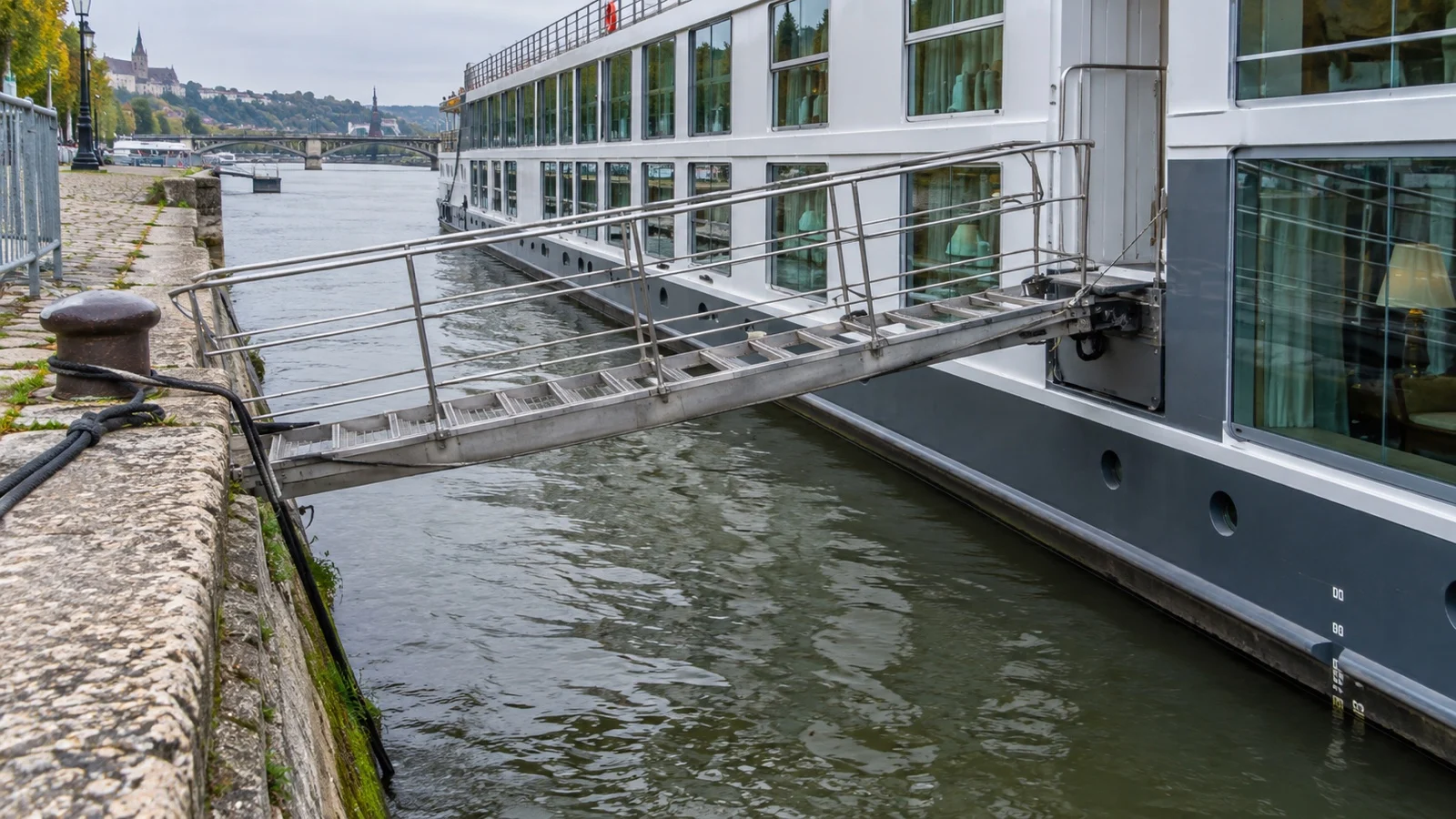
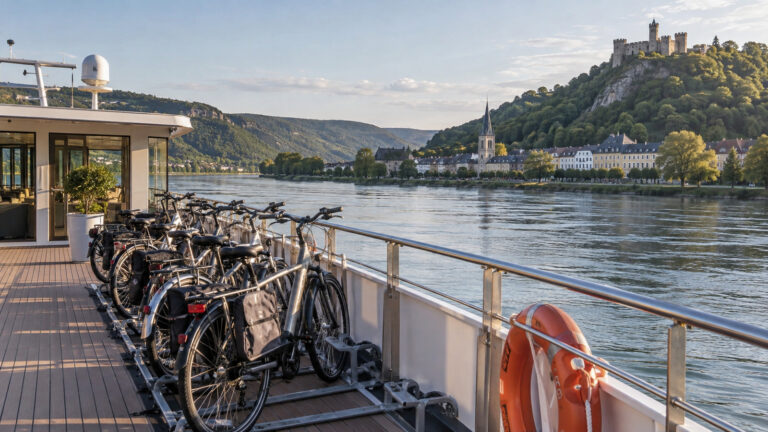
A river-ship gangway is not a permanent building entrance. Its angle and connection point can change with the water level, quay height, berth, and whether the ship is tied directly to shore or alongside another vessel.
A route described as step-free during one call may be steep or interrupted during another. Rain, frost, metal surfaces, narrow pontoons, and moving joints add difficulty for wheels, walkers, and anyone with balance concerns.
Ask about the maximum slope or step arrangement normally encountered, but understand that no operator can promise an identical gangway at every port. The better question is what the line does when the route is not safe for you.
Get a clear answer about whether you may remain aboard, whether staff can help with a manual chair, whether an alternative landing exists, and whether missing an included excursion creates any refund or credit. Those answers may be governed by booking terms, not goodwill on the day.
Rafting is the hardest variable
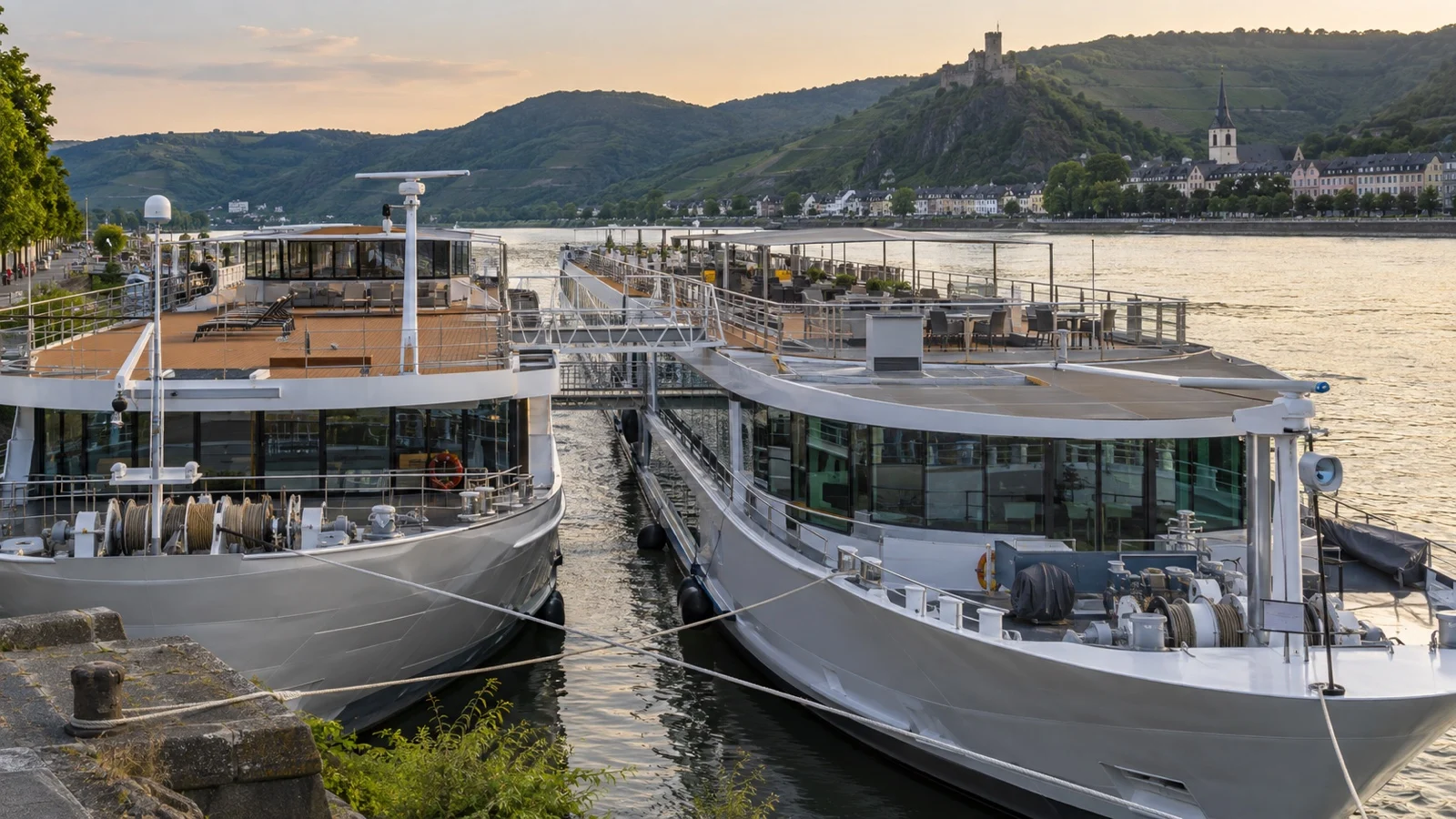
At busy river ports, two or more ships may tie side by side because quay space is limited. Passengers on an outside vessel reach land by crossing the neighboring ships, a routine known as rafting or double docking.
When lobby or sun-deck levels align, the crossing may look simple. When they do not, the route can involve exterior steps, thresholds, narrow passages, or a temporary bridge between different deck heights.
No cruise line controls every berth allocation months in advance, so it cannot reliably promise that your ship will always be against the quay. A fully workable ship can therefore become inaccessible at one stop because another vessel sits between it and land.
Ask the operator to describe the procedure for a wheelchair user when ships are rafted. Listen for a practical explanation of limits and alternatives, not a vague assurance that the crew will “take care of everything.”
Excursion coaches are a separate access decision
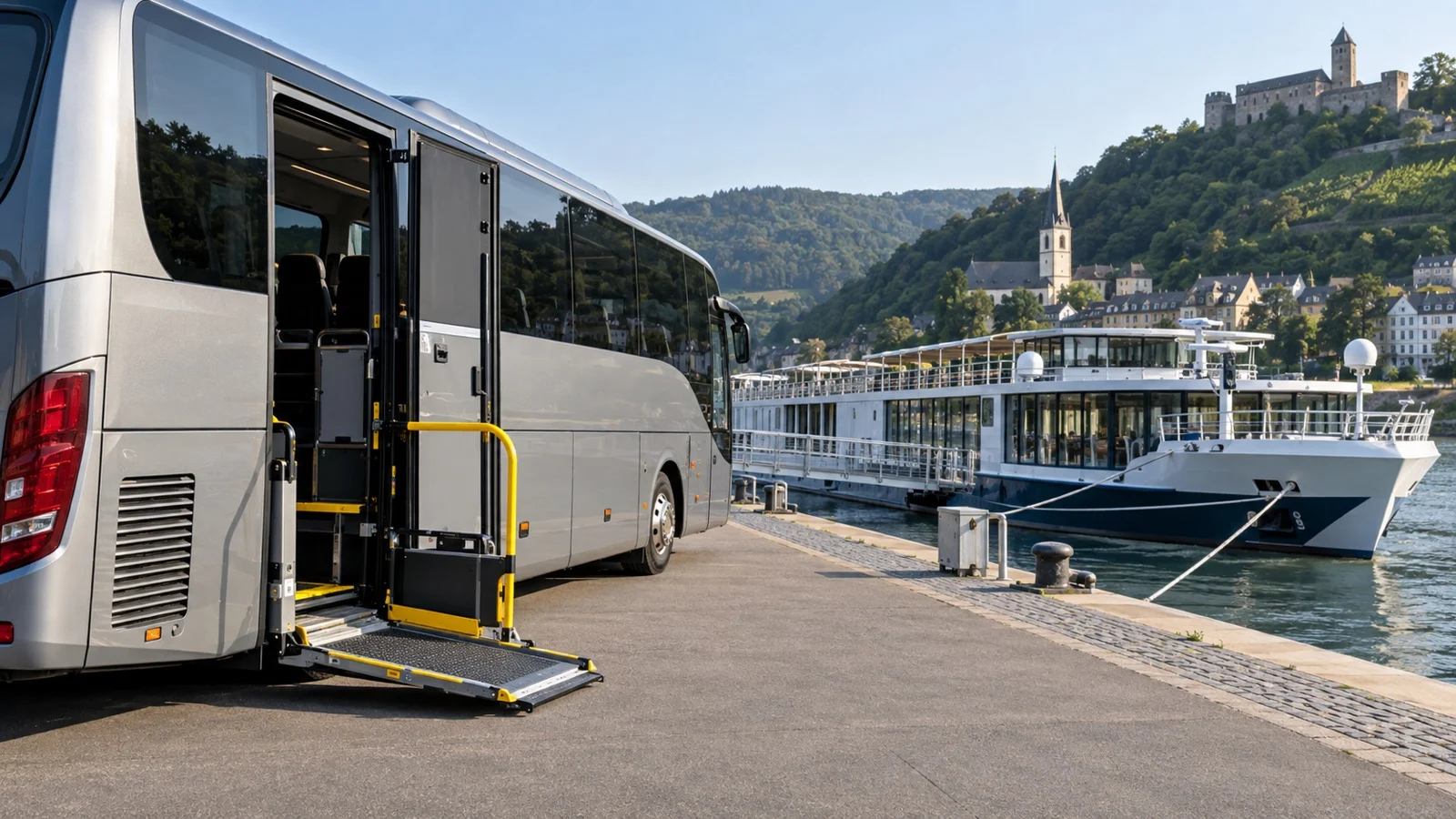
A ship can meet your onboard needs while the included shore program does not. European touring coaches commonly have several entrance steps, narrow aisles, limited space for mobility aids, and no passenger lift.
Ask whether the specific excursion vehicle is lift-equipped, where a wheelchair is secured, what combined weight it accepts, and whether advance notice is required. If you can climb coach steps, explain what kind of handrail and assistance you need.
The phrase “panoramic tour” does not guarantee accessible boarding, and “gentle” often describes walking quantity rather than step-free design. Request the actual walking distance, longest standing period, number of steps, surface type, slope, restroom access, and distance from vehicle to attraction.
Private accessible touring may be possible in major cities, but adapted vehicles can be scarce and expensive. Reserve directly with a reputable provider, share your device measurements, and build a return buffer that protects the ship’s all-aboard time.
The shore itself may be the biggest barrier
River cruising specializes in old cities and villages whose charm includes cobblestones, steep lanes, narrow bridges, historic doorways, and uneven waterfronts. Those features can create more difficulty than the compact ship.
Cobblestones affect different devices differently. Small front casters can catch, rigid chairs transmit vibration, rollators may feel unstable, and a route that is technically short can demand sustained effort.
Research the exact landing rather than the city in general. A destination with accessible museums and transit may still use a sloped temporary landing far from those facilities.
Weather adds another layer because wet stone, snow, heat, and wind change how safely a route can be managed. A comfortable shoulder-season temperature may still arrive with slippery surfaces or a high river that steepens the gangway.
Crew help and personal assistance are not the same
Cruise staff may offer directions, carry a small bag, steady a guest, or deploy equipment according to procedure. They may not be permitted or trained to lift a person, push a chair over long distances, administer medication, help with toileting, or provide ongoing personal care.
If you need those forms of assistance, travel with a companion who can provide them safely or arrange professional support where the operator allows it. Confirm whether the line requires that companion as a condition of carriage.
Discuss emergency evacuation as well as daily convenience. Ask how alarms are communicated, how a guest who cannot use stairs would be assisted, and where the assigned assembly point is relative to the cabin.
A companion should not be treated as an accessibility feature without consent and capacity. Both travelers need to understand the lifting, pushing, transfers, and time involved before committing to the cruise.
Hearing, vision, sensory, and cognitive access
Mobility receives most of the attention, but other access needs deserve the same specificity. Ask about visual and audible alarms, captioning, assistive listening, large-print or electronic documents, cabin lighting, and how announcements are delivered.
Travelers who are blind or have low vision should ask about tactile markings, elevator controls, stairs, gangways, and guided orientation. A compact ship reduces distance but can still contain frequently changing furniture and exterior obstacles.
For sensory or cognitive needs, request a predictable embarkation explanation, quiet waiting options, dietary clarity, and advance notice of loud events or schedule changes where possible. River itineraries can change quickly with locks, water, and berths, so build a support plan for disrupted routines.
Service-animal rules vary across countries and can involve health certificates, entry permits, port restrictions, and ship policies. Begin that conversation many months ahead and use official government requirements for every country on the itinerary.
European and United States river cruises differ
Many European river ships were designed around locks, low bridges, compact cabins, and historic berths, which can limit elevators and circulation. The surrounding itinerary also leans heavily on old towns, walking tours, and standard motorcoaches.
Some newer United States riverboats advertise elevators and dedicated accessible staterooms, making them worth comparing for travelers who need more space. That is not a guarantee across every domestic vessel, landing, gangway, or excursion.
American Cruise Lines, for example, publishes ship and stateroom information for its domestic itineraries, but travelers still need confirmation for the exact vessel and cabin. The Mississippi, Columbia, Snake, and coastal routes also use varied landings whose slope and surface can change.
Do not choose a region based only on a general reputation. Compare two named ships and two realistic itineraries using the same measurements and questions.
Legal rights help, but they do not redesign the ship
Passenger-rights rules may prohibit discrimination and require assistance in covered situations, but safety and vessel-design limits still matter. A carrier may be able to refuse a booking or require a companion when the ship, port, or evacuation arrangements cannot safely accommodate a specific need.
The applicable rules depend on where the trip is sold, begins, ends, and operates, as well as the type of service. For European journeys, review the European Commission’s sea and inland-waterway passenger-rights guidance and obtain advice for your own circumstances if a dispute arises.
Booking terms also govern notice deadlines, equipment limits, itinerary changes, and cancellation rights. Save the policy version you relied on, the written accessibility exchange, cabin confirmation, and receipts.
This guide is planning information, not legal or medical advice. A clinician or occupational therapist can help assess transfers, endurance, fall risk, and equipment needs against the physical details supplied by the cruise line.
Questions to get answered before paying
Start with the named ship and cabin: elevator stops, door widths, bathroom layout, bed height, thresholds, turning space, outlets, and emergency procedures. Ask for a deck plan and measurements rather than relying on photographs.
Then cover your device: make, model, dimensions, weight, battery, storage, charging, and whether it can be used throughout the ship. Ask what changes if a substitute vessel is introduced.
Next cover the edge of the ship: embarkation steps, typical gangway, maximum expected slope, rafting procedure, tender or small-boat transfers if any, and crew assistance limits. Ask what happens when you cannot safely go ashore.
Finally cover the itinerary: coach access, walking surfaces, steps, toilets, accessible transport, independent touring, and the operator’s notice deadline. Put every answer in one email thread and carry a copy while traveling.
How I would compare two cruises
I would build a simple access chain from home to cabin, cabin to public rooms, ship to shore, and vehicle to attraction. A single broken link can cancel the practical value of everything that works before and after it.
The best cruise is not necessarily the ship with the newest elevator. It is the itinerary with the fewest uncertain transfers, the clearest written answers, realistic shore alternatives, and a cabin that works without daily improvisation.
I would also price the accessible version of the trip rather than the brochure version. Private transfers, an adapted van, a companion fare, equipment rental, an extra hotel night, and travel insurance can materially change the budget.
Insurance and disruption planning
Standard travel insurance may not cover every preexisting condition, mobility-equipment problem, or decision not to travel. Read definitions, exclusions, notice periods, and medical-waiver rules before purchase.
Ask how the policy treats a ship swap, motorcoach substitution, inaccessible replacement cabin, or missed excursion after a gangway becomes unusable. Get answers from the insurer in writing when an accessibility feature is essential to the trip.
Carry spare device parts that commonly fail, charging adapters, medication, key documents, and contact numbers in hand luggage. Photograph your mobility device and record its serial number before transportation.
Plan for a day aboard when shore access fails. A book, downloaded entertainment, medication, food needs, and a comfortable viewing place can turn an inaccessible port from a crisis into a disappointing but manageable change.
Common accessibility mistakes
The first mistake is accepting “wheelchair friendly” without dimensions. Friendly is a marketing impression, while inches, pounds, slopes, and step counts are planning facts.
The second is checking the ship but not rafting or the gangway. The best cabin in the fleet does not create a route across mismatched neighboring vessels.
The third is assuming included tours use accessible vehicles. Confirm the actual coach and attraction route, then decide whether an independent option is necessary.
The fourth is understating needs to avoid being refused. Honest disclosure may narrow the choices, but discovering an essential restriction at embarkation is far worse.
The final mistake is treating a companion as unlimited physical support. Plan transfers and assistance that both people can provide safely for the whole journey.
Quick answers
Are river cruises wheelchair accessible?
Some are accessible for some wheelchair users, but there is no universal answer. Confirm the exact ship, cabin, device, gangway, rafting procedure, and shore transportation in writing.
Do river ships have elevators?
Many do, but some do not, and elevator coverage may exclude certain decks or split-level spaces. Ask for every stop and the interior dimensions on the named ship.
Can I bring a mobility scooter?
It depends on the operator, destination, ship, scooter dimensions, weight, battery, and storage plan. Never arrive with a powered device that has not been accepted in writing.
Will crew lift me or my wheelchair?
Do not assume they will. Ask exactly what assistance is permitted, since guidance or steadying is different from lifting a person, carrying a device, pushing a chair, or providing personal care.
What happens when ships are rafted?
Guests on an outside ship may need to cross one or more neighboring vessels to reach the quay. Misaligned deck levels can introduce stairs or thresholds that make the route unusable for a wheelchair.
Are United States riverboats more accessible?
Some domestic riverboats advertise stronger elevator and accessible-cabin features than many European vessels. Access still varies by ship, landing, gangway, excursion, and water condition, so verify each link.
Should I travel with a companion?
If you need physical or personal assistance the crew does not provide, a capable companion may be essential and may be required by the operator. Discuss the real daily tasks before booking.
The last word
A river cruise can be a wonderful choice when its physical details match the traveler, but the industry makes broad labels far too tempting. The useful conversation is not whether a line is accessible, but whether this ship, cabin, device, berth, and itinerary work together.
Ask precise questions, keep the answers, and plan for the imperfect day rather than the ideal one. That preparation protects your safety, your money, and the pleasure that drew you to the river in the first place.
How this guide was researched: Unless a first-hand visit is explicitly identified above, this guide was checked on September 12, 2026, using current cruise-line accessibility information, vessel deck plans, booking terms, and official passenger-rights guidance for sea and inland-waterway travel. Policies, ship assignments, berths, excursions, equipment rules, and accessibility conditions can change, so obtain written confirmation for your trip and see our Editorial Policy.
More on this topic: browse every guide on river cruise planning.