UK Cruise Ports: Homeports and Ports of Call Compared
The UK is one of the great cruise regions, and I love that it works two ways: you can sail from a British homeport like Southampton, or drop in on a British Isles loop. Here is how I would compare them all.
My quick take: Southampton handles the largest share of British cruise departures, but it is not your only homeport. Dover, Portsmouth, Tilbury, Liverpool, Newcastle, Belfast, Greenock, and Leith can all appear, so compare the specific sailing and transfer chain.
The quick facts
- Main homeports: Southampton (the big one), plus Dover, Liverpool, Tilbury and Belfast.
- Top ports of call: Dover, Greenock (for Glasgow), Invergordon, Kirkwall, Lerwick, Falmouth, Portland and Holyhead.
- Currency: pound sterling. Cards are accepted almost everywhere.
- Season: British Isles sailings mostly run spring to autumn, roughly April to October.
- Watch out: Edinburgh and Glasgow calls dock at outlying ports, not in the city itself.
The UK homeports (where you board)
Southampton: the giant
Southampton is Britain’s largest cruise homeport, with several terminals serving major cruise lines. Your transfer time depends on the terminal, so check the berth before choosing a hotel, parking lot, or rail-to-taxi connection.
It is the gateway to London, Winchester, Salisbury and Stonehenge, with the New Forest on the doorstep. If you want a pre-cruise night, see my guide to hotels near the Southampton terminals.
Dover: homeport and headline call
Dover is a major homeport and port of call with rail service from Dover Priory. High-speed trains can reach London St Pancras in about 66 minutes, but the cruise terminals are a 30-to-40-minute walk from the station and London road traffic can be much slower.
Dover Castle looms right above the berths, and Canterbury Cathedral and Leeds Castle sit close by. My full Dover cruise port guide covers the transfers.
Tilbury: the London terminal
Tilbury is marketed as the London International Cruise Terminal, and its Art Deco building is a genuine landmark. Trains from Tilbury Town reach central London in well under an hour.
It is a low-key alternative for Baltic and Northern Europe sailings. The Tower of London and Greenwich are the obvious day trips, as I explain in the Tilbury guide.
Liverpool: docks right in the city
Liverpool is the one that puts you in the heart of the action. The Liverpool Cruise Terminal sits at the Pier Head, steps from the Royal Albert Dock, the Beatles Story and Liverpool Cathedral.
That makes it one of the most walkable cruise ports in the country, working as both a turnaround port and a call. See the Liverpool cruise port guide for the detail.
Belfast: the Titanic city
Belfast sits in Northern Ireland rather than Great Britain, but it appears on almost every British Isles itinerary. Its berths lie in the Titanic Quarter, where Belfast Harbour opened a purpose-built cruise terminal.
Belfast cruise calls use controlled port berths, including locations several miles from the center. Do not assume you can walk to Titanic Belfast from the ship; use the port shuttle, cruise transfer, or a taxi from the authorized pickup area.
Homeport choices people often miss
Portsmouth
Portsmouth International Port is a useful south-coast alternative with rail links via Portsmouth & Southsea or Portsmouth Harbour and straightforward access to the Historic Dockyard. It is smaller than Southampton, so schedules and terminal facilities depend heavily on the line and sailing.
Newcastle and Port of Tyne
Newcastle sailings use Port of Tyne at North Shields rather than the city center. Allow time for a taxi or local transfer to Newcastle rail station or airport, and do not confuse the cruise terminal with the North Shields passenger-ferry terminals.
Liverpool, Greenock, and Leith
These ports can host selected turnaround calls, but they are not interchangeable with high-frequency Southampton schedules. Confirm that your sailing really embarks there, then check baggage drop, parking, station transfer, and hotel location for that exact date.
The ports of call (British Isles loops)
Greenock: your Glasgow call
Greenock is where the big ships call for Glasgow, because the city itself has no cruise berth. The Greenock Ocean Terminal, run by Peel Ports, added a 20 million pound visitor center and takes some of the world’s largest liners.
Glasgow is under an hour by train, and Loch Lomond is the classic shore trip. I break it down in the Greenock cruise port guide.
Edinburgh: read this one carefully
Edinburgh uses four distinct arrival patterns: alongside at Leith or Rosyth, and tender landings at Newhaven or South Queensferry. Each has a different tram, shuttle, bus, or rail chain, so the ship’s exact location matters more than the itinerary label “Edinburgh.”
From any of them the castle and Royal Mile are a 20 to 40 minute transfer. Confirm your exact berth with your cruise line, and use my Edinburgh cruise port guide to plan.
Invergordon: the Highlands gateway
Invergordon, on the Cromarty Firth, is the launch pad for the Highlands. It is the port for Loch Ness, Urquhart Castle and Inverness, all popular excursions.
Kirkwall and Lerwick: the far north
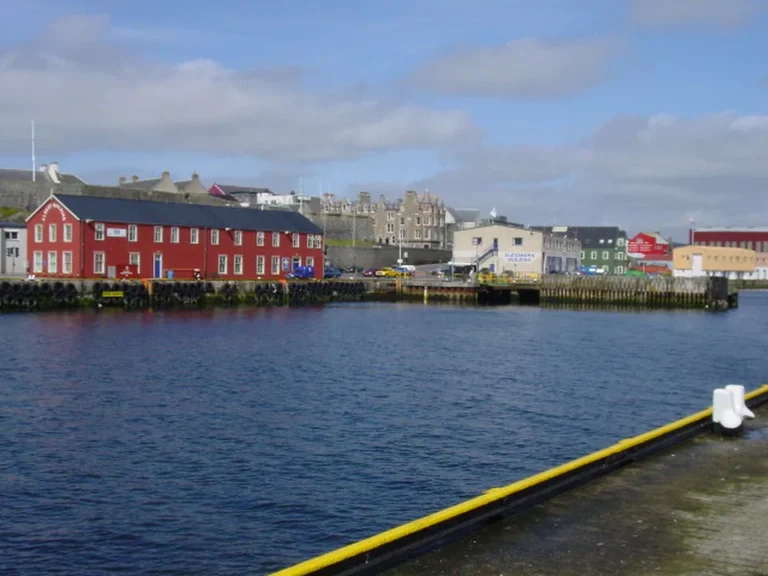
Kirkwall brings you to Orkney, with Skara Brae and the Ring of Brodgar within reach; the Orkney Islands Harbour Authority runs a busy season. Lerwick, the most northerly call, opens up Shetland’s wild coast and the puffins at Sumburgh Head.
England and Wales calls
Falmouth can be an alongside or tender call depending on the ship and berth. The National Maritime Museum Cornwall and harbor area are practical once ashore, but tendering adds weather and queue risk.
Portland is normally an alongside working-port call with transfers toward Weymouth and the Jurassic Coast. Holyhead can use an alongside berth or tender depending on the ship and current port plan, while Portsmouth handles both cruise calls and turnaround sailings near its Historic Dockyard.

How I would choose
For boarding a ship, Southampton is the safe, well-connected choice, with Liverpool and Belfast the most walkable turnarounds. Dover and Tilbury suit anyone chasing a European or Baltic sailing from the south-east.
For a British Isles loop, the Scottish calls are the stars, as long as you remember the docking quirks. If you are new to this, my first-timer cruise ports guide and the European cruise ports hub pair well with this page.
Embarkation-day logistics and accessibility
For any UK homeport, arrive the day before if a flight, long-distance train, or separate-ticket connection could derail check-in. Keep medicines and documents in hand luggage, use the terminal name rather than the city name for directions, and reserve parking only through the port, cruise line, or an established operator.
Do not plan major London sightseeing on the same day you must check in at Dover or Tilbury. Luggage storage is not universal at terminals, traffic is variable, and a comfortable overnight near the port is worth more than one rushed attraction.
Alongside berths are usually easier than tenders, but gangway slope, port shuttles, and accessible vehicles vary. Ask the cruise line about your exact berth and mobility assistance rather than relying on a city-level accessibility claim.
When to go, and the weather
British Isles cruises mostly run from spring to autumn, with the long-daylight months of June to August at the peak. Sailings taper off through October.
Pack layers whatever the month, because Scottish and Irish weather changes fast. A waterproof and comfortable shoes matter more than an umbrella.
Quick answers
Which is the UK’s biggest cruise port?
Southampton, by a wide margin. It runs five cruise terminals and handles most of the country’s homeport sailings.
Do ships dock in central Edinburgh or Glasgow?
No. Edinburgh calls use Leith, Newhaven or Rosyth, or tender off South Queensferry, and Glasgow calls dock at Greenock.
When is British Isles cruise season?
Roughly April to October, peaking in the light summer months. Winter departures tend to head for warmer destinations instead.

How this guide was researched: Unless a first-hand visit is explicitly identified above, this guide uses official port, tourism, transit, government, and attraction sources where available. Logistics and time-sensitive details were reviewed on September 10, 2026; see our Editorial Policy.