Nuku Hiva Cruise Port: A Remote Marquesas Tender Stop
Nuku Hiva is the largest of the Marquesas Islands, one of the most remote stops in all of French Polynesia. Ships anchor in Taiohae Bay and tender you ashore beneath sheer volcanic peaks.
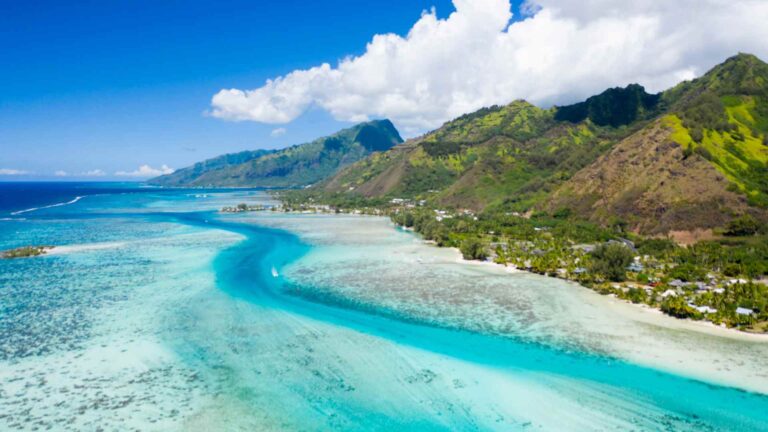
Forget the Society Islands. There are no barrier-reef lagoons here, just dramatic ridges, deep bays, and old stone tiki.
The full Taiohae transport chain
The village starts at the tender quay, but every valley excursion adds tendering, a four-wheel-drive pickup, steep switchback roads, the site visit, and the same mountain route back. Hatiheu and Taipivai are not quick taxi add-ons, so reserve a guide and ask for the promised quay-return time.
Hakaui normally adds a boat transfer and a guided hike on private or customary land. I would return to Taiohae 60 to 90 minutes before the last tender because rough roads, rain, and surf can delay more than one leg at once.
- Best independent plan: Taiohae’s cathedral, waterfront carvings, and market area.
- Best cultural landscape: Hatiheu and its archaeological sites with a booked four-wheel-drive guide.
- Best for strong hikers: Hakaui only when a licensed local or ship excursion confirms land access, trail condition, and return timing.
My quick take
Nuku Hiva is raw, rugged, and unlike anywhere else on a South Pacific run. If you love culture and wild scenery over beach lounging, it is a highlight.
It is a small-ship and expedition port, so I plan it more like Moorea or a wilderness call than a busy stop like Papeete.
The quick facts
- Where you land: Taiohae, the main village, on Taiohae Bay on the island’s south coast. Tenders come in to the small quay on the village waterfront.
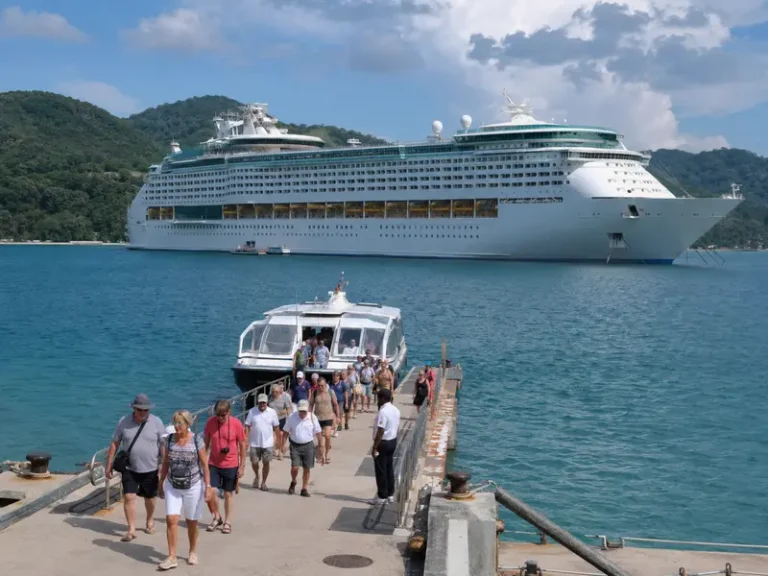
- Dock or tender: There is no cruise wharf, so ships anchor in the bay and tender you to the quay.
- Into town: The tender lands right on Taiohae’s waterfront, so the village, the cathedral and the tiki carvings are a flat 5 to 10 minute walk.
- Currency and language: The CFP franc (XPF); French and Marquesan are the everyday languages, with some English among guides.
- Time zone: Marquesas Time (UTC−9:30), half an hour ahead of Tahiti.
- How often the call is missed: Medium (roughly 3 to 7%): wind or swell can halt tender operations.
French Polynesia sits at a low-risk travel-advisory level, so I plan for normal precautions rather than security worries. The real challenge here is remoteness, not safety.
Getting around Nuku Hiva
Taiohae itself is easy to explore on foot. The waterfront, cathedral, and tiki carvings are all within a short, flat walk of where the tender lands.
Anything beyond the village means a vehicle. The island is mountainous, the roads are unpaved in stretches, and distances are longer than they look on a map.
Because Nuku Hiva is so remote, I would book a ship excursion or a guided 4×4 tour ahead of time. Local guides and operators are limited, so spots go quickly and this is a genuine tender port where independent transport is hard to arrange on the day.
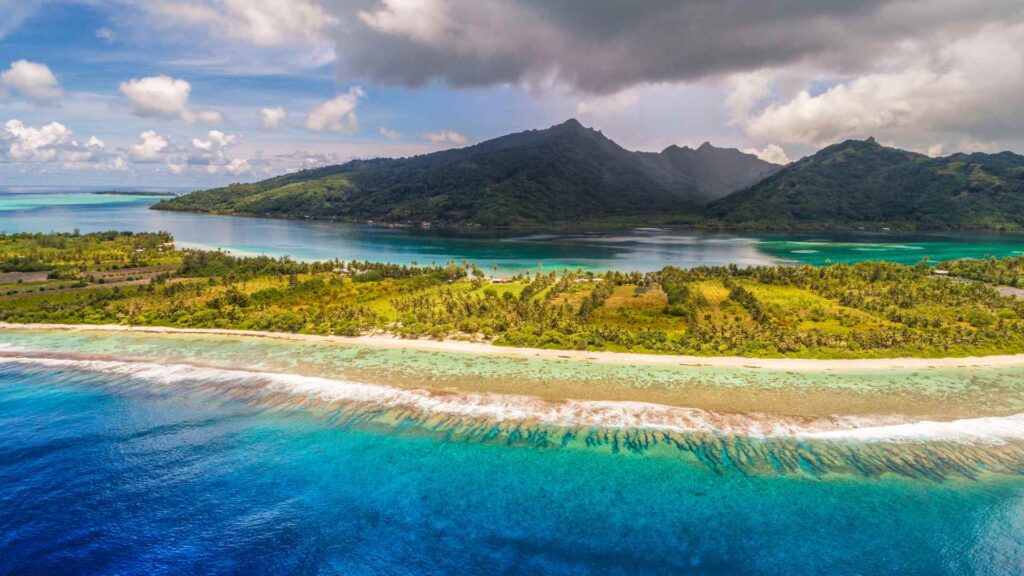
The stops I’d actually spend time on
Nuku Hiva rewards curiosity about culture and landscape more than beach time. These are the named places worth your limited hours ashore.
- Taiohae village and waterfront: The administrative and cultural heart of the Marquesas, set around a wide volcanic bay. The seafront walk is the easy, do-it-yourself option straight off the tender.
- Notre-Dame Cathedral of the Marquesas: Taiohae’s cathedral is known for stone and wood carvings drawn from each island of the archipelago, a showcase of Marquesan craftsmanship, per Paul Gauguin Cruises.
- Waterfront tiki and the Herman Melville statue: Taiohae’s seafront has tiki carvings and a wooden statue of Melville, who set his novel Typee here.
- Taipivai Valley: A lush valley dotted with tiki and old ceremonial platforms. Fun fact: the young Herman Melville jumped ship in 1842 and lived among the Taipi here, the experience behind his first book, Typee.
- Hatiheu Bay: A dramatic north-coast bay with a curving black-sand beach and a statue of the Virgin watching over it from a spire of rock.
- Hikokua and Kamuihei archaeological sites: Restored tohua and me’ae near Hatiheu, with stone tiki, petroglyphs, and giant banyan trees. The Marquesas are famous for these carved stone figures.
- Vaipo Waterfall in Hakaui Valley: Tahiti Tourisme describes this as the highest waterfall in Polynesia, but flow and how close visitors can approach vary with conditions and local access. Reaching the valley normally requires a boat, permission or a local guide, and a demanding hike, so treat it as a full-day, fitness-dependent excursion.
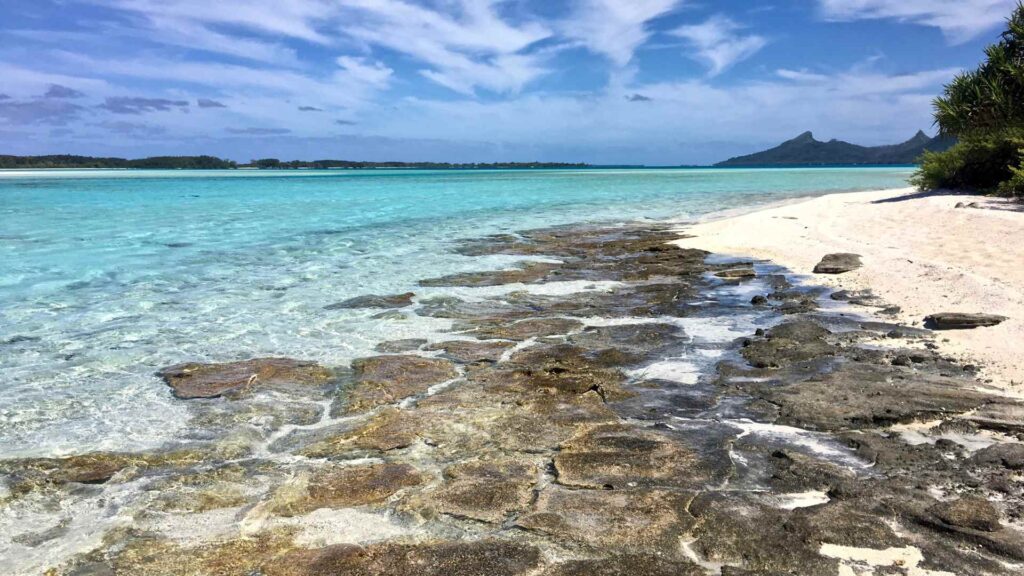
- Anaho Bay: A remote, road-free bay reached by boat or a hike over the ridge, home to the only coral reef in the Marquesas.
- Colette Bay (Hakatea): A quiet neighboring bay often paired with the Hakaui valley walk, a calm beach reached by boat from Taiohae.
You will not fit all of these into one call. The valleys are far from the pier, so I would pick a single theme, either Hatiheu’s archaeology or the Hakaui waterfall, and commit to it.
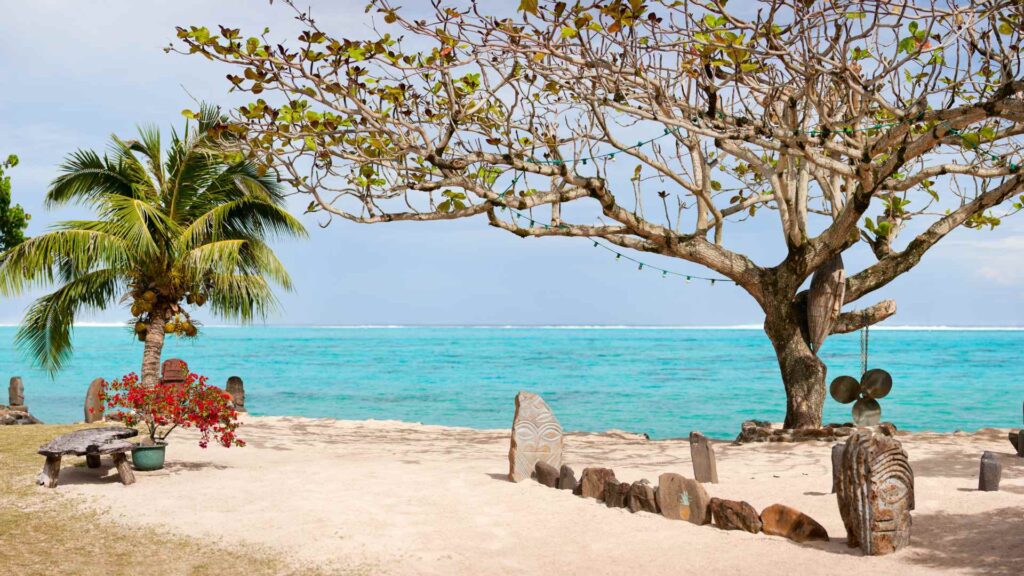
How I’d plan the day
Tender times and the island’s rough roads shape everything. Build in a generous buffer to get back to the last tender.
- Short on time (3 hours): Stay in Taiohae. Walk the waterfront, visit Notre-Dame Cathedral, and photograph the seafront tiki and Melville statue.
- Half day (5 hours): Take a prebooked four-wheel-drive tour toward Taipivai or Hatiheu only if the operator confirms the full round trip fits. Otherwise, stay in Taiohae and add a shorter scenic drive.
- Full day (8 hours): Commit to the Hakaui valley boat-and-hike to Vaipo Waterfall, or a longer 4×4 loop through Taipivai, if the ship’s timing allows.
Whatever you choose, confirm the last tender time with your ship and give yourself a wide margin. This is not a place where a taxi can rush you back.
A realistic word on accessibility
Be honest with yourself about mobility here. Reaching shore depends on a tender and a small quay, so conditions vary with the swell in the bay.
Taiohae’s flat waterfront is manageable for slower walkers, but the valleys, archaeological sites, and waterfall trails involve uneven ground and rough vehicle tracks. If tendering is difficult for you, plan to enjoy the village and bay views.
When to go, and the weather
Nuku Hiva is warm year-round. The drier, more comfortable months generally run from around April to October, which suits hiking and 4×4 touring.
The wetter months bring greener valleys but heavier downpours that can turn trails and dirt roads to mud. Humpback whales pass the Marquesas roughly from July to November, per Tahiti Tourisme.
Quick answers
Does my ship dock in Nuku Hiva? No, ships anchor in Taiohae Bay and tender guests to the village quay.
Can I explore independently?
You can walk Taiohae on your own, but the roads are rough and operators are few, so a booked 4×4 tour or ship excursion is the practical way to reach the valleys.
What currency should I bring? Bring CFP francs because card acceptance is limited and ATMs are scarce on this remote island.
For more South Pacific planning, browse my wider guides to South Pacific cruise ports and nearby Bora Bora.
How this guide was researched: Unless a first-hand visit is explicitly identified above, this guide is based on independent research using official port, tourism, transit, government, and attraction sources where available. Logistics and time-sensitive details were reviewed in September 2026; see our Editorial Policy.