Skjolden Cruise Port: Pier, Tender, Fjords and Glaciers
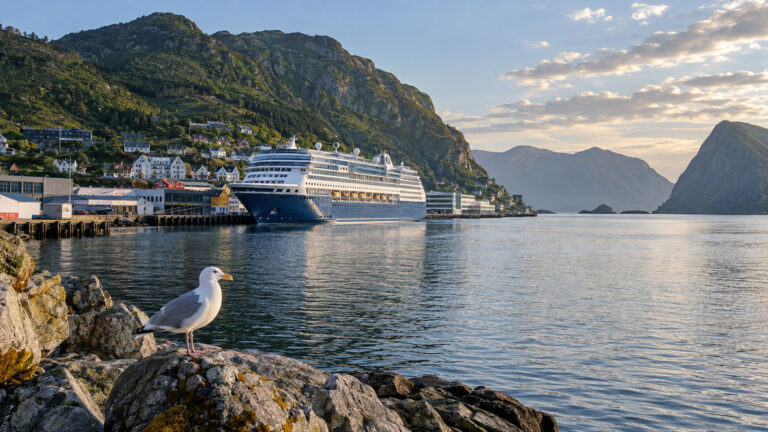
Skjolden is the kind of port that makes you look up before you even think about looking at a map. The village sits at the head of Lustrafjord, where steep green slopes, waterfalls, farms, and high mountains gather around one of Norway’s most dramatic cruise approaches.
The setting is wonderfully simple, but the day still rewards a little planning. Your ship may use the pier or tender boats, the best-known glacier and mountain sights require substantial road travel, and conditions can change quickly in this deep fjord landscape.
Quick Facts
- Port: Skjolden, at the head of Lustrafjord in western Norway
- Arrival: Pier or tender, according to the ship’s confirmed operating plan
- Village access: Generally walkable from the pier or tender landing
- Currency: Norwegian krone, abbreviated NOK
- Language: Norwegian, with English widely understood in visitor services
- Best-known day trips: Jostedalen, the Nigardsbreen area, Urnes Stave Church, and the Sognefjellet mountain road
- Independent-day strength: Scenic village walks, fjord views, and low-stress local exploration
- Main planning issue: Long road journeys and seasonal conditions can affect ambitious excursions
- Weather: Changeable, even when the morning looks settled
- Return strategy: Use the ship’s all-aboard time and allow a generous buffer
Where cruise ships arrive in Skjolden
Skjolden can receive cruise ships alongside its pier, but a particular call may use tender boats instead. Vessel size, berth allocation, weather, and the day’s port operations determine the actual arrangement, so your cruise line’s daily program is the final authority.
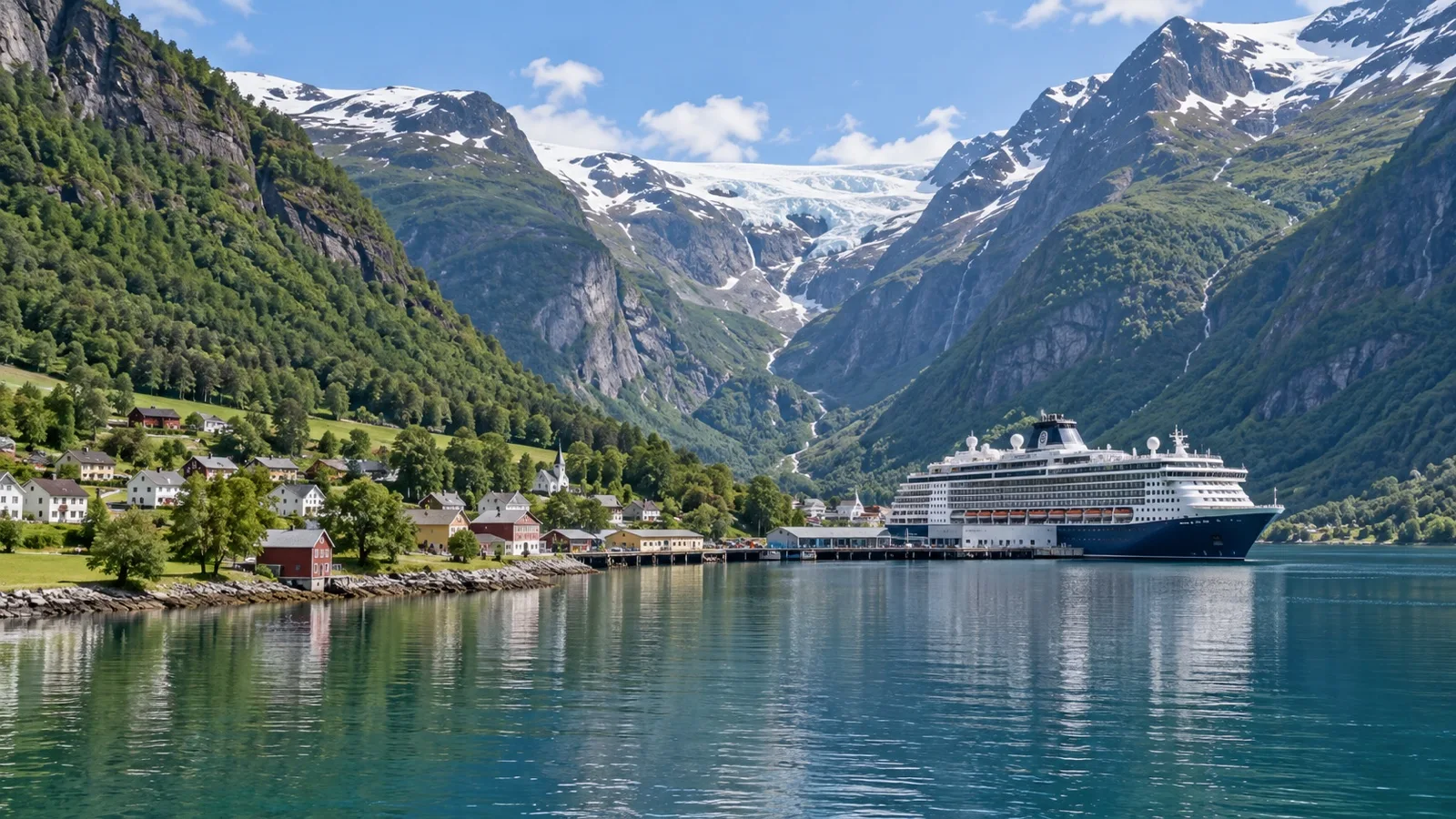
A pier call gives many passengers a straightforward walk into the compact village area. A tender call adds a boat transfer and can create lines at the busiest times, especially when many passengers want to go ashore soon after clearance.
Do not build a tightly timed independent plan around an assumed arrival method. Check the ship’s announcement the evening before or early that morning, then adjust your first meeting time and return margin if tenders are operating.
Passengers with mobility concerns should ask the cruise line about gangway slope, tender transfer requirements, and accessible transportation before disembarking. Conditions at a pier can also change with tides and ship positioning, so a generic port description cannot guarantee step-free access.
The village is small, and that is part of its charm
Skjolden is not a busy city port filled with landmark queues. It is a tiny fjord community where the waterfront, church, local roads, river scenery, and mountain walls form the experience.
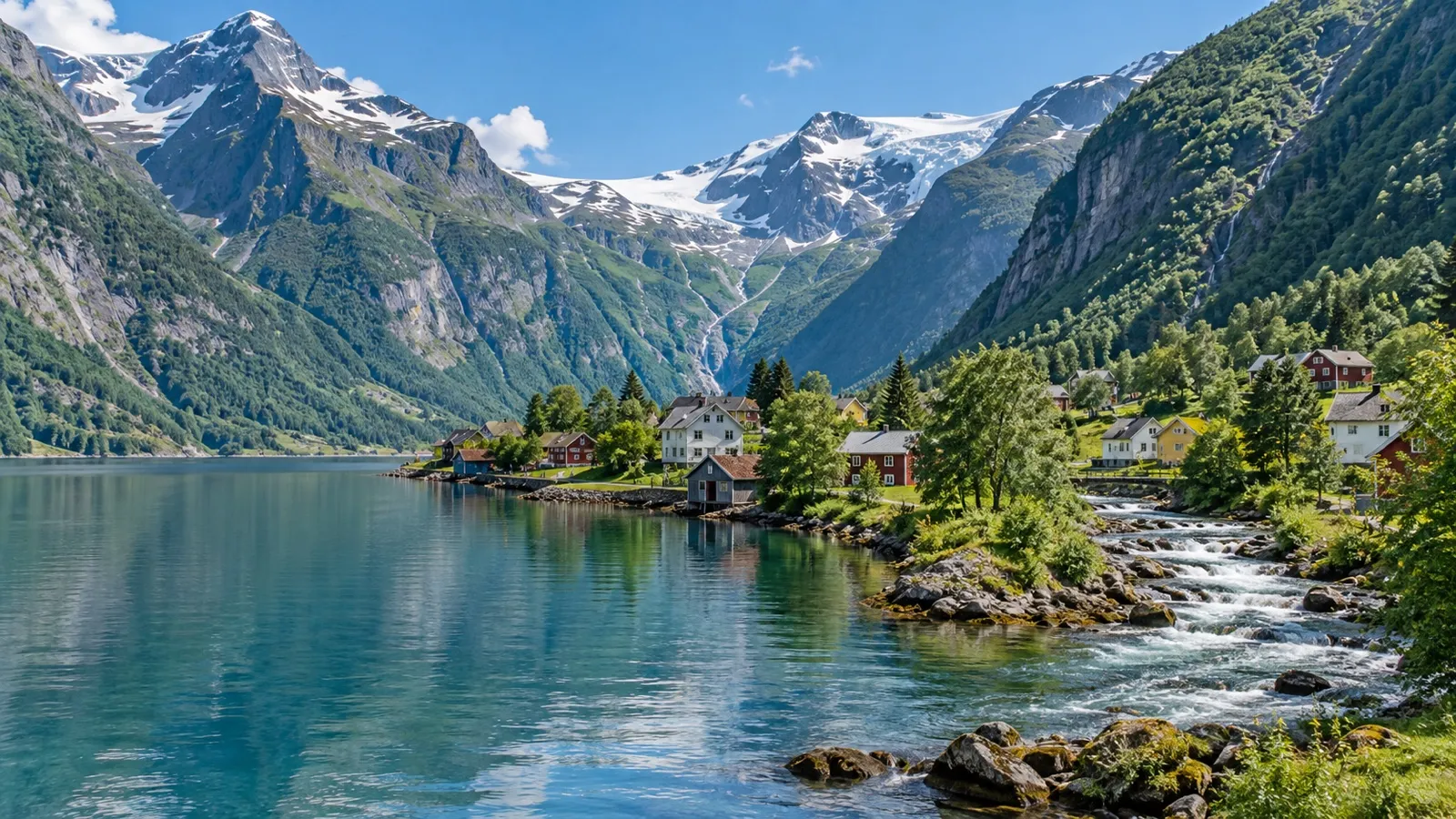
For an easy day, step ashore without trying to collect every famous attraction in the region. A quiet walk, a warm drink, and time beside the water can feel more memorable here than hours spent watching the scenery through a coach window.
Visitor services are limited compared with Bergen, Ålesund, or Stavanger. Opening hours may follow the cruise season and local demand, so carry what you need for the first part of the day and do not assume every shop or cafe will open early.
Cards are commonly accepted in Norway, but a working card does not solve every problem in a small village. Bring a backup payment method, download anything essential before leaving the ship, and keep a little flexibility in your plan.
The sail through Lustrafjord is an attraction in itself
Skjolden lies at the innermost end of Lustrafjord, a branch of the vast Sognefjord system. The approach can reveal waterfalls, isolated farms, narrow shorelines, and mountain slopes that seem to rise directly from the water.
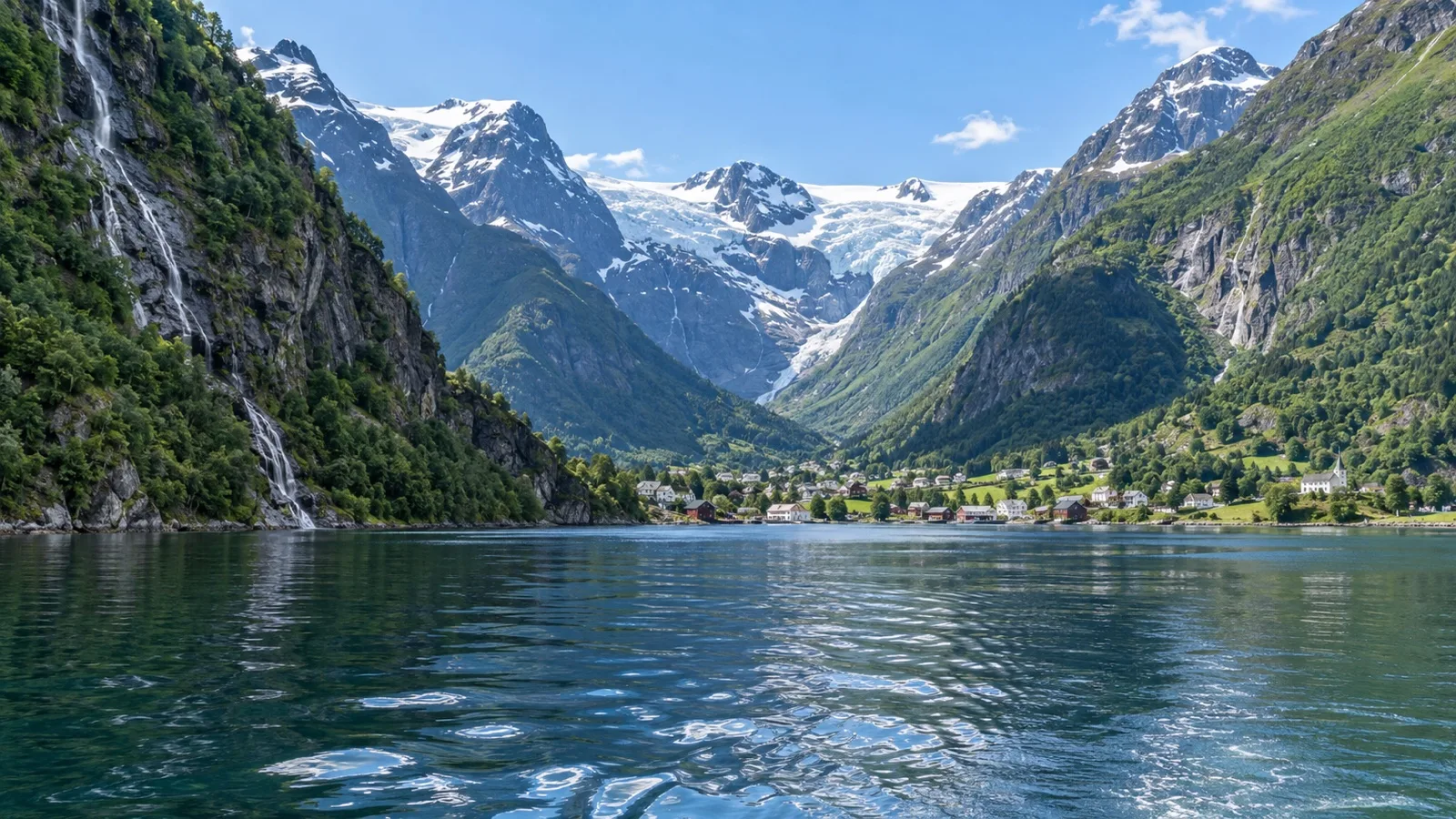
If your schedule allows, be outside well before arrival and again after departure. Morning light, low cloud, and passing rain can transform the same view several times in a single sailing.
The most rewarding viewpoints may appear on either side of the ship as it turns and follows the fjord. Instead of claiming one permanent “best side,” choose an open deck where you can move easily and keep a rain layer within reach.
Binoculars help with distant waterfalls and farms, while a phone or camera with a simple lens is enough for broad landscape views. The scale is the real story, so leave room in your photographs for water, mountain, and sky.
Choosing the right kind of Skjolden day
The essential choice is between a local day and a long scenic excursion. Both can be excellent, but combining several distant highlights usually produces more clock watching than enjoyment.
A local plan suits travelers who value flexibility, short walks, photography, or an easy return to the ship. A full excursion suits travelers who are comfortable with extended road time and want one major goal, such as a glacier landscape, a UNESCO-listed church, or a high mountain route.
Read the itinerary details rather than relying on an excursion title. Look for the actual time outside the vehicle, walking surfaces, elevation, meal arrangements, restroom stops, and cancellation policy.
Ship tours can reduce the logistical burden on a short call, particularly when ferries, mountain roads, or long distances are involved. Independent arrangements can offer a smaller group and more control, but the traveler carries the return risk.
Nigardsbreen and the Jostedalen glacier country
Nigardsbreen is one of the best-known glacier areas offered from Skjolden, but it is not beside the cruise pier. Reaching Jostedalen involves a meaningful road journey, which should be treated as the core of the day rather than a quick add-on.
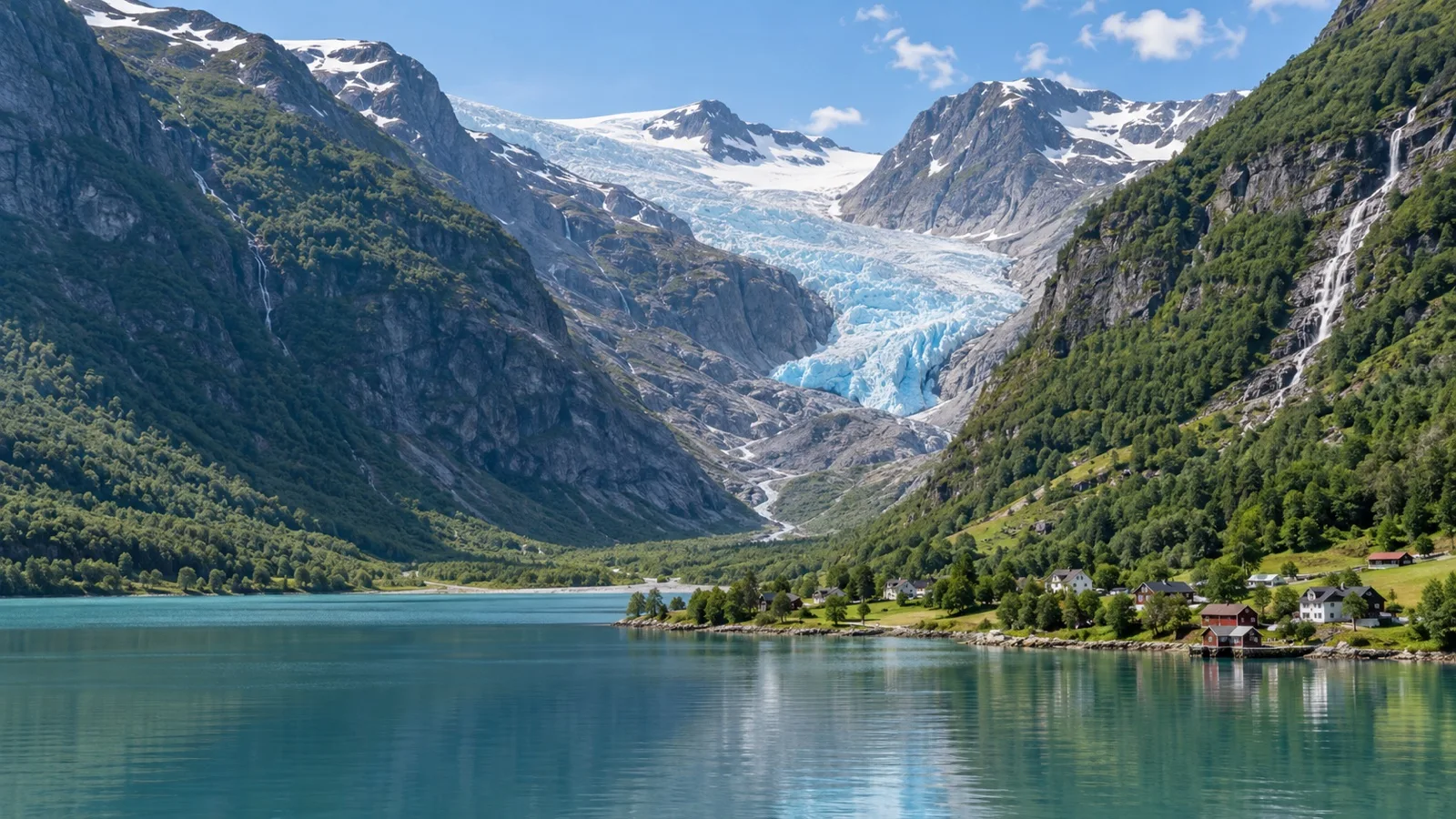
The landscape along the way is part of the appeal, with valleys, farms, rivers, and mountain scenery building toward the glacier region. A well-paced excursion allows time to understand the place instead of treating the ice as a fast photo stop.
Breheimsenteret serves as an important visitor center for the glacier and national park landscape. Current opening, exhibit, transport, and guided-activity information should be checked directly because seasonal operations can change.
A viewpoint visit and a guided glacier activity are completely different experiences. Never step onto glacier ice or cross barriers without an authorized guide and the proper equipment, even if other visitors appear to be doing it.
Glacier fronts are dynamic environments with hazards from ice fall, unstable terrain, cold meltwater, and sudden changes. Follow all signs, closures, and instructions from national park or local safety authorities.
Travelers with limited mobility should ask exactly how far the excursion walks from the vehicle and what the surface is like. “Glacier visit” can mean a distant viewpoint, a boat component, a rough path, or a more demanding guided route.
Urnes Stave Church
Urnes Stave Church is a UNESCO World Heritage site on the opposite side of Lustrafjord and one of the region’s most significant cultural destinations. Its value comes from both the medieval wooden church and the setting above the fjord.
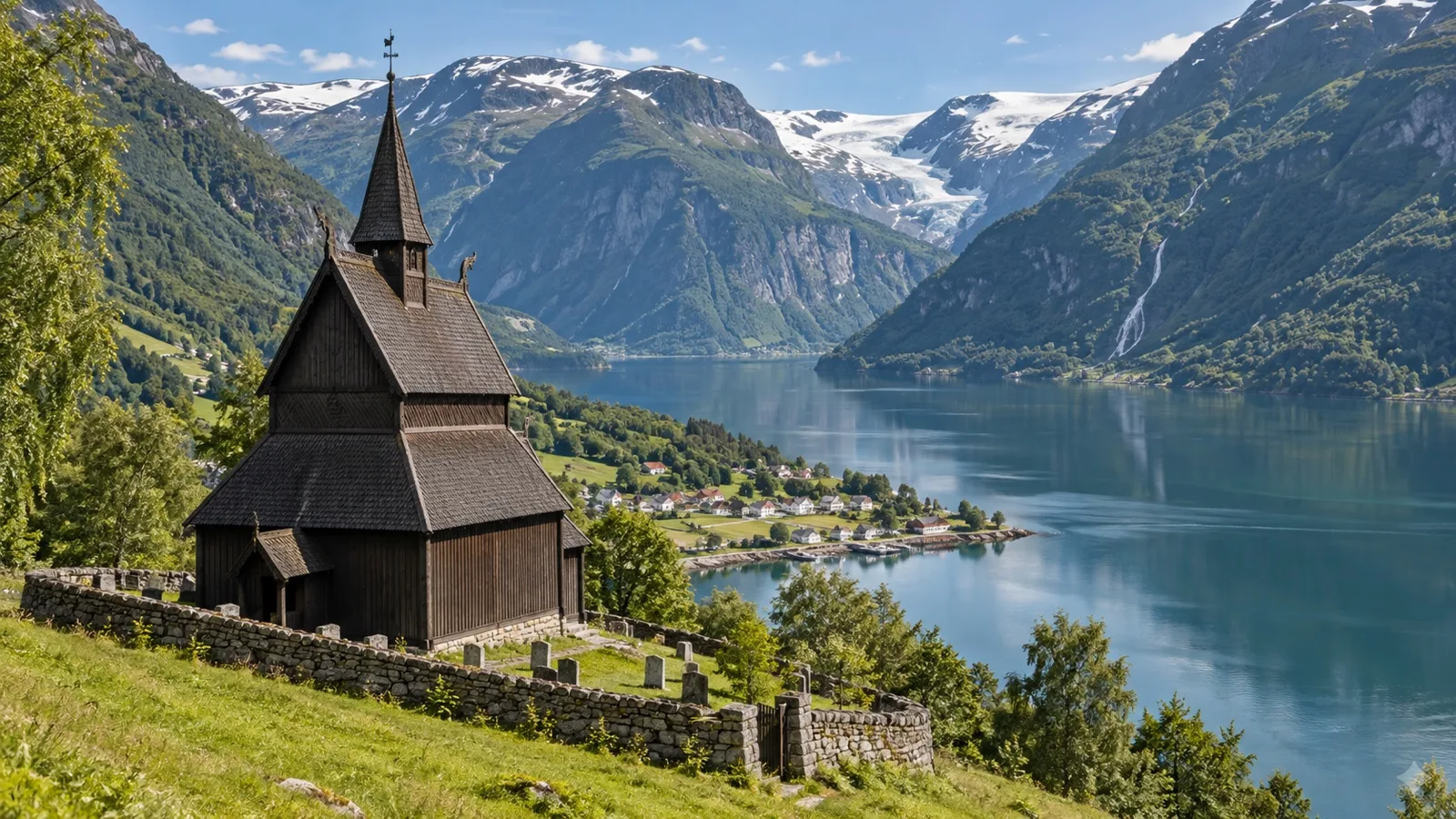
This is not a stop to improvise without checking logistics. Road routes, boat or ferry connections, guided access, opening periods, and the final uphill approach all need to fit the ship’s port time.
UNESCO describes Urnes as an outstanding example of traditional Scandinavian wooden architecture, with artistic traditions that connect Celtic, Viking, and Romanesque influences. A guided visit helps make the carved details and building history more than a quick photograph.
Respect the site as a protected historic church rather than simply a scenic lookout. Follow photography rules, stay within visitor areas, and allow other guests quiet space inside.
The Sognefjellet mountain road
The Sognefjellet route carries travelers from the lush fjord landscape toward a stark high mountain world. On a clear day, the shift in scenery can be extraordinary, with snowfields, rocky plateaus, and distant peaks replacing farms and forest.
This road is seasonal, and winter closure can extend into the cruise shoulder season depending on snow and maintenance conditions. Even after opening, temporary restrictions or difficult weather can affect travel.
Check the Norwegian Public Roads Administration’s live traffic information for the current status of County Road 55. A tour operator should also explain its alternate plan if the highest section is unavailable.
Mountain weather can be much colder and windier than conditions beside the ship. Pack layers even when Skjolden feels mild, and avoid treating a sunny pier forecast as a guarantee for the plateau.
The route works best as a scenic journey with planned viewpoints, not as a race to a distant turnaround point. If cloud hides the peaks, the valleys and changing vegetation can still make the trip worthwhile.
Waterfalls, local walks, and quieter scenery
Skjolden’s immediate surroundings provide a satisfying alternative to the long excursions. Short local walks can reveal river views, farms, village details, and waterfall scenery without committing you to hours on the road.
Ask locally which marked paths are open and suitable on the day of your visit. Snowmelt, rain, maintenance, and private land boundaries can change the practical route even when an online description looks simple.
Wear shoes with reliable grip because wet grass, gravel, roots, and smooth rock can become slippery. Turn around early if a path becomes unclear or conditions feel beyond your comfort level.
Feigumfossen is a dramatic waterfall across Lustrafjord that may be seen from parts of the fjord or included in boat-based sightseeing. The exact view depends on route, water flow, cloud, and where the vessel can safely operate.
Do not assume a waterfall is best at the same point in every season. Snowmelt can produce powerful flow, while drier periods may change the scene, and heavy rain can make nearby terrain less comfortable.
Fjord boats, kayaking, and time on the water
A smaller boat can make Lustrafjord feel more intimate than the view from a cruise ship. Shore details, waterfalls, and reflections become easier to notice when the pace is slower and the vessel sits close to the water.
Kayaking can be beautiful in suitable conditions, but cold water and rapidly changing wind deserve respect. Book with a qualified local operator, wear the provided flotation equipment, and follow the guide’s route rather than setting out casually.
Confirm whether a boat activity departs from Skjolden itself and whether it returns with a comfortable margin before all aboard. Similar excursion names may use different docks or include road transfers.
If wind or visibility causes a cancellation, have an easy village walk ready as a backup. A flexible second choice prevents a weather decision from spoiling the whole day.
Weather and what to wear
Fjord weather can move from bright sun to rain and low cloud with very little ceremony. The most useful outfit is a set of light layers topped by a waterproof shell, not one heavy garment that is difficult to adjust.
Bring footwear that can handle damp surfaces and a small bag that protects electronics. An umbrella may be awkward in wind, while a hood keeps both hands free on gangways and paths.
Check a current forecast from the Norwegian Meteorological Institute, then compare it with the ship’s local information. Forecasts are guidance, and conditions in a valley or on a mountain road may differ from those at the pier.
Low cloud does not make the port day a failure. Mist can create beautiful layers in the fjord, and a local plan remains enjoyable when distant peaks disappear.
Accessibility and reduced-mobility planning
The compact village can be more manageable than many large ports, but the arrival method matters. Tender transfers, gangways, uneven ground, and weather can each affect whether a particular route works safely.
Ask the cruise line for specific information about the assigned berth, mobility equipment, and tender policy. Do this before the cruise if you require a lift-equipped vehicle or cannot manage steps.
For excursions, request concrete details about vehicle access, walking distance, gradients, restrooms, and time spent standing. A scenic coach tour may be a better fit than a glacier path or historic site with an uphill approach.
Travel companions should also consider fatigue. The day can involve more stepping, waiting, and balance than the mileage alone suggests, especially when rain makes surfaces slick.
Visiting Skjolden with children
Children often respond well to Skjolden because the landscape feels immediate and the village is not overwhelming. Waterfalls, boats, rivers, and the idea of a glacier provide natural points of interest.
Choose one main activity and leave space for snacks, weather changes, and an unhurried return. A long coach day can be rewarding for older children who enjoy scenery, but it may feel restrictive to younger travelers.
Near water, roads, and steep terrain, close supervision matters. Cold fjord water can be dangerous even on a warm-looking day, and safety barriers should never be crossed for a photograph.
Pack a warm layer for each child, a waterproof outer layer, and familiar snacks. Small practical comforts make it easier to enjoy a day when the forecast changes.
Food, money, and practical services
Local food options can be limited and seasonal, particularly outside peak visitor hours. If a specific cafe or meal matters to you, confirm opening information and keep a shipboard or packed alternative in mind.
Norway uses the Norwegian krone, and card payment is widespread. Still, carry more than one card when possible because a network issue or card security block can be inconvenient in a small port.
Public Wi-Fi and mobile coverage should not be treated as guaranteed throughout a rural excursion. Download tickets, meeting instructions, maps, and the ship’s contact information before you leave reliable service.
Restroom access may be spaced widely on longer tours. Use facilities when offered, and ask the guide about the next stop rather than assuming there will be one at every viewpoint.
How to protect your return to the ship
Start with the ship’s all-aboard time, not its advertised departure time. Work backward from that deadline and add a buffer for road delays, tender queues, and the walk from your drop-off point.
Long excursions into Jostedalen or the mountains have fewer easy fallback options than a village walk. If traveling independently, use an established operator who understands cruise schedules and has a clear plan for vehicle trouble or road disruption.
Keep the ship’s daily program, port-agent contact details, identification, and any required boarding card with you. A screenshot is helpful, but paper backup can be valuable if your phone battery fails.
If the ship is tendering, the last tender time is the critical deadline. Returning to the waterfront at the sailing time is already too late.
A simple plan for different port-call lengths
Short call
Stay close to Skjolden, enjoy the village and waterfront, and choose a modest walk suited to the weather. This protects your time and still delivers the fjord atmosphere that makes the port special.
Medium-length call
Choose one organized scenic outing or a local boat activity, then leave a little time near the pier. Avoid combining distant attractions unless the operator’s timing is specifically designed for your ship.
Long call
A longer stay may make Jostedalen, Urnes, or a substantial drive on the Sognefjellet route practical. Even then, pick one primary destination and treat any additional stop as a bonus rather than a promise.
Common Skjolden planning mistakes
The first mistake is assuming every ship docks at the pier. Check the confirmed arrival plan because tendering changes the time and effort required to start and finish the day.
The second is underestimating distance. Glacier country and high mountain viewpoints look close on a regional map, but rural roads, stops, and seasonal conditions make travel time significant.
The third is packing only for the temperature beside the ship. Conditions at elevation can be colder, wetter, and windier, so layers are essential.
The fourth is trying to see a glacier, Urnes, a mountain pass, and the village in one rushed itinerary. Skjolden is best when one major experience has enough time to breathe.
Frequently asked questions
Can I walk into Skjolden from the cruise ship?
When a ship is alongside, the village area is generally close enough for many passengers to explore on foot. If the call uses tenders, your walk begins at the designated landing, and the cruise line will explain the transfer.
Does every ship use the pier?
No. The final arrangement can be pier or tender, so use the ship’s current instructions rather than an old schedule or another traveler’s report.
Can I see Nigardsbreen independently?
It may be possible with a properly timed vehicle and confirmed access arrangements, but the journey is substantial and conditions are seasonal. For most cruise visitors, an organized excursion offers simpler timing and a clearer return plan.
Is Urnes Stave Church close to the port?
It is across Lustrafjord, and the practical trip can involve coordinated road and water transport plus an uphill approach. Confirm current opening and transportation before treating it as an independent walk-up attraction.
What happens if the mountain road is closed?
Use the Norwegian Public Roads Administration’s current road information and follow local operator advice. A good excursion should have an alternate lower-elevation route or a transparent cancellation policy.
Is Skjolden worth visiting without an excursion?
Absolutely, especially if you enjoy quiet scenery, photography, and an unhurried waterfront walk. The fjord approach and village setting are not consolation prizes.
What should I wear?
Choose layers, a waterproof shell, and shoes with grip. Add warmer clothing for glacier or high mountain trips even if the pier feels comfortable.
My take on Skjolden
Skjolden works because it offers two different kinds of cruise day in one beautiful place. You can stay close and let the village slow you down, or commit to a larger journey into glacier and mountain country.
I would choose one defining experience, build in more return time than seems necessary, and spend the rest of the day watching the light move across Lustrafjord. This is a port where restraint often produces the richest memories.
Planning sources include Visit Sognefjord, the Norwegian Public Roads Administration, Norway’s National Parks, the UNESCO World Heritage Centre, and the Norwegian Meteorological Institute. Always confirm the final berth or tender plan, excursion operation, road status, and all-aboard time with your cruise line close to sailing.