Shanghai Cruise Port: Terminals, Transfers and Visa
Shanghai greets cruisers through two very different front doors: a giant terminal downriver in Baoshan and a compact one right on the North Bund. Here is how I would work out which one my ship uses, clear the visa, and spend a day in China’s most electric city.
My quick take
Shanghai rewards a little planning, and it is genuinely easy to love once transport and paperwork are sorted. If it sits inside a wider Asia loop, it pairs naturally with Hong Kong, Singapore and Tokyo.
The quick facts
- Where you land: big ocean ships use Wusongkou International Cruise Terminal in Baoshan; smaller and luxury ships often use the central Shanghai Port International Cruise Terminal on the North Bund.
- Dock, not tender: both are alongside berths, so you walk straight off onto the pier.
- Into town: from Wusongkou, roughly 25 minutes and about 100 yuan by taxi to downtown, or a free shuttle to Metro Line 3. From the North Bund terminal you are already in the center.
- Currency: the Chinese yuan (RMB); mobile payment dominates, so carry a little cash as backup.
- Visa: a group cruise visa-free rule may cover you, but confirm eligibility with your cruise line first (details below).
Which terminal, and how I’d confirm mine
Shanghai runs two international cruise terminals, and they are nowhere near each other, so this is the first thing I check on my itinerary. Getting it wrong can mean a very different commute.
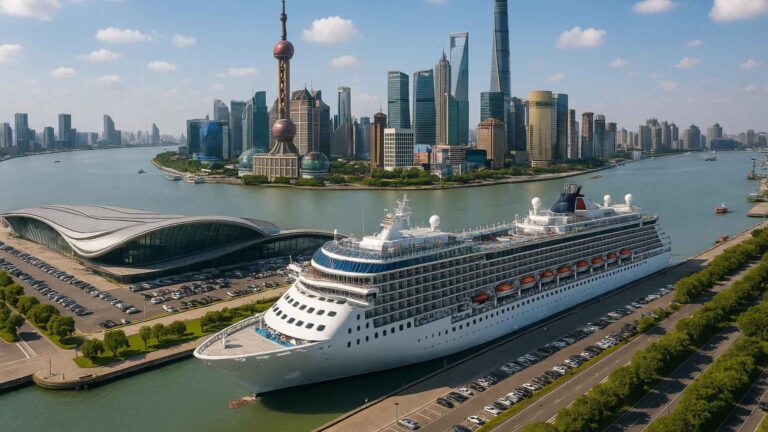
Wusongkou International Cruise Terminal sits in Baoshan District, where the Huangpu meets the Yangtze, and it is the main gateway for large ocean liners. Per its official terminal profile, it can berth up to four big ships at once and is one of the busiest cruise terminals in Asia.
Shanghai Port International Cruise Terminal lies on the North Bund in Hongkou, right on the Huangpu River and within the central city. It handles smaller and luxury ships, and it puts you a short ride or walk from the classic Bund waterfront.
My move is simple: match the terminal name printed on your cruise documents, and note that “Baoshan” means the out-of-town Wusongkou pier. If in doubt, ask your cruise line which of the two you sail from.
Getting into the city
From Wusongkou, the easy public option is the terminal’s free shuttle bus, which runs to Baoyang Road Station on Metro Line 3. From there the metro reaches the Bund, People’s Square and Nanjing Road without a transfer headache.
A taxi from Wusongkou to downtown takes about 25 minutes and costs roughly 100 yuan, per the official terminal guidance above. Traffic can stretch that, so I build in a generous buffer for the trip back.
From the North Bund terminal, you are already central. Metro Line 12 runs beneath the district, its International Cruise Terminal station sits close to the berths, and taxis reach the main Bund in minutes.
One practical tip for either terminal: have your destination written in Chinese to show drivers, since English is not widely spoken. A screenshot of the address on your phone does the job.
The current visa situation
China now offers a specific visa-free entry for cruise passengers. Under the policy in effect since May 15, 2024, foreign tourist groups arriving by cruise ship can stay visa-free for up to 15 days, according to the Chinese government announcement.
The conditions matter. The group must be two or more people, organized and handled by a Chinese travel agency, and everyone must leave China on the same cruise ship.
The policy covers 13 cruise ports including Shanghai, and travel is limited to coastal provinces plus Beijing. It is the cruise-group route, not a personal free-and-easy visa.
Because eligibility hinges on your ship’s shore-excursion arrangements, I would confirm with my cruise line before sailing. If you plan to explore independently or leave the group, you may still need a regular Chinese visa.
The stops I’d actually spend time on
These are the places I would prioritize, all confirmed on the official Meet in Shanghai tourism list unless noted. I have ordered them for a compact, high-payoff day.
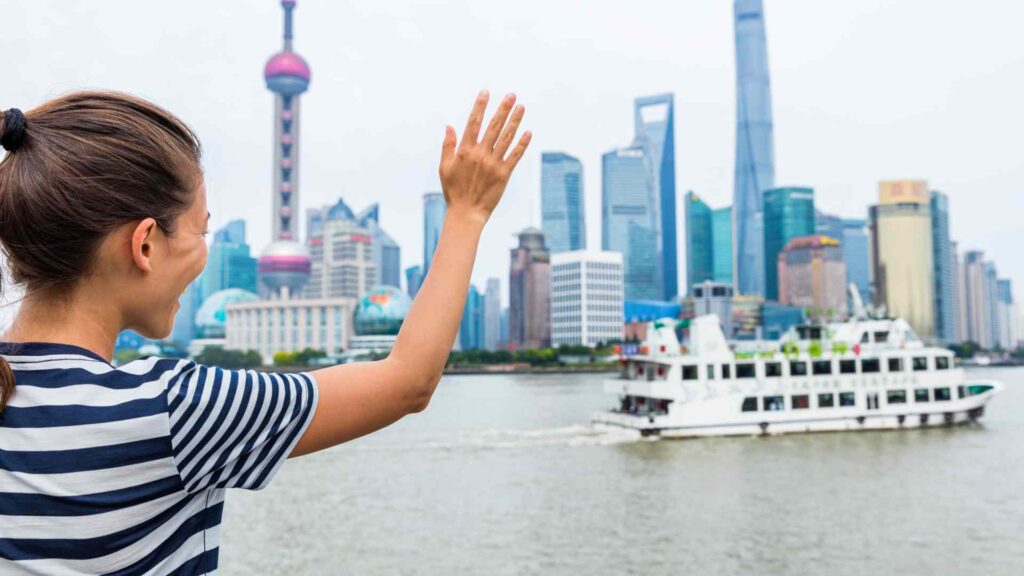
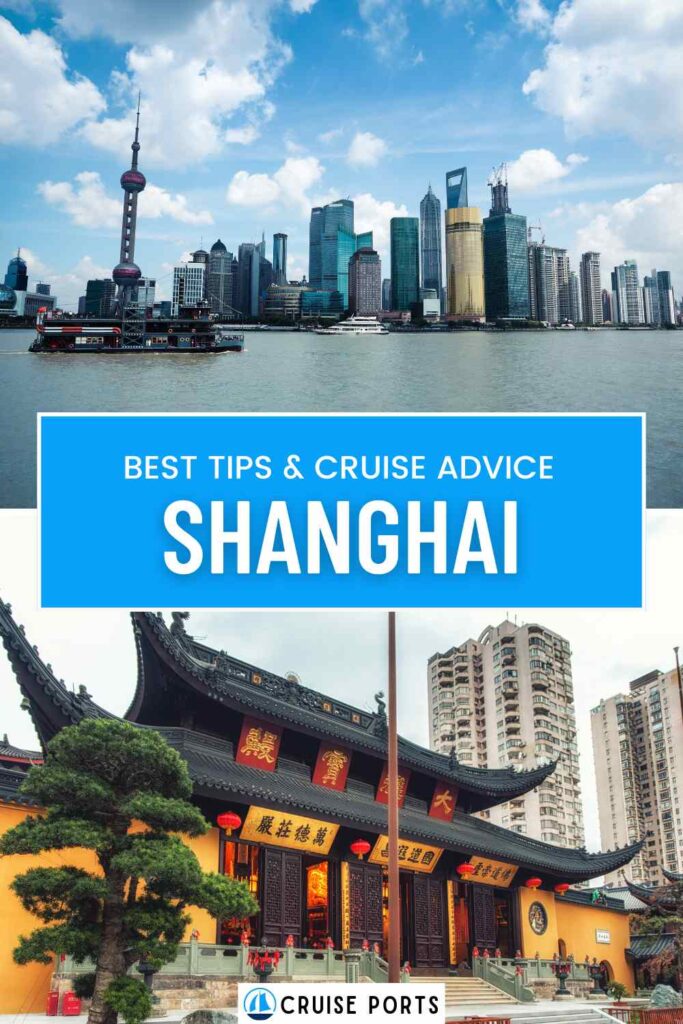
- The Bund: the historic riverfront promenade lined with 1920s colonial architecture, staring across at the Pudong skyline. This is the postcard, and the best free view in the city.
- Lujiazui and Shanghai Tower: the futuristic financial district across the river, crowned by the 632-meter Shanghai Tower, the tallest building in China. Its high-speed lifts reach an observation deck near the top.
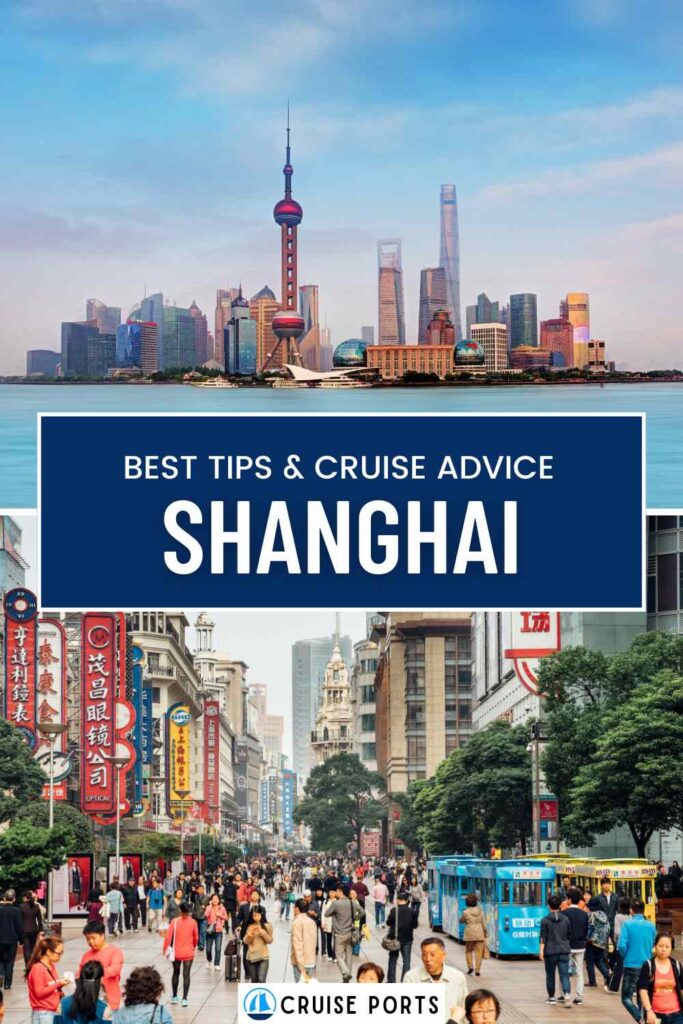
- Oriental Pearl Tower: the pink-orbed 1990s TV tower that defines the Lujiazui skyline, with glass-floor viewing decks if you want the vertigo.
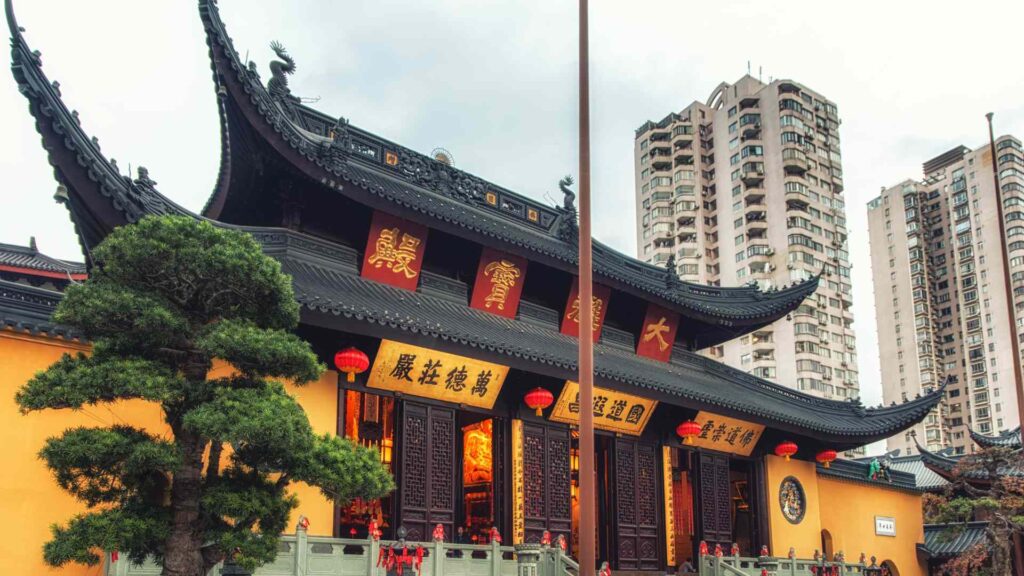
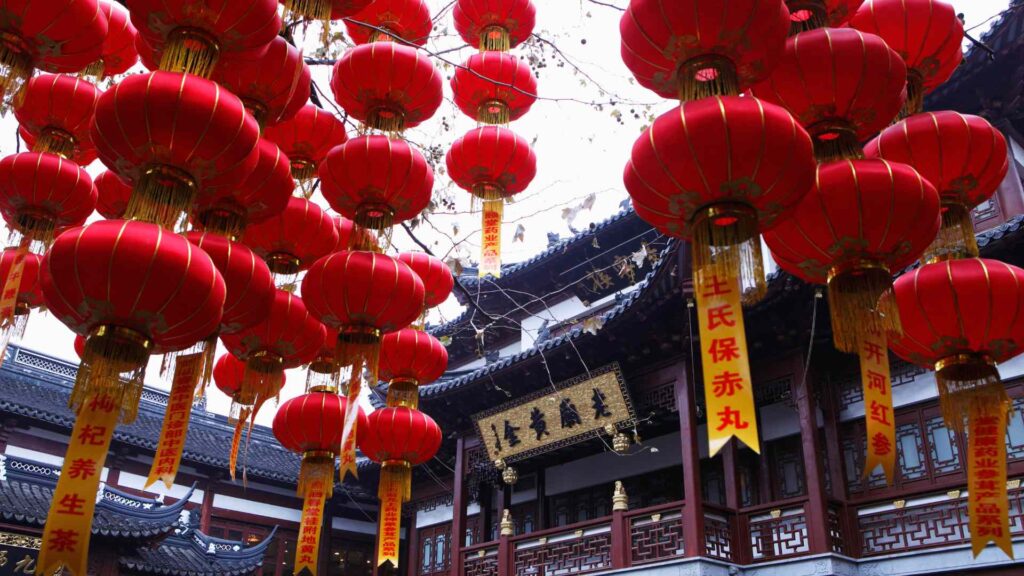
- Yu Garden: a classical Ming-era garden of rockeries, ponds and pavilions in the old town, and one of Shanghai’s most beloved green spaces.
- City God Temple and Yuyuan Bazaar: the lively temple and market quarter wrapped around Yu Garden, packed with snack stalls and souvenir lanes. It is touristy, but genuinely atmospheric.
- Nanjing Road: one of the world’s busiest shopping streets, running from People’s Square to the Bund. Great for a walk even if you buy nothing.
- The former French Concession: leafy plane-tree streets, lane houses and cafes, the calmest corner of central Shanghai for an unhurried stroll.
- Zhujiajiao Water Town: a canal town of stone bridges and old lanes in Qingpu District, about an hour out, if you have a full day and want a change of pace.
The former French Concession and City God Temple appear in the tourism board’s own itineraries rather than the headline top-100, but both are firmly established stops.
You can pre-book skip-the-line tickets and guided day tours through the widget below.
How I’d plan the day
Short on time (3 to 4 hours): from the North Bund terminal, walk or ride to the Bund, cross to Lujiazui for the skyline, then loop back. From Wusongkou, taxi straight to the Bund and keep it simple.
A full day (6 to 8 hours): add Yu Garden, the City God Temple bazaar and a stroll down Nanjing Road, with time for the former French Concession if the group is up for it.
Two ports or an overnight: this is when Zhujiajiao Water Town earns its hour each way.
New to this style of trip? My first-timer cruise port guide covers the day-planning basics.
Whatever you choose from Wusongkou, treat the return commute seriously. I would be back at the pier at least 90 minutes before all-aboard.
A realistic word on accessibility
Both terminals are modern, step-free buildings with alongside berthing, so you avoid tenders and steep gangways in most conditions. The Shanghai Metro is largely accessible, though older attractions like Yu Garden have uneven paths and steps.
If step-free routing is essential, the private shore excursion from your cruise line is usually the smoother option. Confirm specific gangway and transfer arrangements with the line, since they vary by ship.
When to go, and the weather
Spring and autumn are the sweet spots, with mild temperatures and clearer skies. Those shoulder seasons are the most comfortable for walking the Bund and the concession streets.
Summers are hot, humid and prone to downpours, and they overlap with the typhoon season. Winters are chilly but milder than northern China, so pack layers if you sail then.
Quick answers
Do I need a visa for a Shanghai cruise stop?
Possibly not: a cruise group can enter visa-free for up to 15 days if the tour is organized by a Chinese travel agency and you leave on the same ship. Confirm your eligibility with your cruise line, and get a regular visa if you plan to travel independently.
How far is Wusongkou from central Shanghai?
About 25 minutes and roughly 100 yuan by taxi to downtown, per the official terminal guidance, or a free shuttle to Metro Line 3.
Which terminal is closer to the sights?
The Shanghai Port International Cruise Terminal on the North Bund is central and near the Bund. Wusongkou in Baoshan is the larger, out-of-town pier for big ships.
How this guide was researched: Unless a first-hand visit is explicitly identified above, this guide is based on independent research using official port, tourism, transit, government, and attraction sources where available. Logistics and time-sensitive details were reviewed in August 2026. See our Editorial Policy.