Port Antonio Cruise Port: Blue Lagoon & Rio Grande Rafting
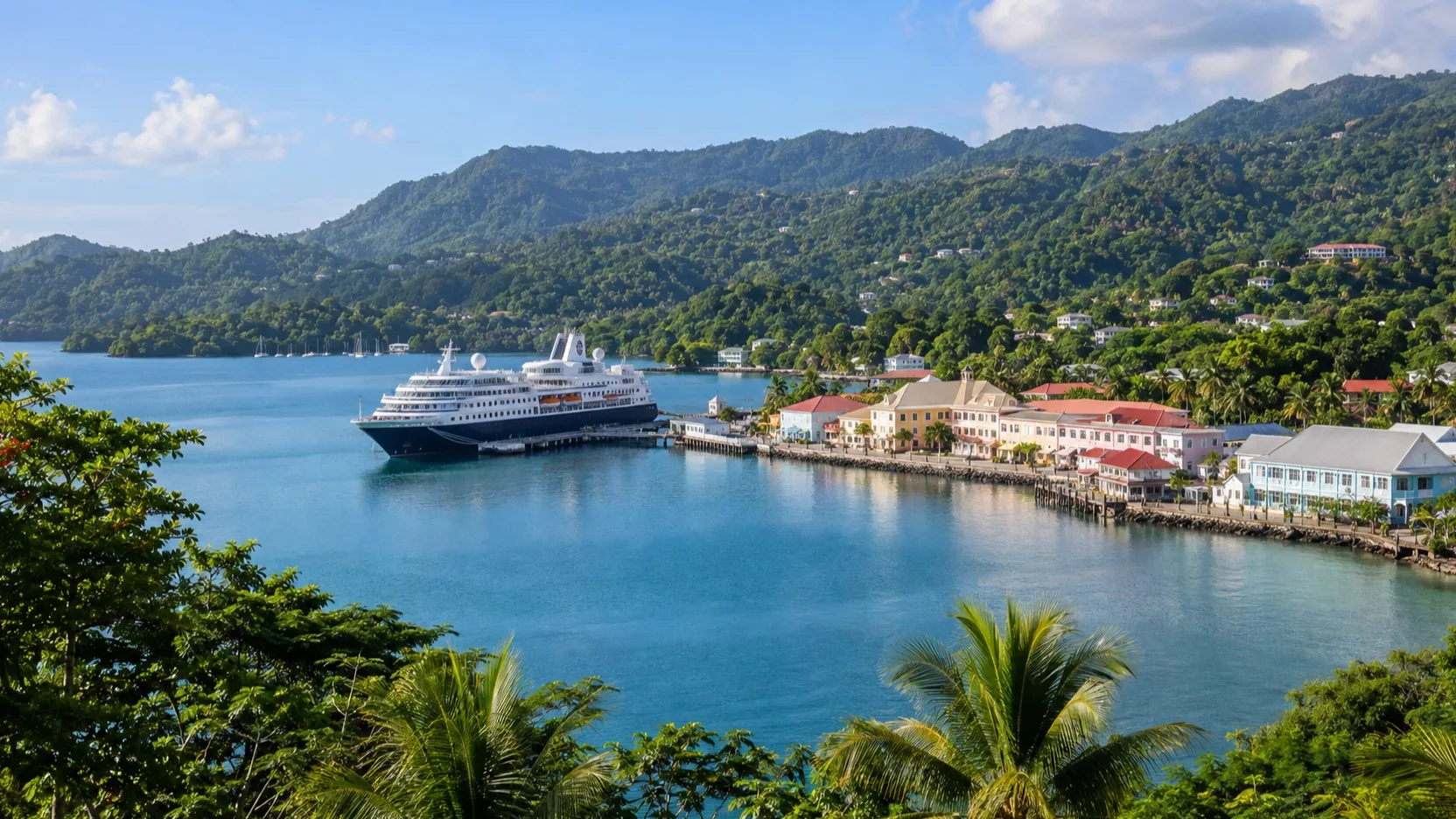
Port Antonio is the kind of cruise stop that rewards slowing down. It is the least “cruise port” cruise port in Jamaica, all quiet marina, green hills, and rivers instead of vendors hustling you toward a jet ski.
Fewer ships call here than anywhere else on the island, and the town center is small enough to cross in ten minutes on foot. The big draws, a lagoon, a river, and a couple of beaches, all reward slowing down rather than checking boxes.
Compared with Jamaica’s bigger ports, Port Antonio has fewer cruise-focused services and less transport capacity. That makes a confirmed driver and a one-theme plan more important, not less.
My quick take
If you want a Jamaican port day built around nature and quiet rather than shopping strips and swim-up bars, Port Antonio is the one to pick. It simply will not give you the sheer volume of organized excursions or the beach infrastructure of the bigger stops.
I would not send first-time Jamaica visitors here looking for an easy, paved, do-it-yourself day. But if you have already done the more built-up ports and want to see a different side of the island, or you just prefer rivers and rainforest to beach bars, this is the port that delivers.
For context on how it stacks up against the rest of the island’s stops, I always point people to our Jamaica cruise ports guide before they lock in a day plan.
Port Antonio Cruise Port Quick Facts
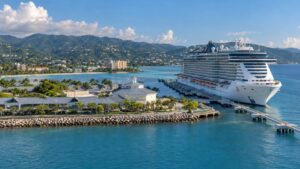
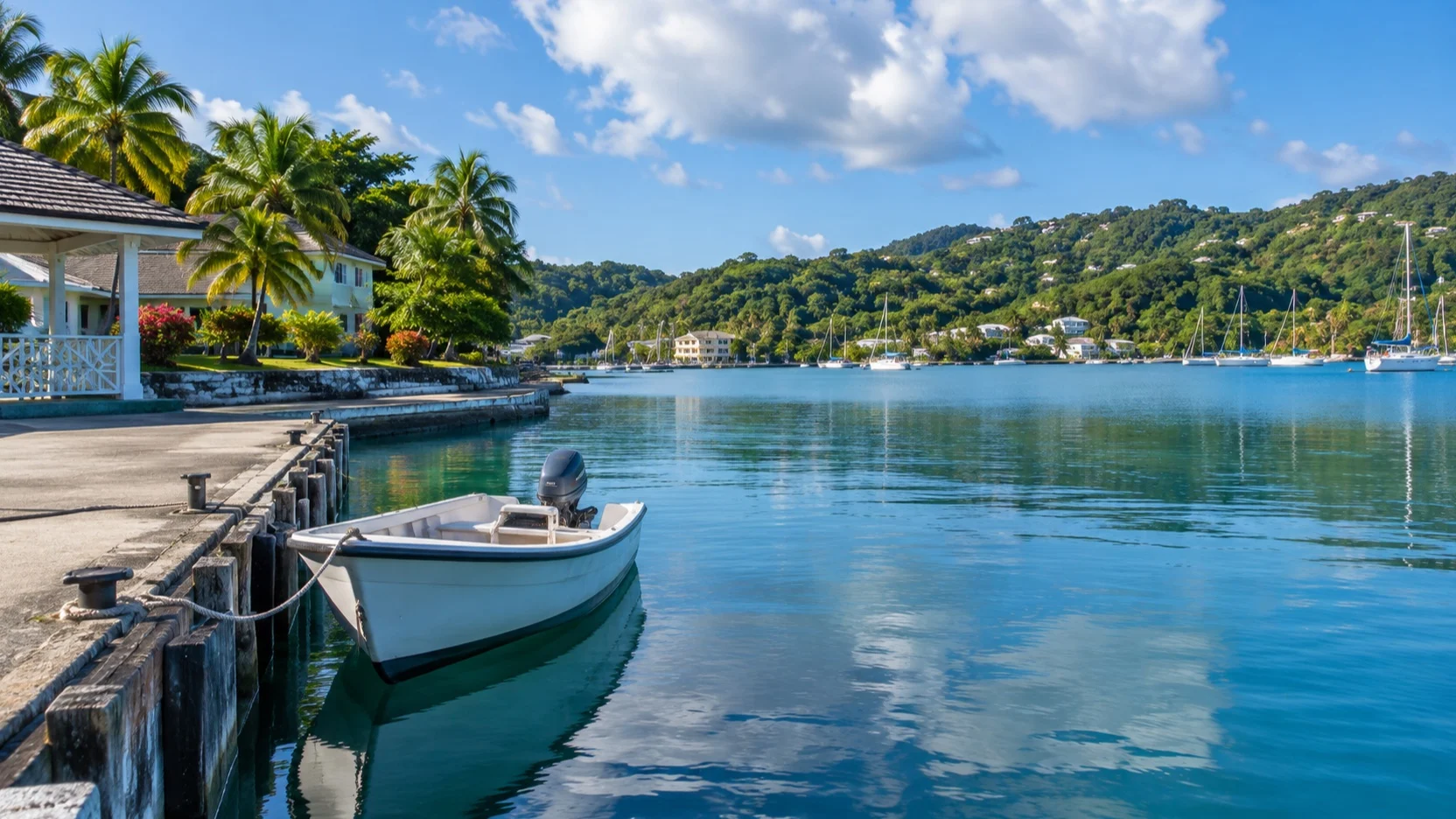
- Where you land: alongside at the Ken Wright Pier inside the Errol Flynn Marina, in Port Antonio’s West Harbour on Jamaica’s northeast coast. The marina is run by the Port Authority of Jamaica, and only small and premium ships call here, so there is no terminal complex to work through.
- Dock or tender: Small ships may berth at Ken Wright Pier when the vessel and schedule fit, while another call can use a different marine arrangement. Confirm the cruise line’s final plan instead of assuming every ship walks off.
- Into town: About a 5 minute walk into the town center, which you can cross on foot in 10 minutes.
- Currency and language: Jamaican dollars (JMD), with US dollars widely taken by taxis and tour operators.
- Time zone: Eastern Standard Time (EST, UTC−5) all year, with no daylight saving anywhere in Jamaica.
- Weather watch: Wind, swell, heavy rain, and tropical weather can change or cancel a call, so keep independent plans flexible until the ship confirms its operation.
What happens at the assigned landing
When a ship uses Ken Wright Pier, passengers walk through the marina toward town; another call may use a different arrangement. Follow the ship’s landing and port-exit instructions rather than assuming the same pier each time.
The Port Authority of Jamaica operates the marina area, and authorized transport should use the designated pickup point. Capacity is much smaller than at Ocho Rios or Montego Bay, so a prebooked driver matters.
Do not improvise with an unvetted driver at the gate. Reserve through the ship or a licensed tourism operator, with the route, total price, included admission, and return time in writing.
If a specific tour matters to you, book it ahead rather than assuming you can arrange it dockside. It is the single easiest way to avoid disappointment on a Port Antonio day.
Getting around
Blue Lagoon access has changed because of management, environmental, and community controls. Check the official or ship-arranged opening status, capacity, swimming zone, and transportation on the day rather than arriving on an old schedule.
Reach Falls requires a significant road transfer whose duration changes with road and weather conditions. Use a licensed driver or protected excursion, give the falls their own half day, and avoid trying to string together several distant stops.
Use the official tourism page to check which attractions are operating, then travel by licensed prearranged transport. Public buses and shared taxis are not appropriate for a time-sensitive cruise day under current United States safety guidance.
Whichever option you pick, build in real buffer before boarding. The roads out to the falls and coves are narrow and winding, and traffic through town can eat more time than the map suggests.
The stops I would actually spend time on
Blue Lagoon: A near-perfect circle of water about seven miles east of town, fed by both the Caribbean Sea and cold underground freshwater springs, so you genuinely feel warm and cool currents swirl together as you swim. The color shifts from turquoise to deep sapphire depending on the angle of the sun, which is why photos of it never look quite the same twice.
The lagoon’s depth and naming stories are often repeated with conflicting numbers and film lore. The useful cruise-day facts are current access, permitted swimming areas, water conditions, and a reliable return transfer.
Rio Grande bamboo rafting. A two-to-three-hour float down one of Jamaica’s longest rivers on a long bamboo raft steered by a licensed captain, with a raised bench for two that locals call the ‘lounge chair.’ It is slow, scenic, and about as far from an adrenaline excursion as it gets.
Fun fact: the rafts were originally cargo vessels that floated bananas down from Portland’s interior farms to the coast for export. Errol Flynn, who lived nearby, is credited with turning the ride into a tourist pastime in the 1950s.
Frenchman’s Cove: Regularly ranked among the most beautiful beaches on the island, thanks to the small river that runs across the sand into the sea, mixing fresh and salt water right where you swim. A modest entrance fee covers a beach bar, restrooms, and shaded picnic spots.
Frenchman’s Cove is a privately managed beach whose admission, hours, river flow, and facilities can change. Reserve or confirm directly, and allow road time from Port Antonio rather than treating it as a town beach.
Folly Ruins: The roofless shell of a lavish early-1900s mansion, now wrapped in vines on a point overlooking the harbor. It is a fifteen-minute stop, not a destination in itself, but a striking one.
Stories that the Folly mansion failed because builders mixed concrete with seawater are local lore, not a settled engineering fact. Treat the roofless ruin as a brief exterior stop and follow current site-access guidance.
Rio Grande, Reach Falls, and road timing
Rio Grande rafting must be arranged with an authorized operator and includes road transfers plus a low, narrow raft with limited mobility support. Confirm the launch point, total duration, life-jacket policy, weather cancellation, and whether lunch or river stops are included.
Reach Falls is in the opposite direction from some Port Antonio highlights and can be affected by rain, river conditions, road delays, and posted opening days. Give it a dedicated half day or book a protected combination, and never enter a flooded river or waterfall after heavy rain.
How I would plan the day
Given how spread out the sites are, I would not try to do all four. Pair the Rio Grande rafting with the Blue Lagoon, since they sit close together and the pacing matches, a slow float followed by a swim.
Start with rafting in the morning while it is cooler and the river is quieter, then head to the lagoon for a couple of hours before working back toward the ship. Folly Ruins slots in neatly on the way, since it takes almost no time.
Save Frenchman’s Cove and Reach Falls for a future visit, or swap them in if rafting and the lagoon do not appeal to you. Trying to squeeze both a river trip and a beach afternoon into one day is where people end up rushing back to the pier.
The United States State Department lists Jamaica at Level 2 as of June 23, 2026 because of crime and health risks. Avoid public buses, night travel, and secluded places, and use a licensed driver with the route, stops, fare, and return time agreed in advance.
A realistic word on accessibility
I want to be straightforward here rather than optimistic. The marina and town center are flat and easy to navigate, and almost nothing past that is.
Bamboo rafting means stepping down into a low raft and sitting close to the waterline, manageable for most people but not something a wheelchair or mobility device can join. The Blue Lagoon and Frenchman’s Cove both involve walking over uneven, sometimes wet ground to reach the water, with limited paved access.
Folly Ruins is an open grassy site with no formal paths. If mobility is a real concern, the honest move is a private driver who can get you close to each site, plus a shorter, town-focused day rather than pushing through the rafting and lagoon combination.
When to go, and the weather
Portland parish is the wettest part of Jamaica, which is exactly what keeps the hills around Port Antonio so green. Pack a light rain jacket even during the December-to-April dry season, when short afternoon showers are still common.
Hurricane season runs June through November, with the highest risk in August, September, and October, which is worth keeping in mind if you are booking a cruise in those months. Mornings tend to be the driest and coolest part of the day, another reason I like starting active excursions like rafting early rather than after lunch.
Quick answers
Do ships tender at Port Antonio, or dock?
Small ships may berth at Ken Wright Pier when the schedule and vessel fit, but marine arrangements can change. Confirm the cruise line’s final berth, tender, and gangway instructions.
Is Port Antonio walkable from the ship?
The town center may be close to an alongside landing, but Blue Lagoon, Rio Grande, Reach Falls, and Frenchman’s Cove require transportation. Use a licensed driver or organized tour and confirm the actual ship landing first.
How many hours do I need for the Rio Grande and Blue Lagoon combo?
Budget five to six hours door to door once you include transfer time, the two-to-three-hour raft trip, and a swim at the lagoon. Leave extra buffer for return traffic.
What is bamboo rafting on the Rio Grande actually like?
You sit on a raised bench while a licensed captain poles a thirty-foot bamboo raft down a calm, shallow river for two to three hours. It is peaceful rather than thrilling, and easily the signature Port Antonio experience.
Can I use US dollars in Port Antonio?
Yes, widely, especially with taxis and tour operators. Small local vendors sometimes prefer or only carry change in Jamaican dollars, so keep a bit of local currency on hand.
Is Port Antonio a safe cruise port?
Use the same Level 2 precautions that apply across Jamaica rather than assuming a small port is automatically low risk. Stay with organized areas, avoid public buses and isolated stops, and use licensed transportation.
Compared with the rest of the island’s stops, Port Antonio is the quiet outlier. If you want beach clubs, duty-free shopping, and a big menu of ship excursions, our Montego Bay cruise port guide is the better match.
If you are still deciding which Jamaican stop suits your ship’s itinerary, start with our full Jamaica cruise ports guide and work from there. But if slow rivers, a lagoon, and a town that has not been built around cruise crowds sound appealing, Port Antonio is worth the extra transfer time.
How this guide was researched: Unless a first-hand visit is explicitly identified above, this guide uses official port, tourism, transit, government, and attraction sources where available. Logistics and time-sensitive details were reviewed on September 11, 2026; see our Editorial Policy.