Norman Island Cruise Port: The Bight, Caves and a No-Pier BVI Day
Norman Island is what happens when your cruise port is basically a protected bay, a beach bar, snorkeling caves, and a lot of pirate stories. There is no giant pier and no town to conquer.
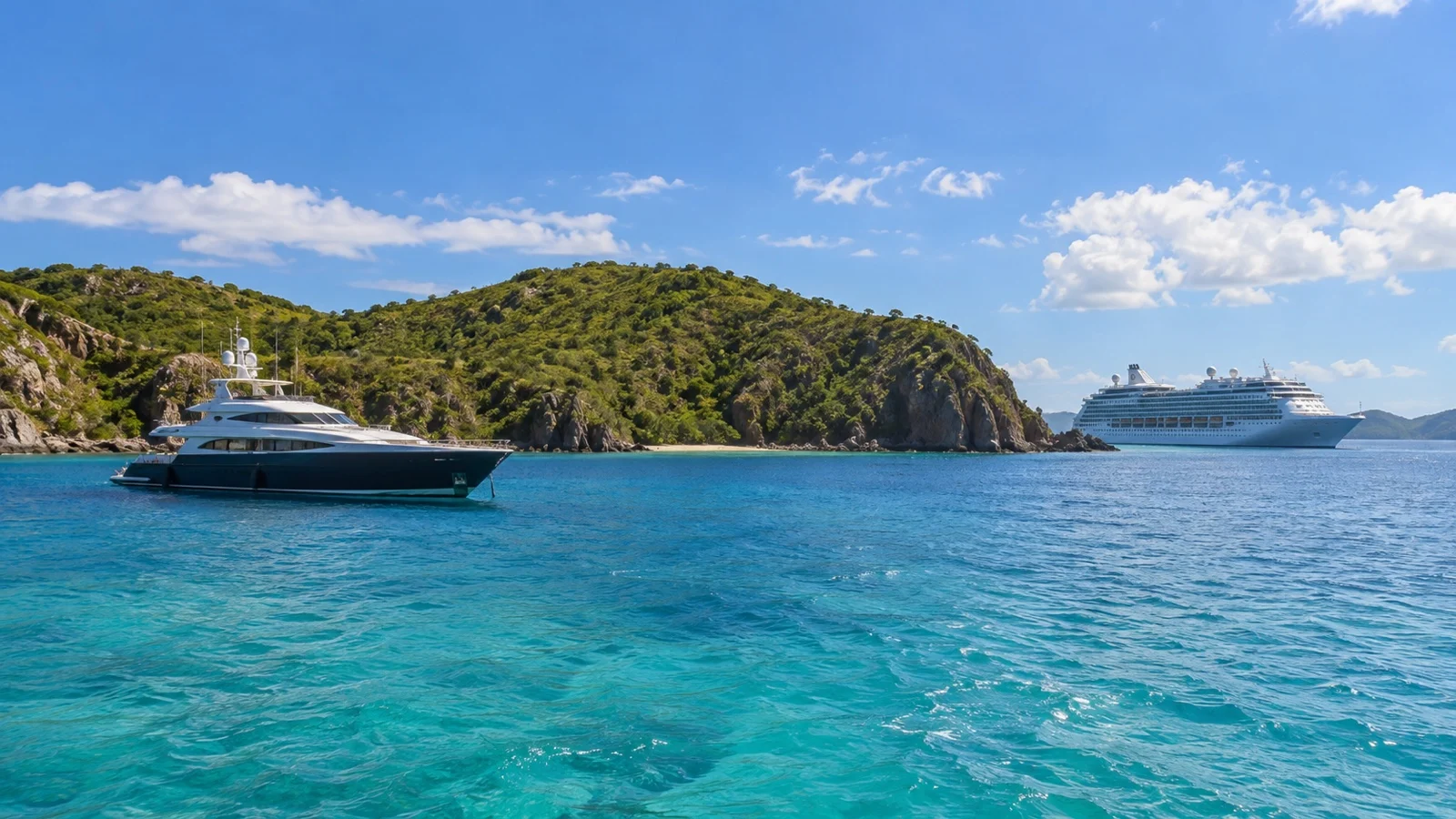
Small ships anchor in The Bight, then the island day starts by boat.
My quick take
I would pick Norman Island over another shopping port without thinking twice. The appeal is wonderfully narrow: swim, snorkel, hike a little, have lunch by the beach, and remember that the British Virgin Islands are supposed to feel like islands.
The one thing to understand is that this is a small-ship anchorage, not a Tortola-style cruise terminal. Your vessel may anchor or use the protected waters of The Bight, and you go ashore or to snorkeling sites in a tender, Zodiac, or similar small boat.
If your itinerary includes Road Town too, my Tortola cruise port guide covers the completely different big-island experience. Norman Island is the day where I would intentionally do less.
The quick facts
- Where you land: Usually The Bight on Norman Island, a protected anchorage on the island’s western side.
- Dock or tender: Tender or expedition boat. Norman Island does not have a conventional cruise-ship pier.
- Into town: There is no town. Pirate’s Bight, beach areas, trails, and snorkeling are the destination.
- Currency and language: U.S. dollar; English is the official language of the British Virgin Islands.
- Time zone: Atlantic Standard Time, UTC−4 year-round, with no daylight saving change.
- How often the call is missed: Medium (about 5–10% chance): swell, wind, or tender conditions can make small-boat operations unsafe.
The Bight is the port
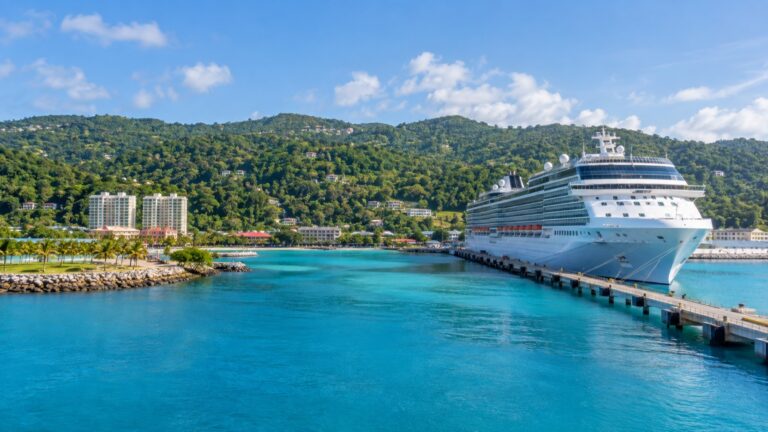
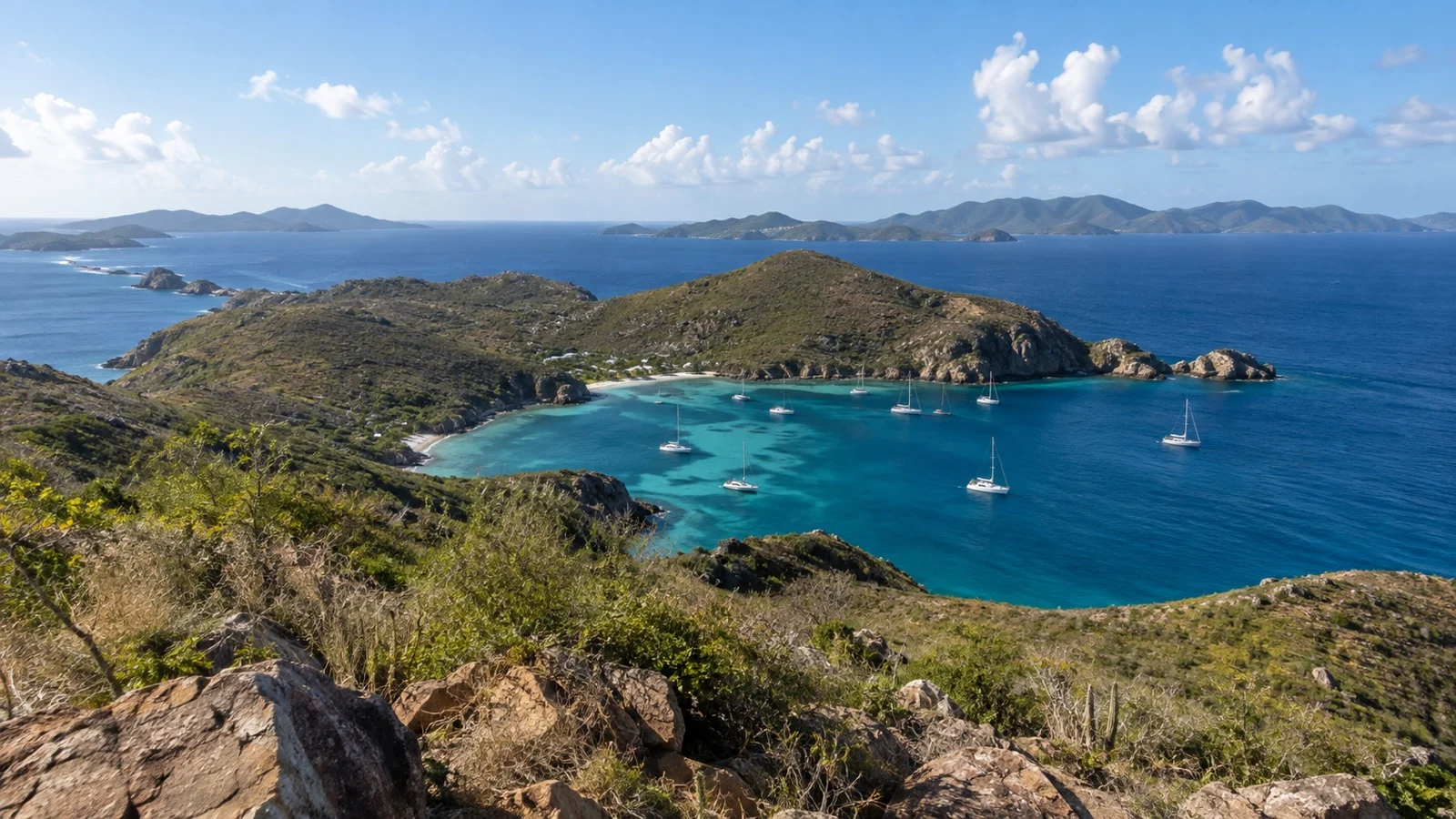
The Bight is a broad, sheltered anchorage on Norman Island, and that is the piece of geography that makes this cruise call possible. The island does not need a concrete cruise terminal when ships can sit in protected water and move guests by small boat.
The BVI Government has described The Bight as one of the territory’s distinctive natural anchorages, with overnight moorings and day access. Yacht guides also show a large mooring field and dinghy access at Pirate’s Bight.
For cruisers, your exact landing depends on the line and the day. Expedition-style ships may use Zodiacs, yacht ships may tender, and some activities can leave directly from the vessel for snorkeling rather than taking everyone to shore first.
Ponant currently lists Norman Island as a small-ship call built around the Treasure Point caves, kayaking, hiking, and protected harbor. That is a much better picture of the day than imagining a standard Caribbean pier.
The anchorage also means the schedule is more weather-sensitive than a docked call. Calm blue water can make the transfer trivial, while swell at the wrong angle can change what the expedition team is willing to operate.
Norman Island really does have pirate history
The pirate theme is not entirely a beach-bar invention. The official British Virgin Islands tourism guide describes Norman Island as a historic pirate hiding place and notes its long association with the inspiration for Robert Louis Stevenson’s “Treasure Island.”
I would phrase that carefully: the island is said to have inspired the novel, not proven to be a one-to-one map of Stevenson’s fictional island. The stories are part documented treasure lore and part the kind of Caribbean mythology that improves dramatically near a beach.
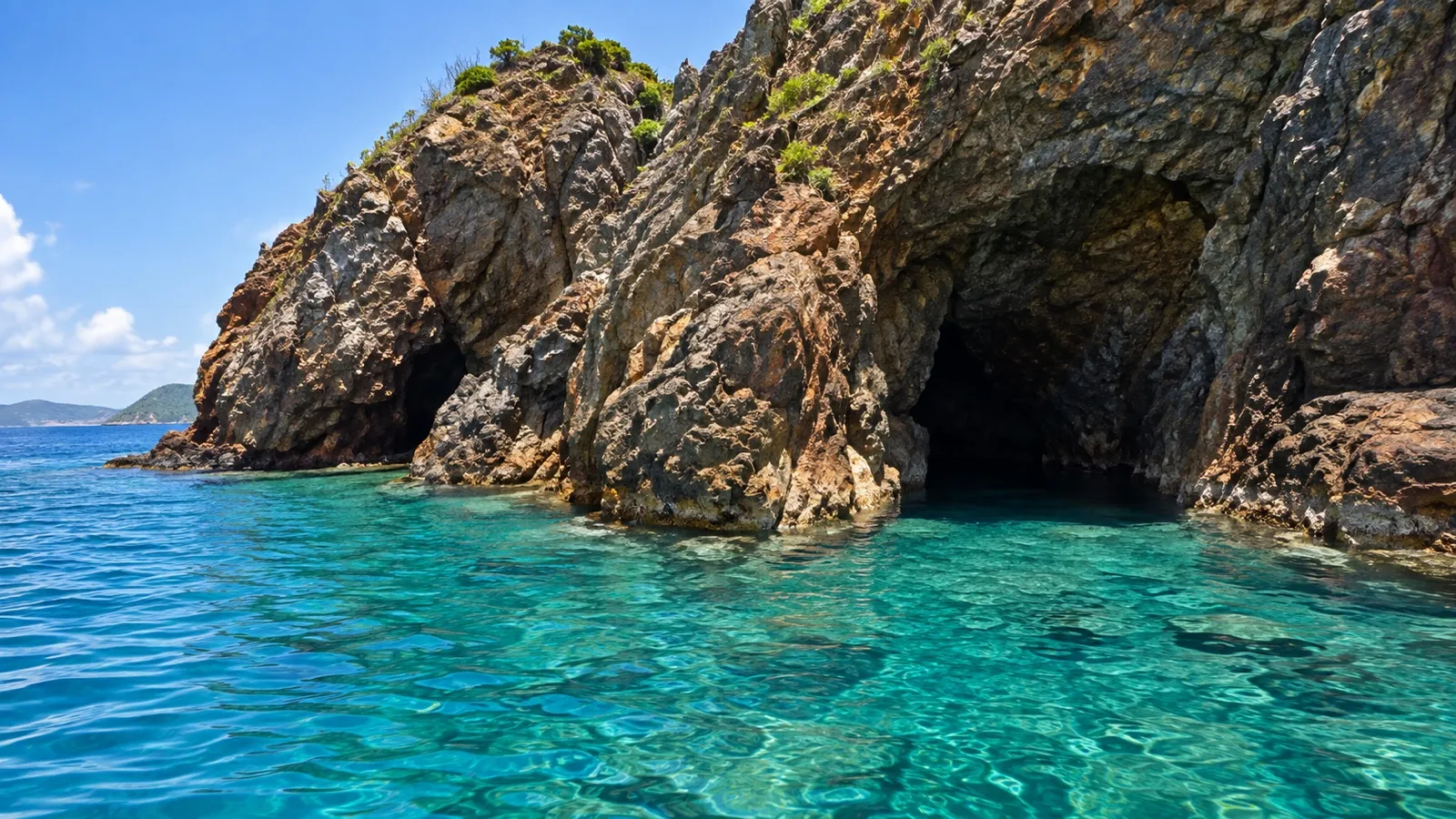
The caves at Treasure Point are where the story feels most believable. Dark openings cut into the shoreline, boats bob outside, and snorkelers disappear under the rock in exactly the sort of place you would choose if you had inconvenient treasure to hide.
Even without pirates, the island has the right shape for adventure. It is hilly, mostly undeveloped, and surrounded by smaller rocks and reefs that make the water more interesting than one uninterrupted beach.
The Caves are the thing I would not skip
If your line offers one snorkeling option around Norman Island, I would prioritize Treasure Point. The flooded caves are close to the waterline, and the experience is part snorkeling, part exploring a rocky shoreline that looks much more dramatic from water level.
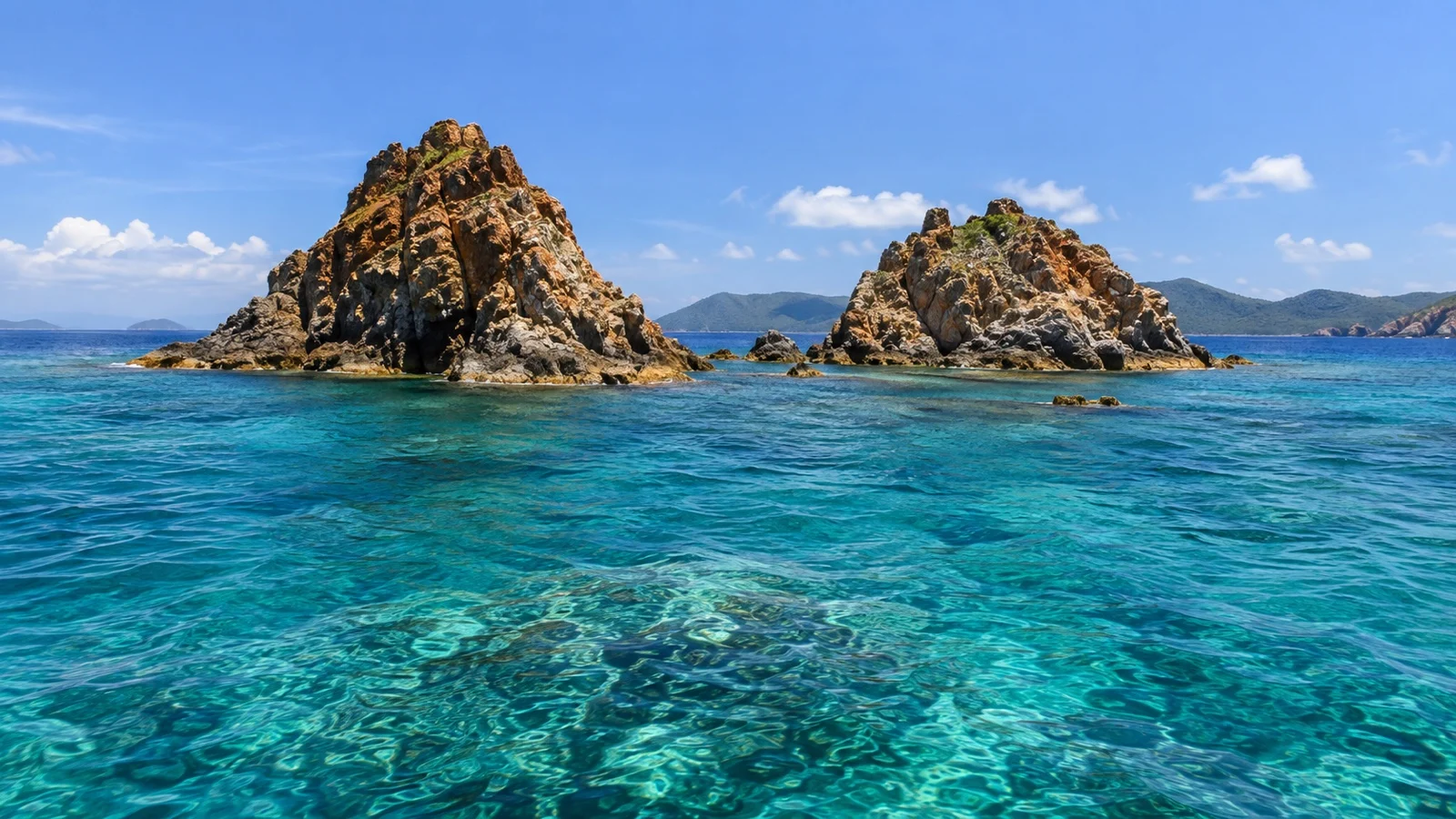
Current small-ship itineraries describe the flooded caves at Treasure Point as a signature snorkeling stop. Nearby Pelican Island and The Indians are also well-known snorkeling and diving sites, but the exact route depends on the operator and sea conditions.
I would bring or borrow a proper mask rather than trying to enjoy this through fogged rental goggles that leak every ten seconds. A rash guard is useful too because tropical sun reflects off water far more efficiently than your vacation brain expects.
Do not assume every cave is appropriate in every sea condition. Your guides know what the surge is doing, and a cave that looks friendly from outside can behave very differently when swell pushes water through a narrow entrance.
If you do not snorkel, Norman Island can still work well. The bay, beach, restaurant, hiking, and scenery give non-swimmers something to do while everyone else disappears under the water.
Pirate’s Bight is the easy shore plan
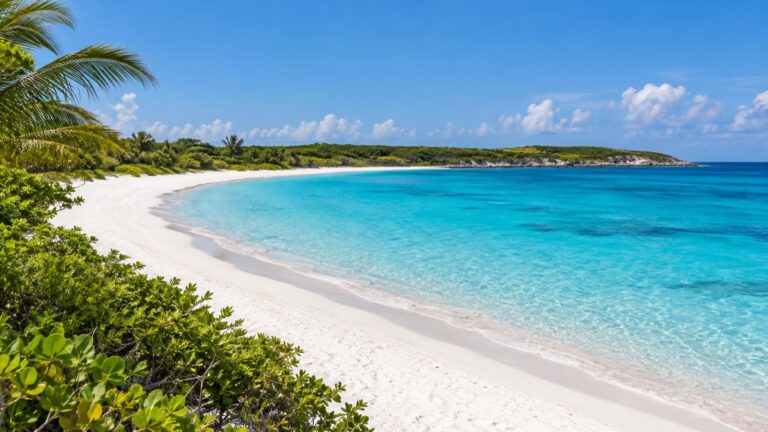
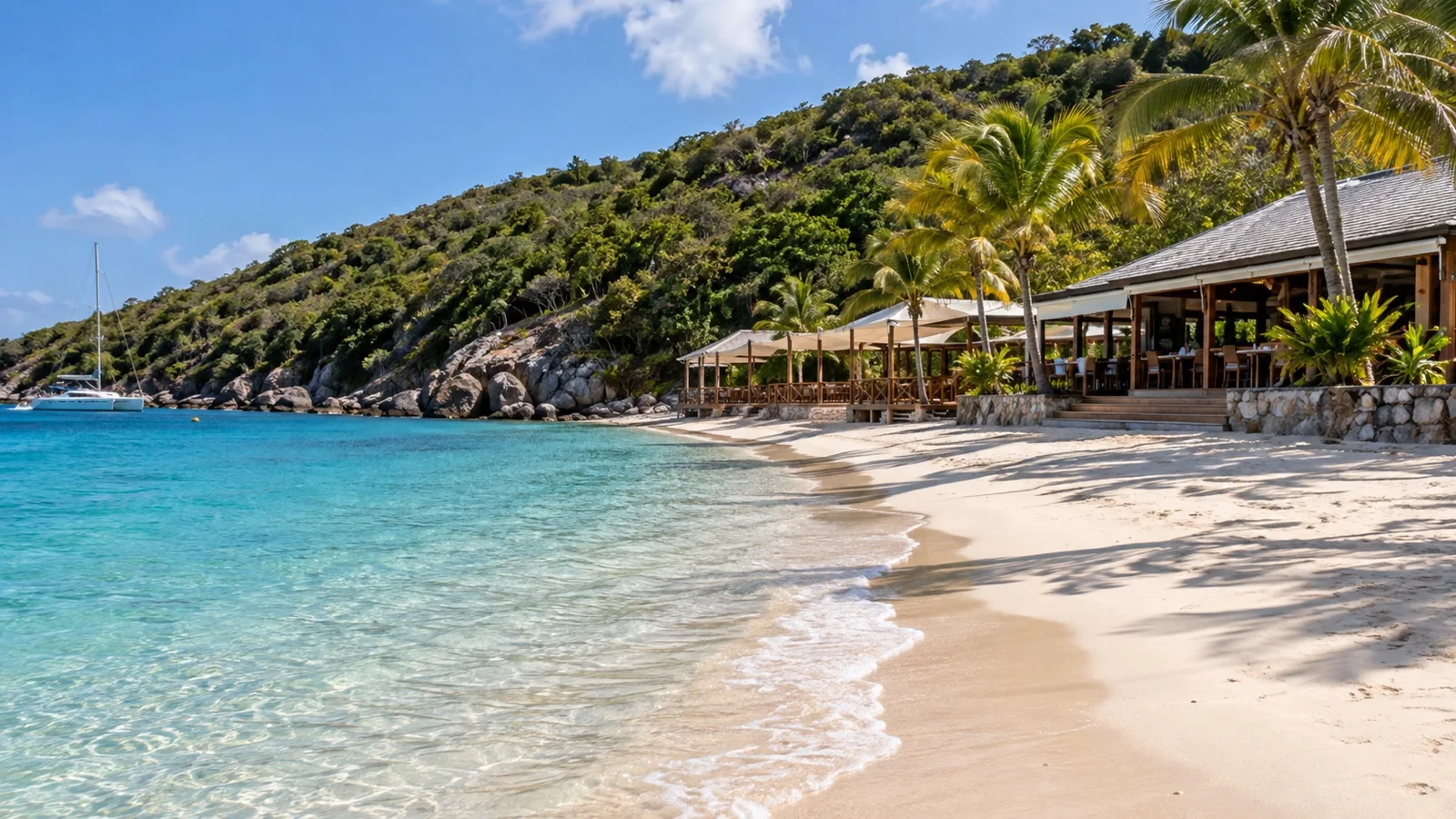
Pirate’s Bight sits on the beach inside The Bight and gives the anchorage a proper shore base. There is food, drinks, sand, and dinghy access without trying to turn a mostly undeveloped island into a resort complex.
I would use it exactly that way: as the place to eat and reset after swimming rather than the entire reason to visit. The Bight is too pretty to spend four hours facing the bar with your back to the water.
The famous floating Willy T bar and grill is currently in The Bight too. Its own site confirms the Norman Island location, but I would check your ship’s timing before planning the day around a visit.
The atmosphere there can be much livelier than the beach itself, so know your group. I would happily visit for a drink, but families and travelers looking for quiet may prefer Pirate’s Bight and the beach.
Current sailing resources describe Norman Island as having limited yacht-style services rather than a full town. That is the charm, not a missing amenity list.
Can you explore Norman Island independently?
This is not a walk-off port where taxis wait beside the gangway. Your ship controls the tender or Zodiac operation, and the practical shore options are the places you can reach from that landing.
If the caves or The Indians matter most, I would book the ship’s small-boat outing or another option the cruise line specifically allows from this call. You do not want to discover after anchoring that an independently arranged boat cannot collect you from the ship.
For a relaxed beach-and-lunch day, going ashore with the ship’s tender can be enough when that service runs to The Bight. Ask onboard where the tender lands, when the final boat returns, and whether Pirate’s Bight or Willy T is operating during your call.
The Indians are worth knowing about
The Indians are jagged rock formations near Norman Island and Pelican Island, and they are one of the BVI’s signature snorkel and dive sites. Some cruise excursions combine them with the Caves, while others focus on one site depending on sea conditions and time.
I would choose a combined small-boat outing if the itinerary offers one and you are comfortable in open water. It gives you two very different underwater settings without turning the day into a marathon.
Strong swimmers sometimes underestimate current around exposed rocks. Follow the guide’s route and use a flotation vest if offered, because vacation snorkeling is not the moment to prove a point about your high-school swim team.
For a broader sense of how these islands fit together, my British Virgin Islands cruise ports guide compares the bigger ports and smaller island calls. Norman Island is much closer to the yacht-cruising end of that spectrum.
You can hike, but I would not overcomplicate it
Norman Island has hills and walking paths with views over the Sir Francis Drake Channel. A hike is a nice alternative if you have had enough snorkeling by the middle of the cruise.
I would ask the expedition team which trail is actually open and realistic for the available landing time. Tropical heat and steep, exposed paths make a “short hike” feel very different at noon than it did in the air-conditioned briefing.
Bring water and real footwear if you plan to leave the beach. Flip-flops are excellent at being flip-flops and surprisingly poor hiking equipment.
The views are the reward rather than a monument at the top. You are looking back across the BVI channels, neighboring islands, anchored boats, and that absurd Caribbean water.
Weather matters more here than at Road Town
Norman Island’s protected bay helps, but the call still depends on safe small-boat operations. Wind, swell, rain squalls, and tropical systems can all change the tender plan.
That is why I rate the missed-call risk as medium rather than low. A captain can dock at Road Town in conditions that would make a beach landing, Zodiac ride, or cave snorkel unnecessarily unpleasant here.
The Atlantic hurricane season is the obvious broad weather concern, though itineraries and individual storms vary. On any day, the ship’s crew will care more about the actual local sea state than a sunny icon on your phone.
If the caves are canceled but The Bight landing still runs, I would take the win and go ashore. A changed Norman Island day can still be a very good Caribbean day.
A realistic word on accessibility
This is not one of the BVI’s easiest calls for limited mobility because the first hurdle is the tender or expedition boat. Transfers can involve steps, movement between vessels, and a beach or small dock landing.
Wheelchair users should ask the line specifically whether Norman Island is an accessible landing on that ship. Small vessels differ dramatically in how they handle mobility equipment.
Even if the landing itself works for you, sandy beach surfaces and trails can add difficulty. Snorkeling excursions also commonly require climbing a small-boat ladder, so ask for the exact boarding setup before paying.
If Norman Island is not workable, a later call at Tortola or Virgin Gorda may offer a broader range of transportation choices. I would never judge the whole BVI itinerary by one small-boat landing.
How I would spend the call
If conditions are good, I would book the caves or combined caves-and-Indians snorkel first. That is the one experience here I cannot easily recreate by walking around on my own.
After snorkeling, I would go ashore at The Bight, get lunch, and spend time on the beach. If there is a guided hike later, I would decide based on heat and how ambitious I still feel.
I would not try to leave Norman Island for Tortola during a short cruise call unless the line specifically operates that excursion. The whole advantage of the stop is not needing to chase another island.
If your itinerary also visits Jost Van Dyke, expect a similar small-island rhythm but a different personality. Jost is famous for White Bay and beach bars; Norman is more about the anchorage, caves, and pirate lore.
The best Norman Island plan ends with you slightly salty, a little sun-tired, and wondering why every Caribbean port cannot be this uncomplicated.
Quick answers
Do cruise ships dock at Norman Island?
No conventional cruise pier is used. Small ships anchor or operate in The Bight and move guests by tender or expedition boat.
What is Norman Island famous for?
Pirate lore, the Treasure Point caves, snorkeling, The Bight anchorage, and its association with “Treasure Island.”
Can non-swimmers enjoy the call?
Yes. The beach, Pirate’s Bight, scenery, and hiking still work, though snorkeling is the signature activity.
Is Willy T on Norman Island?
The floating bar operates in The Bight area near Norman Island; check current ship guidance before planning around it.
Can weather cancel Norman Island?
Yes. Tender and snorkeling operations are more sensitive to swell and wind than a normal docked Caribbean call.
The last word
Norman Island is barely a cruise port in the conventional sense, which is exactly why I like it. The bay is the terminal, the tender is your transportation, and the excursion begins the moment you climb into a small boat.
I would come for the caves, stay for the water, and resist the urge to turn this into a complicated island-hopping project. Some ports are best when the plan fits on one line.
How this guide was researched: Cruise-call details were checked against current small-ship itineraries, BVI tourism and government sources, and Norman Island anchorage guidance in September 2026. See our Editorial Policy.