Pointe-à-Pitre Cruise Port: Walkable Guadeloupe and Island Trips
Pointe-à-Pitre puts Guadeloupe’s markets, museums, and Creole streets within walking distance of the gangway. It also sits between two very different islands, so the smartest port day begins with one choice: explore the city slowly or commit to one focused trip beyond it.
My quick take
This is a practical French Caribbean port. You dock beside a walkable city, while taxis or buses reach nearby beaches when time allows.
Guadeloupe rewards focus because its butterfly-shaped main islands cover more ground than the map first suggests. For nearby comparisons, read my guides to Antigua cruise port and St. Maarten cruise port, where beach decisions are usually simpler.
If you would rather arrive a day early, our Pointe-à-Pitre cruise port hotels guide has the shortlist.
Where cruise ships dock in Pointe-à-Pitre
Large cruise ships normally berth alongside at the Pointe-à-Pitre cruise facilities operated by Guadeloupe Port Caraïbes. This is a docked call, not a routine tender operation, and passengers leave through a secure terminal area close to downtown.
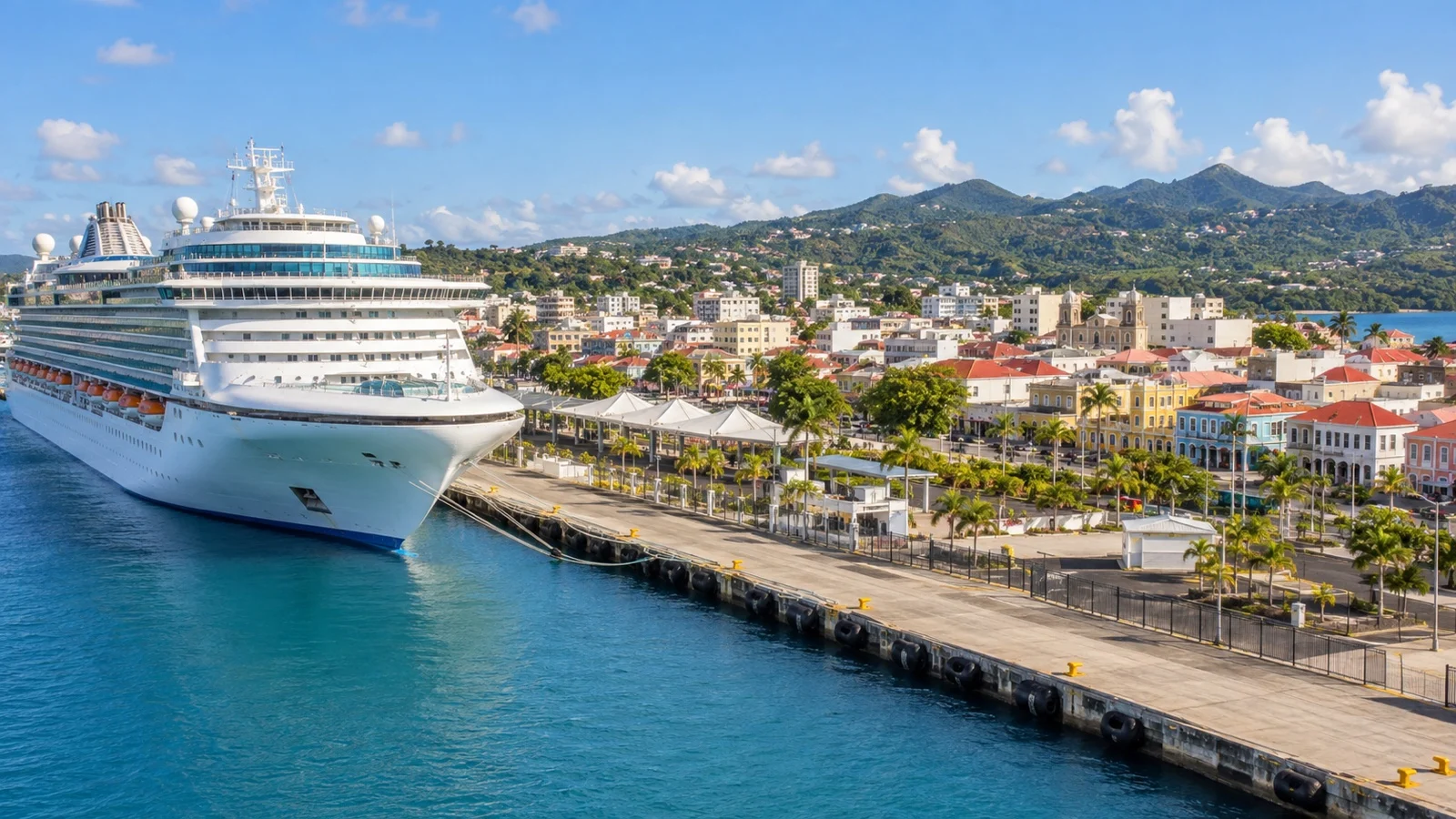
The Grand Port Maritime de la Guadeloupe passenger page lists two cruise terminals of roughly 21,500 and 32,300 square feet. It also confirms free Wi-Fi, reduced-mobility access, duty-free services, airport transfers, capacity for three ships at once, and a walkable city center.
Karuland, a local craft village, sits at the foot of the ships. Beyond the port gate, the city opens into markets, museums, street art, and shopping streets.
Pointe-à-Pitre also supports homeport cruises. Transit passengers can follow signs for town, while turnaround passengers need exact cruise-line check-in, luggage, and transfer instructions.
Do not confuse the cruise terminal with Bergevin
The Gare Maritime Internationale de Bergevin is the ferry terminal for routes within the archipelago and to neighboring islands. It is part of the wider passenger-port system, but it is not automatically the building your ocean cruise uses.
That distinction matters if you are arranging a taxi, meeting a guide, or considering an inter-island ferry. Use the ship’s berth information and a precise meeting point rather than telling a driver only that you are “at the port.”
Quick facts for your Guadeloupe day
- Where you land: the Pointe-à-Pitre cruise terminals operated by Guadeloupe Port Caraïbes, with the Karuland craft village at the foot of the ships and the city just beyond the port gate. The Grand Port Maritime de la Guadeloupe passenger page is the source for berths, and do not confuse the cruise terminal with the Bergevin ferry terminal.
- Dock or tender: Large ships normally berth alongside at the port’s cruise terminals, and this is a docked call rather than a routine tender operation.
- Into town: You walk.
- Currency and language: The euro, because Guadeloupe is a French overseas department and region.
- Time zone: Atlantic Standard Time (AST, UTC−4).
- How often the call is missed: Low (roughly 1 to 2%): tropical storms can make the approach unsafe.
Walking into Pointe-à-Pitre
The port authority specifically lists the city center as accessible on foot. The exact walk changes with your berth and security exit, but central Pointe-à-Pitre is compact enough to explore without booking a tour.
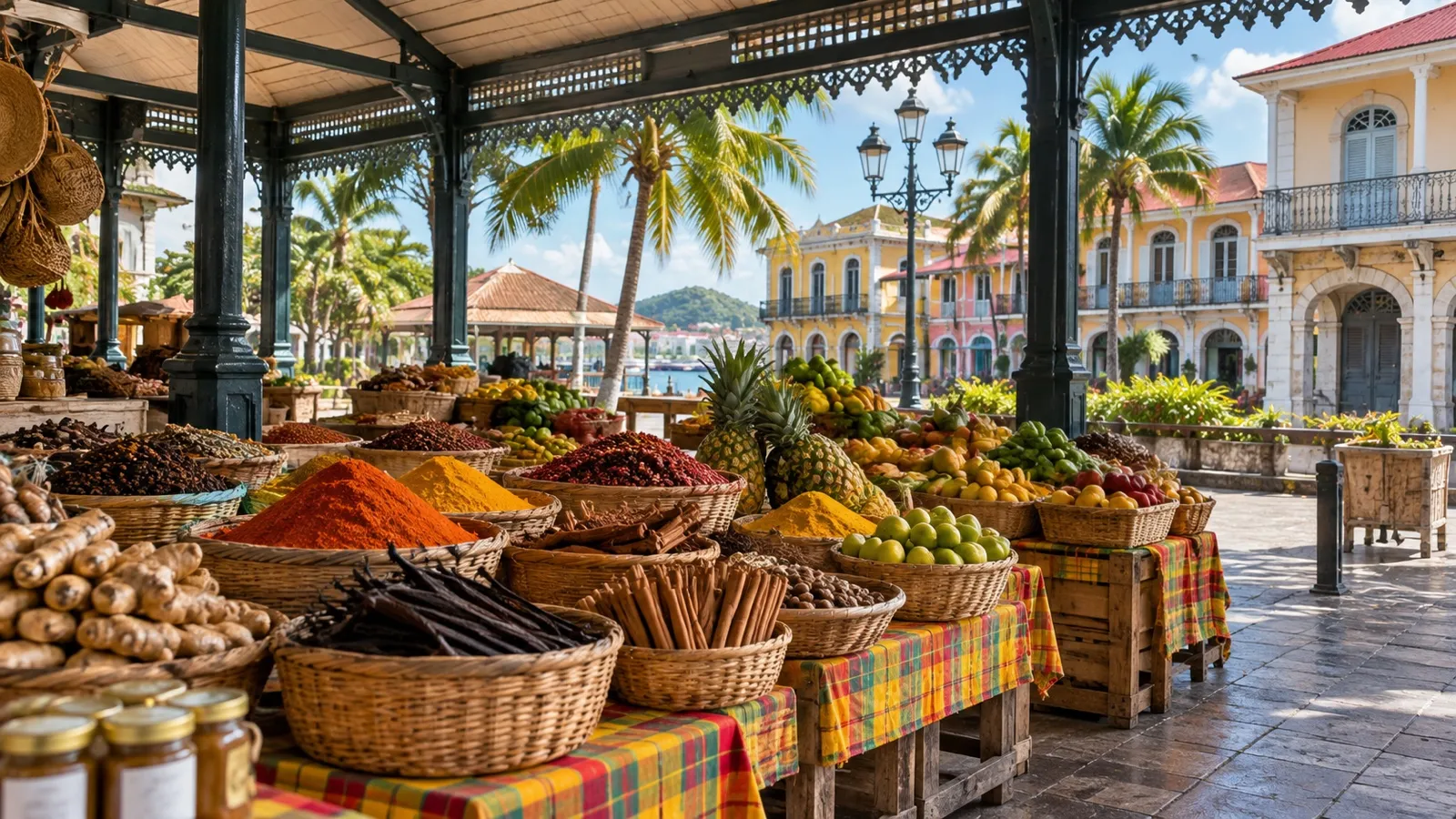
The city is energetic, not polished into a cruise resort. Expect traffic, market noise, uneven sidewalks, and brilliant street art.
Start with Place de la Victoire and the surrounding streets, then move toward the Saint-Antoine spice market and Saint-Pierre-et-Saint-Paul church. The official Guadeloupe Islands city guide identifies these landmarks along with the Saint-John Perse Museum, MUSARTH, port quays, fish market, and city street art.
The spice market is the most sensory stop, with fruit, spices, crafts, prepared products, and bottles of arranged rum. Go earlier for more activity, carry small euros, and ask vendors before taking close photographs.
Saint-Pierre-et-Saint-Paul is often called the iron cathedral because of its metal arches and distinctive structure. It remains an active church, so check the door quietly and avoid treating a service as background scenery.
Make Mémorial ACTe the cultural anchor
Mémorial ACTe occupies the former Darboussier sugar-factory site on the waterfront and examines slavery, the slave trade, colonial history, and the African diaspora. It is the strongest single cultural visit in Pointe-à-Pitre and deserves more than a hurried photo of the building.
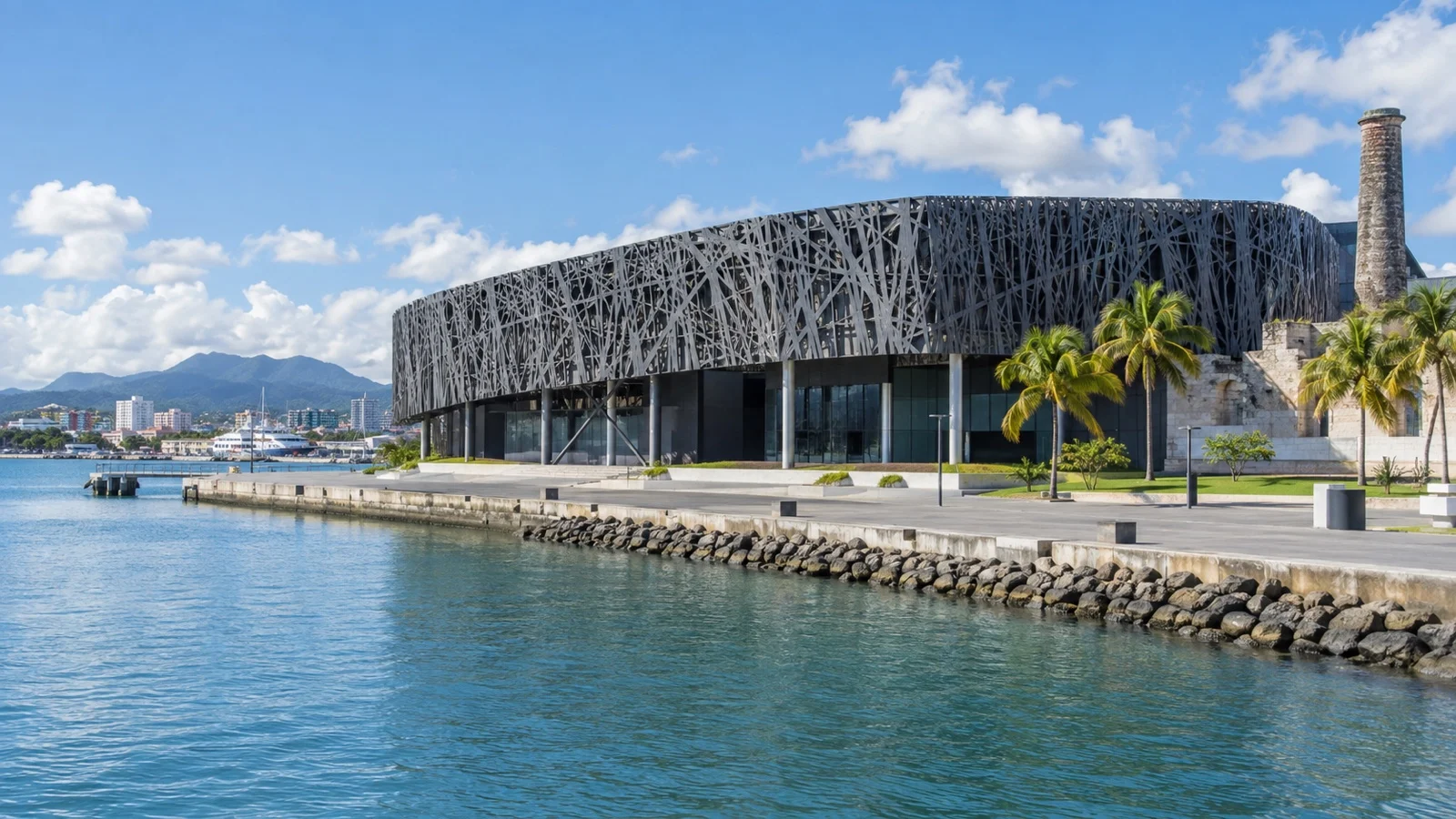
The official Mémorial ACTe visitor page currently lists opening Tuesday through Sunday from 9 a.m. to 6 p.m., Monday closure, and a final tour departure at 4:30 p.m. Check the site again before sailing because special closures and event schedules can override normal hours.
The official tourism board describes the museum as about a 15-minute walk from central Pointe-à-Pitre. Allow enough time for the exhibitions and the return, especially if heat or mobility makes every “quick walk” less quick.
Getting around without a cruise excursion
Karu’lis operates the urban bus network linking Pointe-à-Pitre with nearby communities, the airport area, and Le Gosier. Use the official Karu’lis routes page to check current lines and schedules instead of relying on an old screenshot.
The Guadeloupe Islands tourism board says buses connect Pointe-à-Pitre with both Grande-Terre and Basse-Terre. Its official car-free Guadeloupe guide also describes Le Gosier as about 15 minutes by bus from Pointe-à-Pitre, with Datcha Beach near the central stop.
Buses can work for a city or Le Gosier day, but cruise timing needs a backup. Note an early return and keep taxi money separate from the sorbet budget.
Taxis are a better fit for a private island loop, distant beach, rainforest stop, or travelers with limited mobility. Confirm the total fare, currency, waiting time, exact stops, and return-to-ship deadline before the vehicle moves.
A rental car adds navigation, parking, and traffic. For one cruise day, a driver who understands the route is often worth more than the keys.
We cover that separately in our guide to Guadeloupe Cruise Ports.
The best trips beyond the city
Le Gosier and Datcha Beach
Le Gosier is the easiest beach add-on because it sits close to the Pointe-à-Pitre urban area. Datcha Beach offers a lively shoreline, food nearby, and views toward Îlet du Gosier without consuming most of the day in a vehicle.
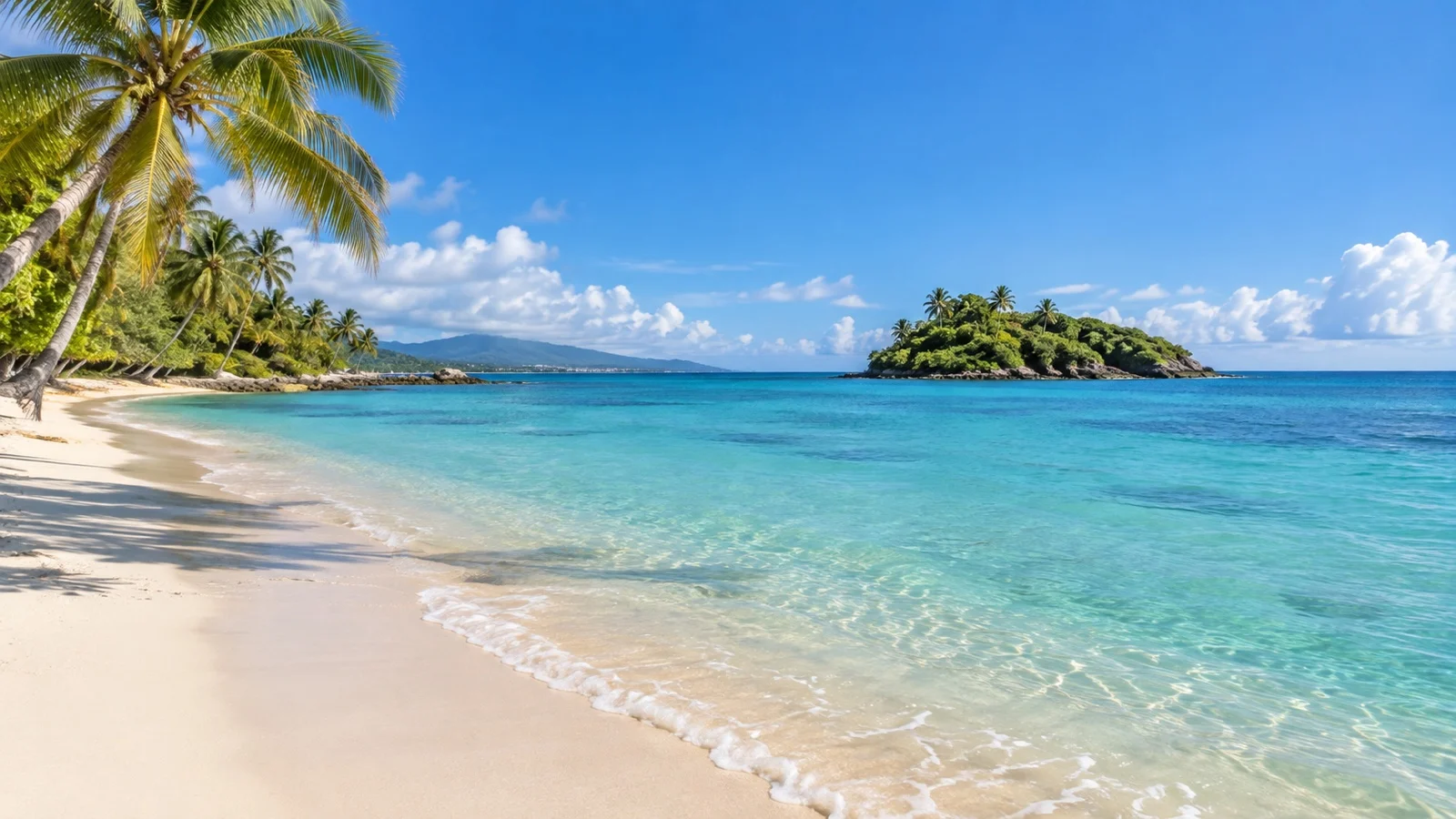
Check sea conditions, beach facilities, and the current bus return before committing. The small islet is attractive, but a separate boat ride adds another schedule that must fit comfortably inside the ship’s day.
Sainte-Anne or Saint-François
Grande-Terre’s south coast holds the classic pale-sand beach towns many cruisers picture before arrival. Sainte-Anne is the more realistic focus for a straightforward beach and market day, while Saint-François and Pointe des Châteaux require more road time.
Choose one destination and prearrange the return if using a taxi. Attempting two beaches, a scenic headland, lunch, and city shopping usually creates a day experienced mostly through glass.
Basse-Terre rainforest and waterfalls
The western main island, Basse-Terre, supplies Guadeloupe’s rainforest, mountain scenery, rivers, and volcanic landscape. These are rewarding full-day ingredients, but distances, winding roads, rain, and trail conditions make an organized or private trip the sensible approach.
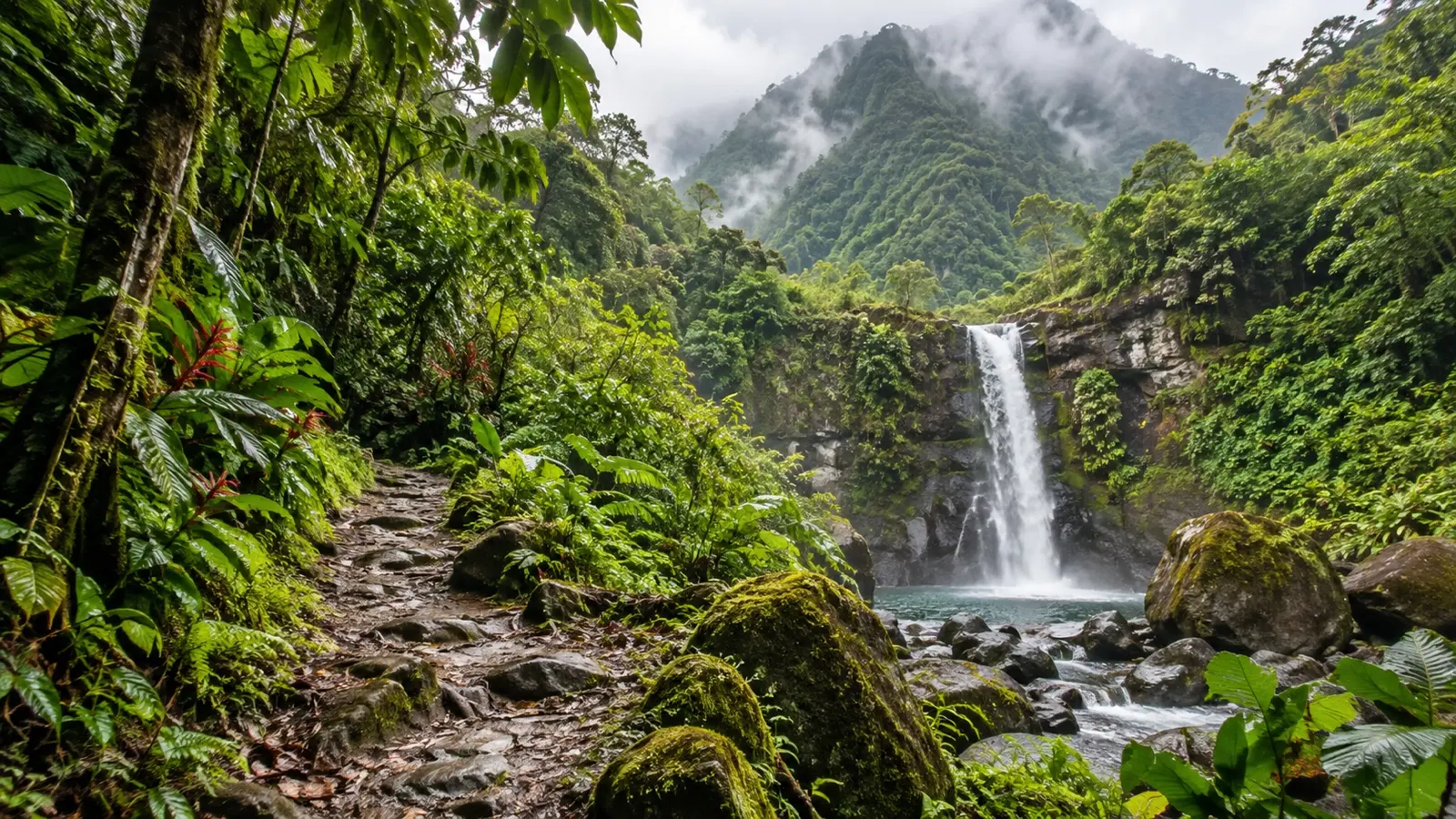
Do not build a cruise day around a waterfall name alone. Ask exactly which viewpoint or trail is included, how many steps it requires, what footwear is needed, and how much driving sits between stops.
Rum, gardens, and smaller museums
Distilleries, gardens, and heritage sites can create a gentler alternative to beach or rainforest plans. Opening days vary, so a beautiful route is useful only when its doors are actually open.
Pick two nearby stops and let lunch be the third. Guadeloupe is too interesting to spend the day zigzagging.
Three realistic port-day plans
About four hours ashore: Stay in Pointe-à-Pitre with Mémorial ACTe or a compact market-and-heritage walk, not both at sprint speed. Add a snack or early lunch and return through Karuland.
About six hours ashore: Pair Mémorial ACTe with the central city, or take a focused outing to Le Gosier and Datcha Beach. Keep one transport backup and return before traffic begins making decisions for you.
Eight or more hours ashore: Choose one prearranged Grande-Terre beach route or one Basse-Terre nature route. Skip the city if necessary rather than slicing every stop into an unsatisfying sample.
My Caribbean cruise ports guide helps place Guadeloupe among other independent and excursion-heavy calls. Compare it with Roseau cruise port, where rainforest plans are even more central to the day.
Accessibility and comfort
The port officially lists reduced-mobility access, but ship gangways still vary with vessel design and tide. Ask the cruise line for assistance before disembarking and confirm which terminal exit your accessible transport can use.
Central Pointe-à-Pitre has uneven pavement, curbs, heat, and busy crossings. Mémorial ACTe or a prearranged accessible vehicle may be more comfortable than a long improvised city loop.
Ask about vehicle steps, wheelchair storage, restrooms, walking surfaces, and drop-off distance. A generic accessible label is not enough.
Weather and season
Guadeloupe is warm throughout the year, with a relatively drier high season and a wetter, more humid stretch later in the year. Showers can be brief and intense, while Atlantic hurricane season can disrupt calls from June through November.
Pack water, sun protection, a compact rain layer, and shoes that can handle slick pavement. Check the ship’s messages and official local forecast before committing to a distant route, ferry, or exposed beach.
Safety and return timing
Pointe-à-Pitre is a working Caribbean city rather than an enclosed resort. Keep valuables discreet in markets, use licensed transportation, avoid quiet unfamiliar blocks, and ask port or tourism staff when a route is unclear.
Traffic is the larger planning trap on an island excursion. Preserve a generous return margin, share the ship and terminal details with your driver, and aim to be back in the port area well before all-aboard.
Match the outing to Guadeloupe’s two sides
Pointe-à-Pitre and the Grande-Terre beaches are the easier independent direction, while Basse-Terre rainforest and waterfall routes require more driving and a prearranged return. Choose one side of the island instead of combining beaches, waterfalls, markets, and a distillery in a single cruise call.
Mémorial ACTe currently lists Monday closure, but holidays, events, and maintenance can override the regular Tuesday-through-Sunday schedule. Check the official visitor page again after boarding, then keep the central market and heritage walk as the nearby fallback.
Karu’lis buses can work for Le Gosier only when the exact stop and a conservative return are confirmed. Inter-island ferries from Bergevin add check-in and another weather-sensitive connection, so they rarely make sense during an ordinary port call.
Quick answers
Can I walk from the ship into Pointe-à-Pitre?
Yes, the port authority lists the city center as walkable from the cruise facilities. Follow the designated security exit because the exact route depends on your berth.
Does Pointe-à-Pitre use tenders?
Large cruise ships normally dock alongside at the port’s cruise terminals. Voyage-specific conditions can change, so the ship’s daily information remains the final word.
What is the best independent day?
Use Mémorial ACTe as the anchor, then walk Place de la Victoire, the spice market, the iron cathedral, and nearby streets. Choose Le Gosier instead if beach time matters more than museums.
Is Mémorial ACTe open on Monday?
The official visitor page currently lists Monday as closed and Tuesday through Sunday as open. Recheck before your cruise because special closures can affect any day.
Can I visit another Guadeloupe island by ferry?
Bergevin serves ferries to islands including Marie-Galante and Les Saintes, but an inter-island trip adds check-in, sailing, and return risk. It is usually better suited to a stay than a standard cruise call unless the schedule is exceptionally generous.
How much return buffer should I keep?
Follow the cruise line’s all-aboard time and enlarge the buffer for traffic, buses, ferries, rain, or a distant tour. Returning to the terminal area at least an hour before all-aboard is a sensible minimum for many independent plans, not a universal guarantee.
How this guide was researched: Port, transport, attraction, safety, booking, and accessibility details were checked against current official sources on September 10, 2026, including Guadeloupe Port Caraïbes, Mémorial ACTe, Karu’lis, and the Guadeloupe Islands Tourism Board. Berths, schedules, access, weather, and operating rules can change, so confirm the sailing-specific details before travel; see our Editorial Policy.