San Diego Cruise Port: Downtown Terminals and an Easy Day Ashore
San Diego is about as convenient as a major cruise city gets. Ships dock on the downtown waterfront, the airport is close, and several excellent attractions begin within an easy walk of the gangway.
Convenience still rewards a plan because two piers serve cruise traffic and downtown events can change parking, transit, and road access. Know your terminal, protect your boarding time, and choose one part of the city rather than trying to cover the entire county.
Quick Facts
- State: California, United States
- Main terminal: B Street Pier Cruise Ship Terminal
- Second terminal: Port Pavilion on Broadway Pier
- City access: Both terminals are on the downtown waterfront
- Currency: United States dollar
- Airport: San Diego International Airport is close, but transfer time varies with traffic
- Nearest rail hub: Santa Fe Depot
- Top walkable sights: Maritime Museum, USS Midway Museum, Little Italy, and waterfront parks
- Best planning rule: Verify the exact pier before arranging transport
B Street and Broadway Pier
The Port of San Diego operates two downtown cruise facilities. Most ships use the larger B Street Pier terminal, while the Port Pavilion on Broadway Pier can handle other scheduled calls and events.
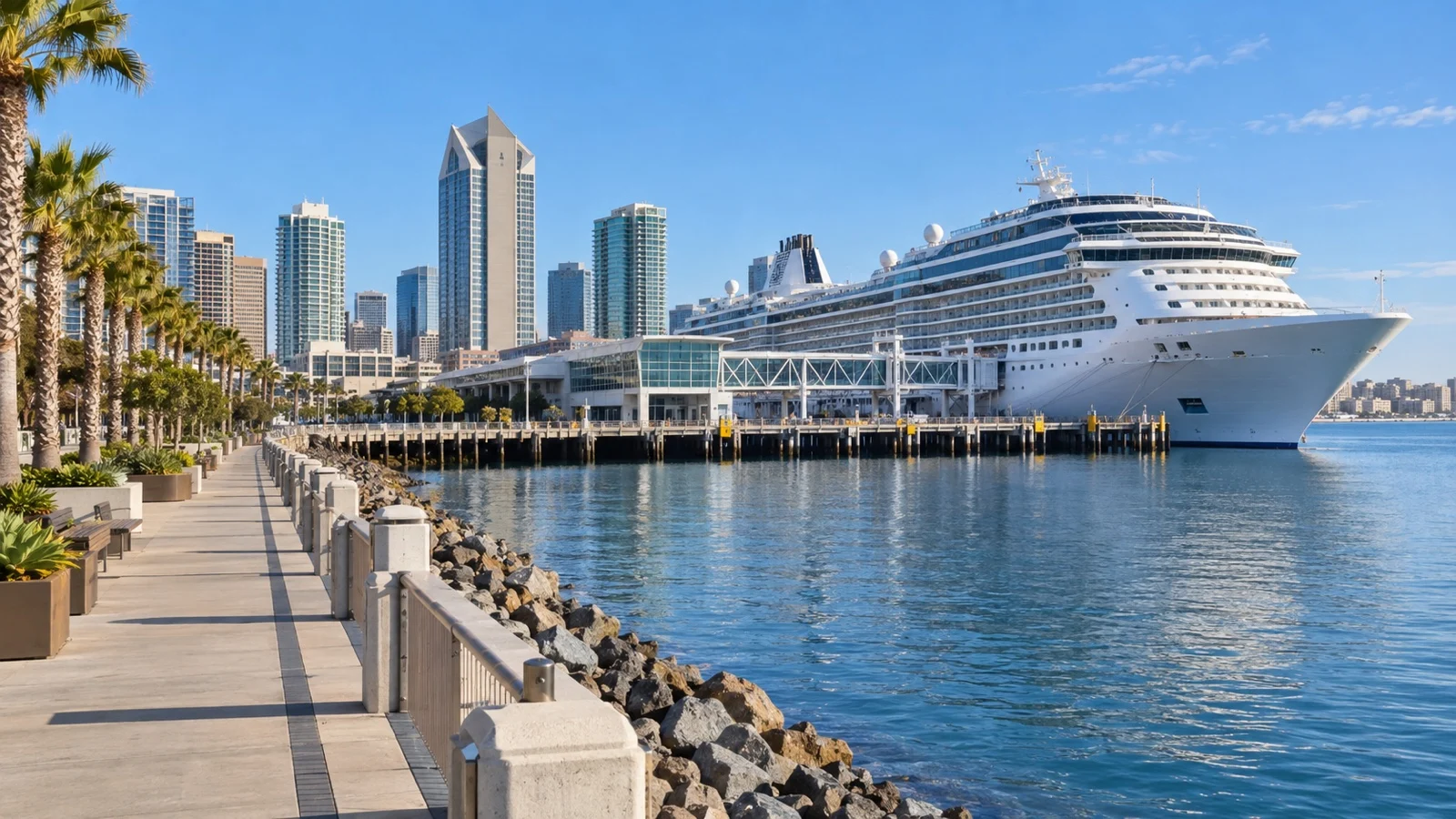
The piers sit close together, but they are not interchangeable when you have luggage or a timed pickup. Check the cruise documents and the port’s current schedule before giving a terminal name to a driver.
B Street Pier
B Street is the primary cruise terminal and has the larger processing role. Traffic lanes, security, baggage handling, and pedestrian access are controlled around ship arrivals and departures.
Only enter the terminal during the time and through the door directed by staff. Curbside space is limited, so long goodbyes and vehicle waiting create unnecessary congestion.
Broadway Pier
The Port Pavilion occupies Broadway Pier just south of B Street. Its event and cruise uses can vary, which makes the current ship assignment more important than an old map or hotel handout.
If you walk to the wrong pier, ask port staff before trying to cross busy Harbor Drive with luggage. The correction is short but stressful when check in time is already tight.
San Diego International Airport
San Diego International Airport is unusually close to the cruise waterfront, but no fixed travel time is guaranteed. Terminal construction, rush hour, event traffic, and ship congestion can turn a short distance into a slower ride.
Taxi and rideshare services are practical, while public transit may work for travelers with manageable luggage. Follow the airport’s current pickup zones and the cruise terminal’s curb instructions.
Flying in on cruise day
A same day arrival leaves little protection against flight delays, baggage problems, or traffic. Whenever possible, arrive at least one day early and use the extra evening to enjoy the waterfront.
If same day travel is unavoidable, choose an early flight and verify the cruise line’s final check in time. Sailing time is not the same as the deadline for terminal processing.
After the cruise
Do not book a flight based only on the airport’s proximity. Disembarkation, customs, baggage collection, vehicle queues, and airline security all take time.
Follow the cruise line’s recommended earliest departure guidance. A later flight is easier to manage than racing from the gangway with no margin.
Parking
Cruise passengers use offsite or nearby public and private parking because curb space at the terminal is not long term parking. Availability, rates, reservations, and shuttle service can change with downtown events.
Book only through a current official or established facility and confirm vehicle height, overnight rules, security, shuttle hours, and cancellation terms. Never leave luggage visible in a parked car.
Santa Fe Depot and local transit
Santa Fe Depot is a short walk inland from the cruise piers and connects Amtrak, COASTER commuter rail, and San Diego Trolley services. The exact platform and route you need depend on destination and service changes.
The Metropolitan Transit System provides trip planning, fares, and alerts for trolley and bus travel. Download the PRONTO information or prepare the accepted fare method before boarding.
Airport bus
MTS Route 992 links downtown and the airport, with connections near Santa Fe Depot. Travelers with large luggage, mobility devices, or a tight boarding window may find a direct taxi or rideshare more comfortable.
Check the current stop, direction, frequency, and construction detours. Do not assume a bus shown in an old article still uses the same curb.
The waterfront on foot
The Embarcadero makes an easy first day walk, with bay views, parks, museums, public art, restaurants, and frequent glimpses of naval and harbor activity. Stay on public promenades because several piers and facilities have controlled access.
Distances are manageable, but sun and hard pavement add fatigue. Walk south toward the USS Midway and Seaport Village or north toward the Maritime Museum and Waterfront Park.
Maritime Museum of San Diego
The Maritime Museum maintains a collection of historic vessels along the waterfront north of the cruise terminals. Boarding ships involves gangways, narrow passages, steps, and changing levels that vary by vessel.
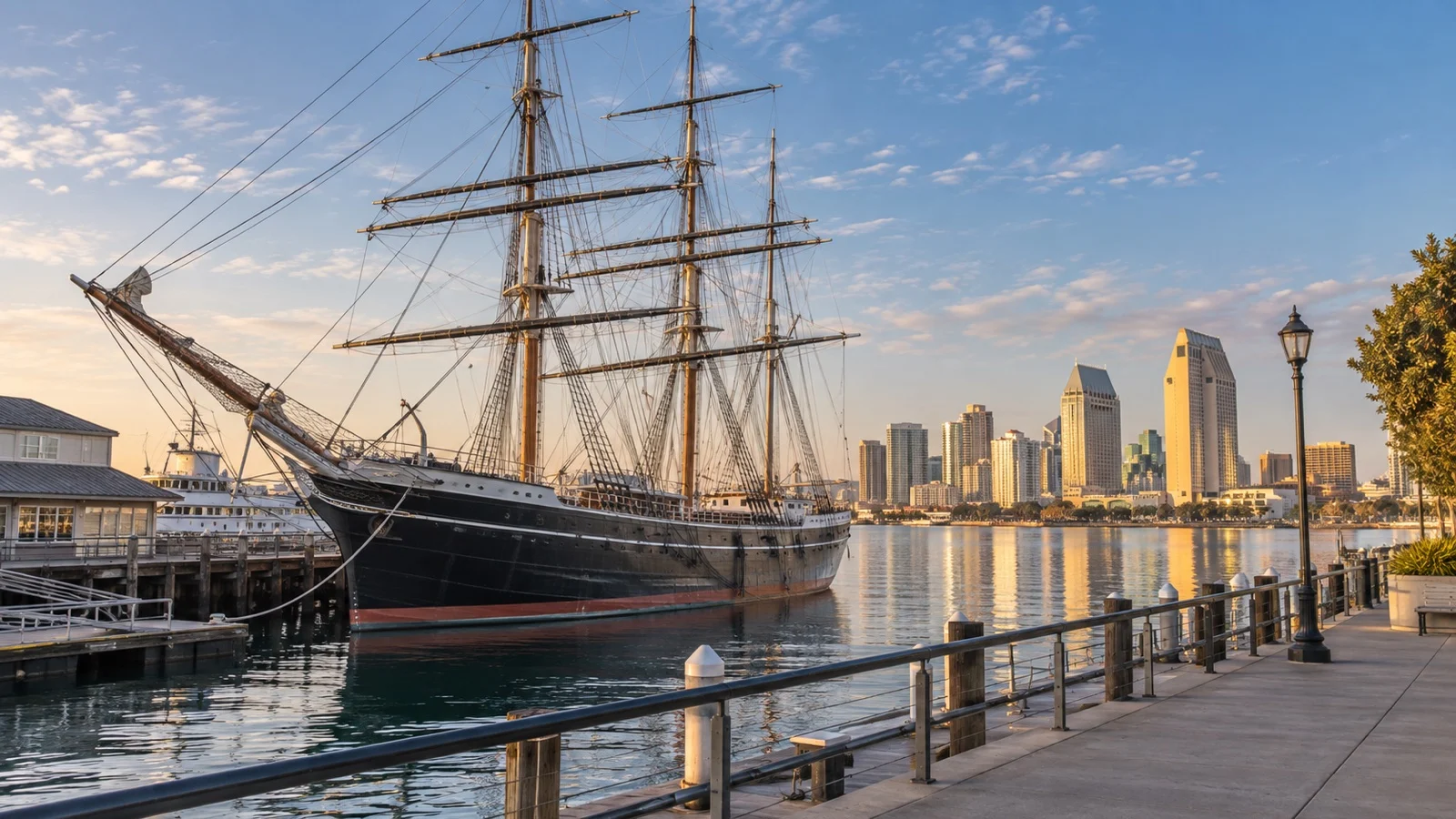
Check the official opening schedule and access information before buying tickets. Visitors with mobility concerns can still enjoy exterior views and any shore level exhibits that are available.
USS Midway Museum
The USS Midway Museum occupies a retired aircraft carrier south of Broadway Pier. Aircraft, flight deck views, crew spaces, and volunteer interpretation make it one of the city’s strongest attractions.
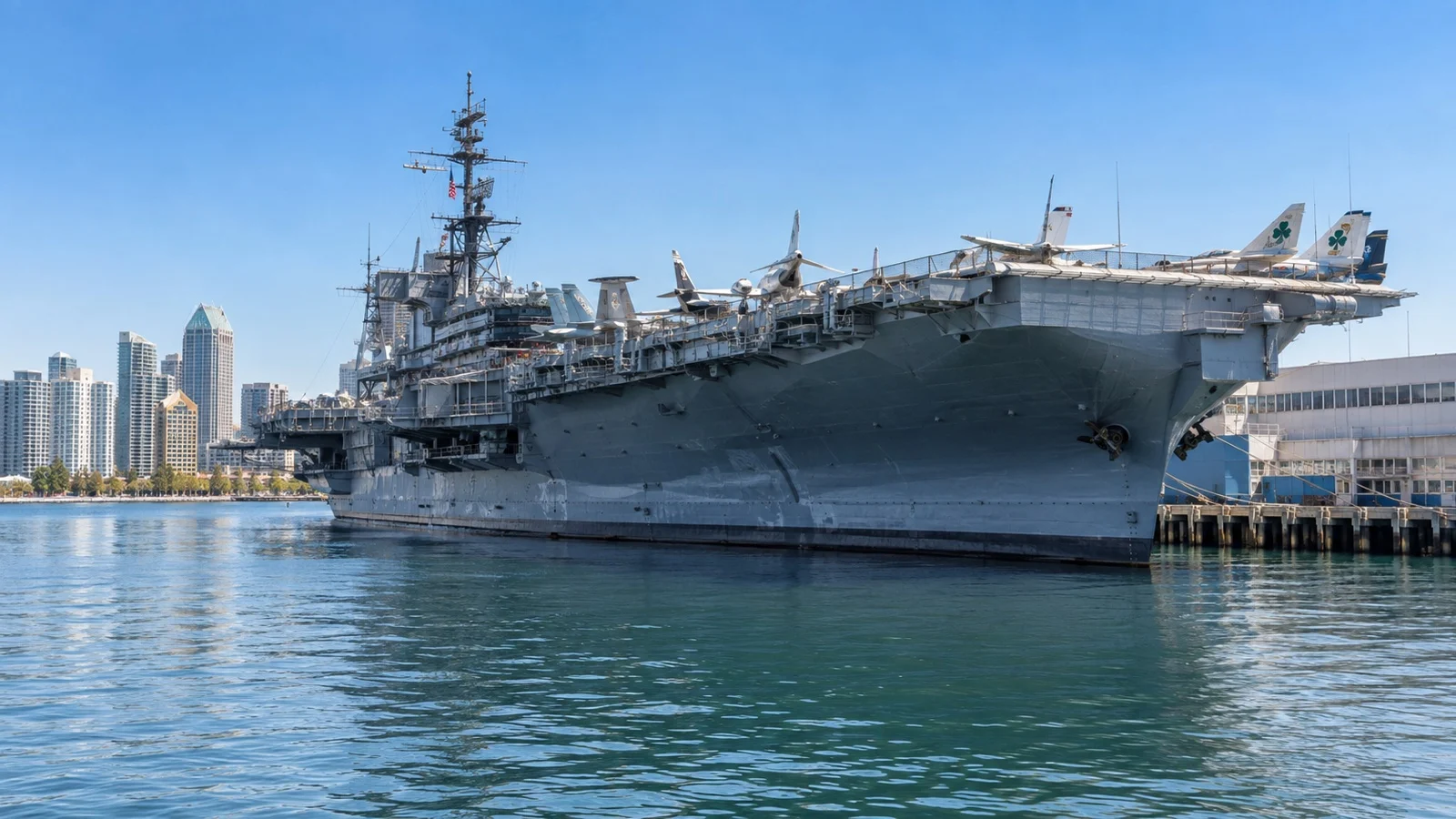
The ship is vast and involves significant walking, ladders or stairs in some routes, and security screening. Use the museum’s accessibility guidance and allow enough time without trying to see every compartment.
Seaport Village
Seaport Village offers waterfront shops, casual food, and bay views beyond the Midway. It works well as a flexible stop because you can shorten the visit if boarding time approaches.
Construction and waterfront redevelopment can alter walking routes. Follow current signs rather than assuming the path shown on an older map remains open.
Little Italy
Little Italy lies north and inland from the cruise terminals, with restaurants, cafes, shops, and the Piazza della Famiglia. It is an easy choice for an embarkation morning or a relaxed port day meal.
Popular dining periods can bring long waits, and the weekly market can change street access. Reserve when appropriate or choose a counter service option if your ship schedule is tight.
Gaslamp Quarter
The Gaslamp Quarter sits farther south and inland, offering historic facades, restaurants, entertainment, and easy links to the convention district. The walk is possible for active visitors, while trolley or rideshare can save time.
Daytime and evening atmospheres differ, and individual blocks can feel quieter than expected. Use ordinary city awareness and keep valuables secure.
Balboa Park
Balboa Park contains gardens, museums, performance spaces, Spanish Colonial Revival architecture, and the San Diego Zoo. It is not within a practical luggage walk from the cruise terminal, so use taxi, rideshare, bus, or a planned tour.
The park is large enough to consume an entire day. Choose one museum area, the zoo, or a focused garden walk rather than trying to cover everything.
San Diego Zoo
The zoo is a full scale attraction with extensive walking, timed programs, and its own operating calendar. A short port call rarely allows both a complete zoo day and broad downtown sightseeing.
Buy through the official zoo site, confirm bag and mobility policies, and plan direct transport. Leave well before all aboard because afternoon road traffic can be unpredictable.
Coronado
Coronado sits across the bay and offers a walkable commercial center, broad beach, and views back toward downtown. Passenger ferries can make the crossing enjoyable, but schedules and departure piers must align with the ship.
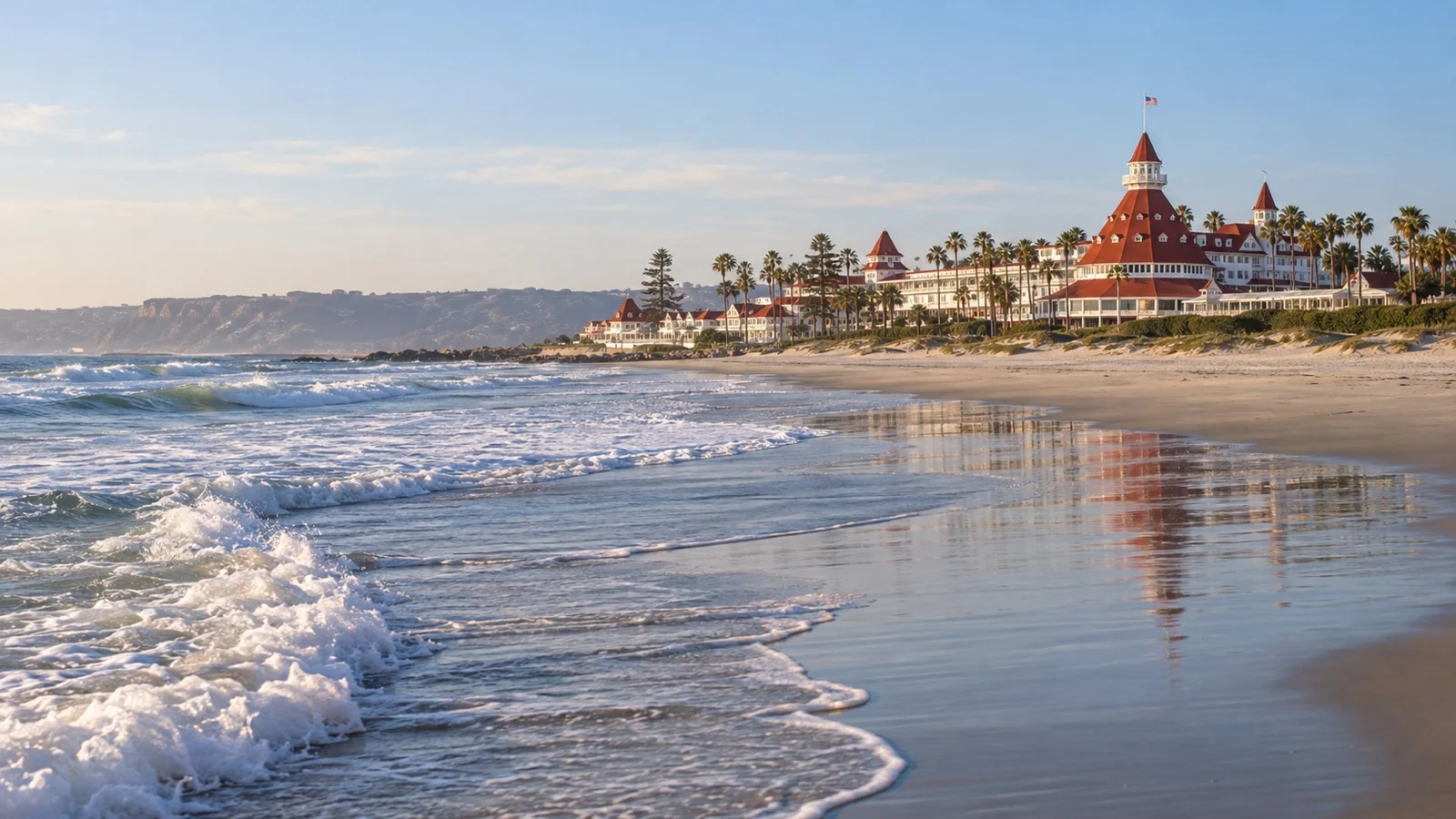
The ferry landing is not directly on the ocean beach, so add local transit or a meaningful walk. A taxi via the bridge is another option, with traffic risk in both directions.
Old Town San Diego
Old Town interprets early California and Mexican era history through preserved buildings, museums, shops, and restaurants. Trolley service can make it accessible from downtown, but check the current route and station connection.
Museum schedules vary and commercial areas can become crowded. Plan one or two historic stops rather than assuming every building will be open.
Cabrillo National Monument
Cabrillo National Monument on Point Loma offers bay and ocean views, coastal defense history, the Old Point Loma Lighthouse, and access to tidepool areas when conditions allow. It requires road transport and has firm operating hours controlled by the National Park Service.
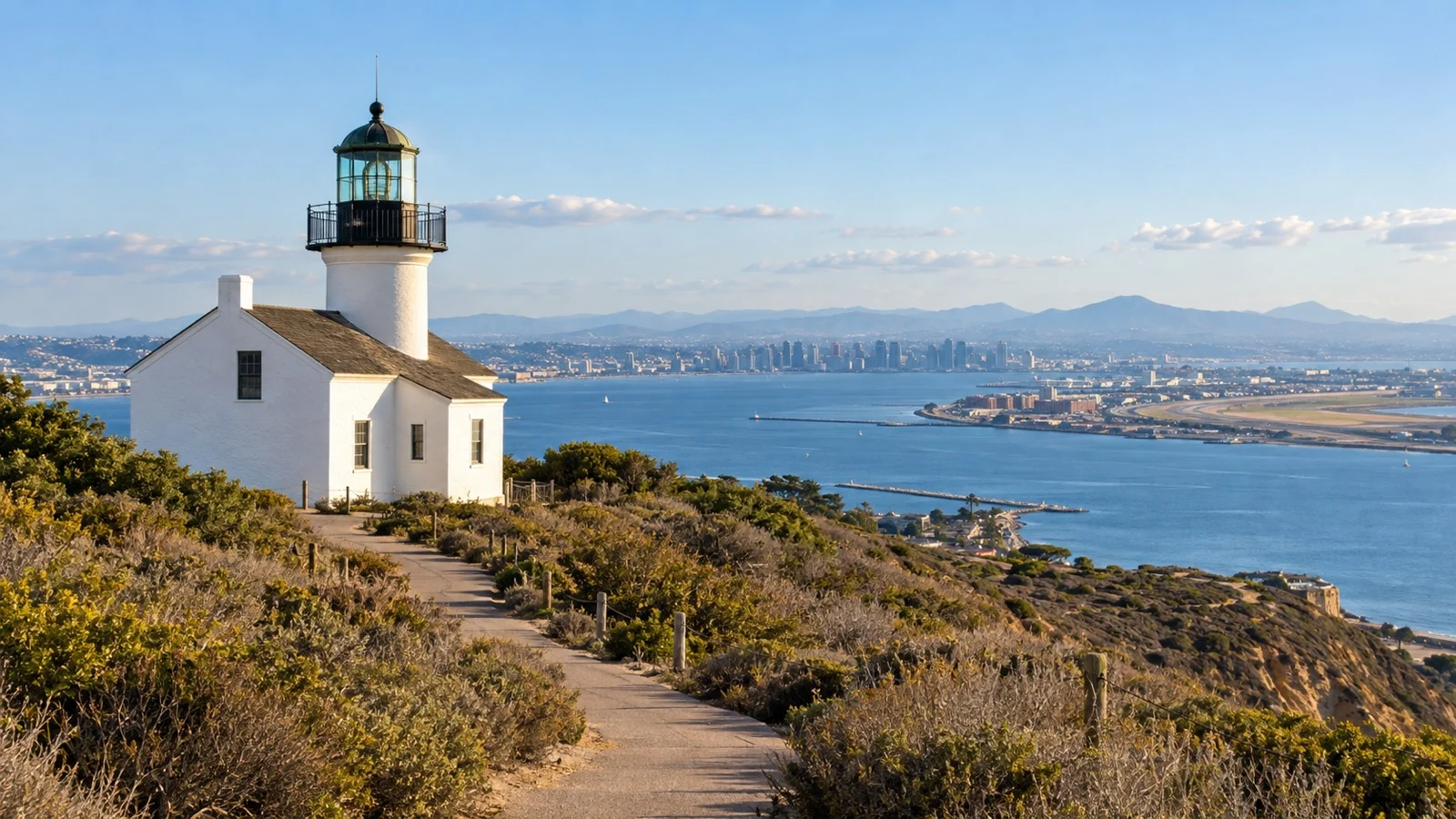
The main gate closes in the late afternoon, and every visitor must leave by the posted time. Check current hours, tidepool access, entrance fees, road conditions, and weather before setting out.
Beaches and La Jolla
San Diego’s famous beaches are spread along the coast rather than clustered by the cruise terminal. La Jolla, Pacific Beach, Mission Beach, and Ocean Beach each require transport and should be treated as separate outings.
Choose based on surf, weather, facilities, and return time rather than name recognition alone. Coastal traffic can be heavy, and parking delays affect private vehicles and rideshares alike.
Marine wildlife etiquette
Seals and sea lions around La Jolla are wild animals protected by law and local rules. Keep the required distance, never touch or feed them, and obey closures around breeding or resting areas.
Cliffs, wet rocks, surf, and sudden waves create real hazards. Use designated paths and respect lifeguard directions.
Weather
San Diego is known for mild weather, but coastal mornings can begin with marine cloud and cool wind before clearing. Rain, heat, and stronger bay breezes are also possible.
Check the National Weather Service forecast and marine information, especially for boat tours. Carry sun protection and a light layer even when the inland temperature looks warm.
Accessibility
Both cruise terminals process large numbers of passengers, but the exact gangway slope, security route, seating, and baggage setup vary by ship. Request cruise line assistance before arrival rather than relying on help at the curb.
The waterfront promenade is generally the easiest sightseeing zone, though construction detours and long distances can create barriers. Museums aboard historic vessels have more complex access than land based attractions.
Transport planning
MTS publishes accessibility information for buses and trolleys, while taxis and rideshares offer different vehicle types. Reserve an accessible vehicle early and provide device dimensions plus transfer needs.
At Cabrillo, Balboa Park, the zoo, and museums, ask about accessible entrances, shuttles, restrooms, and route gradients. A venue labeled accessible may still contain optional historic spaces that are not.
Families
Families have excellent choices within walking distance, including ships, aircraft, parks, and bay activity. Pick one main museum and leave time outside rather than asking children to spend the whole day indoors.
Hold hands near curbs and working piers, and supervise closely on museum vessels. Carry water and sun protection because the waterfront can feel hotter than the forecast.
Food and supplies
Downtown provides restaurants, pharmacies, grocery options, and hotels within a short ride or walk. Terminal shops should not be treated as the place to solve every forgotten item.
Buy medication, baby supplies, or special food before check in when possible. Keep cruise line restrictions in mind for beverages, fresh food, and other items brought aboard.
Luggage
Official cruise baggage instructions specify tag placement, arrival windows, and which items must stay in hand luggage. Keep passports, medicine, electronics, valuables, and one change of clothes with you.
Do not hand a bag to anyone who is not clearly identified as authorized terminal staff or porter. Verify any tipping expectation without displaying a large amount of cash.
A practical port day
For a same ship port call, walk the Embarcadero, choose the Midway or Maritime Museum, and add Little Italy or Seaport Village for lunch. This creates a rich day without depending on road traffic.
With a longer visit, use direct transport to Balboa Park, Coronado, Cabrillo, or one beach area, then return downtown early. Keep the final hour within walking distance of the terminal.
Embarkation day
Arrive at the terminal during the assigned check in window with documents ready. Dropping luggage first and then trying to sightsee can conflict with security or terminal policies, so follow the cruise line’s procedure.
If you have a hotel night, sightsee before bringing bags to the pier. Once checked in, remain aware of the ship’s required onboard time.
Frequently asked questions
Which terminal will my ship use?
Most ships use B Street, while some calls use Broadway Pier. Confirm the terminal in the current cruise documents and port schedule.
Can I walk from the terminal to attractions?
Yes, the Maritime Museum, Midway, waterfront parks, Little Italy, and downtown areas are accessible on foot for active travelers. Balboa Park, the zoo, Cabrillo, and beaches need transport for most people.
How close is the airport?
It is geographically close, but travel time changes with construction, traffic, and terminal congestion. Keep a realistic flight buffer.
Is there public transit?
Yes, MTS buses and trolleys serve downtown, with Santa Fe Depot as a nearby hub. Check live routes, fares, and service alerts.
Can I visit Mexico during the call?
Crossing an international border introduces documents, inspection lines, and major timing uncertainty. It is not a sensible casual side trip for most cruise calls.
Where should I wait for pickup?
Use the passenger area designated by port staff for your terminal. Drivers should not block secure lanes or circle indefinitely at the curb.
My take on San Diego
San Diego earns its reputation as an easy cruise port because the waterfront actually delivers before you need a vehicle. You can step off the ship and build a first rate day around maritime history, bay views, and good food.
Verify the pier, add traffic margin for anything beyond downtown, and keep the final hour close. The city feels relaxed when you do not ask one cruise day to cover an entire region.
Before arrival, confirm terminal assignments and passenger guidance with the Port of San Diego, public transit with MTS, and flight transport information with San Diego International Airport. Check the National Weather Service for current conditions and follow your cruise line’s boarding deadlines.