Montenegro Cruise Ports: Kotor, Bar and the Bay Restrictions
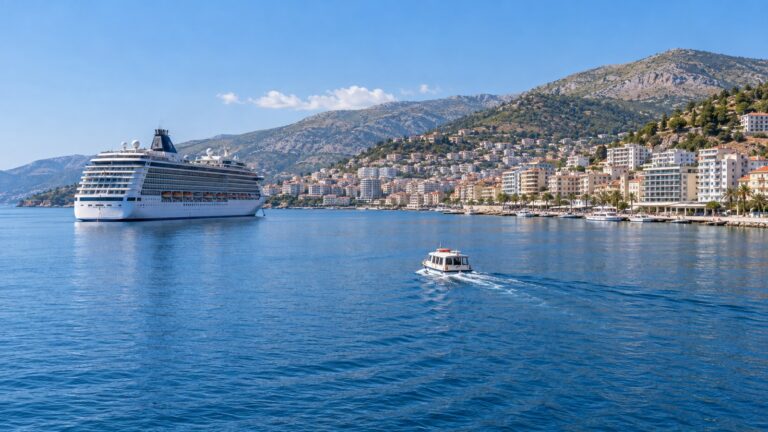
Kotor has two cruise berths and three anchorages, and that is the entire capacity of the most photographed port in the Adriatic. It explains most of what happens on a Montenegro day, including whether you walk off or wait for a tender.
My quick take
Montenegro is a one-port country for most cruisers, and that port is Kotor. I would not trade the sail-in for anything else on an Adriatic itinerary, and I would also not pretend the town holds the crowd that arrives with it.
The thing I check before I sail is not what to do in Kotor. It is how many other ships are scheduled that day, because that single number changes the tender line, the walls, the lanes and the taxi price more than any excursion choice you make.
The quick facts
- The ports: Kotor takes almost all the traffic, Bar takes the rest, and everything else is small ship territory.
- Dock or tender: Kotor has two berths and three anchorages, so mid and large ships often anchor out.
- Money: Montenegro uses the euro without being in the EU or the eurozone.
- Season: Roughly April through October, with July and August the hottest and most crowded.
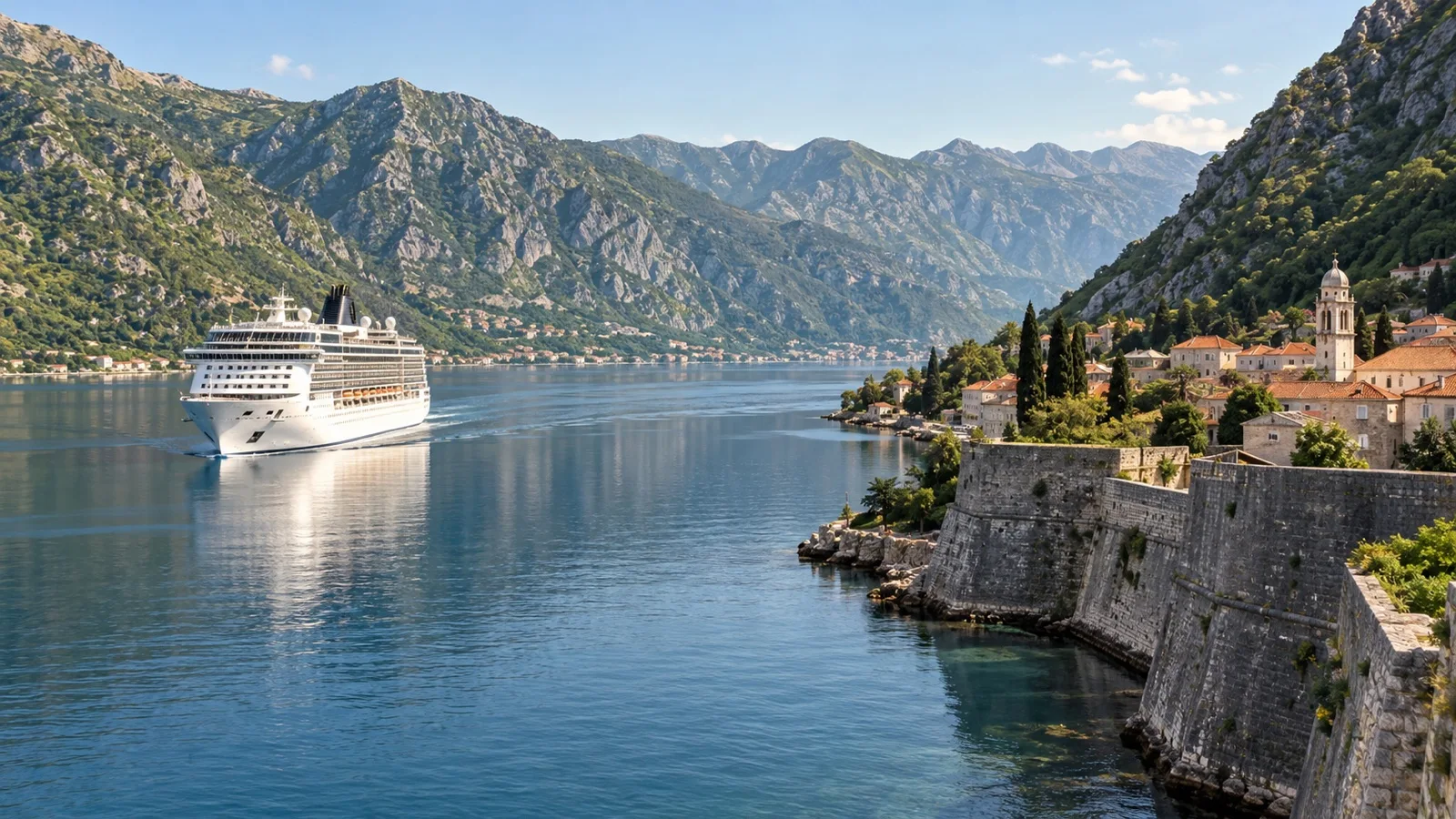
- The main event: The 17 mile (28 km) run up the bay, which you get for free and should not sleep through.
What a Montenegro call actually looks like
Montenegro almost never headlines an itinerary. It appears as one stop on an Adriatic or eastern Mediterranean run, usually within a day or two of Dubrovnik and often paired with Corfu or a Greek island on the other side.
That pairing matters, because a lot of people book an Adriatic cruise for the walled city day in Dubrovnik and then discover Kotor is the stop they remember. If you are choosing between itineraries, my broader guide to Croatia cruise ports covers the stops that usually sit on either side of this one.
The season runs roughly from April to late October. Ships are in the bay by mid morning and gone by early evening, which is a short window for a country that hides most of its good stuff behind a mountain road.
The sail-in is the excursion, and I mean that
The Bay of Kotor runs about 17 miles (28 km) inland from open water, through a chain of inner bays hemmed in by mountains. Halfway along, the ship threads the Verige narrows, which is only about 1,120 feet (340 m) wide at its tightest point and roughly a mile and a half (2.3 km) long.
A big ship going through a gap that size at slow speed, with stone villages close enough to see laundry on the line, is one of the best arrivals in Europe. The bay itself is deep, dropping to around 197 feet (60 m), which is why ships this size can be in here at all.
Be on deck a good hour before your scheduled arrival, not fifteen minutes. If the ship is due alongside at 8am, the interesting part starts closer to 6:30am, and the return trip in the late afternoon is just as good with better light.
Where ships actually tie up in Kotor
The main cruise berth in Kotor runs about 550 feet (168 m) with a further 390 feet (120 m) of quay beyond it, and the water alongside falls from roughly 42 feet (12.8 m) at the head to about 28 feet (8.6 m). A second, shorter berth of around 250 feet (76 m) sits by the Skurda river mouth, where the water shallows fast.
Read those published quay dimensions next to the length of a modern cruise ship and the whole picture snaps into focus. Small ships and older mid size ships fit alongside, and most of the big ones do not.
When you do get the quay, it is one of the best walk-off ports anywhere. The Sea Gate into the old town is a flat five minute stroll, no shuttle, no gate maze, which is covered in more detail in my full Kotor port guide.
When you get anchored out and tendered
There are three anchorages in the bay, and larger ships use them routinely. The good news is that this is a sheltered inland waterway, so the ride is short and usually flat, which is not something you can say about most tender ports.
The bad news is arithmetic. One landing area serving several thousand people means the bottleneck is not the water, it is the pontoon.
- Your day gets shorter: Assume you lose 45 minutes to an hour off each end compared to a berth day.
- Ship tours go first: Booked excursions clear the tender deck before independent passengers do.
- The last tender is not the all aboard time: Work backward from the last tender, and then take another 30 minutes off.
- Mobility matters: Tender steps and a floating pontoon are a real obstacle, and the crew decides who boards.
I do not book a tight independent plan on a tender day in a port with one landing point. If the thing I want is an hour away over a mountain, I want the ship’s bus and the ship’s problem.
The bay limits everyone asks about, answered honestly
You will read on forums that Kotor caps the bay at two ships a day, or five thousand passengers, or some other tidy number. I went looking for a published, standing figure and could not find one.
What is real and documented is smaller and more useful. There are two berths and three anchorages, berth allocation is arranged well in advance through the port, and peak season controls on how many ships take a berth on a given day have been part of the destination’s stated management approach for several years.
What is also real is that a full carrying capacity study for the town has been flagged as missing, which is a polite way of saying nobody has fixed a defensible number yet. So treat any specific cap you see quoted as a rumor, and plan around the schedule for your actual date instead.
For scale, the busiest pre-pandemic year brought 464 cruise calls and roughly 614,000 cruise passengers into a walled town you can walk across in ten minutes. Kotor sits comfortably on my list of the most crowded cruise ports, and it earns the spot.
What a Kotor day is worth doing
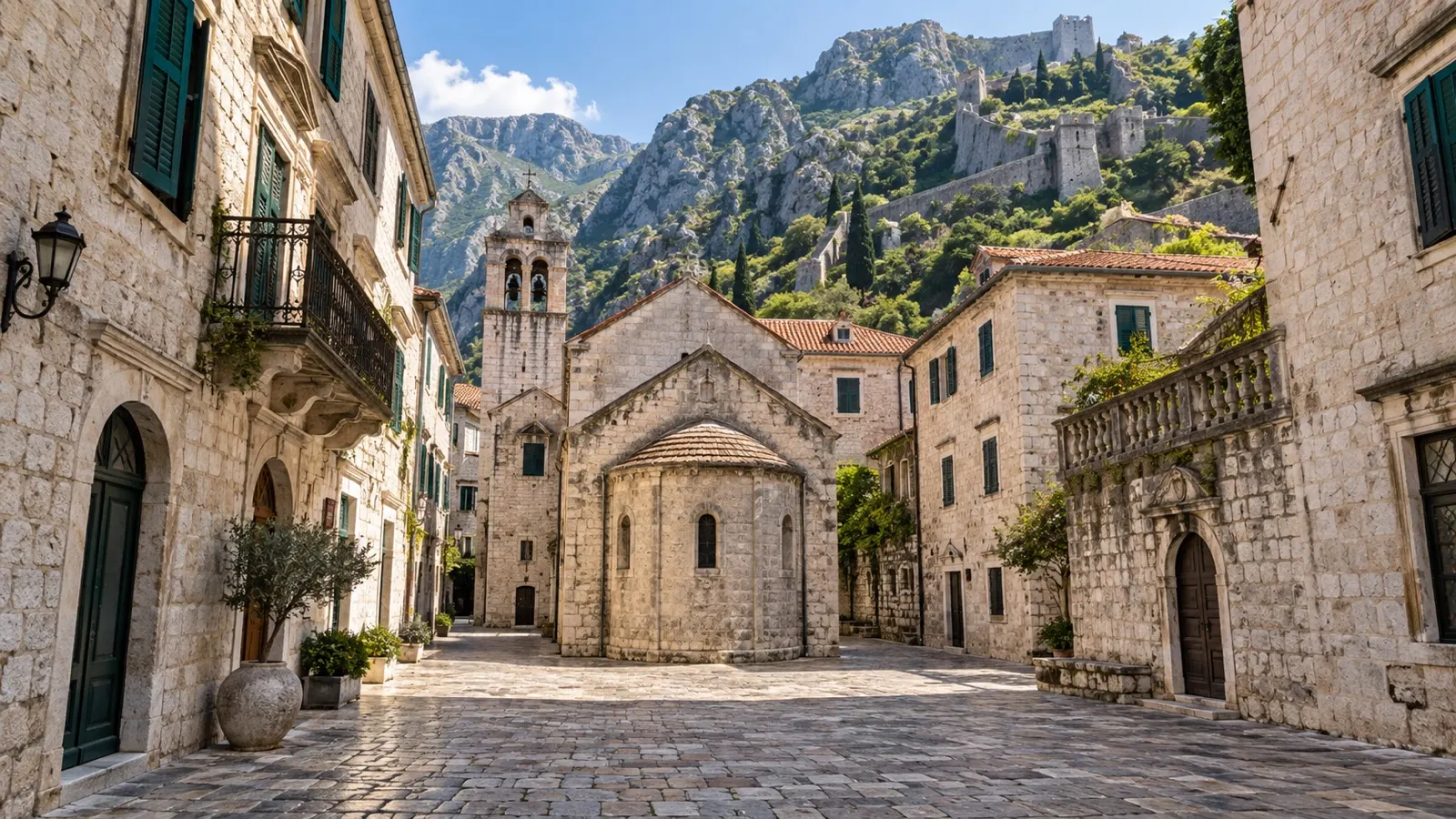
The old town is small, and the fortress walls above it are the thing people fly in for. That climb is steep, exposed and hot from June onward, so it is a first-thing-in-the-morning job or nothing.
The wider bay is where a Montenegro day gets interesting. Perast is a small baroque town a short drive along the water, with boats running out to the man-made islet church offshore, and the mountain road up to the mausoleum above town delivers the view that ends up on everyone’s camera roll.
The whole inner bay carries World Heritage protection as a single cultural landscape, not just the town walls. That framing is worth holding onto, because the drive around the shoreline is the better half of the day and most people skip it.
Bar is the alternative, and it is a working port
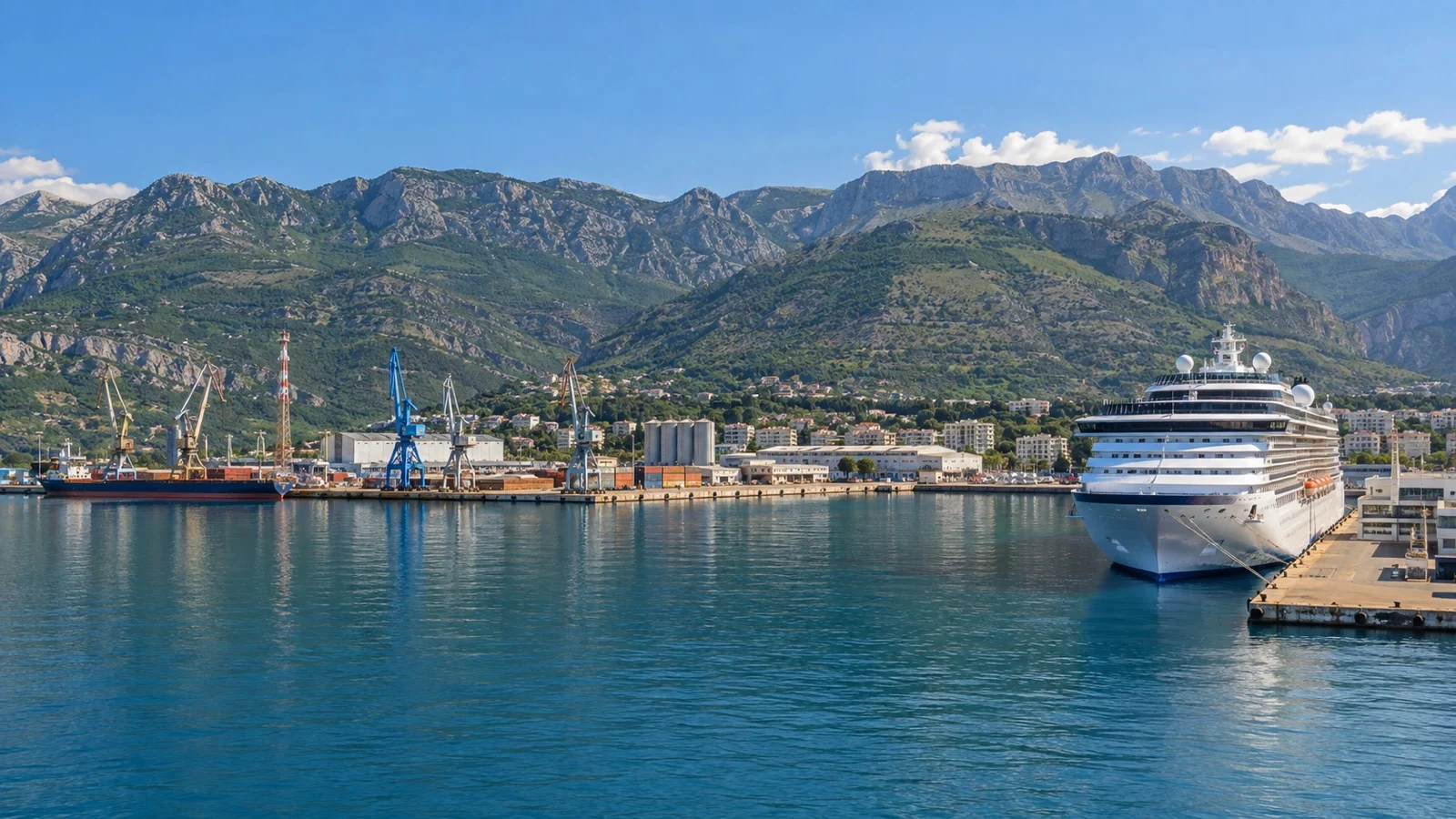
Bar sits south of the bay on the open coast, and it is Montenegro’s real commercial harbor. Cargo, cars and ferries come first, cruise ships come second, and the port makes no attempt to hide that.
The dedicated passenger terminal here is built around ferry and ro-pax traffic, with alongside water only about 19 feet (5.9 m) deep, so a cruise call is a berthing arrangement rather than a purpose-built cruise pier. Larger ships anchor and tender.
What you get in exchange is space. Stari Bar, the hilltop ruin of the old town, sits about 2 miles inland and is worth the short taxi ride, and downtown Bar is a flat 15 to 20 minute walk from the harbor.
My guide to the Bar cruise port goes through the taxi and bus options in detail.
Agree the taxi price before you get in. That is true in a lot of places, and it is more true at a working port gate where the drivers know your ship leaves at five.
Tivat, Porto Montenegro and the small ship version
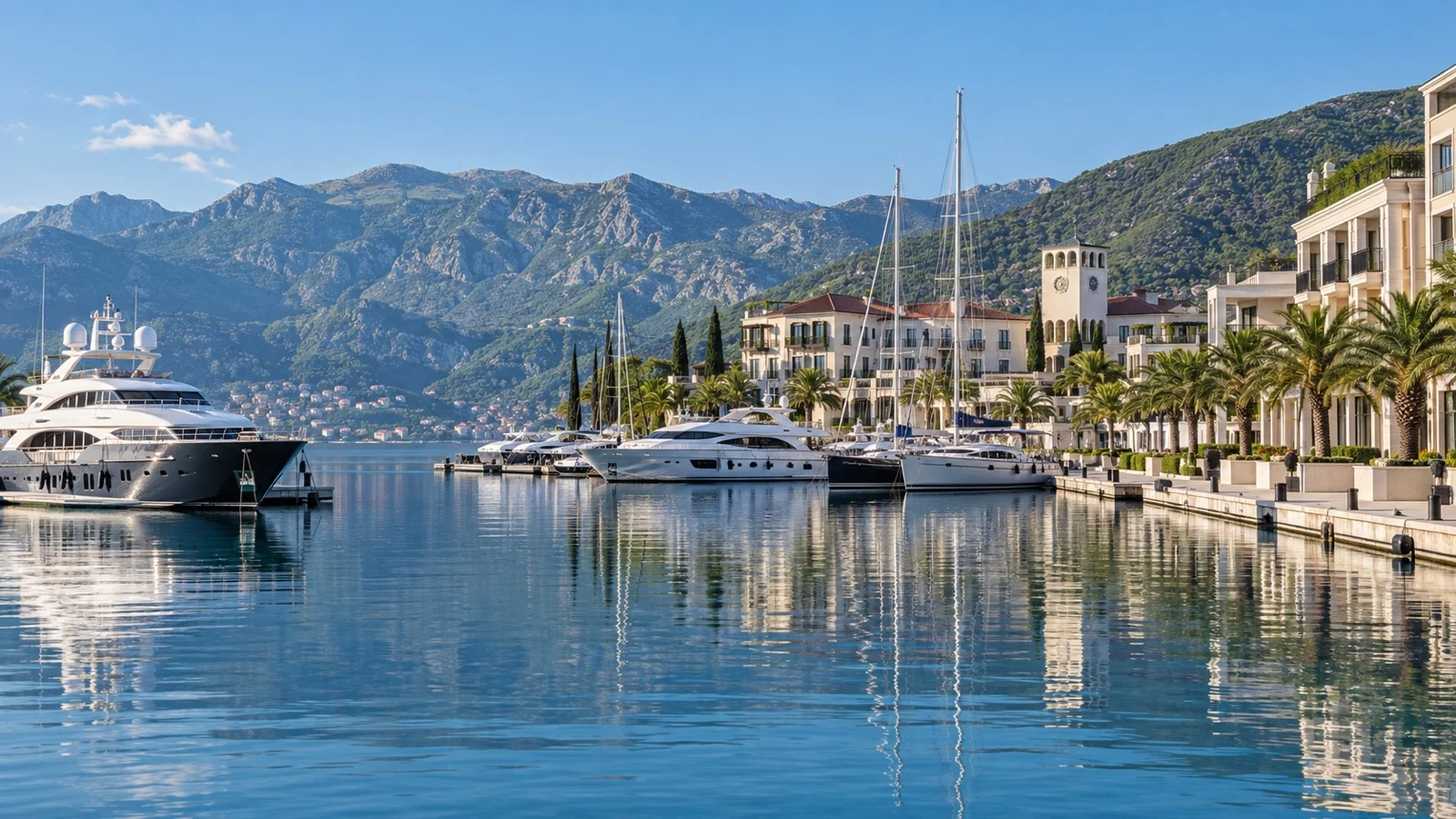
Tivat sits in the outer arm of the bay and is home to a very large superyacht marina with more than 500 berths and space for vessels up to 820 feet (250 m). It is a yacht facility, not a cruise terminal, and it is worth being clear about that difference.
Small expedition ships and luxury vessels do call in this part of the bay, and when they do you get a polished waterfront of restaurants and shops with the mountains behind. If your ship carries a few hundred people rather than a few thousand, this is the version of Montenegro you may be sold.
Tivat also has Montenegro’s main airport, which is the practical reason to care about it. If you are flying in or out around the cruise, that is where you will land.
Herceg Novi and the outer bay
Herceg Novi guards the seaward entrance, which makes it the first town you pass and the last one you see. It is a stepped hillside place of fortresses and staircases, and small ships occasionally call at the little harbors nearby.
For almost everyone reading this, Herceg Novi is scenery rather than a port day. Get a coffee, go to the rail, and watch it go by on the way in.
Budva keeps showing up and it is not a port
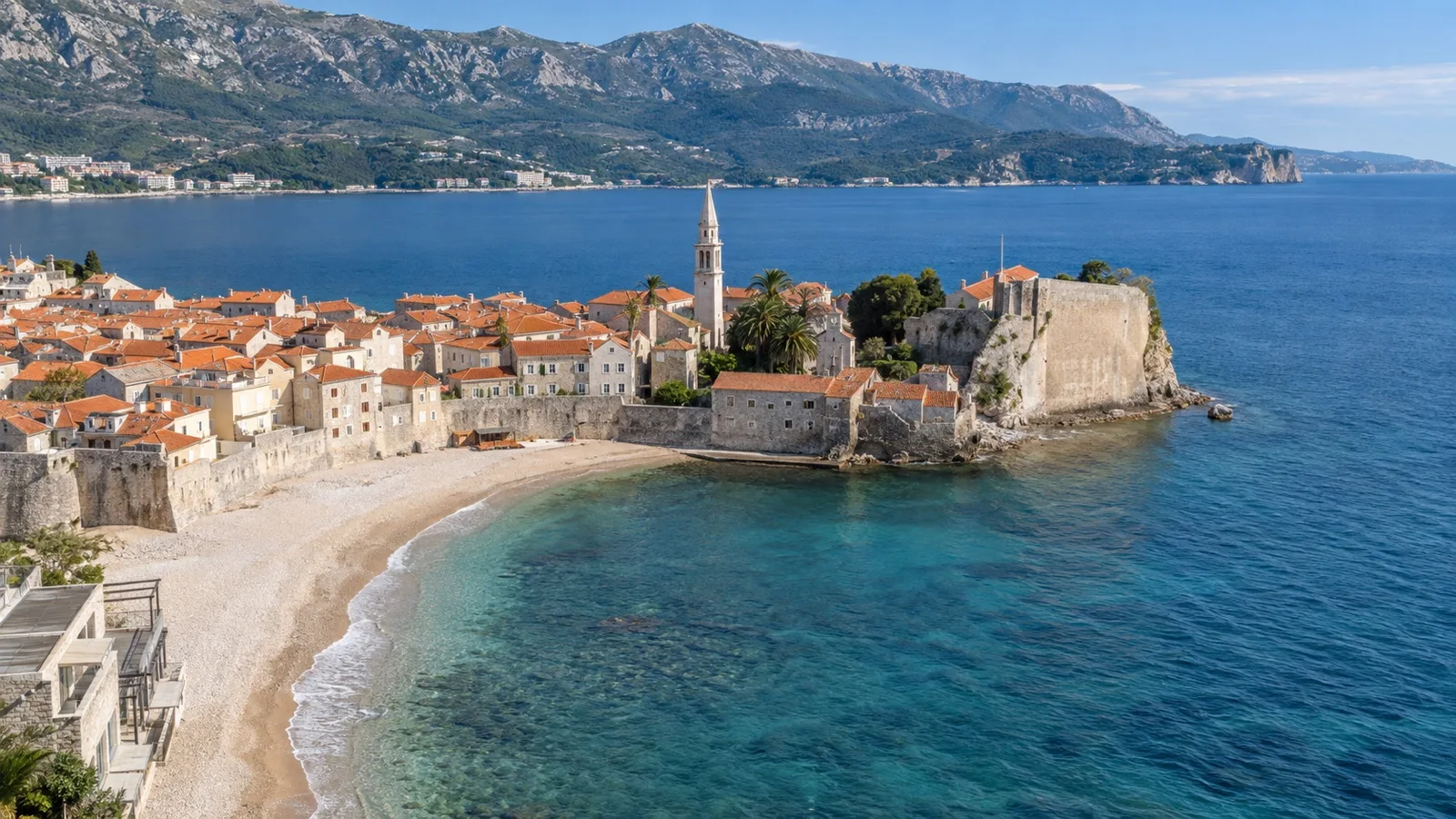
Budva appears in a lot of Montenegro cruise marketing, and it is a walled seaside town about 40 minutes south of Kotor by road. Almost nobody arrives there by cruise ship.
It shows up as an excursion from Kotor, usually bundled with a photo stop at the island resort further down the coast. If you have already done a walled old town that morning, a second one in the afternoon is a lot of stone for one day.
Kotor or Bar, if I could pick
Kotor, and it is not close. The bay approach alone justifies the call, and the old town is a genuinely beautiful place that happens to be having a difficult decade.
Bar wins on exactly one thing, which is elbow room. If you have already seen Kotor, or you are traveling with someone who cannot face a stair climb in a crowd, a quiet ruin on a hillside and a walkable ordinary town is a perfectly good day.
The itinerary decision is usually made for you, since very few sailings offer both. If your ship is large and the schedule shows three vessels in the bay on your date, mentally downgrade the day and plan something outside the walls.
Money, language and the stuff that trips people up
Montenegro uses the euro, which surprises people, because the country is not in the EU and not in the eurozone. It adopted the currency on its own back in 2002 and never left.
Cards work in the tourist parts of Kotor and get patchier the moment you leave them, so carry small euro notes for taxis, boat rides and church entry fees. My guide to carrying cash and cards in port covers why small bills matter more than the total amount.
The language is Montenegrin, English is common in the old town, and US passport holders do not need a visa for a short visit. Because Montenegro is outside the Schengen area, a Kotor day does not eat into your Schengen allowance, which matters on longer trips and is explained in my rundown of Schengen days and visas for cruisers.
Tipping is light. Rounding up a bill or leaving five to ten percent for good service is normal, and nobody will chase you down the street.
Quick answers
Does Kotor dock or tender?
Both, and it depends on your ship’s size and who else is in the bay that day. Smaller ships take one of the two berths, and larger ships anchor in the bay and tender.
How many cruise ships can be in Kotor at once?
There is no published daily cap I could verify, so ignore the specific numbers you see repeated online. The physical ceiling is two berths plus three anchorages, and three or more ships on a summer day is common.
Is Kotor worth it if you have already done Dubrovnik?
Yes, because the arrival is completely different even if the walled town format is similar. The bay approach is the reason to go, and no amount of Dubrovnik prepares you for it.
Do you need euros in Montenegro?
Yes, the euro is the everyday currency even though the country is outside the EU. Bring small notes, since taxis and small boat operators will not love a fifty.
How far is Bar from Kotor?
Bar is south along the coast from Kotor, and the drive is well over an hour on winding coastal road. In peak summer traffic it takes considerably longer, so do not treat them as interchangeable on a port day.
Final word
Montenegro gives you one extraordinary thing and one manageable problem. The extraordinary thing is the bay, and it is free, and it happens whether you booked an excursion or not.
The problem is that a town this size was never built for four thousand people arriving at ten in the morning, and no forum rumor about a passenger cap fixes that for you. Check your date, get up early, and go around the bay instead of into the crowd.
If you are still choosing between Adriatic itineraries, my overview of cruise ports in Europe is a reasonable place to start.
How this guide was researched: Berth and anchorage dimensions, passenger volumes, entry rules and heritage protections for the Bay of Kotor and Bar were checked in October 2026. Berth assignments, ship schedules and any seasonal limits on calls change from year to year, so confirm the arrangements for your own sailing date before you plan the day. See our Editorial Policy.