Libourne River Cruise Port: Berths and Saint-Émilion Guide
Libourne is the sort of river port that hands you two good days and asks you to pick one. You can stroll straight into a lively French market town, or follow the vines to Saint-Émilion and spend the morning wondering how one small village acquired quite so many excellent bottles.
The useful catch is that Libourne has two river-cruise pontoons on opposite banks, and a published itinerary may substitute Bourg when tides, navigation or mooring availability intervene. This guide keeps that fine print where you can actually see it.
Libourne river cruise port quick facts
Into Town: Allow an estimated 5 to 10 minutes from the Libourne-side pontoon, or 15 to 25 minutes from the Arveyres-side landing.
Currency and Language: Euro and French. Cards are widely accepted, English varies and a little cash is useful at small market stalls.
Time Zone: Central European Time, UTC+1 in winter and UTC+2 during daylight saving time.
Call reliability: Tides, river levels, berth availability, or wider navigation changes can substitute Bourg or alter timing. No audited local missed-call rate is published.
Quick take
Choose Libourne itself if you want a relaxed, independent morning with almost no logistical theater. The quays, bastide grid, Place Abel Surchamp market and free fine-arts museum make a compact loop with enough cafés to rescue even a determinedly unhurried schedule.
Choose Saint-Émilion if this is your one chance to see the UNESCO wine landscape and you are comfortable with an organized transfer. The village is close on a map but not at the gangway, and its slopes, cobbles and return timing deserve respect.
Is Libourne an active river cruise port in 2026?
Yes. The City of Libourne’s official port page says the port receives about 160 river-cruise calls and roughly 16,000 passengers in a season, with around five ships per week during the operating period.
The city’s dated 2026 call-planning document also lists scheduled vessels throughout the year. That is stronger evidence than a recycled destination list because it reflects actual local berth planning.
AmaWaterways publishes 2026 days in Libourne with Saint-Émilion excursions, market visits, cycling and vineyard options. CroisiEurope likewise sells 2026 Dordogne and Garonne itineraries that include Libourne, although it explicitly warns that Bourg may replace the call depending on mooring availability.
So Libourne is active, established and busy enough to be taken seriously. It is not, however, a port where every sailing uses one identical patch of pavement.
Where do river cruise ships dock in Libourne?
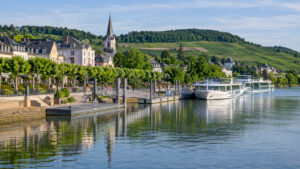
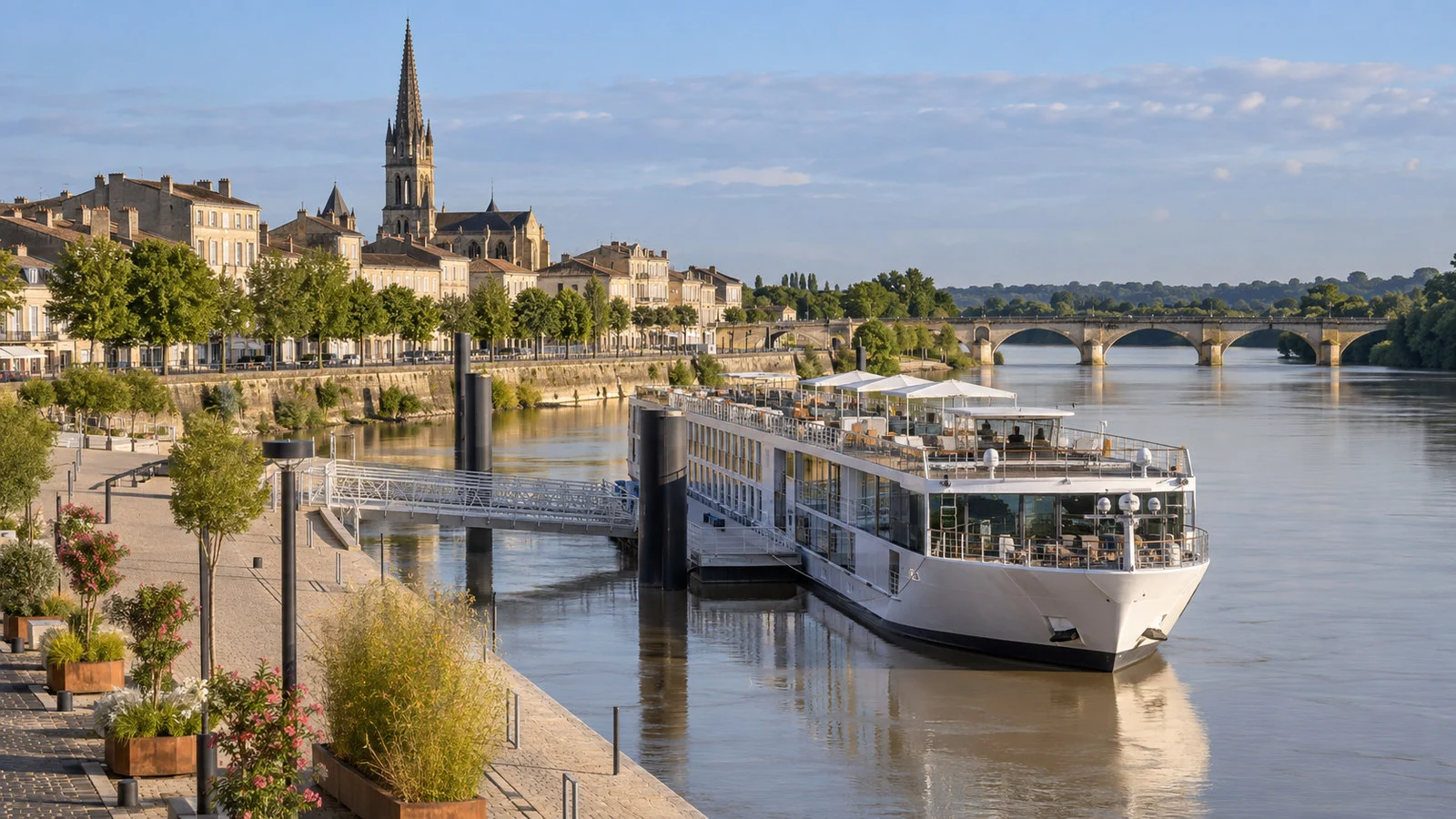
The port has two official river-cruise pontoons. Ponton Roger de Leyburn sits on the right bank on the Libourne side, while Ponton Jeanne d’Albret sits across the Dordogne on the left bank in Arveyres.
Together, the two landing areas can accommodate up to four river ships, with a published maximum vessel length of about 443 feet. The port lists water, electricity, Wi-Fi and restrooms among its services, but your ship’s assigned position still controls the practical walk.
Roger de Leyburn is the simpler position for independent town time because it places you by Libourne’s central quays. Jeanne d’Albret, also called the Port du Noyer landing in city material, faces the bastide from the opposite bank and usually means a bridge crossing or operator-arranged transfer.
Ask the cruise director for the pontoon name before leaving. “We are in Libourne” is geographically correct, but it is less useful than knowing which side of the river currently contains your lunch.
How far is Libourne town center?
From the Libourne-side Roger de Leyburn pontoon, allow an estimated 5 to 10 minutes to reach the bastide streets and Place Abel Surchamp. From the Arveyres-side Jeanne d’Albret pontoon, allow roughly 15 to 25 minutes on foot, depending on gangway position, the bridge route and your pace.
Those are editorial walking estimates, not port-authority guarantees. The ship may also organize a motorcoach movement from the opposite bank, especially when the day’s main excursion is already bound for wine country.
Libourne’s core is flat enough to reward a simple wander, and its regular medieval grid makes navigation pleasantly difficult to ruin. The site’s walkable cruise ports guide explains why berth, surface, slope and return margin matter more than a single distance number.
A first-hour walk in Libourne
Begin on the quays and look toward the meeting of the Isle and Dordogne rivers. The city grew as a trading port at this confluence, so the waterfront is not decorative scenery pasted onto the story.
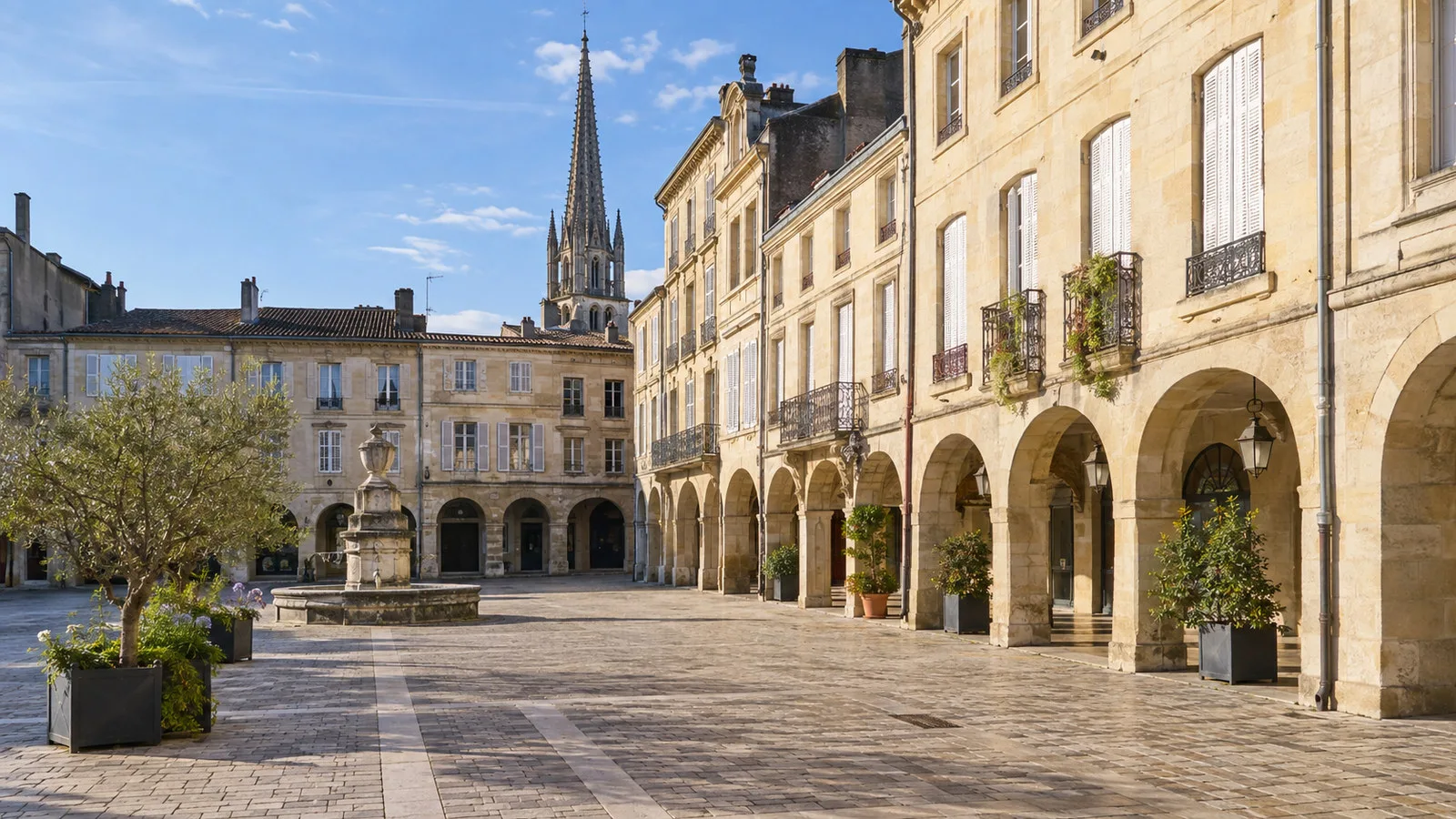
Walk inland to Place Abel Surchamp, the city’s handsome central square. Arcades, the town hall and café tables make it a natural orientation point, with the bastide’s straight streets radiating around it.
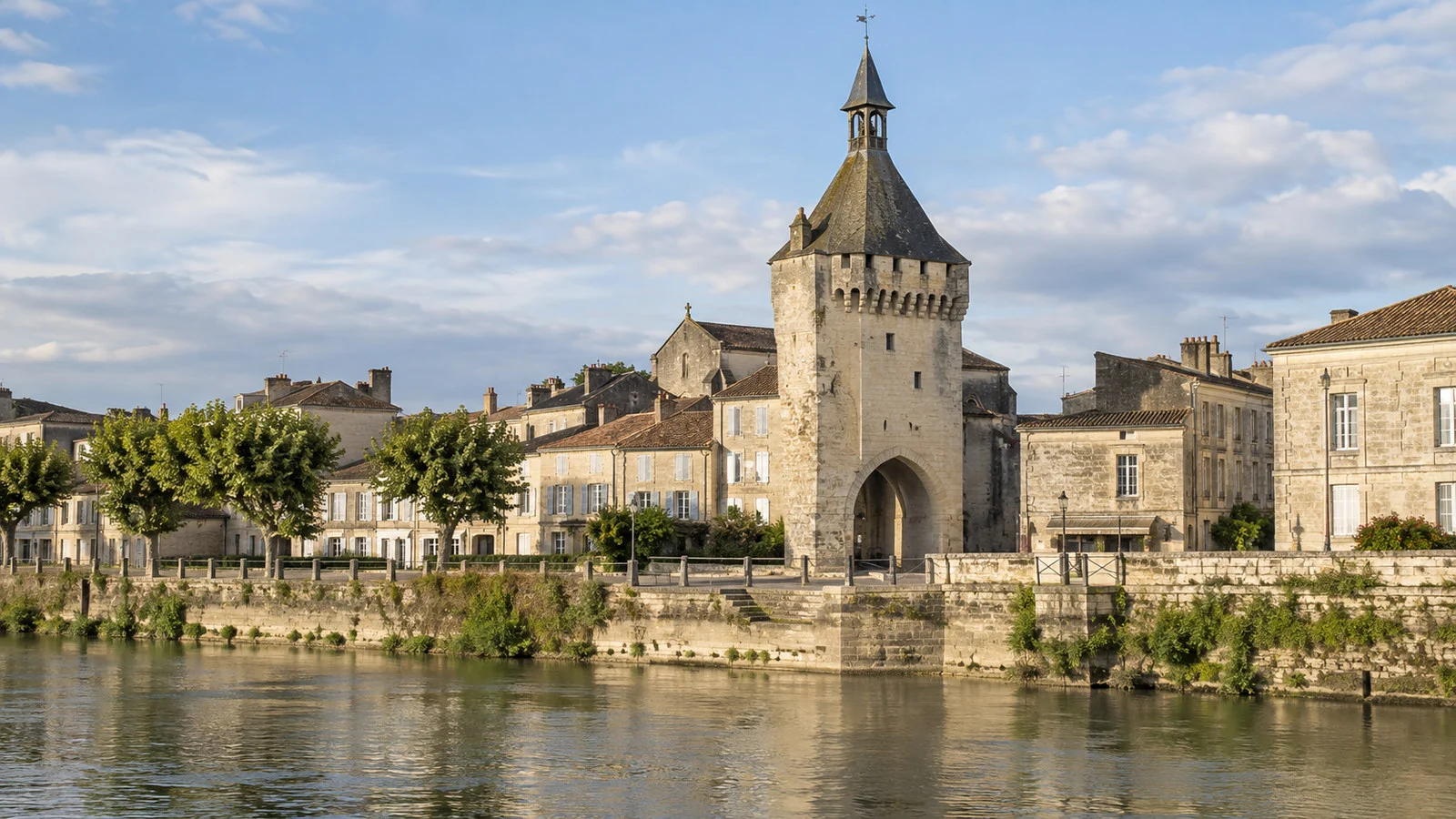
Continue toward the Tour du Grand Port, a surviving medieval gateway near the river, then loop along Quai Souchet. A compact quay, square and old-gate circuit takes an estimated 45 to 75 minutes without entering a museum.
This is a good port for allowing one bakery to disrupt the plan. The distances are forgiving, and a pastry is still cultural research when eaten beside a 13th-century street grid.
Libourne market: the best morning to stay local
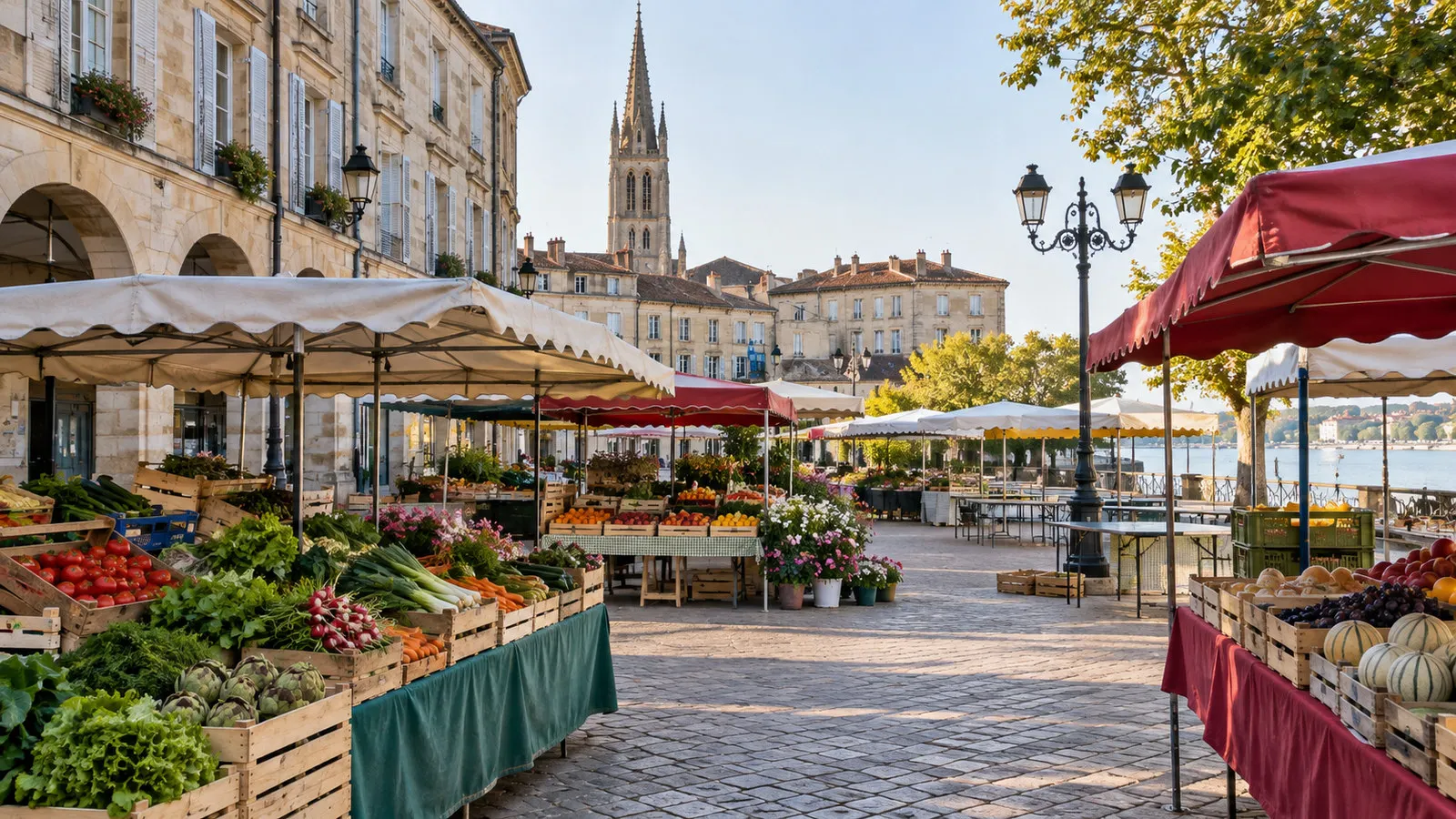
Libourne’s main outdoor market runs on Tuesday, Friday and Sunday mornings, according to the local tourism office. Sunday is the largest and liveliest pattern, while the covered market adds food-shopping options during the week.
Expect produce, cheese, charcuterie, seafood, bread, flowers and the cheerful negotiations of people who are buying dinner rather than performing a market for visitors. Arrive earlier for the fullest choice, then leave room in the plan for coffee or oysters around the square.
The market is a particularly smart option when a call is short or Saint-Émilion’s hills do not appeal. It turns the port day into ordinary local life, which is often the souvenir that sticks.
Market days, stall counts and weather exposure can change, so confirm the morning with the tourism office or ship. A Monday arrival should not be emotionally blackmailed by photos of Sunday’s cheese tables.
Musée des Beaux-Arts
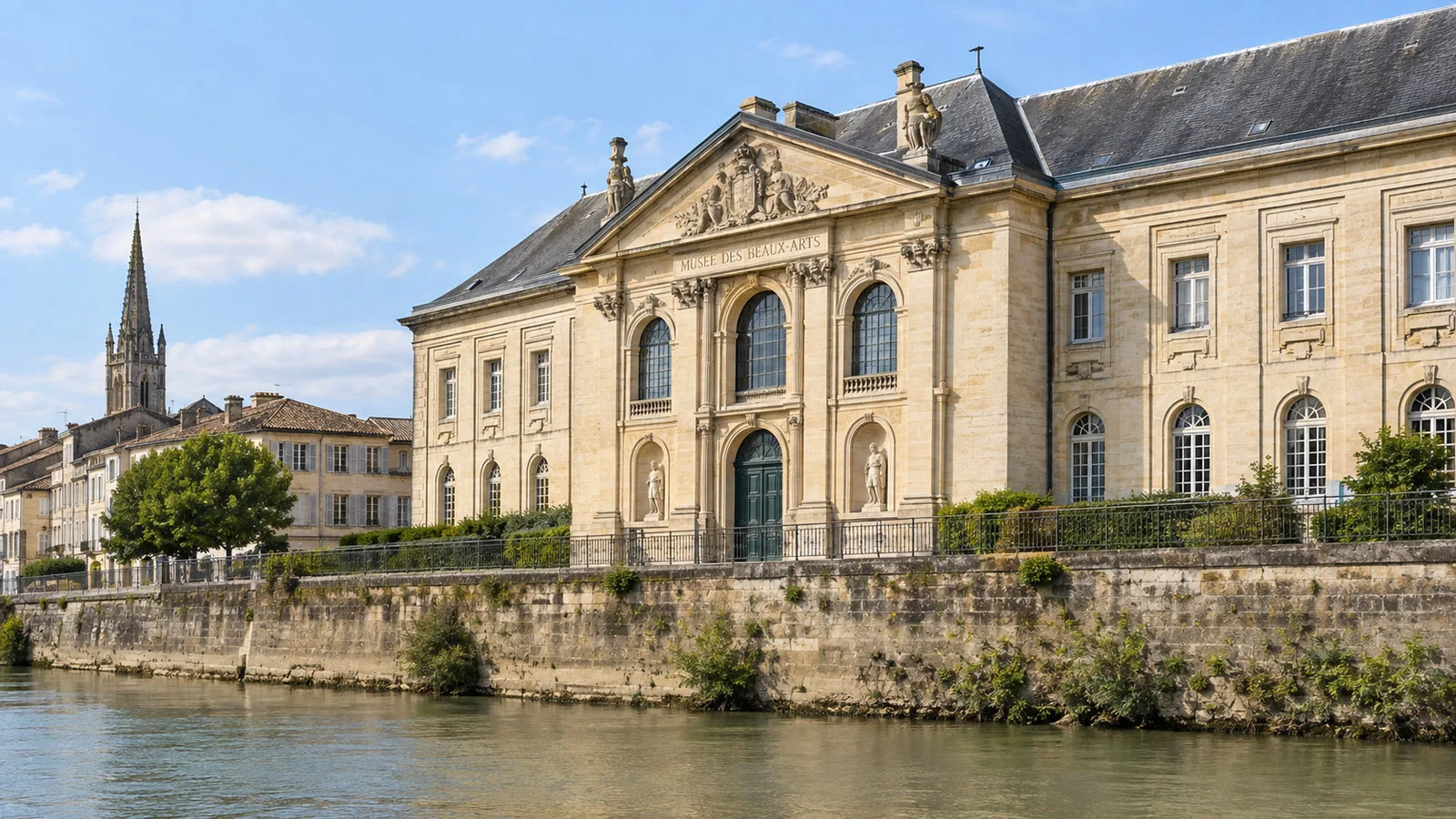
Libourne’s Musée des Beaux-Arts occupies the second floor of the town hall on Place Abel Surchamp. Its European collection spans the 14th through 20th centuries, with works linked to artists including Rodin, Dufy, Foujita and Libourne-born animal painter René Princeteau.
The city’s current museum page lists free admission and Tuesday through Saturday opening, with a midday closure. Hours and temporary displays can change, so check the date before building the entire morning around an indoor visit.
Allow an estimated 45 to 75 minutes for a focused look. The museum’s town-hall setting makes it easy to pair with the square, market and quays without turning the day into a stopwatch competition.
Saint-Émilion from Libourne
Saint-Émilion is approximately 6.2 miles from Libourne and is the headline excursion for many calls. UNESCO recognizes the Jurisdiction of Saint-Émilion as a cultural landscape shaped by intensive wine growing and a long relationship between settlement, vineyards and limestone.
An included or ship-organized motorcoach is the easiest choice for most passengers because it coordinates the transfer, guide, reservations and return. Allow an editorial estimate of 20 to 30 minutes each way by road in normal conditions, with extra time for traffic or the precise winery stop.
Do not expect every excursion to follow the same recipe. One may concentrate on the medieval village and underground monuments, while another spends more time at a château tasting outside town.
The village rewards walking, but it does not disguise the fact that it is hilly. Cobbled lanes, steep tertres and steps give Saint-Émilion much of its drama and give tired knees a very different kind of tasting note.
Can you take the train independently?
Yes, with careful timing. SNCF Connect shows direct TER trains covering the 6.2-mile rail journey in about six to seven minutes on the current schedule.
The train is the easy part. Libourne station is an estimated 15 to 25-minute walk from the usual central quay area, and Saint-Émilion station sits about 1 mile downhill from the village.
The official 2026 Saint-Émilion accessibility guide says the station-to-village walk takes at least 20 to 30 minutes and lacks sidewalks on some portions. Seasonal local transfers may operate, but they should be confirmed rather than assumed.
Independent rail works best on a long call with a generous return buffer. A seven-minute train ride stops feeling clever if the next suitable return leaves after the gangway does.
What to do in Saint-Émilion
Start around the collegiate church and tourist office, then choose whether your priority is an underground heritage tour, vineyard experience or scenic wander. The monolithic church and catacomb areas are controlled-access sites, so reservations and opening times matter.
Wine tastings should be booked with a château, guide or reputable operator rather than treated as an open-door village sport. If you are exploring independently, never combine tasting with driving.
Allow at least three to four hours for transfer, village time and one meaningful visit. A half-day excursion is satisfying when it is focused and slightly frantic when it tries to collect the entire appellation.
Why Bourg may replace Libourne
CroisiEurope’s current itinerary language says Libourne may be replaced by Bourg depending on mooring availability. It also says the order of visits can change with tides, which is important on the Dordogne and lower Gironde system.
Bourg sits farther downstream near the Dordogne’s meeting with the Gironde estuary system and can serve the wider Bordeaux wine itinerary. A substitution may change the motorcoach ride, local walking options and timing, but it does not automatically erase the Saint-Émilion program.
Read the daily program rather than relying on the brochure’s map. Operators can preserve an excursion by moving passengers by motorcoach even when the ship cannot occupy the originally advertised berth.
Tides, river levels and navigation
Libourne is far inland, but the river remains tidal. Arrival times, clearance, current and pontoon access can therefore be tied to a safe navigation window rather than the optimistic hour printed months earlier.
High water is not theoretical. The City of Libourne activated its municipal flood plan in February 2026 for areas including Quai du Priourat, Quai Souchet and the Dordogne banks.
Low water, high water, strong current, debris, fog, berth conflicts and conditions elsewhere on the route can all alter operations. A changed call may mean a shorter stay, opposite-bank landing, motorcoach transfer, Bourg substitution or, less commonly, cancellation.
Keep the ship’s contact details and all-aboard time with you. Tides are impressively unmoved by the fact that you have just ordered dessert.
Accessibility
Libourne’s bastide core is mostly level, but historic paving, curb transitions and occasional uneven surfaces remain. The exact gangway angle changes with pontoon, vessel and tide, so ask the crew about the day’s setup before committing to an independent route.
The right-bank pontoon normally offers the shorter approach to central Libourne. From the Arveyres side, the bridge distance makes a ship-arranged transfer worth requesting if stamina, rolling range or weather is a concern.
Saint-Émilion is substantially harder. Its tourism office warns of paved and sloping streets, recommends accompaniment for wheelchair users and publishes a specific accessible route rather than pretending every lane works.
Travelers comparing distance, surfaces, gangways and step-free backups can use the site’s wheelchair-friendly cruise ports guide. In this call, staying in Libourne is usually the gentler choice, while Saint-Émilion needs advance coordination.
A practical half-day plan
For a relaxed Libourne morning, walk the quays, Place Abel Surchamp and Tour du Grand Port, then add the market if it is Tuesday, Friday or Sunday. Use the Musée des Beaux-Arts as the indoor anchor on an open day.
For Saint-Émilion, take the organized transfer, choose one heritage visit or château and protect the return margin. Trying to combine a winery, underground tour, long lunch and independent train is how a graceful wine day becomes interval training.
On a long call, a guided Saint-Émilion morning followed by a short Libourne quay walk can work beautifully. Confirm whether the motorcoach returns to the ship or central town before drifting toward the nearest café.
Practical checks before Libourne
Ask whether the ship uses the Libourne-side or Arveyres-side pontoon, whether it is rafted, and where guests reboard. Tides can also substitute Bourg or move the ship while tours are ashore, so the morning announcement outranks the itinerary’s printed port name.
Stay in Libourne for the market and museum, or make Saint-Émilion the one main excursion. The train does not remove the walk, hill, or return risk, so use the ship transfer on a short call and follow the operator’s stated return margin when traveling independently.
Check France and Schengen entry rules, train schedules, museum hours, wine-tour prices, and the protected village’s visitor rules. Opposite-bank access, raft crossings, cobbles, steep Saint-Émilion lanes, heat, rain, and tidal navigation each matter for accessibility.
Quick answers
Where is Libourne river cruise port?
It is at the confluence of the Dordogne and Isle rivers, east of Bordeaux. The official river-cruise pontoons sit on opposite banks in Libourne and Arveyres.
Can I walk from the ship into Libourne?
Usually, yes. Allow an estimated 5 to 10 minutes from the Libourne-side pontoon or 15 to 25 minutes from the Arveyres-side landing.
Is Saint-Émilion at the port?
No. It is about 6.2 miles away, reached most easily by an organized road transfer.
Can I take a train to Saint-Émilion?
Yes, but the village is a steep roughly 1-mile walk above its station and some sections lack sidewalks. Check both outbound and return trains before leaving.
Why might the ship dock in Bourg instead?
Published cruise-line terms cite mooring availability and tides. Bourg can keep the broader excursion program workable when Libourne is operationally unavailable.
Is Libourne wheelchair friendly?
Central Libourne is comparatively level, but gangway angle and historic surfaces vary. Saint-Émilion is steeper, cobbled and more demanding.
The last word
Libourne works because it is more than a transfer label for Saint-Émilion. The river confluence, central market and compact bastide give independent travelers a real port day even when the vineyards are calling loudly.
Confirm the pontoon, listen for Bourg updates and decide whether your perfect morning needs medieval lanes or market cheese. Travelers planning a wider French itinerary can also browse the site’s European cruise ports guide.
How this guide was researched: No firsthand visit is claimed; current port, itinerary, rail, and heritage details were checked against the City of Libourne, CroisiEurope, SNCF Connect, UNESCO, and local tourism sources. Logistics and time-sensitive details were reviewed September 12, 2026.
For the detail behind that, see Hotel Barge Cruise Guide.
For the detail behind that, see Bordeaux River Cruise Ports.