The Grocery Store Near the Pier: Cheaper Water, Snacks and Better Souvenirs
The kiosk at the pier gate sells one small bottle of water for about what a six-pack costs at the supermarket a few blocks inland, and that store also has the coffee, chocolate and hot sauce the gate shop marks up. I go find the store.
My quick take
A supermarket is the single most underrated stop on a port day. It is air conditioned, it is full of things locals actually buy, and it is the one place in town where nobody has priced anything for a cruise passenger.
In Santa Marta I skipped the row of stalls near the terminal and walked to a regular grocery store instead, and I came back with better coffee for less money than anything on offer at the gate. I have done some version of that in almost every port since, and I have never once regretted the twenty minutes.
The quick facts
- Drinks aboard: Most lines allow a small sealed non-alcoholic allowance on boarding day, and are far stricter about what you carry up the gangway in port.
- Alcohol ashore: Bottles you buy in port are almost always taken at security and returned at the end of the cruise.
- Best buys: Coffee, chocolate, spice blends, hot sauce, olive oil, tea and local cookies, all of it cheaper than the same thing in a gift box.
- The real limit: Agricultural rules at your home airport, not the ship, decide which food souvenirs survive the trip.
- Bring a bag: Many countries charge for bags, want a coin for the cart, and expect you to weigh your own produce.
What the ship will actually let you carry back aboard
There are two separate questions here and people mix them up constantly. One is what you can bring on boarding day, and the other is what you can walk back through security with on a Tuesday in Cozumel.
Boarding day is the generous one. The common shape of the rule is a small sealed allowance of non-alcoholic drinks measured in cans or cartons, and one big line caps it at twelve standard containers per stateroom.
Another writes the same idea as twelve sealed cans or cartons per person and bans plastic and glass bottles outright. That distinction matters, because a supermarket sells water in exactly the format the ship does not want.
In port the rules tighten, sometimes to zero. At least one major line will not let you bring any beverage aboard at a port of call and says locally bought drinks get disposed of before you reboard.
So do not take my word for it or anyone else’s. Read your own line’s beverage page before you sail, because this is the detail that varies most and it is the one people get burned on.
The bottle of rum goes into a box until the last night
This is the single most useful thing to know before you shop, and it is remarkably consistent across mainstream ocean lines. Alcohol you buy ashore gets pulled at the gangway scanner, tagged, stored, and handed back to you on the last night or on debarkation morning in a designated room.
It is not confiscation and you are not in trouble. It is a bar revenue policy dressed up as a safety procedure, and the ship is genuinely good at giving the bottles back.
What this means in practice is simple. Buy the bottle you want to take home, not the bottle you wanted to drink on your balcony on sea day, and keep the receipt in case anyone asks what is in the bag.
One more thing worth planning for. You collect your bottles at a fixed time in a fixed place on a morning when you are also trying to get off the ship, so leave room in a carry on and do not check that suitcase until the bottle is in it.
Wine at embarkation is a different rule from wine in port
The wine allowance almost every cruiser has heard about is a boarding day allowance. The usual shape is one sealed 750 ml bottle of wine or champagne per adult, carried on, sometimes with a corkage fee if you open it outside your cabin.
That allowance does not renew in port. A lovely bottle you find at a market in Palma on day five is not covered by the embarkation rule, and it will go into storage with everyone else’s tequila.
Some lines are a little softer about wine than about spirits, and a few will let a bottle through for a corkage charge. I would not build a plan around that, and I would treat any in-port wine purchase as a souvenir rather than as tonight’s dinner.
The best souvenir shop in town has a deli counter
Pier shops sell you a country in a gift box. Supermarkets sell you the same country at the price locals pay, in packaging that is honestly nicer about half the time.
The aisles that reliably pay off are the shelf stable ones. These are the things I go looking for.
- Coffee: Roasted and sealed, in the brands people at the checkout are also buying.
- Chocolate and cookies: The regional bars and the biscuit tins that never make it to American shelves.
- Spice blends and dried herbs: Usually a fraction of the gift shop version, and better.
- Hot sauce and mustard: Small bottles, big flavor, terrific gifts for people who are hard to shop for.
- Olive oil, tea and tinned fish: All of it travels well, and all of it is absurdly marked up at the terminal.
The one caution is weight. Olive oil and tinned fish are heavy, so buy them at the end of the day rather than carrying them around a fortress for four hours.
What customs takes off you at the airport
The ship is not the real gatekeeper for food souvenirs. Your home airport is, and the rules there are about pests and disease rather than about revenue.
The broad principle for U.S. travelers is that fresh fruit, vegetables, meat, plants and soil are the problem categories and get destroyed when they turn up. Processed, shelf stable and commercially packaged is the safe end of the spectrum.
The good news is that most of the shopping list above is fine. Roasted coffee and most dried spices are generally allowed in personal quantities, while citrus leaves and seeds are not.
Declare everything, every time. Declaring a bag of coffee costs you thirty seconds, and not declaring it can cost you a fine that dwarfs everything you bought.
Cruise ship security has its own separate list of things that never make it back up the gangway, which I go through in what you cannot bring back onboard. Fresh fruit off a market stall is usually the first casualty.
The bottled water math is the whole argument
Onboard, a bottle of water is priced like a hotel minibar and often carries a service charge on top. At a pier kiosk it is priced for someone who has no other option within a half mile.
At a supermarket it is priced for a person who buys it every week. A multipack of large bottles in most European or Caribbean grocery stores usually costs less than a single small bottle at the gate, which is not a rounding error, it is a category difference.
The catch is what I said above. If your line does not allow drinks aboard in port, that water is for the day ashore only, so buy what you will drink and leave the rest.
Either way, carry a refillable bottle and top it up on the ship before you leave. That habit is in my list of what to actually carry ashore, and it makes the store a bonus rather than a necessity.
The ports where the store is a short walk
Some ports hand this to you. The berth is close enough to a real commercial street that you can be standing in front of a chilled case within fifteen minutes of the gangway.
- Bergen: From the central quays it is roughly a ten minute flat walk to the fish market and the shopping streets behind it, which I cover in my Bergen port day guide.
- Willemstad: Cross the floating bridge from Otrobanda into Punda and you are among the shops, with the produce boats moored a few minutes further along.
- Honolulu: Pier 2 sits at the edge of downtown, and Chinatown and its markets are a walkable stretch from the terminal.
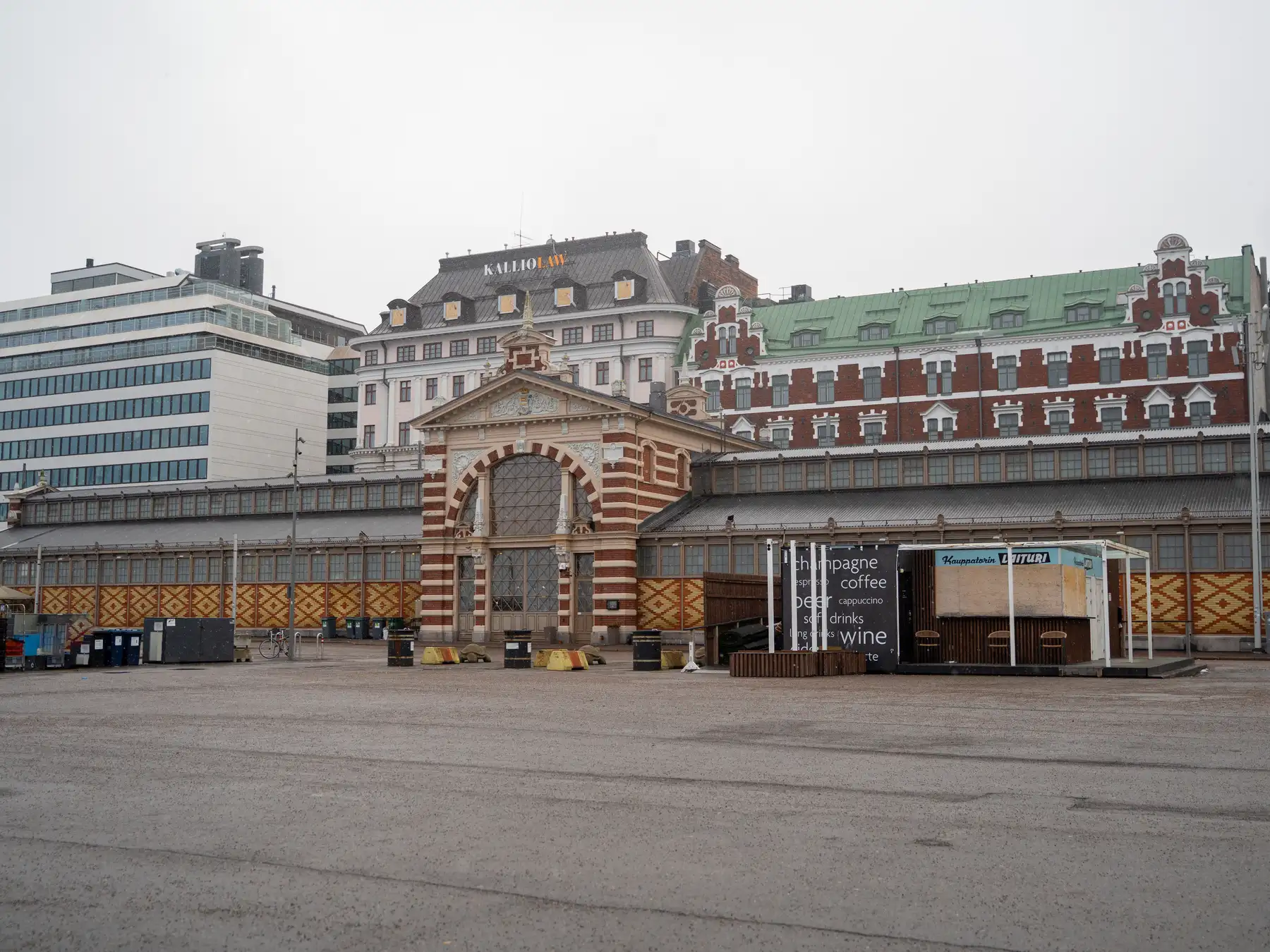
- Helsinki: The old market hall sits right on the waterfront by the market square, close to the central passenger quays.
- Barcelona: From the terminals nearest the Columbus monument, the big covered market on La Rambla is an easy walk, though the outer berths need the shuttle first.
- Tallinn: The cruise quays sit under a mile from the Old Town, and once you are inside the walls the small grocers are everywhere.
Sydney belongs on this list only if you are at the Circular Quay terminal. From the western terminal you are a taxi ride from anything at all.
The ports where it is not, and how to tell before you sail
Reykjavik is the one that surprises people. Big ships use a quay out on the eastern edge of the city, roughly 2.5 miles (4 km) from downtown, so a grocery run means a bus or a shuttle rather than a stroll.
Palma is similar. The passenger terminals sit west of the city and the closest of them is around 2 miles (3 km) from the cathedral, which is a pleasant flat walk on a cool day and a bad idea in August.
In Cozumel it depends entirely on your pier. From the downtown pier you step straight into town, and from the two southern piers you are about 2 miles (3 km) away and paying for a taxi each direction.
My method is boring and it works. A week before I sail I find the berth, drop it into a map, and look for the nearest ordinary shopping street rather than the nearest attraction, because that tells me whether this is a real plan or a fantasy.
The small mechanics that trip up Americans abroad
Grocery shopping in another country is easy right up until the moment it is not. None of these are hard, they are just unfamiliar, and every one of them has held up a line somewhere.
- Bring a bag: Bags are frequently charged for and sometimes not offered at all, so a folded tote in your day bag solves it.
- Carry a coin: Many European carts are chained and want a coin deposit, returned when you re-chain the cart.
- Weigh your own produce: In a lot of European stores you weigh loose fruit and vegetables yourself, print the sticker, and stick it on the bag before checkout.
- Bag fast: Cashiers in much of Europe scan quickly and do not bag for you, so start packing while they are still scanning.
- Watch for bottle deposits: Some countries add a refundable deposit to bottles and cans, which you will not get back as a visitor.
None of this is a reason to skip the store. It is a reason to walk in with a coin, a bag and a little patience.
Sunday is the trap
A lot of Europe still closes on Sunday, and grocery stores are often the strictest about it. In parts of Germany, Austria, Switzerland, Norway and Poland a Sunday port day can mean a shuttered supermarket and a lonely gas station shelf.
Public holidays do the same thing, and they are worse because you do not see them coming. Southern Europe adds a midday closure on top, so a store that is open on paper can still be dark at two in the afternoon.
I check the day of the week against the itinerary before I sail rather than discovering it at the gangway. There is more on this in my guide to port days that land on a holiday, including which countries take closures most seriously.

What families are actually looking for
Half the people hunting for a supermarket on a port day are not there for souvenirs. They are out of diapers, or formula, or the one snack their kid will reliably eat.
Diapers and wipes are the easy win, because sizing is broadly comparable and the pier shop either does not stock them or charges a fortune. Formula is harder, since brands, stages and label wording differ by country and the mixing instructions may be in a language you cannot read on a phone in a store aisle.
Water for formula is the one place the beverage rules bend. Lines commonly allow sealed distilled or purified water for infant feeding and for medical devices outside the normal drinks limit, though you should confirm the wording with your own line rather than assuming.
Medicine is the other surprise. In much of Europe and Latin America the things you would grab off a shelf at home live behind a pharmacy counter instead, sometimes in a separate shop entirely, so budget an extra stop for pain relievers and motion sickness tablets.
Cash, card and the bag you did not bring
Supermarkets are usually the most card friendly businesses in any port town, which is the opposite of the market stall two streets over. Tap works in most of Europe, Australia, New Zealand and increasingly in the Caribbean.
Small local shops are a different story, and some set a minimum for card payment. That is why I still walk off with a small amount of local currency, which I explain in my guide to carrying cash and cards in port.
If a terminal asks you to pay in dollars when the price tag is in local currency, decline the conversion and pay in the local one. The exchange rate the machine offers you is never the good one.
Quick answers
Can I bring bottled water from a store back on the ship?
It depends entirely on your line, and some ban all beverages brought aboard at ports of call. Check your line’s beverage policy page before you sail rather than at the scanner.
What happens to alcohol I buy in port?
Security takes it at the gangway, stores it, and gives it back at the end of the cruise, usually the last night or debarkation morning. Buy it as a souvenir, not as tonight’s drink.
Can I take food souvenirs home on the plane?
Shelf stable and commercially packaged items like roasted coffee, chocolate and most dried spices are generally fine, while fresh produce, meat and plants are not. Declare everything on your customs form regardless.
Are supermarkets open on Sunday in Europe?
Often not, especially in German speaking countries, Norway and Poland, and public holidays close them too. Assume closed and be pleasantly surprised.
Is it cheaper to buy souvenirs at a grocery store than at the pier?
Almost always, because pier shops price for a captive audience and grocery stores price for people who shop there weekly. The gift box costs more than the same product on a normal shelf.
Final word
The supermarket is not a substitute for seeing the town. It is a twenty minute detour that saves you money on water, gets you better gifts than the terminal mall, and shows you what people here actually eat.
Check two things before you go and the rest takes care of itself. Know what your ship lets back aboard, and know what your home airport lets into the country.
How this guide was researched: Cruise line beverage and alcohol policies, national agricultural import rules for travelers, and terminal to town distances for the ports named here were all checked in September 2026. Beverage allowances, storage procedures and store opening hours change often, so confirm the current wording for your own ship and your own sailing date. See our Editorial Policy.
More on this topic: browse every guide on port logistics and timing.