Busselton Cruise Port: Tenders, Jetty & Margaret River
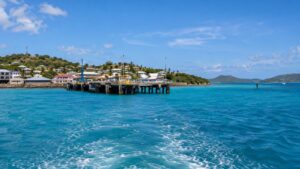
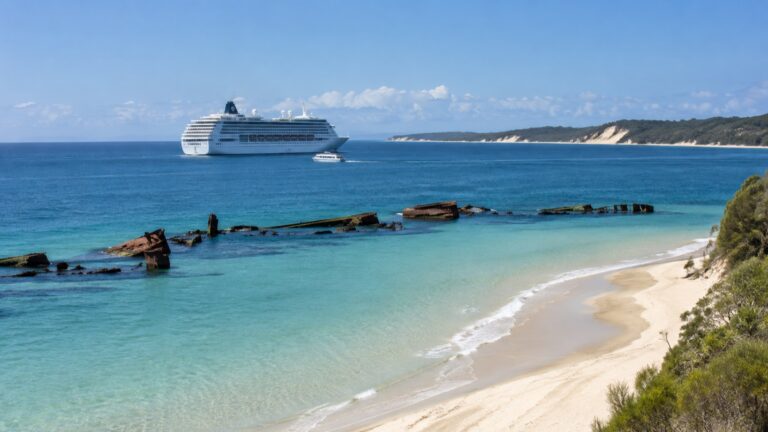
Busselton is one of those cruise calls where the arrival is part of the experience. Your ship anchors in Geographe Bay, the tender heads toward an exceptionally long timber jetty, and the low, friendly town opens onto one of Western Australia’s most inviting coastal regions.
The choice is wonderfully clear but still needs planning. You can stay close for the jetty, foreshore, and town, or use the day to explore wineries, caves, forests, beaches, and Wadandi Country across the Margaret River Region.
Quick Facts
- Port type: Anchor call with tender landing at Busselton Jetty
- Arrival area: Busselton Foreshore beside the jetty and a walkable town center
- Signature attraction: The 1.841 kilometer heritage listed Busselton Jetty, its train, and Underwater Observatory
- Regional gateway: Wineries, caves, forests, coastal scenery, and towns across the Margaret River Region
- Currency: Australian dollar, with cards widely used and some cash still useful
- Best independent option: Jetty, foreshore, town, and a relaxed meal
- Key risk: Wind and sea conditions can delay, change, or cancel tender operations
- Return strategy: Be back at the tender point well before the ship’s stated final boat
Where Cruise Ships Arrive in Busselton
Cruise ships normally anchor offshore in Geographe Bay rather than docking beside the town. Passengers come ashore by tender at Busselton Jetty, a setup confirmed by the City of Busselton’s official cruise information.
The landing places you directly in the foreshore precinct rather than inside a remote industrial port. This is a major advantage for independent travelers because the jetty attractions, waterfront paths, visitor services, cafes, and central Busselton are all close at hand.
The exact tender point, route, and shore arrangements can vary by ship and weather. Listen for onboard instructions about tender tickets, mobility rules, identification, final return, and any local shuttle or welcome services provided for your call.
Tendering in Geographe Bay
Geographe Bay is often protected, but no tender port is guaranteed. Wind direction, swell, visibility, marine traffic, and the captain’s safety assessment determine whether boats can operate and how quickly guests move between ship and shore.
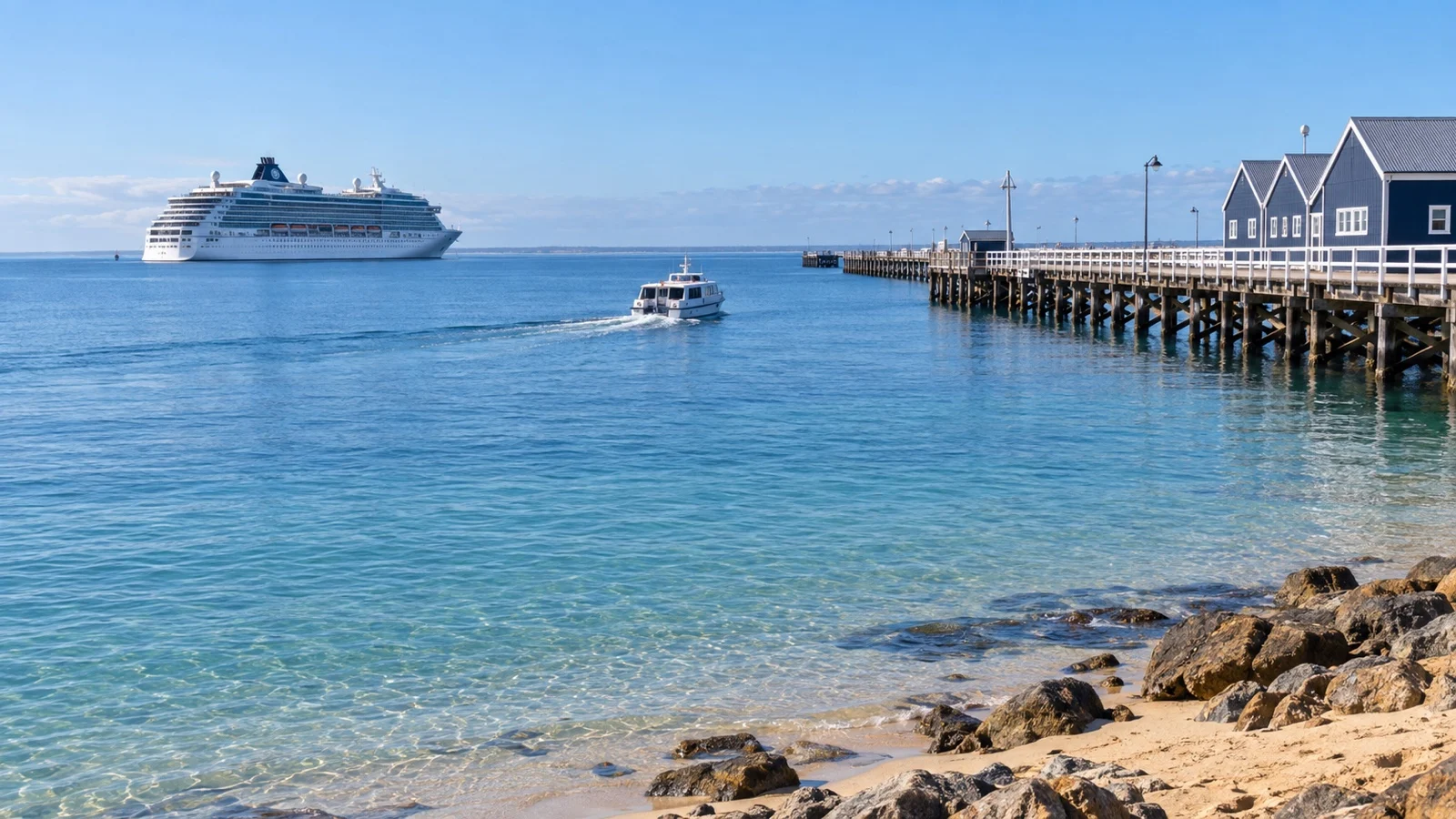
If you have a ship excursion, follow its meeting instructions because your group may receive a specific tender assignment. Independent guests should be ready early, but they should not book a fixed local departure that allows no margin for ship clearance or tender queues.
Wear shoes with secure soles and keep both hands available when boarding. The tender platform and boat can move independently, so crew directions matter more than trying to step aboard on your own rhythm.
A waterproof pouch protects your phone, cruise card, and essential documents from spray. I also bring a light layer because the tender can feel cool even when the shore forecast looks warm.
The Busselton Jetty Experience
Busselton Jetty began in 1865 and extends 1.841 kilometers over the bay. Its official website describes it as the longest timber-piled jetty in the Southern Hemisphere, and its length is immediately obvious when you stand at the shore end.
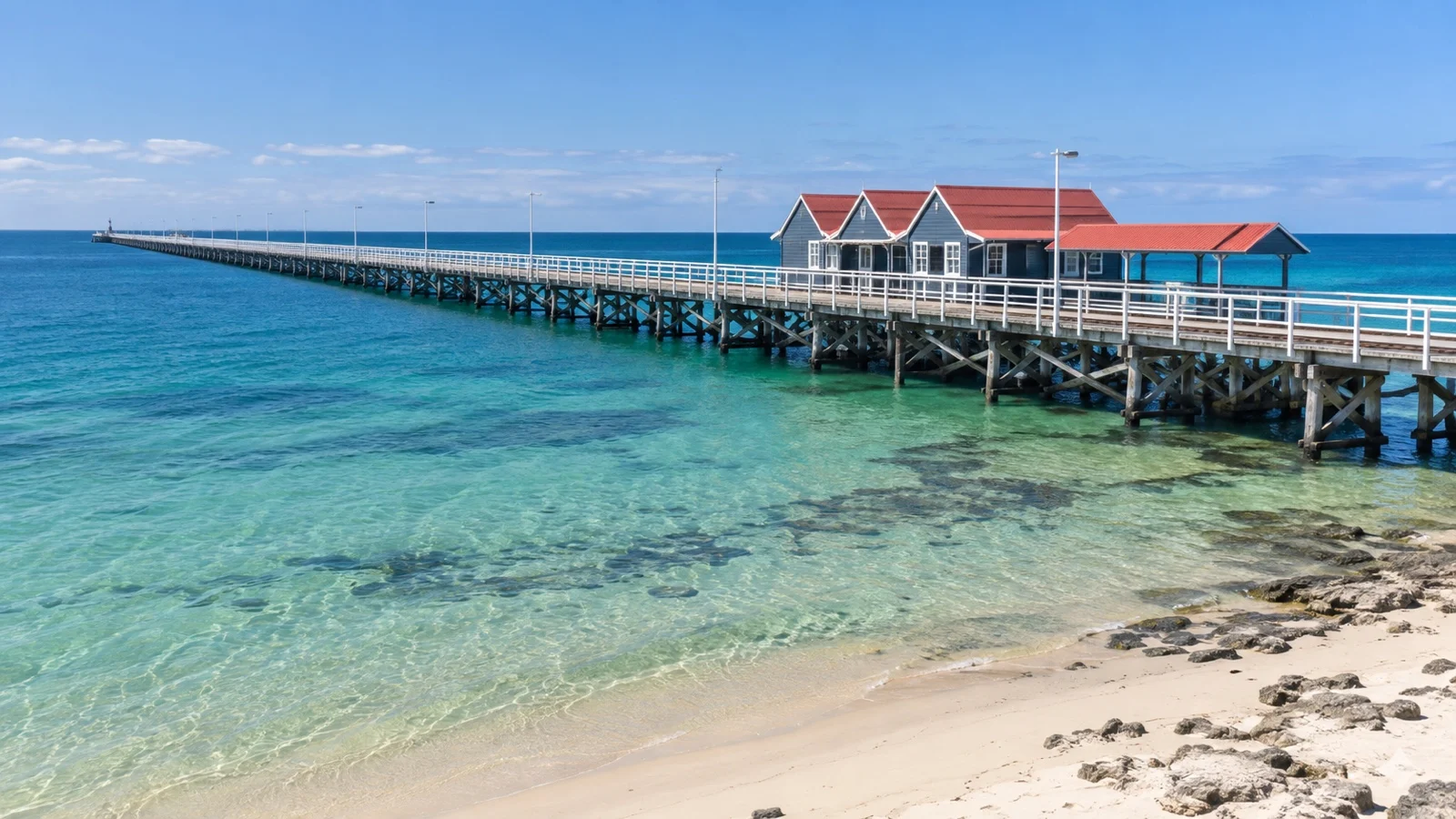
The jetty is not only a landmark or tender landing. It supports a train, an Underwater Observatory, marine interpretation, fishing activity, and broad views across Geographe Bay.
Official operating hours are approximate and depend on weather, wind, and ocean conditions. Bookings can fill on cruise days, so reserve a suitable time if the train or observatory is central to your plan and confirm how a tender delay affects the booking.
Walking the Jetty
A full out-and-back walk is much longer than it first appears. Allow for the distance, sun, wind, photos, passing other visitors, and the time needed to reach your booked activity at the far end.
The surface is exposed, and shade is limited along much of the route. Carry water, use sun protection, and leave enough energy for the return, especially if you also plan to explore town.
Fishing areas and working equipment deserve space. Watch for lines, hooks, wet patches, railings, train movements, and instructions from jetty staff.
The Jetty Train
The solar-powered jetty train offers a scenic ride along the structure and is especially helpful for anyone who does not want to walk the full distance. The official attraction page currently describes a 1.7 kilometer journey and a roughly 45 minute return train experience.
Departures, duration, and operating conditions can change, so use the time printed on your current booking rather than a general guide. Arrive early enough to collect tickets and tell staff in advance if you need wheelchair space or other assistance.
Prams and strollers are not accepted on the train or into the Underwater Observatory under the current published rules. Families with small children should verify those rules directly and plan for an appropriate baby carrier if needed.
The Underwater Observatory
The Underwater Observatory lets visitors descend below the surface and look through windows into the marine environment around the jetty piles. What you see depends on water clarity, light, season, and wildlife, so treat each visit as a live natural experience rather than a staged aquarium.
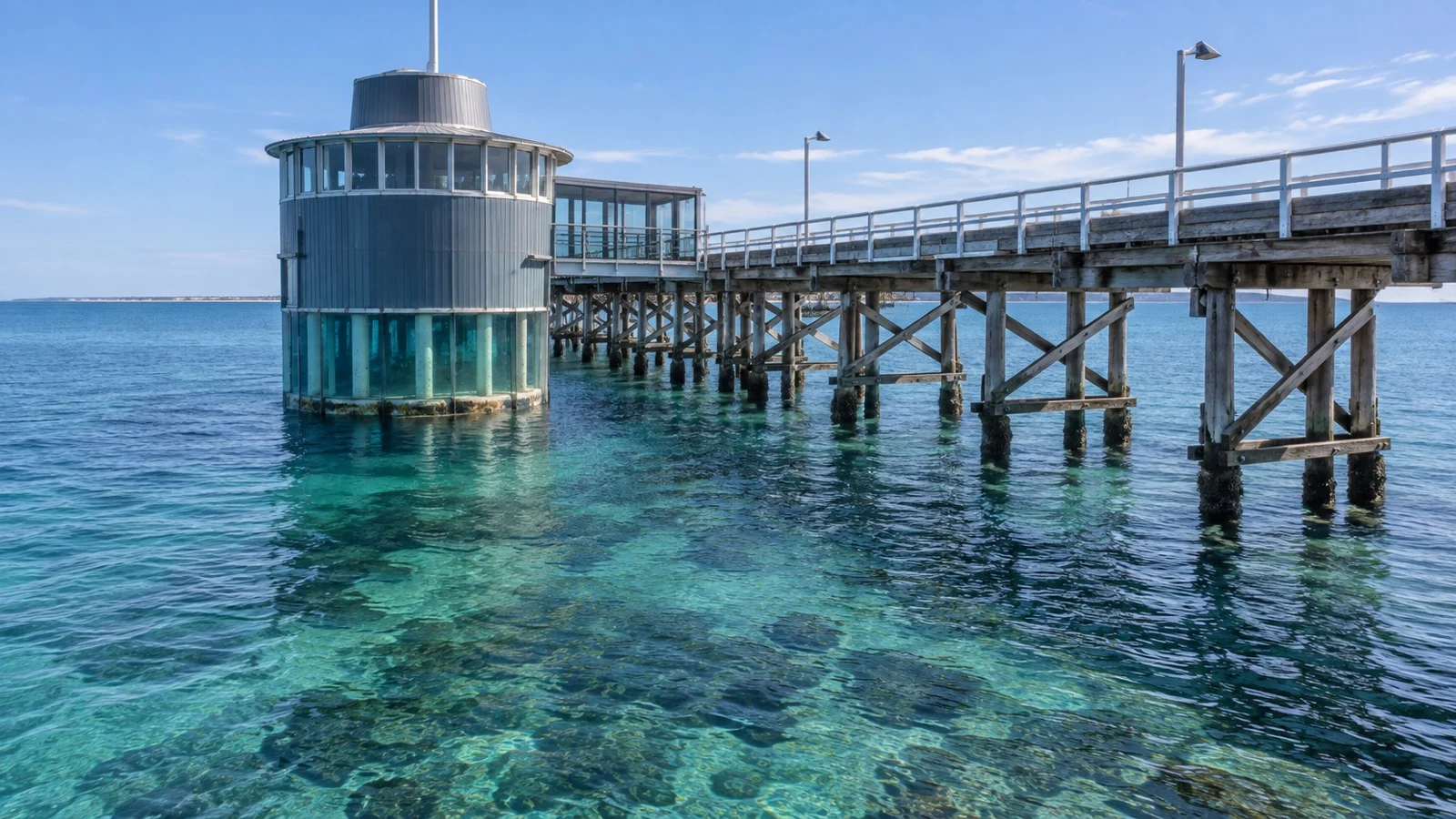
The interior includes multiple levels and many stairs, while an accessibility lift is available within published size and weight limits. Contact the attraction before arrival if the lift, wheelchair space, hearing support, visual assistance, or a translated tour is important.
The observatory is a timed experience, which makes tender uncertainty relevant. A later booking usually creates more arrival flexibility, but it must still leave a safe margin before the ship’s final tender.
Busselton Foreshore and Town
The foreshore makes an easy, satisfying day even without a regional excursion. Paths, lawns, beach access, jetty views, family spaces, cafes, and cultural features sit close enough to explore at a relaxed pace.
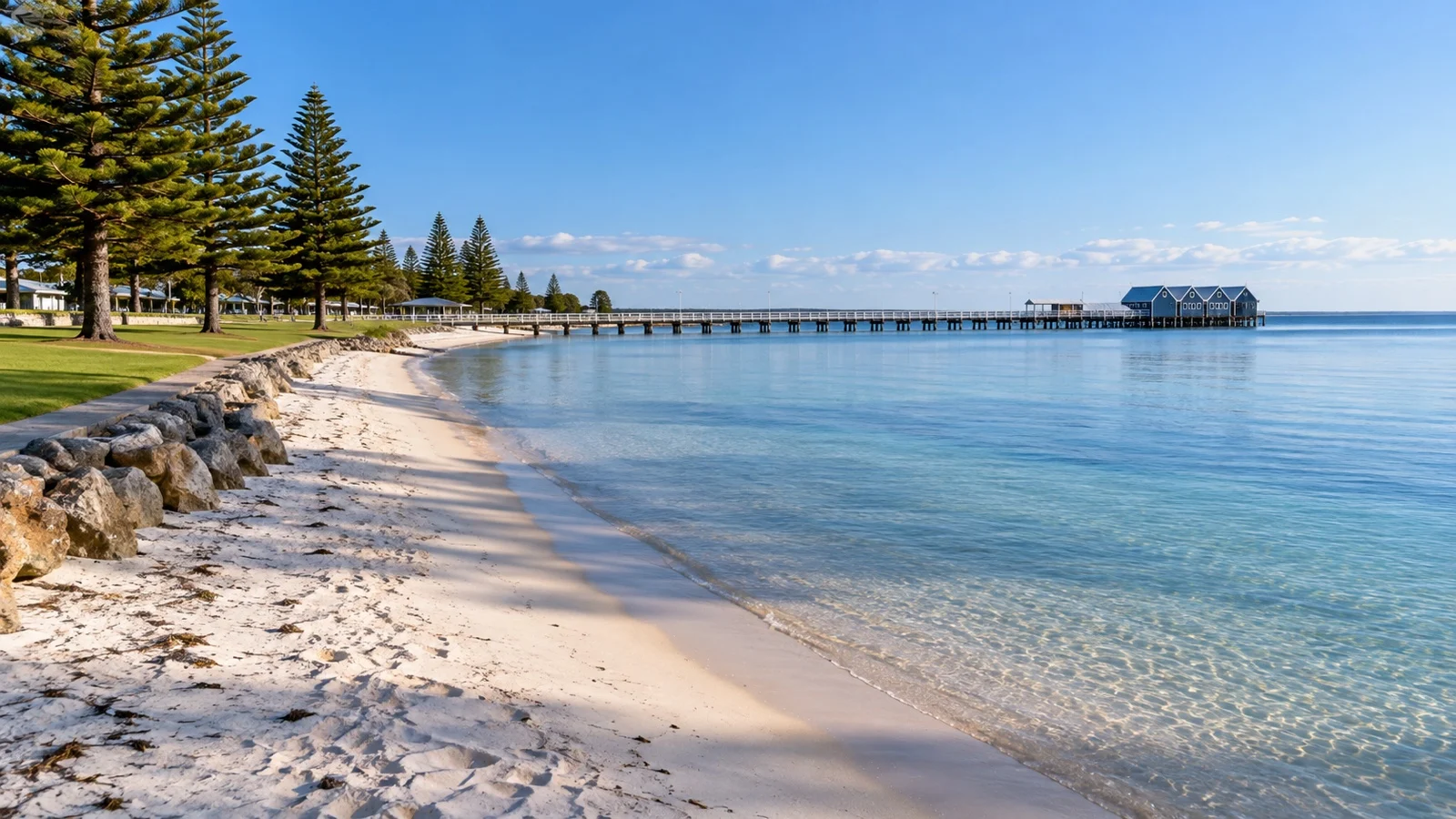
Central Busselton is also walkable from the jetty precinct for most travelers. You can browse shops, find lunch, visit the cultural area when open, and enjoy a town that functions for residents rather than as a purpose-built cruise village.
The City of Busselton highlights the foreshore, surrounding attractions, and city center as natural choices for cruise passengers. That local plan is the least vulnerable to road delays and gives you the easiest control over your return.
Beach Time
The sheltered appearance of Geographe Bay can be inviting, but swimming conditions still require judgment. Use patrolled areas when available, follow local signs and lifeguard directions, and never assume calm-looking water is risk free.
If you swim, protect valuables and leave ample time to dry, change, and reach the tender queue. Australian sun can burn quickly, even on a breezy or partly cloudy day.
The Margaret River Region
Busselton is a northern gateway to the broader Margaret River Region, but the name can mislead first-time visitors. The attractions are spread across a large area that includes Busselton, Dunsborough, Yallingup, Cowaramup, Margaret River town, Augusta, forests, coast, caves, farms, and vineyards.
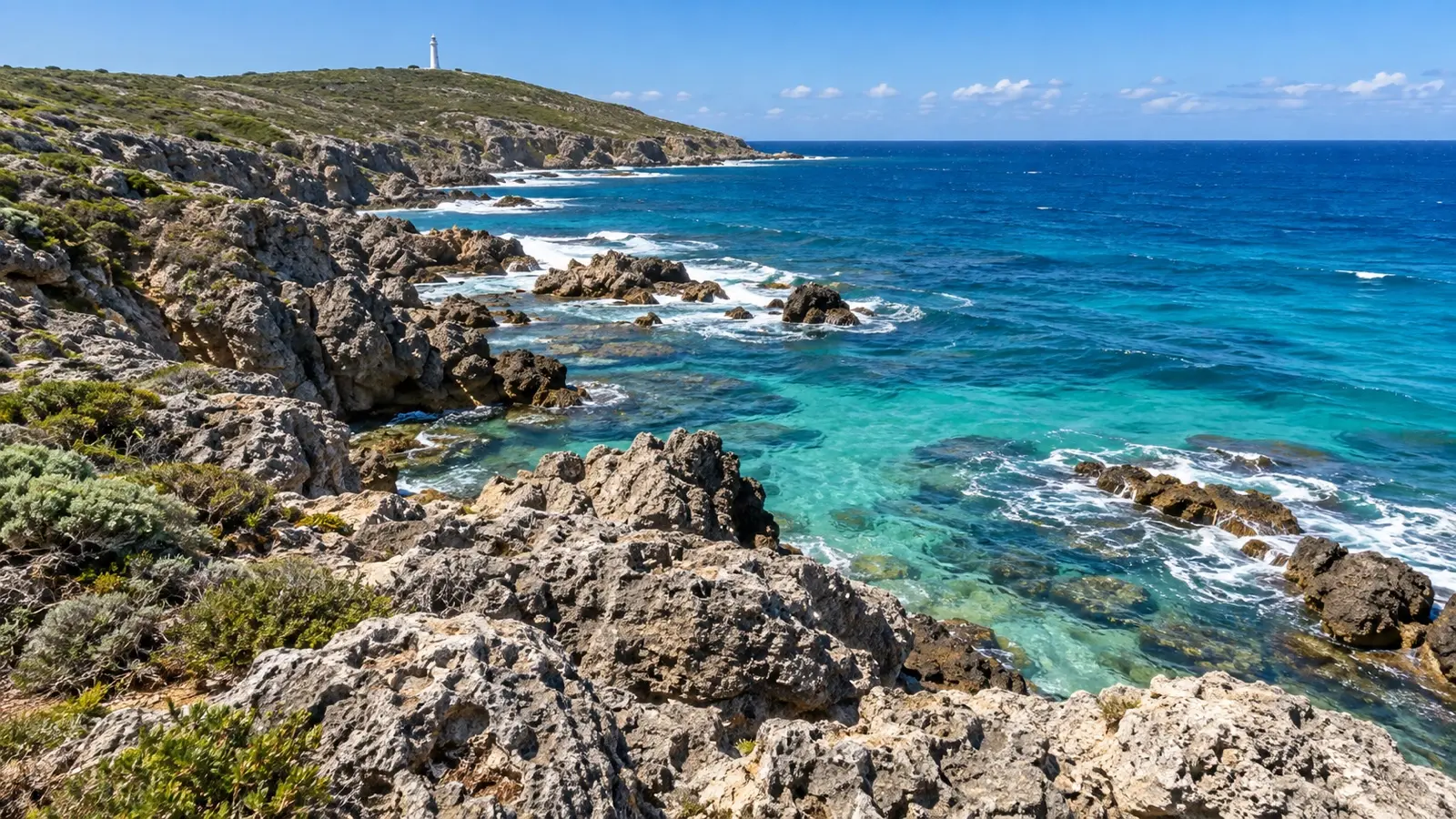
The regional tourism association identifies the area as Wadandi Boodja, the traditional land of the Wadandi Saltwater People. Its current guidance asks visitors to walk softly on Country, respect the environment, and recognize the region’s deep, continuing cultural connection.
For a cruise day, geography matters more than the number of pins on a map. Choose one compact theme and let a knowledgeable operator build the route around current traffic, opening hours, tasting times, and the final tender.
Wine Touring Without Rushing
Margaret River is internationally known for wine, and Cabernet Sauvignon is specifically highlighted by the City of Busselton’s cruise page. A well-designed excursion might combine one or two cellar doors with lunch, local produce, or a scenic stop rather than racing through a long list of tastings.
Book ahead because cellar doors may use set tasting times, capacity limits, or group policies. Confirm the current fee, what is included, whether food is available, and how long the drive will take from the tender landing.
The designated driver must not drink, and an organized tour removes that concern. Anyone tasting should pace themselves, eat, drink water, and remember that a tender transfer still follows the road journey.
Wine is only one part of the region. Travelers who do not drink can focus on food producers, gardens, galleries, beaches, caves, forest walks, or an Aboriginal cultural experience offered with the proper local authority.
Caves and the Leeuwin-Naturaliste Ridge
The limestone ridge contains celebrated show caves, including Ngilgi, Mammoth, Lake, and Jewel caves. They differ in location, tour style, stairs, lighting, walking demands, and booking requirements, so “a cave tour” is not a single interchangeable activity.
Ngilgi Cave near Yallingup is among the more practical options from Busselton, but you still need confirmed admission and transport. Ask about the current experience, duration, number of steps, handrails, enclosed spaces, footwear, and suitability for your mobility.
Caves are cool and can be damp or slippery even when the day outside is hot. Closed shoes with grip are the right choice, and anyone with balance, breathing, or claustrophobia concerns should discuss them before booking.
Do not touch formations or leave the marked route. Cave protection works only when every visitor treats the site as a fragile living system rather than a playground.
Cape Naturaliste, Dunsborough, and Yallingup
The northern part of the region offers a strong alternative to driving all the way to Margaret River town. Dunsborough, Yallingup, Cape Naturaliste, coastal viewpoints, a cave, and selected food or wine stops can form a more compact loop.
Cape Naturaliste’s lighthouse and surrounding coast can be dramatic, but tours, grounds, and trail access vary. Confirm the current operating arrangement, and do not underestimate wind, sun, uneven ground, or the time used by scenic photo stops.
Canal Rocks, Sugarloaf Rock, and other coastal formations appear in regional itineraries. Ocean edges can be hazardous in swell or strong wind, so remain behind barriers and follow local warnings even when other visitors step closer.
Forests, Wildlife, and Aboriginal Culture
The region’s forests, wetlands, coast, and marine environment support distinctive plants and animals. Wildlife sightings are never guaranteed, and feeding or approaching wild animals can harm them and put visitors at risk.
A reputable Aboriginal-led experience can bring deeper meaning to the landscape, seasonal knowledge, food, story, and cave country. Choose programs operated or authorized by the appropriate Traditional Owners, and approach the experience as a guest rather than as entertainment to consume.
Photography may not be appropriate for every story, place, person, or ceremony. Ask before recording, listen to the guide, and follow cultural directions without argument.
Do You Need a Ship Excursion?
You do not need a tour for the jetty, foreshore, or central Busselton. Those close-to-port options are ideal for independent travelers and for anyone who wants maximum control over tender timing.
A tour becomes much more useful once you leave Busselton. Wineries, caves, lighthouses, beaches, forest stops, and Margaret River town require a vehicle, reservations, route knowledge, and time management.
A ship excursion offers the simplest coordination if tender operations are delayed. An independent tour can be more personal, but you are responsible for understanding the cancellation policy and returning before all-aboard.
Questions to Ask an Independent Operator
Ask for the exact meeting point, departure window, full route, included admissions, vehicle size, accessibility, meal plan, payment method, and latest return time. Confirm what happens if your ship cancels the call or tendering begins late.
Share the ship name and all-aboard time, not only the scheduled departure. I would also request an earlier personal return target so there is room for traffic, a slower group, and the tender queue.
Weather and Marine Conditions
Busselton’s tender operation and jetty activities depend on conditions in Geographe Bay. Wind, swell, thunderstorms, poor visibility, and other marine hazards can change the day even when the town itself remains open.
Check the Australian Bureau of Meteorology for current forecasts and warnings, then follow the ship’s operational announcements. The jetty also states that train and observatory hours depend on weather, wind, and ocean conditions.
Southwest Western Australia has warm, dry summers and cooler, wetter winters in broad terms, but cruise-day weather can still shift quickly. Pack sun protection, a light rain layer, and a warmer layer for the tender or exposed coast.
A cancellation is disappointing, but it is a safety decision rather than a customer-service failure. Keep a flexible foreshore or town plan ready in case a regional or marine activity cannot operate.
Return Timing and the Final Tender
Your ship will publish a final tender time, and that is not the moment to begin walking back from town or leave a winery. Be at the designated landing early enough to clear any local process and join the line without panic.
Tender queues often build late in the afternoon as tours return together. Cruise staff will manage the operation, but an early arrival gives you breathing room if loading slows or conditions change.
Regional tours need a larger road buffer than a day in Busselton. If the schedule slips, drop the final tasting, beach, cave, or shopping stop and return directly rather than trying to rescue the original itinerary.
A ship-sponsored excursion generally has established communication with the vessel if delayed, but no excursion can control every road or marine issue. Independent guests carry the full responsibility for returning on time.
Accessibility
Tender boarding is the first accessibility hurdle and is controlled by the cruise line. Moving platforms, steps, gaps, sea conditions, and the ability to store a mobility device can determine whether going ashore is possible.
Ask for the ship-specific tender policy before the voyage rather than relying on a general cruise-line statement. Crew cannot always transfer a wheelchair or scooter safely, even when the traveler can use it independently on land.
Once ashore, Busselton Jetty publishes unusually detailed accessibility information. Its train has a designated wheelchair area and platform ramps, while the Underwater Observatory has a lift with stated door, interior, and weight limits.
The jetty also lists accessible toilets at the Interpretive Centre and observatory, plus hearing, visual, cognitive, and translation support. Contact staff directly before the call because advance notice and equipment dimensions may affect what can be accommodated.
Regional experiences vary widely. A cellar door may be step free while a cave has many stairs, so request a stop-by-stop assessment instead of accepting a broad accessible label.
Families With Children
Busselton is an easy family port when you stay near the foreshore. The beach, open lawns, jetty train, marine life, and compact town create variety without a long coach ride.
The Underwater Observatory can be exciting for children who enjoy sea life, but timed entry and stairs require planning. Current published rules do not allow prams or strollers on the train or inside the observatory, so confirm the details and bring an approved alternative if necessary.
A Margaret River outing works best when the route includes something active or visual rather than a sequence designed entirely around adult tastings. Caves, short nature stops, beaches, farms, food producers, and cultural experiences can make the day more balanced.
Bring sun protection, water, snacks where permitted, and a change of clothes if beach time is possible. Keep the itinerary short enough that children still have energy for the tender return.
Money, Food, and Connectivity
The Australian dollar is used throughout the region, and cards are widely accepted at established attractions, restaurants, and cellar doors. A small amount of cash remains useful for minor purchases or when a mobile payment connection is unavailable.
Busselton offers cafes and restaurants close to the foreshore and in town, while regional tours may include a planned winery or producer lunch. Avoid relying on a walk-in table at a famous venue when several cruise groups could arrive at once.
Mobile coverage is generally useful in populated areas and can become less dependable on rural or coastal roads. Download your booking details, ship contact, meeting point, and offline map before leaving reliable service.
Swimming, Wildlife, and Coastal Safety
Only swim where conditions and your ability make it sensible. Follow local signs, lifesavers, beach closures, and shark or marine warnings issued by Western Australian authorities.
Never turn your back on waves at rocky viewpoints, and keep well away from cliff edges. Smooth-looking rock can be slippery, while unexpected swell can reach farther than a casual visitor expects.
Do not feed wildlife or handle marine animals. Protect reefs and seagrass by taking all waste with you, using marked access points, and leaving shells and natural material where you find them.
Biosecurity and Responsible Travel
Australia has strict biosecurity rules that apply to food, plant products, animal products, soil, wood, and other organic materials. Follow ship announcements and Australian Border Force or biosecurity instructions about what may go ashore or return onboard.
The Margaret River Region’s official tourism organization asks visitors to travel sustainably and walk softly on Wadandi Boodja. Stay on paths, respect private land, support responsible local operators, and do not treat vineyards or farms as open public space.
If you buy wine, food, wood, or plant-based souvenirs, confirm ship policy and onward customs rules before purchasing. What can be sold locally is not automatically permitted at your next international port.
Three Realistic Cruise-Day Plans
A Relaxed Busselton Day
Take an early tender, ride the jetty train or visit the Underwater Observatory, then enjoy the foreshore and walk into town for lunch. Return before the late tender rush and keep the whole day comfortably flexible.
A Northern Region Day
Use a confirmed tour or private driver for Dunsborough, Yallingup, a cave or coastal viewpoint, and one food or wine stop. Keep the route compact and agree on an early return to Busselton Jetty.
A Wine and Food Day
Visit one or two prebooked cellar doors with a quality lunch or producer experience rather than collecting tastings. Use a designated driver, hydrate, and leave enough time for the road journey and tender line.
Common Planning Mistakes
The first mistake is assuming a scheduled arrival means you will step ashore at that exact time. Ship clearance, tender loading, and sea conditions can all shift the start of your day.
The second is underestimating how spread out the Margaret River Region is. Busselton, Cape Naturaliste, Yallingup, Margaret River town, Augusta, and the caves do not fit into one relaxed cruise excursion.
The third is booking the jetty train or observatory too tightly against tender arrival or final return. Timed attractions need margins on both sides, especially on a busy ship day.
The fourth is saving the jetty walk for the very end. Its length and exposure can make the return slower than expected, so keep an eye on distance and time.
Frequently Asked Questions
Do cruise ships dock at Busselton Jetty?
No, large cruise ships anchor in Geographe Bay and passengers come ashore by tender. The City of Busselton identifies the jetty as the passenger disembarkation point.
Can I walk into town from the tender landing?
Yes, the foreshore and central Busselton are close enough for a straightforward independent visit. Confirm the exact return landing before leaving the area.
Do I need to book the jetty train?
Advance booking is wise when the train matters to your day, especially during a cruise call. Use the official jetty site for current times, availability, weather notices, and accessibility arrangements.
Is the Underwater Observatory accessible?
The official jetty accessibility page states that a lift is available and publishes its size and weight limits. Contact staff in advance to confirm that your device and needs can be accommodated on the booked tour.
Can I visit Margaret River independently?
You can, but a prearranged driver or organized tour is much safer than improvising transport after arrival. The region is dispersed, bookings can be timed, and the tender deadline is fixed.
What happens if tenders are cancelled?
The ship may delay the start, suspend service, or cancel the call when marine conditions are unsafe. Follow onboard announcements and the cruise line’s process for affected excursions.
My Take on Busselton Cruise Port
Busselton gives you a rare luxury on a cruise itinerary: a genuine landmark, a pleasant beach town, and an entire wine and nature region all available from the same tender landing. The trick is choosing the scale of day that fits your ship’s schedule.
Stay local for the easiest, most relaxed experience, or book one coherent regional route and protect the return margin. Either way, the view back across Geographe Bay from the long timber jetty is a lovely reminder that the best port days do not need to feel rushed.
For current planning, check the City of Busselton’s official cruise information, Busselton Jetty, the Margaret River Region tourism association, and the Australian Bureau of Meteorology. Tender operations, jetty attractions, bookings, road conditions, weather, and opening hours can change, so reconfirm them with your cruise line and each official provider before your visit.