Kiriwina Island Cruise Port: Tender and Cultural Guide
Kiriwina Island is not a conventional cruise port with a terminal, taxi line, and fixed menu of shore excursions. It is an expedition-style visit to a living Trobriand community, and the privilege of landing comes with a responsibility to listen before exploring.
Your ship’s team and local hosts determine the landing site, permitted area, program, and return schedule. Treat the briefing as part of the destination, because it explains how to enjoy the island without turning a community welcome into an intrusion.
Kiriwina Island quick facts
- Country: Papua New Guinea
- Region: Trobriand Islands, Milne Bay Province
- Arrival: Small-boat or expedition tender, subject to weather and local approval
- Facilities: Very limited compared with a commercial cruise terminal
- Currency: Papua New Guinean kina, with small notes useful for crafts
- Best experience: A host-led cultural visit and respectful craft market time
- Planning priority: Follow the ship’s briefing and controlled return-boat schedule
My quick take
Kiriwina is memorable because it does not behave like an ordinary port day. I would skip the urge to create a private checklist and instead follow the visit arranged by the expedition team and community hosts.
Bring curiosity, small kina notes, sun protection, and a patient attitude. If weather shortens the landing, stay present for the welcome you receive rather than rushing past people in search of a photograph.
This is an expedition-style landing
Kiriwina is the largest of the Trobriand Islands in Papua New Guinea’s Milne Bay Province. The national tourism authority places Kiriwina-Goodenough among the province’s districts and highlights the Trobriands as a center of strong living traditions.
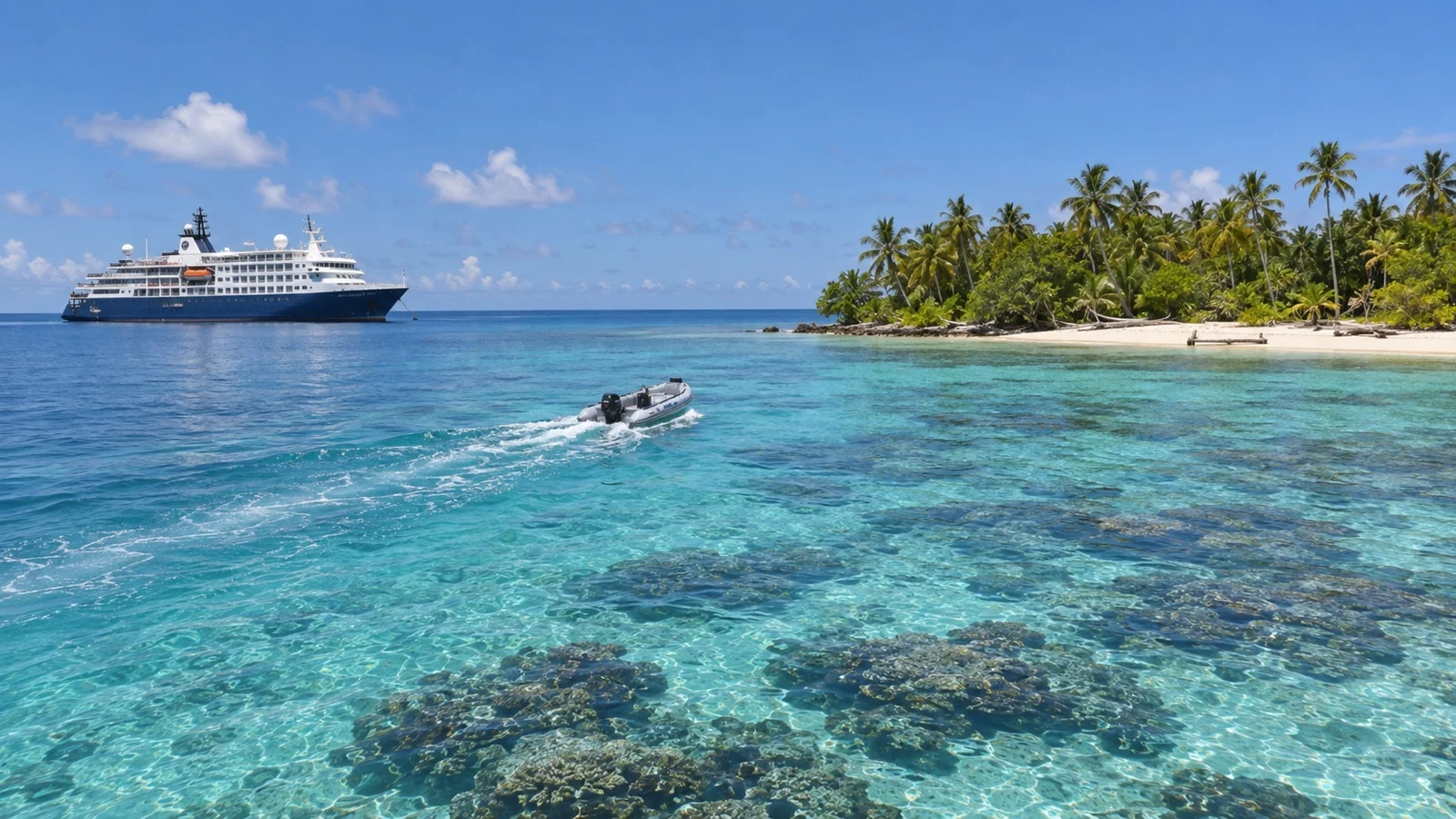
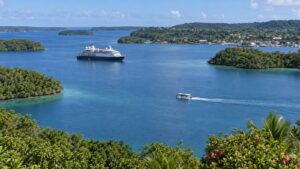
There is no reason to expect a large-ship pier or a standardized passenger terminal. The vessel normally anchors and sends guests ashore in tenders or expedition boats to a landing chosen for that call.
The exact beach, jetty, or village access can change with sea conditions, local arrangements, and the ship’s program. Do not copy a pin from a previous sailing and assume your boat will use the same place.
Current Pacific expedition programs continue to include Papua New Guinea communities, but a regional itinerary page is not a guarantee that a particular Kiriwina landing will occur. Verify the exact sailing on the operator’s website and expect the captain to retain final authority.
The morning briefing is part of the destination
Attend the ship’s briefing even if you have visited other remote Pacific islands. Kiriwina’s landing method, community expectations, permitted walking zone, photography rules, and program belong to this place and this day.
Listen for whether the boat landing is wet or dry, what footwear is appropriate, and whether bags must be passed separately. Our guide to how tendering changes time ashore explains why the scheduled call length is never the same as usable shore time.
Also note the last boat, recall signal, emergency contact, and the point where independent wandering stops. A remote landing works because everyone follows one controlled plan rather than inventing separate transport arrangements.
Enter as a guest, not a collector
Kiriwina is a home, not an open-air museum. People may be working, caring for children, preparing food, worshiping, or spending time with family while visitors move through the community.
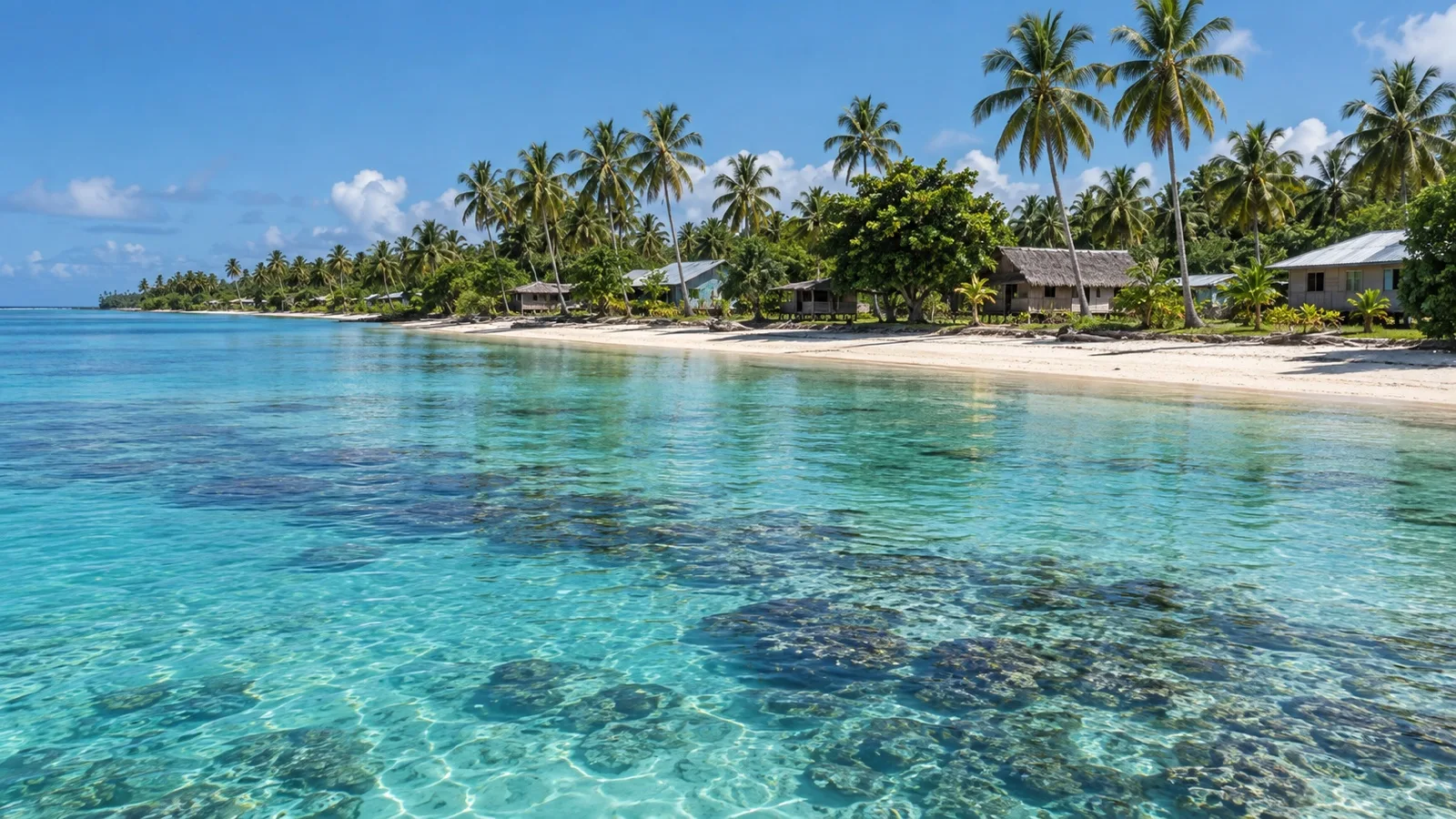
Stay with the route introduced by hosts, greet people before asking questions, and do not enter houses, gardens, yam structures, or ceremonial spaces without invitation. If a guide says an area is private, accept the boundary without negotiation.
Clothing should be lightweight but modest, particularly for a village visit. A shirt that covers shoulders and shorts or a skirt with comfortable coverage will feel more respectful than beachwear worn away from the water.
Photography needs a real yes
Ask before photographing an individual, a child, a home, a ceremony, or a craft maker at close range. A smile in your direction is not always consent, and a long lens does not remove the need to ask.
Use the guide or expedition team when language makes the answer unclear. If someone declines, lower the camera immediately and continue the interaction without making the refusal awkward.
Never promise to send a photograph unless you have a realistic way to deliver it. Connectivity and addresses may not work as they do at home, so a casual promise can become another burden left with the community.
Trobriand culture deserves context
The Trobriand Islands are widely known for seafaring, exchange networks, matrilineal kinship, gardens, carved objects, dance, and elaborate systems of social obligation. Those short labels can guide your questions, but they do not reduce a living culture to one timeless formula.
Communities change, individuals hold different views, and a performance for visitors is not the whole of daily life. Let local hosts explain what they choose to share instead of testing them against something you read in an old anthropology book.
The official Papua New Guinea tourism page for Milne Bay describes Trobriand traditions that include canoe carving, navigation, kundu drumming, storytelling, weaving, wood carving, yam exchanges, and dance. It also emphasizes that community-run experiences can provide insight into contemporary daily life.
A cultural performance is an invitation
A welcome dance, singing, drumming, or a demonstration may be part of the arranged program. Stand where directed, avoid blocking performers or local spectators, and let the hosts indicate whether guests are invited to join.
Do not assume every visible object is a prop or every moment exists for a camera. Watch first, listen to the explanation, and photograph only after the rules are clear.
If a contribution or community fee is included through the ship, that should be explained at the briefing. Do not create confusion by handing money into a performance unless hosts or the expedition team say it is appropriate.
Buying crafts works best with small kina
Carvings, woven pieces, baskets, and other locally made items can turn cruise visits into direct household income. Buy what you genuinely value, ask the price politely, and do not treat aggressive bargaining as part of the entertainment.
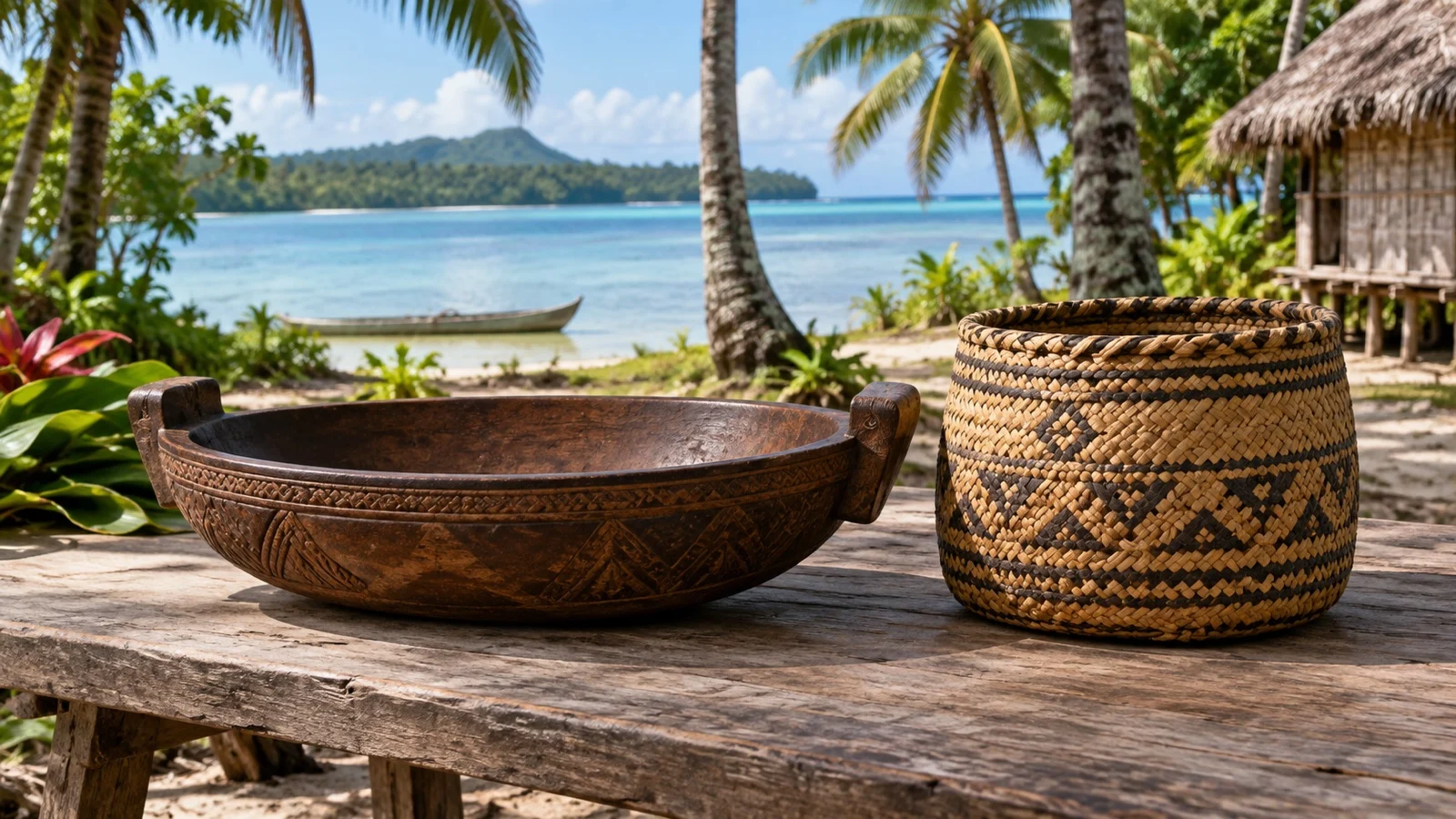
Bring Papua New Guinean kina in small, clean notes because cards, ATMs, and reliable change should not be expected. The ship may offer currency advice before the landing, but exchange only through legitimate channels.
Ask what an object is made from before buying it. Shell, feathers, seeds, untreated wood, plant fiber, or animal products may be restricted by Papua New Guinea rules, the next country on your itinerary, or your home customs authority.
Biosecurity travels in both directions
Remote islands can be highly vulnerable to pests and disease carried in soil, seeds, food, and dirty footwear. Clean your shoes and day bag before landing, and follow every ship instruction about food, plants, and biological material.
The responsibility continues when you leave. Papua New Guinea Customs publishes border guidance, while later ports may require declarations or confiscate organic souvenirs regardless of what a seller intended.
Do not take shells, coral, sand, plants, stones, or cultural material from the shore unless the hosts, ship, and applicable authorities all permit it. “Found on the beach” does not automatically mean legal or respectful to remove.
Swimming is permission plus conditions
Tropical water can look irresistible after a warm village walk, but swimming is not an automatic part of the landing. Ask whether the community and expedition team allow it at the designated place and time.
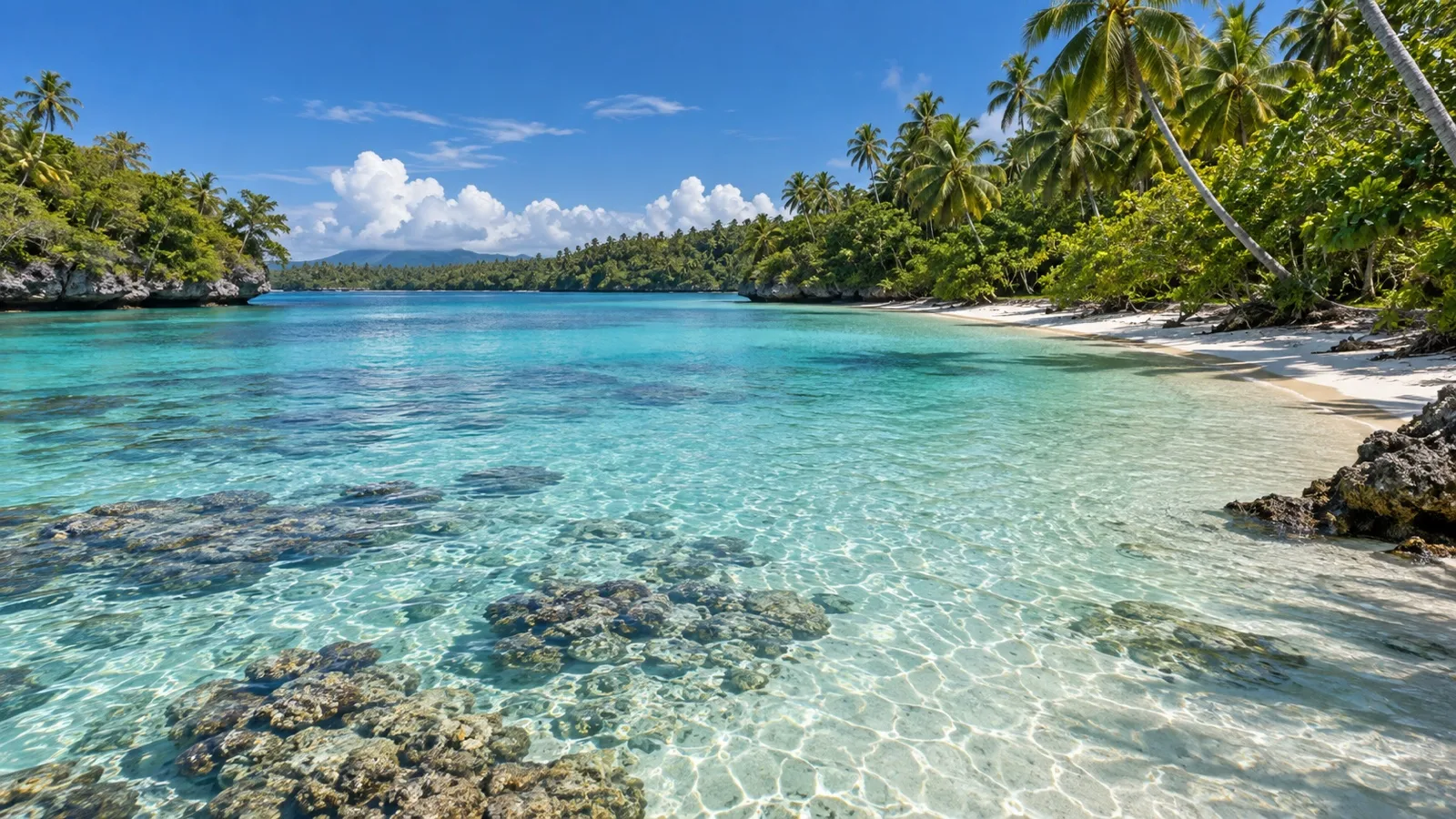
Reef, current, boat traffic, marine life, water quality, and changing weather all matter. Swim only in the supervised area, use reef-safe sun protection where requested, and never wander into village water access points without permission.
If the landing boat requires shoes, keep them ready rather than swimming until the last moment. Sand, wet feet, and a hurried boat transfer are a poor combination.
Walking is simple only on paper
The visitor route may be short, but expect sand, coral rubble, roots, grass, mud, and uneven village paths. Heat and humidity can make a modest distance feel much longer.
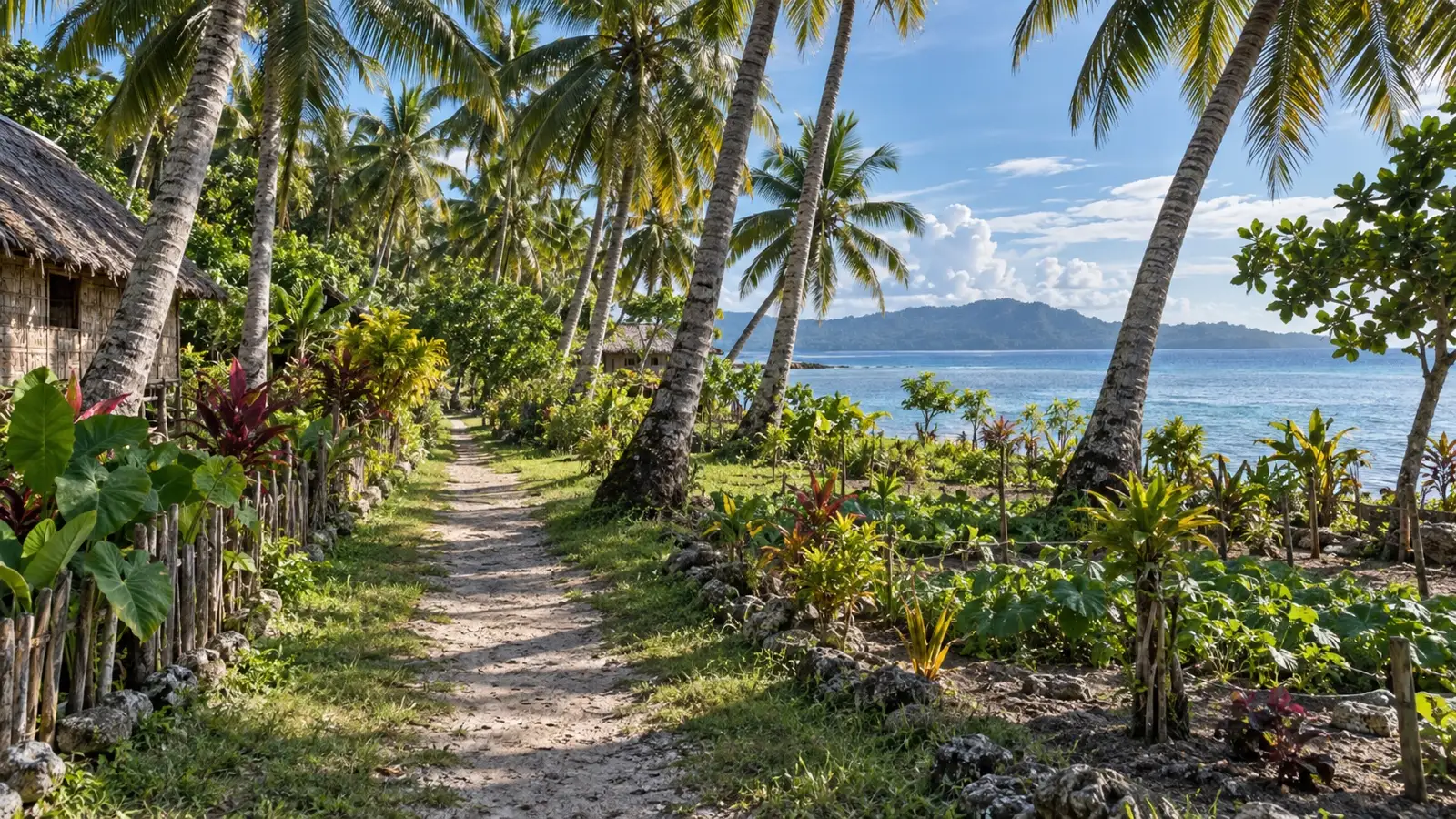
Wear closed or secure water-friendly shoes, carry drinking water, and use a hat. Move aside for residents, bicycles, and daily activity rather than assuming the visiting group has priority.
Do not set off toward an inland village or landmark based on a map screenshot. The route may cross customary land, require local permission, or extend beyond the safe return plan.
Accessibility may prevent landing
Expedition boats and tenders often require passengers to manage steps, a moving transfer, or a beach landing. Wheelchairs and scooters may not be accepted, while guests who can walk on the ship may still be unable to transfer safely in swell.
Ask the cruise line for exact physical requirements before final payment, including whether you must climb into a rigid inflatable boat or step into shallow water. The expedition leader can cancel an individual’s landing if the team cannot complete the transfer safely.
Our guide to wheelchair-friendly cruise ports explains why accessibility labels must include the entire route from ship to shore. On Kiriwina, terrain and the boat transfer are likely to be the decisive barriers.
Medical limits are substantial
Do not plan around access to a full-service hospital or specialist pharmacy during a short Kiriwina landing. The ship is likely to be the immediate medical resource, and serious evacuation from a remote island can be slow and weather-dependent.
Carry personal medication in original labeled packaging and bring any essential rescue medicine ashore. Tell the ship’s medical team before landing if heat, strenuous transfers, severe allergies, or delayed care create unusual risk for you.
Travel insurance should explicitly cover expedition cruising, tender landings, and medical evacuation in Papua New Guinea. Read the current government travel advice for your nationality because security, health, and entry information can change.
Weather owns the schedule
Kiriwina has a tropical climate, and heat, humidity, rain, wind, and sea state can reshape the call. The national tourism authority generally identifies May through October as Milne Bay’s drier period, but no season guarantees a safe landing.
A passing shower may be manageable while a change in swell can stop boat operations. Follow the expedition team’s judgment and read our guide to a rainy cruise port day for practical day-bag choices.
Carry a compact rain layer, protect electronics in a dry bag, and keep both hands free for boarding. If boats are recalled early, return immediately instead of assuming another departure will follow.
Entry permission and community protection
Papua New Guinea entry requirements still apply even when the ship coordinates group clearance. Confirm passport, visa, health, and customs rules through the cruise line and official authorities well before sailing.
Landing permission is also more than immigration paperwork because the community must agree to receive visitors. A ship can be cleared into the country while weather, local circumstances, or community needs still prevent this particular visit.
Never seek an independent boat to bypass a canceled ship landing. That can undermine safety controls, local consent, and the relationship that makes future visits possible.
Return only by the controlled boat plan
Note the last return boat before you leave the landing area and keep your watch on ship time. A phone may change time zones automatically or lose service, so it should not be your only clock.
Stay close enough to hear a recall signal or receive instructions from the expedition team. If weather worsens, a leisurely final market visit can turn into a rushed and unsafe boarding.
There is no ordinary taxi ride back to the ship after the controlled operation closes. Return with your assigned group, board only the authorized boat, and report any missing companion immediately.
Frequently asked questions
Where do tenders land on Kiriwina?
The landing point depends on the ship, weather, local agreement, and day’s program. Use the location given in the onboard briefing instead of relying on a previous itinerary or map pin.
Can I explore independently?
Only within the area and conditions agreed by community hosts and the expedition team. Do not leave the visitor route, enter private spaces, or arrange separate transport without explicit approval.
What cash should I bring?
Bring small Papua New Guinean kina notes for locally made crafts and any approved contribution. Do not expect cards, an ATM, or abundant change at the landing.
Can I photograph people?
Ask the person or a responsible adult before taking a close photograph, and follow any broader rule announced by hosts. Respect a refusal immediately and avoid photographing children without clear permission.
Can a Kiriwina call be canceled?
Yes, weather, sea conditions, safety, local needs, or clearance issues can prevent a landing. Expedition itineraries are flexible, and no published call is guaranteed.
The bottom line
Kiriwina is not about conquering an island in a few hours. It is about accepting a carefully arranged invitation, learning from the people who live there, and leaving the shore as respectfully as you entered it.
For a larger regional port with more conventional infrastructure, see our Alotau cruise port guide. We verify practical details under our editorial policy, but the ship’s team and Kiriwina’s community hosts always set the rules for the actual visit.