Hualien Cruise Port: Terminal, Taroko and East Coast
Hualien is the Taiwan cruise call where a little restraint creates a much better day. The port sits beside a compact, easygoing city, while Taroko National Park and the wild Pacific coast tempt you into longer drives that need current access checks and a serious return margin.
I would not build this stop around an old photo of Swallow Grotto or assume every famous gorge path has reopened after the 2024 earthquake. My approach is to confirm the ship’s berth and departure instructions first, verify Taroko and highway conditions on the morning of the call, then keep a satisfying Hualien or coastal plan ready.
Quick Facts
- Port: Hualien Port, a working commercial harbor with a cruise passenger terminal
- Terminal address: 68 Haian Road, Hualien City
- Arrival: Usually alongside, but follow your cruise line’s final berth and gangway notice
- City access: Shuttle, taxi, organized excursion, or call-day bus arrangements are the practical choices
- Rail station: Hualien Station is inland and is not a comfortable walk from the cruise berth
- Taroko: About 28 kilometers from the terminal area, with access that remains partial and changeable
- Best easy alternatives: Pine Garden, Hualien Stone Sculpture Museum, Qixingtan, and a focused city food stop
- Currency: New Taiwan dollar
- Language: Mandarin Chinese is the main language; English varies by setting
- Weather: Humid, changeable, and exposed to heavy rain, earthquakes, and typhoon disruptions
- Return margin: Generous for any gorge or north-coast outing
First understand Hualien’s working port
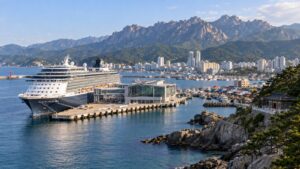
Hualien is not a cruise village where the gangway opens onto cafés and souvenir stalls. It is an active harbor, so pedestrian routes can be restricted and the safe exit process may involve a shuttle, a controlled bus movement, or instructions specific to your ship.
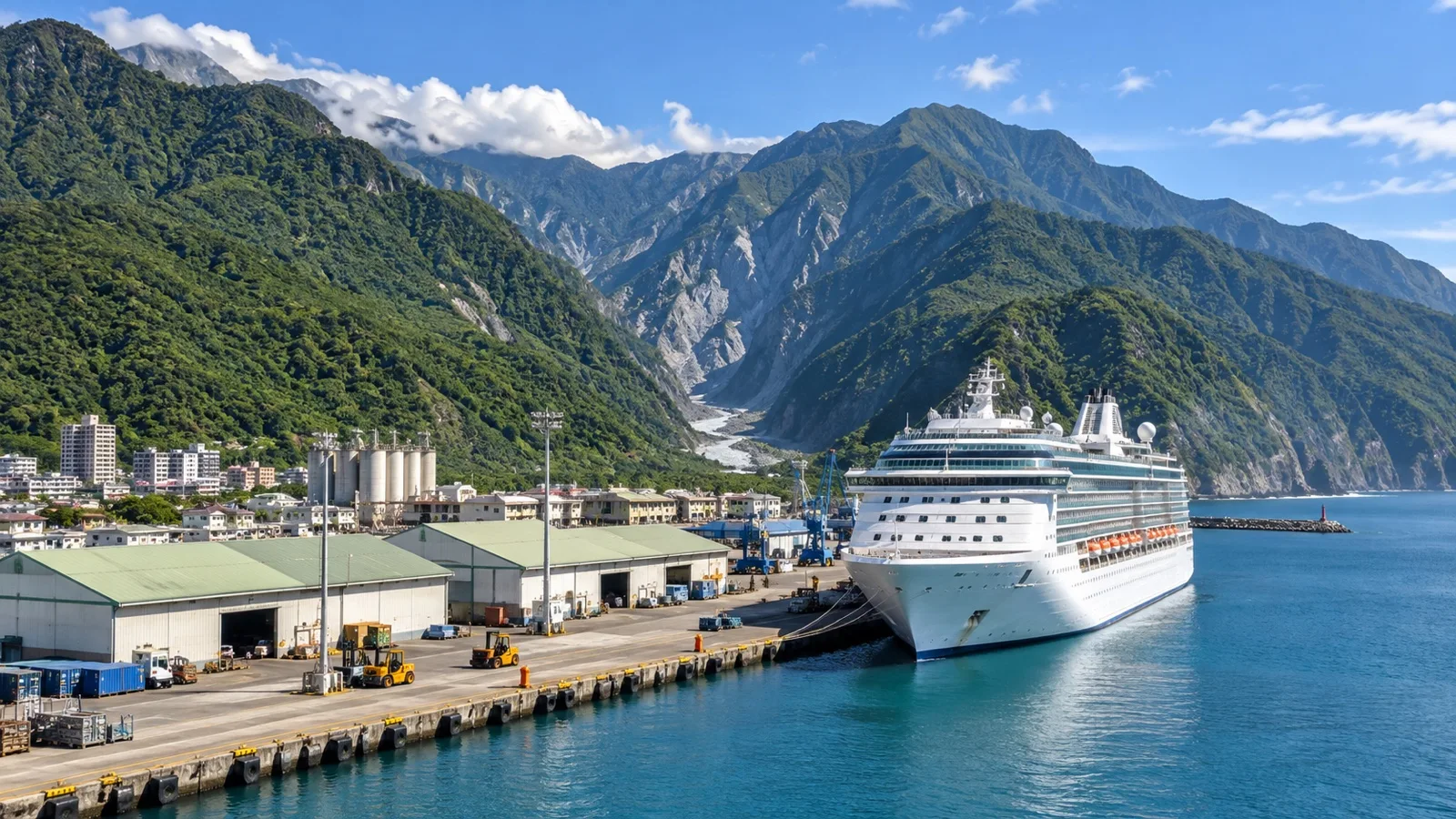
The official Taiwan International Ports Corporation cruise page identifies the passenger terminal at 68 Haian Road and lists customs screening, X-ray facilities, a taxi and bus staging area, accessible restrooms, drinking water, a breastfeeding room, an AED, and currency exchange. Those services make the terminal functional, but they do not turn the industrial port into a place for an improvised walk.
Listen carefully to the ship’s announcement about where independent passengers meet ground transportation. If your cruise line provides a port shuttle, note both its city stop and its final return time before leaving the terminal.
Getting from the terminal to Hualien City
A taxi is usually the cleanest independent option when you want to move directly between the port, Hualien Station, Pine Garden, or another named stop. Show the destination in Traditional Chinese on your phone, and keep the terminal address saved for the return.
The port authority says Hualien Station is roughly a ten-minute taxi ride under ordinary conditions. I still allow more time because a call can produce a sudden queue, and road conditions are never guaranteed.
Public transportation can work, but it should be treated as a confirmed call-day plan instead of an assumption. The official port page says route 308 adds two port shifts on cruise-call days, while regular routes 308, 105, and 1123 serve the Shalom Mennonite Center across from the main gate.
That wording matters because a bus stop near the gate is not the same thing as a bus beside the ship. Ask terminal staff whether passengers may walk to the gate, whether a port shuttle bridges the secure area, and whether the extra 308 service is operating for your call.
Hualien Station becomes useful if you have a deliberately rail-based plan, but it adds a transfer at both ends. Do not choose a train solely because a map makes the distance look short, and always check the Taiwan Railways timetable for the actual date rather than relying on a generic journey estimate.
Taiwan entry checks before the gangway opens
Your cruise line is the final authority on the documents it will accept for the sailing. Taiwan’s National Immigration Agency links travelers to the official Taiwan Arrival Card service, so complete any required online submission through the government site and follow the timing in your cruise documents.
Do not pay an unofficial website to submit a routine arrival form unless your cruise line has specifically directed you there. Save the confirmation in a form that works without mobile data, and carry the passport or ship-issued identification named in the daily program.
Taroko is possible only when the live facts support it
Taroko National Park begins about 28 kilometers from the cruise terminal area, but distance alone does not describe the outing. Mountain roads, recovery work, weather, traffic controls, and the time needed to reach an actually open site determine whether the day is sensible.
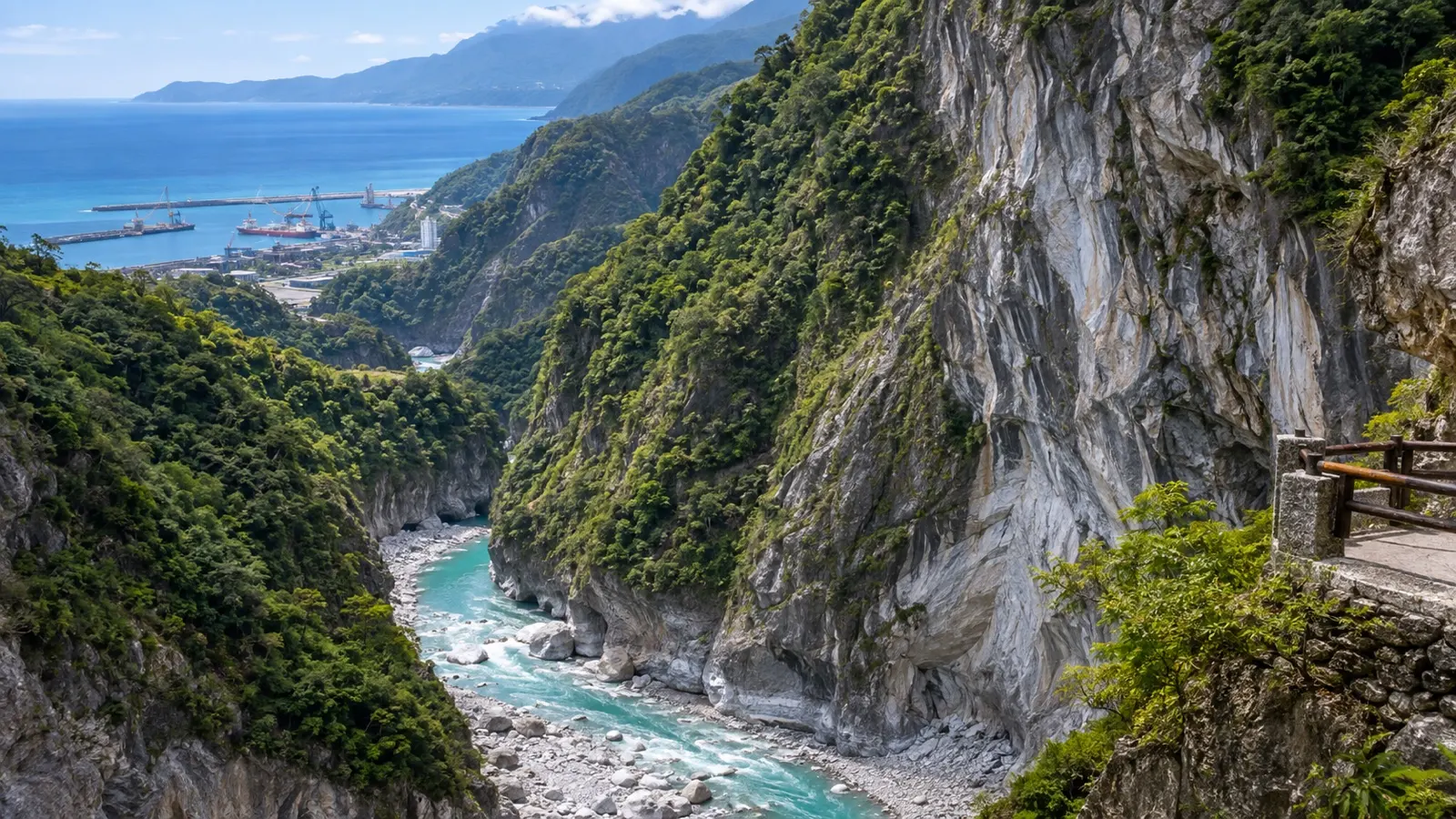
The park’s official hiking update shows a mixed recovery picture rather than a complete reopening. Dekalun Trail is open but steep, Dali and Datong are open and difficult, the Tianxiang Visitor Center area has access, and portions of Lushui and Chongde trails have reopened.
Several headline attractions remain closed, including Shakadang Trail, Eternal Spring Shrine Trail, Swallow Grotto, Tunnel of Nine Turns, and Baiyang Trail. A tour description that simply promises the classic Taroko highlights is not enough, so ask for the current route and the named stops before booking.
The national park does not operate commercial tours itself. Its official information points visitors toward licensed tourism services, and a reputable operator should be able to explain the latest closures, road controls, walking surface, hard-hat guidance, and fallback route.
The park advises wearing a hard hat on gorge trails because rockfall is a real risk. Treat closures, barriers, ranger directions, and weather warnings as safety limits rather than inconveniences to work around.
For a cruise call, I favor a ship excursion or a highly accountable local operator when Taroko is the priority. The advantage is not that delays disappear, but that the transport plan is designed around the ship and can be adapted when access changes.
Independent travelers need a disciplined turnaround time that begins before the ship’s all-aboard. Check the official Taroko National Park updates and the Highway Bureau’s real-time road portal before departure, then ask locally whether conditions changed after the latest notice.
What a realistic Taroko day looks like
A good current itinerary may spend more time in accessible gateway areas and less time deep inside the gorge than an older guide suggests. That can still be worthwhile if the guide explains the landscape, the earthquake recovery, the Liwu River system, and the Indigenous history rather than racing between blocked trailheads.
Avoid stacking too many distant stops into one day. One verified park sector plus a coastal viewpoint or an early return through Hualien is more resilient than a checklist that depends on perfect traffic and unrestricted access.
If your mobility is limited, ask for exact walking distances, stair counts, gradients, toilet locations, and vehicle access at each planned stop. Descriptions such as easy, panoramic, or suitable for everyone are too vague for a recovering mountain environment.
Hualien City is a real plan, not a consolation prize
Hualien City works well when you want a lower-risk day with room for food, history, and a waterfront pause. The distances are compact enough to combine a few stops by taxi without turning the day into a transportation project.
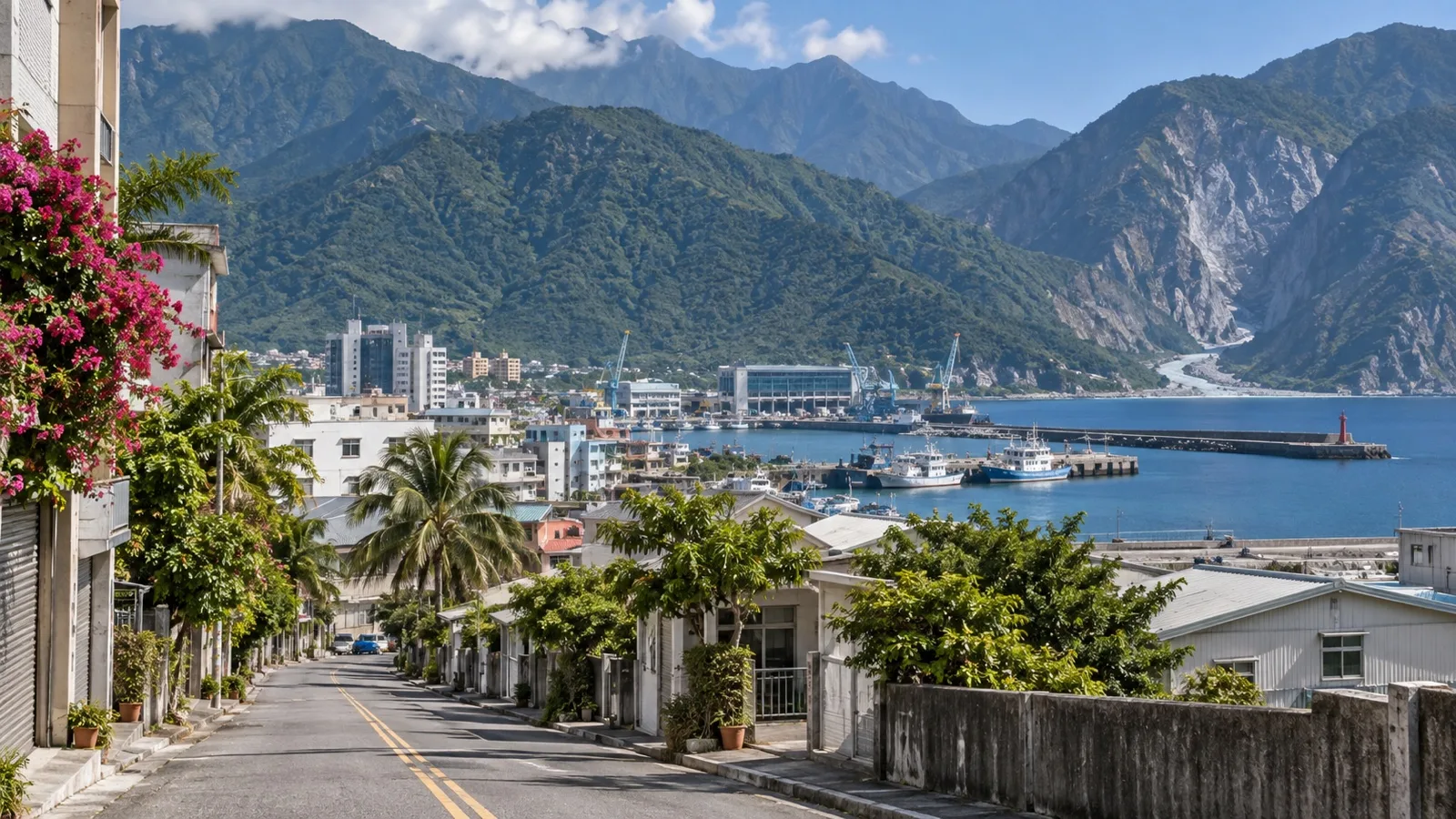
Pine Garden
Pine Garden is one of the closest well-known sights to the port area, and the port authority places it about half a kilometer from the terminal in its nearby-attraction listing. The historic hillside setting and views make it a natural first or last stop, but confirm opening hours and step-free access before relying on it.
Hualien Stone Sculpture Museum
The Hualien Stone Sculpture Museum reflects the region’s strong relationship with marble and stone arts. The port authority lists it about 1.4 kilometers from the terminal, which makes it much easier to fit around a short call than a mountain excursion.
Waterfront and harbor views
The Waterside Art Walk and Hualien Harbor Landscape Bridge can add an outdoor element close to the port. Their official distance listings are about 2.1 and 2.2 kilometers from the terminal, but confirm whether your route begins outside the secure zone and whether heat or rain makes walking comfortable.
Food without a frantic checklist
Hualien is known for regional snacks and casual Taiwanese food, but I would choose one food area that fits the day’s transport rather than chase a long social-media list. Ask about ingredients if you have allergies, and carry the destination name in Chinese for the taxi ride back.
A city day also gives you a better buffer for weather and operational changes. You can shorten a museum visit, move a meal earlier, or return to the terminal without being committed to a mountain road.
Qixingtan brings the Pacific close
Qixingtan is a sweeping pebble coast north of the city, about 5.6 kilometers from the terminal according to the port authority. It is one of my favorite alternatives when the gorge is uncertain because the scenery feels distinctly eastern Taiwan without demanding a full-day drive.
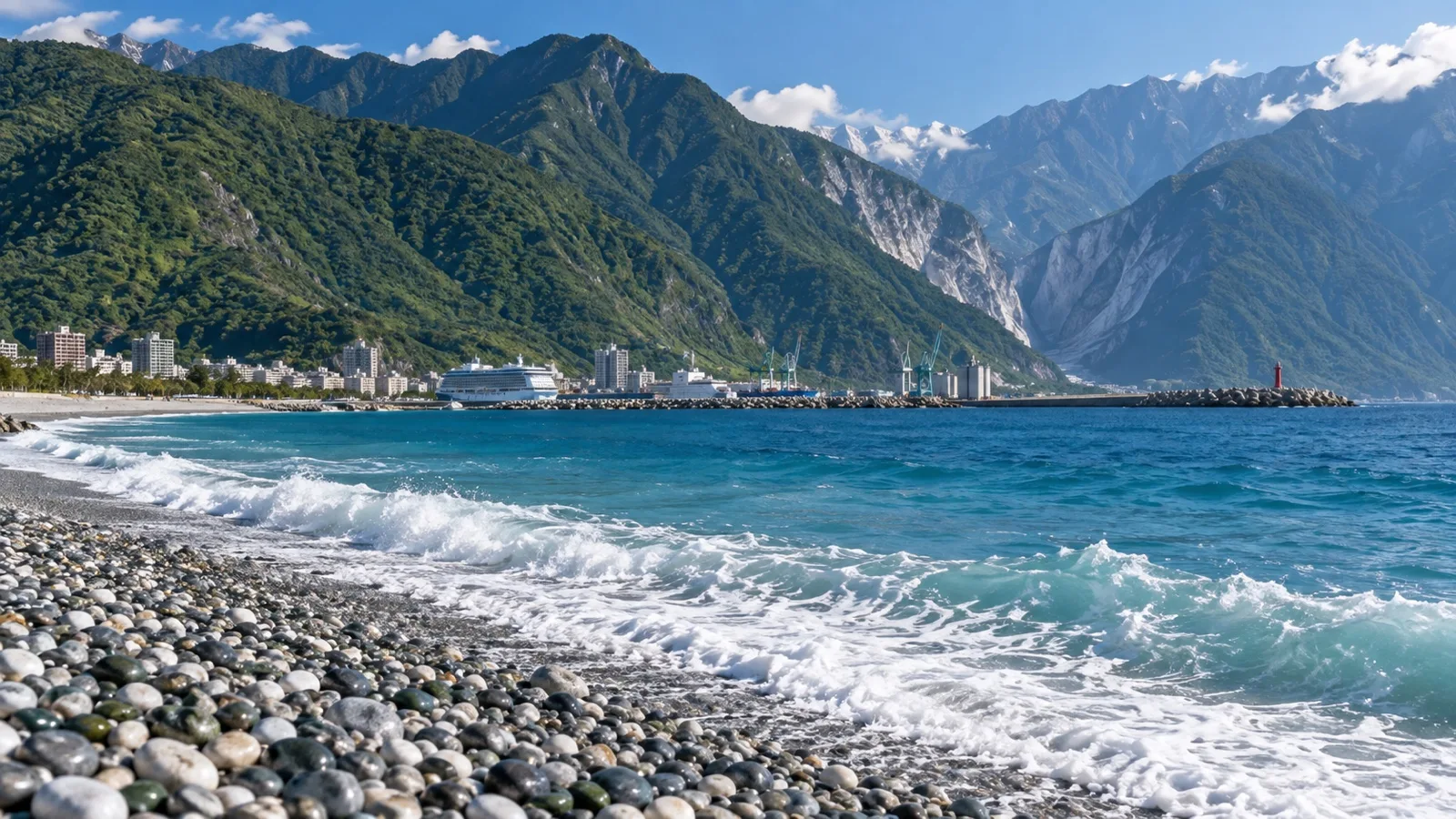
This is an exposed ocean shore, not a conventional swimming beach. Waves, wind, slippery stones, and changing weather deserve respect, so stay behind any barriers and follow local safety signs.
A taxi or prearranged driver is simpler than piecing together an uncertain bus connection on a short call. Agree on whether the driver will wait, arrange the pickup location clearly, and keep enough time to handle a delayed return.
Qingshui Cliffs and the north coast
The dramatic Qingshui coast is roughly 28 kilometers from the terminal area and can be paired with a carefully limited northbound plan. The viewpoint or trail you can actually use depends on road and park conditions, not on the most famous image in a brochure.
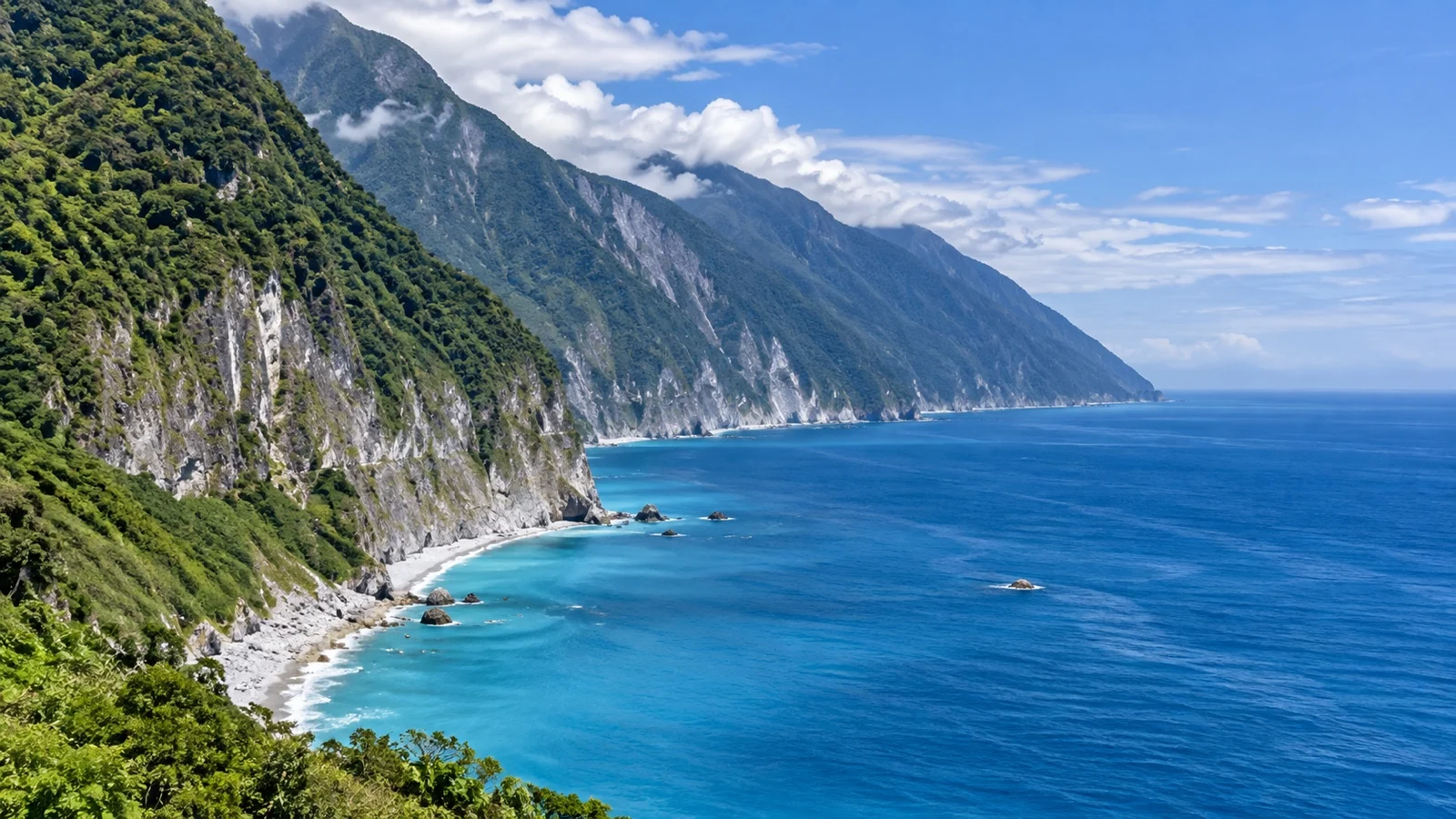
The park reports partial access on Chongde Trail to the second viewing platform, while other places remain restricted. Verify the exact access point on the day and never enter a closed section for a better photograph.
North-coast drives share the same return-risk problem as Taroko. Road controls, rockfall inspections, rain, and tour traffic can compress the schedule, so set the turnaround time before leaving Hualien.
Culture and place deserve more than a photo stop
The Taroko region is part of the homeland of the Truku people, whose living culture cannot be reduced to scenic branding. Choose guides and experiences that name Indigenous communities respectfully, follow local rules, and support authorized cultural interpretation.
Sacred places, memorial spaces, villages, and private land are not open sets for cruise-day photography. Ask before photographing people or ceremonies, and do not cross a barrier because another visitor did.
Hualien’s stone arts, temples, foodways, and coastal communities offer context that a fast gorge transfer can miss. Even on an excursion, leave space to listen to the people who live here rather than treating the county as a sequence of viewpoints.
Accessibility and energy planning
The official cruise terminal lists accessible restrooms, but the rest of the day varies widely. Port buses may have steps, taxis may not accommodate larger mobility devices, and natural sites can involve gravel, uneven paving, stairs, or long distances from the vehicle.
Ask the cruise line whether the gangway is level, whether an accessible shuttle is guaranteed, and whether your mobility device can be stored in the tour vehicle. Get those answers in writing when accessibility determines whether the outing is possible.
For a gentle day, a vehicle-based city circuit with Pine Garden or the sculpture museum can be easier to control than the gorge. Build in seated breaks and an indoor option because humidity can make a modest walk feel much harder.
Earthquakes, rain, and typhoons change the plan
Eastern Taiwan is seismically active, and aftershocks or inspections can close roads and trails with little notice. Follow official instructions immediately after any earthquake and do not continue toward the mountains while authorities are assessing conditions.
Heavy rain can increase rockfall, flooding, and road-control risk even when conditions at the port look manageable. The Central Weather Administration provides official forecasts, radar, precipitation, wind, and warning information for Hualien.
Typhoons can alter ship arrivals, excursions, rail service, and attraction hours. Cruise-line messages and local emergency directions outrank the itinerary you planned at home.
Carry water, sun protection, a light waterproof layer, and shoes with dependable grip. A small power bank is also valuable because live transport and safety checks can consume your phone battery quickly.
Money, language, and mobile service
New Taiwan dollars are the practical currency for taxis, small shops, and markets, even though larger businesses may accept cards. The terminal lists currency exchange, but I would still avoid depending on a single facility being open at the exact moment you arrive.
Mandarin Chinese is widely used, and English availability varies. Save your destination, terminal address, and ship name in Traditional Chinese, plus a screenshot of the port location that does not require a data connection.
A working mobile connection makes real-time road, weather, and transport checks easier. Download maps before sailing and keep every essential instruction offline in case coverage becomes weak near the mountains.
How much return time is enough
Your ship’s all-aboard time is the hard deadline, not its scheduled departure. I plan to be back inside the port earlier than the cruise line requires, with a larger cushion for Taroko or Qingshui than for a city visit.
A driver should know the correct cruise terminal entrance and the need to clear port controls. Ask for the return estimate before the outing begins, and shorten the route when the margin starts to disappear.
Independent rail or bus plans need a backup taxi strategy and enough cash or card access to use it. Do not spend the buffer on one last stop, especially if the final transfer crosses the city at a busy time.
Three sensible ways to use the call
For first-time visitors who prioritize Taroko
Book an accountable excursion with a clearly stated current route, safety plan, and port return commitment. Confirm which sites are open, how much walking is involved, and what replaces the gorge stops if access changes.
For an easy scenic day
Pair Qixingtan with one city attraction and a relaxed meal. This keeps the Pacific landscape in the day while avoiding the timing pressure of a deeper mountain route.
For maximum flexibility
Use taxis for a compact circuit around Pine Garden, the stone sculpture museum, waterfront areas, and a preselected food stop. Keep the final hour lightly planned so a weather change or taxi delay does not threaten the ship.
Common Hualien cruise questions
Can I walk from the ship into town?
Do not assume you can walk through the operational port. Follow the ship and terminal instructions for the secure area, then decide whether walking makes sense only after you reach an authorized public exit.
Is Taroko fully open again?
No, the official park information still shows a combination of open, partial, difficult, and closed areas. Check the named site you intend to visit rather than relying on the general phrase Taroko is open.
Should I take a taxi to Hualien Station?
A taxi is the practical connection for most cruise passengers using the station. The port authority estimates about ten minutes under ordinary conditions, but build in queue and traffic time.
Can I visit Taroko and Qingshui Cliffs in one call?
Some organized routes may combine limited stops, but the plan depends on live access and call length. I would rather see fewer places safely than carry a thin return margin through an active recovery area.
What if the weather closes the mountains?
Switch early to Hualien City, the sculpture museum, a food-focused outing, or a safe coastal stop if local conditions allow. A strong backup chosen before the call feels like a deliberate day instead of a disappointment.
Is Hualien suitable for travelers with limited mobility?
The terminal has accessibility facilities, and a vehicle-based city day can be manageable. Natural sites and tour vehicles vary, so confirm each transfer and surface in detail before booking.
My bottom line for Hualien
Hualien rewards travelers who treat current conditions as part of the itinerary. Verify the berth, the port exit, Taroko’s named open areas, Highway Bureau notices, weather, and the ship’s return instructions before committing to a long route.
If the gorge is not the right choice, stay curious about the city and coast rather than forcing the famous plan. Pine Garden, stone arts, Qixingtan, local food, and a calm Pacific view can make this one of the most memorable calls in Taiwan.
Compare this stop with our Keelung cruise port guide, and use our excursion versus DIY guide when weighing a long independent route. You can also explore the wider itinerary in Taiwan Cruise Ports.
How this guide was researched: This guide was independently checked on September 11, 2026, against the Taiwan International Ports Corporation, Taroko National Park, National Immigration Agency, Taiwan Arrival Card, Central Weather Administration, and official live road information. Reconfirm the berth, entry documents, transport, attraction access, weather, and final return before sailing because live conditions can change.