Klaipėda Cruise Port: Old Town, Piers and Curonian Spit
Klaipėda is one of those Baltic ports where a satisfying day can begin almost immediately. The old town is close to the cruise quay, yet the passenger also has a tempting second route across the lagoon to the Curonian Spit.
That choice should be made early because a city walk and a full excursion to Nida use the clock very differently. Keep the exact berth, ferry terminal, and ship time separate in your planning, and Klaipėda becomes pleasantly manageable.
Quick facts about Klaipėda cruise port
- Arrival: Normally alongside at the Cruise Vessel Terminal or another assigned secure berth
- Old Town: Close to the main cruise quay, with a generally walkable historic center
- Signature excursion: The Lithuanian Curonian Spit, often including Juodkrantė or Nida
- Independent spit option: Ferry to Smiltynė, then walk, cycle, bus, or prearranged transport
- Currency: Euro
- Language: Lithuanian, with English common in visitor services
- Best short plan: Theater Square, Fachwerk lanes, the riverfront, and Lithuanian food
- Weather: Changeable Baltic conditions with wind and rain possible in any cruise month
- Main risks: Using the wrong ferry, underestimating Nida distance, wind, and leaving too little quay buffer
The main cruise quay is beside the city
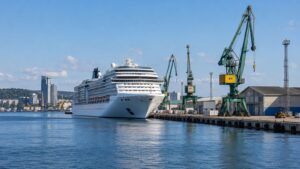
Klaipėda’s established Cruise Vessel Terminal lies near the mouth of the Danė River and the edge of the historic center. Ships normally berth alongside, although port operations can assign another quay and the daily notice remains the authority.
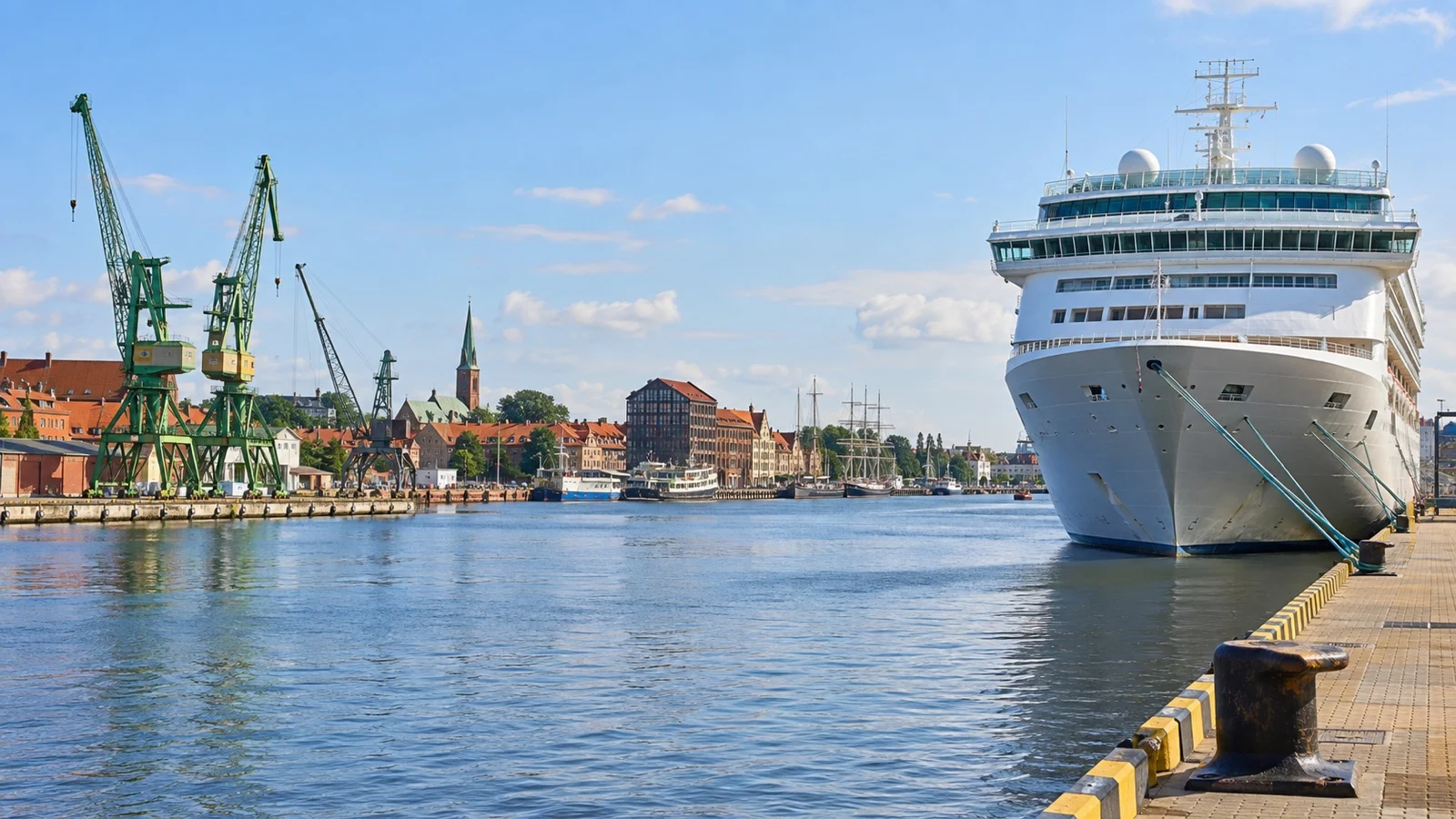
From the principal cruise berth, Theater Square is roughly a comfortable city walk for most active passengers. Port security, gangway location, road crossings, and temporary construction can change the exact path, so follow the marked exit rather than cutting across working areas.
Do not confuse announcements about a future or expanded cruise terminal with the berth actually used on your sailing. Send independent guides the ship name, date, and precise gate before agreeing to a pickup.
Old Town is the dependable independent day
Klaipėda’s historic center feels different from the grand baroque capitals farther east on the Baltic. Its German-influenced plan, red brick, Fachwerk buildings, sculpture trail, and low-scale riverfront create a compact city that rewards looking closely.
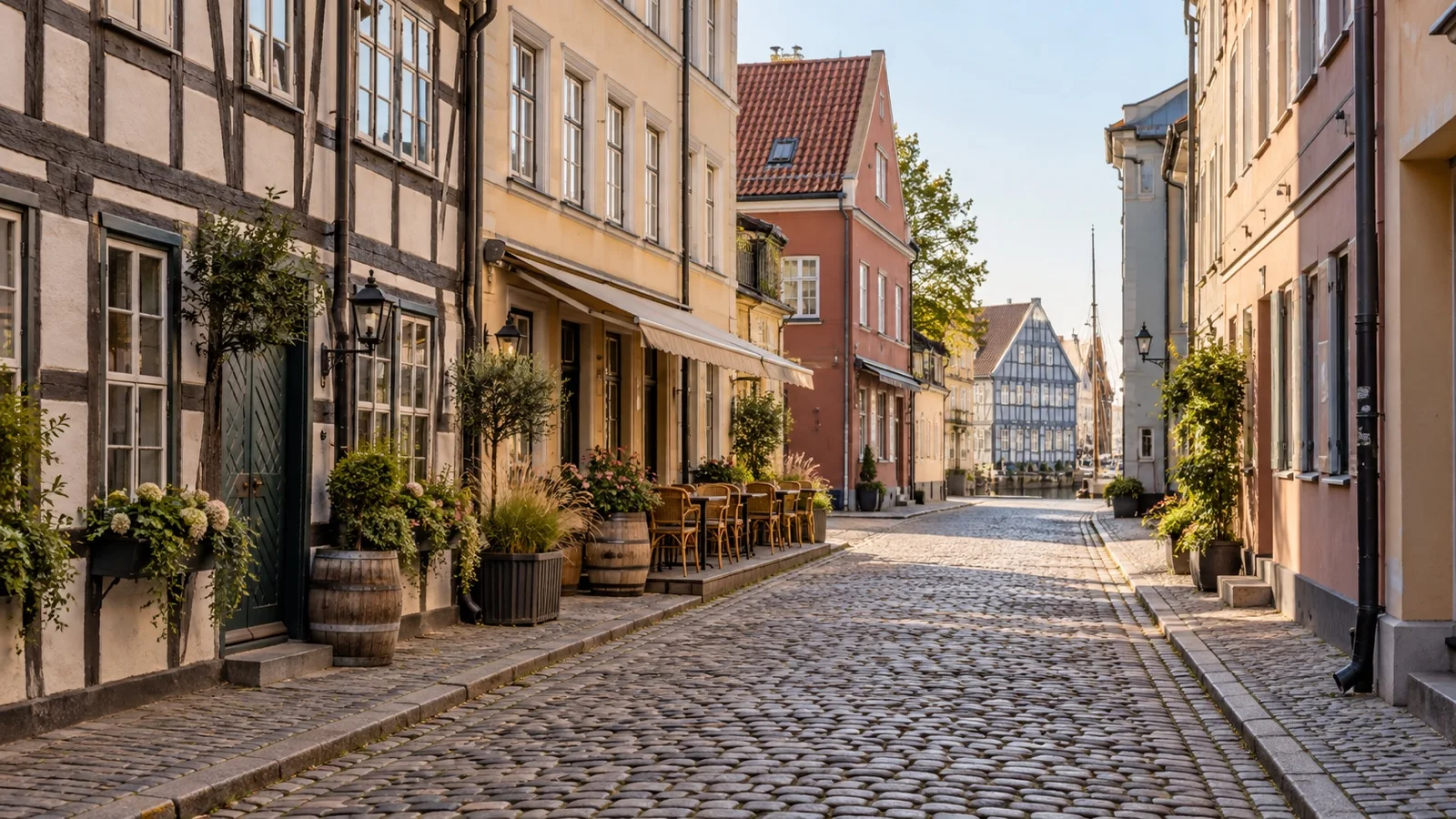
Theater Square is the natural orientation point, framed by the Drama Theatre and the small Ännchen of Tharau fountain. From there, wander the lanes around the old market area, then return toward the Danė waterfront without turning the walk into a forced march.
Small sculptures appear around the center, including mice, cats, dragons, and maritime figures. Finding a few is charming; trying to collect every one before lunch is how a relaxed Baltic stroll becomes competitive fieldwork.
The riverfront keeps maritime history visible
The Danė River connects the old town with the port, ferries, and working maritime landscape. Warehouses, quays, boats, and modern public spaces make the water a useful spine for an easy self-guided route.
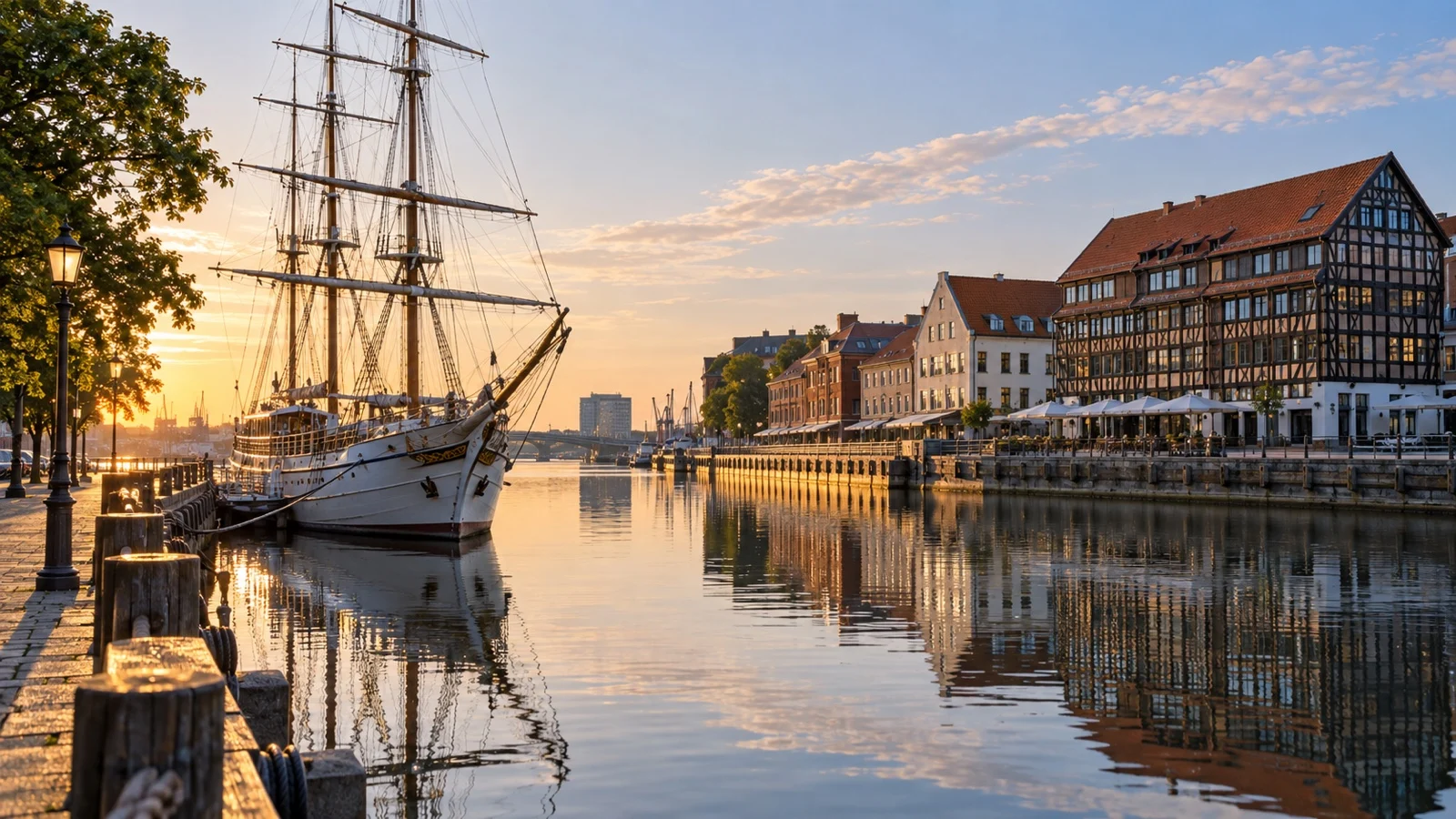
The Castle Museum complex and nearby archaeological area help explain the city’s earlier identity as Memel and its strategic place on the Baltic. Opening hours and exhibition access vary, so check current municipal museum information before building the day around an interior visit.
The Curonian Spit begins across a narrow channel
The Curonian Spit is a long ribbon of dunes, forest, lagoon shore, and settlements separating the Curonian Lagoon from the Baltic Sea. UNESCO recognizes it as a cultural landscape shaped by centuries of human work to stabilize a vulnerable sand environment.
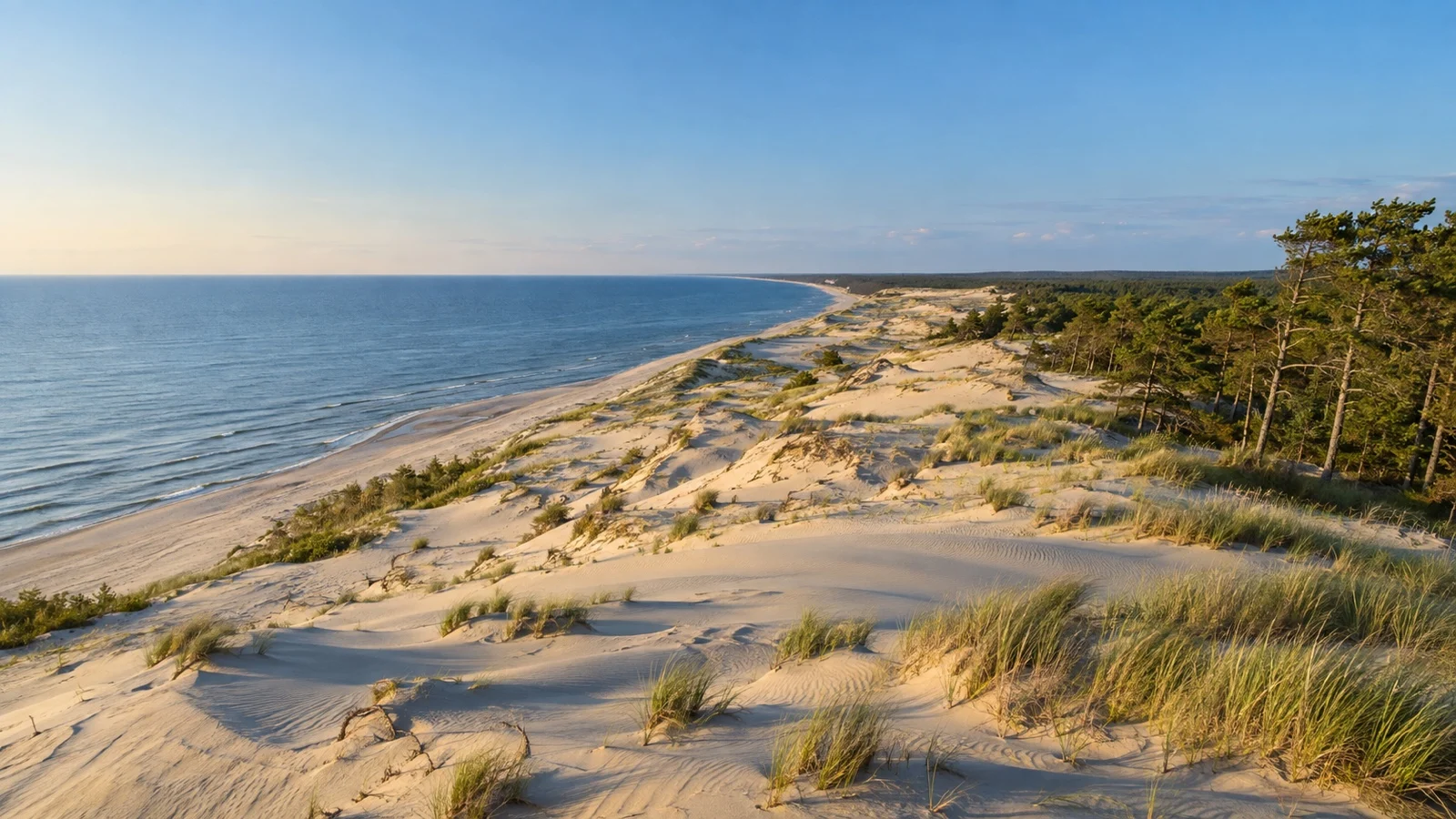
Smiltynė sits directly across the water from Klaipėda, but famous Nida is far south along the Lithuanian portion. Reaching the spit is quick; reaching its distant villages, viewpoints, and dunes is the part that demands a real timetable.
Know the two ferry operations
Klaipėda has an Old Ferry Terminal for pedestrians and cyclists and a New Ferry Terminal that also carries vehicles. The correct terminal depends on whether you are walking across, taking a bicycle, joining a bus, or traveling with a car.
Use the official Smiltynė ferry schedule for the date, terminal, fare, and final return, since seasonal frequency and operational notices change. Build a missed-ferry cushion into the return because a boat visible across the channel is still unhelpful after its doors close.
After arriving in Smiltynė, the immediate peninsula offers forest paths, beaches, and maritime attractions without the long transfer to Nida. This is the better independent choice for a short call or travelers who want nature without spending hours on a bus.
Smiltynė makes a flexible half-day
A walk through pine forest to the Baltic beach can create a strong contrast with the old town. Distances, sand, wind, and seasonal services matter, so carry water and check the return route before wandering deeper into the peninsula.
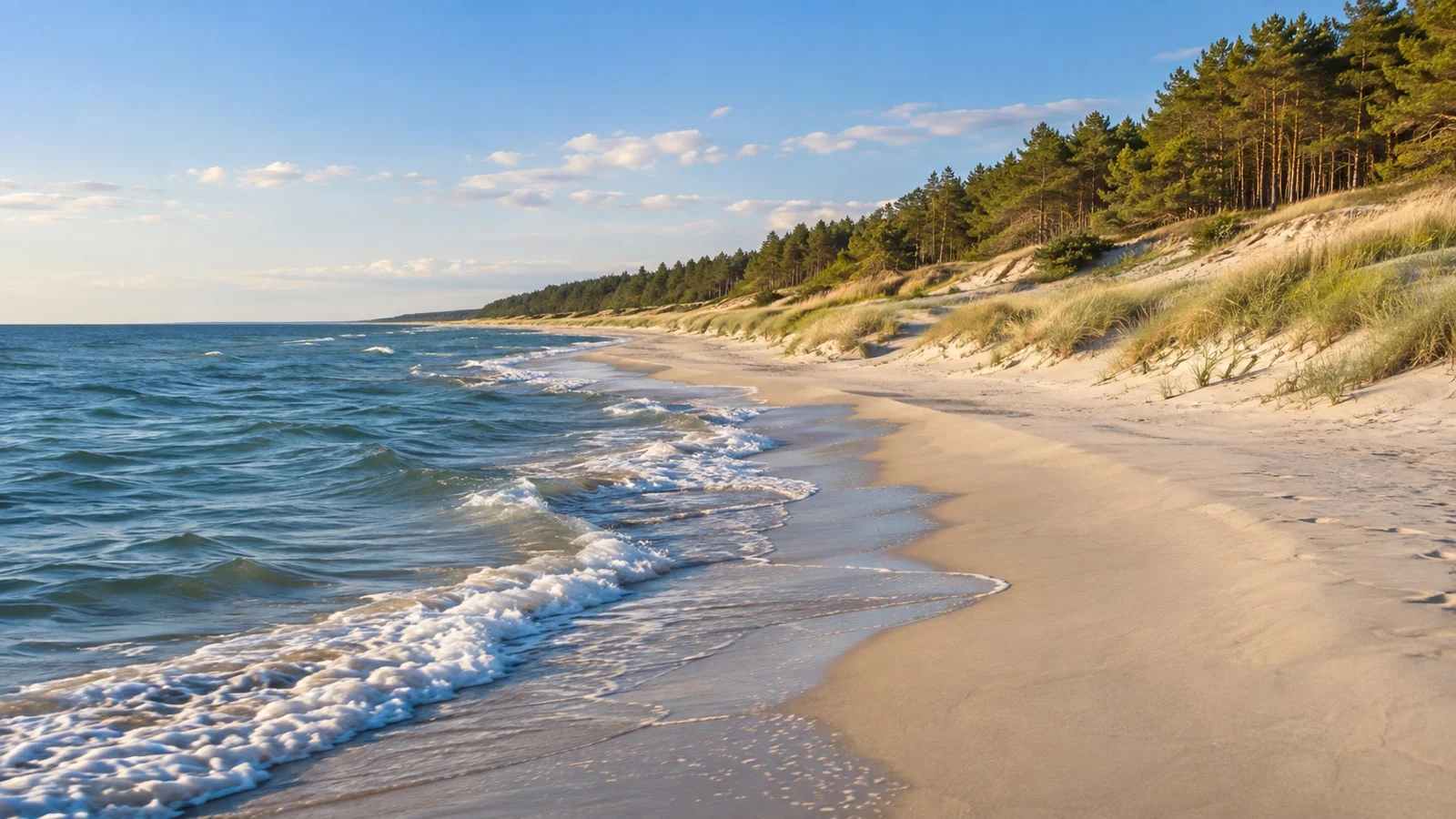
The Lithuanian Sea Museum and Dolphinarium occupy the northern tip near the historic fort area. Tickets, performance schedules, renovations, and access arrangements can change, making advance official confirmation essential when the museum is the main reason for crossing.
Nida is beautiful and not nearby
Nida is the best-known settlement on the Lithuanian spit, with lagoon views, traditional architecture, the Thomas Mann connection, and access to the Parnidis dune landscape. It is an excellent full excursion and a poor casual add-on after a leisurely city morning.
A ship tour or reputable private guide simplifies ferry coordination, road timing, parking, and the return to the correct port gate. Independent travelers need current bus schedules in both directions and a backup plan if a connection is missed.
Stay on marked boardwalks and designated viewpoints because unrestricted footsteps accelerate erosion. Protected dunes are landscapes to experience carefully, not shortcuts between a coach park and a photograph.
Juodkrantė offers a shorter spit excursion
Juodkrantė lies north of Nida and can reduce the road commitment while preserving the atmosphere of lagoon village, forest, and coastal landscape. The Hill of Witches sculpture trail is a popular stop, although roots, slopes, and damp surfaces affect accessibility.
A guide can combine Juodkrantė with a dune viewpoint or brief beach stop more comfortably than a full Nida circuit on a moderate call. Confirm what is actually included, since the phrase Curonian Spit tour covers outings of very different length and depth.
Palanga is the mainland alternative
Palanga lies north of Klaipėda and offers a Baltic resort atmosphere, a long pedestrian promenade, beach, and the Amber Museum in the former Tiškevičiai Palace. It avoids the spit ferry but still requires road transport and a firm pickup.
A focused Palanga outing suits travelers more interested in amber, gardens, and resort history than dune landscapes. Check museum hours and traffic before combining it with Klaipėda old town.
Eat something Lithuanian before sailing
Look for smoked fish, potato pancakes, cepelinai dumplings, beet soup, dark rye bread, or a seasonal pastry. A relaxed lunch in the old town is a completely legitimate centerpiece when wind or rain makes a distant nature excursion less appealing.
Lithuania uses the euro, and cards are widely practical in established businesses. Carry a small backup amount for minor purchases, ferry machines, or a temporary card outage, and confirm whether service is included before tipping.
Weather rewards layers and a backup
Baltic weather can change quickly with wind, showers, bright sun, and cool shade appearing in one call. Pack a light waterproof layer, secure shoes, and something warm enough for an exposed ferry deck or dune viewpoint.
Wind affects perceived temperature and can alter ferry or excursion operations. Keep an old-town and museum plan ready, since forcing a beach day through sideways rain rarely creates the memory advertised.
Accessibility varies sharply by route
The main cruise berth and parts of central Klaipėda can be relatively manageable, but cobbles, curbs, gangway slope, and port distance still vary. Ask the ship for the sailing-specific route and request an accessible shuttle when needed.
Ferries may carry mobility devices, yet ramps, vessel assignment, boarding surfaces, and onward transport require confirmation. Sand, forest roots, older buildings, and dune boardwalk grades make some spit attractions much more demanding than the crossing itself.
For a lower-energy day, use an accessible vehicle between Theater Square, the riverfront, a confirmed museum, and lunch. Ask attractions for entrance, elevator, restroom, and companion policies rather than relying on a general accessibility symbol.
Three realistic Klaipėda plans
The easy city plan connects Theater Square, old-town lanes, the riverfront, one museum, and lunch. It minimizes transportation and remains easy to shorten when the ship clears late.
The mixed plan explores old town early, then takes the pedestrian ferry for a Smiltynė forest or beach walk. Set a personal ferry back well before the final one that could technically reach the ship.
The full spit plan uses a ship excursion or vetted private guide for Juodkrantė or Nida and treats that journey as the day. Skip the lengthy old-town lunch if the road or ferry schedule tightens.
Protect the return across water and port gates
All aboard is earlier than departure, and the ship’s daily program controls the time. Add a missed-ferry margin for any independent spit visit and a traffic margin for Palanga, Juodkrantė, or Nida.
Save the exact berth, marked entrance, port agent, and ferry schedule offline. If the outbound connection is late, reduce the route immediately rather than expecting every return connection to perform perfectly.
Final thoughts
Klaipėda succeeds because it offers a genuine city day beside the ship and a protected coastal landscape just across the channel. Choose old town, nearby Smiltynė, or a full Curonian Spit excursion, then give the ferries and port gate an honest return buffer.
CruisePorts.co provides practical, independent planning guidance for cruise travelers. Berths, ferry schedules, attraction access, entry rules, prices, weather, and road conditions can change, so verify critical details with official sources and your cruise line before travel.