Cagliari Cruise Port: Castello, Poetto Beach and Easy City Plans
Cagliari gives cruisers an unusually easy Sardinian choice: climb into a golden old town, chase flamingos beside a city beach, or do both without turning the day into a transportation puzzle.
My quick take
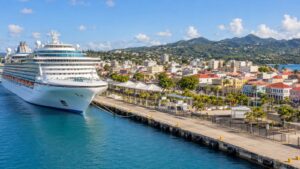
Cagliari is a strong do-it-yourself port because the harbor sits beside the lower city. Once the required port shuttle releases you at the public side of the gates, cafés, the Marina lanes, Piazza Matteotti, and the climb toward Castello are close at hand.
The one decision that matters is whether you want history or sand to lead the day. Castello rewards sturdy shoes, while Poetto Beach is the low-effort escape when Sardinia is delivering its full blue-water sales pitch.
If you are comparing this call with bigger Western Mediterranean stops, start with our Mediterranean cruise ports guide. Cagliari requires far less transfer time than ports built around a distant marquee city.
The quick facts
- Where you land: the dedicated cruise facility at Molo Rinascita, on the Italian island of Sardinia, where the port operator lists two substantial docks and a 6,780-square-foot (630 sq m) terminal. It sits alongside the lower city rather than out in an industrial suburb.
- Dock or tender: Most scheduled calls use the berths at Molo Rinascita, and tendering is not part of a normal Cagliari call.
- Into town: A free port shuttle takes you to the public gates, because walking independently inside the operational port is restricted.
- Currency and language: The euro, with Italian the working language and Sardinian widely spoken.
- Time zone: Central European Summer Time (CEST, UTC+2) through the cruise season, CET (UTC+1) in winter.
- How often the call is missed: Low (roughly 1 to 2%): swell or rough seas can make access unsafe.
Where cruise ships dock in Cagliari
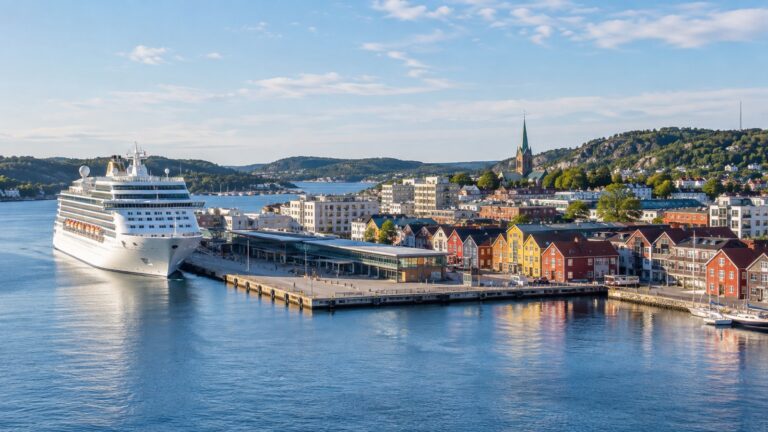
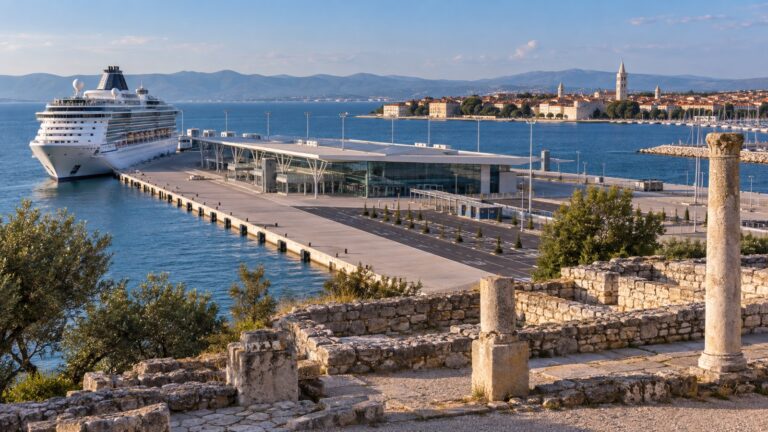
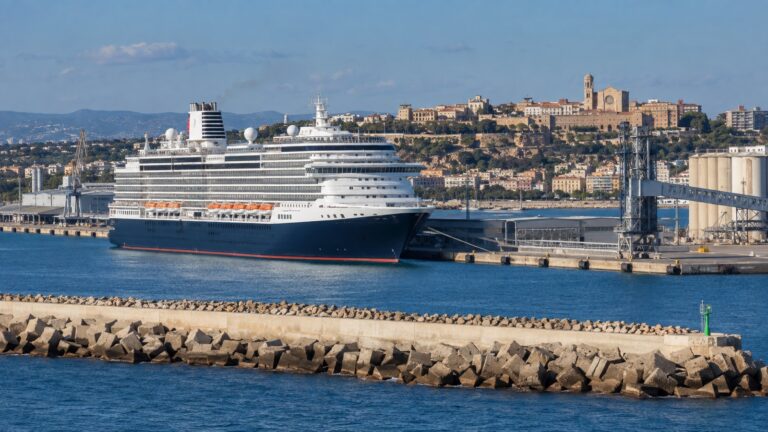
The dedicated cruise facility is at Molo Rinascita, 09123 Cagliari. The official port operator lists two substantial docks, a 6,780-square-foot (630 sq m) terminal, and facilities for both transit calls and turnaround operations.
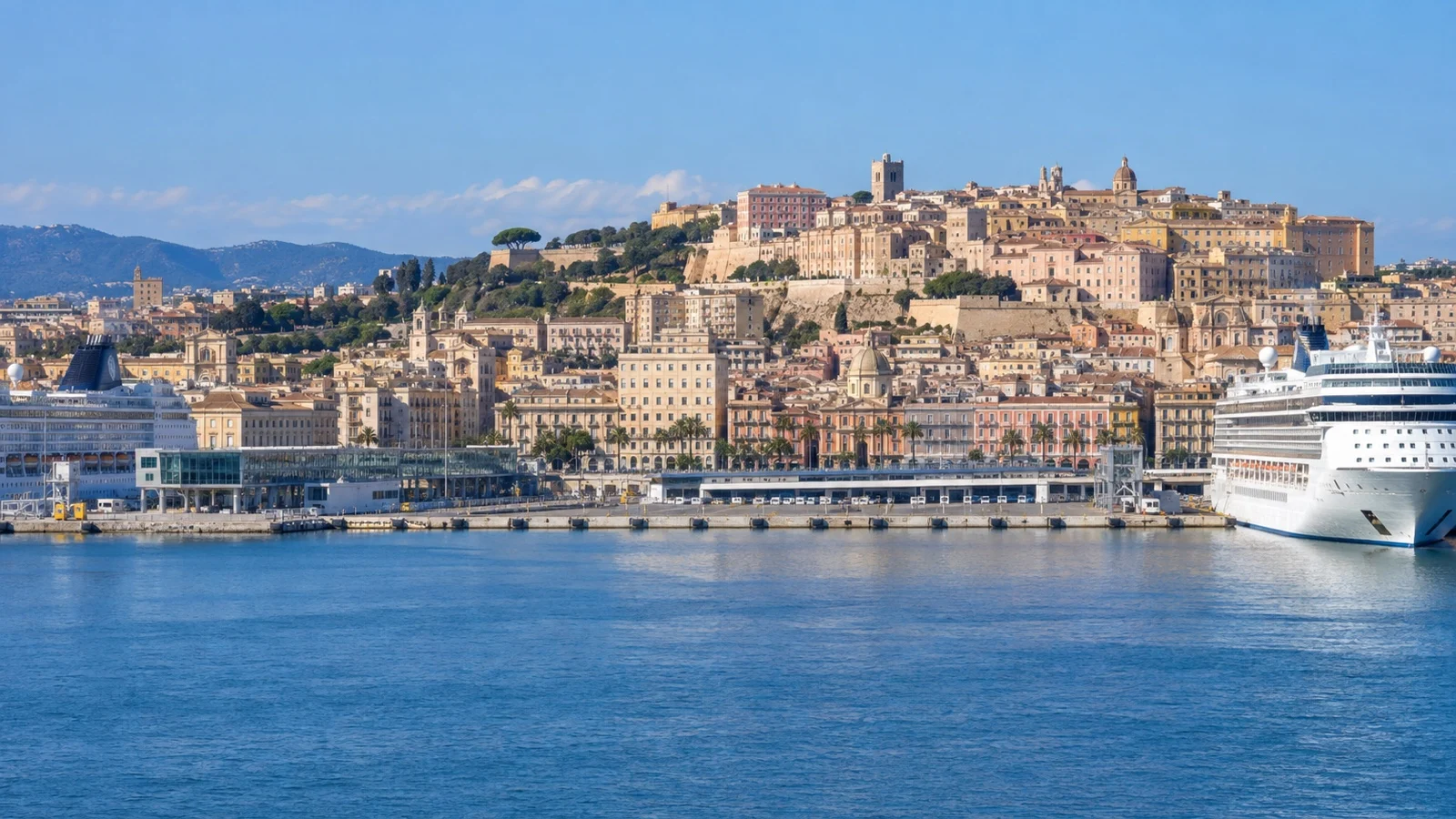
The port operator and Sardinian port authority publish current call information, but the calendar is continually updated. Use the cruise line for the final berth and hours, then follow the required port shuttle from the operational quay.
Do not plan to stroll straight from the gangway along the commercial quay. The port says passengers are usually required to use its free shuttle to the gates, and the precise loading point can change with the berth and security plan.
Once outside the secure zone, the port’s location becomes delightfully practical. Piazza Matteotti, Cagliari railway station, Via Roma, and the Marina quarter form the useful starting area for an independent day.
Getting around from the port
Walking
Walking is best for the Marina, Via Roma, Piazza Yenne, Bastione di Saint Remy, and Castello. The lower streets are straightforward, but the old city rises sharply and mixes slopes, stairs, polished stone, and uneven paving.
A city-only route can easily cover several miles without feeling like a formal hike. In summer, the uphill portion feels much less charming at noon than it did on the map.
City bus
CTM runs Cagliari’s local buses, and its official PF route links the Piazza Matteotti station area with stops along Poetto and onward toward the coast. Routes, stops, and seasonal service can change, so check CTM on the morning of your call rather than relying on an old screenshot.
Buy or activate the correct ticket before boarding when the chosen product requires it. A beach plan is simple only after you have also checked the return direction and left room for traffic.
Taxi and private driver
A taxi is useful for Poetto, Molentargius, or a traveler who wants to skip the steepest climb into Castello. Agree on the plan and expected fare before leaving, and ask where the return taxi can legally meet you.
For a day beyond the city, a prearranged driver removes the uncertainty of finding a return ride. It does not remove traffic, so protect your ship buffer anyway.
Airport and rail station
Cagliari railway station is near Piazza Matteotti and is useful for turnaround passengers. Trenitalia’s official airport guide says trains link the city with Elmas Airport about every 20 minutes during the published service day, with the airport station connected to the terminal by an indoor walkway.
What to do in Cagliari on a cruise day
Start in the Marina quarter
The Marina is the soft landing for the day, with narrow streets, small restaurants, and very little logistical drama. It is also the right place to save for lunch if you prefer exploring before the tables fill.
From here, move inland toward Piazza Yenne or begin climbing toward Bastione di Saint Remy. The route quickly changes from port city to honey-colored hill town.
Climb to Bastione di Saint Remy and Castello
The Bastione is Cagliari’s grand visual payoff, a monumental stair and terrace built over older defensive walls. The city’s official tourism page places it at Piazza Costituzione, directly on the route into the historic upper quarter.
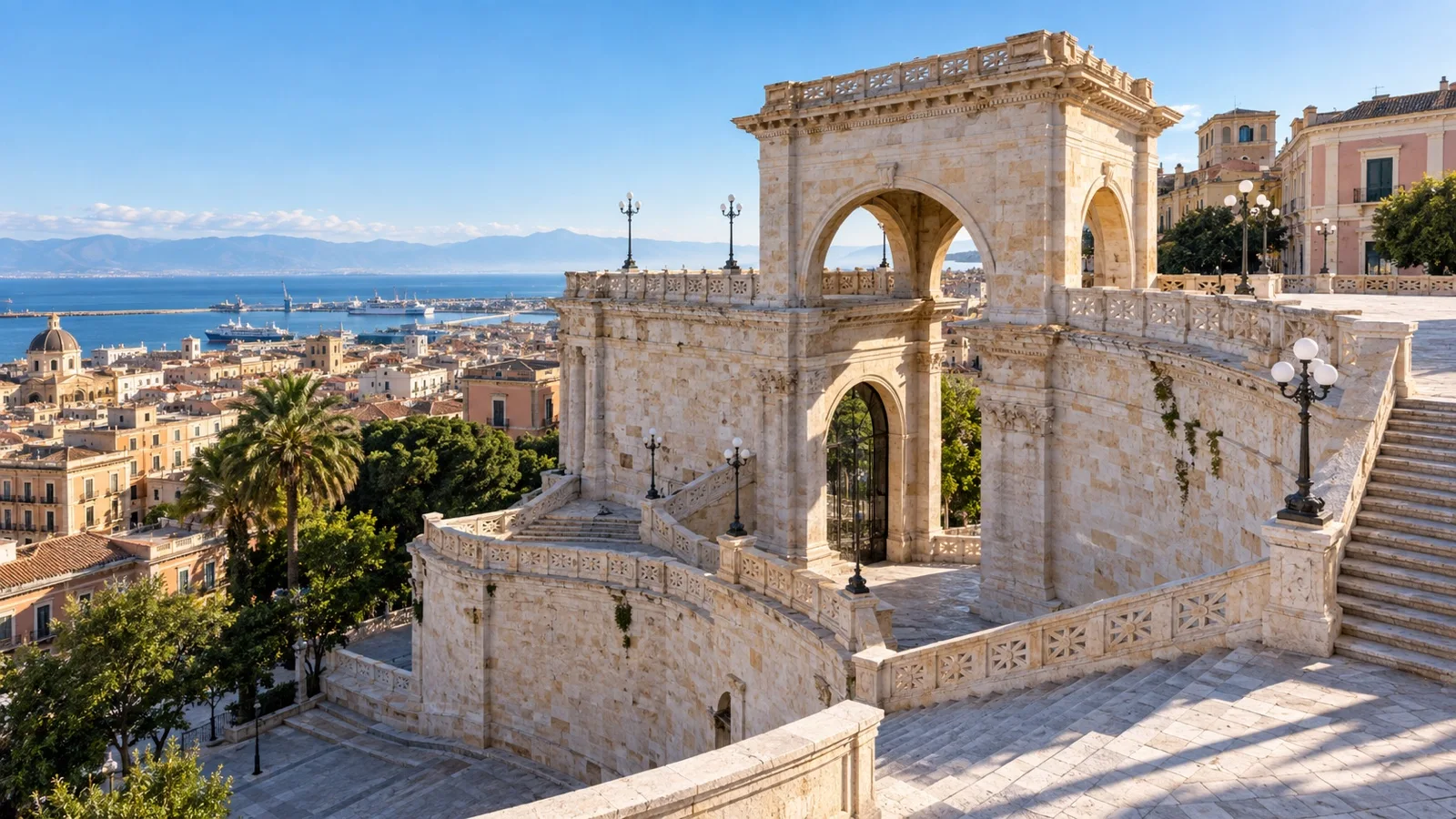
Continue into Castello for the cathedral, old gateways, viewpoints, and lanes that seem determined to keep climbing. Check same-day opening information before building the route around a museum, tower, elevator, or church interior.
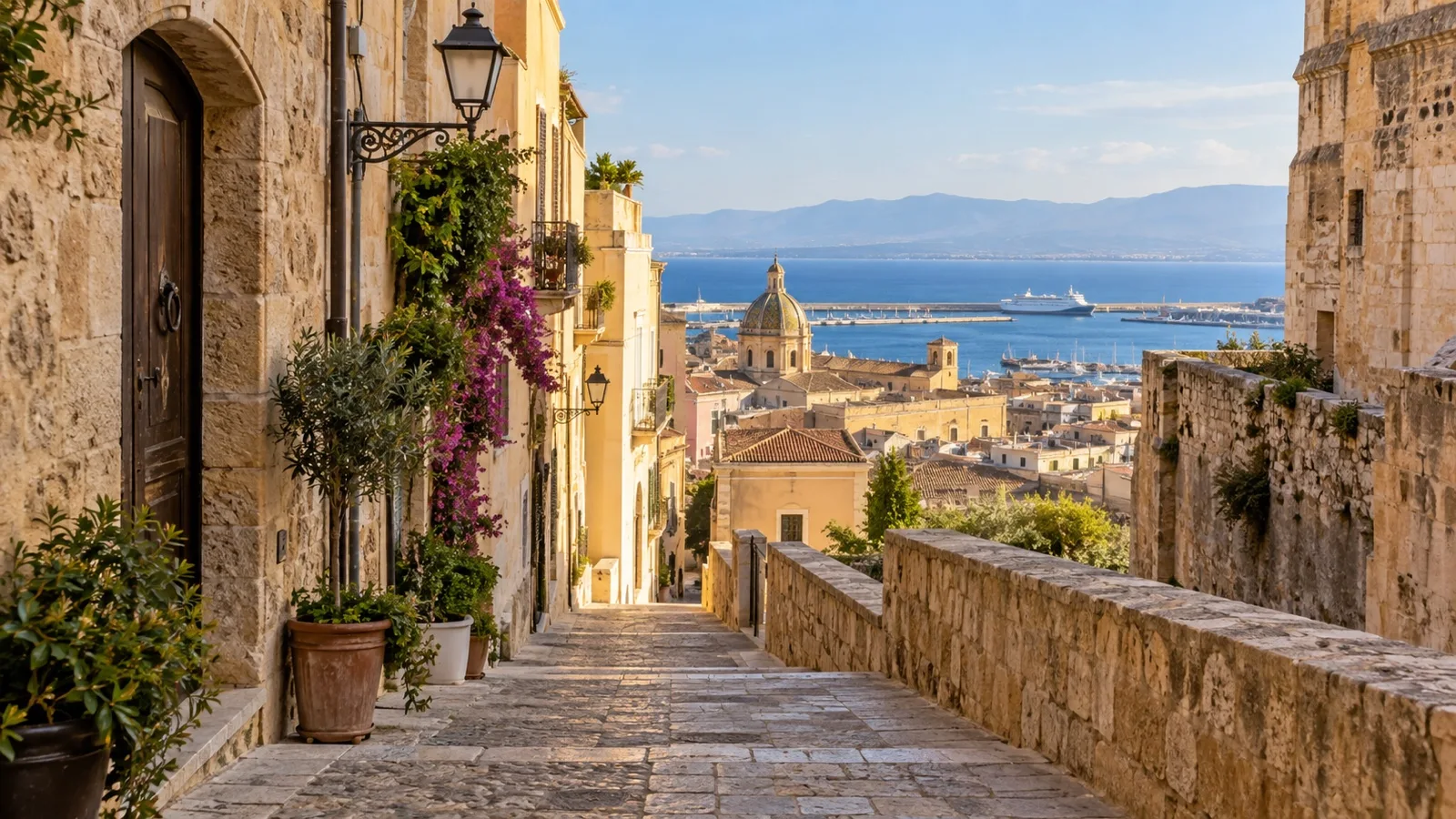
Cagliari is more compact than Rome, but its vertical layout creates a different kind of effort. Our Civitavecchia guide for Rome is the useful comparison if you are choosing between an easy local day and a long gateway transfer elsewhere in Italy.
Choose archaeology, not an attraction marathon
The National Archaeological Museum and the Roman amphitheater area can deepen a city route, but opening days and accessible areas vary. Pick one major indoor stop and let the neighborhoods do the rest of the work.
Go to Poetto Beach
Poetto is Cagliari’s long urban beach, backed by casual food and drink options and watched over by the Sella del Diavolo headland. The official Cagliari tourism listing confirms that the waterfront includes beach facilities, diving centers, and surf schools, although individual businesses remain seasonal.
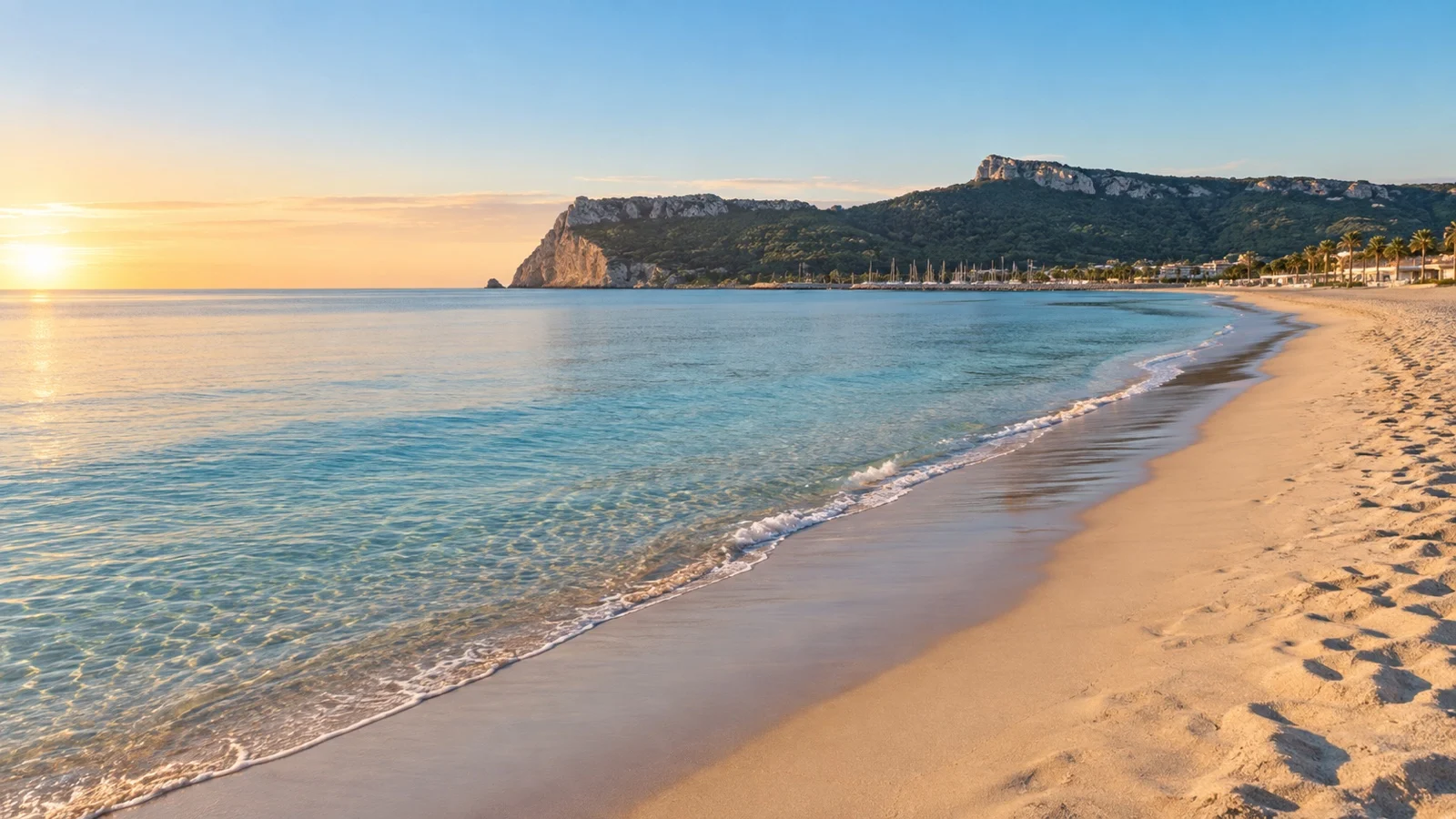
Use the bus for a budget trip or a taxi when time matters more than price. Leave valuables on the ship, bring sun protection, and confirm sea conditions before treating a beach stop as a swimming guarantee.
Look for flamingos at Molentargius
The Molentargius-Saline wetlands sit between the city and Poetto, making them a sensible pairing rather than a separate expedition. Flamingos are the celebrity residents, but wildlife sightings and comfortable conditions are never guaranteed.
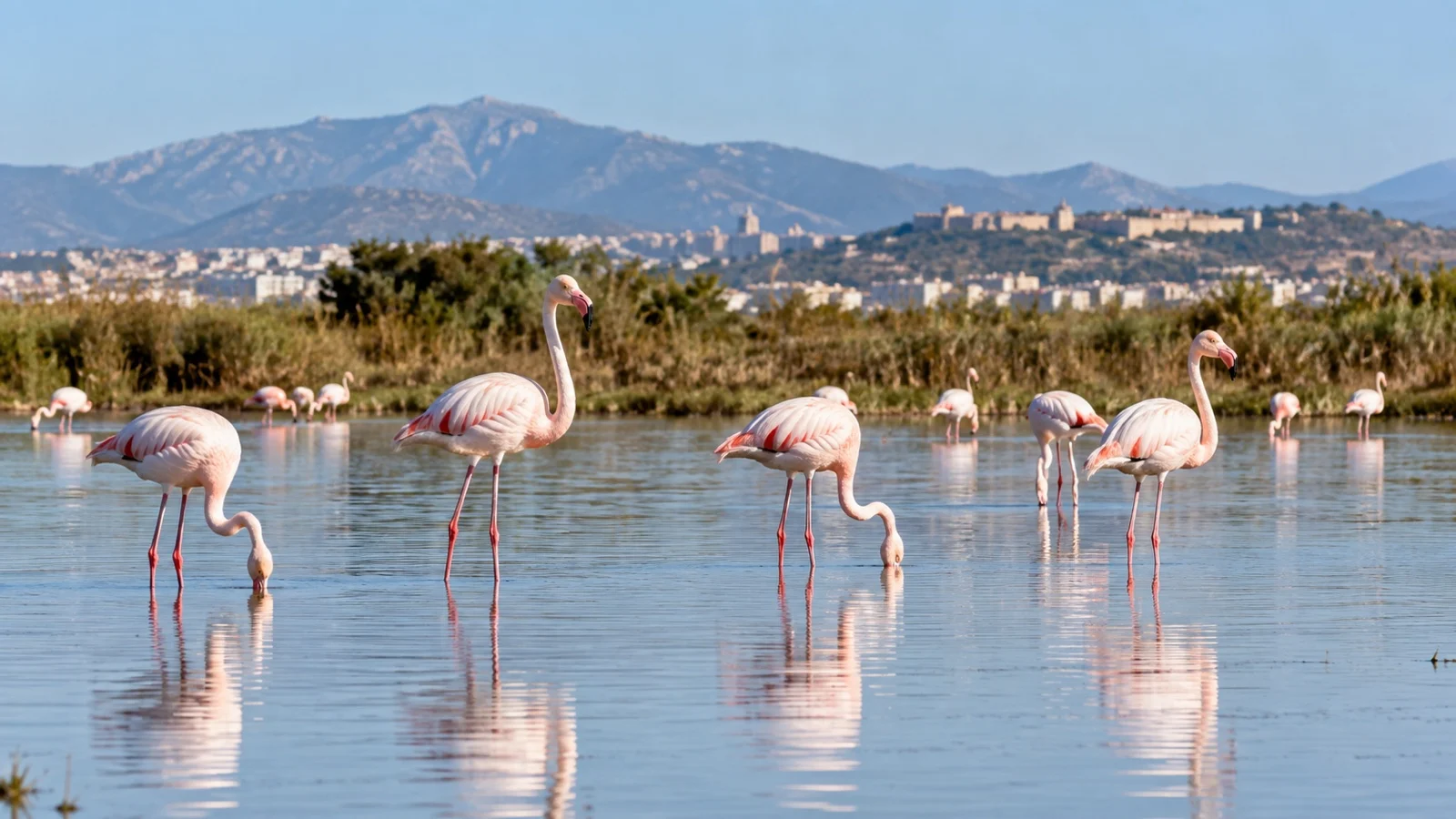
Check the park’s current entrances, visitor services, and route conditions before going. Heat and limited shade can turn a gentle nature outing into a very sweaty lesson in timing.
Three realistic Cagliari port-day plans
Four to five hours: old city essentials
- Take the port shuttle to the public gate and orient yourself near Piazza Matteotti.
- Walk through the Marina and climb to Bastione di Saint Remy.
- Loop through Castello, choosing the cathedral or one museum if it is open.
- Descend for a relaxed Sardinian lunch, then return with at least 60 minutes before the ship’s all-aboard time.
Six to seven hours: Castello plus Poetto
Explore Bastione and Castello early, when the climb is cooler, then use CTM or a taxi to Poetto. Spend roughly two hours at the beach and begin returning before the traffic buffer starts feeling silly.
This plan works best when the ship stays late enough to absorb waiting time in both directions. If the forecast is windy or wet, replace the beach with a museum and a longer lunch.
Seven to eight hours: wetlands, beach, and lower city
Prearrange transport to Molentargius, continue to Poetto, and finish in the Marina. Do not bolt a full Castello climb onto the plan unless everyone still has time, energy, and an excellent relationship with stairs.
For another island port where a local city day competes with a bigger excursion, compare our Palermo cruise port guide. Cagliari is calmer, but the same one-big-choice rule applies.
Accessibility and mobility
Ask the cruise line about an accessible port shuttle before sailing, including lift capacity and scooter rules. The terminal operator controls the secure area, while the cruise line controls assistance between your cabin, gangway, and arranged transportation.
Via Roma, the Marina waterfront, and parts of the lower center support a gentler day. Castello is the harder assignment because grades, steps, curb cuts, cobbles, and occasional elevator outages can change a route quickly.
A taxi to the upper quarter can save the climb, but it does not make every lane or attraction step-free. Confirm entrances directly with each museum or monument, and keep a lower-city backup plan.
Food worth making time for
Look for fregola pasta, malloreddus, culurgiones, grilled fish, bottarga, or a simple plate built around local cheese and vegetables. Menus vary, and not every dish marketed as Sardinian is specifically from Cagliari.
For dessert, seadas pair pastry, cheese, and honey in a way that makes a rushed lunch feel especially unreasonable. Ask about allergens clearly, since seafood, dairy, nuts, and gluten appear frequently.
Weather, safety, and timing
Summer can be hot, bright, and dry, with strong sun reflecting off pale stone. Spring and autumn are usually better for climbing, but showers, wind, or rougher sea conditions can change a beach plan.
Cagliari generally calls for normal city precautions: watch belongings in busy transport areas, use licensed taxis, and avoid leaving phones or bags unattended at the beach. Hydration and shade are practical safety issues in high heat, not optional accessories.
Return to the port area at least 60 minutes before all aboard, adding more time for a beach, private driver, or mobility need. The ship does not wait because the view from Bastione was particularly persuasive.
Match the hills, beach, and wetlands to your time
Castello rewards the climb, but elevators, escalators, historic interiors, and the port shuttle can change operating status. Ask terminal staff for the current step-free route, then use a taxi to the upper district if the hill would consume the traveler’s energy.
CTM’s PF service links central Cagliari with Poetto, but the current timetable, stop direction, and ticket method should be checked for the exact day. Keep the return from the beach early because traffic, crowding, and a missed bus can shrink the port buffer quickly.
Molentargius is protected habitat, and flamingo sightings or close views are never guaranteed. Use marked routes, keep distance from birds, and choose a guided or vehicle-based visit when heat or mobility makes the exposed paths a poor fit.
Quick answers
Can you walk from Cagliari cruise port to the city?
You normally cannot walk independently through the secure operational port, so use the free port shuttle to the public gate. From there, the Marina and lower center are easy to explore on foot.
Does Cagliari use tenders?
Most scheduled cruise calls use the dedicated berths at Molo Rinascita. Operational changes are possible, so follow the arrival instructions issued for your ship.
Is Cagliari easy without an excursion?
Yes, especially for the Marina, Bastione, Castello, and lunch. A guided excursion becomes more useful for destinations outside the city or for travelers who want guaranteed transportation.
Can I combine the old town and Poetto Beach?
Yes, on a call of roughly six hours ashore or longer, provided you start early and limit the old town to a focused route. Check CTM service and weather before committing.
Is Cagliari wheelchair accessible?
A lower-city route is more manageable than Castello, but accessibility varies by shuttle, street, and attraction. Arrange port assistance through the cruise line and verify step-free entrances directly.
What should I do if it rains?
Skip the beach and build the day around a museum, church interiors when open, the Marina, and a leisurely meal. Stone steps can be slippery, so shorten the Castello loop.
The bottom line
Cagliari works because it offers a real city immediately outside a serious working port. Choose one headline, Castello or the coast, then let the rest of the day stay pleasantly unscheduled.
If Sicily is also on your itinerary, our Messina cruise port guide explains a very different island call built around Taormina and Mount Etna. Both ports reward a simple plan more than a heroic checklist.
How we research: We verify port operations, transport, and visitor information against official sources and explain where arrangements can change by ship or date. Read our Editorial Standards and Corrections Policy.
If you are flying in the night before, our guide to hotels near Cagliari cruise port compares the options by distance from the terminal.
How this guide was researched: Port, transport, attraction, safety, booking, and accessibility details were checked against current official sources on September 10, 2026, including Cagliari Cruise Port, the Sardinian port authority, CTM, Trenitalia, and Cagliari tourism. Berths, schedules, access, weather, and operating rules can change, so confirm the sailing-specific details before travel; see our Editorial Policy.