Valletta Cruise Port: A Malta Day Guide
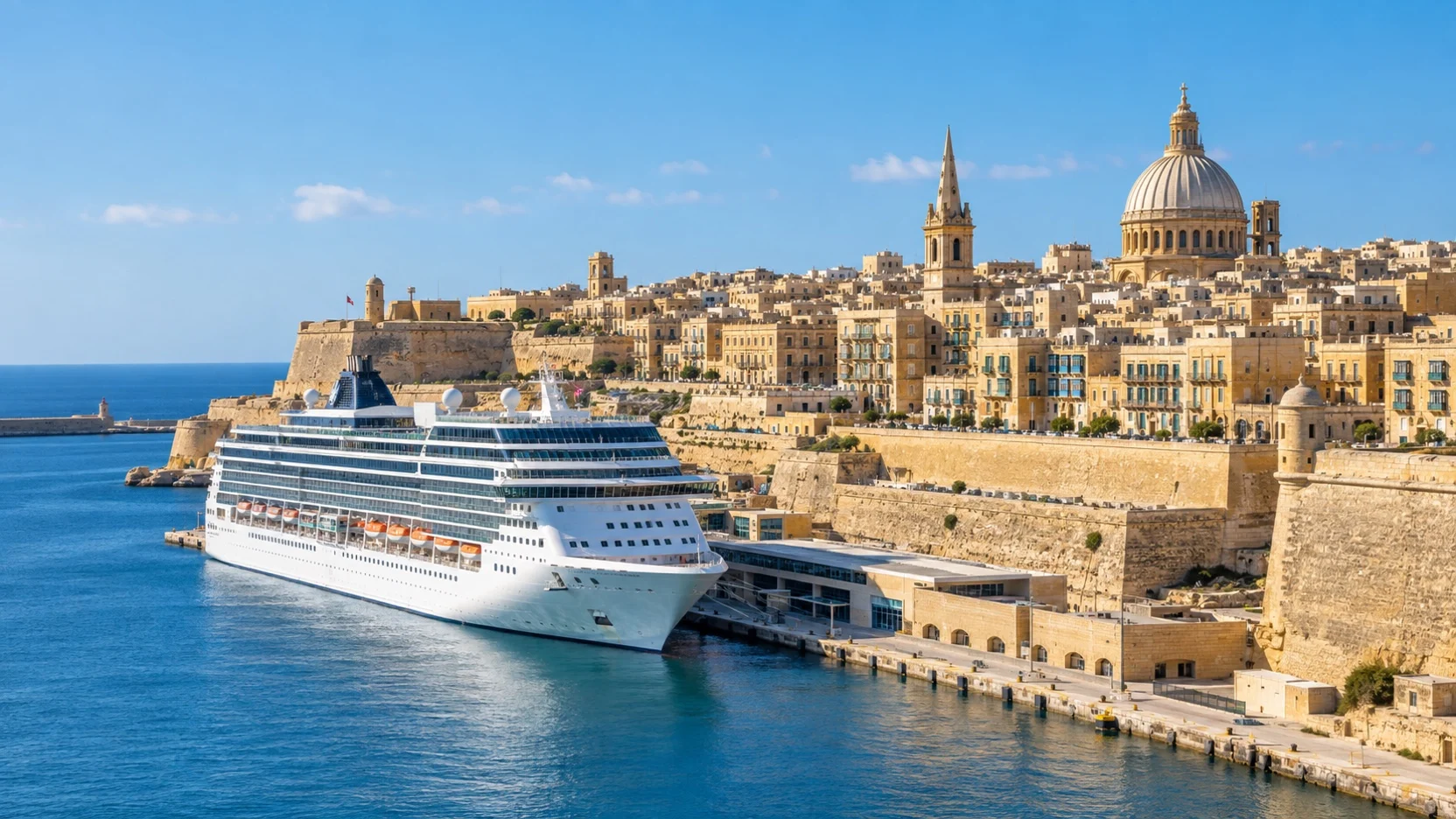
Arriving into Valletta by sea is dramatic, with the ship gliding into the Grand Harbour as Malta’s honey-colored bastions rise straight out of the water. Here is how I would plan a smooth, memorable day.
My quick take
Valletta is one of the most rewarding walking ports in the Mediterranean: you dock right below the city, and the whole capital is a compact UNESCO World Heritage Site you can cover on foot. If you want more of my region planning, I lean on my Mediterranean cruise ports guide and my broader European cruise ports roundup.
If you would rather arrive a day early, our Valletta cruise port hotels guide has the shortlist.
The quick facts
- Where you land: One of the berths along Valletta Waterfront in Grand Harbour, often beside the historic Pinto warehouses. Check the official Valletta Cruise Port information and your ship’s daily program because walking distances vary.
- Dock or tender: Cruise ships normally berth alongside at Valletta Cruise Port. Operational changes are still possible, so follow the day’s gangway instructions.
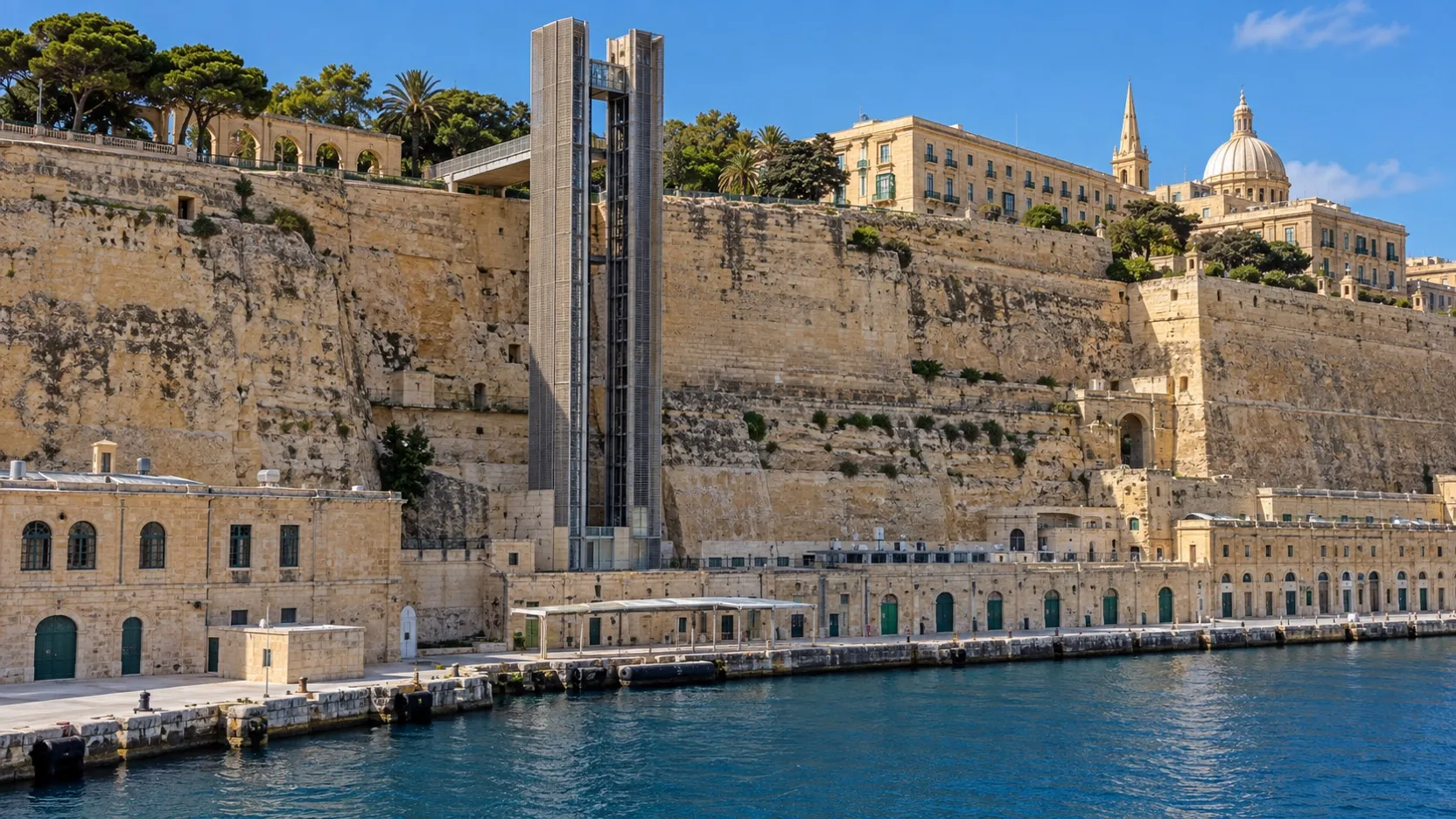
- Into town: Valletta sits on the bluff above the waterfront; allow about 10 to 20 minutes to reach the Barrakka Lift area from many berths, plus any wait for the elevator.
- Currency and language: The euro (EUR); English is an official language alongside Maltese, so signage and directions are easy, and card payment is near-universal.
- Time zone: Central European Summer Time (CEST, UTC+2) through the cruise season, CET (UTC+1) from late October to late March.
- How often the call is missed: Low (under 1%): strong winds can make the approach unsafe.
Getting up the hill and around
The one thing to understand about Valletta is the climb. Your ship is at sea level and the old city sits on a bluff above the harbor.
The easiest way up is the Barrakka Lift, which rises about 190 feet from Lascaris Wharf to the Upper Barrakka Gardens. It is roughly one-third mile from the cruise-terminal area, but the exact walk depends on your berth and current access route.
If you would rather walk, a set of stepped lanes climbs from the waterfront up into the city in roughly 10 to 15 minutes. Taxis with fixed harbor fares wait at the terminal, and Malta’s public buses fan out from the main terminus just outside the city gate.
Heads up: some links below are affiliate links. If you book through one, I may earn a commission at no extra cost to you. It never changes which hotels or tours I recommend. Full disclosure.
The stops I’d actually spend time on
Valletta rewards focus over rushing. These are the named places I would prioritize, all verifiable through Malta’s official tourism board.
St. John’s Co-Cathedral
This is the one interior I would not skip. Behind a plain facade lies an overwhelming Baroque church built by the Knights of St. John, home to Caravaggio’s monumental The Beheading of Saint John the Baptist.
Upper Barrakka Gardens
The Upper Barrakka Gardens deliver the postcard view straight down over the Grand Harbour and the Three Cities. If you time it right, the Saluting Battery below fires its cannon at noon.
The Grandmaster’s Palace
The former seat of the Knights sits on Republic Street in the heart of the city. Its state rooms and armory tell the story of the order that shaped Malta.
Fort St. Elmo and the National War Museum
Out on the tip of the peninsula, this star fort anchored the Great Siege of 1565. It now houses the National War Museum, tracing Malta’s history from the Knights through the island’s WWII ordeal.
Lower Barrakka Gardens and the Siege Bell
Quieter than its upper twin, this garden looks out over the harbor mouth. Beside it stands the Siege Bell War Memorial, tolled in memory of those lost defending Malta in WWII.
Casa Rocca Piccola
A 16th-century noble house still lived in by its family, opened for guided tours. The visit includes antique-filled rooms and a warren of underground WWII shelters.
National Museum of Archaeology
Housed in a Baroque auberge, this is where you meet Malta’s deep prehistory. The star piece is the tiny Sleeping Lady figurine from the island’s Neolithic temples.
Valletta Waterfront
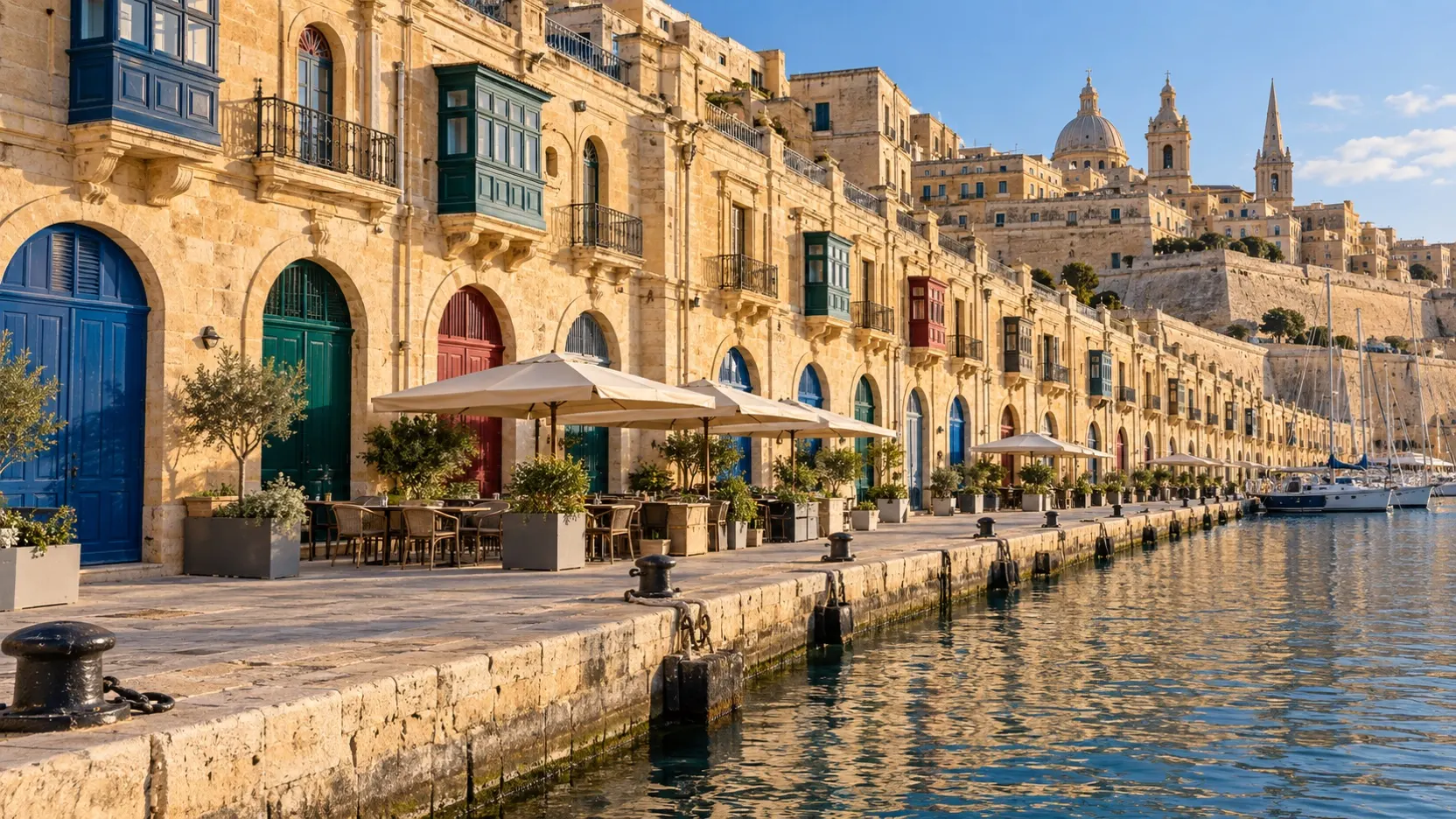
You land right on it. This row of restored 18th-century warehouses along Pinto Wharf is lined with cafes and restaurants, ideal for a coffee before or after the climb.
If you have time beyond the city
Malta is small, so a longer call opens up the rest of the island. These three are the trips I would rank first, each confirmed by Visit Malta.
The Three Cities
Vittoriosa (Birgu), Senglea and Cospicua sit across the Grand Harbour, older than Valletta itself. A short ferry ride takes you to their quiet waterfronts and to Fort St. Angelo, and you can read more on the official Vittoriosa page.
Mdina, the silent city
Mdina was Malta’s old capital, a walled medieval hill town nicknamed the Silent City. Wander its car-free lanes to St. Paul’s Cathedral and out to the ramparts for a view across the whole island.
Marsaxlokk and the Blue Grotto
Marsaxlokk is a working fishing village where brightly painted luzzu boats fill the harbor, busiest on Sunday market day. Nearby, the Blue Grotto offers small-boat trips into a run of sea caves famous for their luminous blue water.
How I’d plan the day
- Short call (about 4 hours): Lift up to the Upper Barrakka Gardens, St. John’s Co-Cathedral, a wander down Republic Street, and back down for a coffee on the waterfront.
- Full day (6 to 7 hours): Add Fort St. Elmo or the archaeology museum, then a ferry across to the Three Cities.
- Long day (8 hours plus): Trade some city time for a run out to Mdina or to Marsaxlokk and the Blue Grotto, allowing a generous buffer to get back to the ship.
Whatever you choose, aim to reach the cruise terminal 60 minutes before all-aboard, or 90 minutes if returning from Mdina, Marsaxlokk, or a weather-dependent boat trip. Traffic, ferry waits, and the lift queue can all use the margin.
A word on accessibility
The Barrakka Lift avoids the main climb for many wheelchair users, but the berth-to-lift route and elevator availability still need checking. On top, some old streets are steep, stepped, or cobbled, so use the flatter main axis and confirm each attraction entrance.
When to go, and the weather
Malta’s cruise season runs long, with spring and fall usually the most comfortable for walking. Summer heat requires water and shade, while strong wind or rough water can cancel Blue Grotto boats and affect harbor ferries even when the ship is safely alongside.
A fun fact worth knowing
The entire city of Valletta is a UNESCO World Heritage Site, built from scratch by the Knights of St. John after the Great Siege of 1565. In other words, the moment you walk through the city gate, the whole place is the monument.
Quick answers
Do ships dock or tender at Valletta?
Ships normally dock alongside at Valletta Waterfront, although the exact berth and walking distance vary. Follow the daily program if operations change.
How do I get up to the city?
The Barrakka Lift rises from the harbor front to the Upper Barrakka Gardens for a small fare, and stepped lanes offer a walking route of about 10 to 15 minutes. Taxis and buses also serve the port.
Is Valletta good for first-time cruisers?
Very much so, since almost everything sits within an easy, English-friendly walk of the ship. If it is your first sailing, my first-timer cruise ports guide and my cruise ports in Europe hub pair well with a Malta stop.


How this guide was researched: Unless a first-hand visit is explicitly identified above, this guide is based on independent research using official port, tourism, transit, government, and attraction sources where available. Logistics and time-sensitive details were reviewed in September 2026; see our Editorial Policy.