Antalya Cruise Port: A Cruiser’s Guide to Kaleici, Roman Ruins and the Turquoise Coast
Antalya poses two excellent choices: explore a Roman-and-Ottoman old town above a blue bay, or leave the city for ancient ruins on a larger scale. It is a rewarding Mediterranean cruise stop, but trying to do both thoroughly is how lunch becomes crackers in traffic.
The port is outside the historic center. Once in Kaleiçi, the city becomes compact and happily resistant to straight lines.
Antalya Cruise Port Quick Facts
- Where you land: QTerminals Antalya, also known as Port Akdeniz, a working commercial port west of the city. Kaleiçi, the historic old town, sits roughly 6 miles east, so the berth is a starting point rather than a destination.
- Dock or tender: Ships berth alongside behind the port breakwaters, though this is a secured industrial facility and you cannot simply walk out of the gate.
- Into town: You will need the ship shuttle, a sold transfer or a taxi.
- Currency and language: The Turkish lira (TRY) and Turkish, with English common in the tourist quarter.
- Time zone: Turkey Time (UTC+3).
- Weather and operations: Ships normally berth alongside inside the harbor, but the port and cruise line make the final operational decision.
The transfer comes first
Cruise vessels use QTerminals Antalya, also known as Port Akdeniz, west of central Antalya. It is a commercial port, and independent walking from the berth to Kaleiçi is not a sensible sightseeing route.
Your cruise line may provide a shuttle, sell a transfer, or direct passengers to taxis. Confirm the drop point, return point, final departure, and whether local currency or cards are accepted for any independent ride.
Road time varies with traffic and the exact destination. Allow much more margin on summer weekends, during major events, and when roadworks or beach traffic affect the coastal approaches.
The terminal handles cruise operations, but facilities and landside access can change with the call. Follow port security instructions and do not assume you can walk through an industrial gate to find better transport.
Choose your Antalya before leaving the ship
Kaleiçi is the best choice for a short or medium call. It combines Hadrian’s Gate, Ottoman houses, Seljuk and Roman landmarks, the old harbor, parks, food, and shopping inside one walkable district.
Perge and Aspendos suit a long call with organized road transport. They deliver more archaeological scale, but distances, summer heat, site terrain, and the return drive make them a genuine excursion rather than an add-on.
Termessos is the adventurous alternative in the mountains northwest of the city. Its steep approach and rugged ruins demand time, strong footwear, and physical confidence, so it is a poor casual substitution when another attraction is closed.
For most first-time visitors, I would choose either Kaleiçi plus one city stop or Perge and Aspendos plus a short Kaleiçi finish. The word “plus” should not be allowed to reproduce after that.
A Kaleiçi loop that uses the slope wisely
Begin near Republic Square or the Clock Tower if that is where your transfer ends. From the upper old town, you can walk gradually through the historic lanes rather than beginning with a climb from the marina.
Yivli Minare, the Fluted Minaret, is Antalya’s best-known Seljuk landmark. Its brick shaft rises above a complex that reflects the city’s medieval history and provides an easy orientation point.
Continue toward the old harbor, using the city’s elevator where operating if you want to reduce the steep descent. Check the return route before going down, because “we’ll find the elevator later” is a classic sentence spoken just before an unnecessary hill.
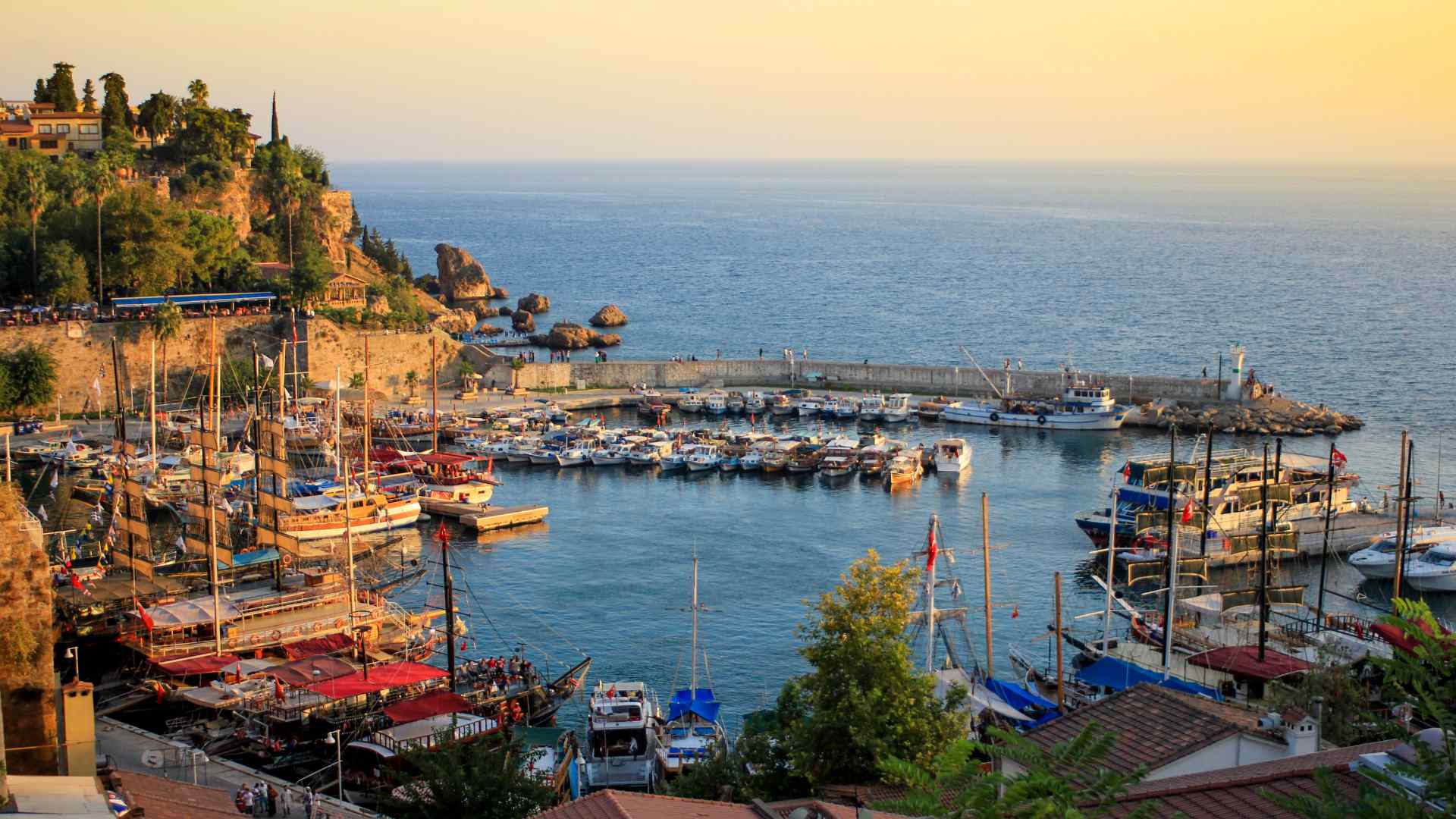
The harbor occupies a sheltered curve below the walls. Short sightseeing boats depart from here, but their routes, duration, accessibility, and sea conditions vary, so confirm the details before handing over money.
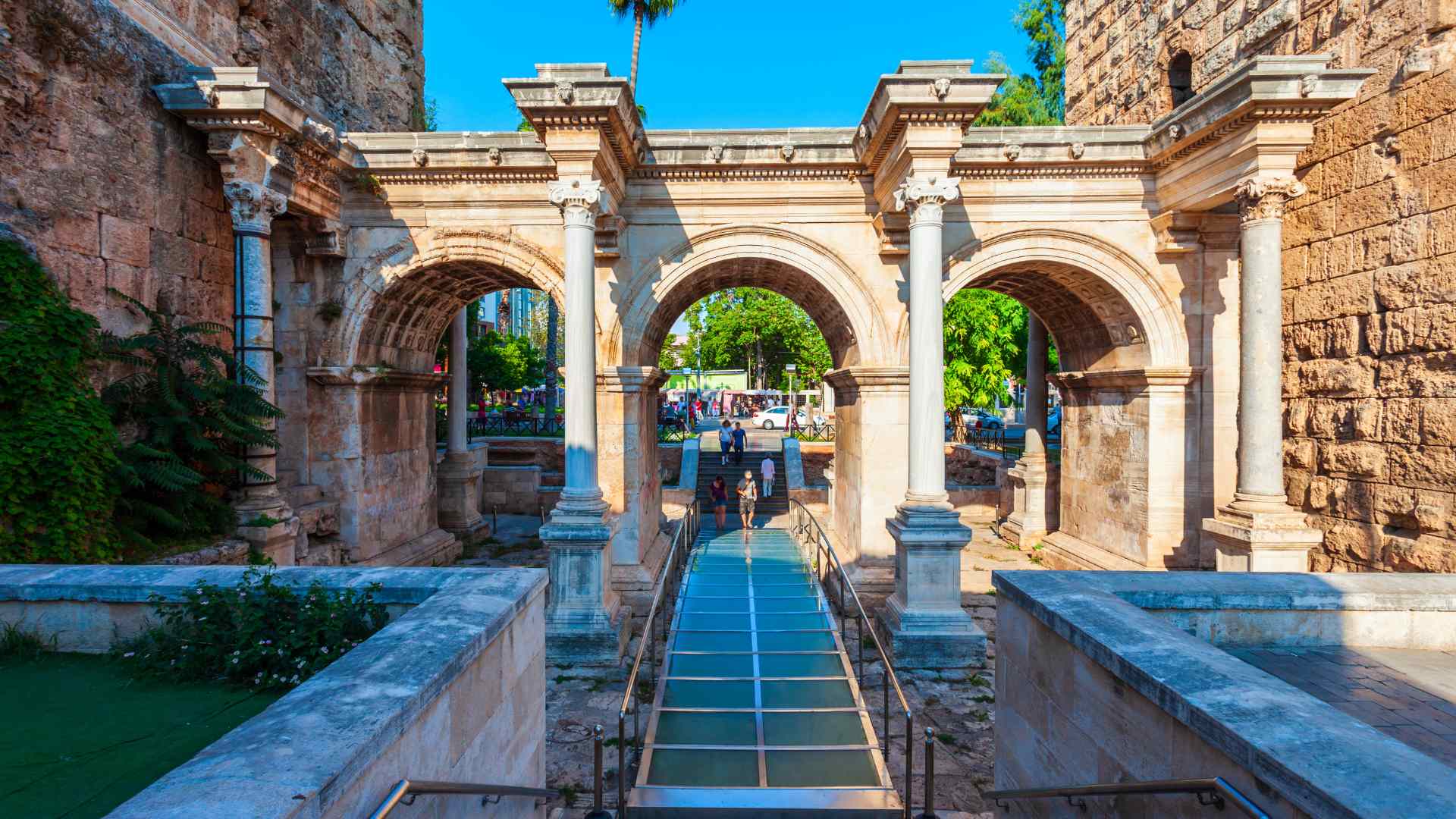
Climb or ride back toward the lanes and cross the old town to Hadrian’s Gate. The monumental triple arch dates to the Roman period and marks one of the clearest surviving pieces of ancient Antalya.
Finish through Karaalioğlu Park toward Hıdırlık Tower. The clifftop greenery and broad bay views make a calmer final stop than the busiest shopping lanes.
What to notice in the old town
Kaleiçi is not one frozen historical period. Roman walls, Byzantine layers, Seljuk monuments, Ottoman houses, republican-era changes, hotels, homes, mosques, churches, and shops all share the district.
Hadrian’s Gate deserves a close look at its stonework and wheel-worn passage. Crowds build around the arches, so visit early or wait a few minutes for the group with twelve identical hats to move on.
Kesik Minare, the Broken Minaret, belongs to a complex with a long religious history and later restoration. Treat it as a layered site rather than reducing it to one tidy label.
The old harbor is visually appealing, but commercial boat sellers can be persistent. A polite, clear refusal works better than entering a lengthy negotiation you never intended to complete.
Shops sell carpets, leather, jewelry, spices, candy, and ordinary souvenirs. Compare quality and price, bargain respectfully where appropriate, and keep the ship’s departure more important than the final chapter of a rug discussion.
If you are flying in the night before, our guide to hotels near Antalya cruise port compares the options by distance from the terminal.
Check the Antalya Museum before leaving the ship
The Antalya Museum normally holds major collections from regional sites, including celebrated sculpture from Perge. Its galleries span archaeology, sarcophagi, coins, mosaics, icons, and ethnographic material.
As of September 11, 2026, the official Turkish Museums page lists the museum as closed to visitors. Do not build a port day around it unless the official status changes before your call.
This is exactly the sort of detail that old port guides get wrong for years. Check the official listing shortly before sailing and use Kaleiçi, Perge, or another verified attraction as the backup.
If it reopens, allow at least ninety minutes and confirm which galleries are available. Major museum projects can return in stages rather than with every room instantly restored.
Perge: streets, columns, and a lot of sun
Perge lies east of Antalya in the Aksu district. The archaeological site preserves monumental gates, a long colonnaded street, baths, an agora, water channels, stadium remains, and other elements of a major Pamphylian city.
The site spreads across open ground with limited shade. A hat, water, sunscreen, and shoes with grip are essential for much of the cruise season.
The official Perge listing should be checked for current hours, ticketing, and partial closures. As of September 11, 2026, it notes that the ancient theater is temporarily closed during restoration work.
That closure does not make Perge a poor visit, because its street plan and civic spaces remain the main appeal. It does mean a guide promising unrestricted theater access is working from stale information.
Allow around ninety minutes to two hours for the core site. Faster is possible, but the heat and uneven stone have a way of editing ambitious schedules.
Aspendos: one tremendous theater, plus more if time allows
Aspendos is known above all for its exceptionally well-preserved Roman theater. The building continues to host performances, so event preparation can alter access even when the archaeological site remains open.
The Ministry of Culture visitor page also identifies the basilica, acropolis remains, and major aqueduct. Many short tours focus almost entirely on the theater, which is reasonable but incomplete.
Climbing the seating tiers involves high, uneven steps and exposure. Excellent views are possible from lower levels, so there is no prize for proving yourself to the uppermost row in midday heat.
Perge and Aspendos combine naturally by road on a full-day excursion. Add a leisurely city lunch only if the operator has built it into the schedule rather than treating food as an optimistic side quest.
What about Düden Waterfalls?
Lower Düden drops from the coastal cliffs east of central Antalya into the Mediterranean. The surrounding municipal park provides land views, while some harbor boat trips advertise a sea view of the falls.
Water volume, spray, route access, and boat proximity vary. Confirm that a cruise actually goes to Lower Düden rather than assuming every one-hour harbor loop reaches it.
Upper Düden is a different site inland. Mixing the two in directions or taxi requests can produce a very educational trip to the wrong waterfall.
Lower Düden pairs better with a city tour than with Aspendos and Perge. Traffic between the western cruise port, center, and eastern falls makes it less tidy than the map initially suggests.
Beaches and a slower alternative
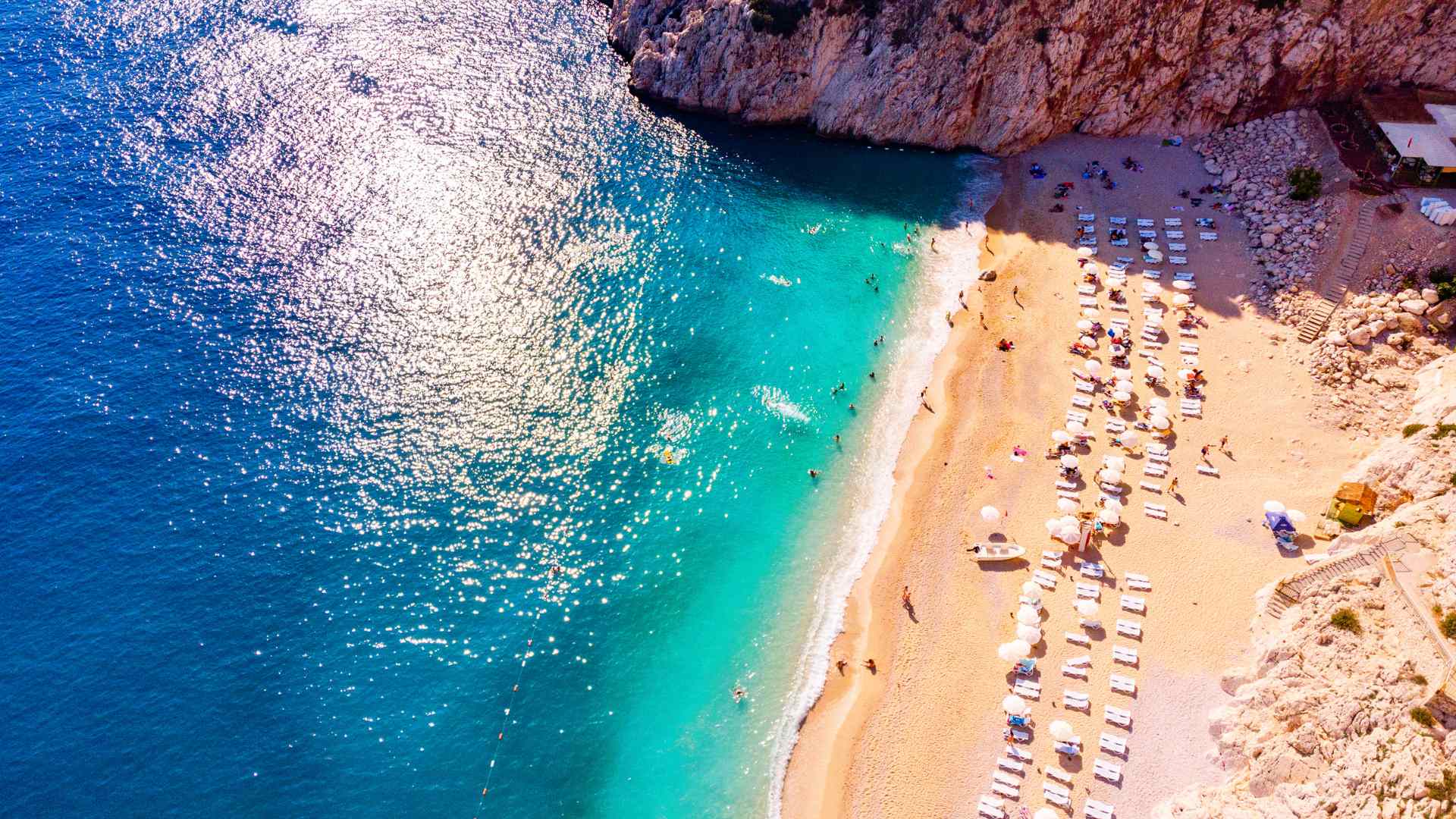
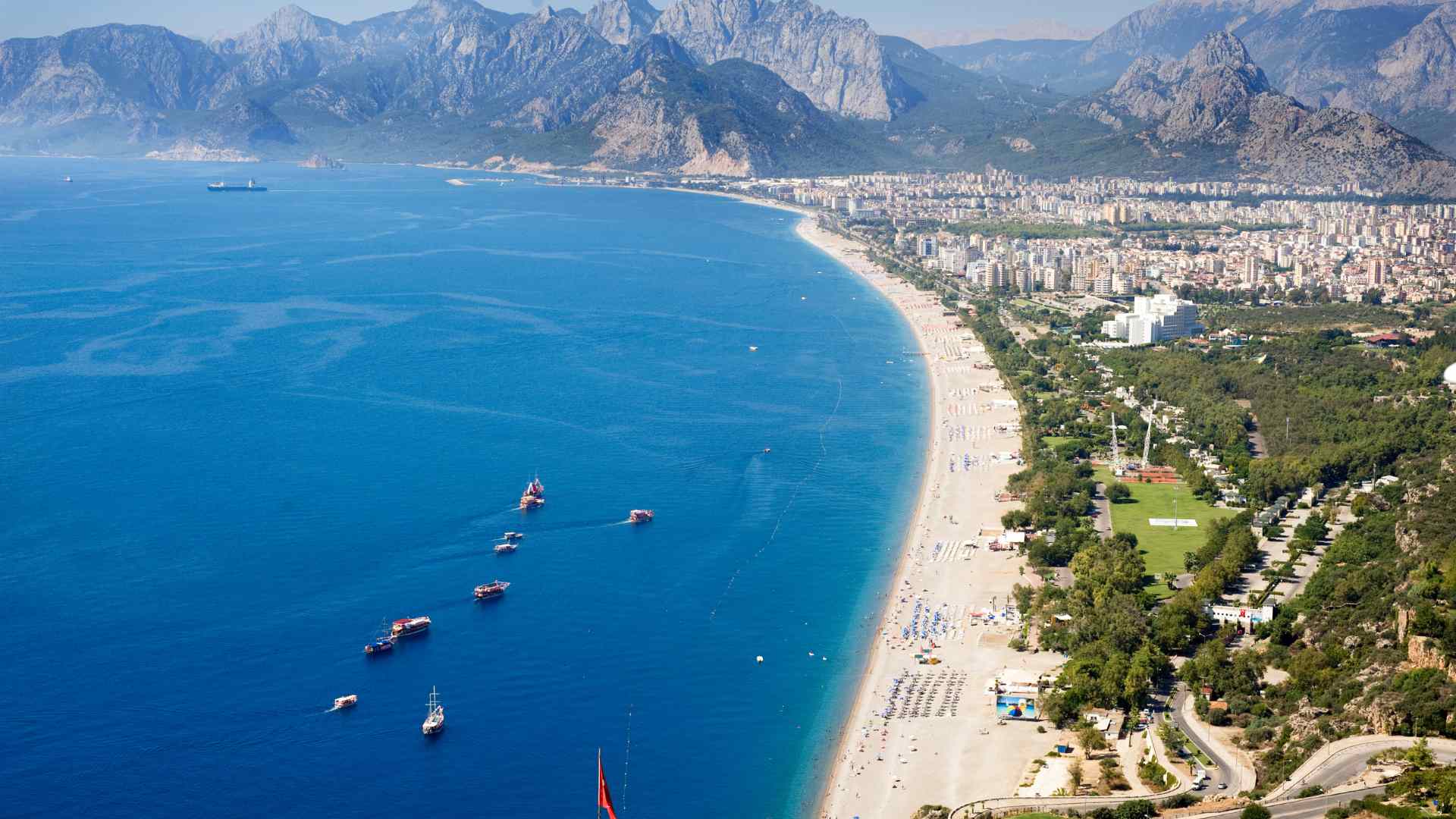
Konyaaltı Beach runs west of central Antalya beneath mountain views. Much of the shore is pebbled, and the long promenade offers cafés, parks, and level sections for a less historical day.
The beach lies between Kaleiçi and the cruise port area, though access points and road routes still require planning. Swimming conditions, flags, and seasonal facilities should guide the visit.
Mermerli Beach is a small cove below the old town. Its access and commercial operation have changed over time, so verify whether it is open and how entry works on your date.
For a short call, I would choose Konyaaltı only if the shuttle or taxi plan is secure. It is easy to relax so effectively that the round trip begins later than intended.
Documents, tickets, and the secure-port return
Visa rules depend on nationality, and travelers who need an e-Visa should use only the official Republic of Türkiye e-Visa site. Follow the cruise line’s passport instructions, since a transit call does not create one rule for every traveler.
Museum admission products do not guarantee that a closed gallery or restoration area will be accessible. Check the official page for each site on the morning of the call, then have a cash or card backup for a gate that does not accept your preferred method.
Allow at least 90 minutes from Kaleiçi to the ship, and more from Aspendos or during peak traffic. The industrial gate, security, and final port transfer are part of the return, so “back in Antalya” is not the same as “back aboard.”
Three workable port days
Under four hours ashore
Transfer directly to Kaleiçi, walk from the upper town toward Hadrian’s Gate and Karaalioğlu Park, then return from the confirmed pickup point. Skip the boat trip and museum gamble.
This plan is compact but still gives Roman, Seljuk, Ottoman, and coastal Antalya. A Turkish coffee or fresh juice fits more comfortably than a formal lunch.
Five to seven hours ashore
Explore Kaleiçi, add a verified short harbor cruise or Lower Düden by road, and eat near the old town. Keep the final ninety minutes protected for the trip back to the port.
If the museum has officially reopened, it can replace the waterfall or boat. It should not be stacked on top of everything else.
A full day
Take an organized Perge and Aspendos excursion, preferably with an early start. Finish with a brief stop at Kaleiçi only if traffic and the operator’s schedule allow.
I would not add Termessos to this route. Ancient cities are not collectible cards, and two in a day is already a strong hand.
Accessibility and heat
Kaleiçi includes cobbles, steep lanes, steps, and uneven thresholds. Compare the call with our wheelchair-friendly cruise ports guide, because the harbor elevator does not make the whole district step-free.
Perge has broad outdoor areas over rough stone and gravel. Aspendos’s theater seating is steep, though lower viewpoints and selected ground-level areas may still be possible.
Request an adapted vehicle through the cruise line or tour operator well ahead of arrival. Ask how close it can approach Hadrian’s Gate, the old harbor, and archaeological-site entrances.
Summer heat is a genuine access issue, not merely a comfort note. Start early, use shaded pauses, carry water, and shorten the route before fatigue becomes a safety problem.
Money, dress, and practical manners
The Turkish lira is the local currency, while cards are common in established businesses. Keep modest cash for small purchases and confirm taxi payment before the ride.
Dress respectfully for active mosques, covering shoulders and knees and following instructions about shoes. A light scarf is useful, but visitors should use coverings provided where required.
Tap water guidance can vary, and many visitors choose sealed bottled water. In hot weather, drinking regularly matters more than winning an argument about the perfect beverage container.
My recommendation
For a first call under seven hours, I would stay with Kaleiçi and one coastal add-on. The old town has enough historical layering to feel substantial without placing the entire day at the mercy of traffic.
For a long call, choose Perge and Aspendos with organized transport, then accept whatever time remains in the city as a bonus. Antalya rewards a clear decision, especially when the closed museum and Perge theater prove that current facts matter more than a beautiful old checklist.
How this guide was researched: Unless a first-hand visit is explicitly identified above, this guide is based on independent research using official port, tourism, transit, government, and attraction sources where available. Logistics and time-sensitive details were reviewed September 11, 2026; see our Editorial Policy.