Renting a Bike on a Port Day: The Ports Where It Actually Works
A bike shows up on this site mostly as a river cruise amenity, hanging on a rack by the gangway. On an ocean port day it is a genuinely good idea in about a dozen places and a bad one nearly everywhere else.
My quick take
I like bikes on port days for one narrow reason. In a flat town with a real bike lane, a bike turns a six hour call into a full day instead of a loop around the same four streets.
What I will not do is rent one to solve a problem the port created. If the terminal sits behind a mile of container yard or on the shoulder of a highway, a bike makes that worse.
The quick facts
- Where it works: Flat, compact towns with separated bike lanes and a short ride from the pier.
- Bike share: Most systems now run through an app, and some still want a payment method issued in that country.
- The hold: Expect a preauthorization on your card that can sit there for days after you return the bike.
- Helmets: The law varies by country and a rental shop will not always hand you one.
- The real risk: The ride back, into wind, on a flat tire, against an all aboard time.
The ports where a bike wins outright
Key West is the easiest yes on the list. The island is small enough to ride end to end in an afternoon, the streets are flat and slow, and locals use bikes as transportation rather than as a novelty.
Bermuda is the other one I would plan around, because the Railway Trail runs roughly 18 miles (29 km) along the old rail bed and stays off the road for long stretches. Our guide to Dockyard, Hamilton and St George explains why that trail matters far more than the roads do.
Victoria, British Columbia is a quiet third, and the Galloping Goose runs about 34 miles (55 km) from downtown, so you ride out as far as your clock allows and turn around. The Victoria port guide covers how little time most Alaska itineraries give you there.
Bonaire earns a mention for a different reason. It is flat, the traffic is thin and Kralendijk is small, though the heat does more damage than the distance.
Northern Europe is playing a different sport
Amsterdam and Copenhagen are not bike friendly in the way an American city means it. They are built around bikes, which is a different and more intimidating thing.
Amsterdam has more than 250 miles (400 km) of dedicated bike paths, and the etiquette that goes with them is real. Stay right, signal with your arm, cross tram rails at a sharp angle, and never stop dead in a bike lane to look at your phone.
That only helps if your ship is actually in Amsterdam. If you dock at the sea gate instead, read the IJmuiden port guide first, because the ride into the city from there is a long, exposed slog that eats the day.
Bruges is the sleeper, because the whole historic center is a bicycle zone where drivers are capped near 19 mph (30 km/h) and are not allowed to pass you, and the marked route out to the coast at Zeebrugge covers about 10 miles (16 km). I would still take the train or shuttle in and rent once I got there, for reasons I get into in the piece on doing Bruges independently.
How bike share actually works when you are a visitor
There are two shapes of system and they fail differently. Dock based systems only let you end the ride at another rack, which is fine until every dock near the pier is full when you come back.
App based systems are now the norm in most European port cities. You download an app, find a bike on a map, and unlock it with your phone, which is how the main share scheme in Copenhagen runs across hundreds of pickup points.
The part that catches cruise passengers is registration, not riding. Create the account on ship wifi the night before, because doing it on a pier with one bar of roaming data is how people lose forty minutes.
- Account first: Register and add a card before you leave the ship, not at the rack.
- Check the zone: Most apps show a service area boundary, and ending a ride outside it costs extra.
- Screenshot the map: Save the return locations offline in case your data drops.
- Photograph the bike: Take a picture at pickup and at return, showing the lock closed.
The card hold nobody warns you about
Almost every rental shop and share system puts a security hold on a card. It is usually a preauthorization rather than a charge, but it reduces your available credit and can sit there for days after you hand the bike back.
A few systems go further and want a payment method issued locally, or a phone number that can receive a local text. That is the failure mode I plan for, because you find out standing next to a bike you cannot unlock.
Small shops in island ports sometimes ask for a passport or a cash deposit instead. Handing over your passport on a port day is a hard no from me.
The e-bike question
An e-bike changes the math on hills and distance, and almost nothing about traffic. If the only thing between you and a good ride is a climb out of the harbor, the motor solves it.
The catch is the battery you are handed rather than the one in the brochure. Range moves with assist level, rider weight, hills and temperature, so the advertised number is a best case you will not hit.
I ask two questions at the counter. Is this battery fully charged right now, and what happens if I run it flat on the far side of the loop.
An e-bike with a dead battery is a heavy, awkward regular bike. That is survivable on a flat island and genuinely miserable on a hilly one.
Helmets, roads, and which side you are on
Helmet law varies more than people expect. Adults are not required to wear one in most of northern Europe, British Columbia requires them at every age, and plenty of places sit in between with rules that cover only minors or only towns.
Legal and sensible are not the same thing. A rental shop is not guaranteed to offer you a helmet at all, and share bikes almost never come with one, so if you want a helmet you should ask before you pay.
The bigger variable is which side of the road you will be on. Bermuda, the Bahamas and much of the eastern Caribbean drive on the left, and the moment you are tired and turning out of a driveway is when your instincts betray you.
The return leg is what you are really betting on
Everyone plans the ride out and nobody plans the ride back. The wind that pushed you along the coast for an hour is the wind you now pedal into, tired, sunburned and watching a clock.
My rule is a hard turnaround time, set before I leave the pier and built on the outbound leg being the fast one. If I am not turning around by then, I turn around anyway.
Then there is mechanical failure, which is boring right up until it happens. A flat tire five miles out with no shop and no taxi rank is the scenario I use to decide how far out I am willing to ride.
One more wrinkle is whether your ship is staying put. Berth shuffles are uncommon, but busy multi ship days can move where you board, and a bike that must go back to a fixed rack does not care about your problem.
What the rental clock actually costs you
Shop rentals usually run on blocks of hours or a flat day rate, and the clock starts when you sign, not when you stop taking photos of the ship. Share systems bill by the minute, which is cheap for a half hour hop and expensive for a leisurely four hours.
The share model punishes lingering. If your plan involves lunch, a museum and a beach stop, a day rate from a shop is usually the better structure even when the headline rate looks higher.
Check the shop’s closing time against your all aboard time. A place that shuts at five when your ship sails at six sounds fine until you are standing outside a locked door holding a bike.
Alaska is a bike port more often than you think
Skagway is the standout. The town is flat and tiny, and the Dyea Road runs toward the Chilkoot Trail, with the trailhead about 9 miles (14 km) from town on a road that is mostly graded dirt.
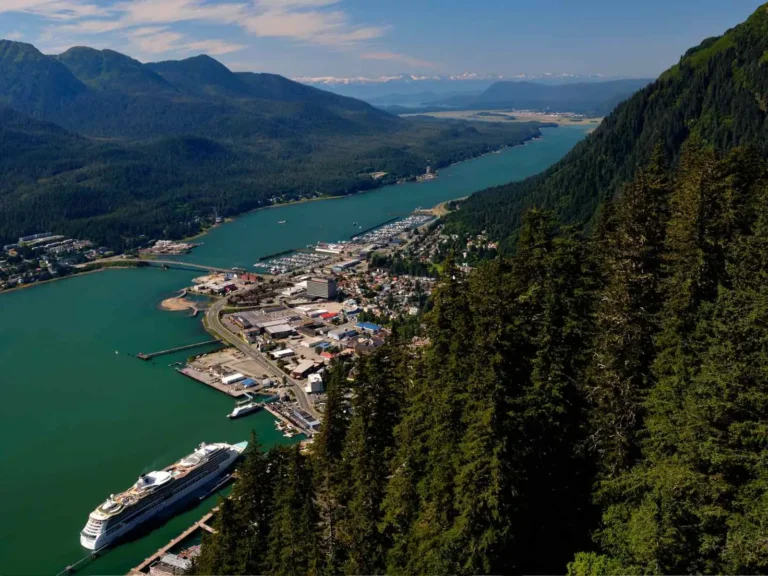
Juneau works if you are honest about the weather. There is a flat road route out along the channel, and operators there lean on e-bikes because the return leg into a headwind in the rain is nobody’s idea of a vacation.
Whittier is the counterexample I have actually stood in. It is one road, a tunnel, and a very short list of places to ride to.
The ports where I would not bother
Start with geography, because mountainous islands like Madeira, Santorini, Dominica and St. Lucia put a serious climb between the pier and anything worth seeing. An e-bike shortens that fight without winning it.
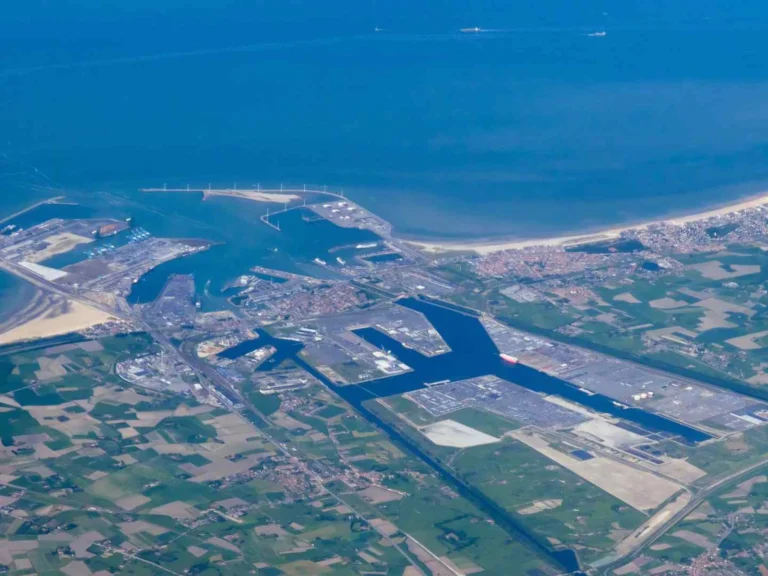
Then the working ports. Where the berth sits deep inside a container terminal you often have to take a shuttle just to reach the gate, and a bike is either barred from that shuttle or turns the first two miles of your day into stacked containers.
Nassau is the one I get asked about most, and the answer is no. There is very little separated bike infrastructure, the traffic through downtown is heavy, and the drive is on the left, which is a lot to absorb in one afternoon.
Old towns built on cobbles are their own category. Rhodes, Dubrovnik and Corfu Town are beautiful and largely pedestrian, and a bike there is a thing you push rather than ride.
Charleston deserves a footnote, because on paper it is close to perfect. It is flat, compact and pretty, but ships no longer call there, which makes it a question for land vacations now.
Ship bike tours versus doing it yourself
A ship excursion bike tour costs meaningfully more than a rental, and what you are buying is not the bike. You are buying a guide, a support vehicle, a proven route, and the ship’s obligation to wait if the tour runs late.
In Alaska and Bermuda that premium is defensible. The distances are longer, the roads are narrower, and someone else owning the logistics of getting back on time has real value.
In Copenhagen, Key West or Palma I would not pay it. A rental shop and a phone map do the same job, and the ship tour mostly buys a slower group pace.
If you know bikes as a cruise amenity rather than a rental, the guide to river ships that carry bikes is a useful contrast. Those bikes come with the ship and none of this paperwork.
Insurance and liability, briefly and honestly
Read the one line about damage and theft, because that is the whole agreement. In most contracts you are responsible for the bike from the moment it leaves the rack until it is locked back up, and a stolen share bike can be billed at replacement value.
Your travel insurance is a separate question. Many policies treat cycling as a normal activity and cover medical costs from a fall, but some exclude it or charge extra, and almost none cover damage to the bike itself.
The exclusion I would look for specifically is e-bikes. Some policies classify anything with a motor differently, which is exactly the kind of detail that only matters once.
Quick answers
Can I bring my own bike on a cruise?
Policies vary by line and most ocean ships have nowhere practical to store one, so treat it as a request you clear in advance rather than something you turn up with.
Do I need a credit card to use bike share abroad?
Nearly always yes, because the system wants a card it can place a hold on. A few systems also require a payment method issued in that country, which is worth checking before you sail.
Is Amsterdam too intense to bike as a tourist?
It is fine if you are a confident rider who can hold a straight line and signal. It is stressful if you have not ridden in ten years, and rush hour is the worst time to find out.
What happens if I miss the ship because of a bike?
If you rented independently, catching up with the ship is entirely your cost and your problem. That gap is the single strongest argument for a ship tour in a port where the ride is long.
Are e-bikes allowed everywhere regular bikes are?
Usually but not always, since some trails, parks and pedestrian zones restrict motors or set a minimum rider age. Ask the shop which specific route you are allowed to ride.
Final word
A bike is a great answer to one specific question, which is how to cover four flat miles that a walk would waste and a taxi would trivialize. It is a terrible answer to a port that parked your ship in an industrial estate.
Look at the terrain, the traffic and the road out of the gate before you look at the price. If all three are friendly, rent the bike, and if any one of them is not, spend the money on something else.
How this guide was researched: Cycling networks, trail lengths, helmet rules and bike share mechanics for these ports were checked in September 2026. Rental terms, app requirements, card holds and trail conditions change often, so confirm the details that matter for your own sailing before you commit to a plan. See our Editorial Policy.
More on this topic: browse every guide on shore excursions and DIY port days.