Food Allergies on a Cruise: How It Works Onboard and in Port
This is a walk through one process, from the booking form to the dining room to a cafe in a port where you do not read the language.
The onboard half works better than most people expect. The port half is where it breaks.
Why this is worth ten minutes
Ten minutes of paperwork before you sail buys a week of meals somebody has already thought about. Skipping it does not mean going hungry, it means negotiating at seven in the evening with a different server every night.
The lines publish real deadlines, and missing one moves you from arranged to attempted. Royal Caribbean is explicit that a late request depends on what the ship happens to be carrying.
The port half is worth the other five minutes. A shore day is the only part of a cruise where nobody on a payroll is tracking your allergy.
What you are actually looking at
The system has four stages and they are not equally reliable. There is the pre-cruise form, the main dining room, everything else onboard, and then the shore.
Stages one and two are the strong ones, because a named person owns them. Stages three and four are where the published wording turns into cannot guarantee.
Carnival puts it plainly on its guests with allergies page, saying dietary requirements can only be accommodated in the main dining room with the chef, and that items delivered to your room, items on Lido, buffets and other locations cannot be guaranteed free of allergens. That is a cruise line describing its own limits, which is more useful than a reassurance.
One thing this post is not is medical advice, and I am not going to tell you what is safe for anyone’s body. Carry what your own doctor prescribes and follow their plan, and confirm every dietary arrangement in writing with the line.
Step one: the form, and the deadline that actually matters
Royal Caribbean asks for at least 45 days’ notice for dietary requests. Its current page is internally inconsistent about the longer 90-day region list, mentioning Europe and South America in one place and Europe and Asia in another, so use 90 days for any of those itineraries and get confirmation.
A request made inside that window is not refused, it is downgraded. Royal Caribbean says late requests are dependent on the ship’s product availability and that it will try to accommodate, which is a different promise entirely.
Carnival runs a pre-cruise Allergies Form and then asks you to inform the maitre d’ and your dining team directly on the first evening. Both steps matter, because the form reaches the provisioning side and the conversation reaches the people actually cooking.
Disney Cruise Line asks for requests at least 3 days before embarkation through Special Services, the shortest published lead time I found. Its special dietary requests page lists the nine major US allergens plus gluten, lactose, corn and MSG.
Step two: the main dining room, night by night
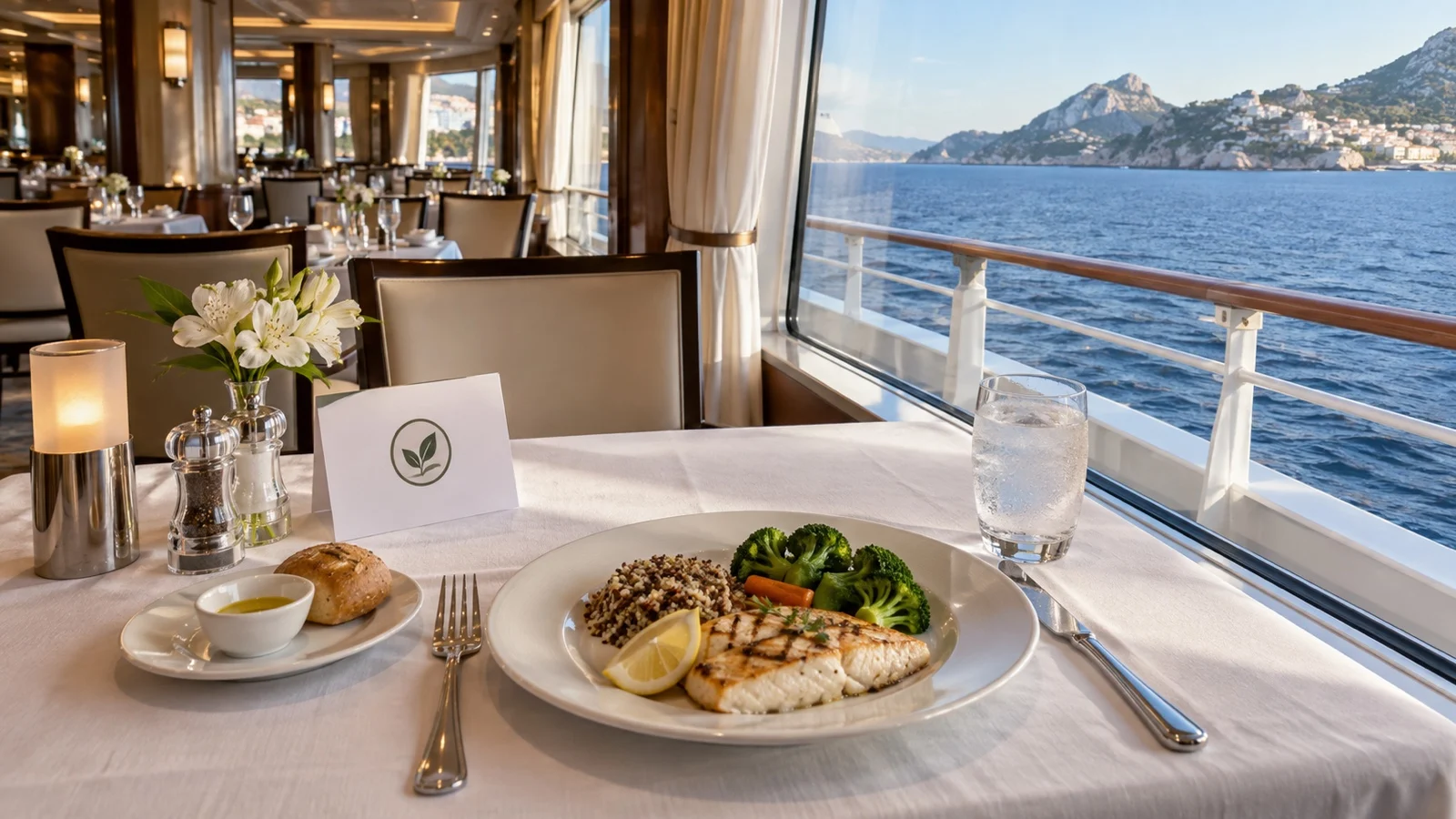
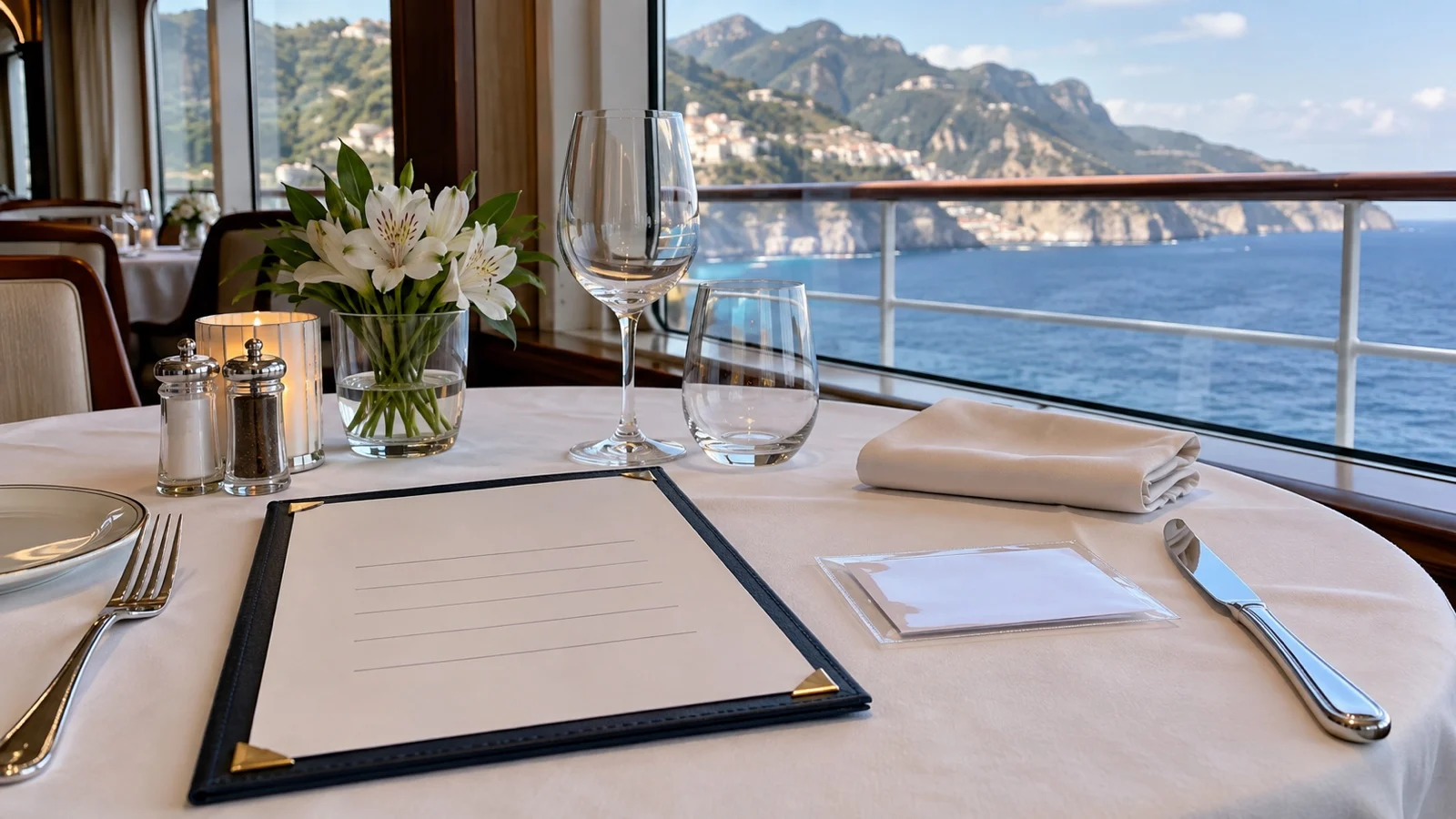
The main dining room is the part that works, and it works through pre-ordering. Carnival says its food and beverage team can help plan your daily meals and pre-order meals for the following day.
Carnival says its dining team can help plan daily meals and pre-order for the following day. Ask how your line handles pre-orders, who confirms each dish and whether the same server or dining section can be kept.
Fixed seating helps more than flexible dining, because the same team builds up the file. If your line only sells anytime dining, ask to be seated in the same section nightly and ask for the same waiter by name.
Step three: the buffet, room service and everything that is not dinner
This is where the published language changes tone across every line I read. Carnival states that it cannot completely mitigate the chance of cross contamination and is unable to guarantee a fully allergen free environment.
Disney is equally direct, saying it does not have separate allergy-friendly kitchens and is unable to guarantee that a menu item is completely free of allergens. It adds that dietary requests noted on your reservation will not be automatically applied at quick-service locations or through in-room dining.
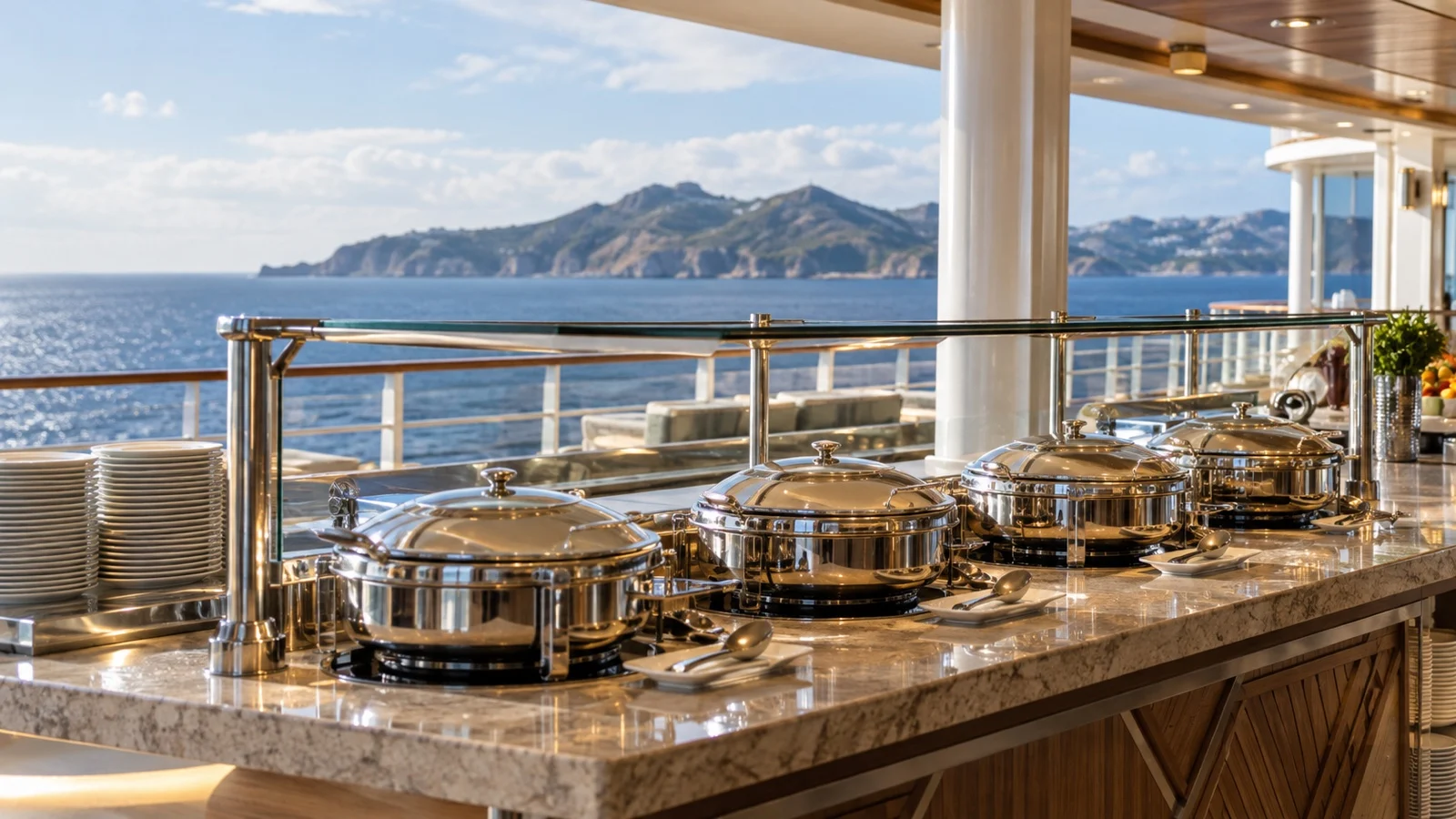
Buffets add shared utensils, open displays and frequent guest contact. Ask a manager what can be prepared separately, but do not treat plating from a fresh pan or the back kitchen as a guarantee against cross-contact.
Fun fact: sesame only became the ninth major food allergen in the United States on January 1, 2023, when the FASTER Act took effect. Europe had required sesame to be declared for years before that, so a packaged snack bought in Barcelona carried the warning long before the same snack in Miami did.
Step four: eating ashore, where the system stops
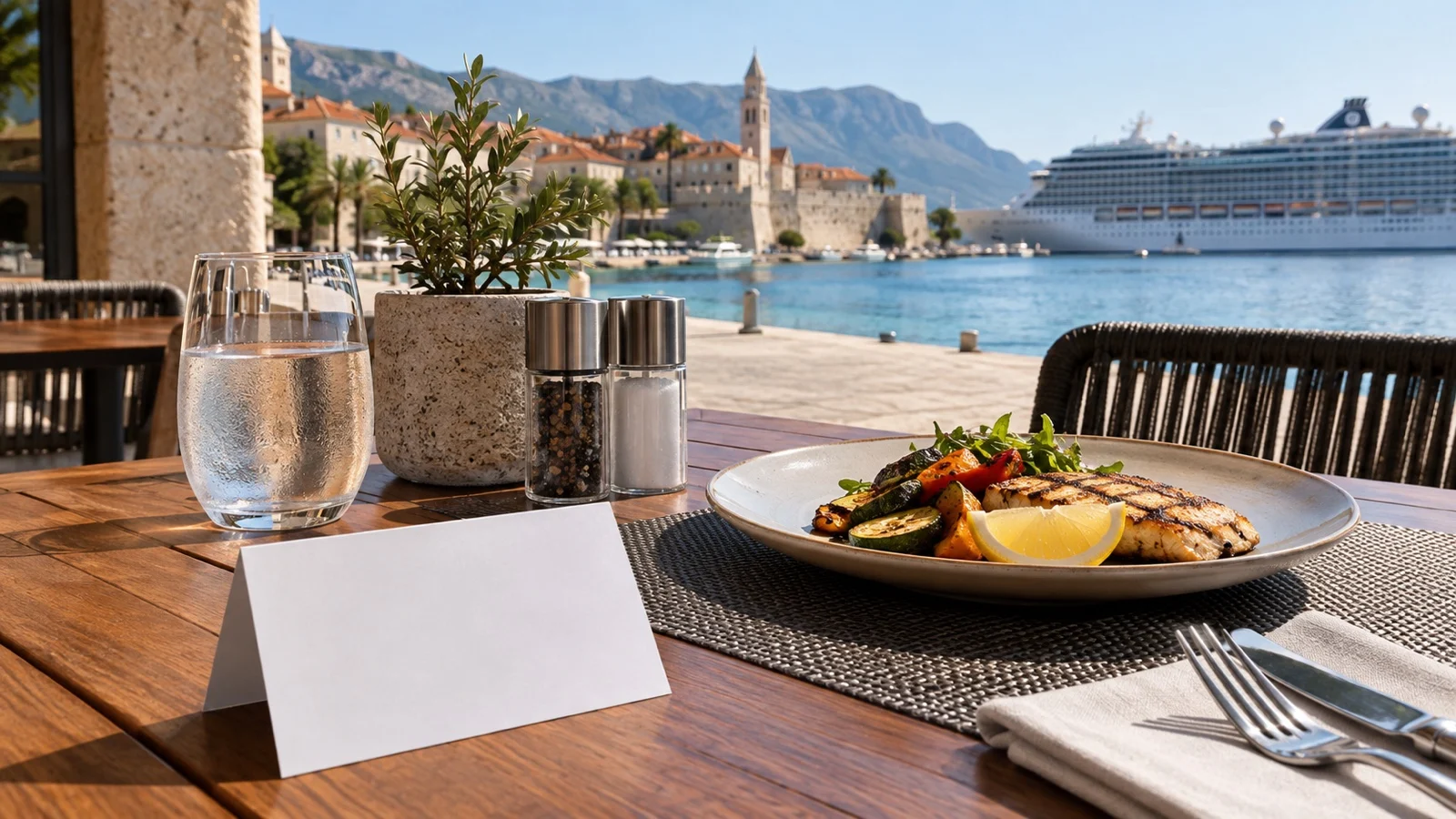
Nothing about the onboard arrangement follows you down the gangway. Carnival states outright that specific dietary requirements cannot be guaranteed on shore excursions, and I have not found a line that promises otherwise in writing.
Ship-organized tours with lunch included are the quiet trap, because the venue is picked for capacity and the menu is fixed weeks ahead. Ask the shore excursion desk to check with the operator, in writing, and be ready for the answer to be no.
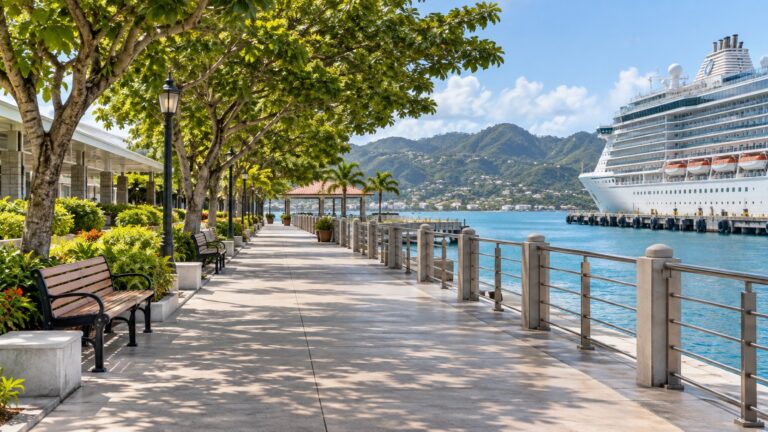
The simplest fix on a hard day is eating on the ship. Going back aboard at lunch costs you an hour and deletes the whole problem, which is one more reason to like a pier you can walk from.
In a tender port that hour becomes closer to two, so the math changes. My explainer on what a tender port actually means covers the timing, and tender days are exactly when I plan a single stop instead of three.
Translation cards are the other half of the shore plan. A printed card naming your allergens in the local language, plus a line asking that it be shown to the kitchen, beats an app because you can hand it over rather than read it aloud.
Which ports and cuisines are easiest, and which are hardest
European Union ports come with a legal advantage nobody mentions at booking, and it covers Barcelona, Civitavecchia, Naples, Piraeus, Lisbon and every other EU call. The European Commission’s guidance on mandatory food information says that for non-prepacked food, which includes food served in restaurants, it is mandatory to provide information about the substances and products causing allergies or intolerances listed in Annex II of Regulation 1169/2011.
The United Kingdom retained mandatory allergen-information rules for food businesses after leaving the EU. Still ask how the restaurant controls cross-contact, because ingredient disclosure and a medically safe preparation process are different questions.
Outside those systems the burden shifts to you completely. I could not find an equivalent published requirement for most Caribbean islands, for Mexico or for Turkey, which is not a comment on the kitchens, only on whether there is a rule to point at.
Cuisine matters as much as jurisdiction does. Southeast Asian cooking treats fish sauce, shrimp paste and peanuts as background rather than headline ingredients, Japanese dashi is fish-based by default, and Mexican mole frequently carries nuts and sesame.
The easiest shore meals I have had were in northern Europe, where allergen questions are routine and English is widely spoken. Cozumel sits in the middle, with a tourist restaurant scene used to American questions, and my notes on whether Cozumel is worth leaving the ship cover the walkable part of town.
The details that matter most
- The deadline is per line, not per industry: Royal Caribbean publishes 45 days, or 90 for Europe and South America. Disney publishes 3 days, and Carnival wants the form plus a conversation on night one, so check yours rather than borrowing someone else’s number.
- The main dining room is the reliable room: pre-order the next night’s meal at the end of each dinner, and keep the same table and the same waiter if the line will let you. That single arrangement does more than everything else combined.
- The buffet is the weak point in writing: Carnival says buffet, Lido and room-service items cannot be guaranteed free of allergens, and Disney says quick-service and in-room dining do not automatically pick up your reservation notes. Ask a manager to plate from the back instead.
- Shore excursions carry no promise: Carnival states that specific dietary requirements cannot be guaranteed on excursions. Treat any tour with a meal included as an unknown until the excursion desk puts an answer in writing.
- Cards beat apps ashore: print and laminate a card for every language on the itinerary, and include the phrase asking that it be taken to the kitchen. Phones die, and a card works across a counter in a loud room.
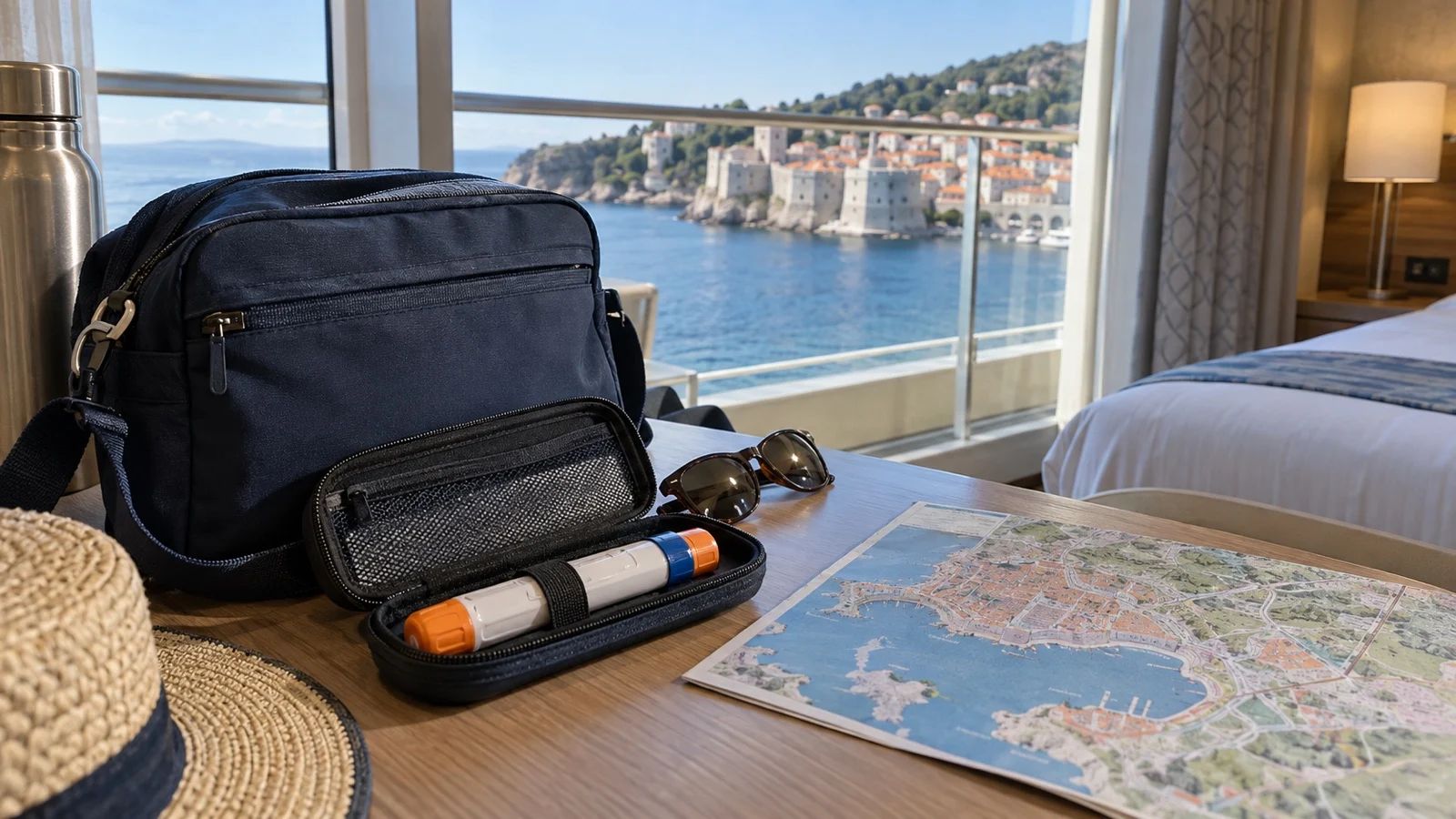
- Your plan is yours: what you carry, how much and where you keep it is a conversation with your own doctor, not with a cruise line or a blog. Ask your doctor before the trip and follow what they tell you.
What I check first, in order
First, the line’s published deadline and whether the itinerary crosses the longer European threshold. That one date decides whether the request is arranged or merely attempted.
Second, the dining setup, because a repeatable table is worth more here than any menu. It is also far easier to change before final payment than after it.
Third, the port list sorted by whether the pier is walkable from town. Walkable piers make lunch aboard a real option, and that turns four risky meals a week into one.
Fourth, any excursion with a meal included, which I either skip or query in writing. Fifth, the translation cards, printed at home in every language the itinerary touches.
A realistic word on accessibility
Managing an allergy ashore quietly assumes you can leave a room quickly. When walking out is slow, or a taxi back to the pier is not simple, choosing the venue before anyone is hungry matters a great deal more.
Onboard, accessible tables often sit near the doors and the service stations, which is the loudest and busiest part of the room, and the same dining team is the one that produces braille and large print menus. Ask the maitre d’ for a table that works on both counts rather than assuming the two requests are the same request.
For the shore side, my guide to planning a port day for someone who cannot walk far is about keeping the radius small, and a small radius is also what makes a controlled lunch possible. Busy calls compound both problems, which is why I look at the most crowded cruise ports before I plan a meal ashore at all.
Quick answers
How far in advance do I tell the cruise line about a food allergy? Royal Caribbean says at least 45 days, but its page conflicts on whether the 90-day rule applies to Europe plus South America or Europe plus Asia; Submit 90 days before any of those itineraries, while Disney asks for at least 3 days and Carnival uses its Allergies Form plus an onboard conversation.
Can I eat at the buffet with a food allergy? Carnival says buffet, Lido and room-service items cannot be guaranteed free of allergens; Ask a manager about separately prepared choices, then follow the risk plan agreed with your own clinician rather than treating a special plate as a guarantee.
Will the ship pack me a safe lunch to take ashore? I could not confirm a fleetwide promise from the lines reviewed on September 10, 2026; Ask onboard, but also check destination food-import rules and do not build the day around an unconfirmed courtesy.
Do restaurants in Europe have to tell me what is in the food?
In the European Union, allergen information for non-prepacked food is mandatory, which includes restaurants; I could not find an equivalent published requirement for most Caribbean and Latin American ports, so treat those calls as ask-and-verify.
Are specialty restaurants safer than the main dining room?
Not automatically, because they are a separate booking and often a separate galley with a fixed menu; Tell the reservation desk at the time of booking rather than at the door, and expect fewer substitutions than the main dining room offers.
The last word
Plan the shore meals the way you plan an excursion, with a venue in mind and the ship as the fallback. A walkable pier is worth more than a famous restaurant on this particular trip.
A walkable berth can make lunch aboard a practical fallback, but the tender schedule and port-security process matter too. Pick a shore venue only after it answers the ingredient, preparation and cross-contact questions that matter for your allergy.
Confirm the details in writing with your line before you sail, because policies move and the page you read in September 10, 2026 is not necessarily the page in force next spring. And follow your own doctor’s plan rather than anything you read here.
How this guide was researched: Onboard allergy procedures were checked against current official information from Carnival, Royal Caribbean and Disney, with allergen-law context from the European Commission, UK Food Standards Agency and U.S. Food and Drug Administration. Details were rechecked on September 10, 2026, but menus and procedures change, so confirm arrangements with the line and follow your clinician’s plan.
More on this topic: browse every guide on accessible and family cruise planning.