What Actually Happens on Cruise Embarkation Day
Cruise embarkation day is a chain of small checkpoints: reach the correct berth, hand over any checked bags, clear security, show your documents, check in, and board. Your cruise line’s app, ticket, and final boarding time outrank every generic tip online.
For a big ocean ship, follow the assigned terminal arrival window unless the line tells you otherwise. For a river cruise, expect a smaller-scale process that may happen directly at a quay, with a broader boarding window and fewer terminal steps.
The safest plan is wonderfully unglamorous: arrive in the embarkation city at least one day early, keep your documents and medication with you, and be at the correct terminal during the time printed on your boarding pass.
The quick facts
- Online check-in: complete it by your line’s deadline, which is not the same across cruise brands.
- Arrival time: use the window on your boarding pass or final documents; an early arrival may mean waiting outside or in a holding area.
- Final boarding: treat the printed cutoff as absolute because it can be well before the ship’s departure time.
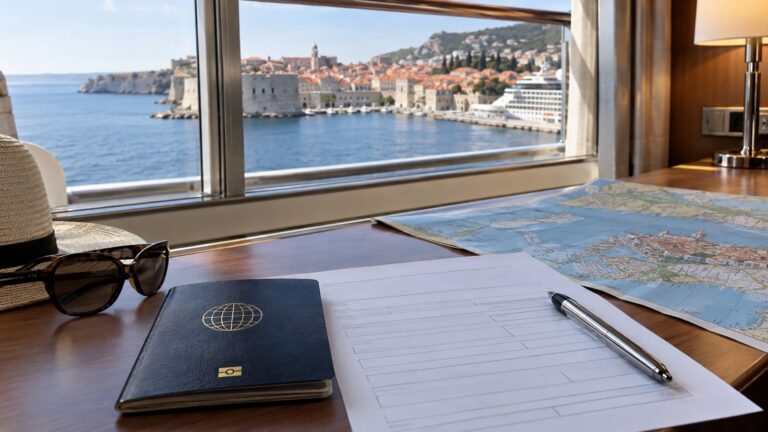
- Carry-on bag: keep identification, citizenship documents, visas, medication, valuables, chargers, and first-day essentials with you.
- Safety briefing: every guest must complete the line’s required process, whether it uses an app, an in-person station visit, or a traditional drill.
One week before: make embarkation boring
Finish the line’s online check-in, verify every name against the travel documents, and download the boarding pass. Screenshot it or carry a paper copy in case terminal service is slow.
There is no industrywide opening or closing time for online check-in. Royal Caribbean encourages completion at least three days before sailing, while Carnival currently requires online check-in by midnight Eastern time before departure.
Check the exact terminal or quay again, especially in a city with several cruise berths. Our guide to finding your ship’s berth and terminal explains where to verify the assignment.
Read the prohibited-items list for your line rather than borrowing rules from another brand. Beverage allowances, power strips, irons, drones, mobility equipment, and medical devices can all have line-specific instructions.
Your embarkation-day timeline
- Morning: check messages from the cruise line, port agent, or hotel, and confirm the berth before leaving.
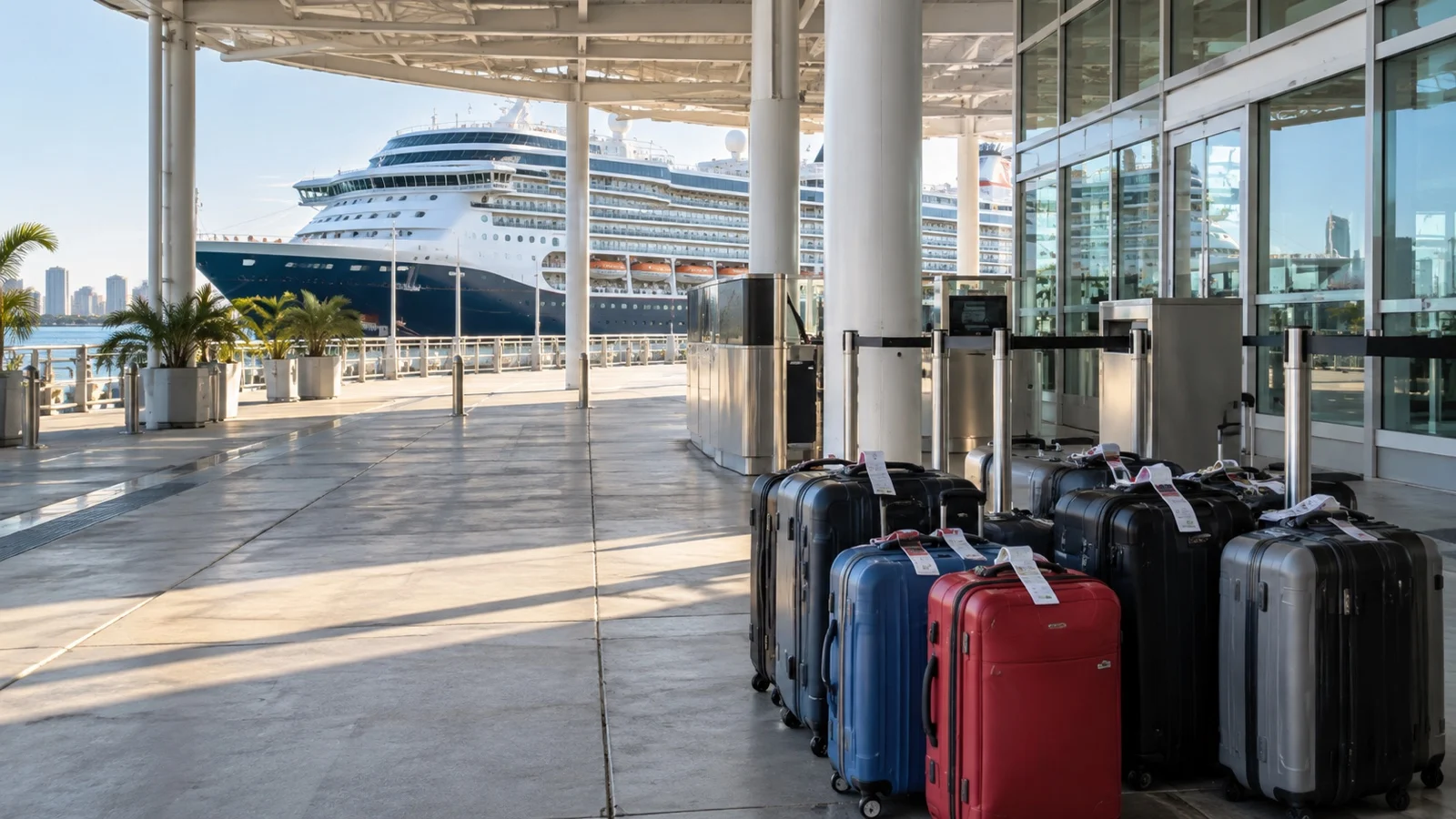
- Before the terminal: attach the cruise line’s luggage tags and separate the bags you plan to keep with you.
- At the curb or quay: hand over only the bags the line or porter accepts, then keep passports and boarding documents in your own hands.
- Inside: follow signs for security and document check, then complete any photo, payment, health, or immigration steps requested.
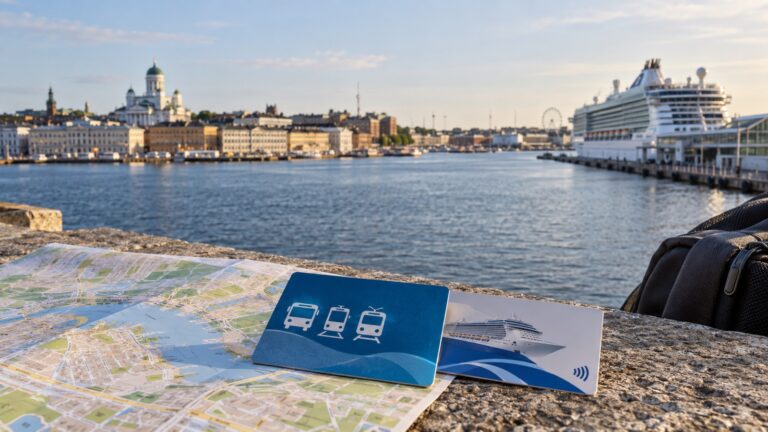
- At boarding: scan the boarding pass or cruise card and listen for instructions about cabins, dining, and the safety briefing.
- Before departure: complete the required muster process and be fully on board by the stated cutoff.
The order can change by port, and some terminals combine several steps at one desk. Allow extra time for large groups, mobility assistance, document questions, and peak holiday departures.
Arrival windows and the real deadline
An arrival appointment manages the crowd at the terminal; it is not the ship’s departure time. Royal Caribbean’s current guidance says early guests cannot begin boarding and late guests may need to wait for a later group.
Other lines use different procedures, so do not assume every slot is a half-hour window or first come, first served. If no appointment appears, follow the check-in range in the final cruise documents.
The hard deadline is the line’s final boarding cutoff. Royal Caribbean says guests must be fully checked in and on board no later than 90 minutes before port operations close, while Carnival directs guests to the final boarding time printed on the boarding pass.
Do not work backward from the published sailing time. A ship scheduled to depart at 5:00 PM can stop accepting passengers much earlier.
What happens to checked luggage
At many ocean terminals, a porter takes tagged luggage before you enter and the cruise line delivers it later. Delivery time varies, so your suitcase may reach the cabin well after you do.
River-cruise handling is less standardized because you may meet the ship at a quay, hotel, or transfer point. Follow the line’s instructions and do not leave a bag with anyone unless the porter or crew is clearly handling your sailing.
Carnival’s published guidance tells guests to keep boarding documents, valuables, medication, and special-handling items in carry-on luggage. That is sensible for any cruise, even when another line uses different baggage limits.
Pack one small first-day bag
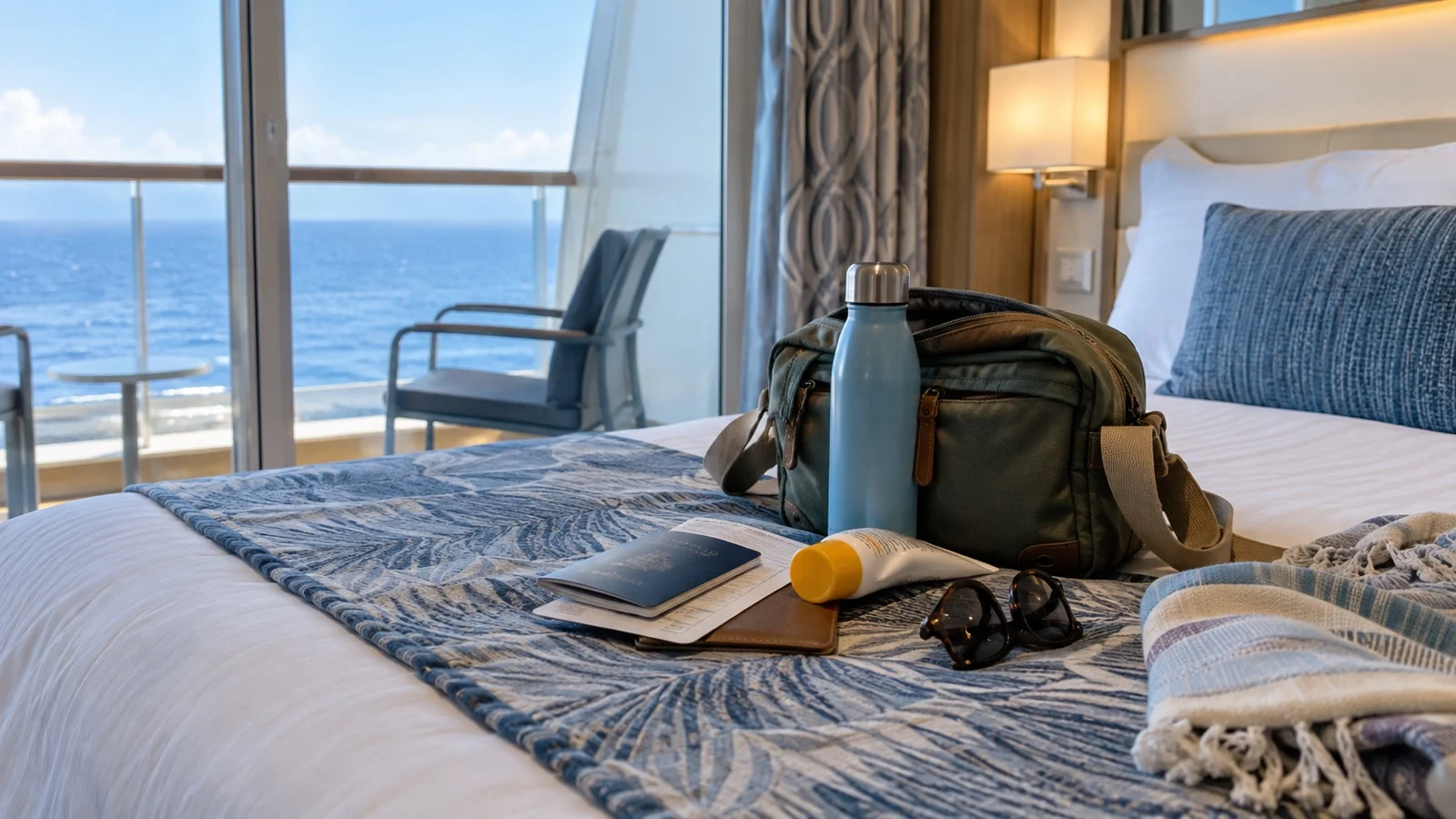
- Passport or other required citizenship and identity documents
- Boarding pass, visas, and any required consent or medical paperwork
- All medication in original, accessible packaging where practical
- Phone, charging cable, and a small power bank if the line permits it
- Glasses, hearing-aid supplies, and essential mobility-device accessories
- A change of clothes, sunscreen, and swimwear if you plan to use the pool
- Valuables and anything you cannot comfortably lose for a day
Keep the bag small enough to manage through security and lunch because cabins may not be ready when boarding begins. Never put a passport or essential medication in luggage you surrender.
Documents: bring what your itinerary requires
The required document depends on citizenship, itinerary, ports, and cruise line. Check the cruise line’s instructions and the official entry rules for every country, not a social-media checklist.
The United States Department of State strongly recommends a passport book for cruise passengers because a traveler may need it to fly home internationally in an emergency. A passport card cannot be used for an international flight.
Some closed-loop cruises may accept other documents for eligible United States citizens, but that does not make them valid for every itinerary. Our cruise visa guide explains why nationality and route both matter.
Families should verify rules for minors, including parental consent documents when a child is not traveling with both parents. Names and dates of birth must match the booking exactly.
Security and check-in at the terminal
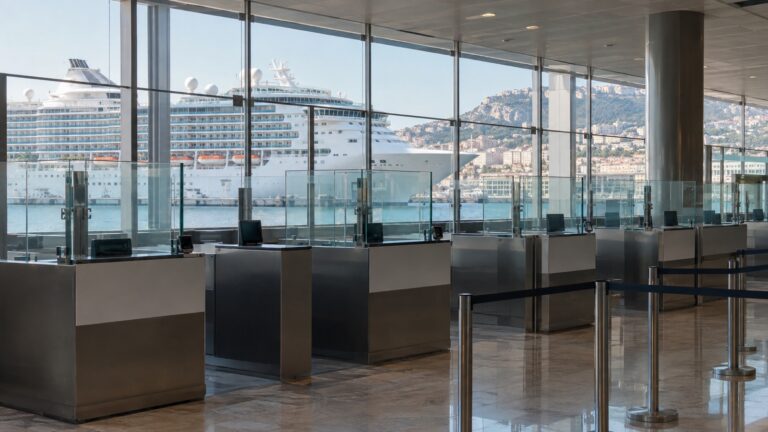
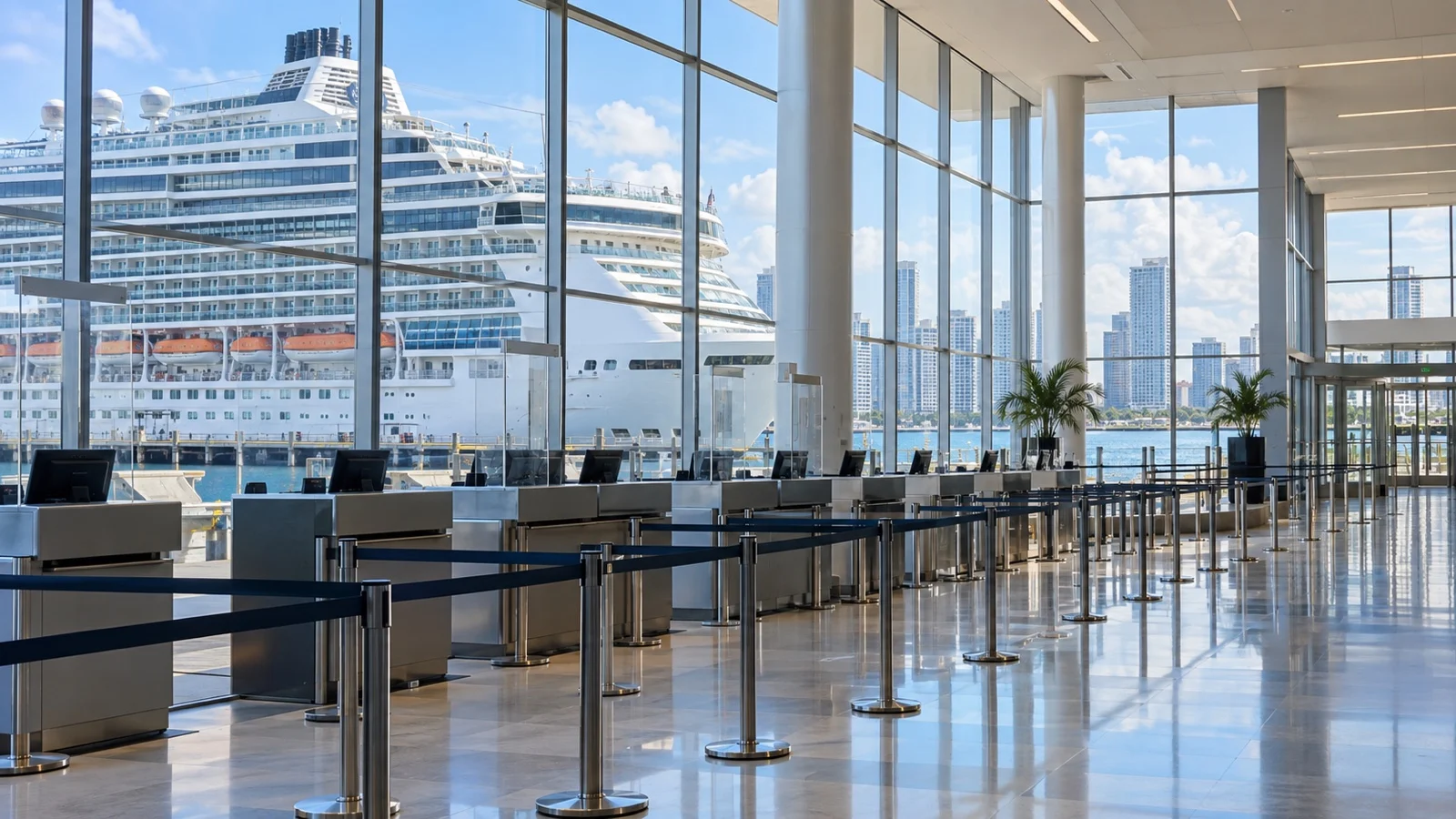
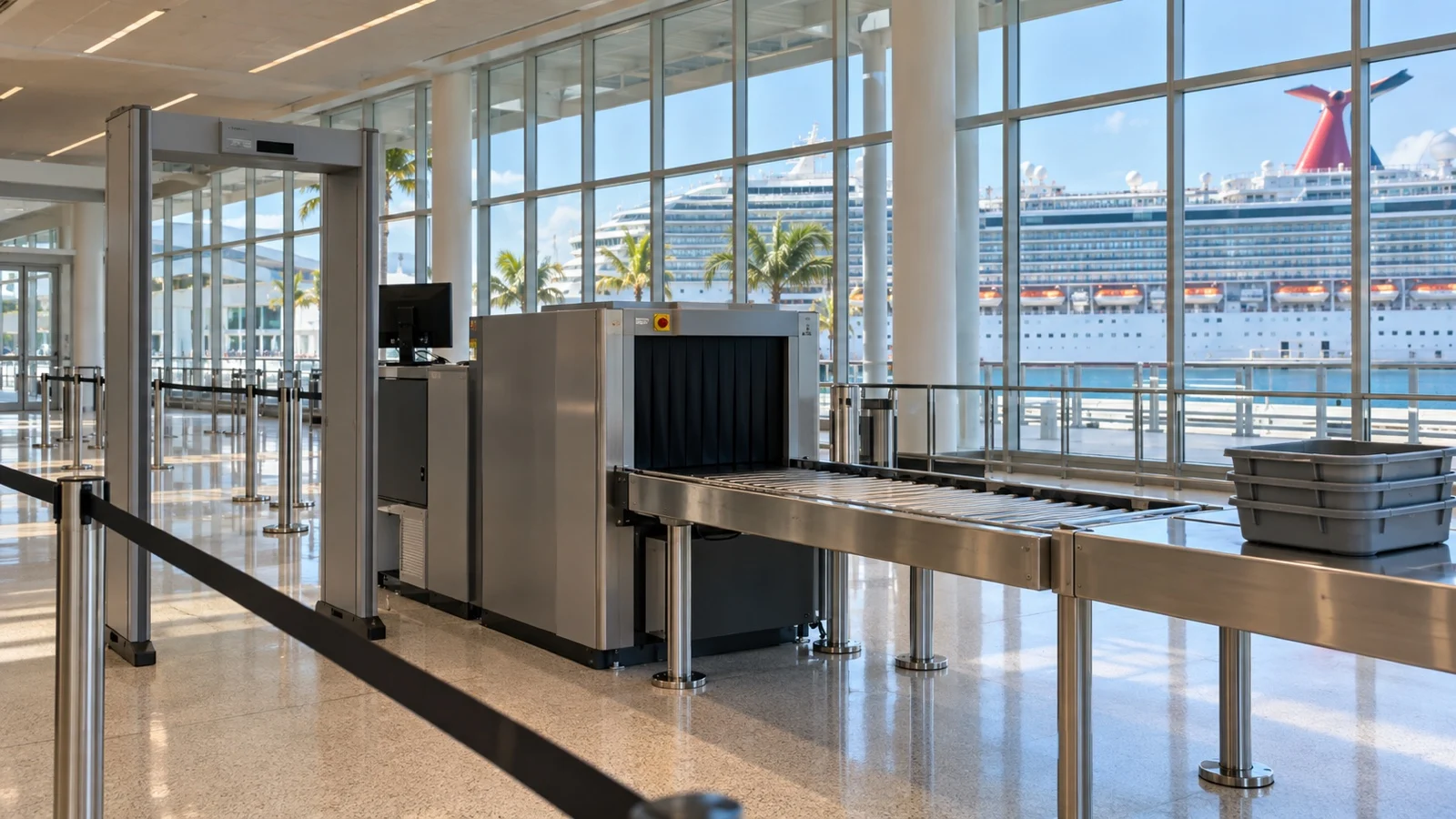
Expect your bags and person to be screened, but the setup ranges from a full cruise terminal to a compact river quay. Keep drinks and special equipment easy to identify if the line allows them.
At the desk or kiosk, staff may check your boarding pass, photo identification, citizenship documents, visas, payment method, and security photo. Some details may already be complete in the app, but you still need the original documents the line requires.
If the cruise line has not assigned a cabin or cruise card before arrival, staff will explain the next step. Follow the boarding group shown on your documents rather than joining the longest line and hoping it is yours.
Ocean ship versus river ship embarkation
Big ocean ships often use scheduled arrival groups, curbside porters, security lanes, waiting zones, and a formal gangway scan. Thousands of guests may be leaving and joining the ship on the same day.
A river ship may board fewer than 200 guests from a city quay, sometimes after a hotel stay or cruise-line transfer. There may be no airport-style terminal, and the crew may handle check-in in the lounge or reception area.
The smaller process is not permission to arrive whenever you like. River berths can change, gangways may be steep, and the vessel may be away from the quay until its scheduled turnaround is complete.
Check messages on the morning of boarding and use the emergency contact in the cruise documents if the ship is not where expected. A map pin saved the week before can be stale on embarkation day.
The safety briefing is mandatory

The muster process varies by line and sailing. Some lines combine app-based safety information with an in-person station check, while others gather guests for a traditional briefing.
Carnival’s current app guidance tells guests to use the app for safety information and then check in with a crew member at the assigned muster station. Complete whatever your ship requires promptly because departure procedures cannot finish while guests remain outstanding.
Do not assume you need to carry a life jacket unless the crew instructs you to do so. Listen to the ship’s directions because the location and procedure can differ even within one cruise brand.
What to do after you board
- Confirm the safety step: find the muster station and complete the required briefing first.
- Check the cabin-ready notice: do not block crew corridors or leave carry-on bags in an unsecured room.
- Review reservations: confirm dining, excursions, spa, and entertainment in the app or with the appropriate desk.
- Check your account: make sure the payment method and package purchases appear correctly.
- Learn the route: locate the cabin, main dining room, guest services, medical center, and gangway.
- Eat where it suits you: opening hours vary, so check the daily program instead of assuming every restaurant serves lunch.
On a river cruise, the first gathering may include a welcome briefing, ship orientation, or excursion sign-up. Be present for it because small schedule changes are often explained there.
Should you fly in the same day?
For a cruise that matters, arrive in the embarkation city at least one day before sailing. Weather, airline disruptions, missed connections, traffic, and lost luggage can turn a legal connection into a missed ship.
A cruise-line air package or transfer may provide assistance, but it does not mean the vessel will wait indefinitely. Read the package terms before relying on that protection.
Drivers should build in similar slack for traffic, road closures, parking, and shuttle time. Our cruise port parking guide covers common parking and hotel-package choices.
Accessibility and special assistance
Request assistance before sailing and confirm it again with the terminal or transfer staff. Accessible drop-off points, wheelchairs, gangway help, sign-language support, and boarding order depend on the port and line.
Keep mobility-device batteries, medical supplies, and required documentation with you as instructed by the cruise line. Never assume an airline’s approval automatically satisfies the ship’s safety rules.
River ships can be especially challenging where the gangway is steep or guests cross another vessel during double docking. Ask how embarkation works at the actual berth, not just whether the cabin is labeled accessible.
Embarkation outside the United States
The basic sequence remains document check, security, check-in, and boarding, but immigration and port procedures vary. Extra steps do not automatically mean every foreign terminal takes longer.
A line may temporarily collect passports for later immigration processing, particularly on multi-country itineraries. The guide to face-to-face cruise immigration explains why instructions can change by port.
Carry the local address of the ship or terminal and the cruise line’s day-of-travel phone number. If the berth changes, contact the port agent rather than trusting a taxi driver’s guess.
Common embarkation mistakes
- Using the departure time as the deadline: final boarding can be much earlier.
- Going to yesterday’s berth: confirm the terminal or quay on the day you board.
- Arriving far outside the assigned window: early or late guests may be held until staff can accommodate them.
- Checking essential items: documents, medication, valuables, and first-day needs belong in the carry-on.
- Borrowing another line’s rules: check-in, beverages, baggage, and prohibited-item policies differ.
- Skipping the safety process: app steps do not always replace the in-person station check.
- Planning a same-day flight: one disruption can erase the time needed to reach the ship.
Quick answers
What time should I arrive at the cruise terminal?
Arrive during the window on your boarding pass or final documents, and obey the separate final boarding cutoff. If no window is assigned, use the line’s stated check-in range.
How early can I board?
Boarding begins only after the ship and authorities clear the arriving voyage, and your arrival appointment may control when you enter. Early hotel checkout is not a reason for the terminal to admit you.
When will my cabin and luggage be ready?
Both times vary by ship and sailing, so plan to carry essentials for several hours. Wait for the official cabin-ready announcement before entering closed corridors.
What documents should I carry?
Carry the boarding pass plus the original passport, identification, citizenship, visa, and minor-consent documents required for your itinerary. Keep them with you until the cruise line says otherwise.
Can I bring drinks, a power strip, or a drone?
Only if your cruise line’s current prohibited-items and beverage policies allow it. Rules vary sharply, so check the official page for your exact brand before packing.
What is different on a river cruise?
River embarkation is usually smaller and may happen directly at a quay, but berth changes and gangway access deserve extra attention. Follow the line’s same-day message and transfer instructions.
Do I have to complete the muster drill?
Yes, every guest must complete the safety process required for that sailing. An app video may be only one part of it.
Should I fly in on embarkation day?
Plan to arrive at least one day earlier when practical. The hotel cost is far easier to absorb than a missed sailing.
Final word
Embarkation day is easy when you respect the three details that actually matter: the correct berth, the assigned arrival time, and the final boarding cutoff. Everything else is a short sequence of luggage, security, documents, and a gangway.
Keep the first-day bag with you, finish the safety briefing, and let the crew tell you when the cabin is ready. Then you can stop managing logistics and start having a vacation.
How this guide was researched: This guide was checked in September 2026 against Royal Caribbean and Carnival embarkation instructions, United States Department of State cruise-passenger guidance, and Viking’s pre-trip planning resources. Procedures differ by line, ship, and port, so the boarding pass and final cruise documents control; see our Editorial Policy.
More on this topic: browse every guide on port logistics and timing.