Hoi An River Cruise Guide: The Beautiful Stop That Is Usually a Land Extension
Hoi An looks like a river-cruise port on plenty of itineraries, but there is an important catch: your overnight river ship usually is not docked beside the lanterns. On major Mekong programs, Hoi An is typically a hotel-based land extension before or after the actual cruise.
My quick take
I would absolutely keep Hoi An on the itinerary, because this is one of those places where the cruise database is technically confusing and the actual experience is excellent. The lack of a big river ship in town is not a downgrade.
What you are really getting is a few slower days in central Vietnam, usually with a hotel in or near Hoi An, time in the Ancient Town, and excursions toward My Son, Da Nang, or Hue. The Thu Bon River is still part of the scenery, just not normally the waterway carrying your Mekong ship.
I would treat this as a land-program stop with river flavor, not as a dock-and-walk port. That one expectation change makes the itinerary much easier to understand.
The quick facts
- Where you land: Usually at a Hoi An hotel by coach or flight connection, not directly from the Mekong river ship.
- Dock or tender: Neither on most packaged river itineraries. Hoi An is generally a land-extension stop.
- Into town: Many hotels sit within a short ride or walk of the UNESCO-listed Ancient Town.
- Currency and language: Vietnamese dong; Vietnamese is official, with English common in hotels, restaurants, and major visitor sites.
- Time zone: Indochina Time, UTC+7 year-round, with no daylight saving time.
- How often the call is missed: Low (about 2–5% chance): typhoons, flooding, or flight disruption can reroute the land program.
Why Hoi An shows up as a river cruise port
Cruise databases need a simple list of stops, and Hoi An appears in the middle of many longer Vietnam and Cambodia river-cruise vacations. That makes it look like the river ship sails into town, even when the detailed day-by-day itinerary says otherwise.
Current CroisiEurope itineraries, for example, place Hoi An in a hotel-based extension after or before the Mekong cruise. Guests travel through Hue and Da Nang, spend nights ashore, visit Hoi An and My Son, then fly onward rather than sailing a Mekong vessel into the Ancient Town.
Emerald Cruises follows the same basic pattern on its Grand Tour of Vietnam and Cambodia. Hoi An comes before the seven-night Mekong cruise, with the river ship joined later in Ho Chi Minh City.
This matters because you should not plan around a gangway or tender schedule here. Your practical clock is the hotel meeting time and the coach schedule instead.
If your trip includes the actual Mekong section, my Mekong river cruise ports guide explains how water levels change the true river portion. Hoi An is better understood as the cultural bridge between that cruise and central Vietnam.
The Ancient Town is the reason to stay
Hoi An was a major Southeast Asian trading port from roughly the 15th through 19th centuries, drawing Vietnamese, Chinese, Japanese, and European merchants. UNESCO lists the Ancient Town for the unusually intact fusion of those cultural influences.
The historic core sits along the Thu Bon River and is compact enough to explore slowly. That is exactly how I would do it, because Hoi An loses some of its charm when you turn it into a checklist sprint.
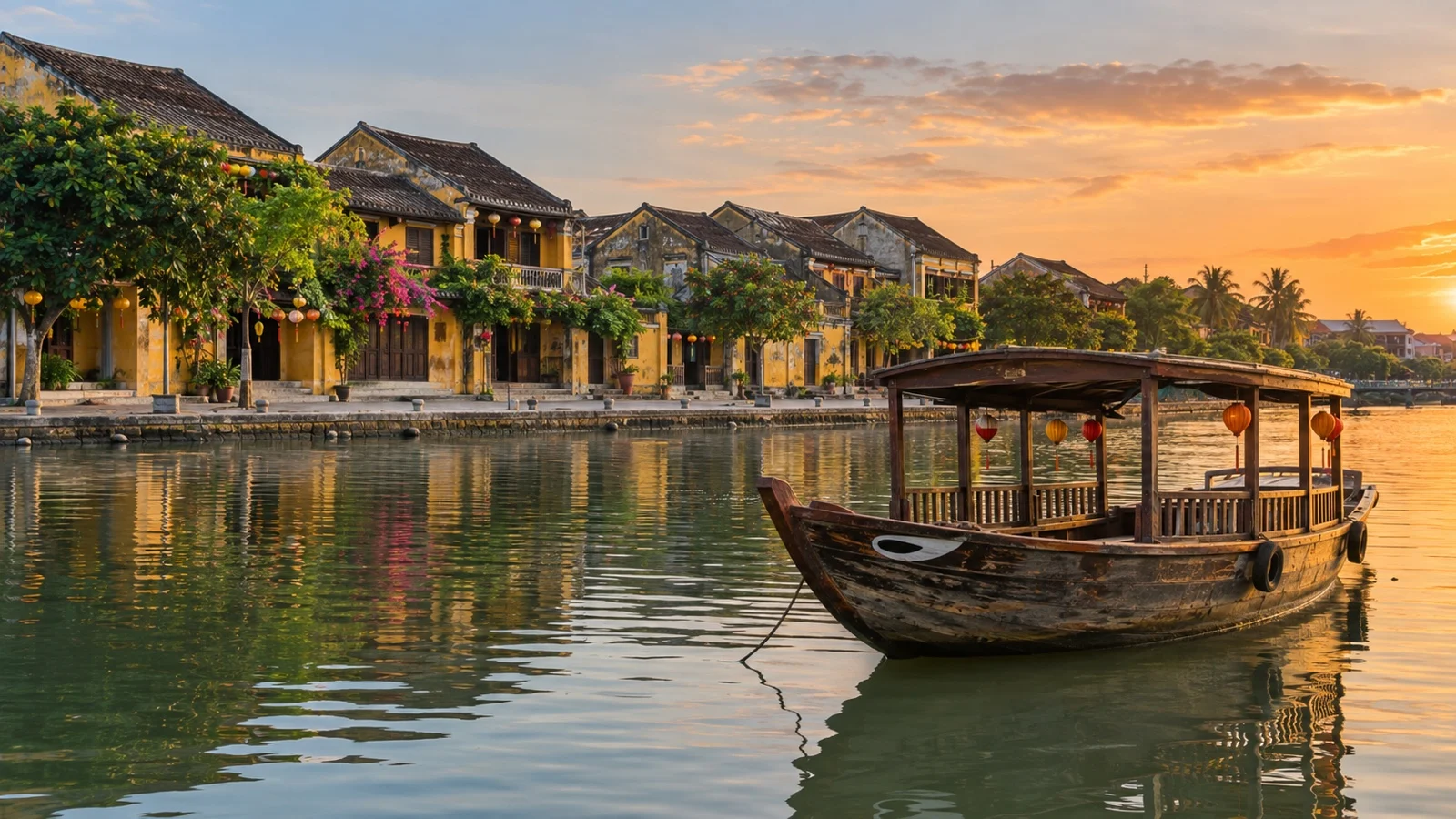
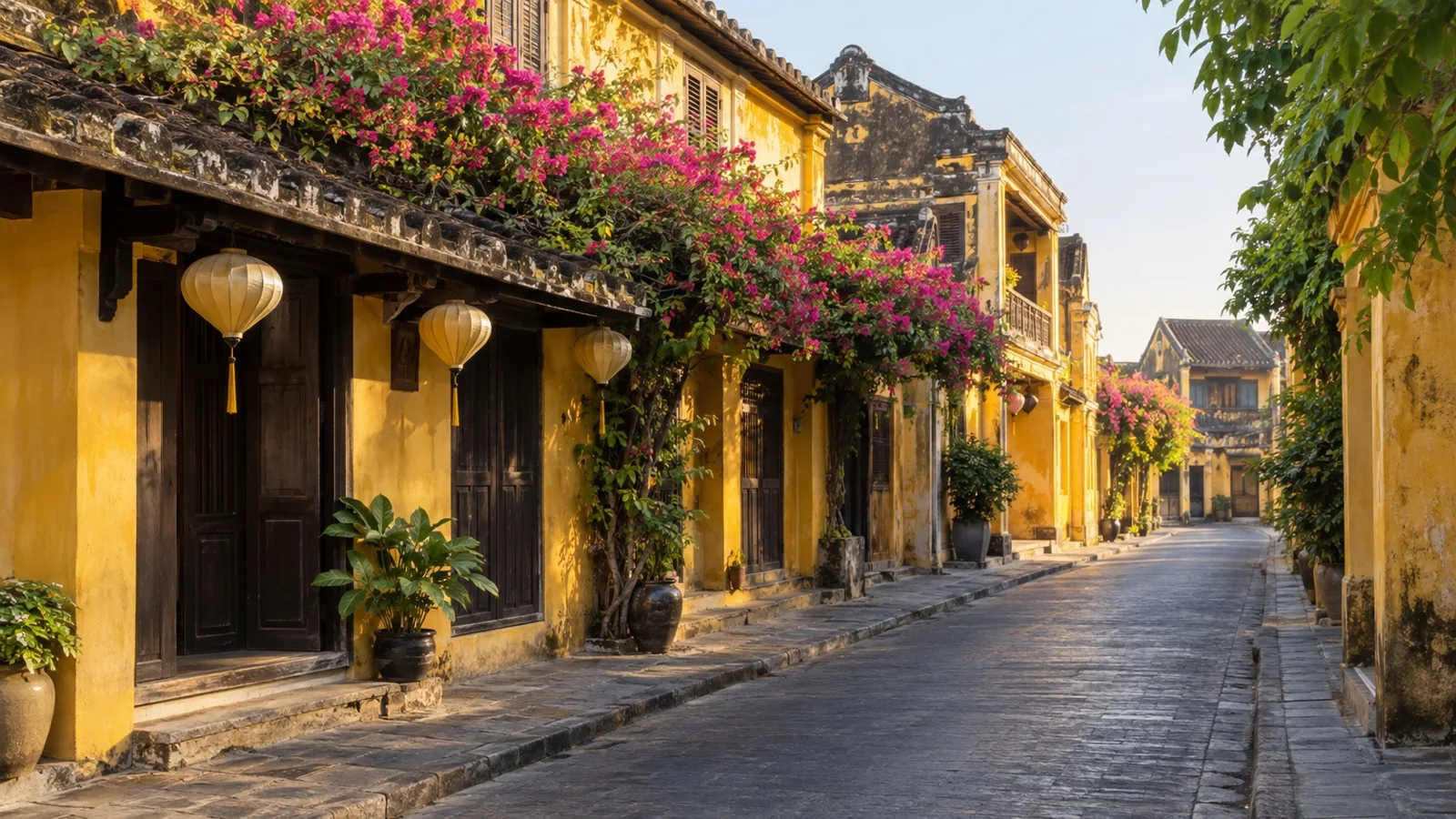
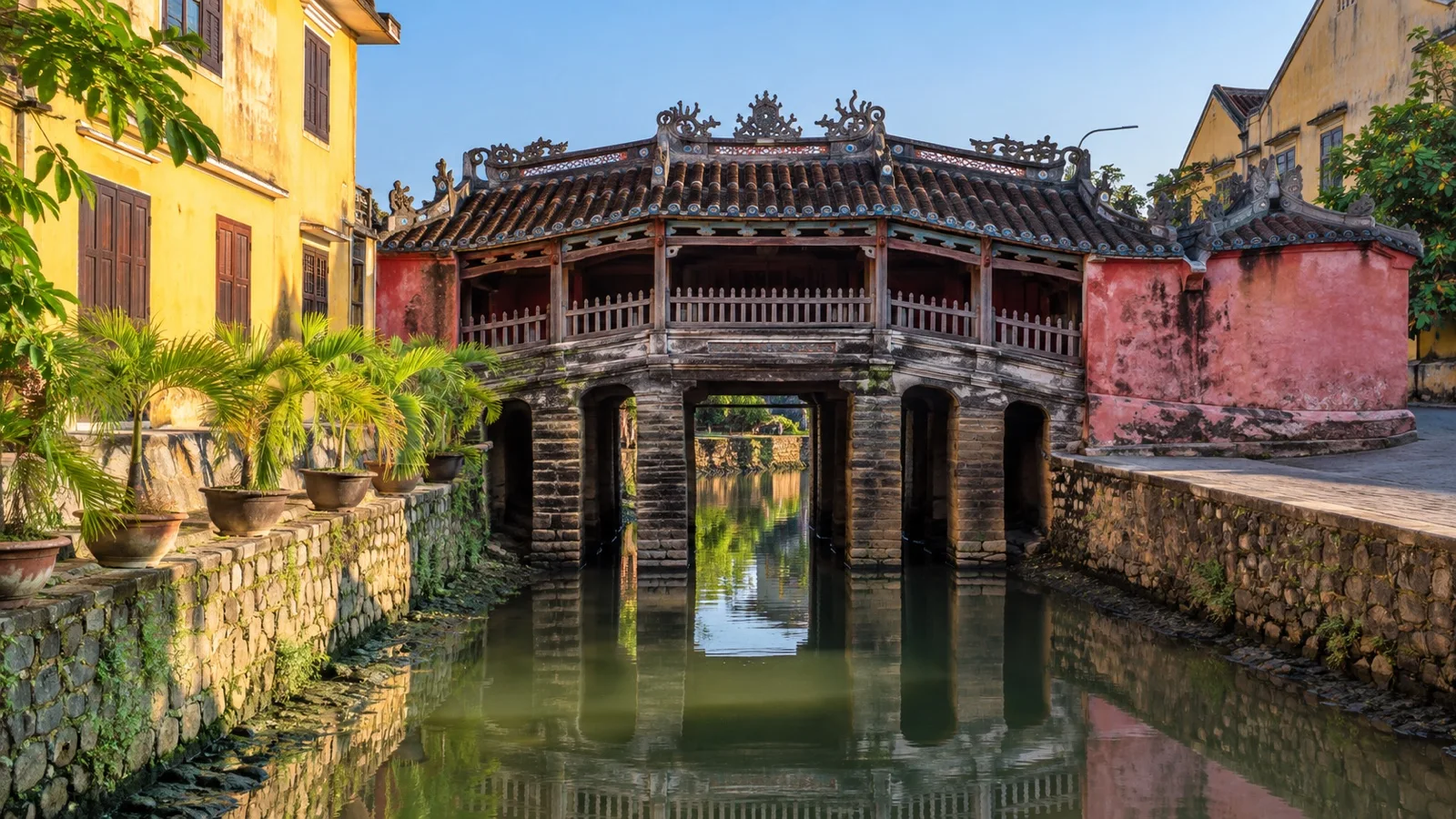
The Japanese Covered Bridge is the famous landmark, but I would spend at least as much time in the old merchant houses and assembly halls. The appeal is the whole streetscape of yellow walls, dark timber, tiled roofs, lanterns, courtyards, and tiny storefronts.
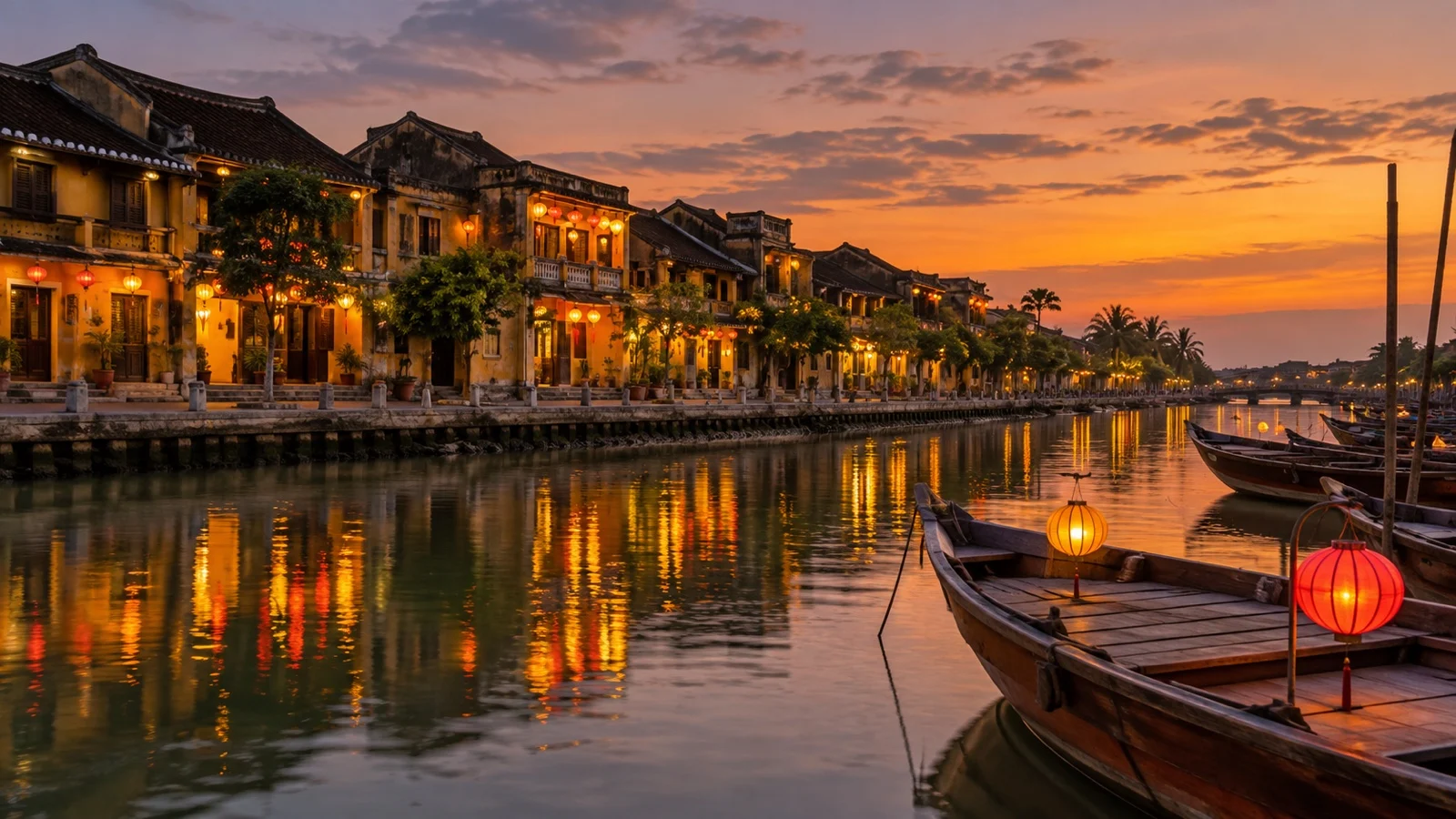
The riverside gets busiest later in the day when lantern boats and evening crowds arrive. I like the idea of seeing the old town once in daylight, then coming back after dinner when the atmosphere changes completely.
Hoi An is also one of the easiest places on a long escorted itinerary to claim a little independent time. You can wander, stop for coffee, shop, or sit by the river without needing to solve a huge transportation problem.
How the transfer through Da Nang works
Da Nang is the practical transport hub for Hoi An. It has the airport and rail connections, while Hoi An sits roughly 18 miles to the south by road.
On a packaged cruise extension, this is usually handled for you by motorcoach. The line may combine the transfer with sightseeing in Da Nang, a museum stop, lunch, or the drive over from Hue.
If you are building the extension independently, I would use a prearranged car or hotel transfer instead of overcomplicating the route with several local connections. Central Vietnam traffic can be busy, and the door-to-door simplicity is worth it with luggage.
Do not confuse Hoi An with an ocean cruise call at Da Nang or Chan May. My Da Nang cruise port guide covers the actual coastal port logistics, while my Chan May guide explains the farther-north gateway used by many ocean ships.
The broader Vietnam cruise ports guide is useful if your trip mixes river, ocean, and land segments. Vietnam is one of those countries where the itinerary labels can hide very different arrival experiences.
The Thu Bon River still matters
Hoi An exists because of the river, even if your overnight cruise ship is somewhere else. The old trading port developed along the Thu Bon, and the water remains part of everyday life and the visitor experience.
Small local boats operate from the waterfront, especially around sunset. These are short sightseeing rides, not transfers to a large river-cruise vessel.
If you want a quieter water experience, I would look for a daytime or late-afternoon trip toward the surrounding countryside rather than only the busiest lantern-boat hour. The river becomes much more interesting once the old-town crowds fall behind.
Some hotels run their own Thu Bon cruises as well. Anantara Hoi An, for example, currently advertises one-hour traditional-style boat trips from its riverfront property.
I would treat that as an optional extra rather than something you must book to say you experienced Hoi An. Walking the riverfront at dusk can be just as memorable and leaves more room for an unplanned dinner.
My Son is the excursion I would keep
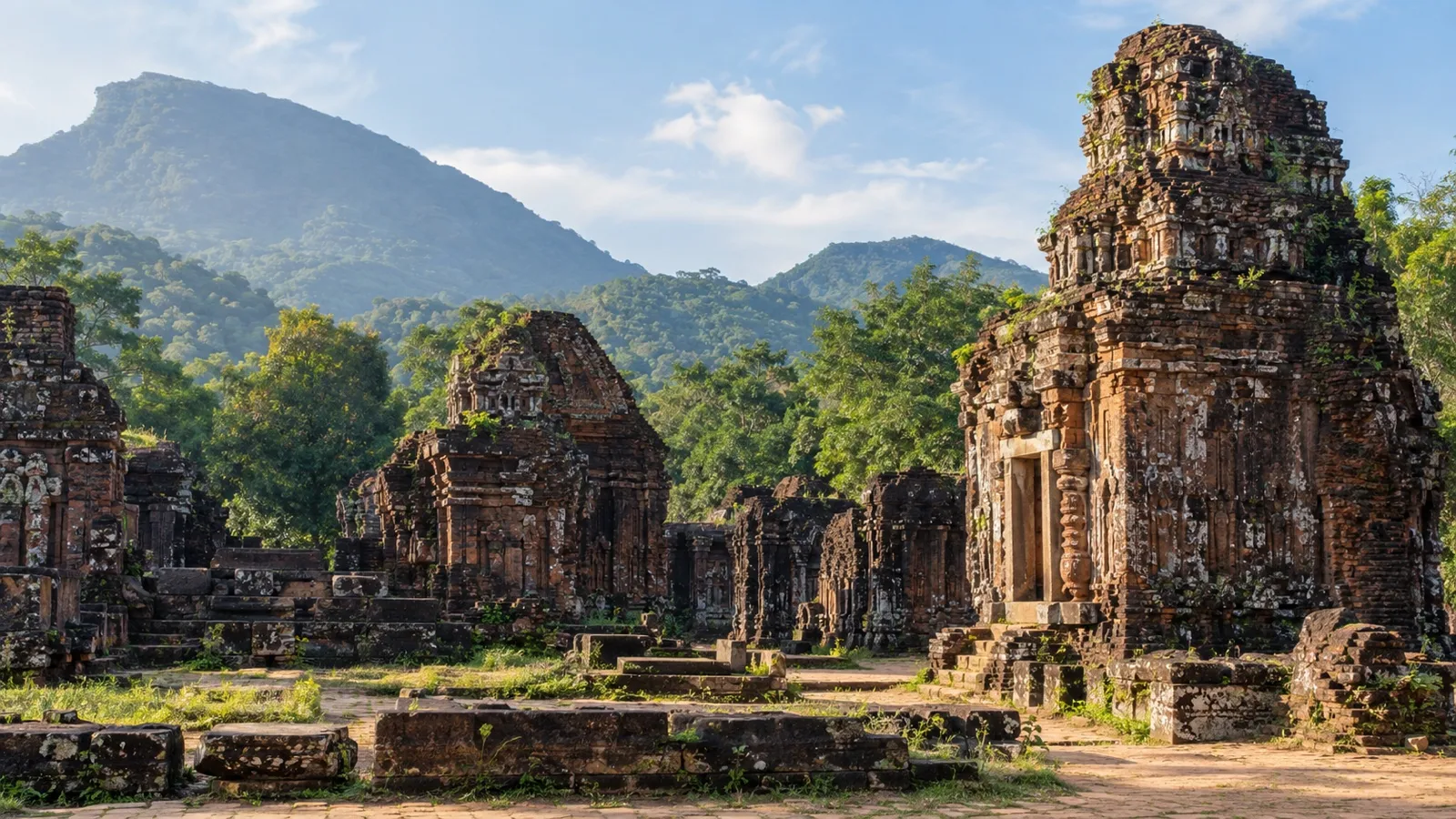
Many cruise extensions pair Hoi An with My Son, the ruined Hindu sanctuary of the Champa kingdom. This is the one organized excursion I would be reluctant to skip because it adds a completely different layer to central Vietnam.
My Son sits inland from Hoi An, so a tour solves the transportation and interpretation at the same time. The brick temple towers make far more sense with context than they do as a quick photo stop.
The current CroisiEurope programs specifically dedicate a day to My Son and Hoi An, which tells you how central the pairing is to these extensions. I would save independent wandering for the Ancient Town and let the guided day handle the archaeological site.
Start early if your program allows any flexibility. Central Vietnam can feel hot and humid by midday, and shade at archaeological sites is not always where you want it.
Weather can actually change this part of the itinerary
Hoi An’s most meaningful disruption risk is not a missed berth. It is central Vietnam’s wet season, when heavy rain, tropical systems, and flooding can affect roads and the low-lying Ancient Town.
I would pay particular attention to weather from roughly September through December. That does not mean you should avoid the region, but it does mean the land program can need more flexibility than a sunny brochure suggests.
If water rises in the historic center, the line may alter sightseeing, change the sequence, or substitute another activity. That is why I rate the chance of a meaningful Hoi An program disruption as low rather than pretending it is zero.
Bring a light waterproof layer and shoes you do not mind getting wet. In hotter months, I care more about breathable clothing, water, and sun protection than dressing up for photographs.
A realistic word on accessibility
Hoi An is easier than many ancient towns in one sense: the historic center is mostly flat. The challenge is the surface quality, with uneven paving, thresholds, narrow shop entrances, crowds, and occasional steps.
Motorcoach-based extensions add another variable. If you cannot manage coach steps or need a wheelchair lift, tell the cruise line before the trip rather than assuming the land package uses the same accessible setup as the ship.
Small local riverboats are another case where access varies. I would not assume a lantern boat or traditional wooden boat can take a wheelchair without advance confirmation.
If mobility is limited, a centrally located hotel is extremely valuable. Being able to return to the room without another long coach ride gives you much more control over the day.
How I would spend two days in Hoi An
On the first afternoon, I would check into the hotel, walk the Ancient Town in daylight, and avoid overbooking anything. The whole point is to have enough time to notice the details rather than arrive, photograph the bridge, and leave.
I would stay through sunset, eat in town, and walk the riverfront once the lanterns come on. This is the evening I would keep completely free if the cruise line gives you independent time.
The next morning, I would do My Son or the main included excursion while temperatures are lower. Back in Hoi An, I would use the afternoon for a local boat ride, cooking class, tailor appointment, café, or simply more wandering.
If the itinerary continues to Hue, I would not try to squeeze Hue into Hoi An time. Let each place have its own day, because the imperial capital and the old trading port are very different experiences.
Most importantly, I would stop thinking about this as a missing cruise berth. Hoi An is one of the reasons the land extension exists in the first place.
Quick answers
Does a Mekong river cruise ship dock in Hoi An?
Usually no on the major packaged itineraries. Hoi An is typically a hotel-based extension before or after the Mekong cruise.
Can you still take a boat in Hoi An?
Yes. Small local boats operate on the Thu Bon River, including short sightseeing and sunset trips.
How far is Hoi An from Da Nang?
Roughly 18 miles by road, depending on your exact hotel and route.
Is Hoi An worth the cruise extension?
Yes. I would consider it one of the strongest cultural stops on a longer Vietnam and Cambodia program.
Can flooding affect the visit?
Yes. Heavy rain and tropical weather can flood low-lying areas and force sightseeing changes, particularly during the wetter part of the year.
The last word
Hoi An belongs on a river-cruise website because river-cruise travelers genuinely spend important days here. It just does not belong in your mental picture of a ship pulling up to a quay beside the Japanese Covered Bridge.
Think of it as a beautifully placed pause between travel segments: a hotel, an old trading port, a river at your feet, and enough independent time to remember you are on vacation rather than completing an itinerary spreadsheet.
How this guide was researched: This guide uses current cruise-line itineraries plus UNESCO and destination sources to separate Hoi An’s land-program role from true river-port logistics. Details were reviewed in August 2026. See our Editorial Policy.