Kochi Cruise Port: A Guide to Shikoku, Japan
Kochi sits on the Pacific coast of Shikoku, Japan’s fourth main island, and it is one of my favorite low-key stops in the country. This is a castle town of seared bonito, a 300-year-old street market, and a samurai hero who helped remake modern Japan.
My quick take
Kochi is an easy, friendly, uncrowded day, and the draw is clear: the original Kochi Castle, the Sunday Market, and the Sakamoto Ryoma statue at Katsurahama. If Kochi is part of a longer Japan itinerary, it pairs naturally with Kobe, Hiroshima, and the other Japan cruise ports.
The quick facts
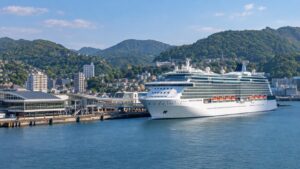
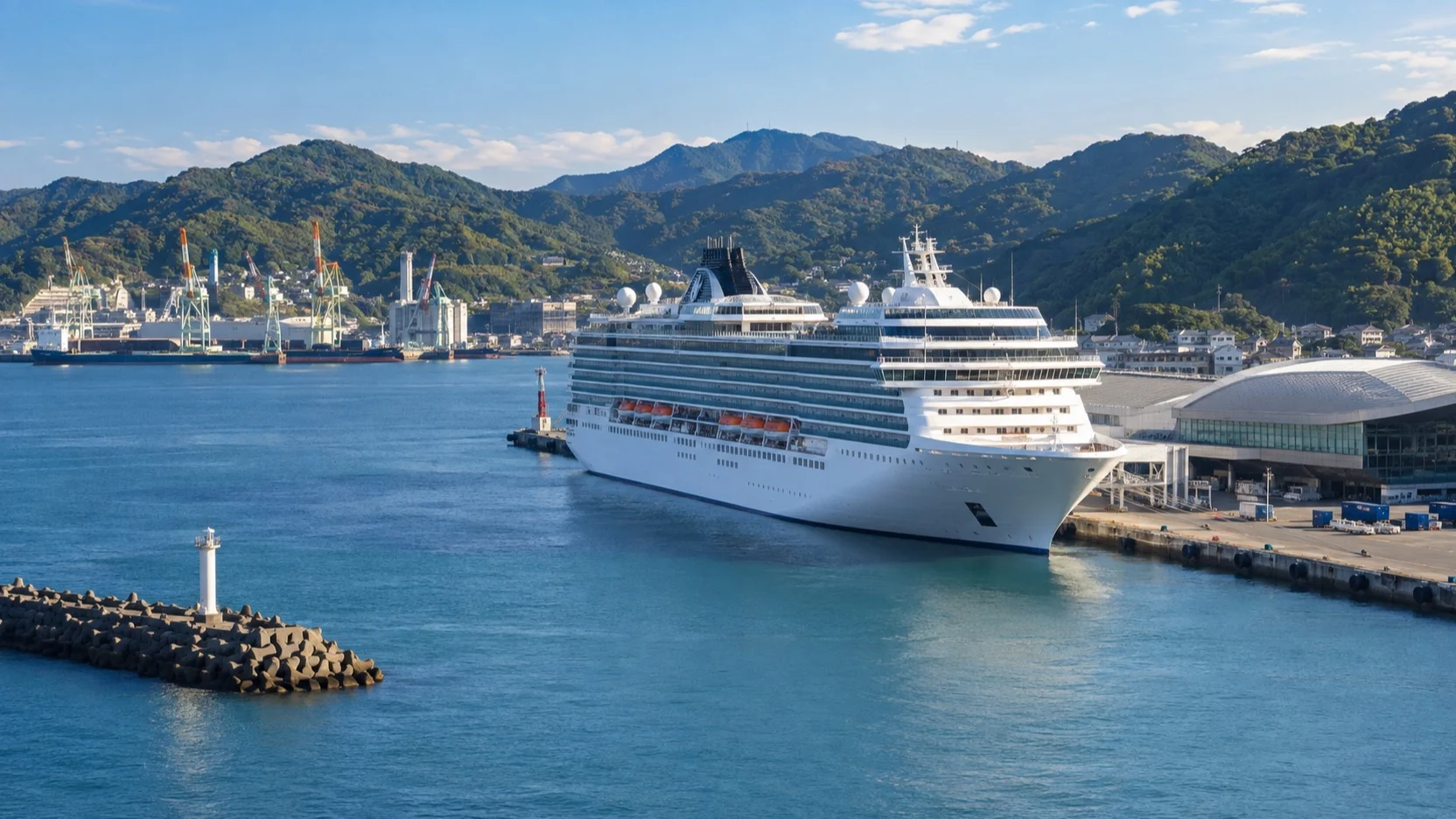
- Where you land: large cruise ships berth at Kochi New Port (Kochi Shinko), at the Misato wharves, per the official Japan government cruise port guide. This is a working commercial port rather than a downtown berth.
- Dock or tender: You come alongside at Misato and walk off.
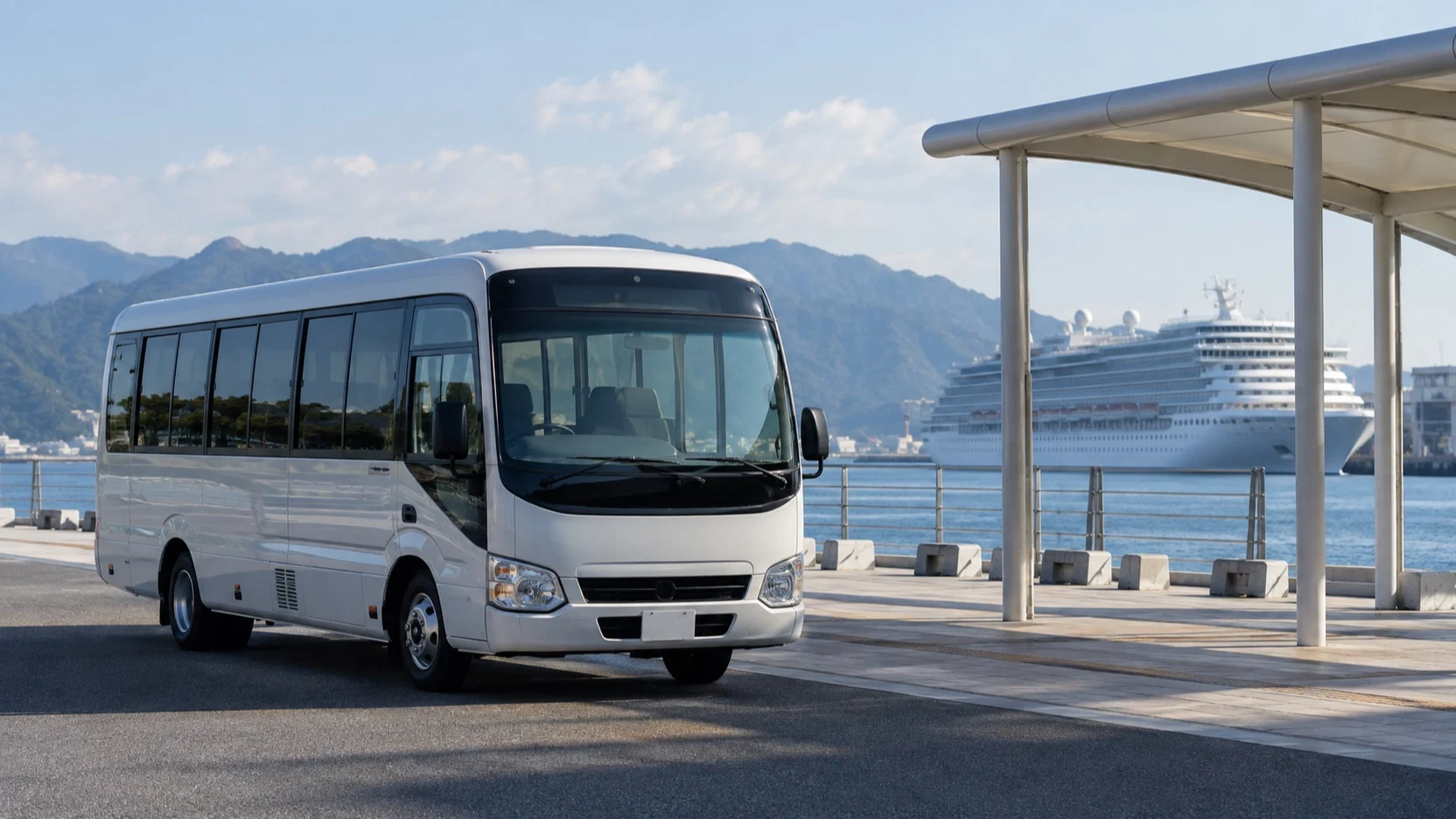
- Into town: The port sits outside the center, roughly a 30 minute drive from JR Kochi Station, with no comfortable walking route, so plan on the shuttle.
- Currency and language: Japanese yen (JPY) and Japanese.
- Time zone: Japan Standard Time (JST, UTC+9).
- How often the call is missed: Low (roughly 1 to 2%): tropical storms can make the approach unsafe.
Getting from the port into the city
Kochi New Port is a working commercial port, not a walk-off downtown berth. The city, the castle, and the markets are all a short drive inland.
A cruise-day shuttle is often arranged, but the operator, price, and drop-off are ship-specific rather than guaranteed. Confirm the last return departure before leaving the pier, because a taxi back to the controlled port area may require clear Japanese directions and extra time.
Once you are in the center, the Tosaden streetcar (tram) is the easiest way to move around, and the Harimayabashi junction is the hub where its lines cross. A tram stop sits about three minutes’ walk from Kochi Castle.
Taxis wait at the port, and a private driver or a ship excursion is the simplest option if you want to reach Katsurahama or Godaisan without piecing together buses.
Build the transport chain first
For a city-only day, take the ship shuttle to its announced drop-off, then use the tram or walk between Harimayabashi, Kochi Castle, Hirome Market, and the Sunday Market when it is operating. Note the return stop on your phone because the outbound and inbound pickup points may not be identical.
Katsurahama and Godaisan sit in different directions from the center, so combining both by public bus wastes precious time. A taxi hired for a fixed loop or a ship tour costs more, but it is the better choice for families, limited mobility, or calls under six hours.
Kochi Castle is the best pick for history, Hirome Market is the easy food stop, and Katsurahama is for scenery and Ryoma rather than swimming. Choose two of those three on a short call and the day will feel pleasantly full instead of rushed.
Japan’s visa rules depend on your passport, and cruise passengers still need the correct permission to enter. Verify it with the Ministry of Foreign Affairs before travel, then follow the ship’s instructions on immigration documents and what identification to carry ashore.
The stops I’d actually spend time on
Kochi rewards a focused plan over a rushed one. These are the places I would build a day around.
Kochi Castle
This is the single reason many cruisers come ashore. Kochi Castle is one of only twelve original castles left in Japan, and the official VISIT KOCHI JAPAN guide notes it is the only one where both the original main keep (tenshu) and the honmaru palace survive intact.
Fun fact: the keep has weathered wars, fires, and centuries of storms, and it is designated an Important Cultural Property. Climb it for city views framed by the mythical shachi (half fish, half dragon) figures on the roof.
The Sunday Market (Nichiyou-ichi)
If your call happens to land on a Sunday, do not miss this. The Sunday Market has run for more than 300 years and stretches about 0.8 mile along Otesuji street from the castle’s Otemon gate.
Stalls sell local vegetables, yuzu products, sweet-potato tempura, plants, and knives from early morning into the afternoon. Hours and closures can change around holidays, so check the official listing and arrive early for the widest choice.
Hirome Market
Hirome Market is a lively covered food hall near the castle, packed with stalls and shared tables. It is the easiest place to try Kochi’s signature dish.
That dish is katsuo no tataki, bonito seared hard over a straw flame so the outside chars while the center stays raw. It is the local soul food, and watching it flame-seared is half the fun.
Katsurahama and the Sakamoto Ryoma statue
Katsurahama is a curved pine-backed beach where a tall statue of Sakamoto Ryoma gazes out over the Pacific. Note that swimming is prohibited here because of strong currents and big waves, so come for the view, not a dip.
Fun fact: Ryoma was a Kochi-born, low-ranking samurai who became a key figure in the Meiji Restoration that ended feudal rule and opened up modern Japan. The Sakamoto Ryoma Memorial Museum sits on the headland just above the beach.
Godaisan Park, Chikurin-ji, and Makino Botanical Garden
Godaisan Park is a green hilltop with a lookout over the city and bay. On the same hill you will find two more highlights within an easy walk.
Chikurin-ji is temple 31 on the Shikoku 88-temple pilgrimage, with a five-story pagoda and mossy grounds that are lovely in fall. Beside it, the Makino Botanical Garden honors Kochi-born botanist Makino Tomitaro and is a calm, beautifully planted stop.
Harimaya Bridge and the Niyodo River
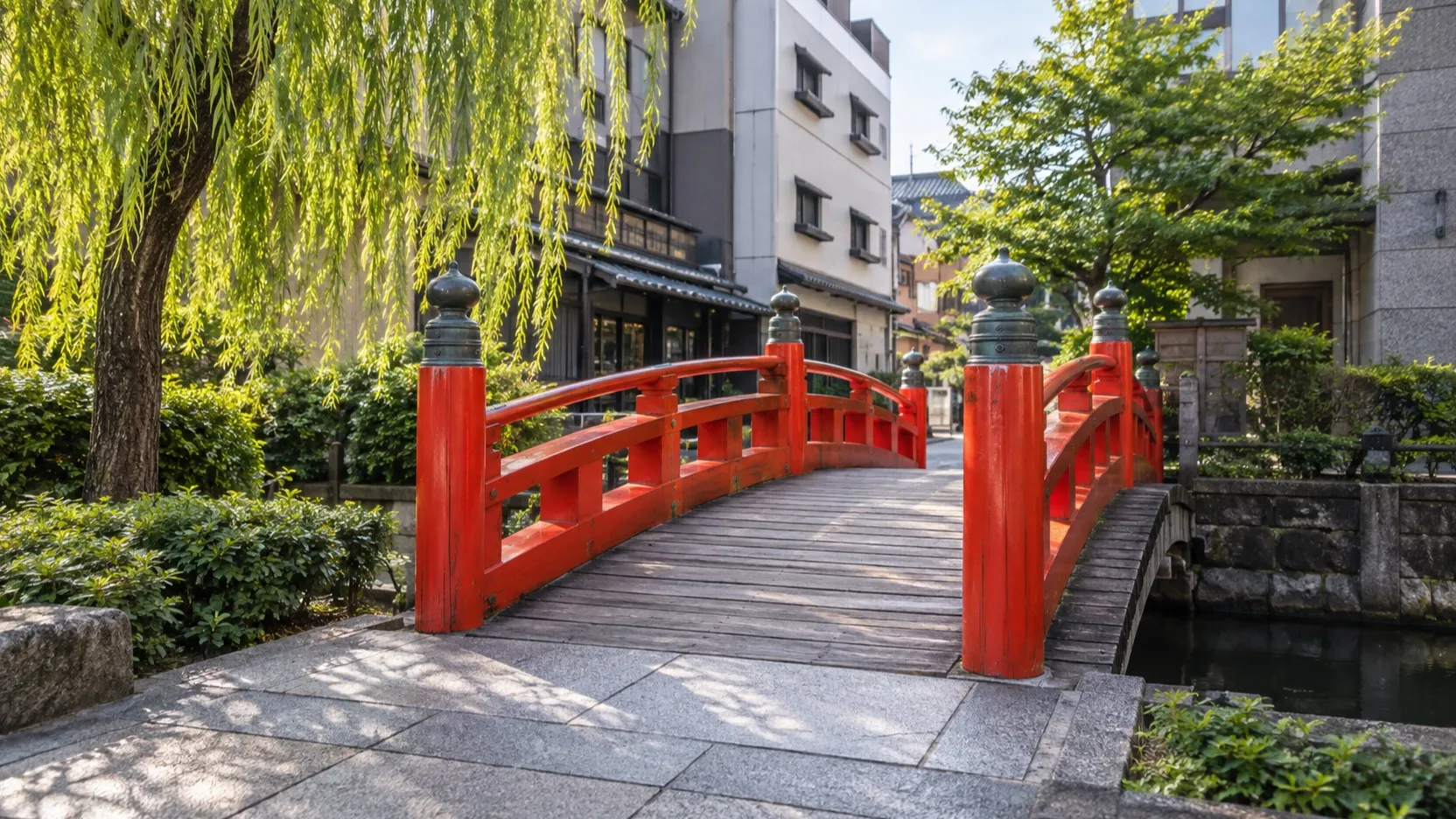
The little red Harimaya Bridge in the center is a beloved local symbol tied to an old love-story legend. It is a quick photo stop rather than a destination, and it sits right by the tram junction.
If you have a full day and a driver, the Niyodo River inland is famous for its clear “Niyodo blue” water. It is a longer trip, so weigh it against the shorter return buffer a cruise day allows.
How I’d plan the day
Short on time (about 3 hours): Shuttle into the center, walk up to Kochi Castle, then graze at Hirome Market for katsuo no tataki. If it is a Sunday, swap in the Sunday Market on Otesuji street.
A relaxed half day (about 5 hours): Add Katsurahama and the Ryoma statue by taxi or excursion, then return for the castle and market.
A full day (7 hours or more): Combine the castle and market with Godaisan hill for Chikurin-ji and the Makino Botanical Garden, and still leave a generous buffer for the 30-minute ride back to the port.
Whatever you choose, aim to be back aboard well before all-aboard time. The port is a drive from the sights, and traffic can stretch that return.
Tickets, opening days, and a safe buffer
Carry yen for trams, markets, and small food stalls, and check attraction hours before committing. Museums and the botanical garden can close on specific weekdays or for maintenance, while the Sunday Market is useful only when your ship is actually in port on Sunday.
For an independent city day, start back toward the shuttle 90 minutes before all-aboard and take the earlier of the last two practical returns. For Katsurahama, Niyodo River, or any private-driver day, agree on a hard departure time and show the driver the ship name and berth in Japanese.
A realistic word on accessibility
You dock alongside at Kochi New Port, which avoids the tender-boat step that makes some Japanese ports tricky. Compare it with the genuinely tender-dependent stops on my best tender ports roundup.
That said, this is a hilltop-castle and old-market destination. Kochi Castle involves steps and steep stone paths to the keep, and market lanes are crowded and uneven.
The city trams and central streets are the most manageable option for limited mobility. If you need step-free transport ashore, arrange it with your cruise line in advance.
When to go, and the weather
Spring and fall are the sweet spots. Cherry blossoms ring the castle and Godaisan in early spring, and fall brings mild air and maple color at Chikurin-ji.
Summer is hot and humid, and Kochi Prefecture is one of Japan’s rainiest regions. Late summer into fall is also typhoon season, so a passing storm can reshape a port call.
Quick answers
Can I walk from the ship into Kochi city?
No, not comfortably. Kochi New Port is roughly a 30-minute drive from the center, so plan on a cruise shuttle, an organized tour, or a taxi.
What is Kochi best known for?
Its original Kochi Castle, the centuries-old Sunday Market, seared bonito (katsuo no tataki), and native son Sakamoto Ryoma, whose statue looks out over Katsurahama beach.
Do I need cash?
Bring some yen. City shops and restaurants take cards, but market stalls and small vendors are still often cash-only.
For more Japan planning, browse my guide to nearby Osaka.
How this guide was researched: Unless a first-hand visit is explicitly identified above, this guide is based on independent research using official port, tourism, transit, government, and attraction sources where available. Logistics and time-sensitive details were reviewed in September 2026. See our Editorial Policy.