New Plymouth Cruise Port: Blyde Wharf & Taranaki
New Plymouth gives cruise travelers a rare combination: an alongside working port, an easy shuttle into a compact city, and the possibility of seeing Taranaki Maunga on the same day. The mountain is the postcard, but the smartest plan keeps a satisfying city option ready for the cloud that often hides it.
Ships have used Blyde Wharf at Port Taranaki, where passengers must follow secure-port transport rules before walking or touring independently. Once outside the gates, the Coastal Walkway, Puke Ariki, contemporary art, gardens, and cafes make New Plymouth one of New Zealand’s easiest ports to enjoy without a long excursion.
New Plymouth cruise port quick facts
- Port: Port Taranaki, a secure working harbor
- Recent cruise berth: Blyde Wharf
- Arrival style: Alongside, with shuttle transport required through the secure area
- City distance: About 3 kilometers from the port to central New Plymouth
- Shuttle destination: Puke Ariki Landing in the city center
- Best independent day: Coastal Walkway, Puke Ariki, art, gardens, and cafes
- Key variable: Taranaki Maunga can disappear behind cloud at any time
My quick take
For a first call, I would take the free shuttle to Puke Ariki, explore the city on foot, and add a prebooked mountain or garden excursion only if the forecast and schedule are favorable. New Plymouth is too pleasant to treat as nothing more than a bus stop on the way to one distant viewpoint.
If the mountain is hidden, lean into the city instead of chasing clouds around the region. The art, waterfront, museum, park, and food scene can fill a port day without feeling like a consolation prize.
Current cruise evidence and Blyde Wharf
Port Taranaki’s official record confirms that Coral Princess called at Blyde Wharf on February 25, 2026. The port described the vessel docking alongside and provided shuttle transport for passengers heading to the city.
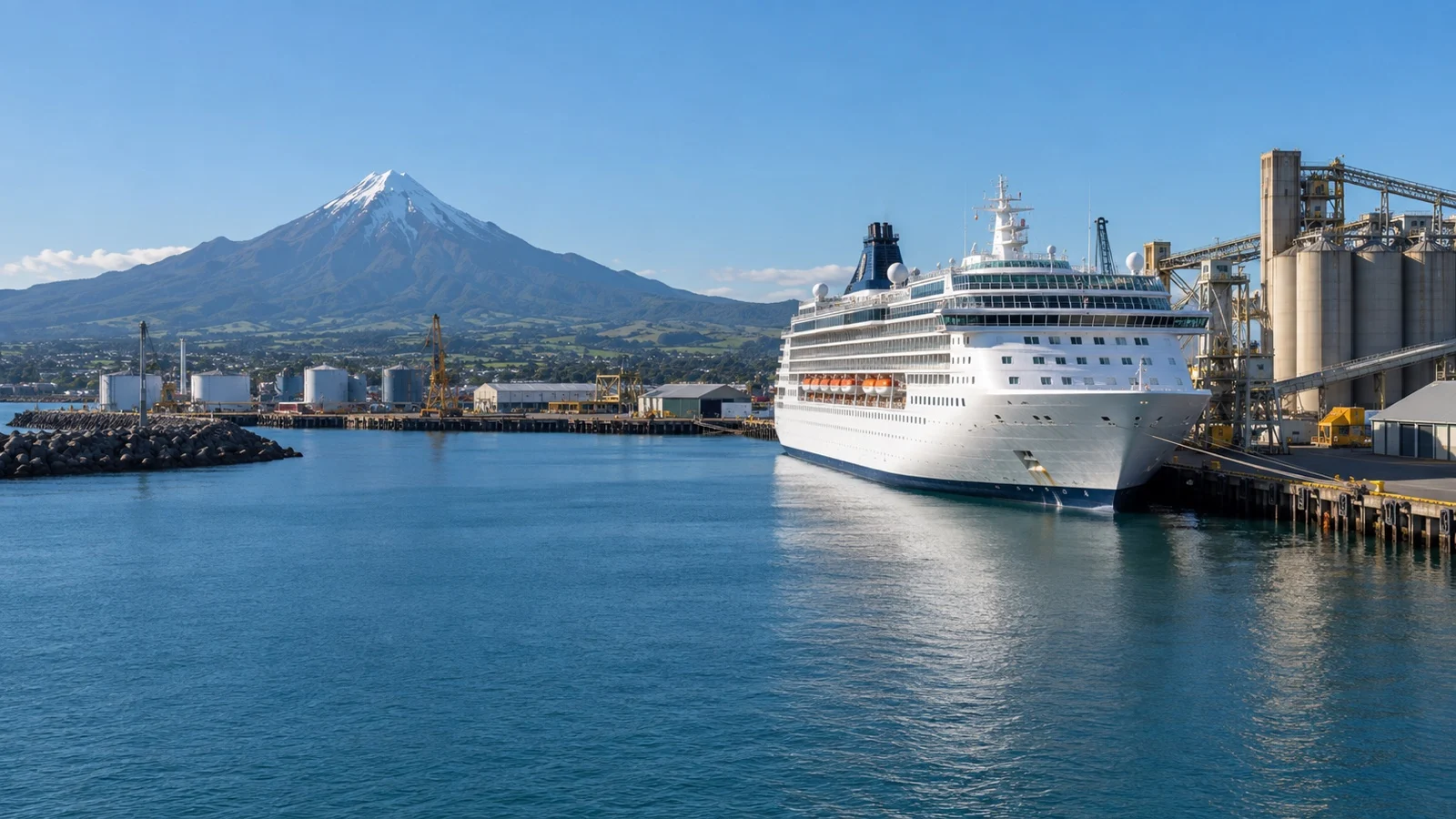
That verified call is useful evidence for how New Plymouth handles cruise guests, but it is not a promise that every future ship will use the same berth or receive identical arrangements. Check the official Port Taranaki cruise schedule and your cruise line’s itinerary close to sailing.
Blyde is a working terminal rather than a dedicated passenger complex. Port Taranaki says the wharf can accommodate vessels of 65,000 tonnes displacement, while berth assignment remains an operational decision for the port and ship.
Do not use an old cruise map to walk through cargo areas. Follow crew, security staff, signs, and the shuttle plan in effect for your call.
The secure-port rule
The official regional cruise page states that pedestrians cannot walk from the gangway to the port gate. Passengers who want to walk into the city or visit nearby Ngāmotu Beach must first ride a designated shuttle to the stop outside the secure area.
This rule is easy to follow when you know it in advance. Board the correct shuttle, note where it will collect you later, and do not step into marked vehicle lanes or industrial zones for a shortcut.
Recent cruise arrangements have included a free passenger shuttle to Puke Ariki Landing, next to the visitor information center. Confirm the first and final departure times on the day because transport frequency depends on the ship’s schedule.
From the port gate to the city
After the secure-area shuttle drops passengers outside the gate, the regional tourism authority suggests allowing about 30 minutes to walk into the center along the Coastal Walkway. The route gives you Tasman Sea views and public art without committing to a vehicle.
You can also remain on the passenger shuttle to Puke Ariki Landing. That is the easiest choice for limited time, variable weather, or anyone who wants the visitor center before deciding what to do.
A taxi stand has operated by the outside-port shuttle stop on cruise days, but availability is not guaranteed. Prebook transport if you have a timed attraction or a regional itinerary.
Puke Ariki makes a strong first stop
Puke Ariki combines museum, library, research, and visitor services close to the waterfront. It is the natural orientation point for learning about Taranaki’s people, land, history, and contemporary identity before setting off independently.
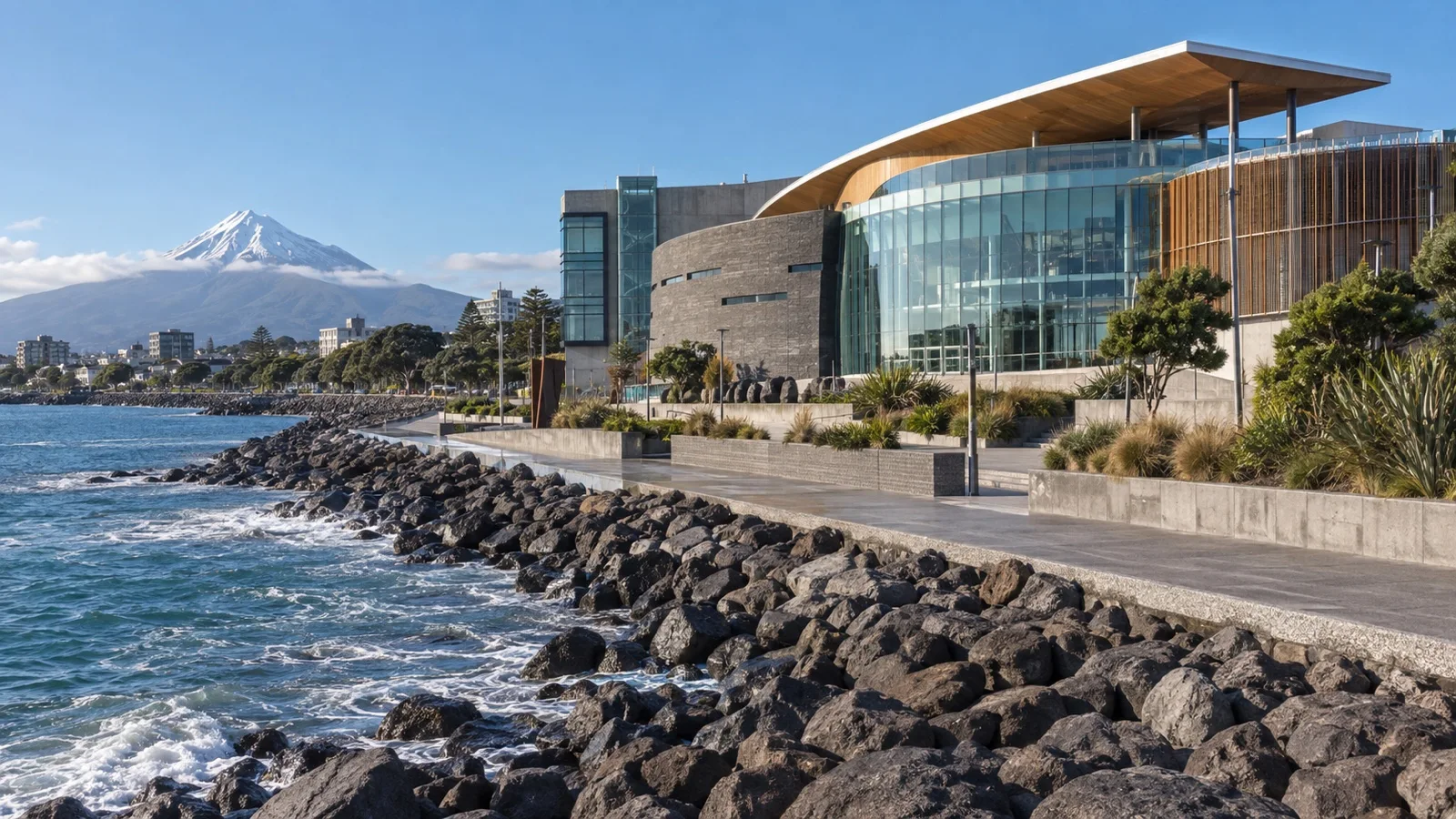
Check current exhibition hours and allow more time than you think if local history matters to you. The museum also works well in rain, making it a practical anchor when the mountain has disappeared behind cloud.
The surrounding central streets offer cafes, shops, and everyday city life within an easy walk. Keep a map from the visitor center so you can loop toward the art gallery or park without retracing every block.
Contemporary art and the Len Lye Centre
The Govett-Brewster Art Gallery and Len Lye Centre give New Plymouth a cultural draw far larger than the city’s size suggests. The reflective exterior is a landmark in its own right, while the program inside changes throughout the year.
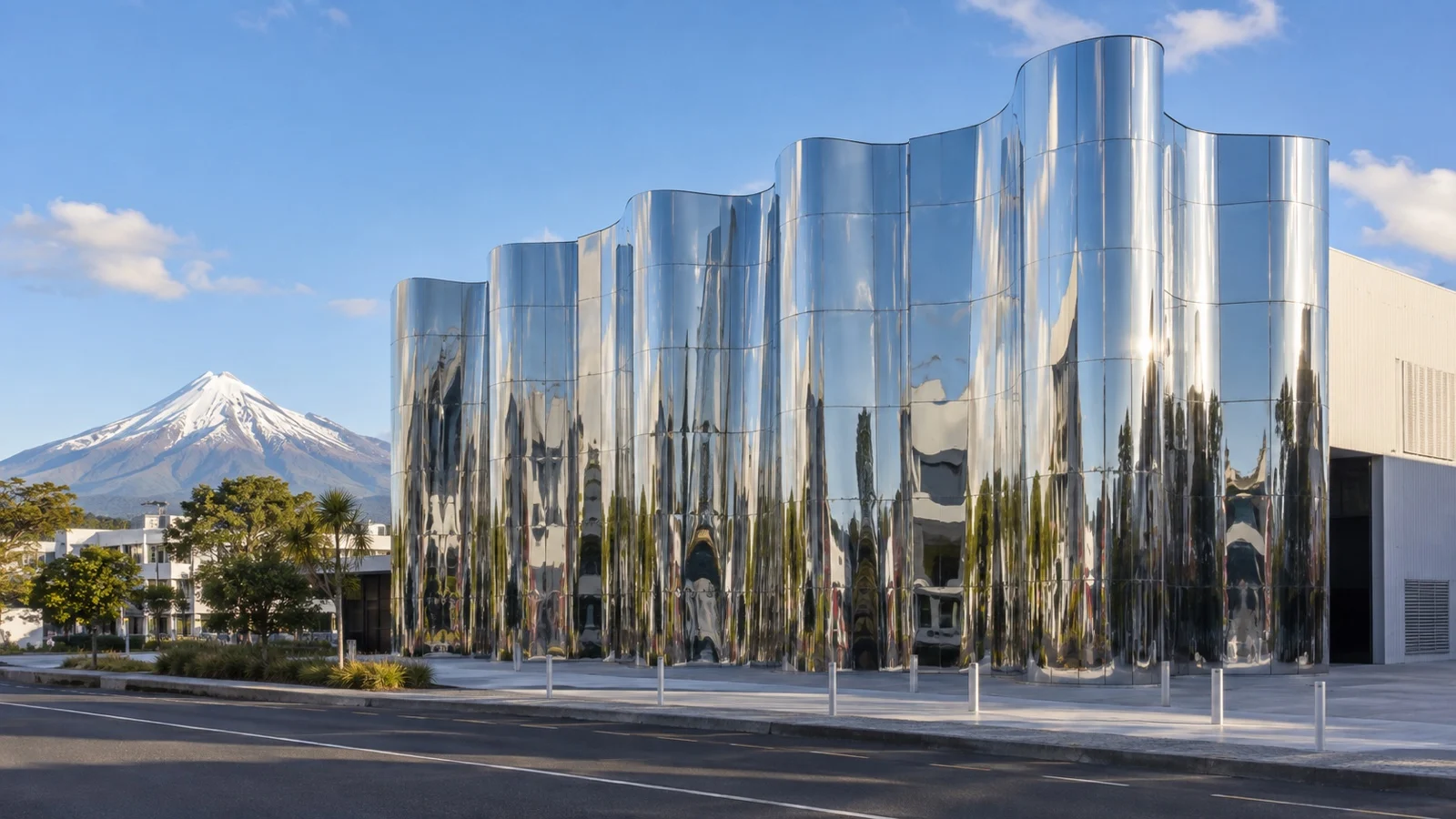
Verify opening hours and current exhibitions before building the day around a specific work. Even a short visit can pair neatly with Puke Ariki because both sit within the compact central area.
Public art continues along the coast, where Wind Wand is one of the most recognizable pieces. The walkway setting lets you combine art and sea views without needing a formal tour.
Pukekura Park is the green city option
Pukekura Park brings lakes, paths, mature plantings, and quiet garden spaces close to central New Plymouth. It is a rewarding choice when you want nature without spending a large part of the call in a vehicle.
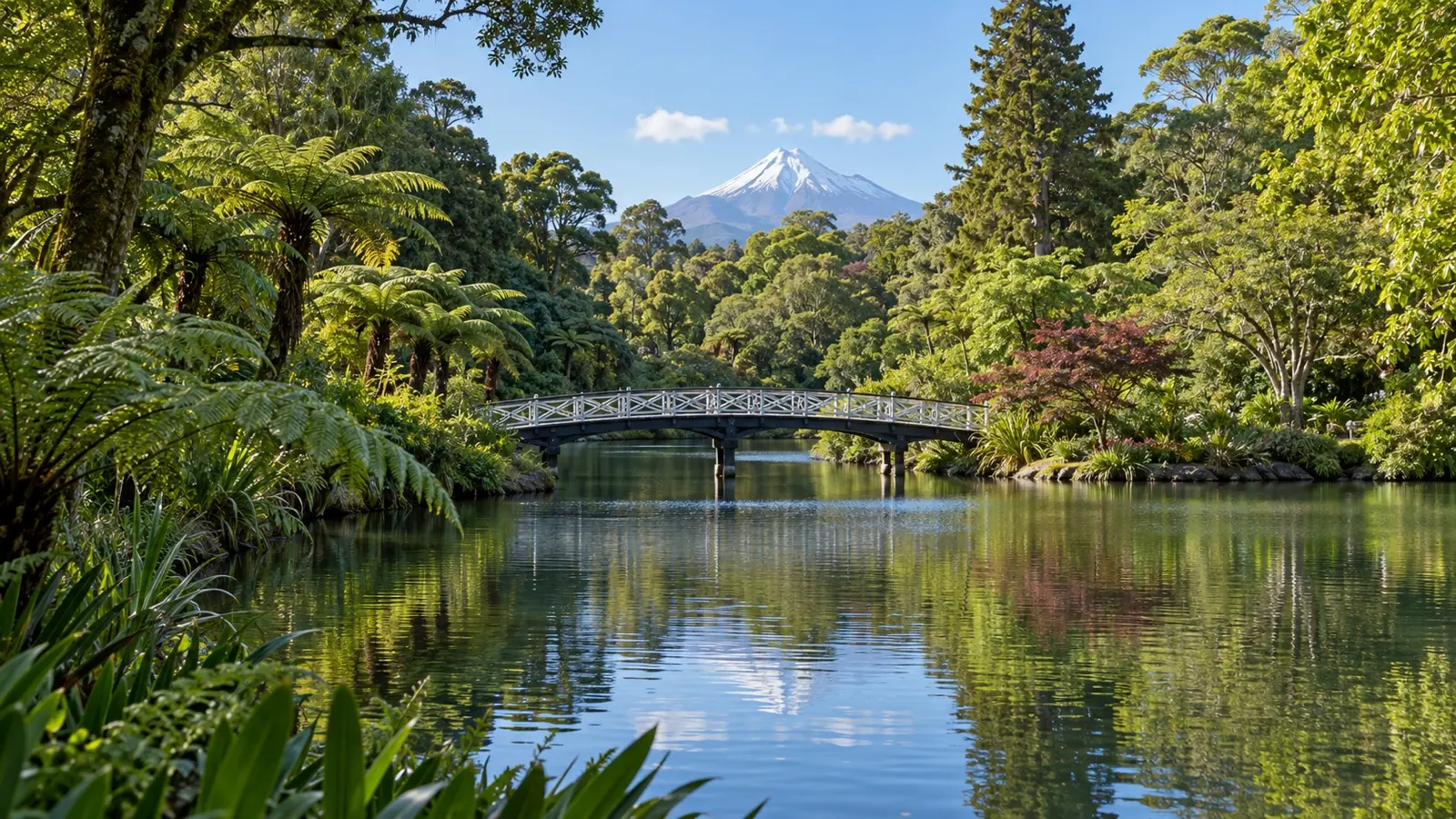
The park is extensive enough that you should choose a loop rather than wander without a turnaround point. Ask the visitor center for a route matched to your available time and mobility.
Surfaces and slopes vary, and wet weather can make some paths less comfortable. A compact umbrella or light waterproof layer helps because Taranaki conditions can change quickly.
The Coastal Walkway and Te Rewa Rewa Bridge
New Plymouth’s Coastal Walkway stretches well beyond the center, but cruise passengers do not need to cover its full length. Pick a section that fits the clock, then turn back before distance becomes a return problem.
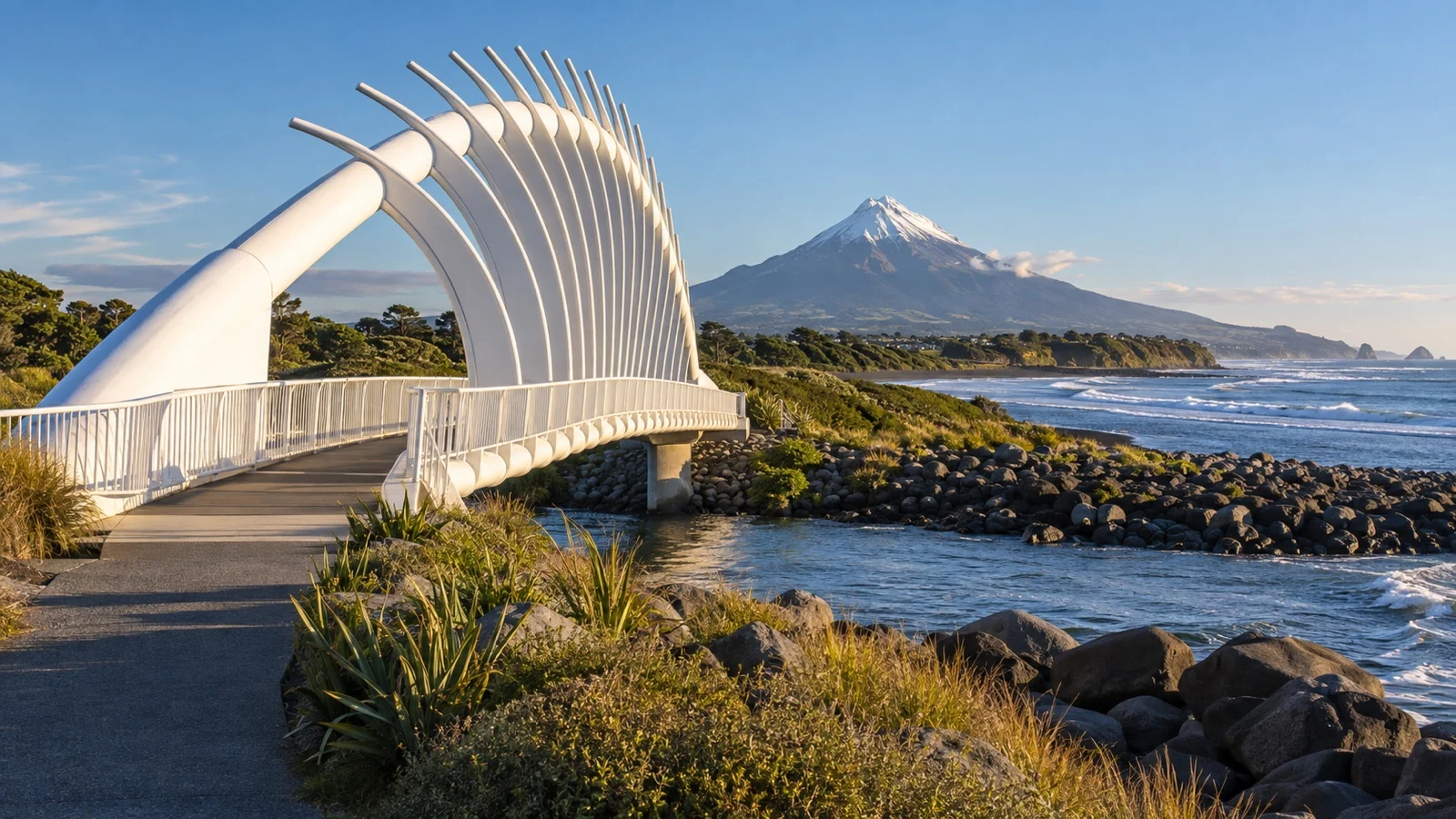
Te Rewa Rewa Bridge is a celebrated viewpoint because its white ribs can frame Taranaki Maunga on a clear day. It lies far enough from central New Plymouth that a bicycle, taxi, or planned transfer is more efficient than trying to add it to a casual short walk.
The mountain view is never guaranteed, and the bridge remains an attractive piece of design when cloud wins. Do not ask a driver to race there based on a five-minute gap in the weather.
Taranaki Maunga with humility
Taranaki Maunga is an ancestral mountain and a presence of profound importance to Taranaki Māori. Visit with respect, use current names and guidance, and remember that a scenic attraction label never tells the whole cultural story.
A cruise-day trip should focus on lower visitor areas, short walks, viewpoints, and interpretation rather than a summit attempt. Mountain conditions change rapidly, and a serious alpine objective has no place inside a fixed all-aboard schedule.
Ask a local guide which side of the mountain best matches the day’s cloud, road conditions, and available time. A good regional tour may combine a visitor center, forest walk, waterfall, or garden instead of gambling everything on one viewpoint.
The Pouākai Crossing is not a port-day walk
The Pouākai Crossing is a demanding full-day mountain experience, not a casual cruise excursion. It requires transport at both ends, suitable weather, proper equipment, fitness, and enough daylight.
Do not trim a serious route to fit a sailing deadline. Cruise passengers can experience Taranaki’s landscape through a short lower track or viewpoint and save the crossing for a land trip with flexible dates.
Gardens beyond the city
Taranaki is known for gardens that thrive in its volcanic soil and generous rainfall. Tupare offers landscaped grounds closer to New Plymouth, while Pukeiti is associated with forest and rhododendron collections on the mountain’s slopes.
Neither should be treated as a spontaneous walk from the ship. Check current opening information, access, travel time, and whether your tour includes enough buffer for the port shuttle.
A garden outing is especially useful when low cloud hides the mountain because the weather can intensify color and atmosphere. Bring a waterproof layer and shoes that handle damp paths.
Three realistic port-day plans
An independent city day
Ride to Puke Ariki, explore the museum, walk the waterfront, visit the art gallery, and choose a cafe. Add Pukekura Park only if the weather and your pace leave a comfortable return margin.
A mountain and garden tour
Prebook a reputable operator for lower mountain viewpoints, a short nature walk, and one garden. Ask for a weather-flexible route so the guide can switch priorities when cloud covers the summit.
Coast and city
Use a taxi or tour to reach Te Rewa Rewa Bridge, then return to the center and walk a manageable section of the Coastal Walkway. Finish near Puke Ariki so the shuttle ride back is simple.
Accessibility from gangway to garden
An alongside berth removes the tender transfer that complicates many ports, but Blyde remains an industrial wharf. Ask about gangway gradient, shuttle steps or lift, wheelchair capacity, and space for mobility devices before sailing.
The port’s current visitor guidance makes the secure-area shuttle compulsory because pedestrian access from gangway to gate is unavailable. A traveler who cannot board the provided vehicle needs an accessible transfer confirmed in advance.
Central New Plymouth has useful flat waterfront sections, though curb cuts, slopes, wind, and construction can affect a route. Attractions and private tours should be asked about step-free access directly, not assumed from a general accessibility label.
West coast weather keeps a vote
Taranaki faces the Tasman Sea, and weather can shift from bright sun to wind and showers within one call. The mountain creates its own cloud patterns, so a clear harbor does not guarantee a clear summit.
Wear layers and carry a compact waterproof shell, sunscreen, and water. Closed shoes are the most useful choice for the Coastal Walkway, gardens, and any short forest path.
Strong wind can affect exposed waterfront walking even when the ship remains safely alongside. Keep an indoor option such as Puke Ariki or the art gallery ready instead of losing time debating the forecast.
Entry, biosecurity, and mountain respect
New Zealand enforces strict border and biosecurity rules, and cruise passengers must complete the process arranged for their voyage. Declare food, plants, animal products, and outdoor equipment whenever required, and clean mud or seeds from hiking shoes before arrival.
Do not remove plants, rocks, or cultural material from Taranaki Maunga or other protected places. Stay on open tracks, obey closures, and follow guidance from local iwi, conservation staff, and tour leaders.
Build the return backward
Start with the final shuttle time from Puke Ariki or the outside-port stop, then work backward to set your city turnaround. The all-aboard time is not the moment to arrive at a shuttle queue.
For a regional tour, I would aim to be back in central New Plymouth at least 90 minutes before all aboard. That leaves time for traffic, a final shuttle, port security, and any change in the pickup point.
Never ask a driver to enter the secure port without confirmed authorization. Your practical target is the official passenger shuttle or tour return point, not the map location of the ship.
Frequently asked questions
Do ships tender at New Plymouth?
Recent cruise calls have docked alongside at Blyde Wharf, including Coral Princess in February 2026. Berths are operational assignments, so confirm the arrangement for your exact ship.
Can I walk from the ship to town?
No pedestrian route is currently available from the gangway through the secure port to the gate. Use the designated shuttle first, then walk the Coastal Walkway from the stop outside the port if conditions suit you.
Is the mountain possible in one port day?
Lower viewpoints and short walks are realistic with a prebooked tour and good timing. A summit attempt or full Pouākai Crossing is not appropriate for a fixed cruise call.
What if Taranaki Maunga is hidden?
Choose Puke Ariki, the Len Lye Centre, Pukekura Park, gardens, or a section of the Coastal Walkway. Cloud is common enough that every good itinerary should include a satisfying backup.
Continue around New Zealand
New Plymouth fits naturally into a wider North Island itinerary, so compare our guides to Auckland, Wellington, Tauranga, and the Bay of Islands. Each port handles arrival and independent access differently, so treat the instructions for New Plymouth as call-specific.
We verify practical details using port and destination sources under our editorial policy. Your cruise line, Port Taranaki, and same-day shuttle staff remain the final authorities for berth access and return transport.