La Roche-Guyon River Cruise Port: Château, Keep, and Village Guide
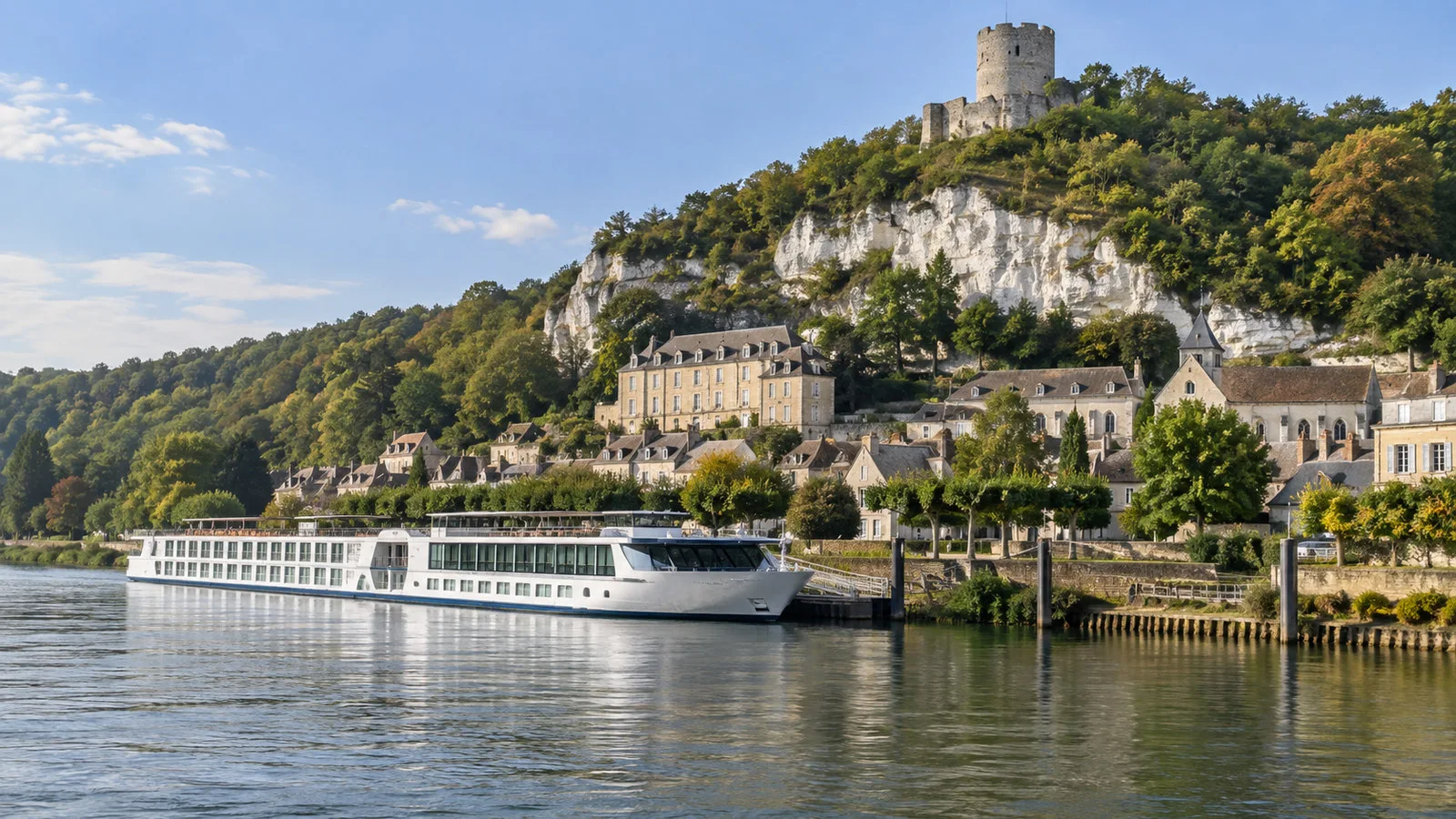
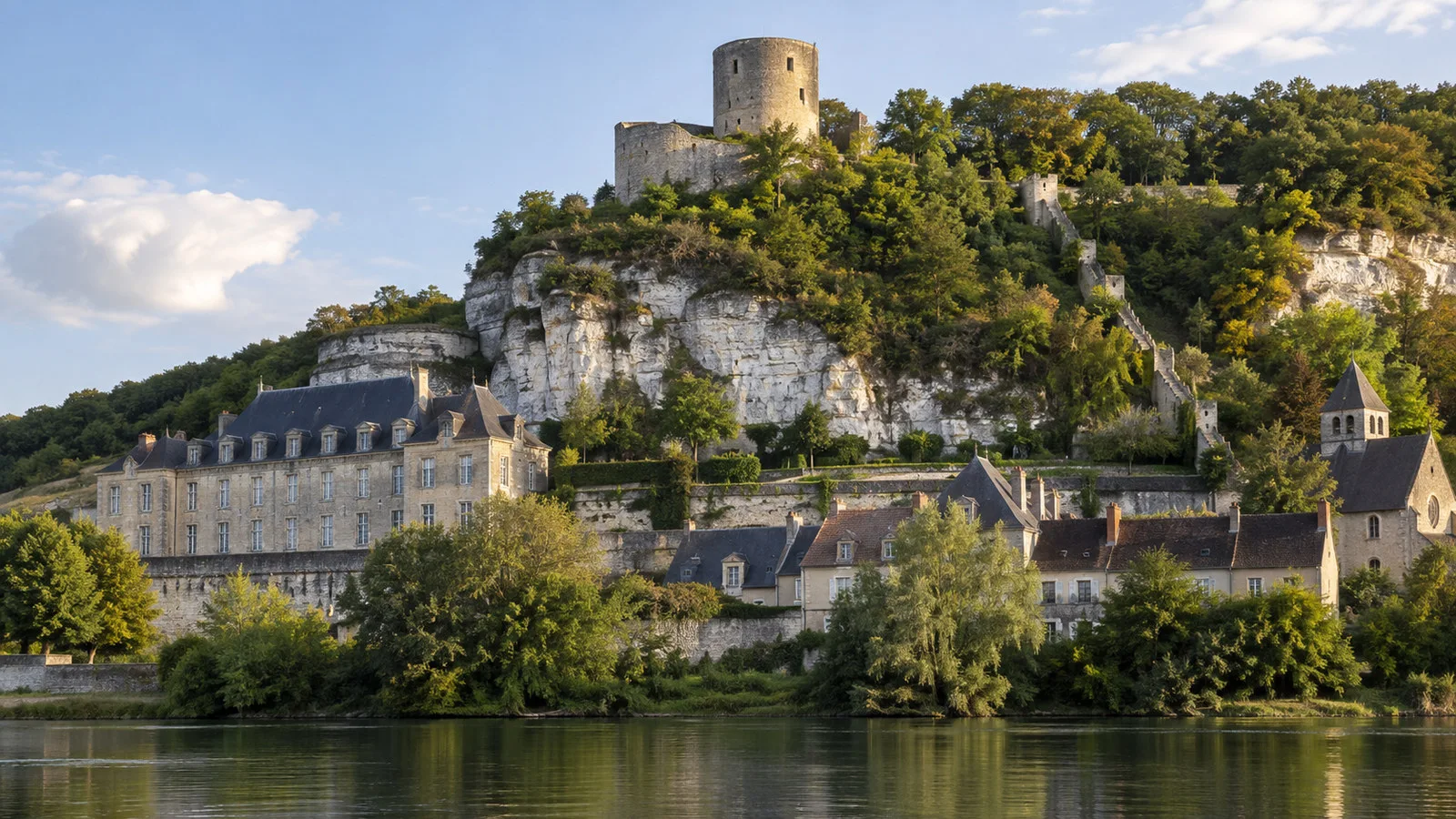
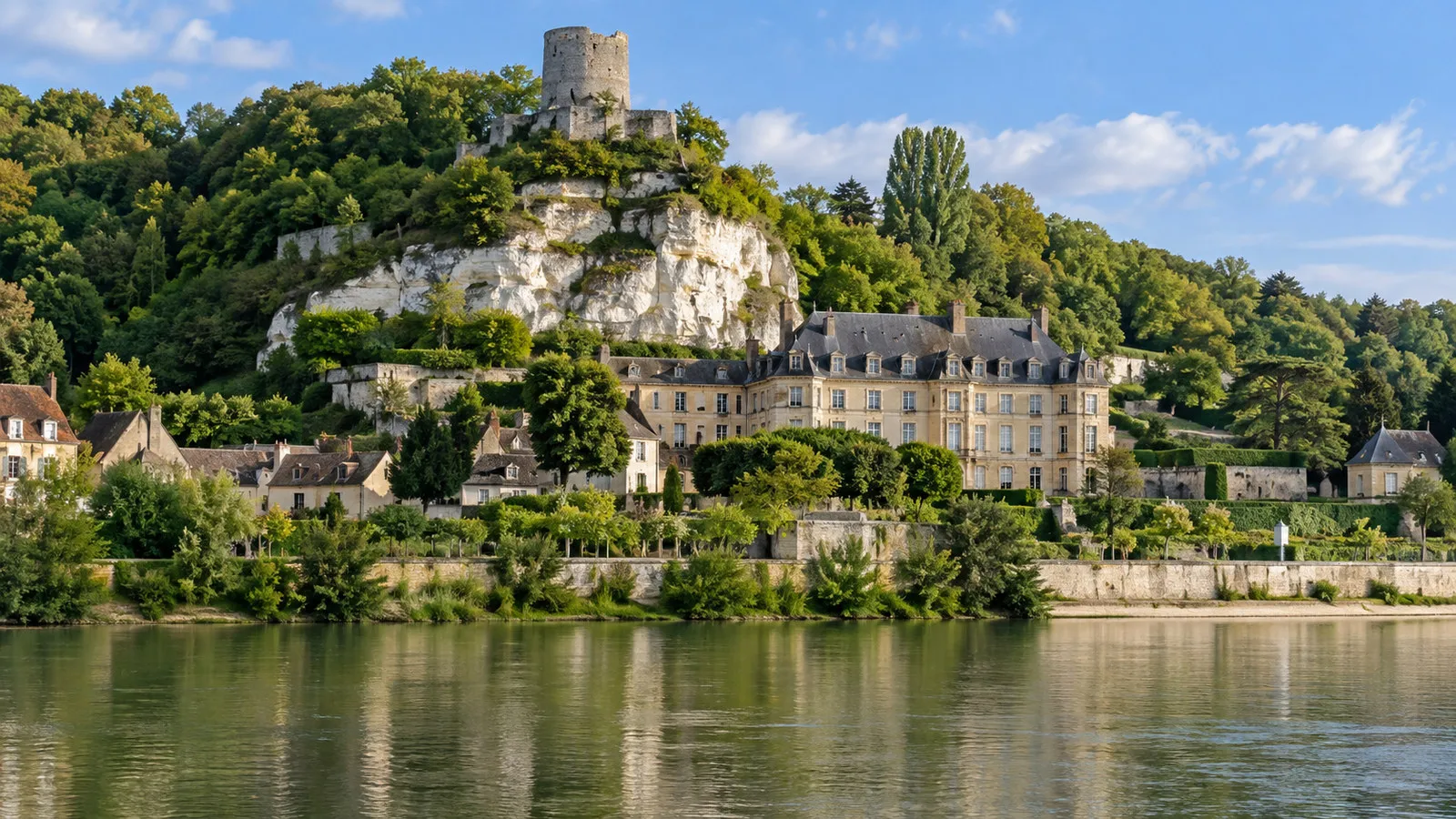
La Roche-Guyon makes an immediate impression because the whole village seems squeezed between the Seine and a chalk cliff. The château begins at street level, disappears into the rock, and climbs toward a medieval keep above the rooftops.
It is an unusually focused cruise stop, which is part of its charm. You can understand the shape of the day quickly, but the layered history inside the château deserves more than a hurried photo stop.
My quick take
I would make the château the center of the visit and treat everything else as a bonus. Start with the climb if you are able, continue through the historic rooms, then slow down in the kitchen garden and village.
The biggest planning mistake is assuming every Seine itinerary handles La Roche-Guyon in the same way. Some programs may use a nearby mooring and a coach, so the ship’s daily instructions matter more than any generic dock description.
Quick Facts
- Destination: La Roche-Guyon, on the Seine northwest of Paris.
- Arrival: Confirm whether your sailing uses a local landing or a coach transfer from another Seine mooring.
- Main sight: Château de La Roche-Guyon, including the lower château, rock cut passage, medieval keep, and Potager-fruitier.
- Best order: Tackle the keep first if you want the climb, then tour the lower rooms and garden.
- Currency: Euro.
- Time zone: Central European Time, with summer time observed seasonally.
- Emergency number: Call 112 for general emergencies in France.
- Key caution: The keep requires a substantial stair climb through the cliff.
Where river cruise passengers arrive
There is no single arrival description that safely applies to every cruise line and departure. Your ship may call locally, or the operator may bring passengers by coach as part of a wider Seine program.
Check the daily program for the exact landing point, meeting place, included transportation, and all aboard time. If a coach is involved, note whether the return is from the same location or from a different point after the tour.
Independent travelers should be especially careful about timing because public transportation in a small village is not designed around a ship’s schedule. A missed connection here is more complicated than a late walk back from a city center.
How the village is arranged
La Roche-Guyon occupies a narrow band of land between the river and cliff, so the basic layout is easy to understand. The château stands at the base of the slope, while its formal kitchen garden lies closer to the Seine.
The official château address is 1 rue de l’Audience, and the site notes a public parking area at the entrance to the village. Travelers arriving by road should allow extra time to park, walk, and clear the château’s security check.
The village is small enough for a relaxed walk around the center after the main visit. Do not expect a large commercial district, a major museum cluster, or the depth of dining choices you would find in Rouen or Paris.
Why the château feels so different
The official history of the château describes a site that has evolved over roughly ten centuries. Medieval defenses, elegant eighteenth century rooms, gardens, underground spaces, and twentieth century military history all occupy the same compact estate.
The first fortress was carved into the rock, which explains why parts of the visit feel more like a tunnel system than a conventional manor house. A later residence grew at the cliff’s base, while the keep claimed the high ground above it.
This physical layering is what makes La Roche-Guyon memorable. You are not simply moving from one decorated room to another, but tracing how generations adapted the same cliff for defense, status, comfort, and survival.
The medieval keep and cliff stairway
The keep was built in 1190 at the request of King Philip Augustus to watch a strategic frontier. The official description says the cylindrical tower measures 12.2 meters across and 35 meters high.
Its most dramatic feature for today’s visitor is the stairway cut through the chalk cliff. The climb links the lower château with the fortress above and demands steady footing, time, and enough energy for the return.
I would do the climb early, before crowds or fatigue make the confined route less pleasant. Shoes with good grip are a much better choice than smooth soles, and anyone uneasy with stairs should ask staff about the lower route before starting.
The keep later became a viewpoint within an English style park, then suffered partial demolition during the French Revolution. That combination of military purpose, romantic ruin, and broad views explains why it feels more atmospheric than polished.
The lower château and rooms
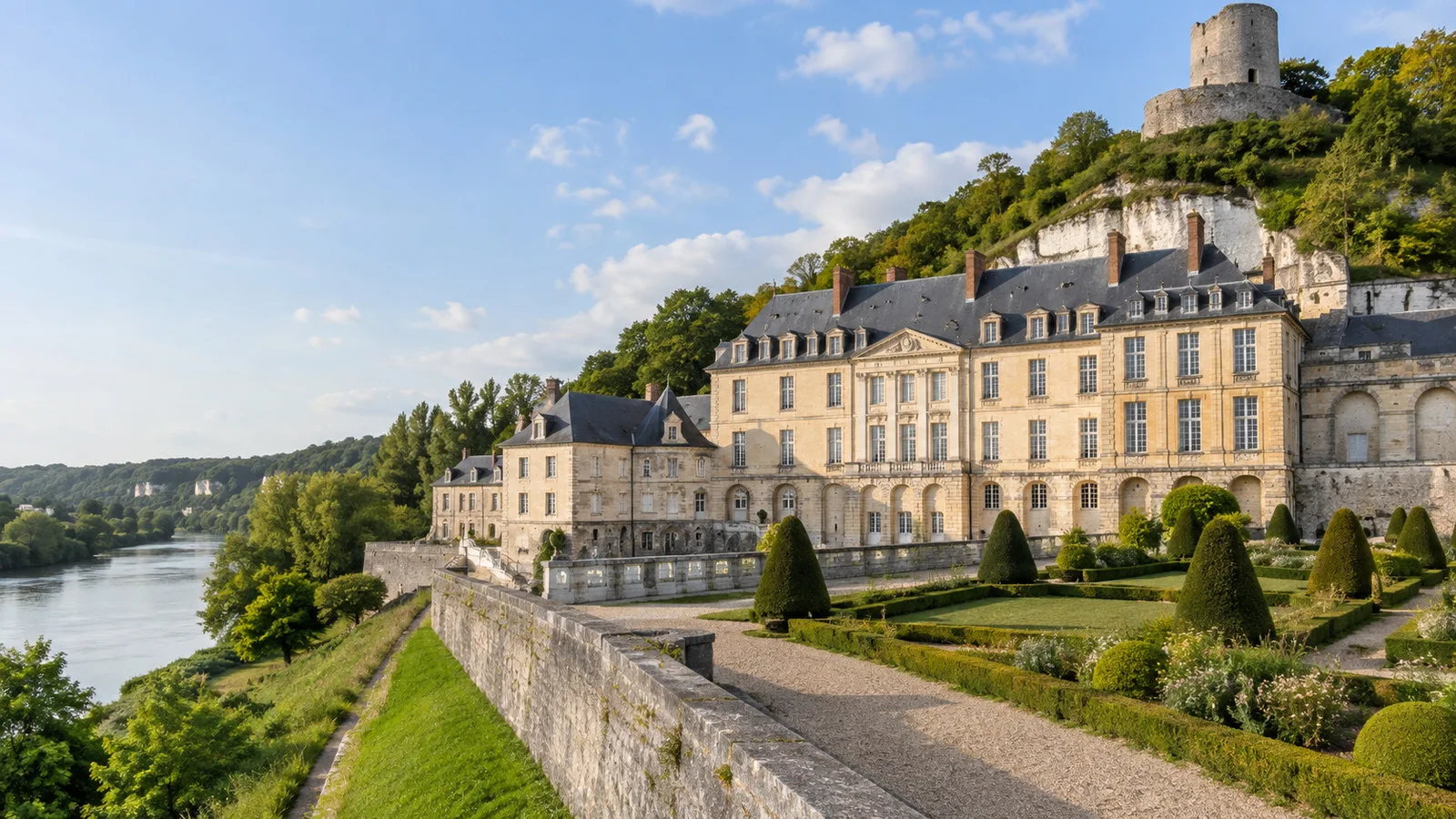
The lower château tells a different story from the keep. Major work by the La Rochefoucauld family brought monumental entrances, stables, pavilions, terraces, reception rooms, and a library into the medieval complex.
The result is not a single period interior, and that is a strength rather than a flaw. Move slowly enough to notice where refined rooms meet rough stone and where domestic spaces sit beside older defensive fabric.
Not every historic room is open to visitors. The château identifies a small eighteenth century theater and rooms with historic Chinese wallpaper among spaces currently closed, so do not build the visit around seeing every feature mentioned in an older guidebook.
Rommel and the wartime layer
In 1944, German Field Marshal Erwin Rommel and his staff used the château as a headquarters. Casemates were created in the cliff, adding a stark modern chapter to a place already shaped by underground construction.
Access to individual wartime spaces can change because of conservation, exhibitions, and temporary closures. Check the château’s current notice before arrival if this part of the history is especially important to you.
The Potager-fruitier
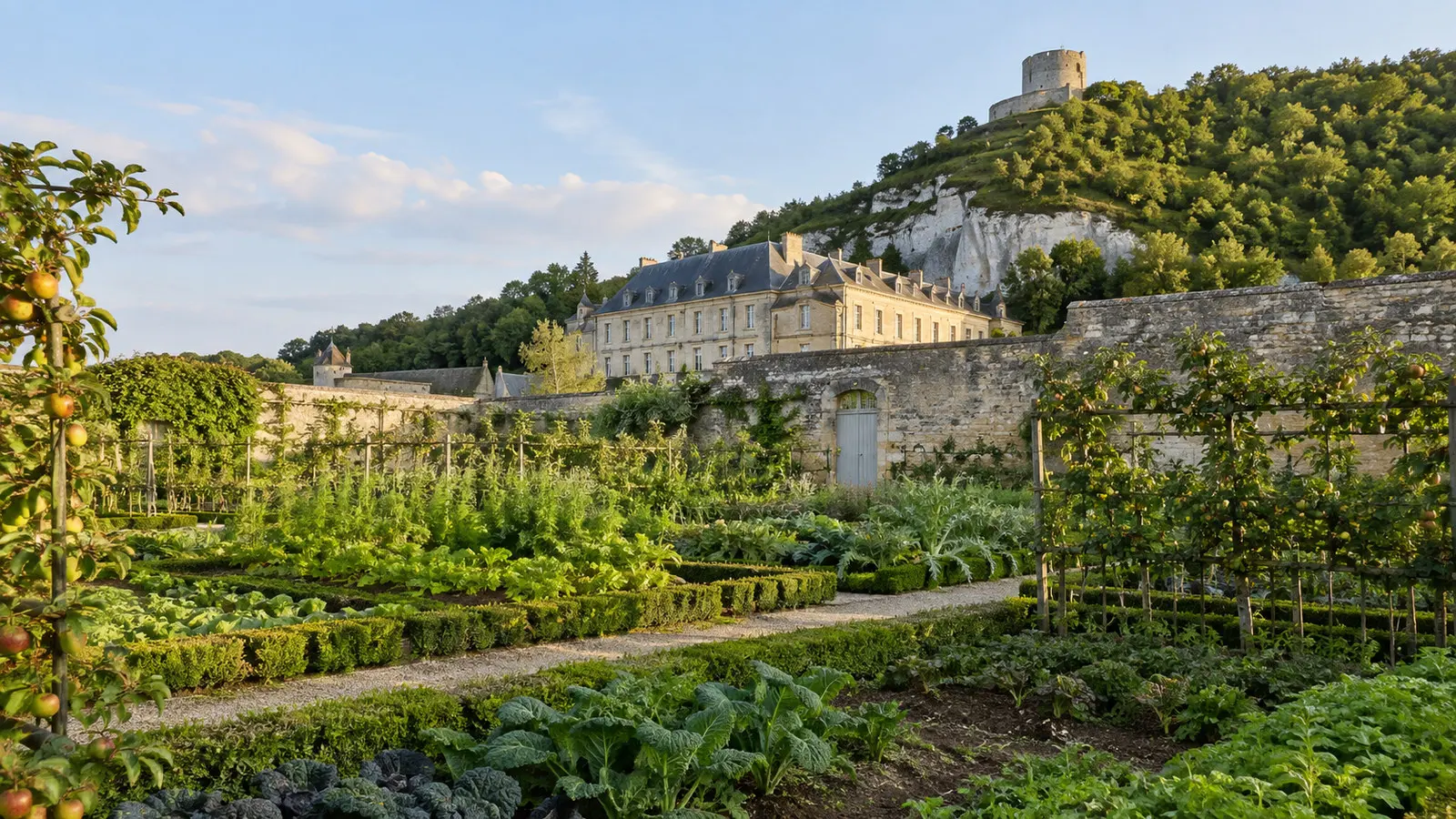
The Potager-fruitier is much more than a decorative garden. Created in 1697 and later restored to its 1741 layout, it covers 3.8 hectares and combines fruit trees, vegetables, herbs, heritage design, and active cultivation.
Its geometry becomes clearer when you look across the four large squares and their triangular plots. After the darkness and effort of the cliff passage, the open garden feels like a welcome change of pace.
The official site says synthetic chemicals have not been used across the estate since 2007, and the garden’s production received organic certification in 2013. Seasonal produce and château products may be available, but selection should never be assumed for a particular call.
Opening hours, tickets, and security
The château’s 2026 visitor information lists daily opening from April 1 through November 1, from 10:00 AM to 6:00 PM. It also lists a winter opening from December 5 through January 3, 2027, from 1:00 PM to 7:00 PM.
The last ticket is sold one hour before closing, and the published full admission is 9.50 euros with reduced rates starting at 5 euros. Prices and access can change, so recheck the official page close to your sailing.
Security checks are required under France’s Vigipirate measures. The château also says strollers are not allowed inside and cannot be left at the entrance, which matters for families planning an independent visit.
Ship excursion or independent visit
If your ship provides a direct, well timed route to the village, the château is simple to explore independently. Buy the appropriate admission, decide whether to climb first, and keep enough time for the lower rooms and garden.
A ship excursion is more valuable when the itinerary reaches La Roche-Guyon by coach or when you want detailed historical interpretation. It also removes the uncertainty of arranging transportation in a small village on a fixed schedule.
Read the excursion description closely because a panoramic stop, a guided interior visit, and free time in the village are not the same product. If the keep matters to you, confirm that the schedule allows the climb rather than assuming it is included.
A practical two hour plan
With about two hours at the château, start with the cliff stairway and keep if your mobility and the day’s access allow it. Return through the lower rooms, spend a short period in the garden, then head back without adding another destination.
If you are skipping the climb, use the saved time in the historic rooms and Potager-fruitier. This version is less strenuous and still captures the unusual relationship between the château, cliff, and river landscape.
A practical half day plan
A half day gives you room to climb, explore the lower château, and walk through the garden without racing. Finish with a short village stroll or a café stop, keeping the final part of the visit close to your meeting point.
I would not try to combine La Roche-Guyon and Giverny independently on a short call. The places look close on a regional map, but transportation and ship timing make that combination much less simple than the distance suggests.
Accessibility and honest limits
The keep is the most demanding part of the visit because it is reached by a long stairway within the rock. Travelers who use wheelchairs, avoid stairs, or tire easily should not treat the upper fortress as the measure of a successful day.
The lower estate may still include historic thresholds, varied surfaces, and route changes. Contact the château at [email protected] or +33 1 34 79 74 42 for current access information that matches your needs.
If your cruise uses a coach transfer, ask about steps into the vehicle, storage for mobility devices, walking distance from parking, and the guide’s pace. These details can matter more than the total distance shown in a brochure.
Food and practical comforts
La Roche-Guyon has a small village food scene rather than a broad restaurant district. Opening days may not align neatly with a cruise call, so check current options or eat on the ship when the schedule is tight.
Carry some euros for small purchases even if you expect to use a card. Water is especially useful before the keep climb, while a light rain layer earns its place in almost any Seine season.
Public restrooms and seating should be located early rather than left to chance. Ask château staff or your guide before starting the longest part of the route.
Weather, river conditions, and safety
Weather in the Seine valley can change over the course of a visit. Cool air near the river, damp stone inside the passage, sun on the exposed upper route, and rain on smooth surfaces can all occur in the same day.
High or low river levels can also affect cruise operations even when the village itself is open. Your cruise director is the best source for schedule changes, altered landings, and revised meeting times.
France uses 112 for general emergencies, while 15 reaches urgent medical services, 17 police, and 18 fire and rescue. The French government’s official emergency guidance says these services are available around the clock.
Return timing
The short distance across the village can create false confidence. Time disappears quickly inside the château, especially if the keep route is busy or you pause in the garden.
Set a personal turnaround time that is earlier than the ship’s all aboard deadline. Include time for security, restroom stops, the walk or coach transfer, and any instructions for reboarding.
If the ship excursion has a designated meeting point, photograph it before the group separates. Small French place names and similar stone streets are easier to navigate when you have a visual reference.
How La Roche-Guyon fits a Seine cruise
La Roche-Guyon works as a counterpoint to the larger city days in Paris and Rouen. Its appeal comes from seeing one landscape and one estate in depth rather than collecting a long list of landmarks.
It also pairs naturally with Vernon and Les Andelys, where river scenery and hilltop history shape the day. Our Seine river cruise ports overview explains how these smaller calls fit between the major cities.
Quick answers
Does every river ship dock in La Roche-Guyon?
No single arrangement applies to every cruise program. Confirm whether your visit begins locally or includes a coach transfer from another mooring.
Is the keep included with admission?
Current access can depend on opening conditions and temporary closures. Check the official ticket information and ask at entry before starting the climb.
Can I visit without climbing the stairs?
Yes, the lower château and garden still provide a meaningful visit. Ask staff which route is open and best suited to your mobility on that day.
Should I add Giverny independently?
Only if you have ample time and confirmed transportation in both directions. A cruise line excursion is the safer way to combine distant sights on a fixed port call.
The last word
La Roche-Guyon is memorable because its history is written vertically, from river garden to château rooms, rock passage, and ruined keep. Give that sequence your attention, respect the climb, and let the village stay small.
How this guide was researched: Unless a first-hand visit is explicitly identified above, this guide is based on independent research using official château, regional park, government, transit, and tourism sources where available. Logistics and time-sensitive details were reviewed on September 12, 2026 under our Editorial Policy.