Kalna River Cruise Port: Rickshaws, Rajbari and 108 Shiva Temples
Kalna is normally an operator-led Bhagirathi-Hooghly landing with a rickshaw or walking visit to the Rajbari temple complex. Verify the gangway, local vehicle, temple etiquette, India entry permission, heat, seasonal water, mobility needs, and return instead of expecting a fixed passenger terminal.
Kalna river cruise port quick facts
- Into Town: Cruise landings vary. Most guided visits continue by cycle or electric rickshaw to Rajbari; confirm whether your sailing uses a gangway or tender.
- Currency and Language: Indian rupee (INR). Bengali is dominant; Hindi and English are useful with guides and some visitor-facing businesses.
- Time Zone: India Standard Time, UTC+5:30 year-round, with no daylight saving time.
- How Often the Call Is Missed: Operational caution: Monsoon flows, shifting shoals, fog, landing conditions and itinerary timing can alter or cancel shore access.
No audited public missed-call rate was found for Kalna. A changed landing, rickshaw route or shortened visit that still reaches the town is not counted as a missed call.
My quick take
Take the included excursion. Kalna is easy to enjoy once ashore, but operator transport removes the two least charming mysteries: where the boat will land and how to connect that riverbank with the temple zone on a short clock.
Spend your attention on the terracotta panels at Pratapeswar and the geometry of Naba Kailash rather than trying to race through every shrine. The 108 Shiva temples are a sacred complex, not a punch list with excellent arches.
If mobility is limited, ask hard questions before sailing. A rickshaw may reduce the walking distance while adding a high step, narrow seat and bumpy ride.
Is Kalna an active river cruise port?
Yes. Multiple 2026 and 2026-2027 programs include Kalna on lower Ganges or Hooghly itineraries sailing from Kolkata toward Bandel, Matiari, Mayapur and points farther upstream.
Antara’s 2026 cruise brochure describes sailing from Bandel to Kalna, taking electric rickshaws to Rajbari and Naba Kailash, visiting a weaver and walking back through the vegetable market. Pandaw’s current programs likewise say passengers land at Kalna and use rickshaws to see the town’s terracotta temples.
That is solid evidence for a real operational call, but not for a fixed cruise terminal. “Land at Kalna” can cover a direct gangway, a simple bank landing or a tender transfer selected for the river and vessel on the day.
Kalna is normally a sightseeing stop rather than a passenger embarkation hub. The site’s Ganges river cruise ports guide explains how it fits into the wider Kolkata-to-Varanasi system.
Bhagirathi, Hooghly or Ganges?
You will see all three names in cruise material. The navigable Ganga-Bhagirathi-Hooghly system is designated National Waterway 1, while the river beside Kalna is commonly called the Bhagirathi or Bhagirathi-Hooghly.
Calling the voyage a Ganges cruise is therefore normal travel shorthand. Calling Kalna an ocean port or a purpose-built cruise terminal would be a much larger stretch.
The river here is part of a working waterway shaped by current, sediment, seasonal discharge and tidal influence. Pretty dawn reflections do not suspend hydrography, however persuasive the photograph.
Where river cruise vessels land in Kalna
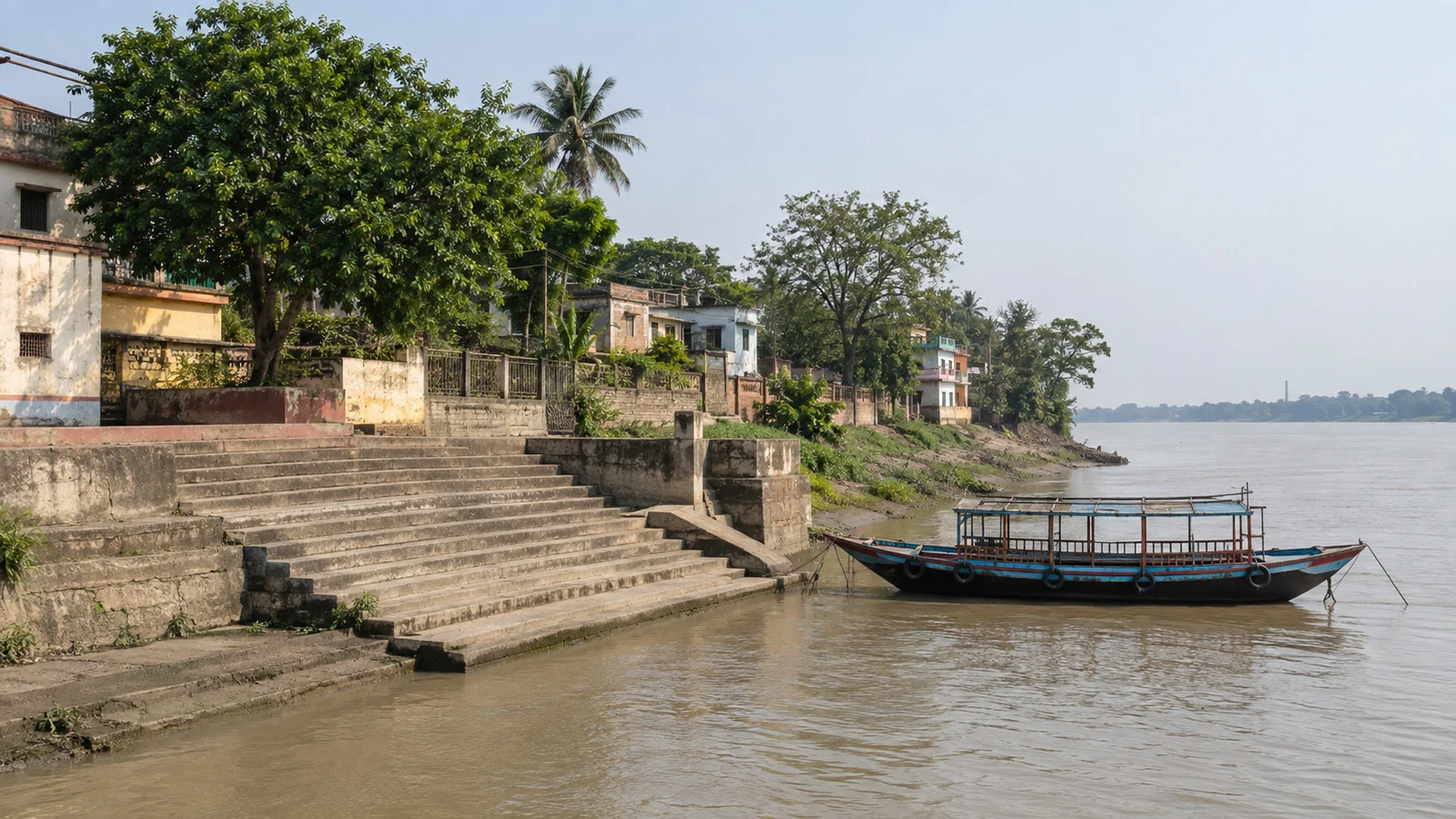
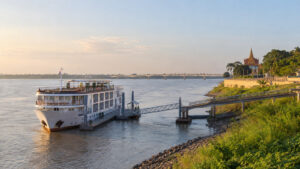
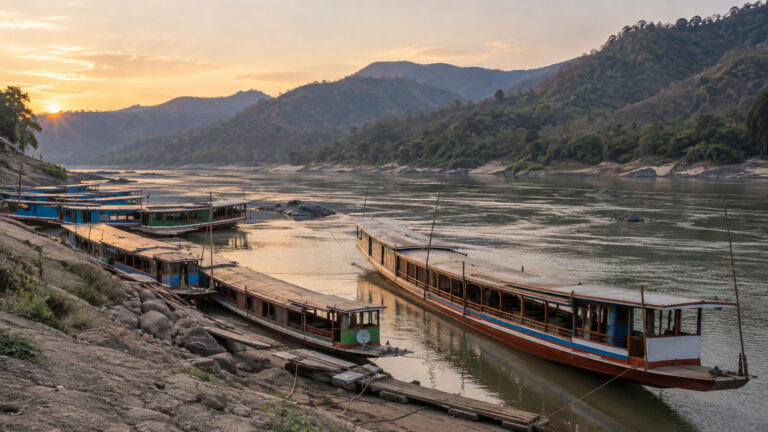
No current public harbor plan was found that guarantees one Kalna berth for every operator. Small passenger vessels may approach a suitable bank or local landing directly, while another vessel or water condition may require a tender or utility boat.
The landing can involve a gangway, plank, steps, uneven ground or a floating surface whose angle changes with the river. Facilities may be much simpler than the terminal buildings travelers associate with major cruise ports.
Ask your operator four concrete questions: Will guests tender, are there steps at the landing, how far is the walk to the rickshaws and is crew assistance available? “We dock in Kalna” does not answer any of them.
Stay with the organized route unless independent exploration is explicitly allowed. A different-looking riverbank on the return can be the correct landing after the vessel repositions, not evidence that your guide has misplaced an entire ship.
How the rickshaw transfer works
Current itineraries variously specify cycle rickshaws or electric rickshaws, often called e-rickshaws or totos locally. Both are practical on Kalna’s narrow streets, but they offer different seating, suspension, step height and weather protection.
A cycle rickshaw generally carries one or two passengers in a raised seat behind the driver. An electric rickshaw has a roof and bench seating but may require a step up and a sideways shuffle.
Board only after the guide assigns vehicles, keep hands inside and secure loose scarves and camera straps. Confirm whether you will ride both ways because some programs return on foot through the market.
Rickshaw drivers are working partners in the excursion. Follow the operator’s guidance on tips, ask before taking a close portrait and do not treat a person’s workday as decorative transportation.
Rajbari is a temple district, not one palace tour
“Rajbari complex” can mislead first-time visitors into expecting furnished royal rooms. In Kalna, the sightseeing focus is a concentrated group of historic temples developed under the patronage of the Bardhaman rulers.
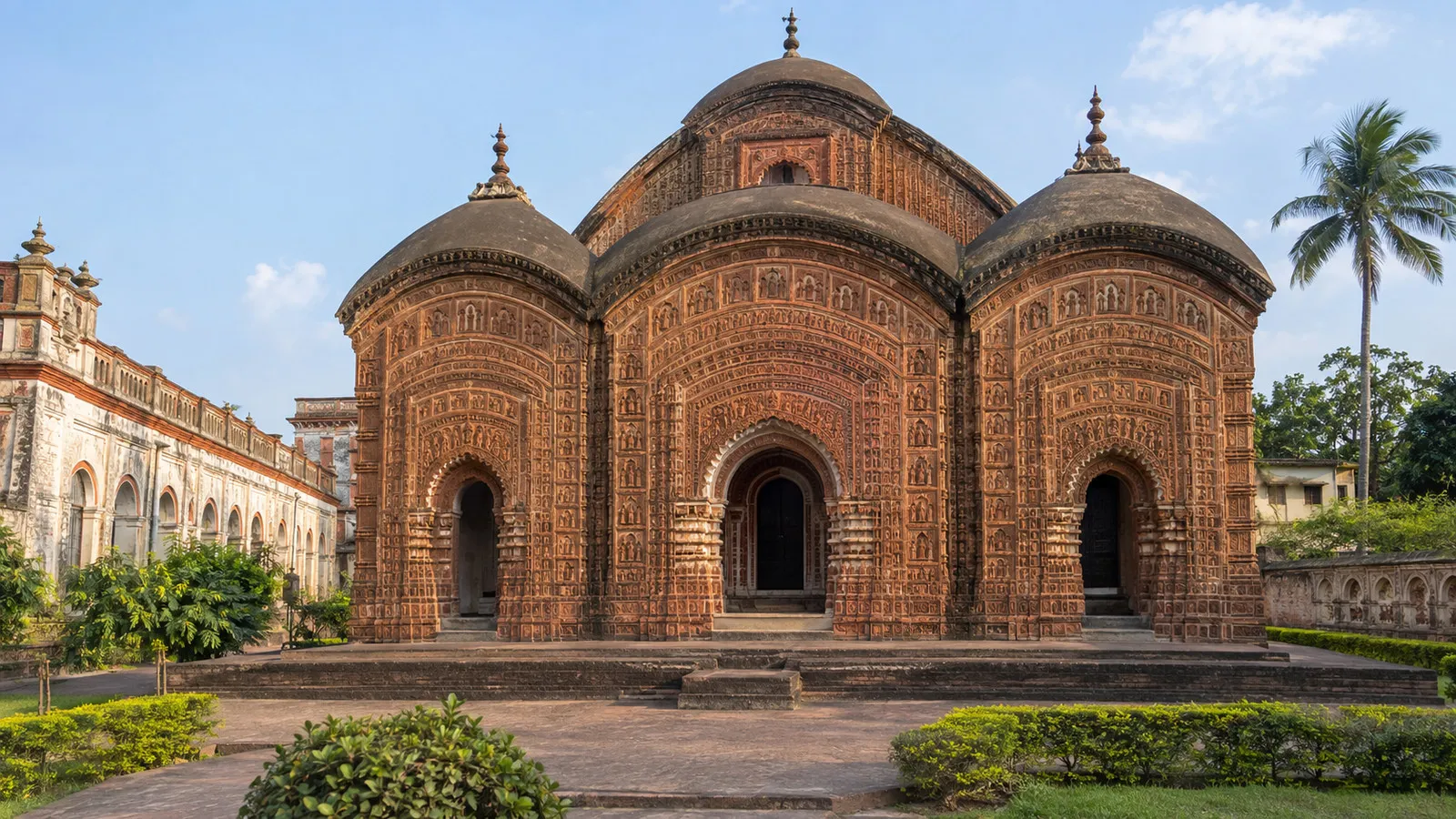
West Bengal Tourism highlights the terracotta Pratapeswar Deul, Lalji Mandir and Krishnachandraji Temple alongside Naba Kailash. Their different roof forms, towers and ornament make the area feel like a compact architecture lesson with better birdsong.
Allow the guide to identify which buildings are open and active on your day. Worship, conservation, festivals and local management can change access without turning the entire call into a failure.
Do not touch terracotta panels or lean bags against temple walls. These surfaces have already managed centuries of monsoon weather and do not need help from a backpack buckle.
Naba Kailash and the 108 Shiva temples
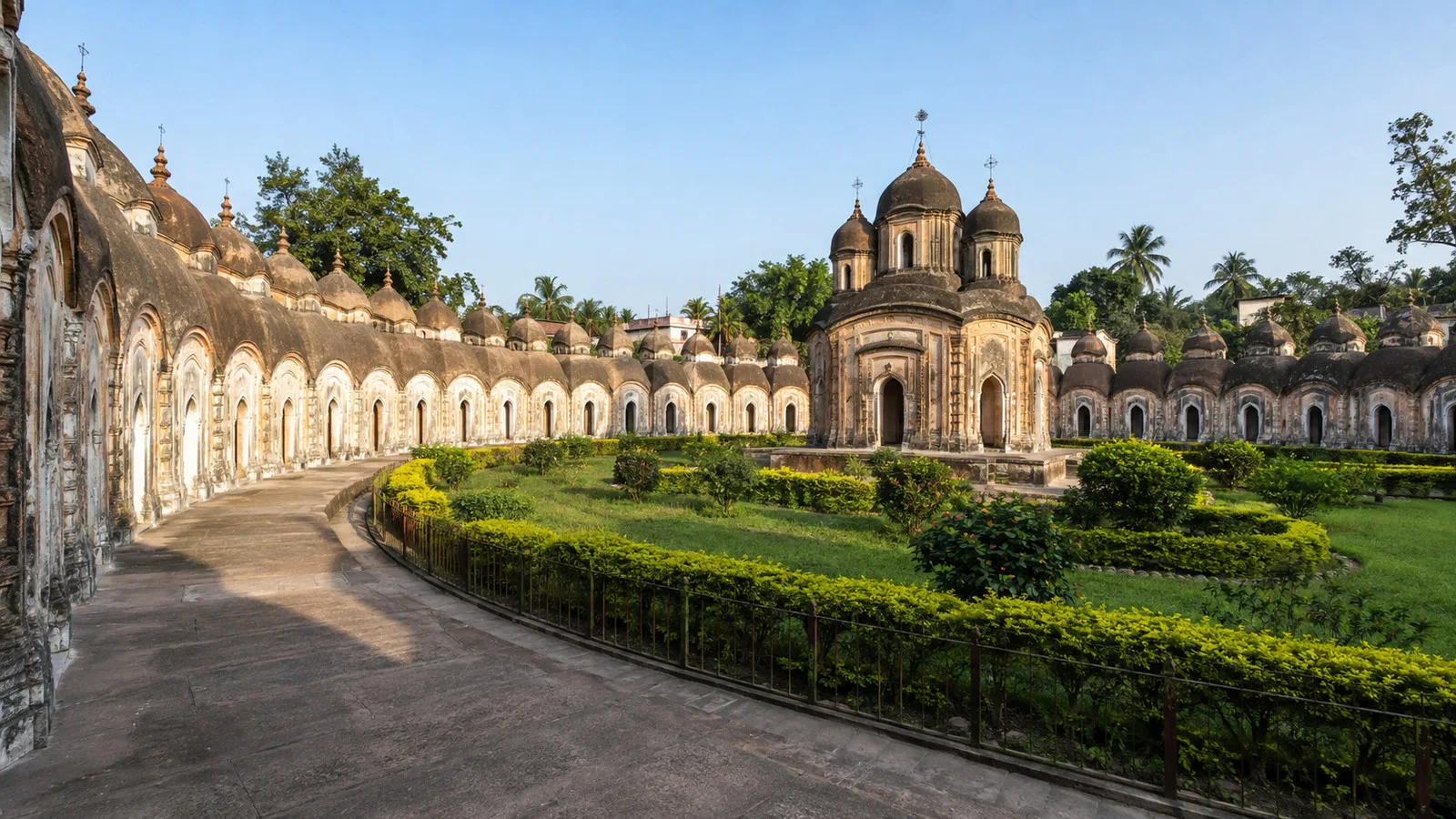
Naba Kailash, also called the 108 Shiva Temple Complex, was built in 1809 by Maharaja Teja Chandra Bahadur. Its 108 small aat-chala shrines form two concentric circles around a central space.
The official West Bengal Tourism guide to Kalna counts 74 shrines in the outer ring and 34 in the inner ring. Each shrine contains a Shiva linga, and the repeating doorways create the complex’s famous visual rhythm.
The number 108 carries sacred significance in Hindu traditions, including prayer and meditation practices. Approach the site as a place of devotion first and an ingenious photographic composition second.
Shoes may need to come off before entering sacred areas, and access can tighten during worship or festivals. Wear socks you are comfortable using on warm stone and follow local instructions about photography.
Pratapeswar and Kalna’s terracotta stories
Pratapeswar is smaller than the 108-shrine ensemble but can hold attention longer. Its terracotta surface work rewards close looking, with religious narratives, decorative patterns and glimpses of social life modeled into fired clay.
A guide helps distinguish deities, epic scenes and architectural vocabulary without turning every panel into a hurried quiz. Use optical zoom rather than stepping over a barrier or pressing a phone against the relief.
Lalji and Krishnachandra temples introduce other characteristic Bengal forms and elaborate facades. Exact entry can vary, so consider the whole temple zone the attraction rather than staking the day on one unlocked doorway.
The market walk back
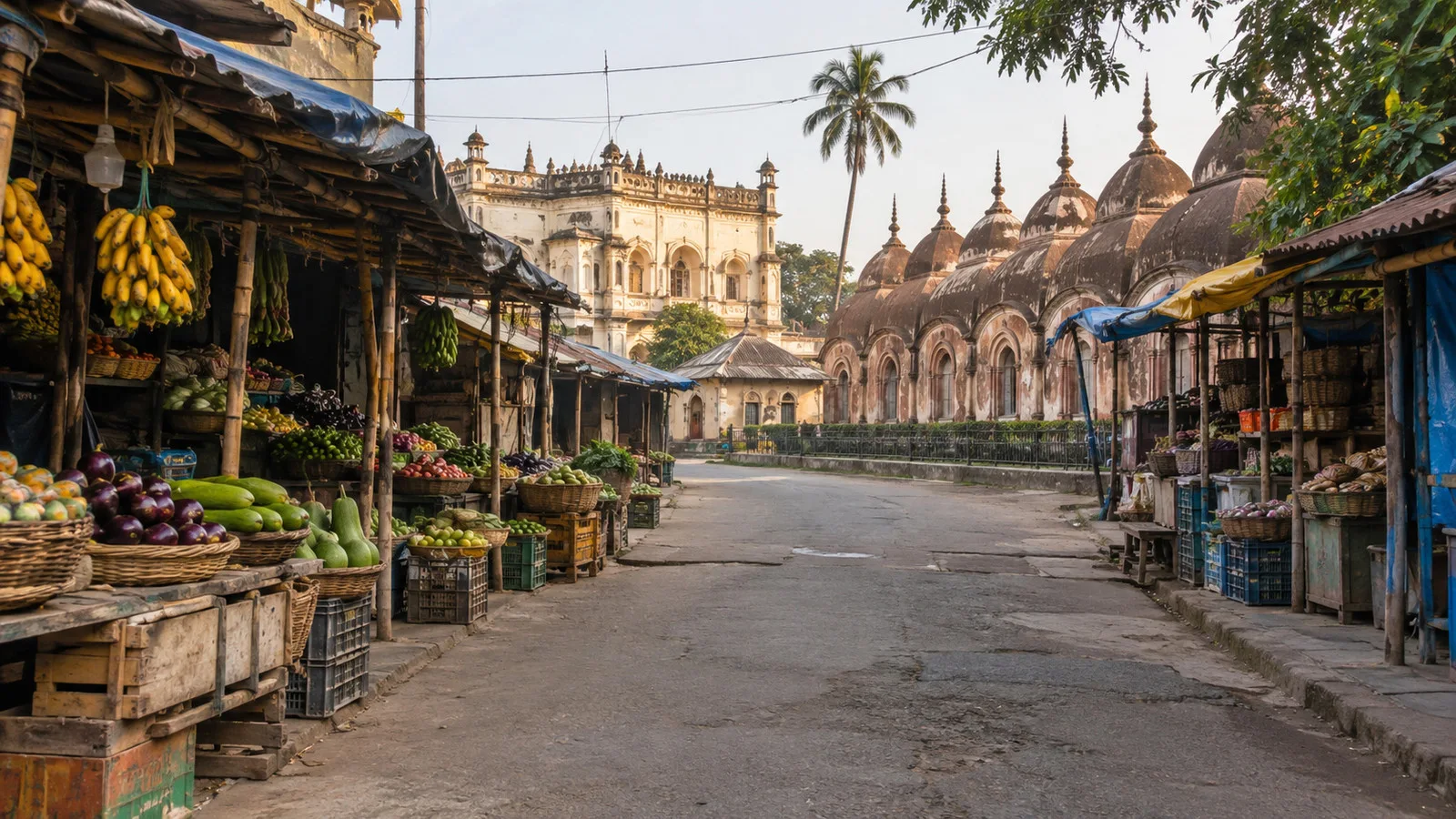
Several current programs route passengers through Kalna’s vegetable market on the way back to the ship. It is a useful change of register after royal patronage and sacred geometry.
Expect active trade, narrow passages, handcarts, rickshaws, produce underfoot and wet patches. Stay near the guide because a procession of identical sun hats can separate surprisingly fast around a mountain of eggplants.
Ask before photographing vendors or customers. Small rupee notes are useful for an approved purchase, but many short calls allow observation rather than a leisurely shopping expedition.
Do not buy unsealed food to eat unless your cruise line or guide confirms it is appropriate. A beautiful pile of fruit and a safe ready-to-eat snack are not automatically the same thing.
Weaving and other operator-added visits
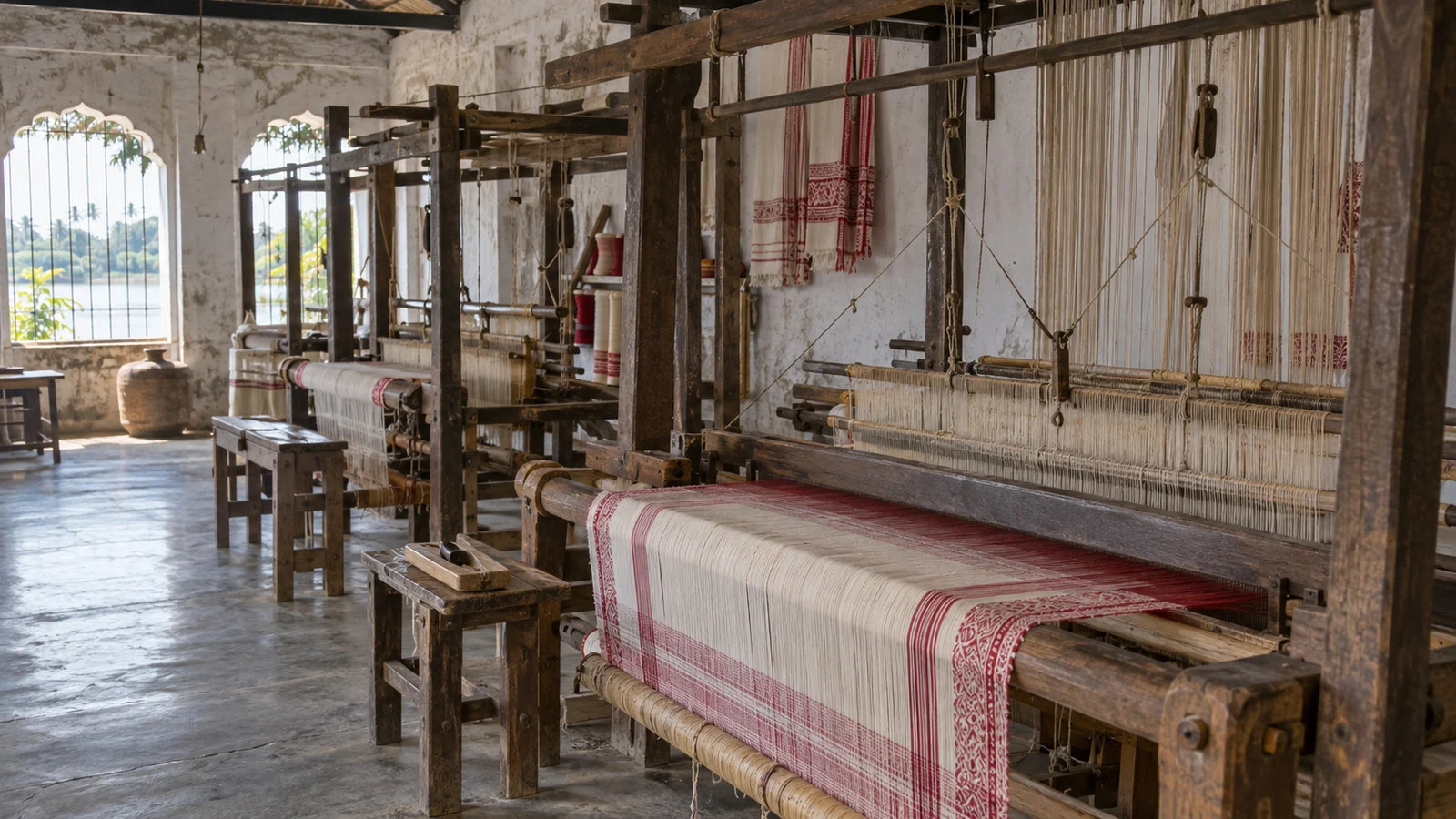
Some itineraries add a weaver’s home or workshop to the temple and market circuit. This is an operator-designed cultural visit, not a guaranteed feature of every Kalna call.
Listen for whether the host demonstrates muslin, cotton weaving or another local textile tradition, since broad cruise descriptions can compress several techniques. Ask permission before photographing people, home interiors or the loom in operation.
If textiles are sold, decide based on workmanship and stated material rather than feeling obligated by the demonstration. Confirm price, currency and whether cards are accepted before the group begins boarding rickshaws again.
Accessibility in Kalna
Kalna is not reliably step-free from cabin to temple. The landing, tender possibility, rickshaw boarding and historic-site surfaces each add a separate mobility question.
No authoritative public specification was found for gangway slope, landing stairs, wheelchair handling or an accessible route through every temple. Cruise lines should confirm the arrangement for the exact vessel and water level rather than quoting a destination-wide label.
Rickshaws reduce distance but may not accept an occupied wheelchair, and a folding chair may need to travel separately. Ask about vehicle step height, seat width, grab points, transfer assistance and whether a vehicle can wait near the complex.
Temple paths may include thresholds, uneven paving, exposed roots and shoe-removal zones. The market adds crowds and wet surfaces, so passengers who need a smooth route should ask whether they can return by vehicle instead.
Use the site’s river cruise accessibility guide to send a detailed pre-cruise request. “Limited mobility” is too vague to establish whether a tender step or rickshaw transfer is workable.
Seasonal river conditions and reliability
The Bhagirathi-Hooghly changes across monsoon, post-monsoon and drier months. High flow can increase current and complicate a small-boat or bank landing, while lower water can expose shoals and change where a vessel can safely approach.
The Inland Waterways Authority of India classifies the Ganga-Bhagirathi-Hooghly route as National Waterway 1 and maintains navigation systems and fairway works. Its NW-1 navigation overview directs mariners to hydrographic notices and least-available-depth information because river conditions require continuing management.
Tidal influence extends upriver through this broader Hooghly reach, although freshwater flow also affects local conditions. A captain may time movement or choose a landing according to water level even when passengers experience an ordinary sunny morning.
Winter fog can delay navigation, while intense rain, heat and festival crowds can change the shore plan. Operators may shorten Kalna, adjust the landing, swap the order of visits or sail onward to protect later calls.
Heat, clothing and temple etiquette
Wear light clothing that covers shoulders and knees, plus closed shoes with good traction. A hat and water help during hotter months, but be ready to remove footwear wherever the temple custodian directs.
Carry socks, hand sanitizer and a small rain layer during monsoon season. Keep both hands available when boarding because a beautiful umbrella is poor compensation for missing the handrail.
Walk around shrines in the direction indicated by worshippers or your guide, avoid blocking doorways and never touch a Shiva linga without clear invitation. Photography rules can vary inside active sacred spaces.
Two realistic Kalna plans
Standard guided call: Follow the landing team to assigned rickshaws, visit Naba Kailash and the Rajbari temples, then return through the market. This is the most reliable plan because transport and sailing time remain coordinated.
Longer operator program: Add a weaving visit if it appears in the daily schedule, but preserve unhurried time for the temple panels. The house or workshop should be treated respectfully, not as a retail obstacle between shrines.
An entirely independent call is sensible only if the cruise director permits it and confirms the landing, last tender or gangway time. Leave a large return margin because local traffic, rickshaw availability and a repositioned vessel can all complicate a short route.
Quick answers
Where do river cruise ships dock in Kalna?
No verified universal berth serves every cruise; vessels may use a direct riverbank landing or a tender arrangement chosen for current conditions.
Is Kalna the same as Ambika Kalna?
Yes; Ambika Kalna is the fuller name, while cruise itineraries commonly shorten it to Kalna.
How do passengers reach the Rajbari temples?
Current programs commonly use cycle or electric rickshaws, sometimes returning through the vegetable market on foot.
Why are there 108 Shiva temples?
The sacred number 108 appears in Hindu devotional traditions, and Kalna’s Naba Kailash arranges the shrines in concentric rings of 74 and 34.
Can I visit all 108 shrines?
You can see the ensemble, but individual access may reflect worship, opening conditions and your excursion time; respectful observation matters more than entering every doorway.
Is Kalna wheelchair accessible?
Not reliably end to end; request exact details for the landing or tender, rickshaw transfer, temple surfaces and vehicle return.
Can river conditions cancel Kalna?
Yes, though an altered landing or shortened excursion is more likely than a complete miss under many manageable conditions.
How I would visit Kalna without rushing the temples
The operator assigns the landing and rickshaw movement, while West Bengal Tourism provides destination context. Stay with the named meeting point because seasonal river stages can change the gangway.
Give Rajbari and Naba Kailash priority, remove shoes where required, dress modestly, and ask before photographing worship. A market or weaving stop is optional, and a short call should not be inflated with a distant independent detour.
Check India entry through Indian Visa Online and the cruise line. Rickshaw steps, uneven temple courts, bare feet on hot surfaces, heat, rafting, and steep gangways should be assessed individually, with a 30-minute return margin.
Research note
This guide was desk-researched on September 12, 2026 using current Antara cruise programs, West Bengal Tourism, the Inland Waterways Authority of India and Government of India immigration information. It does not claim a personal sailing, landing inspection, rickshaw ride, temple visit, worship experience or market walk.
Landing interpretations and suggested time margins are transparent editorial guidance because no public ship-specific Kalna berth roster or audited cancellation series was found. Verify the landing, tender, mobility requirements, temple access and all-aboard time with the operator, and see the Editorial Policy for sourcing and corrections.
How this guide was researched: Unless a first-hand visit is explicitly identified above, this guide is based on independent research using official port, tourism, transit, government, and attraction sources where available. Details were checked against West Bengal Tourism guide to Kalna and the Inland Waterways Authority of India.
Logistics and time-sensitive details were reviewed September 12, 2026. See our Editorial Policy.