Kom Ombo River Cruise Port: Temple, Tickets and Evening Guide
Kom Ombo is the Nile’s most efficient plot twist. Your ship rounds a bend, a floodlit temple appears above the bank, and within minutes you are walking through a sanctuary built in duplicate so neither a crocodile god nor a falcon god had to share top billing.
This is usually a short archaeological call rather than a free-form day in town. The temple and Crocodile Museum are the event, while the mooring, lighting and return time supply the practical suspense.
Kom Ombo river cruise port quick facts
Into Town: The temple is an estimated 5 to 15 minutes from typical waterfront moorings; modern Kom Ombo town extends farther inland.
Currency and Language: Egyptian pound and Arabic. English is common in tourism, and small Egyptian-pound bills help with minor purchases and tips.
Time Zone: Eastern European Time, UTC+2, switching to UTC+3 during Egypt’s daylight saving period.
Disruption risk: Navigation delays, berth congestion, maintenance, or itinerary changes can shorten or cancel the temple stop; no audited local cancellation rate is published.
No Nile authority or cruise line publishes a Kom Ombo missed-call percentage. Use the ship’s daily program for a material schedule or visit change.
My quick take
Take the included guided visit unless you have a strong reason not to. Kom Ombo’s reliefs make far more sense when an Egyptologist can point out the paired axes, ritual calendar and scene believed to show surgical instruments.
Stay close to the group if the call is after dark, then leave enough time for the Crocodile Museum. The mummies are not a novelty bolted onto the exit; they complete the story of Sobek worship that the temple begins.
Is Kom Ombo an active 2026 river cruise port?
Absolutely. AmaWaterways’ current 2026 Nile itinerary visits the Great Temple of Kom Ombo while sailing between Aswan and Luxor.
Viking markets Kom Ombo on its Nile programs, and A&K Sanctuary’s 2026 and 2027 voyages include the temple. Numerous Egyptian-operated Nile ships and smaller dahabiyas also build it into the standard Luxor to Aswan route.
The call’s frequency does not create a universal berth assignment. Large cabin vessels, boutique ships and sailing dahabiyas have different drafts, schedules and operating arrangements, even when everyone is heading toward the same sandstone columns.
There is more on this in Dahabiya Nile Cruise or Standard Boat.
Where do Nile cruise ships moor at Kom Ombo?
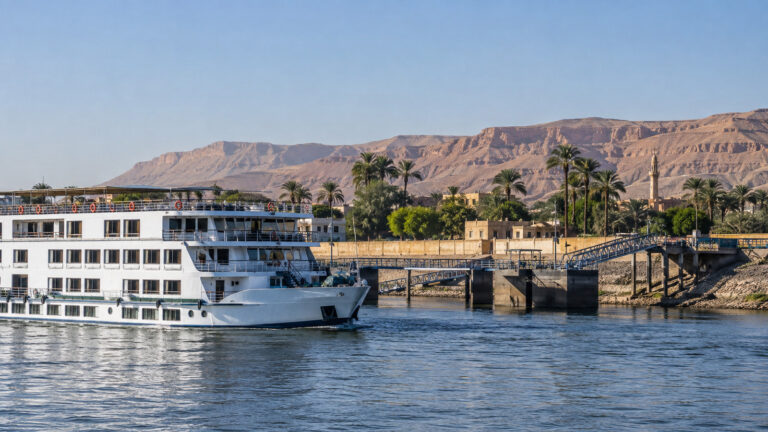
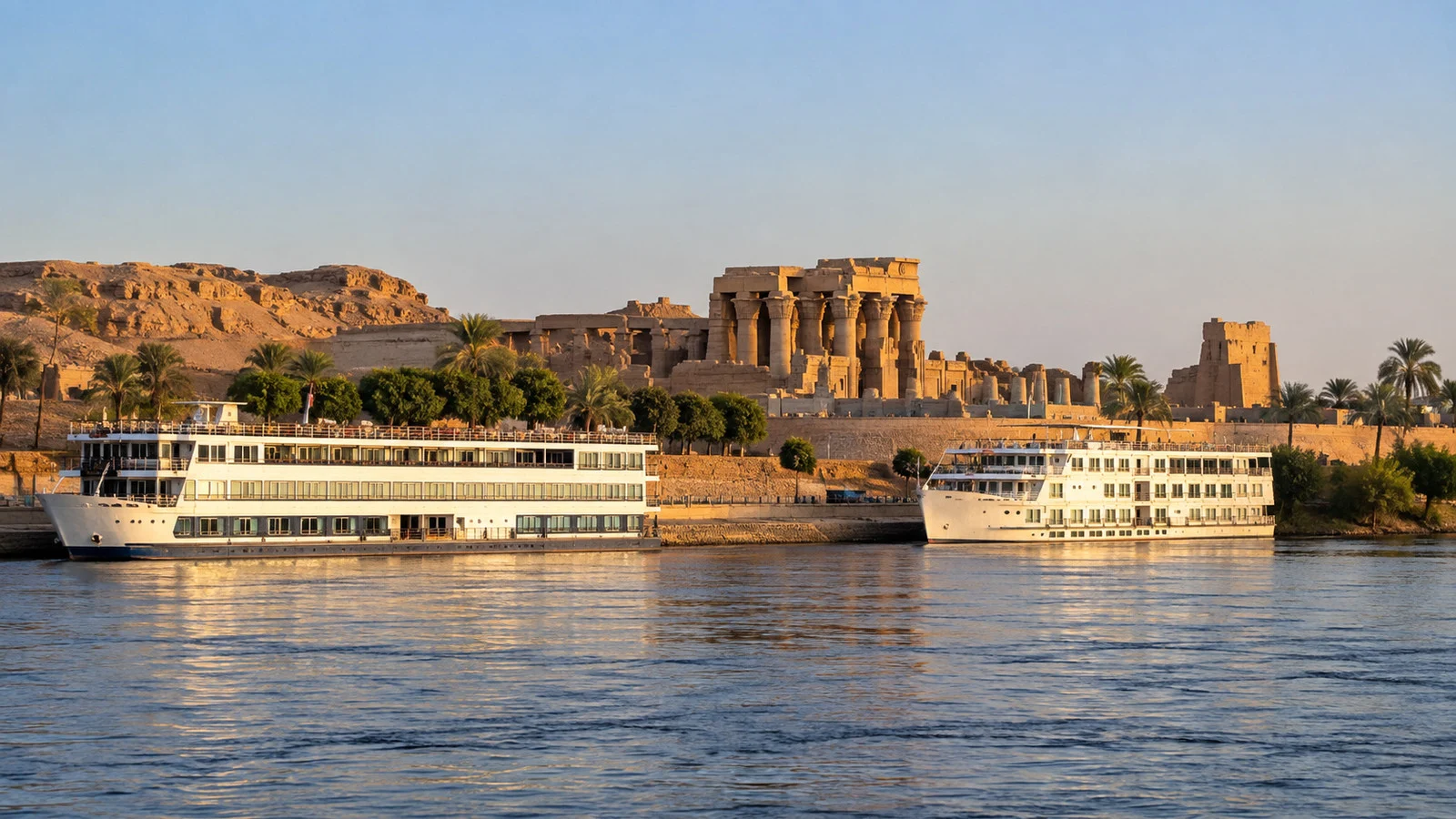
Ships normally stop along the east-bank waterfront below or near the temple complex. Egypt’s official tourism guide describes Nile cruises as docking right by the temple, which is why Kom Ombo feels radically simpler than Edfu.
There is no public port-authority page assigning one numbered berth to every cruise line. Exact position depends on vessel, traffic, water level, local instruction and arrival order.
On busy evenings, vessels may lie side by side and passengers can cross another boat to reach shore. That common Nile practice may add stairs, narrow thresholds and several lobbies to a journey that looked like one gangway from the sun deck.
Smaller dahabiyas may use a different landing or time their visit away from the main fleet. Ask the tour manager whether you are directly alongside, rafted to another vessel or using a short tender-style transfer before judging the walk.
How far is the Temple of Kom Ombo?
From the typical temple-side waterfront pattern, allow an estimated 5 to 15 minutes from the final gangway to the site entrance. A more distant berth, several rafted vessels, crowds or a mobility aid can lengthen that approach.
The temple sits on raised ground above the Nile, so the walk includes an incline and may involve steps or ramps depending on the route in use. It is close, but close and level are not synonyms.
The modern town spreads inland beyond the archaeological zone. Most cruise calls do not provide enough time or independent context to explore it, especially when the ship departs immediately after the temple visit.
Temple hours, tickets and last entry
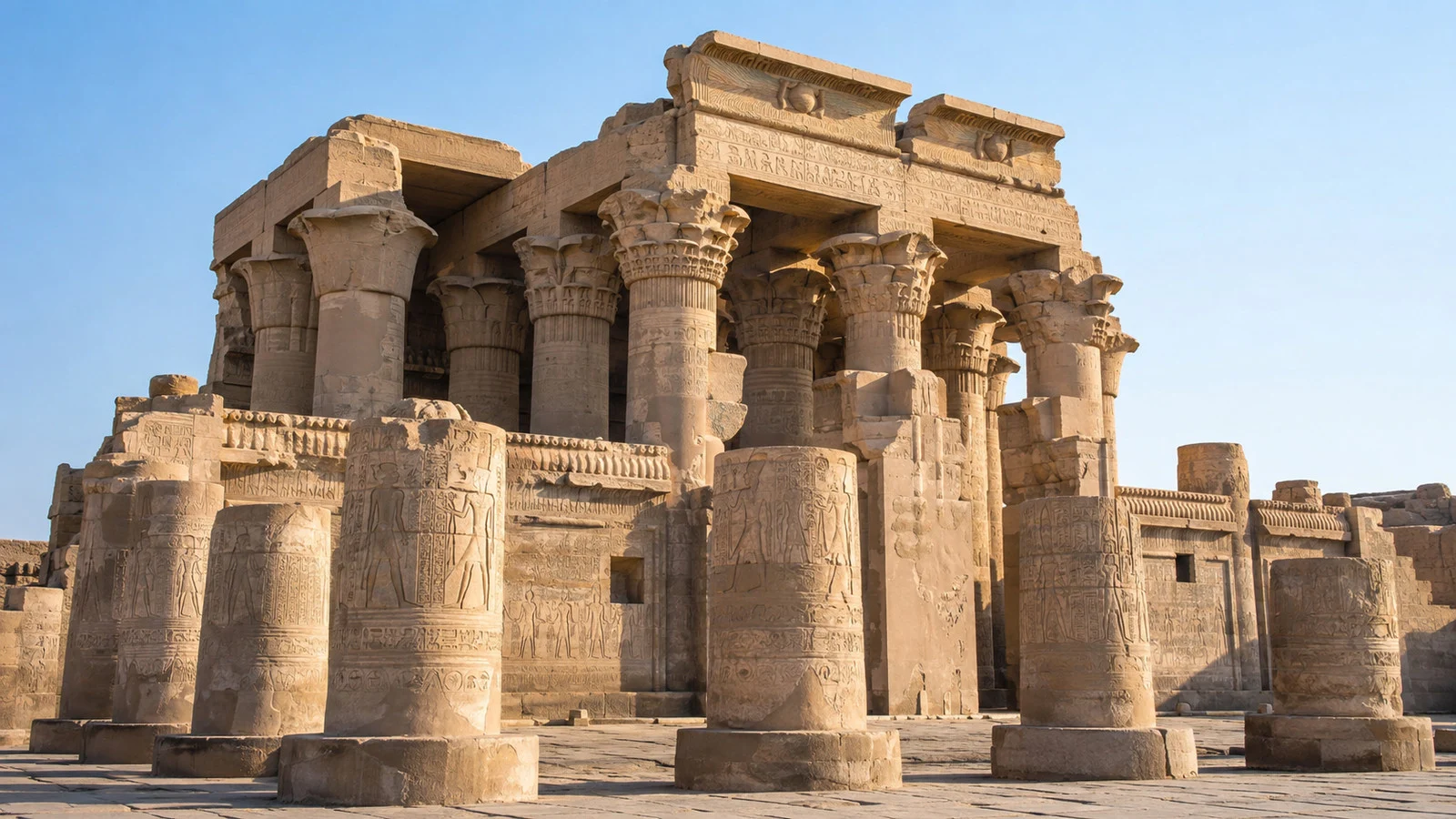
The Ministry of Tourism and Antiquities currently lists daily opening from 7:00 AM to 9:00 PM. Its official ticket portal lists 8:00 PM as last entry and asks visitors to arrive at least one hour before closing.
As of September 12, 2026, the official e-ticket portal lists foreign-adult admission at EGP 450 and eligible foreign-student admission at EGP 225. Children under six enter free under the published policy, while students need valid identification and must meet the age rule.
The official Crocodile Museum listing describes the same admission as an inclusive ticket for both temple and museum. Most organized cruise visits include site admission, but confirm rather than buying a duplicate ticket with impressive efficiency.
Prices and hours can change quickly, and Ramadan operations may differ. Check the official portal near departure and trust the ship’s same-day timing over a screenshot saved months earlier.
Why the temple is doubled
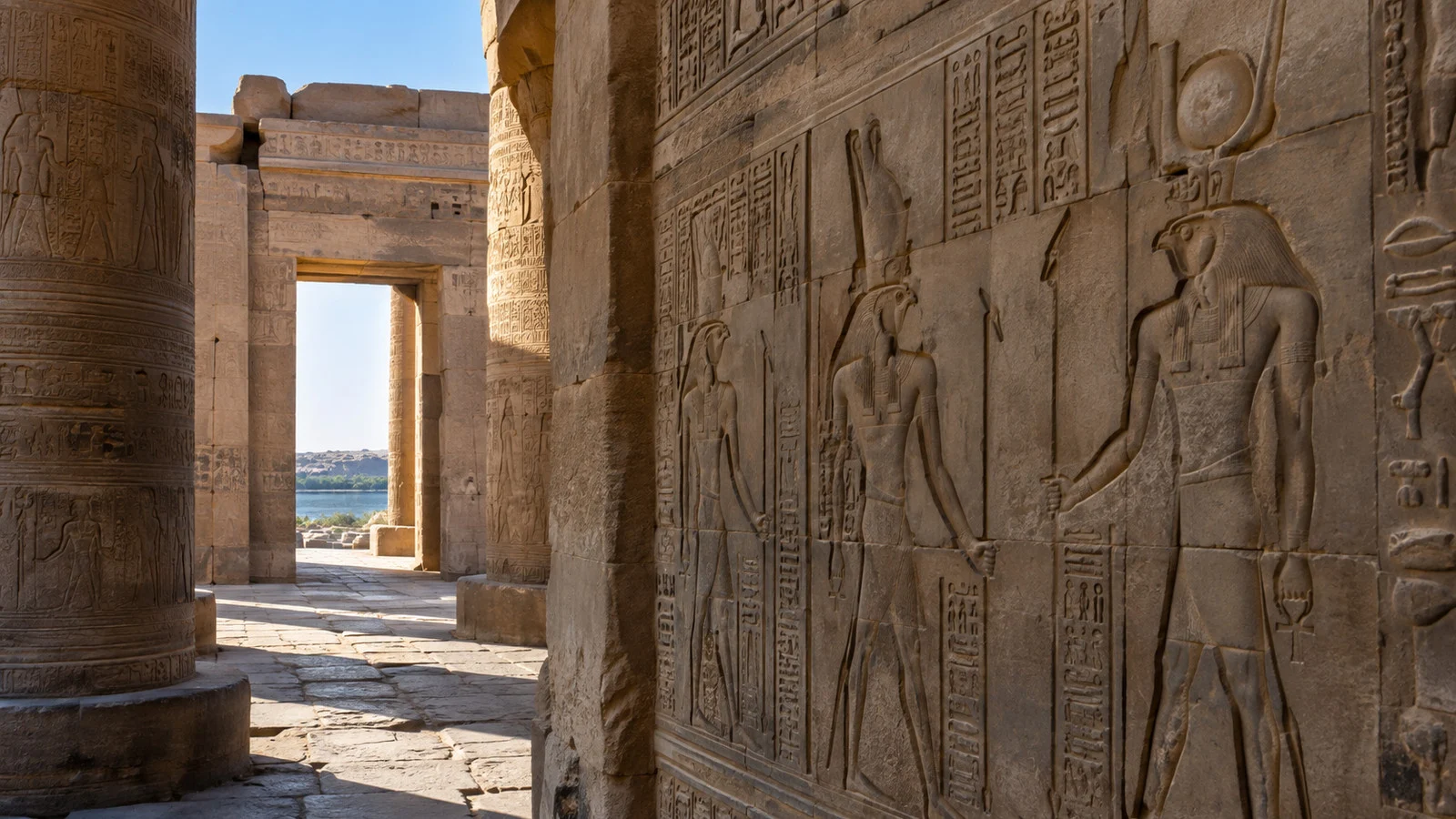
Kom Ombo is dedicated to Sobek, the crocodile god associated with water, fertility and the inundation, and Harwer, or Horus the Elder, represented as a falcon-headed deity. Its architecture gives each god a parallel axis through the halls to a separate sanctuary.
The southern axis on the right belongs to Sobek, while the northern axis on the left belongs to Harwer. Doors, halls and sacred spaces echo one another with the studied diplomacy of a building determined not to choose favorites.
An earlier New Kingdom temple once stood here, but the surviving structure is mainly Greco-Roman. The Ministry dates the earliest attested royal name in the present temple to Ptolemy VI, with much of the decoration completed under Ptolemy XII.
This timeline matters because the site blends Egyptian religious tradition with Ptolemaic and Roman patronage. It is ancient Egyptian sacred architecture with a long, layered construction meeting rather than one ruler’s single afternoon of inspiration.
What not to miss inside
Start with the floral capitals and surviving color above the Harwer side. Even after centuries of sun and river air, portions of the ceiling retain enough pigment to make beige seem like a modern mistake.
Look for the ritual calendar arranged in a table on the right side of the second vestibule. The official tourism authority highlights it as a record of festivals, dates and associated rites.
Near the northeastern corner of the outer corridor, a Roman-period relief shows objects widely interpreted as surgical instruments. Use “believed to be” rather than declaring the wall an ancient operating-room catalog, since interpretation is more nuanced than many captions suggest.
Your guide may also discuss the sacred well, nilometer traditions and the temple’s relationship with the river. Ask which elements are archaeologically established and which explanations are conventional, because Kom Ombo attracts excellent storytelling along with excellent stonework.
The Crocodile Museum
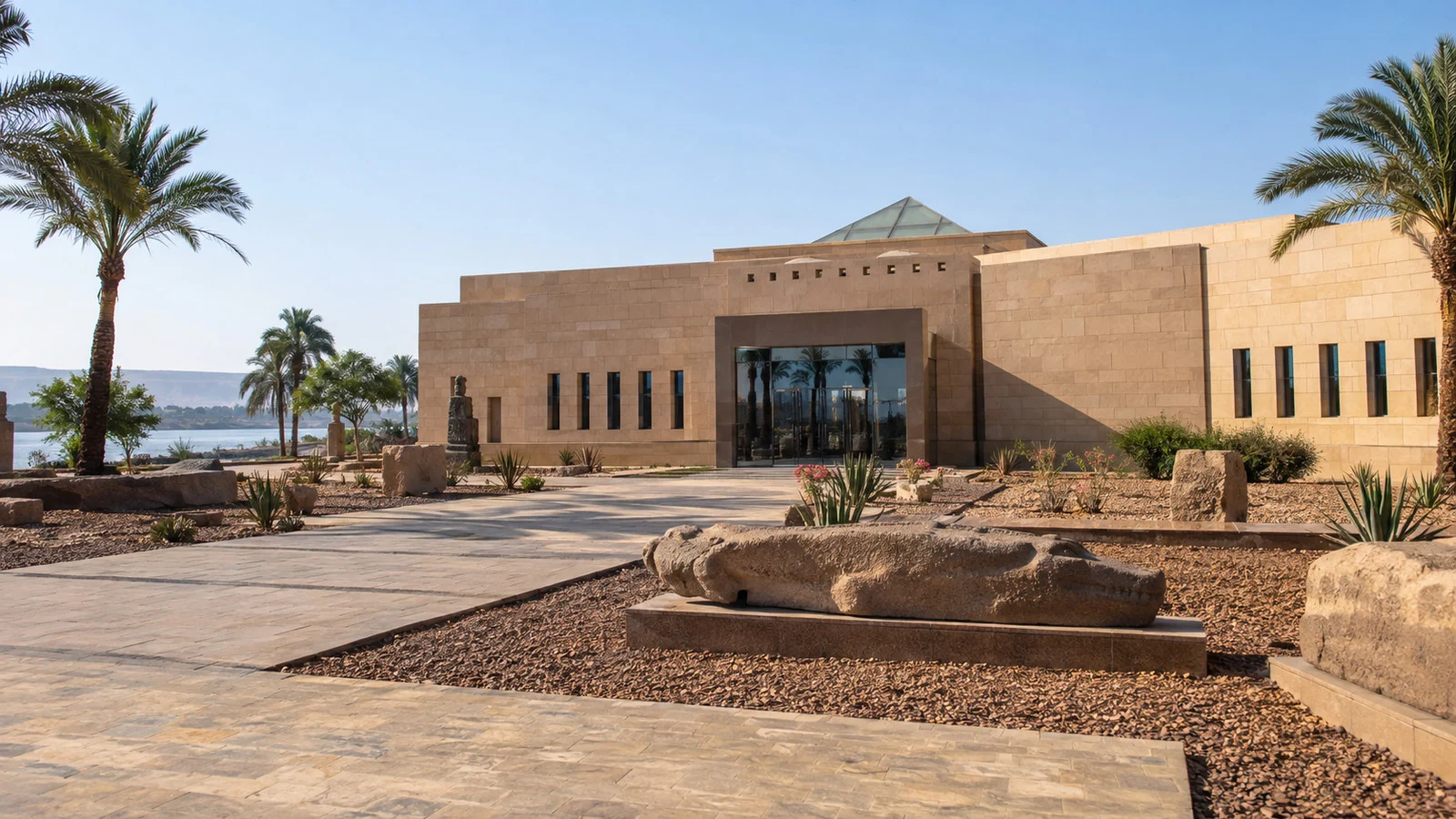
The Crocodile Museum sits beside the temple complex and opened in 2012. The Ministry describes it as a one-floor museum devoted to Sobek worship, crocodile mummification and the rituals surrounding the animal.
Displays include mummified crocodiles of different sizes and ages, coffins made to hold them, offering scenes and a reconstruction of a crocodile burial. It is small enough for a short call but substantial enough to deserve more than a sprint past the final case.
Allow an estimated 20 to 30 minutes for a focused visit. Pair that with 60 to 90 minutes at the temple, then add the walk and whatever human traffic has formed between six Nile ships and one exit.
The official museum page confirms that the temple ticket includes museum entry. It also says flash, tripods and commercial photography require restrictions or permission, so check the posted rule before taking pictures inside.
What an evening visit feels like
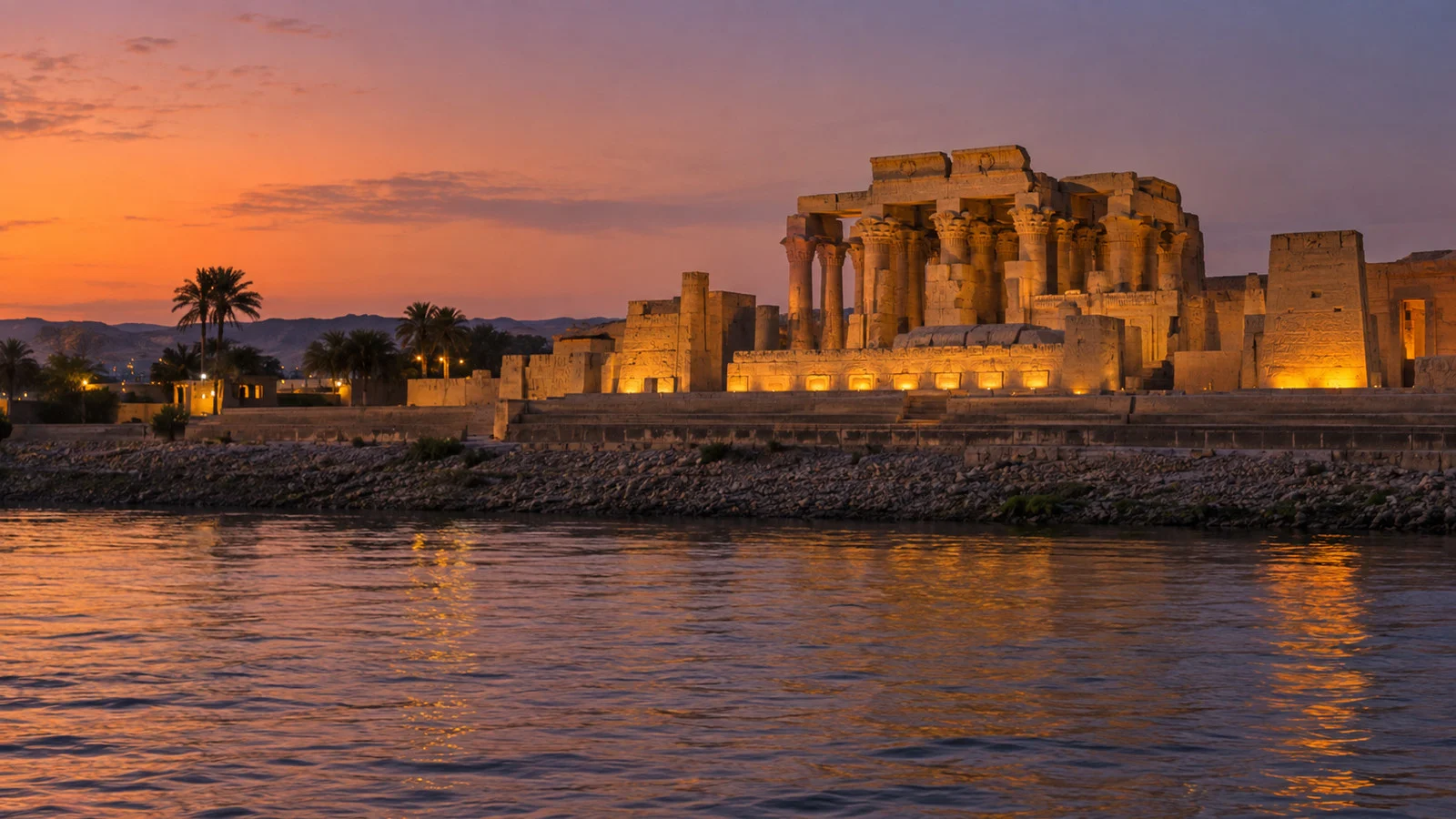
Many southbound or northbound itineraries reach Kom Ombo in late afternoon or evening because the stop fits between longer sailing segments. A&K Sanctuary currently describes an evening temple visit after an afternoon cruise from Aswan.
Floodlights make the columns glow and temperatures usually ease after sunset. The tradeoff is that relief details, changes in paving and the edges of steps can be harder to read.
Stay with the guide through the entrance, note the meeting point and keep a phone light available for the ground without shining it on other visitors. The site remains open until 9:00 PM under the current schedule, but last entry is one hour earlier.
Several ships can arrive within a similar window, creating sudden lines even when the waterfront looked quiet five minutes before. Visit the museum before browsing souvenirs if your departure is tight, because a scarf stall will survive being admired another day.
Can you visit independently?
Passengers can theoretically buy the official inclusive ticket and walk from a nearby mooring. In practice, the guided group is usually included, short timing is common and your ship may leave as soon as everyone returns.
An independent visit works only after confirming the precise gangway, all-aboard time and whether the vessel will move while tours are ashore. Carry the ship contact number and photograph the name of any boat you must cross on the return.
Do not treat the current 9:00 PM closing time as permission to stay until 8:59. The monument’s clock controls admission, while the captain’s clock controls whether your cabin continues toward Luxor without you.
Accessibility
No current Ministry page provides an end-to-end wheelchair route from a specific Kom Ombo berth through every temple space. That absence matters, so the site should not be labeled fully accessible on the strength of distance alone.
The main approach may use a graded path or ramp, and portions of the temple platform are relatively open. However, gangway angle, rafting between vessels, stairs, uneven stone, thresholds and dense evening groups can create serious barriers.
The Crocodile Museum is on one floor, but a one-floor building is not automatically a verified step-free journey from ship to gallery. Ask the operator to confirm the exact vessel crossing, landing, entrance route and restroom before booking.
Manual-wheelchair users may need crew or guide assistance, which must be arranged rather than assumed. Power-chair and scooter users should ask about gangway width, weight limits and whether equipment can cross any rafted ships.
The site’s wheelchair-friendly cruise ports guide offers a practical checklist for gangways and surfaces. Travelers continuing south can also compare the Aswan river cruise port guide.
Heat, crowds and practical comfort
Kom Ombo can be intensely hot in the afternoon, with limited shade on the exposed approach and courtyard. Carry water, wear a hat and use shoes with grip rather than relying on the short distance to make heat irrelevant.
Evening visits are cooler but darker, while early mornings are clearer and can still heat quickly. A light layer helps on the air-conditioned ship, though the temple itself is likely to have entirely different opinions.
Use the restroom on board before leaving unless your guide confirms a suitable facility. Keep Egyptian pounds for a small purchase or tip, but the official site ticket is best handled through the included tour or authorized portal.
Mobile-phone photography is currently free at the temple under the official ticket rules. Museum rules are more restrictive, so do not use flash and follow staff instructions.
Vendors and the return walk
Souvenir stalls line parts of the visitor route and can be lively when several ships arrive together. A calm “la shukran,” meaning no thank you, is usually more useful than starting a negotiation you do not intend to finish.
If you buy, agree on the currency and final price before accepting the item. Check change carefully and leave enough time to retrace every vessel crossed on the way ashore.
The archaeological complex is the normal focus of this stop, not an unstructured nighttime walk through modern Kom Ombo. Follow the ship’s local guidance and keep valuables secure in dense lines.
A practical 90-minute plan
Walk directly from the mooring to the temple with the Egyptologist, spending roughly 55 to 65 minutes on the paired sanctuary, capitals, calendar and surgical-instrument relief. Use the final 20 to 25 minutes for the Crocodile Museum, then return without shopping detours.
With two hours, slow the temple visit and allow 30 minutes in the museum. Add photographs from the riverside viewpoint only after confirming how many boats stand between you and dinner.
For a mobility-paced visit, choose fewer interior details and protect the approach, museum and return. The twin design will still make sense even if you do not inspect every surviving stone.
The practical checks I would make before Kom Ombo
Ask for the active mooring, rafting order, and return landmark because Nile vessels line the bank and can change position while guests visit the temple. Reaching shore may require crossing other boats, narrow lobbies, stairs, and more than one gangplank.
The temple and Crocodile Museum are the complete call, so take the included guide and do not add modern Kom Ombo town on a short evening stop. Check the official ticket, last entry, museum inclusion, bag and photography rules, then be back at the river at least 30 minutes before the ship’s stated departure.
Check Egypt’s visa and entry rules for the traveler’s nationality, and follow all barriers without touching carvings or archaeological stone. Heat, darkness, crowds, polished surfaces, uneven paving, raft crossings, and steep gangplanks make written accessibility details essential.
Quick answers
Where do Nile ships moor at Kom Ombo?
They usually stop along the east-bank waterfront below or near the temple. Exact position varies, and vessels may raft side by side.
Can you walk from the ship to the temple?
Usually, yes. Allow an estimated 5 to 15 minutes from the final gangway, with an incline and possible steps or ramps.
How much is the ticket in 2026?
The official portal listed EGP 450 for foreign adults and EGP 225 for eligible foreign students on September 12, 2026.
Is the Crocodile Museum included?
Yes under the current official inclusive ticket. Most organized cruise visits also include admission, but confirm with the operator.
Can I visit after sunset?
Yes. Current hours run until 9:00 PM, with last entry at 8:00 PM, and many cruises schedule an illuminated evening visit.
Is Kom Ombo wheelchair accessible?
Parts may be manageable with arranged assistance, but no official end-to-end route is published. Gangways, rafting, inclines and ancient surfaces vary.
The last word
Kom Ombo earns its place on the Nile route by doing one thing exceptionally well. It puts a visually striking, intellectually unusual temple close to the river and lets a museum full of sacred crocodiles have the final word.
Confirm the gangway, keep the museum in the plan and listen for the all-aboard time before the floodlights become too persuasive. More regional planning lives in the site’s Africa cruise ports guide.
How this guide was researched: This guide was independently checked on September 12, 2026, against Egypt’s official e-ticket portal, the Ministry of Tourism and Antiquities’ Crocodile Museum page, Egypt’s official e-Visa portal, and current AmaWaterways itinerary information. Reconfirm the mooring, rafting or ship movement, transportation, protected-site rules, entry documents, weather, accessibility, costs, and reboarding point because live operations can change.