Remich River Cruise Port: Moselle Quay and Luxembourg Guide
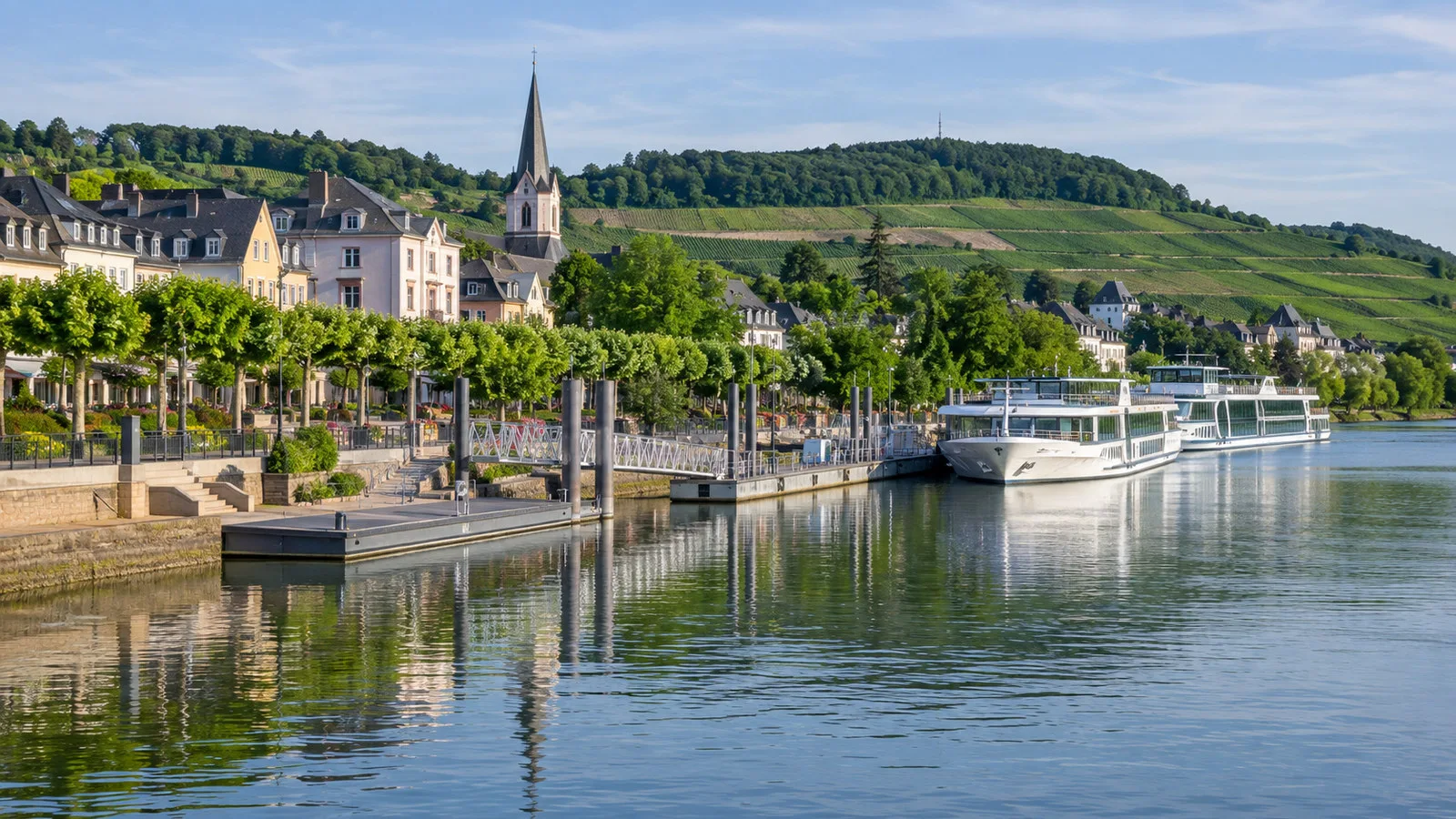
Remich is the kind of river port that makes Luxembourg’s small size feel like a travel superpower. The ship can sit beside a leafy Moselle promenade, Luxembourg City is a practical excursion away, Germany is across the water, and Schengen waits just downriver with a rather important European story.
It is also a working Moselle landing, not a single private cruise terminal with a guaranteed door number. Exact quay position, rafting, embarkation procedure, and even a substitution with Grevenmacher can vary by sailing.
Remich River Cruise Port Quick Facts
Into Town: The official roughly 410-foot Remich quay borders the riverside promenade. Central shops, cafés, church, and bus stops are generally 5 to 15 minutes away.
Currency and Language: Euro; Luxembourgish is national. French, German, and Luxembourgish are used administratively; English is common in tourism.
Time Zone: Central European Time, UTC+1; Central European Summer Time, UTC+2, from the last Sunday in March through the last Sunday in October.
Call Changes: No reliable public cancellation rate is available. Moselle levels, locks, fog, berth availability, traffic, or operating changes can alter Remich calls.
A delayed arrival, different gangway, shortened stay, or Grevenmacher substitution may be more likely than a canceled cruise. No authoritative Remich cancellation series supports assigning a percentage.
Is Remich an Active River Cruise Port?
Yes. Avalon Waterways sells a current 2026 cruise beginning in Remich, and its reverse itinerary ends with overnight docking and disembarkation here.
CroisiEurope also publishes 2026 Moselle programs that return passengers to a ship in Remich after Luxembourg City and local wine excursions. Its itinerary includes an unusually candid footnote that Remich may be replaced by Grevenmacher depending on mooring availability.
That disclosure does not make Remich inactive. It makes the operator refreshingly honest about a small public-quay system where more than one passenger ship may want the same useful piece of riverbank.
Some journeys use Remich as an embarkation or disembarkation port, while others call for excursions or an overnight stay. For wider route planning, our European cruise ports guide connects Remich with the Moselle, Rhine, Saar, and nearby continental ports.
Where Do River Cruises Dock in Remich?
Luxembourg’s river navigation authority documents the official Remich landing quay on the left bank of the Moselle between river kilometers 233.405 and 233.530. It lists a usable length of roughly 410 feet, about 6.2 feet of water depth, shore electricity, and a low-flow water connection.
The same official page publishes a 2026 occupancy plan. That is strong evidence of an active, scheduled public facility rather than a decorative promenade where cruise ships merely appear in old photographs.
The left bank is the Luxembourg side, beside Remich’s esplanade and town. Germany lies across the Moselle, which forms the national boundary here.
A roughly 410-foot quay can accommodate a long river ship, but dimensions alone do not guarantee a particular section or private use. Another vessel, priority rights, ship length, services, navigation instructions, or an event can change the arrangement.
Luxembourg also lists a separate passenger-vessel waiting area at Remich with its own 2026 occupancy plan. Do not assume a ship seen farther along the river is using the passenger embarkation position, and follow the crew’s check-in instructions.
Cruise operators may raft vessels, requiring guests to cross another ship. Photograph the ship name, gangway, and nearby landmark before leaving because “the white one on the Moselle” is not yet a complete return plan.
Walking Into Remich
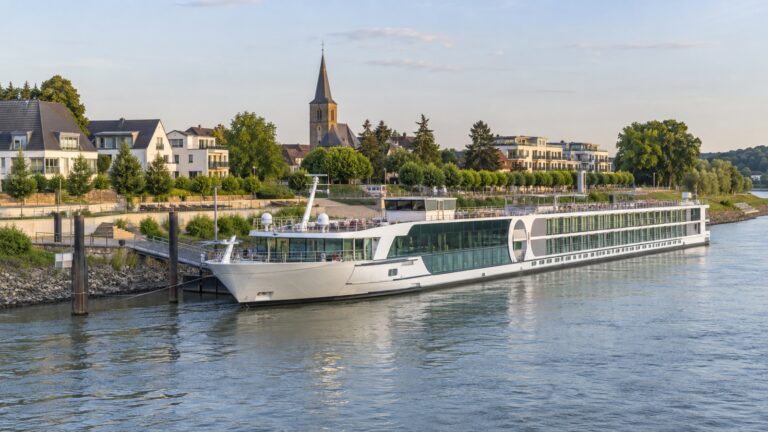
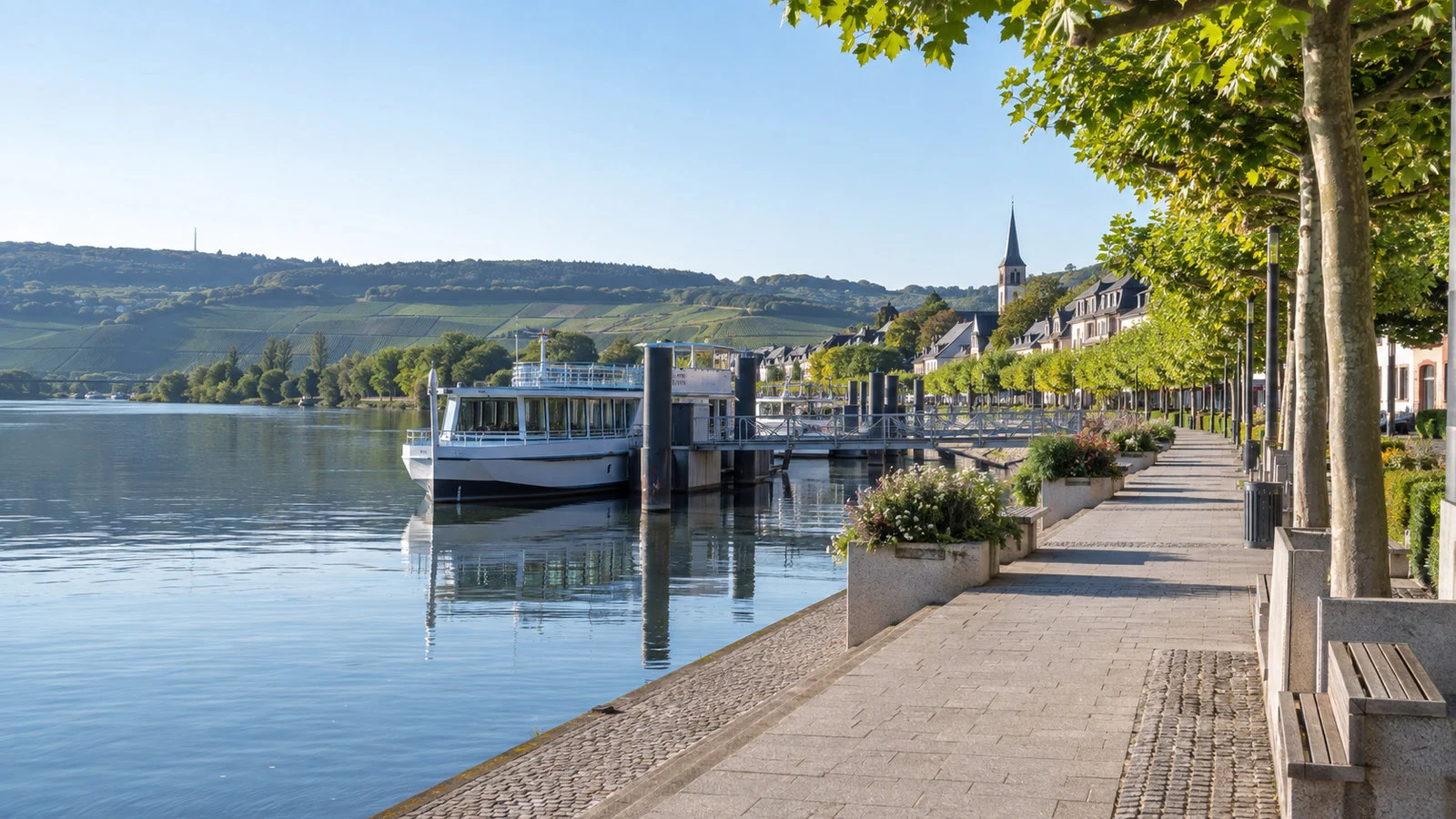
The port’s chief pleasure is that Remich itself needs no transfer. The riverside esplanade, restaurants, local cruise boats, visitor information, and streets rising into the old center cluster around the Luxembourg bank.
Allow roughly 5 to 15 minutes from a typical quay position to central services, an editorial estimate that varies with the ship’s section, rafting, pace, and crossings. The promenade is longer than the town is complicated.
Visit Luxembourg describes a roughly 1.9-mile waterfront promenade shaded by lime and cherry trees. A short-call traveler can sample one portion without accidentally converting a gentle stroll into a roughly 3.7-mile round trip.
The old town includes Saint Nicholas Gate and the parish church, reminders of Remich’s former defenses and river history. The streets behind the promenade begin to rise, so the flattest experience stays close to the Moselle.
Restaurants and cafés are generally close enough for an independent stop, but opening days and kitchen hours can be surprisingly specific. Check before promising yourself a full lunch during a short morning call.
What to Do in Remich
Walk the Moselle Esplanade
The promenade is Remich’s easiest and most reliable attraction. It gives views across the river to Germany, passing ships, trees, terraces, and vineyard slopes without an admission schedule.
A relaxed out-and-back walk can take 30 to 60 minutes depending on distance and coffee discipline. This is a CruisePorts.co editorial range, not an official tour duration.
Watch for bicycles and service vehicles on shared sections. River edges can also become slippery after rain or inaccessible during flood controls, so stay behind barriers and closures.
Take a Local Moselle Boat Trip
Remich supports local sightseeing vessels as well as overnight cruise ships. Visit Moselle lists departures from Quai de la Moselle for panoramic trips, lock passages, meal cruises, and longer day sailings.
A second boat ride only works when its return time leaves a generous ship buffer. “Back at 2 p.m.” and “all aboard at 2 p.m.” are not compatible interpretations of punctuality.
The tourism listing labels the local operator wheelchair accessible, but that statement applies to its visitor product. It does not guarantee that your overnight ship’s gangway or today’s assigned public-quay section is step-free.
Explore Luxembourg Wine
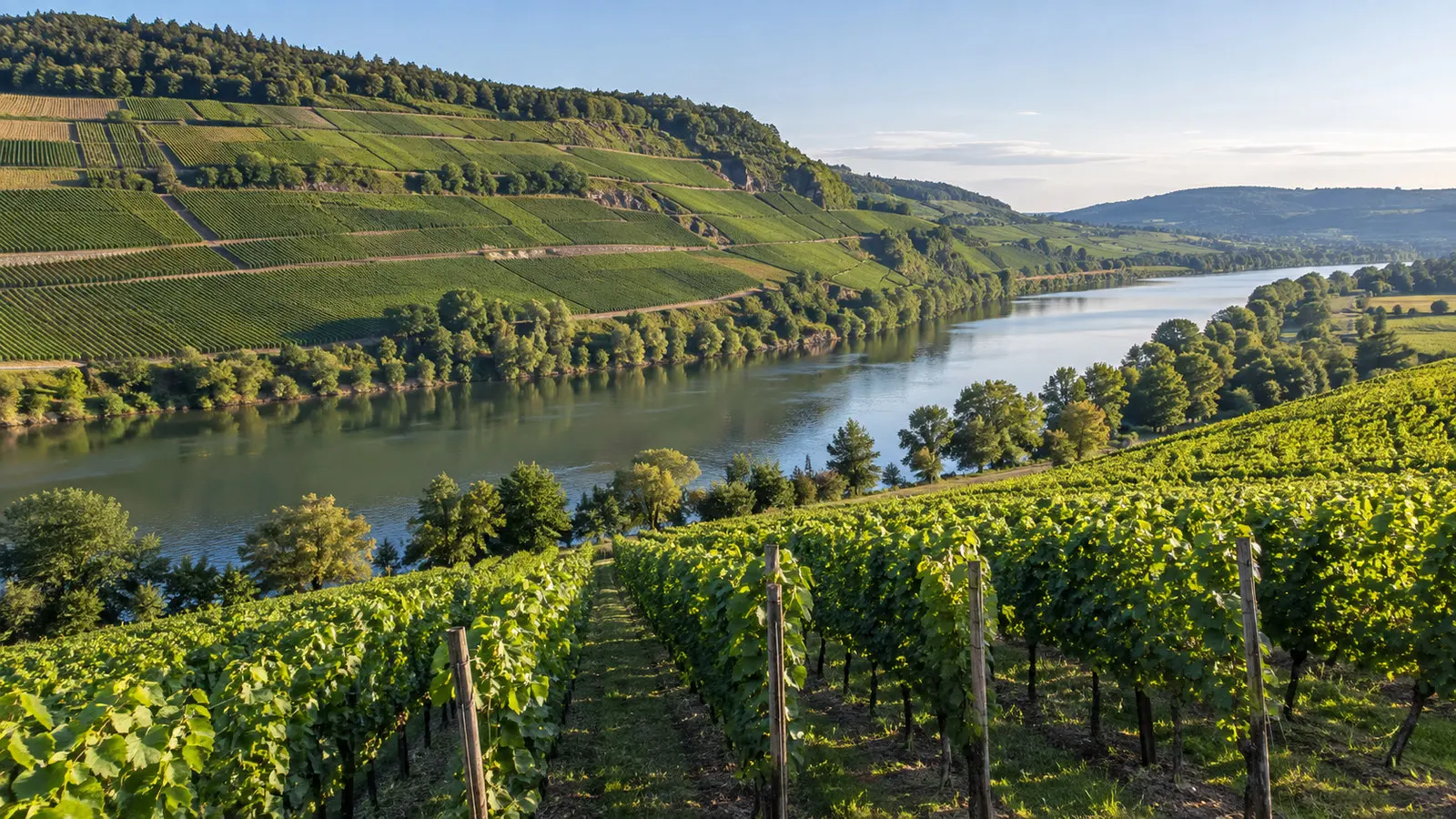
The Luxembourg Moselle is known for still white wines and Crémant de Luxembourg sparkling wine. Cruise excursions often visit a producer or cellar, and CroisiEurope currently offers a Remich-area cellar visit with a tasting.
Cellars can involve cool temperatures, uneven floors, stairs, and scheduled groups. Ask about access before booking, bring a layer, and remember that tasting rooms are not an excuse to forget the ship’s departure time.
Independent visitors should reserve ahead rather than assuming every producer welcomes walk-ins. If the named cellar is unavailable, operators may use another producer, a sensible substitution in a working wine region.
Remich to Luxembourg City
Many cruise lines market Remich as the port for Luxembourg City, about 15.5 to 19 miles inland depending on route. The capital is not visible from the gangway, despite the country’s admirably compact dimensions.
A cruise motorcoach or taxi generally needs about 30 to 45 minutes each way in ordinary traffic, an editorial estimate rather than a guaranteed transfer. Rush hour, road work, event controls, and the exact drop-off point can make it longer.
Luxembourg City’s historic center and old fortifications are a UNESCO World Heritage site. A typical tour may include upper-city viewpoints, Place Guillaume II, the cathedral area, the Grand Ducal Palace exterior, or a view into the Alzette valleys.
The city is built on plateaus and deep valleys, so “walking tour” can include grades, steps, cobbles, and elevators. Confirm the route if mobility, stamina, or time makes a lower-city detour difficult.
For a first visit and a short port call, the ship’s excursion is often the least stressful option because transport and return are coordinated. Independent travel is practical, but the capital deserves more buffer than its map distance suggests.
Public Bus From Remich to Luxembourg City
Remich has no passenger railway station. Current national schedules list RGTR bus 411 between Remich and Luxembourg’s Bonnevoie area and bus 412 between Remich and Luxembourg Central Station.
The official Mobiliteit route list should be checked on the day because stops, road work, and schedules change. A scheduled 412 trip commonly takes around 40 to 50 minutes end to end, but that is a schedule observation rather than a promise.
Domestic buses, trams, funiculars, and second-class trains are free for residents and visitors throughout Luxembourg. First-class rail and international portions remain chargeable, and passengers may still be asked for identification.
Free does not mean delay-proof. Build a substantial return margin, verify which Remich stop is closest to the day’s gangway, and avoid the last theoretically possible connection.
Travelers embarking with luggage may prefer the cruise transfer or a prebooked vehicle. Public buses are useful, but suitcase space and the walk from the stop to the correct ship deserve advance thought.
Schengen and the Three-Country Geography
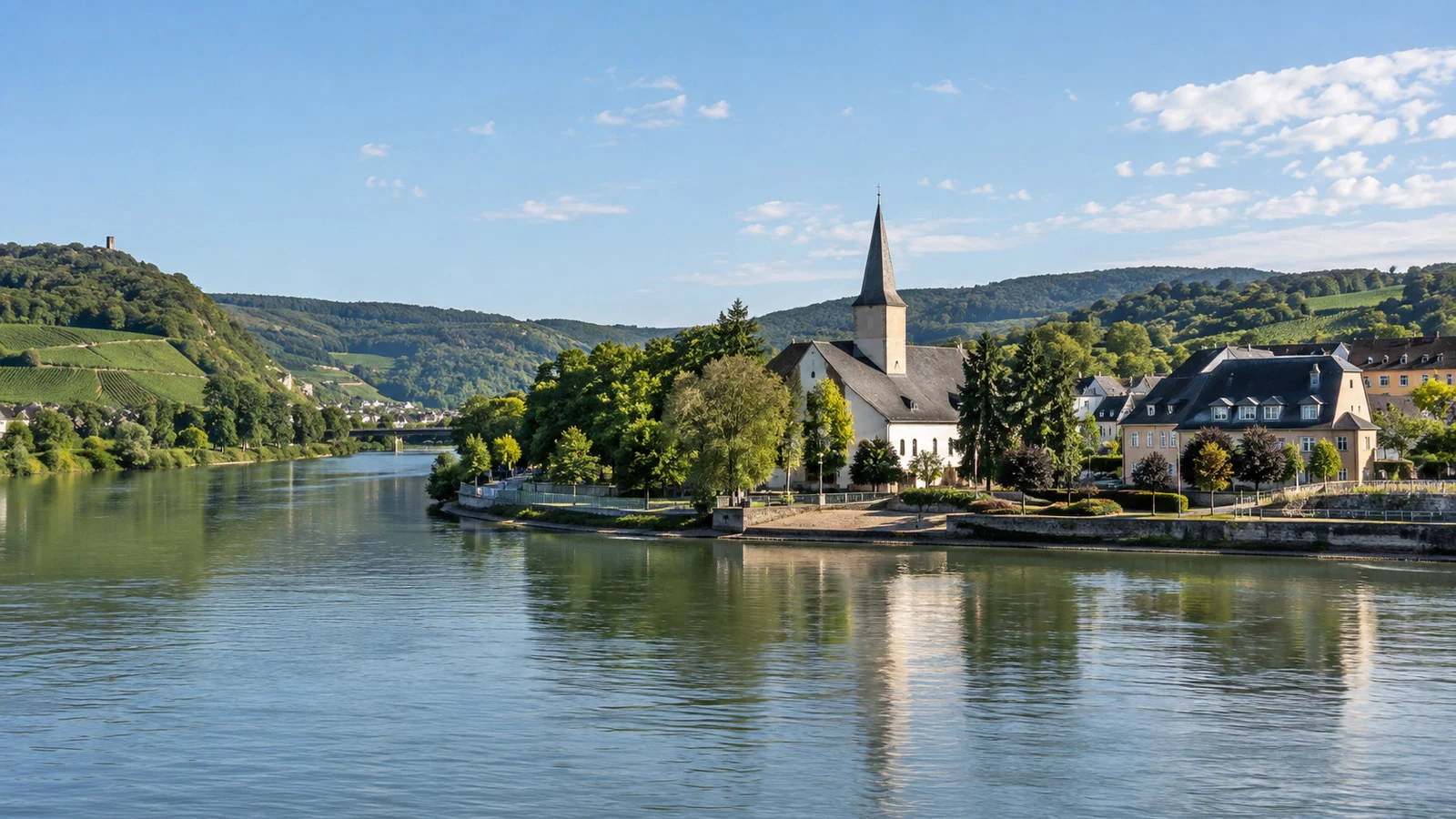
Remich itself faces Germany, not France, across the Moselle. The celebrated three-country area lies farther south near Schengen in Luxembourg, Perl in Germany, and Apach in France.
Schengen is roughly 6.2 miles south of Remich by road, depending on route. It is a separate town and separate public landing, not another name for the Remich quay.
The Schengen Agreement was signed on the passenger ship Princesse Marie-Astrid on June 14, 1985. The agreement began the gradual removal of checks at participating countries’ internal borders and gave a small wine village an enormous place in European vocabulary.
A completely redesigned Schengen Museum opened on June 14, 2025 for the agreement’s fortieth anniversary. The official museum announcement lists daily hours of 10 a.m. to 6 p.m., but visitors should recheck current access, admission, and the historic ship before traveling.
Some local boat trips from Remich advertise the Schengen three-country area, and some cruise programs offer a motorcoach or bicycle excursion. Confirm whether transport returns to Remich or meets the cruise ship elsewhere because ships can sail while guests tour.
Open internal borders do not eliminate identification requirements or temporary controls. Carry the travel document required by your cruise even when a roadway barely pauses to acknowledge that it crossed a country.
Accessibility at Remich River Cruise Port
The promenade is relatively level, but the ship-to-shore transition is the key unknown. A fixed quay, changing water level, gangway design, rafting, and crew procedure can determine whether a wheelchair or walker can disembark safely.
Ask the cruise line about Remich specifically rather than accepting a general statement that the ship is accessible. Our river-cruise accessibility guide explains why vessel, landing, transfer, and attraction access must be checked separately.
The official quay listing provides length, depth, utilities, and location but does not promise a step-free passenger route. That missing detail matters, so travelers should request the gangway plan after the day’s position is confirmed.
Remich’s waterfront offers the easiest local outing for limited mobility, while old-town slopes and some wine cellars require more planning. For Luxembourg City, ask whether the motorcoach has steps or a lift and whether the tour uses valley streets, steep grades, or extensive cobbles.
Public transport planners provide current stop and service information, but vehicle access can vary. A traveler needing a guaranteed ramp, wheelchair space, or door-to-door boarding should arrange it rather than infer it from Luxembourg’s free-fare policy.
Moselle Locks, Water Levels, and Schedule Risk
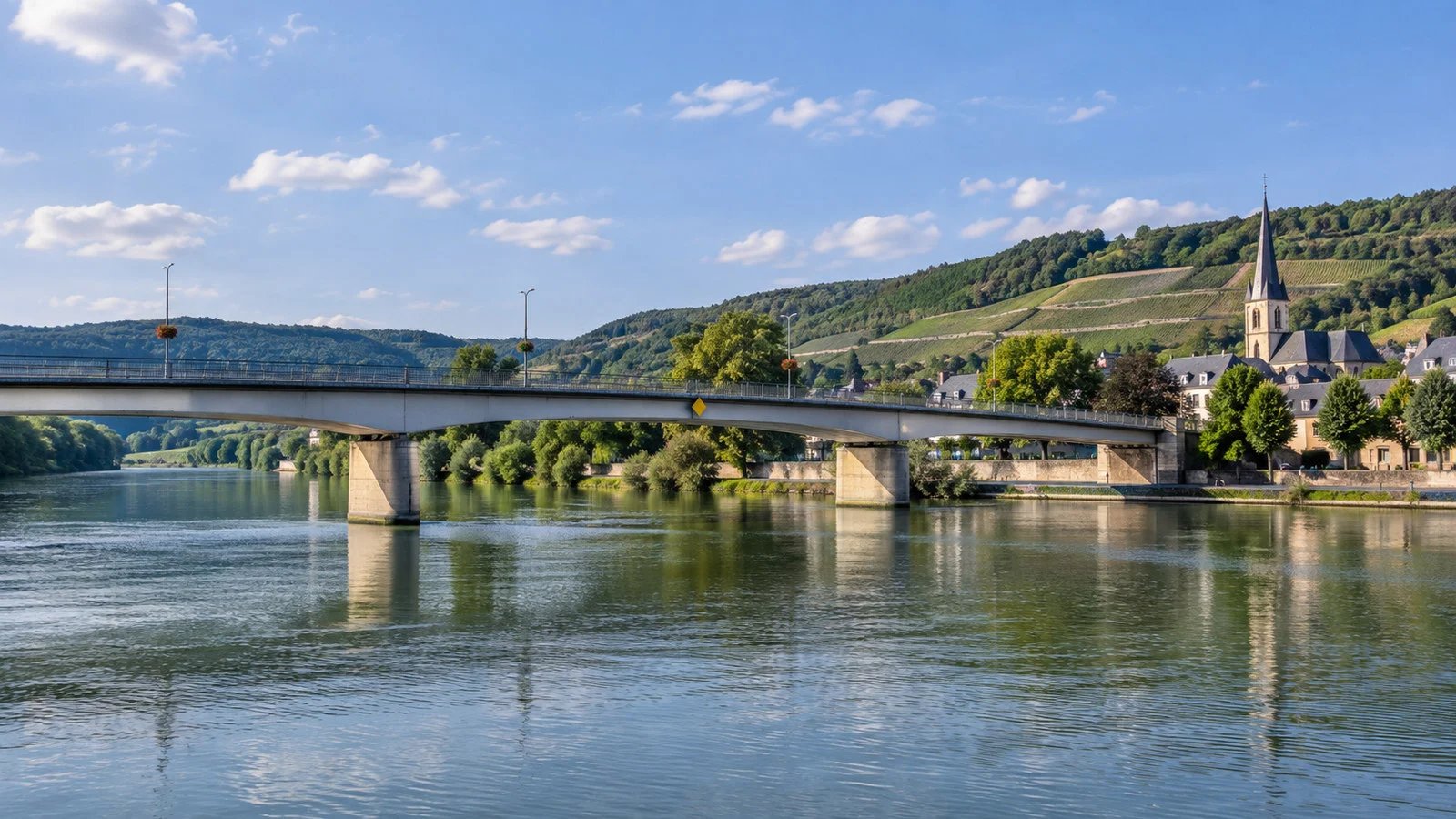
The Moselle is a lock-controlled commercial waterway. Regulation reduces some water-level swings within individual reaches, but it does not make the system immune to high water, drought, maintenance, technical faults, congestion, or navigation restrictions.
Ships near Remich coordinate with locks including Stadtbredimus and facilities farther along the international Moselle. Even priority lock rights do not guarantee passage at one exact time, according to Luxembourg’s navigation rules.
High water is the clearest local concern because quay access and navigation thresholds can be affected. Luxembourg’s navigation service publishes forecasts for the official Stadtbredimus gauge and shifts to national flood bulletins after the highest navigable-water threshold is exceeded.
Low water can affect draft or operations elsewhere on a longer Moselle and Rhine itinerary even if the Remich reach looks calm. A ship swap, motorcoach segment, altered embarkation, or changed port can result from conditions well beyond the visible promenade.
Fog, wind, and commercial traffic can also delay sailing. Trust the captain’s operational update over a generic weather app because safe navigation involves more than whether it might rain on your café table.
Embarkation, Airport, and Rail Connections
Luxembourg Airport and Luxembourg Central Station are the main gateways for a Remich embarkation. Neither is beside the river, so a cruise-arranged transfer or prebooked vehicle is often the smoothest choice with luggage.
Allow roughly 25 to 40 minutes by road from the airport and 30 to 45 minutes from central Luxembourg in ordinary traffic, editorial estimates that need a larger buffer during busy periods. Confirm the actual meeting point because some packages begin at a hotel, station, or airport desk rather than the ship.
Bus 412 can connect the central station area with Remich without a fare. It remains a public service rather than a luggage transfer, so check stop location, operating day, construction diversions, and the distance to the assigned quay.
Arrive well before check-in closes and keep the cruise emergency number available. When a ship is replaced by Grevenmacher, reaching the Remich waterfront on time is an impressive but unhelpful achievement.
Weather, Food, and Practical Safety
Spring and fall can be cool, damp, and breezy along the exposed Moselle, while summer can be warm on the promenade and hotter on inland city walks. Bring a light waterproof layer, sun protection, water, and shoes with dependable grip.
Remich generally needs normal small-town precautions. Watch bicycles on the waterfront, secure valuables in crowds, obey flood barriers, and keep children away from unprotected quay edges and moving gangways.
Emergency number 112 works in Luxembourg and appears on the official Remich quay listing. Carry the ship’s contact details as well because a missed all-aboard time is urgent without necessarily being an emergency-services problem.
Cards are common, and the euro works on both the Luxembourg and German banks. A little cash is useful for small purchases, while any international mobile-roaming question should be settled before the phone decides that looking across a border counts as an adventure.
A Sensible Half-Day Plan
For a local morning, walk the esplanade, explore the church and old-center streets, then choose a reserved cellar experience or relaxed lunch. This keeps the day flexible and never puts you far from the ship.
For Luxembourg City, use the cruise motorcoach or depart early by current public bus, focus on the upper historic center, and return with at least one backup connection. Do not add Schengen to the same independent half-day unless the schedule genuinely supports it.
For Schengen, treat the museum and historic ship as a focused separate outing. Verify opening, transport, and whether your cruise vessel remains in Remich before leaving.
Final Verdict
Remich works beautifully as both a compact Moselle port and Luxembourg’s river-cruise gateway. The official quay is real, town is close, public transport is unusually generous, and three countries shape the landscape within a very small radius.
Its limitations are equally clear: the quay is shared, locks control timing, Luxembourg City requires a transfer, and Grevenmacher can substitute when mooring space dictates. Confirm those moving parts, and Remich becomes one of the Moselle’s most interesting small ports rather than merely the place a brochure labels “Luxembourg.”
The practical checks I would make before Remich
Confirm the Remich quay position, rafting order, baggage plan, and final gangway because a Moselle itinerary may use another landing or substitute Grevenmacher. The public quay is central, but an outside vessel adds thresholds and steps before the promenade.
Remich and one wine experience make the forgiving local day, while Luxembourg City needs a round-trip bus or ship transfer. Public transportation is fare-free within Luxembourg, but time is not, so leave the capital at least 90 minutes before all aboard and check the live connection rather than the last theoretical bus.
Check Luxembourg and Schengen entry rules, tasting prices and age requirements, and official navigation notices. Lock delays, fog, water level, gangways, bus boarding, vineyard grades, and alcohol all affect a plan that looks simple on a map.
Research note
This guide was checked on September 12, 2026 against Luxembourg’s official Remich quay and navigation information, current cruise-operator itineraries, national public-transport schedules and fare rules, and official regional tourism sources. Walking times, transfer times, and visit durations are clearly labeled CruisePorts.co editorial estimates; no authoritative port-specific cancellation series supports a numerical missed-call rate.
No firsthand visit is claimed. CruisePorts.co applies the sourcing and correction standards in our Editorial Policy, but berth assignments, gangway access, locks, transport schedules, and attraction hours can change after publication.
How this guide was researched: This guide was independently checked on September 12, 2026, against official source 1, official source 2, official source 3, official source 4, the official sites linked in the article, and current cruise-line instructions. Reconfirm the mooring, rafting or ship movement, transportation, protected-site rules, entry documents, weather, accessibility, costs, and reboarding point because live operations can change.