Edfu River Cruise Port: Temple of Horus Without the Guesswork
Edfu is a one-headliner Nile stop, but what a headliner it is. The Temple of Horus rises almost complete, with roofed halls, fierce falcons and densely carved walls.
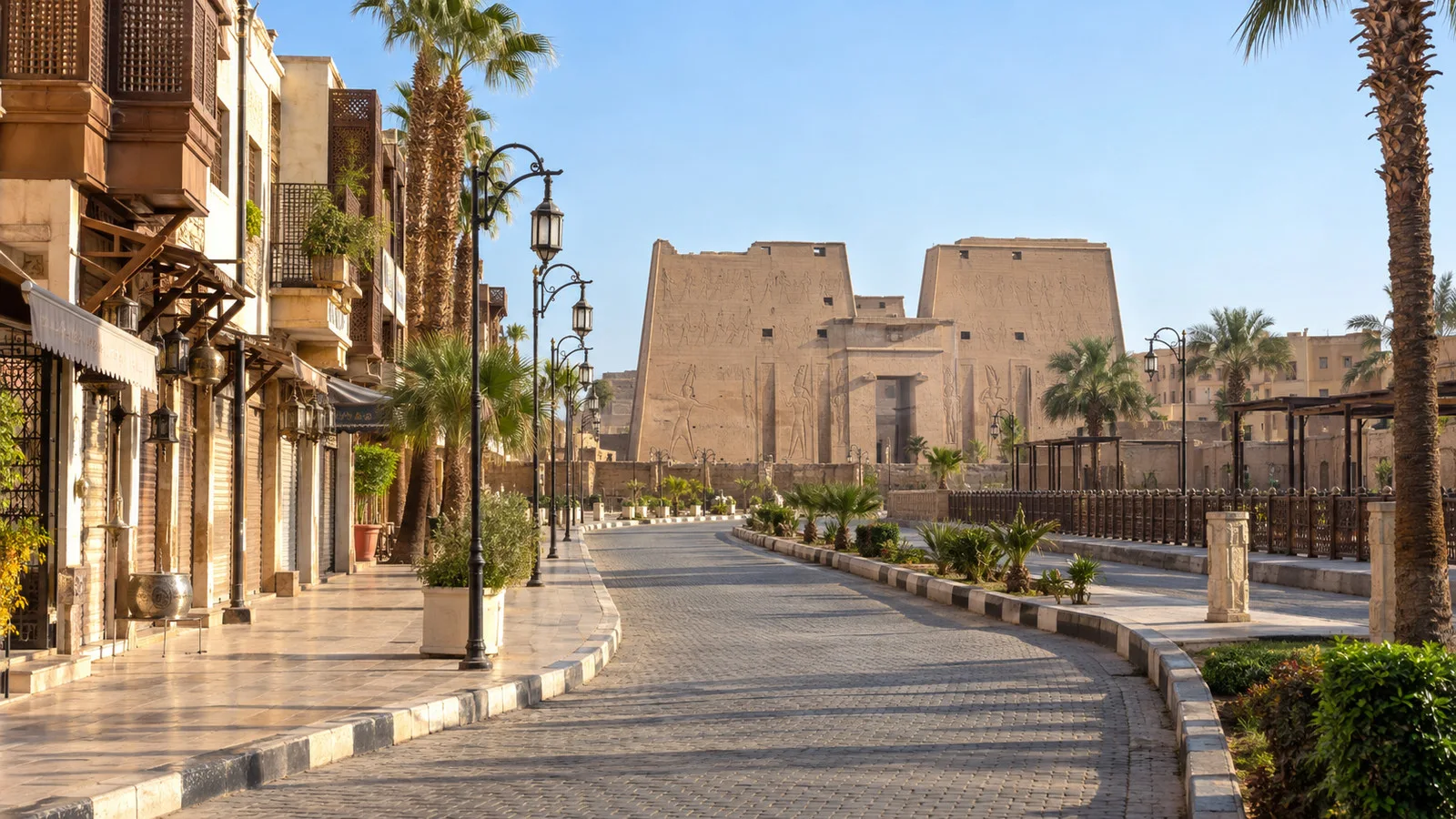
The temple is not beside the gangway. Ships use river moorings on Edfu’s west bank, then passengers travel about 1 to 1.5 miles inland by motorcoach, minibus, horse-drawn carriage or an independently arranged vehicle.
My quick take
Take the ship’s guided visit on a first Edfu call unless you have a generous schedule and a solid independent plan. Dock assignments move, local transportation is informal and most itineraries allow just enough time for the temple before sailing.
Ask in advance whether your transfer uses a minibus or horse-drawn carriage. Travelers who prefer not to use an animal-drawn vehicle can request a motorized alternative, but availability should be confirmed before the ship reaches Edfu.
Edfu river cruise port quick facts
- Country: Egypt.
- River: Nile, west bank.
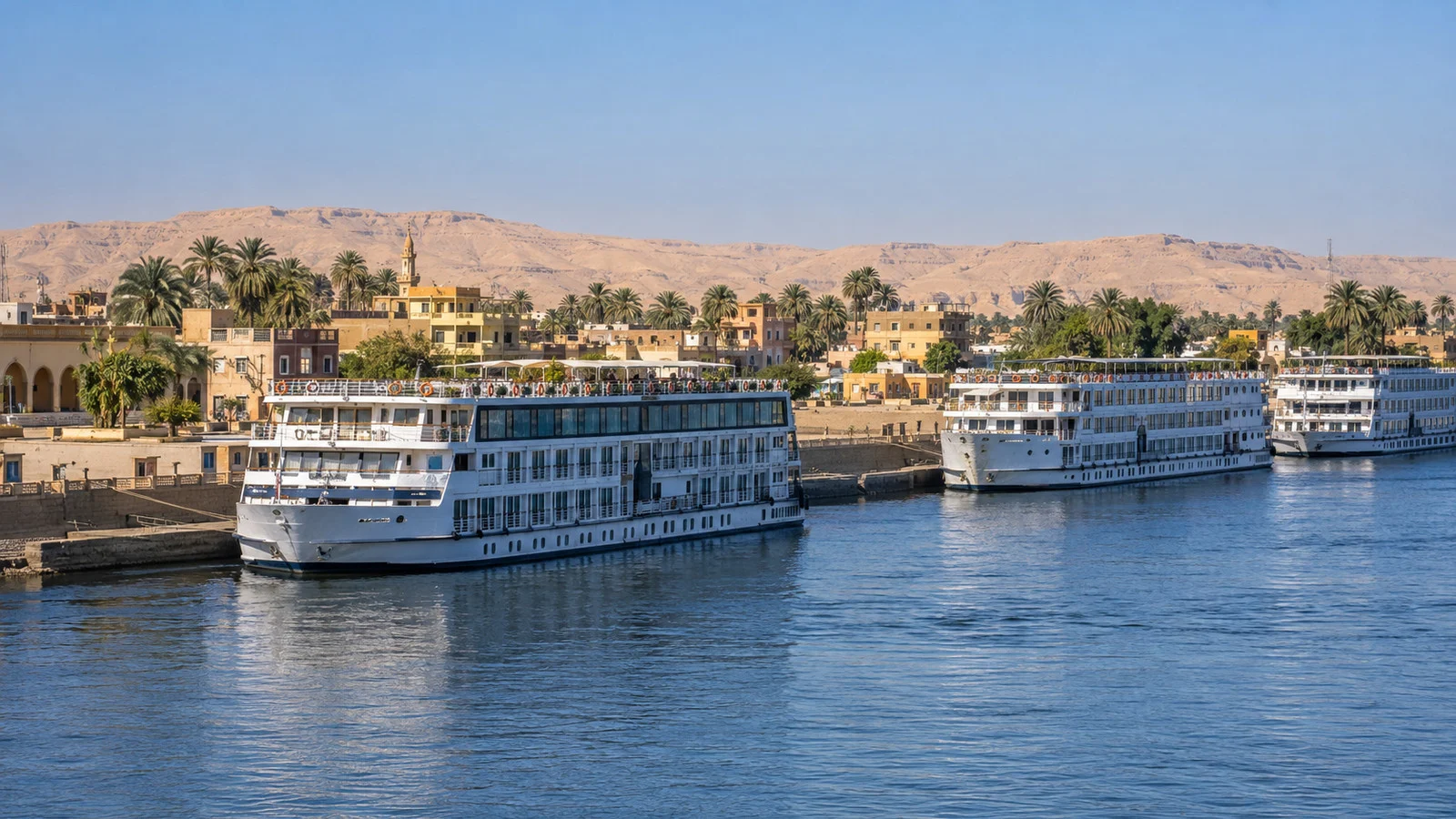
- Berth: One of several river moorings; exact gangway position and rafting arrangement vary by ship and day.
- Into Town: Temple of Horus is about 1 to 1.5 miles inland; most ships provide a 10- to 15-minute group transfer.
- Currency and Language: Egyptian pound (EGP). Arabic is official; English is common with guides and temple staff but less reliable in local transport.
- Time Zone: Eastern European Time, UTC+2, and UTC+3 during Egypt’s daylight saving period.
- Call reliability: Technical issues, berth congestion, lock schedules and itinerary changes can bypass the stop; no verified missed-call percentage is published.
- Tenders: None. Boats dock alongside, often rafted to another vessel.
- Top priority: Temple of Horus with an Egyptologist or a well-researched self-guided plan.
- Best local taste: Ta’ameya, dates or karkadeh hibiscus tea when time and food-safety comfort allow.
Where Nile cruise ships dock in Edfu
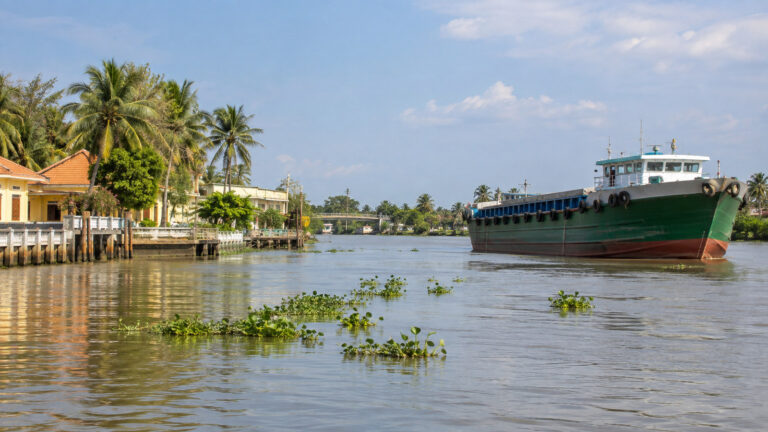
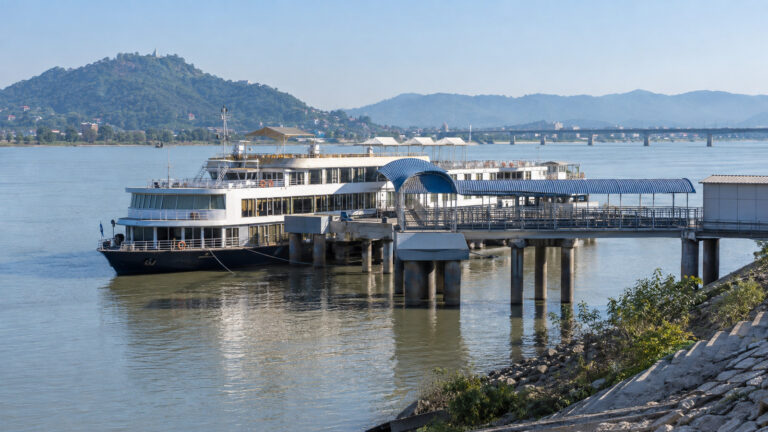
Edfu has river moorings rather than one universal passenger terminal. Your vessel may tie directly to the bank or raft beside other Nile boats, making the route ashore longer and less level than the itinerary map suggests.
The Temple of Horus stands west of the current Nile channel in the middle of the modern city. Yale’s Tell Edfu Project places the ancient settlement about 1 mile west of today’s river, while a particular cruise berth can make the road trip longer.
The 1-to-1.5-mile range is a map-based editorial estimate, not a guaranteed gangway measurement. Check the ship’s program for the meeting point and return time.
For the larger route, start with my guide to river cruise ports. Edfu is usually a compact visit between the more complex stays covered in my Aswan cruise port guide.
How to reach the Temple of Horus
Ship motorcoach or minibus
A motorized group transfer is easiest for most passengers and usually takes 10 to 15 minutes. If the ship arrives late or changes moorings, its excursion team can adjust.
Horse-drawn carriage
Traditional carriages, commonly called calèches, remain a standard Edfu transfer for some cruise programs. The ride is short, lively and deeply embedded in local livelihoods, but animal welfare conditions can vary from one horse and operator to another.
Brooke Hospital for Animals Egypt reports working with the tourism ministry, Aswan Governorate, Edfu City Council and the carriage-horse syndicate on local welfare improvements. That is encouraging, but it does not make every individual animal or ride identical.
Decline any horse that appears lame, injured, severely thin or distressed and ask for another transfer. To avoid a carriage entirely, request a motorized option before arrival.
Independent taxi, tuk-tuk or walking
Independent vehicles may be available near the moorings, but there is no standardized taxi desk. Agree on the round-trip price, currency and pickup point before moving.
Walking can take roughly 25 to 40 minutes each way, depending on berth, route and pace. That editorial estimate assumes a confident walker, and Edfu’s traffic, limited shade, heat and short cruise schedule make the walk a poor default choice.
Temple of Horus tickets and hours in 2026
As of August 20, 2026, Egypt’s Ministry of Tourism and Antiquities lists foreign admission at EGP 550 for adults and EGP 275 for eligible students. Egyptian rates are EGP 40 for adults and EGP 20 for students.
The ministry’s current schedule shows a 5 p.m. closing and opening at 6 or 7 a.m. depending on the listed date. Confirm the exact day when booking because operating hours, holiday arrangements and prices can change.
Independent visitors can use Egypt’s official archaeological-site e-ticket platform. Cruise excursion admission is often bundled, so check the inclusions before buying a second ticket that merely becomes an expensive bookmark.
Why Edfu Temple is so complete
Construction began in 237 BC under Ptolemy III and finished in 57 BC under Ptolemy XII, a 180-year project. It was built for Horus of Behdet, the falcon god closely associated here with kingship and the defeat of Seth.
Later settlement debris accumulated around and above the sanctuary, protecting much of its structure and decoration. French archaeologist Auguste Mariette began clearing parts of the site in 1860, which is why today’s visitor can follow an unusually complete temple sequence.
The temple route, room by room
Pylon and falcon statues
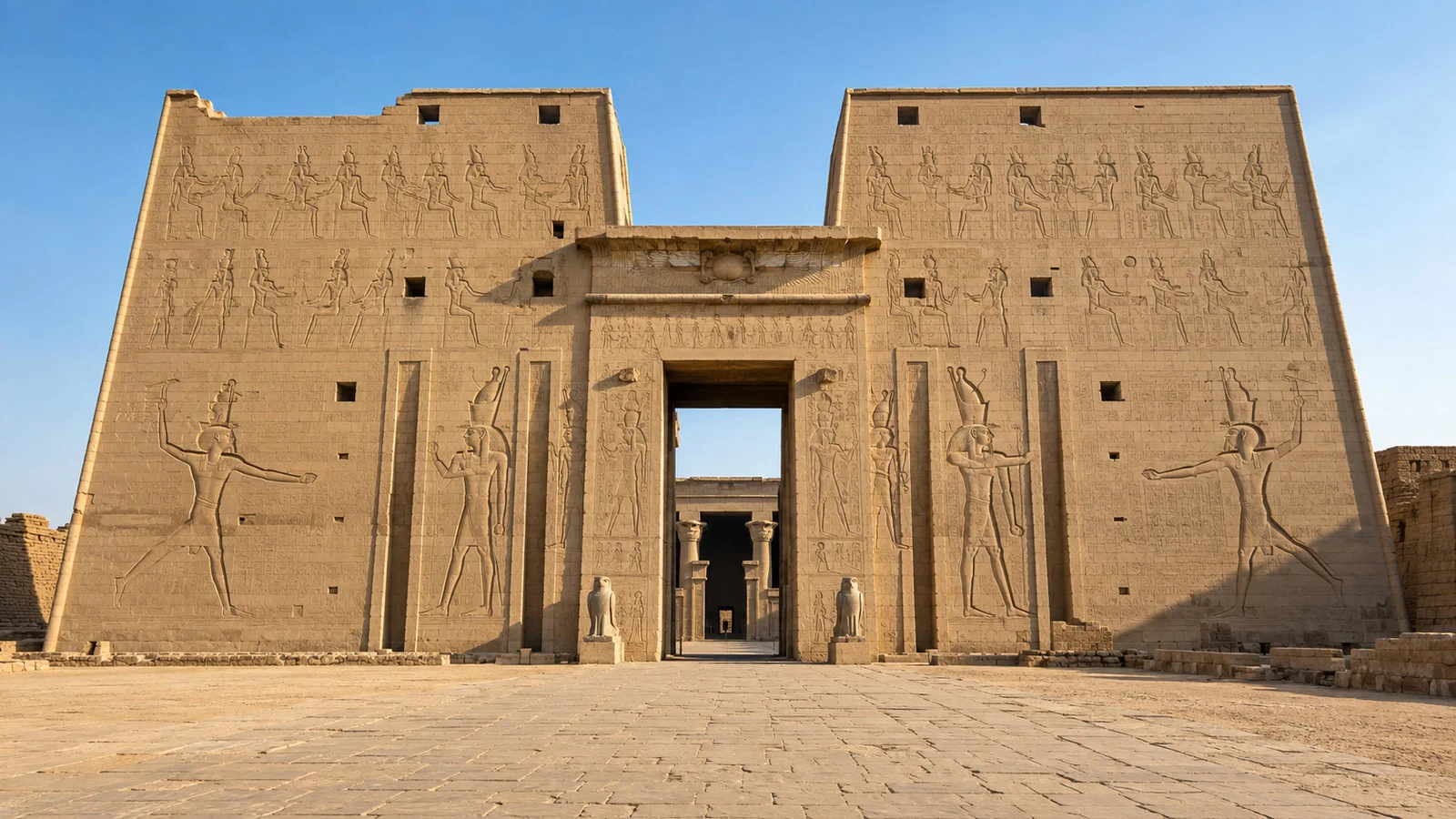
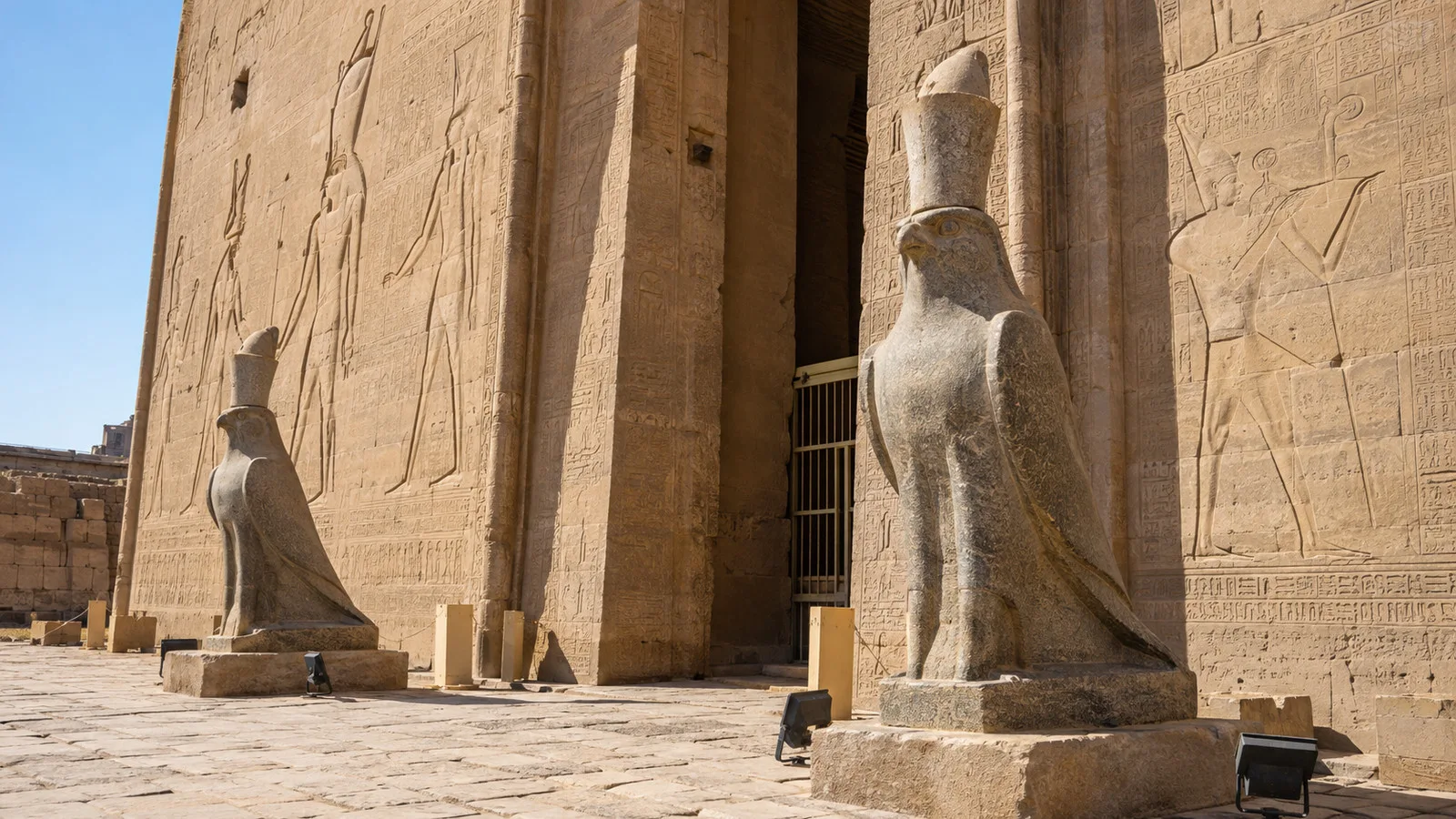
The massive entrance pylon shows Ptolemy XII striking enemies before the gods, a familiar royal image magnified to billboard scale. Granite falcons representing Horus guard the approach, and one survives especially complete with the double crown.
Open court and hypostyle halls
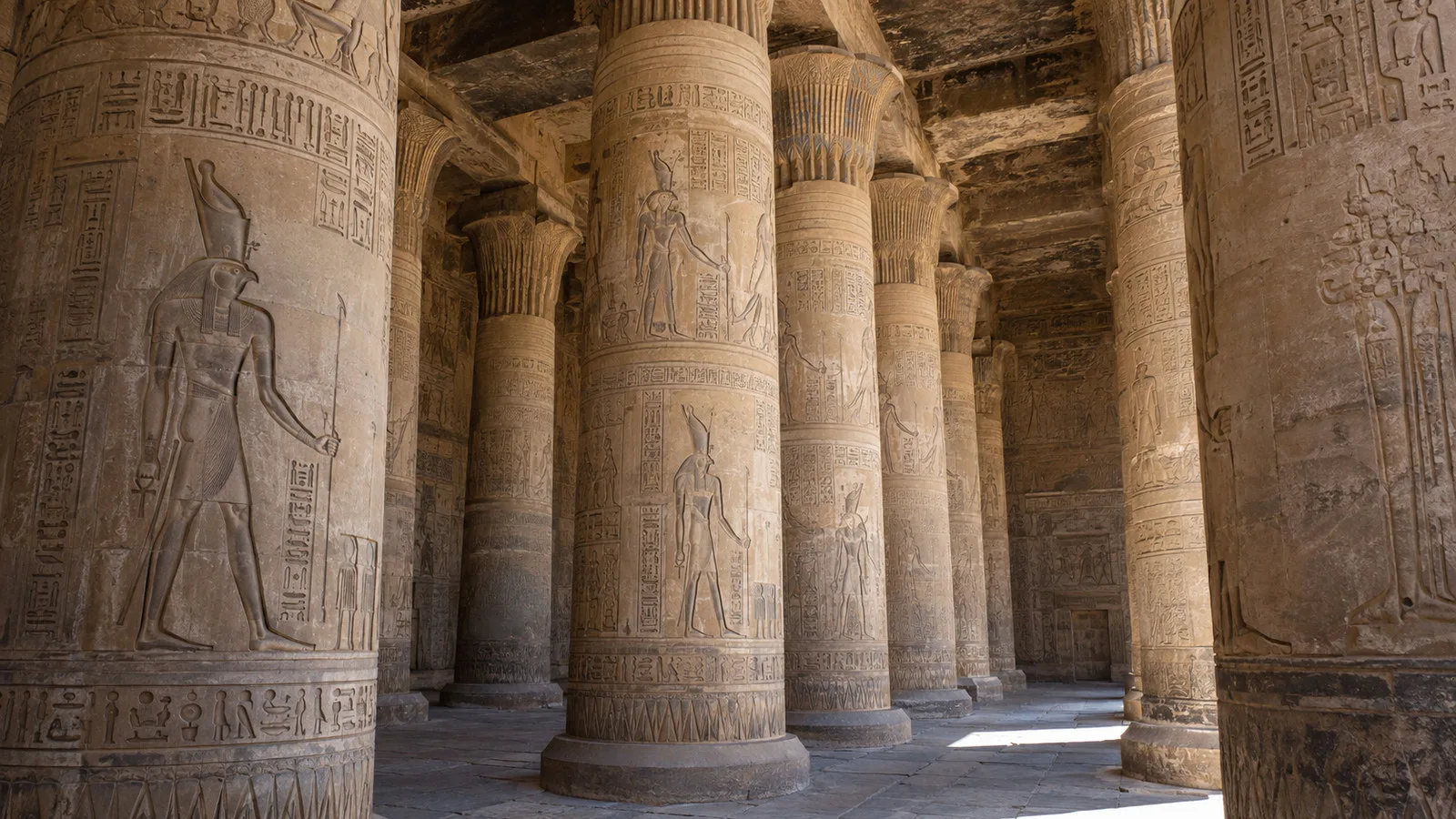
The peristyle court is ringed by columns with varied floral capitals and is one of the brightest spaces in the complex. Beyond it, the first and second hypostyle halls become cooler, darker and more intimate.
Look for ritual scenes, foundation ceremonies and images connected to the sacred bark of Horus and Hathor. The narrowing rooms were designed to control access as worship moved toward the sanctuary, not to create a modern one-way visitor line.
Sanctuary, naos and sacred bark
At the heart of the temple stands a dark granite naos, older than much of the surrounding Ptolemaic building. It once protected the cult image, while the nearby wooden sacred bark on display is a modern reconstruction.
This is where a guide earns the microphone. Without context it can look like one more dim stone room, but the architecture shows how priests approached the god through increasingly restricted spaces.
Horus, Seth and the outer reliefs
Reliefs around the temple recount ritual versions of Horus battling Seth, sometimes represented as a hippopotamus. Other inscriptions preserve festival calendars, offerings and the Beautiful Meeting, when Hathor of Dendera ceremonially visited Horus.
Do not read every scene as a literal illustrated history book. These walls combine mythology, ritual performance, royal ideology and sacred geography, which is precisely why an Egyptologist adds so much value.
How much time do you need?
Most cruise groups can see the main sequence in 75 to 90 minutes inside the site. Allow two hours if you want to study reliefs, circle the exterior and pause without constantly becoming separated from your guide.
Those are editorial planning estimates and exclude transfer, security, ticketing, restrooms and the market corridor. A complete ship excursion often uses two and a half to three hours from gangway to gangway.
A realistic short-call plan
Follow the ship transfer, enter promptly and spend most of your time on the pylon, open court, hypostyle halls and sanctuary. Use any final minutes for the outer reliefs rather than shopping first and hoping Horus waits.
Keep your ticket and guide in sight because several ships may arrive together. Note the return vehicle or carriage number before leaving it.
Heat, crowds and accessibility
Early calls are a gift in Edfu. The open court and approach have limited shade, while enclosed halls can become crowded when multiple cruise groups reach the temple at once.
Expect uneven ancient paving, thresholds, busy passages and possible steps, plus a gangway or rafted-ship crossing before the land transfer. Ask the cruise line about an adapted vehicle, step-free route and wheelchair assistance rather than assuming the temple’s completeness means modern accessibility.
My guide to accessible river cruising explains the chain of small barriers that can shape a shore day. At Edfu, the transfer vehicle and crowd management may matter as much as the site surface.
River conditions and missed calls
Nile flows on this route are regulated, but technical trouble, berth congestion, local navigation restrictions, lock schedules and wider itinerary changes can still shorten or remove Edfu.
No Egyptian authority or cruise line publishes an audited Edfu missed-call percentage. Your cruise line remains the authority for the actual call.
Decide the transfer before the ship reaches Edfu
Edfu ships berth at variable west-bank moorings and may raft, while the Temple of Horus is inland rather than beside the gangway. Confirm whether your program uses a minibus, motorcoach, tuk-tuk, or horse-drawn carriage and record the exact return vehicle before entering the site.
If you do not want an animal-drawn ride, request a motorized alternative in writing before arrival because the pier is the worst place to negotiate an accessible substitute. Decline an animal that appears lame, injured, severely thin, or distressed, and ask the cruise manager to change the arrangement.
The Ministry of Tourism and Antiquities controls the protected temple, tickets, hours, and any closure, and the official schedule can vary by date. Allow time for security, restrooms, the market corridor, and the walk through the complex instead of treating the advertised 10-minute ride as the full excursion.
Egyptian entry rules depend on nationality even when the cruise handles local clearance. Keep water, a hat, medicine, and small Egyptian-pound notes with you, then return early because berth congestion or a lock schedule can move the ship’s departure.
Quick answers
Where do Nile cruise boats dock in Edfu?
They use west-bank river moorings, with the exact position and rafting arrangement assigned operationally.
Is Edfu Temple beside the cruise dock?
No, the temple is roughly 1 to 1.5 miles inland depending on the ship’s berth and route.
How do cruise passengers reach Edfu Temple?
Ships commonly arrange a motorcoach, minibus or horse-drawn carriage transfer that takes about 10 to 15 minutes.
Can I avoid the horse-drawn carriage?
Often yes, but request and confirm a motorized alternative with the cruise operator before arrival.
How much is Edfu Temple in 2026?
The official August 2026 foreign rate is EGP 550 for adults and EGP 275 for eligible students.
How long should I spend inside Edfu Temple?
Allow 75 to 90 minutes for highlights or about two hours for a slower, more detailed visit.
Is Edfu Temple the same as Kom Ombo?
No, Edfu is dedicated principally to Horus, while Kom Ombo is a separate dual temple farther south.
How this guide was researched: This guide was checked against Egypt’s Ministry of Tourism and Antiquities, its official ticket platform, Yale Egyptology, Brooke Egypt, immigration guidance, and current operator information. Operational and time-sensitive details were reviewed September 12, 2026; confirm the live berth, daily program, entry rules, accessibility, and cancellation terms before travel.
See our Editorial Policy.