Frankfurt River Cruise Port: Docks, Old Town and Day Plans
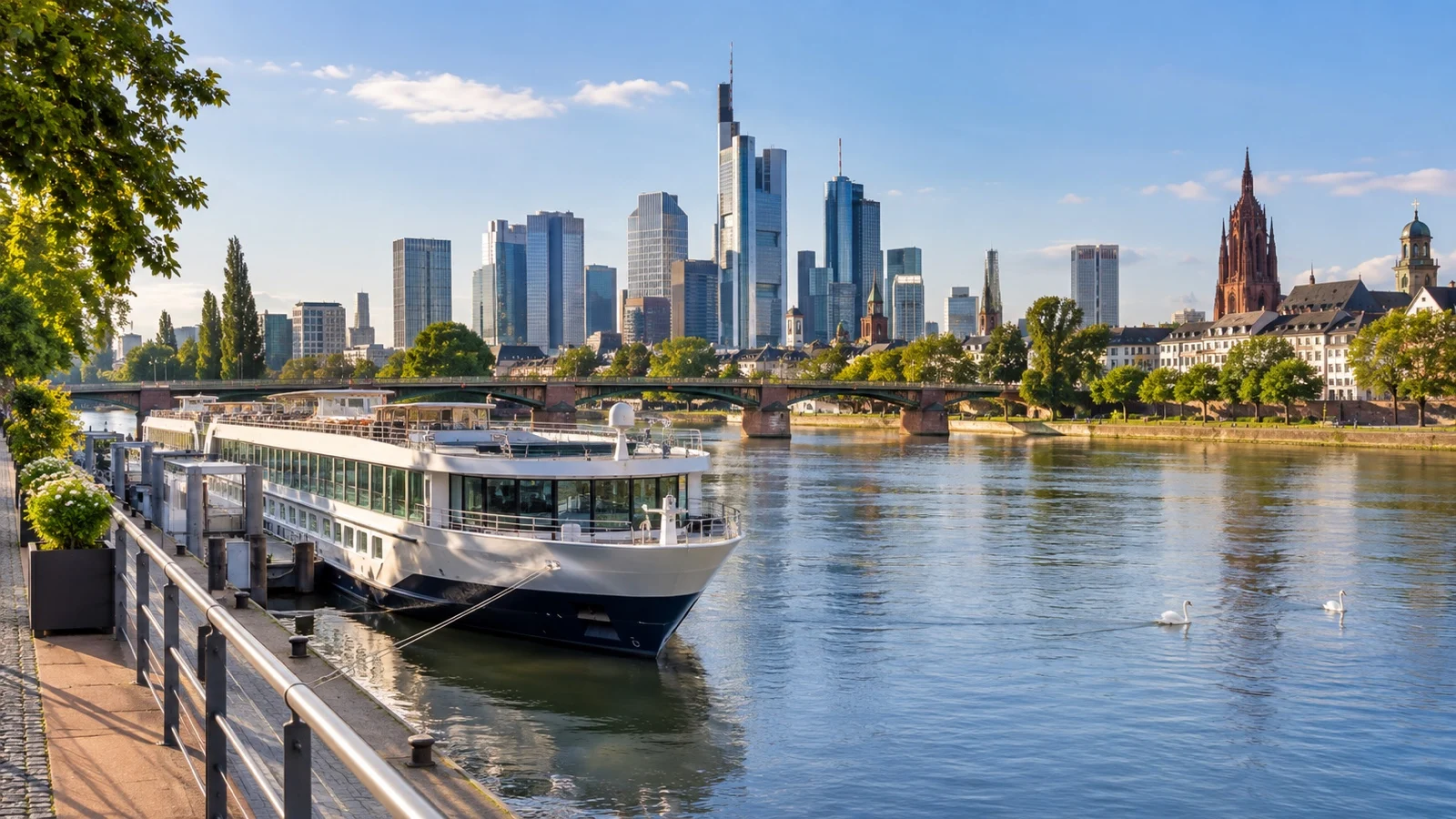
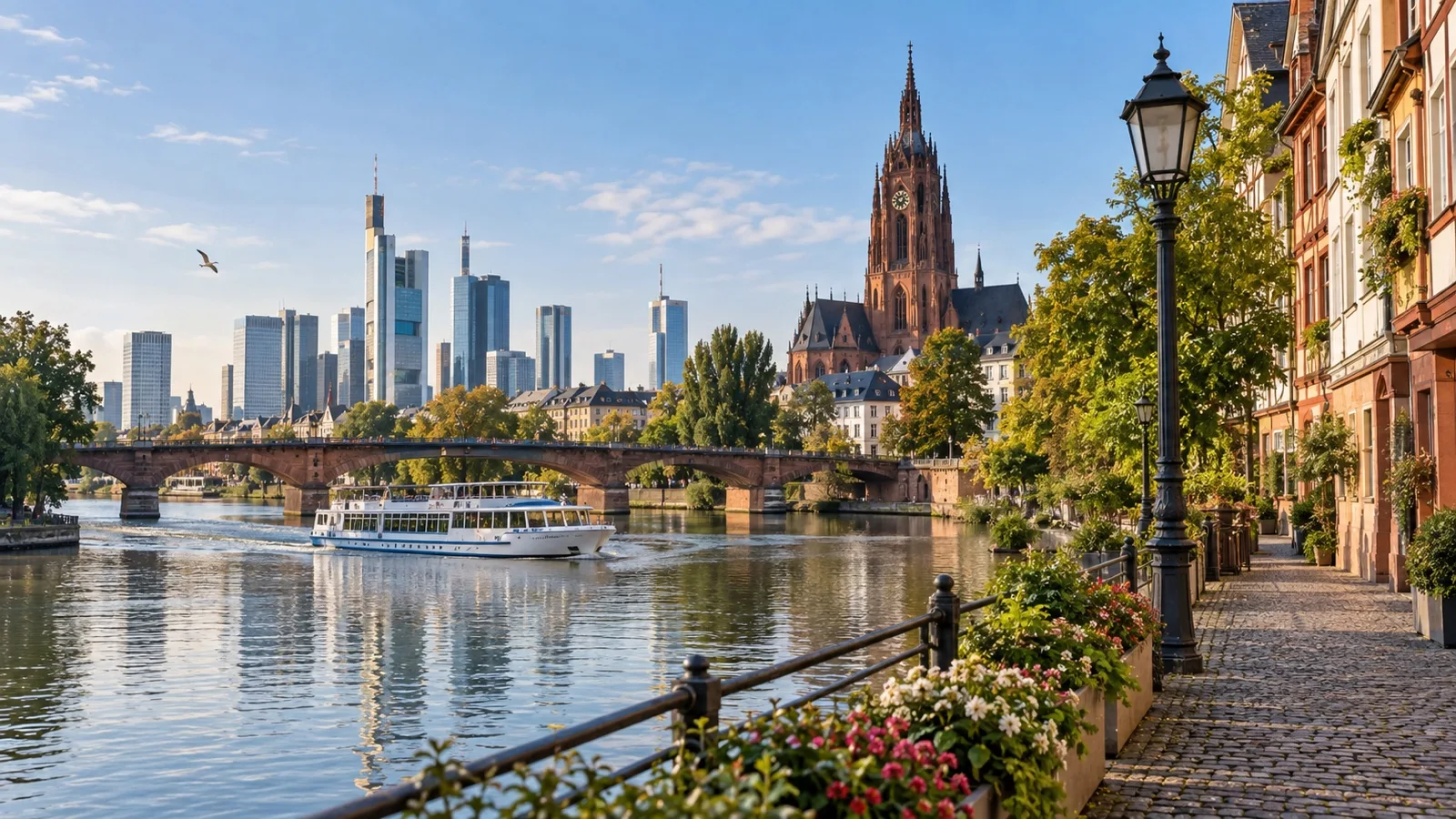
Frankfurt is the river port where medieval coronation history and glass skyscrapers share the same camera frame. Your ship docks on the Main, not the Rhine, with the Old Town, museum embankment, apple wine, and a highly efficient airport all close enough to make one day feel surprisingly generous.
The main planning trick is learning your exact berth. Frankfurt has six central berths spread along the north bank, so “docked in Frankfurt” can mean a five-minute Old Town stroll or a longer walk through the riverside park.
My quick take
Pair Römerberg and the New Old Town with the cathedral tower or one museum. For more German calls, use our Germany cruise port guide.
Quick Facts
- Into Town: About 5-20 minutes on foot to Römerberg, depending on whether your ship uses Leonhardswerft or the farther Nizzawerft berths.
- Currency and Language: Euro. German is official; English is widely used in this international business city and at major visitor attractions.
- Time Zone: Central European Time, UTC+1; Central European Summer Time, UTC+2, from late March through late October.
Where do river cruise ships dock in Frankfurt?
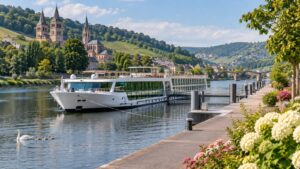
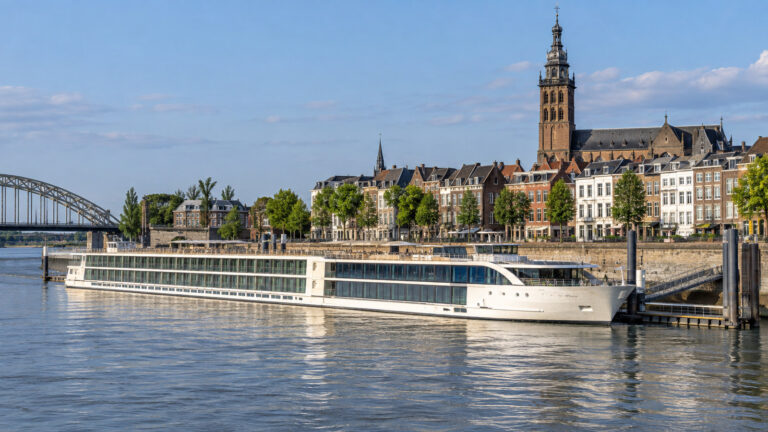
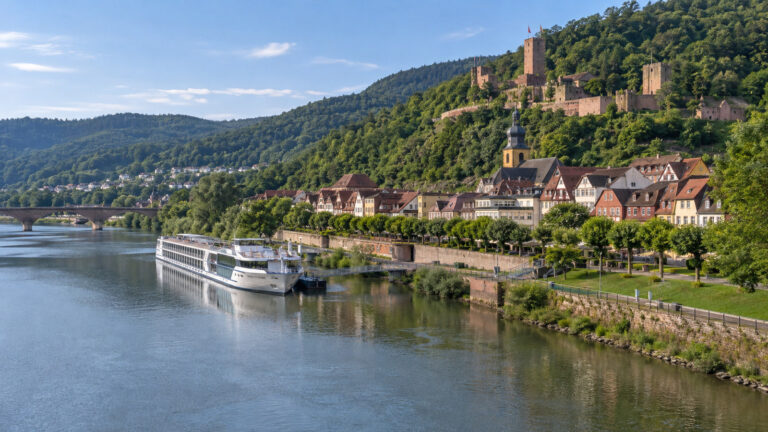
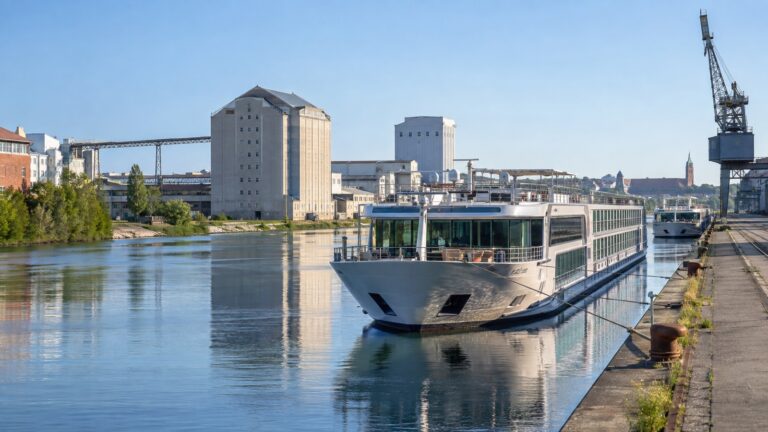
Frankfurt’s official harbor manager, HFM, operates six berths for river-cruise and hotel ships along the Main. The current HFM berth information says they accept vessels up to about 443 feet and provide direct access to central Frankfurt.
The berths use Nizzawerft and Leonhardswerft on the north bank. Leonhardswerft is closest to Römerberg, while Nizzawerft extends west beside the Nizza riverfront.
Your cruise line controls the operational assignment, and HFM does not promise a specific public berth for each sailing. Read the ship’s daily program and photograph the berth or gangway sign before leaving.
Do not confuse your berth with the sightseeing-boat piers around Eiserner Steg. Primus Line and KD use that area for public cruises.
Estimated walking times
Römerberg: Allow about 5 to 20 minutes. Leonhardswerft is generally closer than the western Nizzawerft positions.
Frankfurt Cathedral: Allow about 10 to 25 minutes. Continue east through the New Old Town from Römerberg.
Städel Museum: Allow about 10 to 25 minutes. Cross the Main by Eiserner Steg, Untermainbrücke, or Holbeinsteg, depending on the berth.
Frankfurt Hauptbahnhof: Allow about 20 to 35 minutes. Nizzawerft is closer, but luggage and busy crossings make transit or a taxi more appealing.
These are editorial estimates from the official berth areas and city map, not port-guaranteed times. Your exact gangway, walking speed, events, and temporary riverfront closures can change them.
Getting into central Frankfurt
Walking is easiest for the Old Town. Follow the north-bank promenade toward Eiserner Steg, then turn inland to Römerberg.
For longer hops, Frankfurt’s U-Bahn, S-Bahn, trams, and buses use the RMV fare system. Dom/Römer is the most useful Old Town station, while Willy-Brandt-Platz can suit western berths and Hauptwache serves the Zeil shopping area.
As of 2026, an adult one-way ticket within Frankfurt city is €3.80, while a short-trip ticket is €2.35. The official RMV fare page excludes the airport from the standard city zone, so buy for your actual destination.
Römerberg and the New Old Town
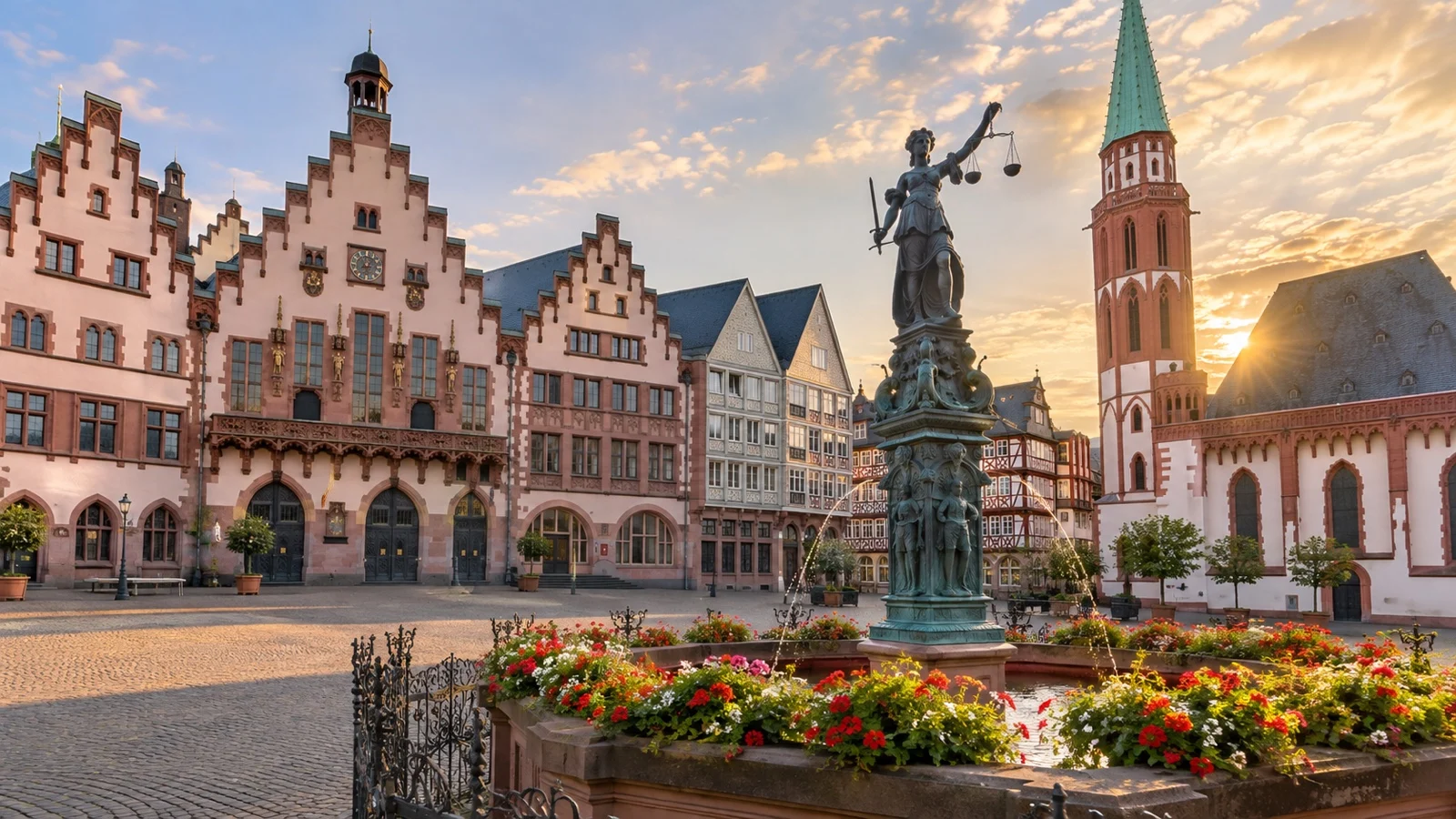
Römerberg is Frankfurt’s historic stage, anchored by the stepped-gable Römer city hall and Fountain of Justice. Today’s streets combine surviving buildings, careful postwar reconstructions, and modern layers.
Walk behind the square into the New Old Town, rebuilt over the former Technical City Hall site between Römer and the cathedral. The compact lanes are free to explore and make Frankfurt feel far more intimate than its airport departure board suggests.
Nearby St. Paul’s Church is central to German democratic history because the first freely elected national parliament met there in 1848. Civic events can limit entry.
Frankfurt Cathedral and its 328-step view
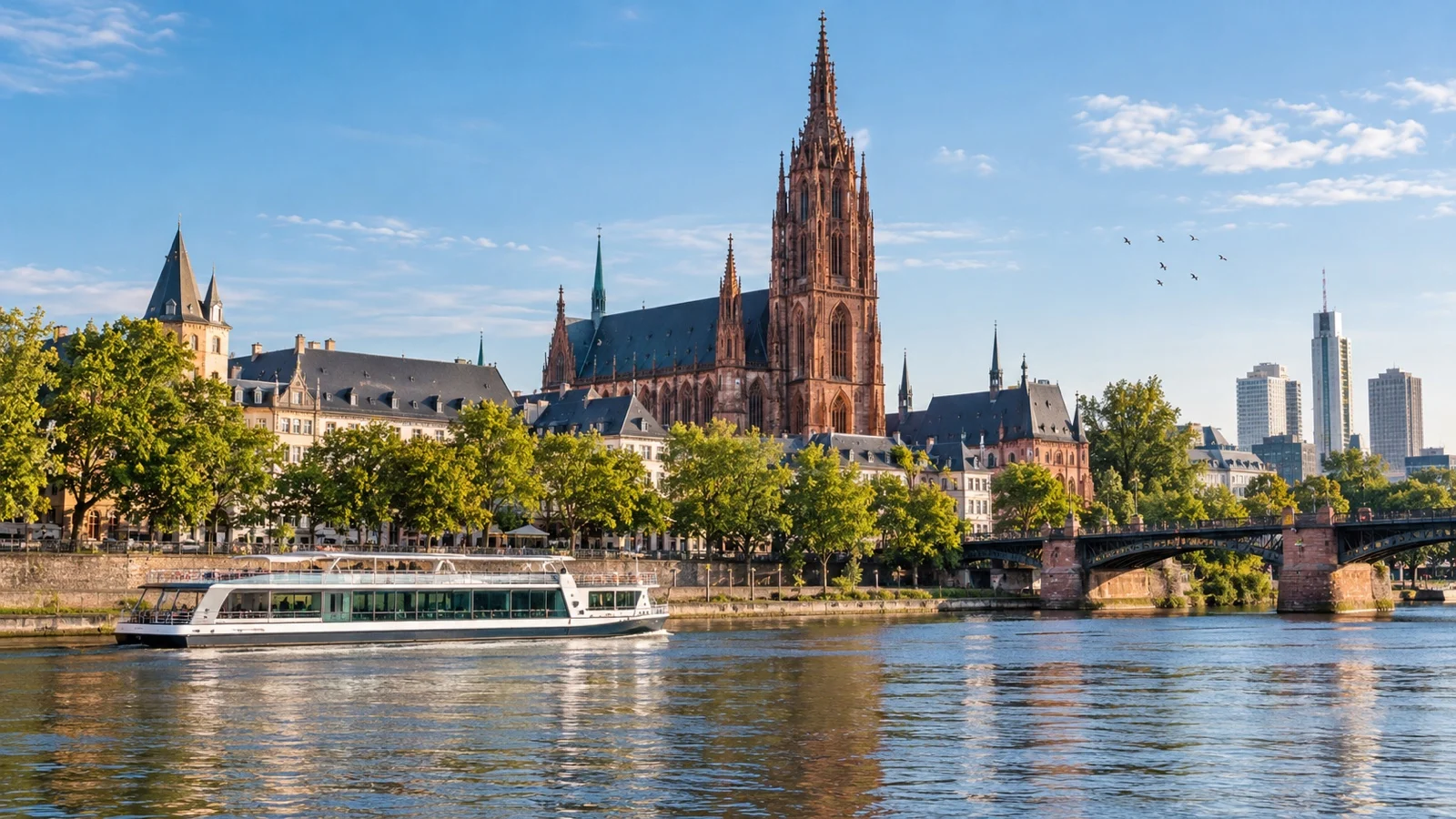
St. Bartholomew’s is called a cathedral, although Frankfurt was never a bishop’s seat. Kings were elected here from 1356, and ten Holy Roman emperors were crowned here between 1562 and 1792.
The church itself is active and may restrict sightseeing for services. The tower is a separate commitment: 328 steps climb to a viewpoint about 217 feet above the city, with no elevator substitute for heroic optimism.
From April through October, the tower normally opens Monday noon to 6 p.m., Tuesday through Saturday 10 a.m. to 6 p.m., and Sunday 11 a.m. to 6 p.m. Winter hours are shorter, and the official cathedral museum and tower page says the last ascent is 30 minutes before closing.
Städel Museum: the strongest art choice
The Städel is the museum embankment’s all-around choice. Its collection spans roughly 700 years, from Old Masters to contemporary art.
The museum is open Tuesday, Wednesday, Friday, Saturday, and Sunday from 10 a.m. to 6 p.m., and Thursday until 9 p.m.; Monday is closed. Regular adult admission is €19, with a €10 Tuesday special from 3 to 6 p.m.
The official visitor page confirms elevator access at the main entrance. Its included rooftop view may close in bad weather or high winds.
Kleinmarkthalle: lunch without a committee meeting
Kleinmarkthalle sits north of the cathedral with more than 60 food traders. It solves the sausage, cheese, or cake debate without a committee meeting.
The market’s official site lists Monday through Friday hours from 8 a.m. to 6 p.m. and Saturday from 8 a.m. to 4 p.m.; it closes Sundays and holidays.
Try a Frankfurter sausage, regional cheese, bread, or seasonal produce. Keep cash because individual stall payment policies vary.
Three realistic Frankfurt port-day plans
Plan 1: Classic Frankfurt in four hours
Walk to Römerberg, loop through the New Old Town, visit the cathedral, and browse Kleinmarkthalle if it is open. Return along the river with time for skyline photos from Eiserner Steg.
Plan 2: Old Town plus serious art
Give Römerberg and the cathedral 90 minutes, then cross the Main for two hours at the Städel. Thursday’s later closing adds breathing room.
Plan 3: Skyline, shopping, and apple wine
Walk through Römerberg to the Zeil, then cross into Sachsenhausen for an apple-wine tavern. Ask for Apfelwein and remember that pleasantly tart is the point.
If this is your first independent port day, our first-time cruise port guide explains return buffers, phone setup, and why an all-aboard time is not a creative suggestion.
Frankfurt Airport and train connections
Frankfurt Airport makes this one of Europe’s easiest river-cruise embarkation cities, but it is not in the central Frankfurt fare zone. RMV lists the 2026 adult single fare between the city and airport as €6.90.
The airport’s Regional Station beneath Terminal 1 is served by S8, S9, and regional trains with direct Frankfurt connections. The official Frankfurt Airport rail guide explains station and terminal access, including elevators.
For embarkation, allow time from the station because riverfront vehicle access is restricted. With luggage, a prearranged taxi or cruise transfer is tidier.
Accessibility at Frankfurt river cruise port
HFM describes the six berths as central and set in a car-free park area, but it does not publish a passenger-facing guarantee for gangway angle, steps, or rafting. Water level and vessel position matter, so ask the cruise line about the exact sailing rather than accepting a generic “accessible” label.
Riverside paths are broad, while the Old Town has cobbles, gradients, and curbs. Eiserner Steg has elevators, but a street-level bridge is the backup if they fail.
Städel provides elevator access, and the New Old Town Tourist Information at Markt 10 opened in July 2026 as a barrier-free location. Cathedral ground level is far easier than the tower, whose 328 steps have no elevator.
Weather, seasonal issues, and Christmas calls
Summer can be warm, while spring and fall reward layers and a rain shell. Winter brings early darkness, cold river wind, and hot apple wine.
Major events can close roads or crowd Mainkai and Römerberg. Check the ship’s notice and city event calendar.
Frankfurt’s Christmas market fills Römerberg and nearby streets, but dates and stall hours change annually. Pair this guide with our Christmas market cruise ports guide and verify the official calendar for your sailing.
Safety and return-to-ship strategy
Frankfurt’s central sights are busy urban areas, so use routine precautions with phones, wallets, and open bags. The Hauptbahnhof district can feel grittier than Römerberg, especially at night, but an untidy street is not a reason to abandon normal situational awareness for panic.
Germany uses 112 for ambulance and fire, and 110 for police. Save the ship’s local contact, note the berth name, and return at least 30 minutes before all-aboard time unless the cruise director requires more.
Frankfurt river cruise port FAQs
Can you walk from the Frankfurt river cruise docks to the Old Town?
Yes. Römerberg is an estimated 5-20 minutes away depending on your assigned berth.
Do Frankfurt river cruises dock near Eiserner Steg?
Some central berths are nearby, but the piers directly at Eiserner Steg primarily serve public sightseeing boats. Confirm the ship’s berth name before leaving.
What should I eat in Frankfurt?
Try Frankfurter sausage, green sauce with eggs or potatoes, Handkäs cheese, and apple wine. Kleinmarkthalle is the easiest one-stop tasting strategy when open.
How early should I return?
Aim for at least 30 minutes before the ship’s stated all-aboard time, and add margin after airport, rail, or cross-city travel. Follow the cruise director’s instruction if it is earlier.
Final take
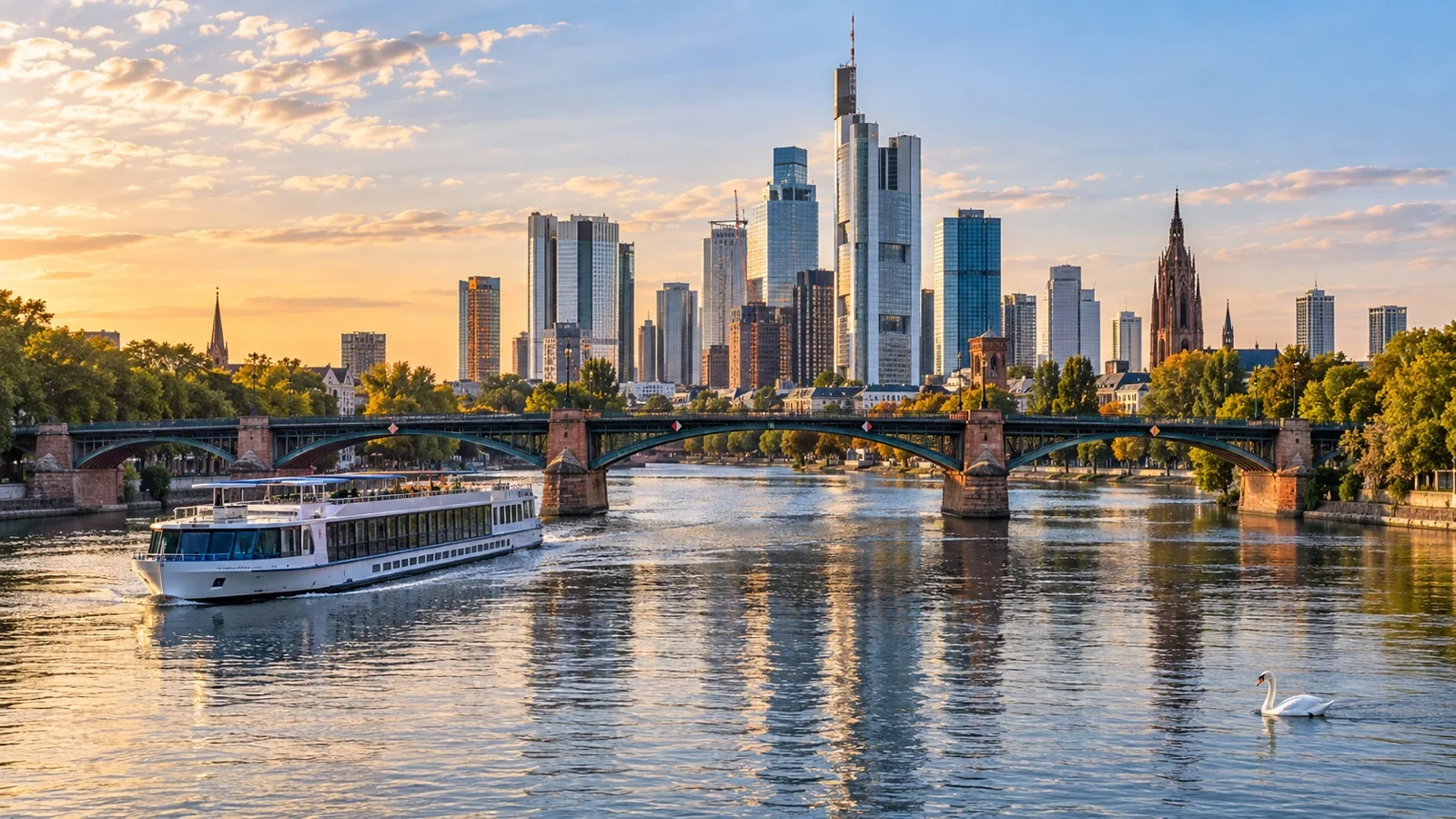
Frankfurt works because the contrast is genuine: imperial election history below a modern skyline, market snacks beside serious art, and river paths that lead straight into the city. Stay central, choose one major add-on, and the day remains full without becoming frantic.
How this guide was researched: Unless a first-hand visit is explicitly identified above, this guide is based on independent research using official harbor, tourism, attraction, transit, airport, and cruise-line sources where available. Logistics and time-sensitive details were reviewed on September 12, 2026, under our Editorial Policy.