Great Lakes Cruise Ports: The St. Lawrence Seaway Guide
Great Lakes cruises are shaped by geography and engineering before a ship ever reaches the first port. Every ocean-going vessel entering from the Atlantic must fit the Saint Lawrence Seaway locks, which keeps ships smaller and turns canals, river reaches, and lake passages into central parts of the experience.
The region also crosses an international border and several climate zones. A good plan accounts for Canadian and United States entry rules, changing berth types, occasional tenders, lock delays, and weather that can differ sharply from one lake to the next.
Great Lakes cruise ports quick facts
- Waterway: Saint Lawrence River, Seaway canals, and five Great Lakes
- Countries: Canada and the United States
- Seaway locks: 15 locks across five canals
- Maximum routine vessel dimensions: About 225.5 meters long and 23.8 meters wide
- Typical cruise season: Late spring through fall
- Turnaround cities: Commonly Montreal, Toronto, Milwaukee, Chicago, or other regional gateways
- Currencies: Canadian dollars and United States dollars
- Main planning issue: Repeated border crossings and port-specific transport
Why the ships are small
The Saint Lawrence Seaway connects Montreal with Lake Ontario through seven locks, while the Welland Canal uses eight more to bypass Niagara Falls between Lakes Ontario and Erie. These structures set hard limits on which passenger ships can reach the upper lakes.
The Seaway authority publishes lock chambers measuring 233.5 meters long, 24.4 meters wide, and 9.1 meters deep over the sill. Vessels up to about 225.5 meters long and 23.8 meters in beam routinely use the system.
Smaller ships usually mean fewer dining venues, more modest entertainment, and a closer relationship between the itinerary and onboard routine. The tradeoff is access to inland cities, town quays, narrow channels, and lock transits no large resort ship can enter.
Lock transits and the Welland Canal
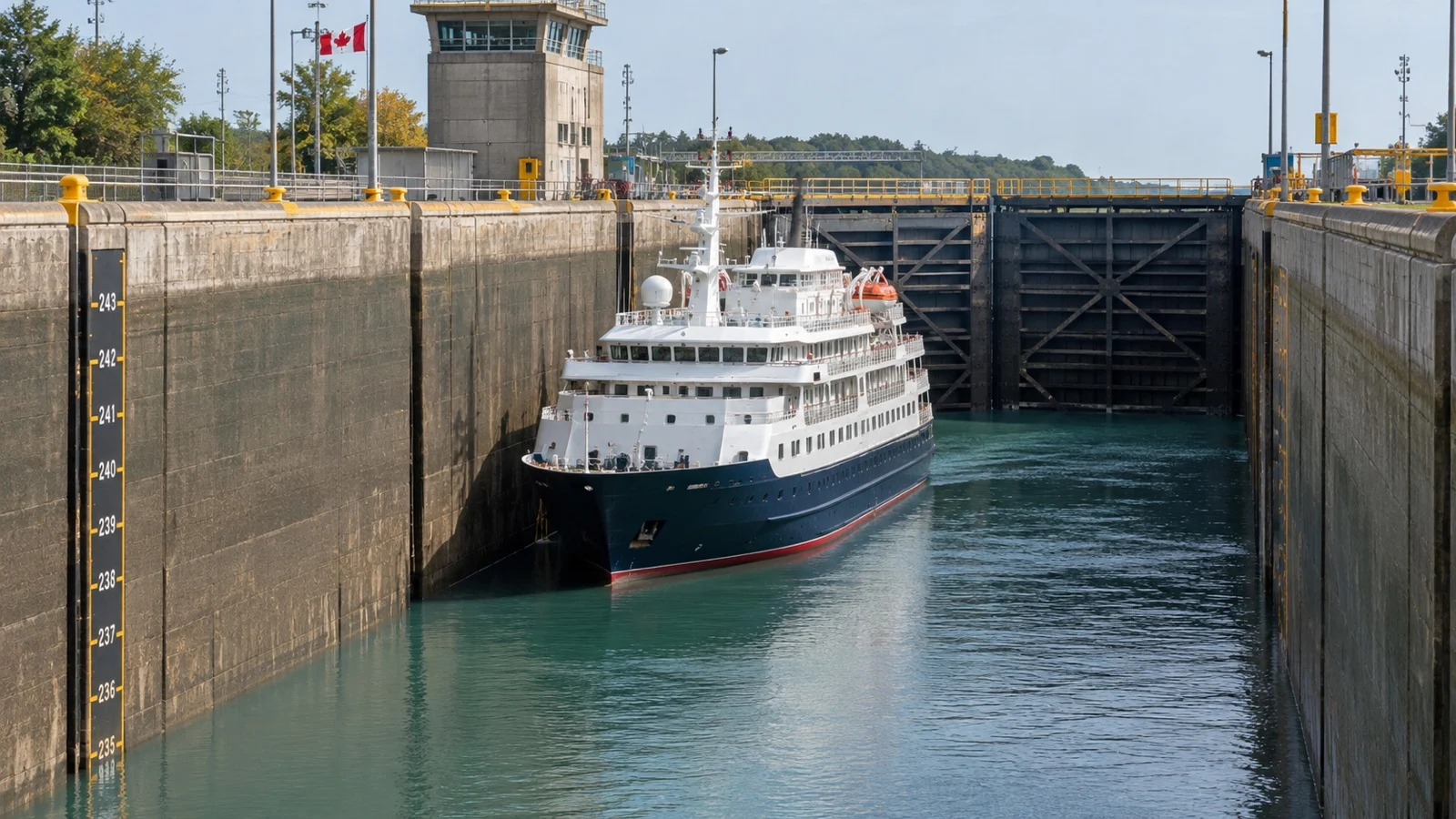
The Seaway’s 15 locks fill and empty by gravity across five short canals. The Welland Canal alone covers 23.5 nautical miles and lifts vessels between Lake Ontario and Lake Erie through eight locks.
A lock transit can be fascinating from open deck, especially the first time the ship rises beside a concrete wall. Schedules remain subordinate to commercial traffic, weather, maintenance, and waterway control, so delays are a normal operational possibility.
Montreal
Montreal frequently serves as an eastern turnaround or major port call. Cruise facilities at the Old Port place passengers near Old Montreal, though the exact terminal determines walking distance, vehicle access, and baggage arrangements.
An extra hotel night creates space for Notre Dame Basilica, museums, markets, neighborhoods, and the city’s dining scene without treating embarkation day as a race. French is the official language in Quebec, while English is widely available in central visitor services.
Quebec City
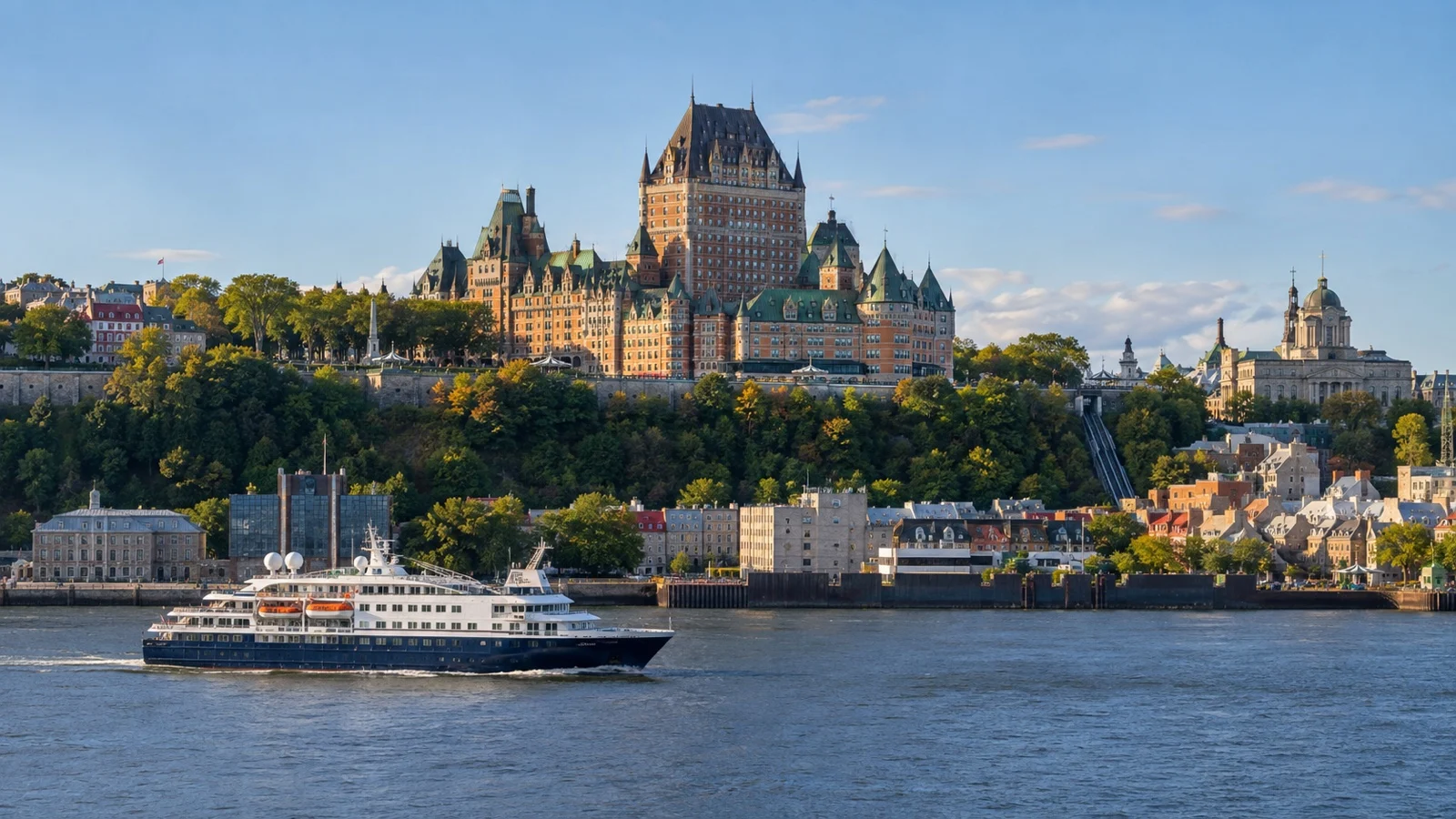
Quebec City is one of the strongest walking ports on the route. The Port of Québec lists the Ross Gaudreault terminal near Old Québec and Petit Champlain, while Terminal 30 and other assigned wharves may require a different route.
Old Québec rises steeply from the river, with the lower town, funicular, Dufferin Terrace, fortifications, and upper streets offering a full independent day. Cobbles, grades, stairs, and seasonal crowds make the funicular and taxis useful for some travelers.
Saguenay and Tadoussac
The Saguenay Fjord introduces dark cliffs, deep water, forested slopes, and a strong wildlife focus. Some itineraries call at Saguenay, some visit Tadoussac, and others emphasize scenic cruising without a landing.
Parks Canada describes the Saguenay Saint Lawrence Marine Park as one of the world’s best whale watching areas. Wildlife is never guaranteed, and vessel operators must follow rules designed to reduce disturbance in important beluga and whale habitat.
The Thousand Islands
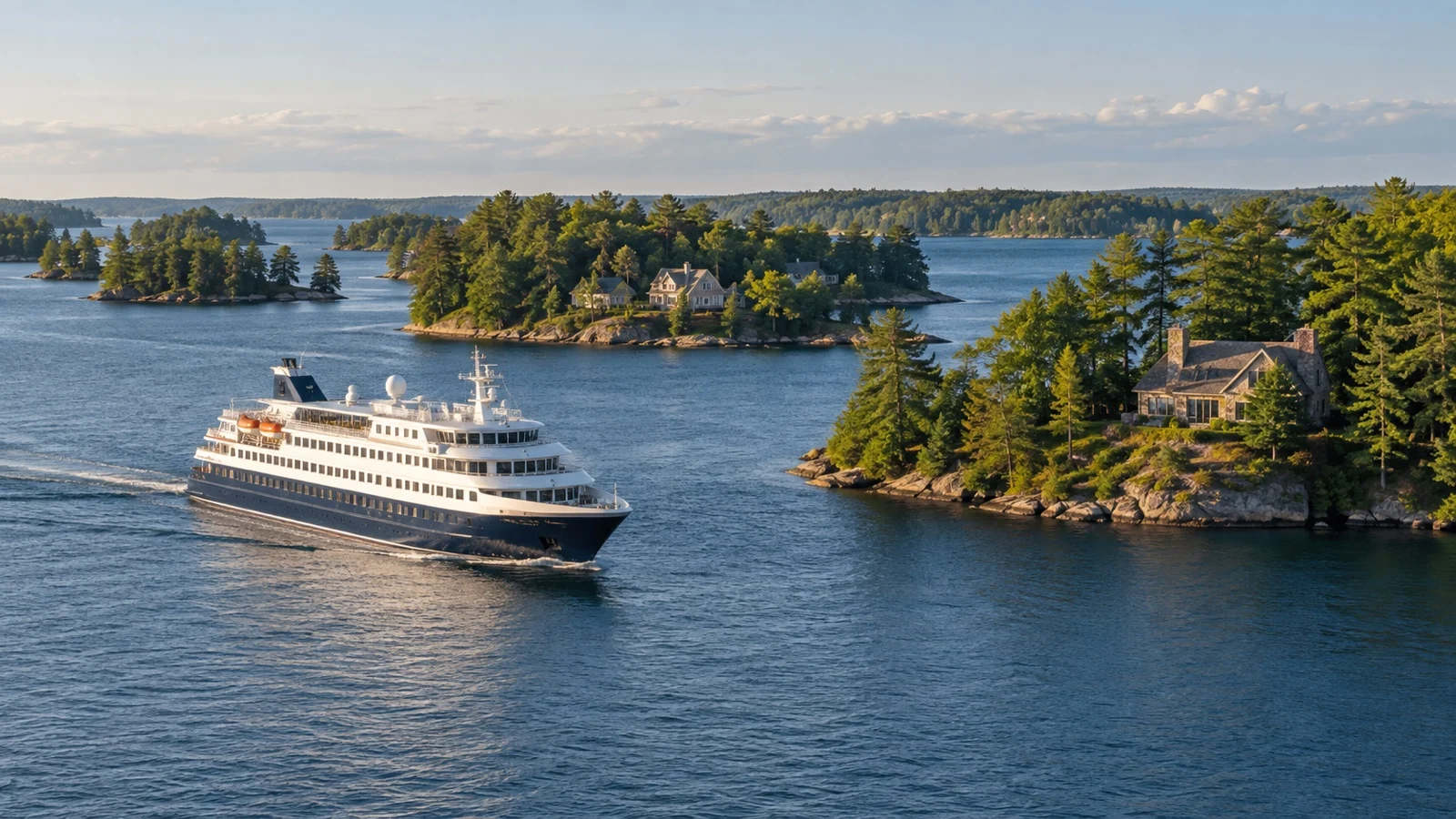
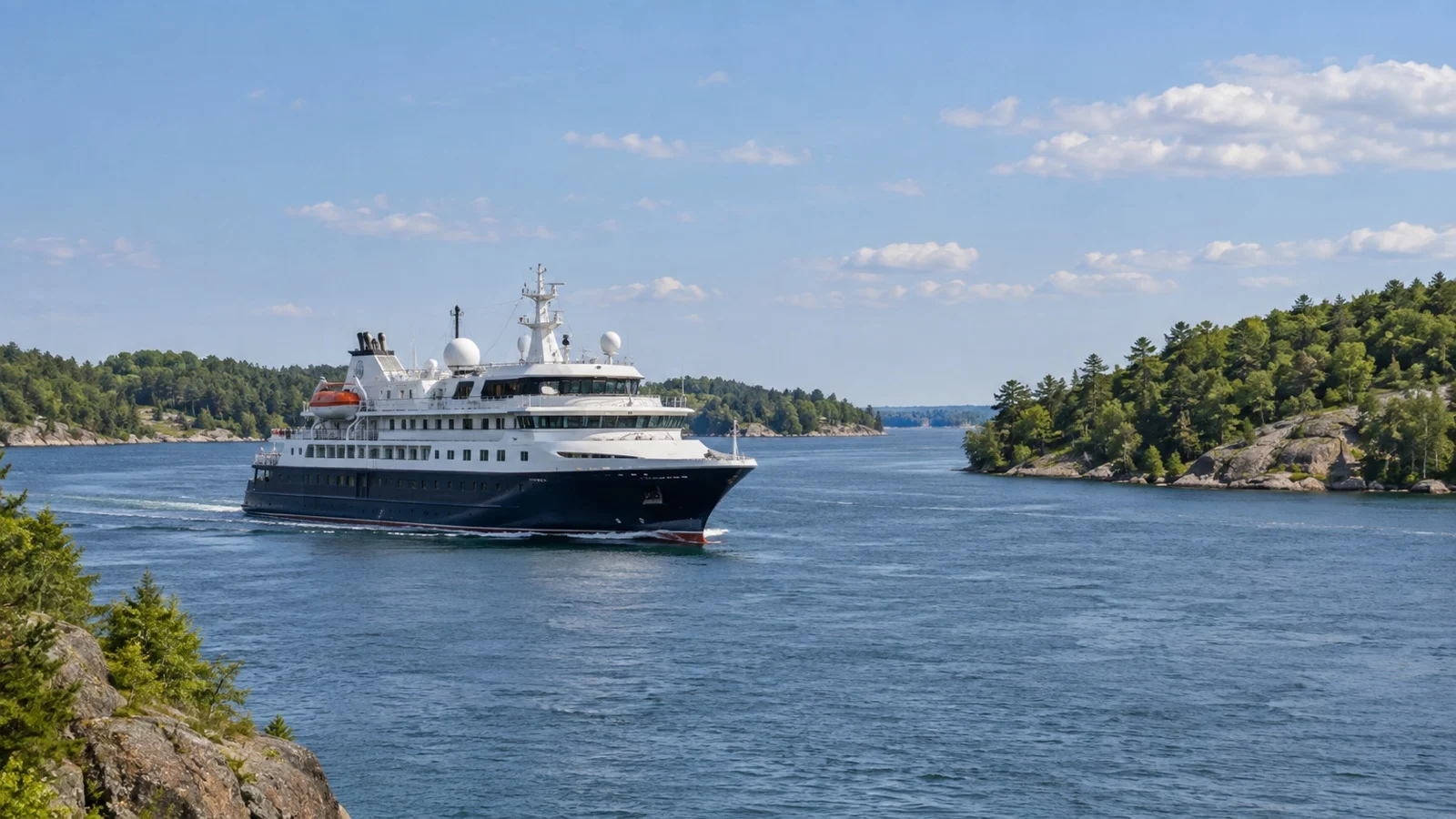
The Thousand Islands spread across the Saint Lawrence between Canada and the United States. Granite outcrops, wooded islands, cottages, channels, and historic estates make daylight scenic cruising especially worthwhile.
Kingston, Brockville, and nearby communities can appear as calls or excursion gateways. Exact docking and border arrangements vary, so treat the operator’s daily program as the final source for going ashore.
Toronto and Niagara Falls
Toronto gives access to a major city but does not always provide a berth beside its best-known attractions. Confirm the assigned terminal, shuttle, and local transport before committing to a tightly timed museum or tower reservation.
Niagara Falls is reached overland because ships bypass it through the Welland Canal. A cruise excursion or prearranged transfer is the practical choice, with the schedule built around road travel and a conservative ship return margin.
Mackinac Island
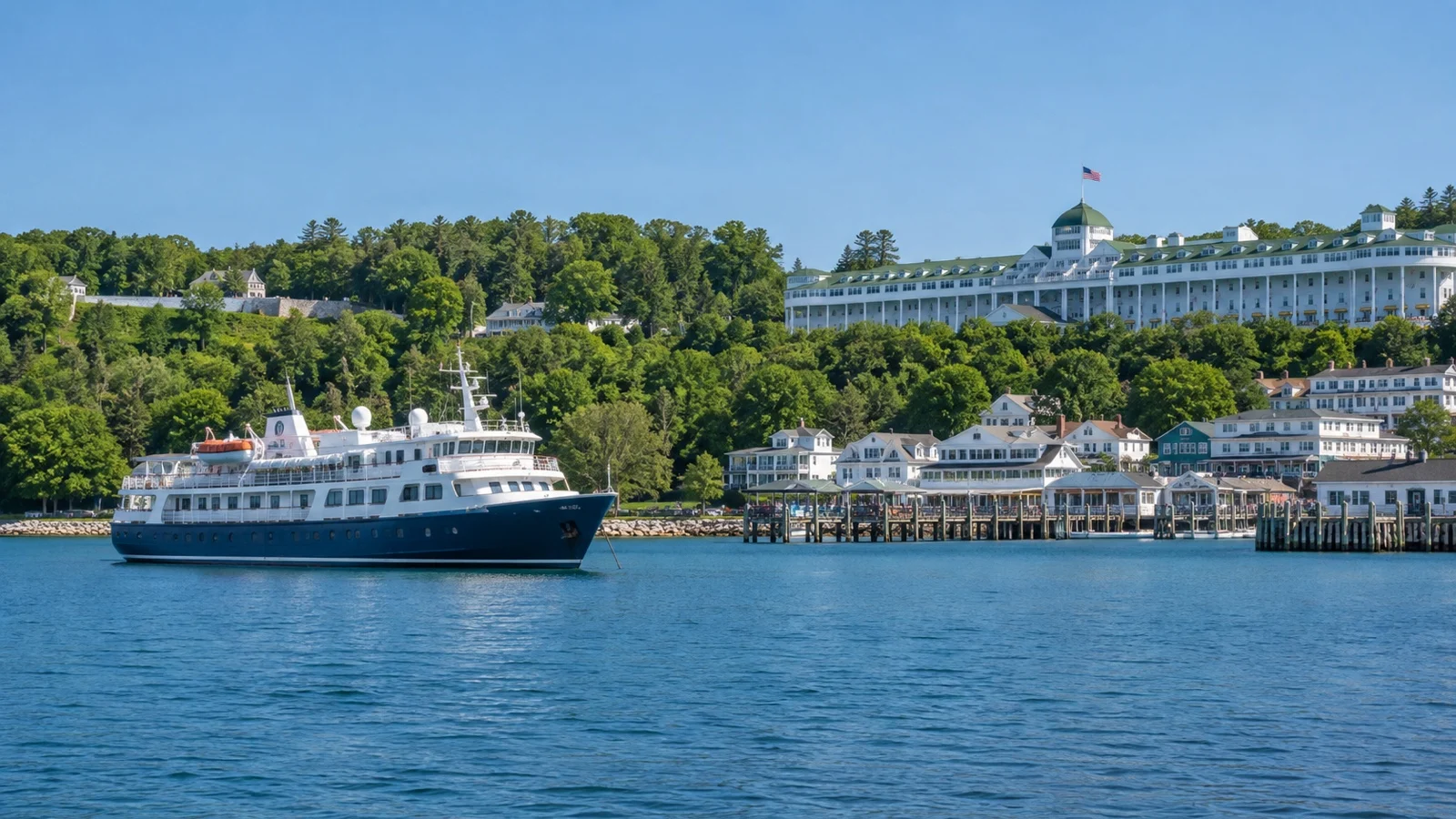
Mackinac Island offers one of the route’s most distinctive port days through a car-free town, historic fort, horse-drawn transport, bicycles, and lakeside scenery. Many cruise visits require tender boats, making wind and lake conditions important.
A carriage tour suits visitors who want interpretation with less walking, while the island road attracts confident cyclists. Tender timing, bicycle availability, hill grades, and the ship’s final boat should shape the choice.
Sault Ste. Marie
Sault Sainte Marie sits where the Saint Marys River connects Lakes Superior and Huron. The Soo Locks handle the elevation change and remain the central attraction for travelers interested in Great Lakes navigation.
Itineraries may call on the Michigan or Ontario side, which are separate cities in different countries. Check the exact berth before planning a museum, lock viewing area, or cross-border trip.
Milwaukee and Chicago
Milwaukee combines a working lakefront with museums, breweries, historic neighborhoods, and an approachable downtown. Pier or dock assignment determines whether the art museum and central waterfront are walkable or require a transfer.
Chicago offers world-class architecture, museums, food, and river tours, but vessel and berth logistics vary significantly. A central architecture cruise can be an excellent anchor, provided transfer time and ticket timing leave a generous return margin.
Duluth and Thunder Bay
Duluth’s arrival beneath or near the Aerial Lift Bridge reveals the scale of Lake Superior shipping. The waterfront, maritime history, and nearby scenery make it a strong western endpoint or port call.
Thunder Bay combines an industrial harbor with access to substantial scenery beyond the city. Excursions can involve long drives, so verify the route, walking conditions, and turnaround time rather than judging distance from a regional map.
Border and document planning
Many itineraries cross between Canada and the United States several times. Passport, visa, eTA, ESTA, and admissibility requirements depend on nationality, residency, route, and method of arrival.
Follow both governments’ official guidance and the cruise line’s document list before travel. Border formalities may occur at terminals, onboard, or at designated ports, and passengers must remain available when instructed.
Weather and season
The Seaway closes during winter and opens on an officially announced schedule each navigation season. Passenger cruises generally operate from late spring into fall, well within the commercial shipping window.
Conditions can range from humid warmth near Montreal or Chicago to cold wind and fog on Lake Superior. Pack layers, a waterproof outer shell, sun protection, and footwear suited to wet decks and uneven port surfaces.
Large lakes can produce genuine swell and fast-changing weather. A tender call may be canceled even when an alongside port remains workable, and scenic cruising can shift with visibility or traffic.
Accessibility
Small ships can have compact elevators, narrow corridors, high thresholds, and decks that are not reached step-free. Ask for a deck-by-deck accessibility description and the exact dimensions that apply to mobility equipment.
Port conditions differ dramatically across the route. Quebec City is steep and cobbled, many modern terminals provide elevators, and a Mackinac tender can become the decisive barrier even when the town itself offers adapted transport.
Confirm gangway slope, shuttle accessibility, tender transfer policy, and excursion vehicle features for each call. General labels such as accessible do not explain whether a specific route works for a particular wheelchair or scooter.
Choosing an itinerary
Some cruises focus on the Saint Lawrence and eastern lakes, while others cross the entire system toward Lake Superior or Chicago. Compare actual daylight passages, port hours, included excursions, and hotel nights rather than counting destinations alone.
A longer route creates more lock and lake time but may reduce the hours available in individual cities. An extra night before embarkation or after disembarkation can add more meaningful sightseeing than one additional panoramic bus tour.
Common questions
Why are Great Lakes cruise ships smaller?
They must fit through Seaway locks measuring 233.5 meters long and 24.4 meters wide. The authority says vessels up to about 225.5 meters long and 23.8 meters in beam routinely use the system.
Will I see Niagara Falls from the ship?
No, the Welland Canal bypasses the falls to connect Lakes Ontario and Erie. Niagara is an overland excursion rather than scenic cruising from the ship.
Do I need a passport?
International itineraries normally require appropriate passport and entry documents for both Canada and the United States. Verify the exact requirements for your nationality and complete route with official authorities and the cruise line.
Are all ports alongside?
Many are, but some calls can involve tenders or different seasonal berths. Mackinac Island and smaller harbors deserve particular confirmation.
Final thoughts
Great Lakes cruising is an itinerary-led experience built around waterways, locks, border cities, and dramatic changes in scale. The best sailings use daylight well and give enough time for both engineering landmarks and distinctive ports.
Berths, borders, navigation schedules, tenders, weather, and attraction access can change, so verify essential details with the cruise line and official authorities before traveling. This guide is for independent planning and is not affiliated with the waterway agencies, ports, attractions, or cruise operators.
How this guide was researched: This guide was checked on September 12, 2026 against current Great Lakes St. Lawrence Seaway, U.S. Department of Transportation, Parks Canada, Canadian and U.S. border, and official port information. Navigation dates, berths, border procedures, tenders, attraction access, and weather can change, so verify live details with your cruise line and the relevant authorities.