Taranto Cruise Port: Castle, Old Town and MArTA Logistics
Taranto is a working port and naval city in Puglia, built around the connected waters of Mar Grande and Mar Piccolo. Its cruise-day strengths are the Aragonese Castle, the island old town, the swing bridge, and the National Archaeological Museum.
The port is close to the historic core by city standards, but the route from ship to town depends on the assigned berth and controlled port access. Use the shuttle or pedestrian instructions provided for your call.
My quick take
Explore the castle, old town, and MArTA independently when the ship provides a straightforward town transfer. Choose an excursion for Alberobello, Matera, or another destination that requires significant road travel.
Taranto’s rough edges are part of a living industrial and naval city, but they do not excuse careless route planning. Stay on public streets and follow port, Navy, and museum rules.
Taranto quick facts
- Country: Italy
- Region: Puglia
- Sea: Ionian Sea
- Typical cruise access: Direct berth in the commercial port, with controlled exit or shuttle arrangements
- Historic center: Città Vecchia on the island between Mar Grande and Mar Piccolo
- Main sights: Aragonese Castle, Ponte Girevole, Doric columns, cathedral, and MArTA
- Currency: Euro
- Independent transport: Walking after the port exit, local bus, or taxi
- Longer excursions: Alberobello, Matera, and regional Puglia routes
- Best first check: Berth, shuttle endpoint, castle visiting hours, and all-aboard time
Where cruise ships berth
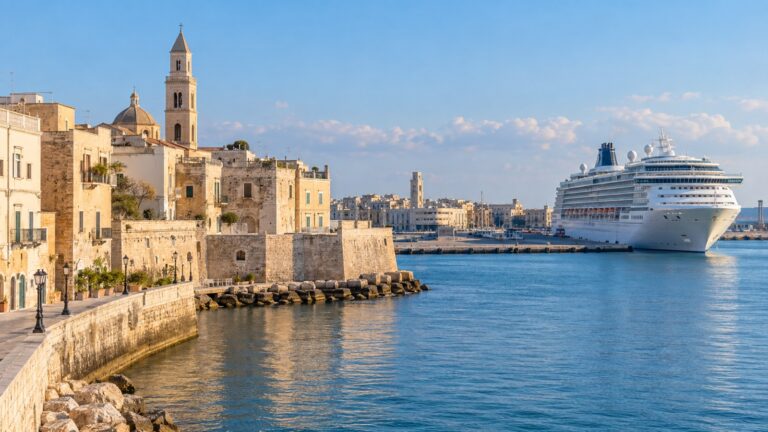
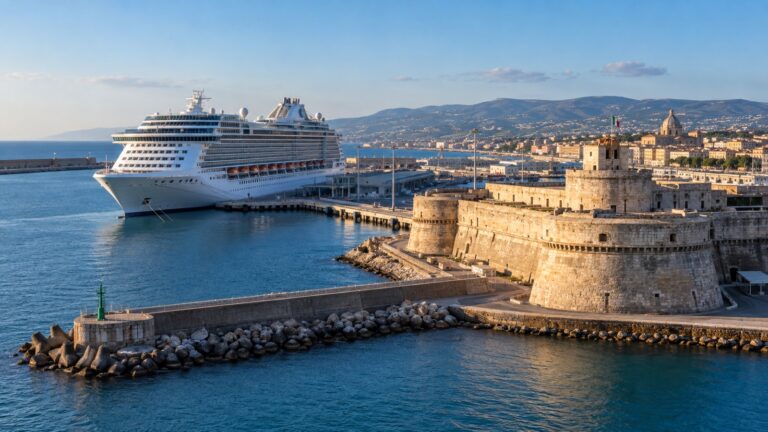
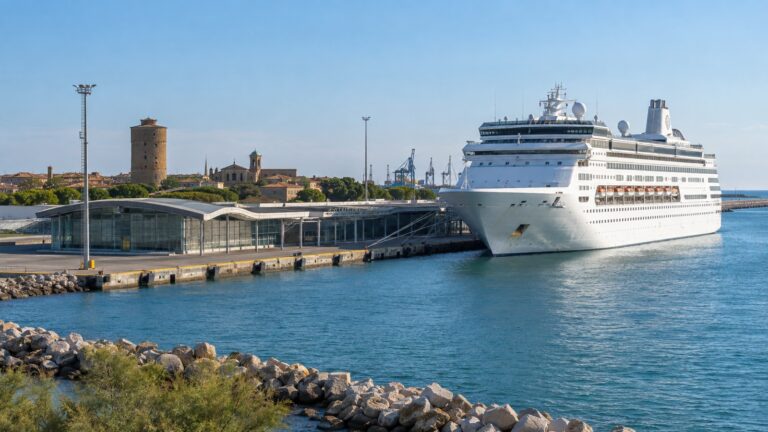
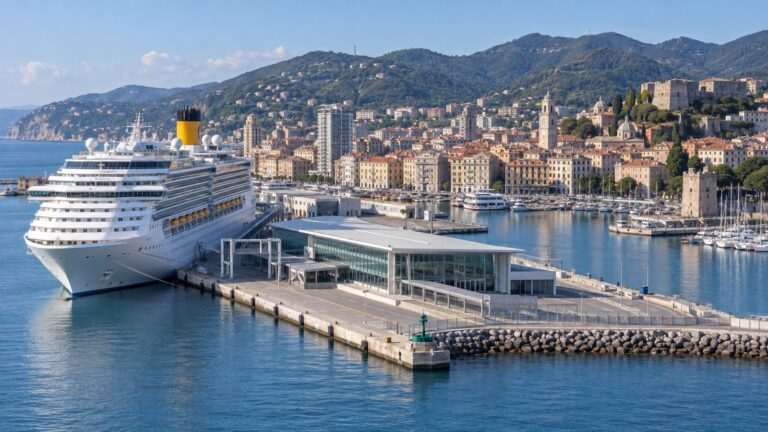
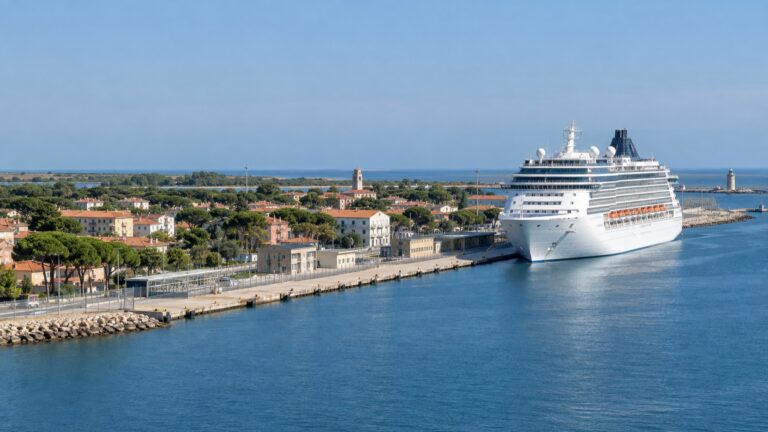
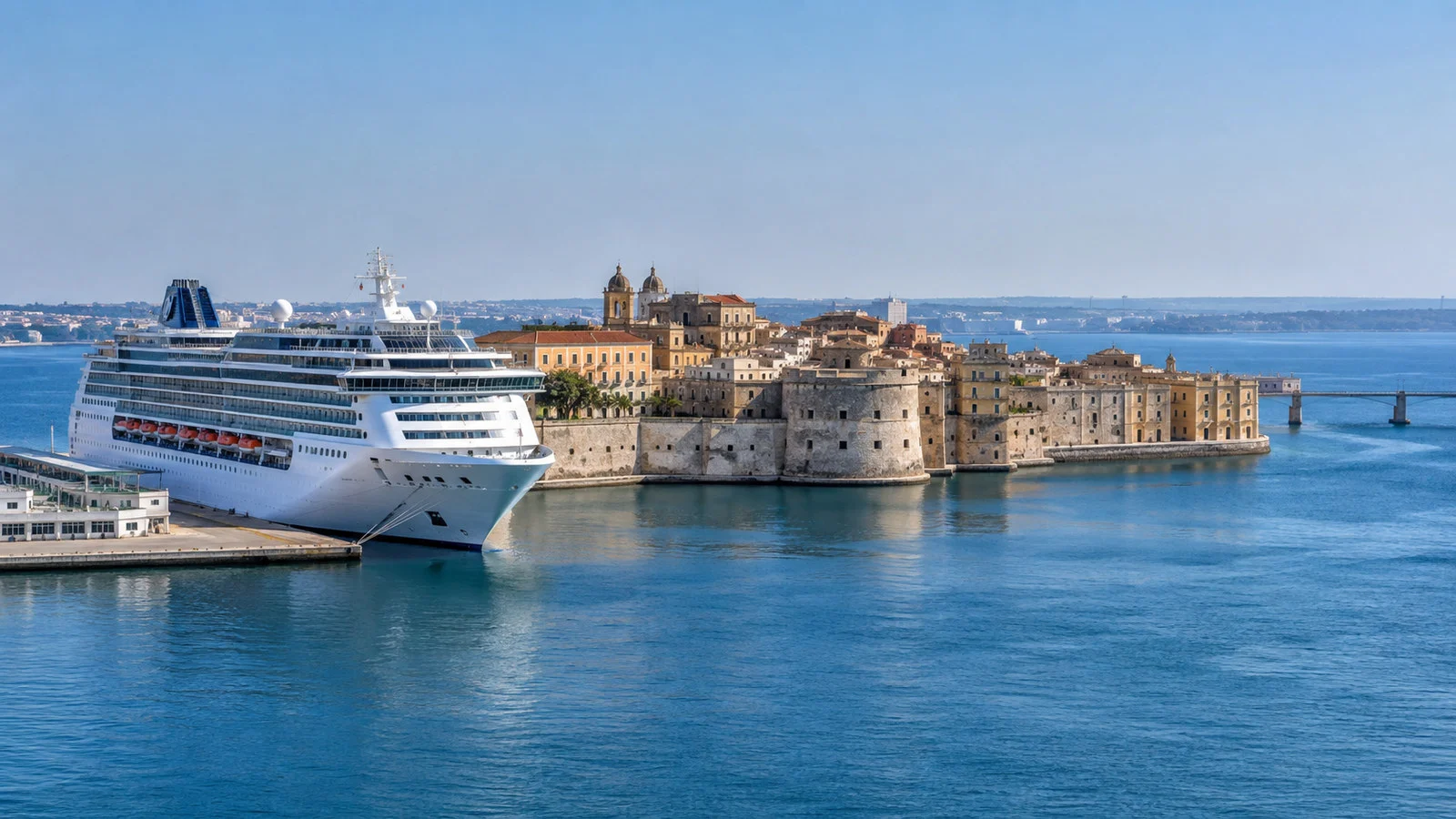
Cruise ships normally use direct berths within Taranto’s commercial port rather than routine tender operations. Exact assignments can change around cargo, naval, construction, and other port activity.
The official Port of Taranto publishes cruise information and passenger maps. It also announced a 2026 agreement for a new cruise terminal, so older descriptions of the arrival setup may become outdated.
A direct berth does not necessarily mean passengers can walk unescorted through the port. Use the authorized gate, shuttle, or marked route given by the ship.
Photograph the shuttle stop and note the last departure. The return endpoint may be outside the secure port perimeter rather than beside the gangway.
If the ship uses an unexpected tender or alternate berth, recalculate the day. Do not rely on a walking time written for a different quay.
Getting to Città Vecchia
Taranto’s old town occupies the island between the two seas and is linked to the newer city by bridges. The Ponte Girevole beside the castle is the best-known connection.
The swing bridge opens for naval traffic when required, which can interrupt the most obvious walking route. Follow police or Navy controls and allow extra time.
A port shuttle may deliver passengers near the old town or another central point. Confirm the endpoint before deciding whether you still need a taxi.
Local buses serve the wider city, but a cruise passenger should not build a tight return around an unfamiliar connection. Save the route and allow for service changes.
Aragonese Castle
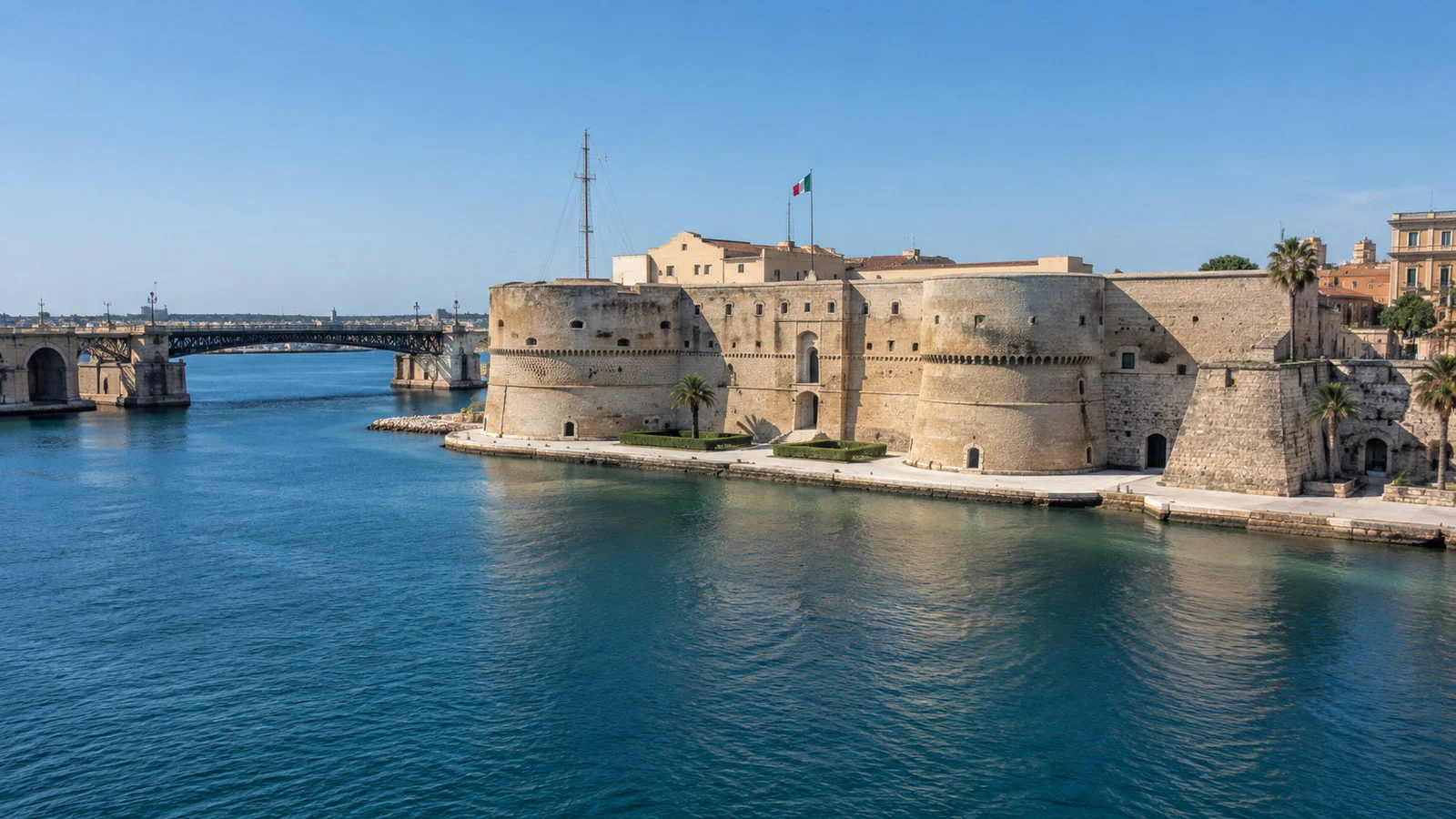
The Castello Aragonese sits beside the swing bridge at the edge of the old town. The Italian Navy manages the site and controls visitor access.
Tours and opening arrangements can change around operational needs, ceremonies, maintenance, or security. Check the official Navy information or ask the local tourism desk on the day.
The visible fortress reflects major late fifteenth-century reconstruction, while excavations and earlier structures reveal a longer history. A guided visit is valuable because much of that story is not obvious from the exterior.
Bring identification if the current visiting instructions require it, and expect security rules. Large bags, tripods, or restricted photography may not be permitted.
If the schedule does not fit, the castle exterior and bridge still form a strong first stop. Do not sacrifice the rest of the day waiting without confirmation.
Walking Città Vecchia
Città Vecchia is dense, layered, and less polished than many Italian cruise centers. Narrow lanes, stairways, worn paving, traffic, and ongoing restoration all shape the route.
Use main public streets and avoid entering abandoned or private buildings. A local guide can explain the district without turning everyday hardship into spectacle.
The Cathedral of San Cataldo is one of the old town’s central landmarks. Visit quietly and work around services, funerals, and parish activity.
The Doric columns near Piazza Castello are surviving evidence of ancient Taras, the Greek city founded in antiquity. Their modest scale makes historical context especially helpful.
Look across both Mar Grande and Mar Piccolo to understand why the settlement developed here. The bridge and island position explain the city more clearly than any single monument.
MArTA archaeological museum
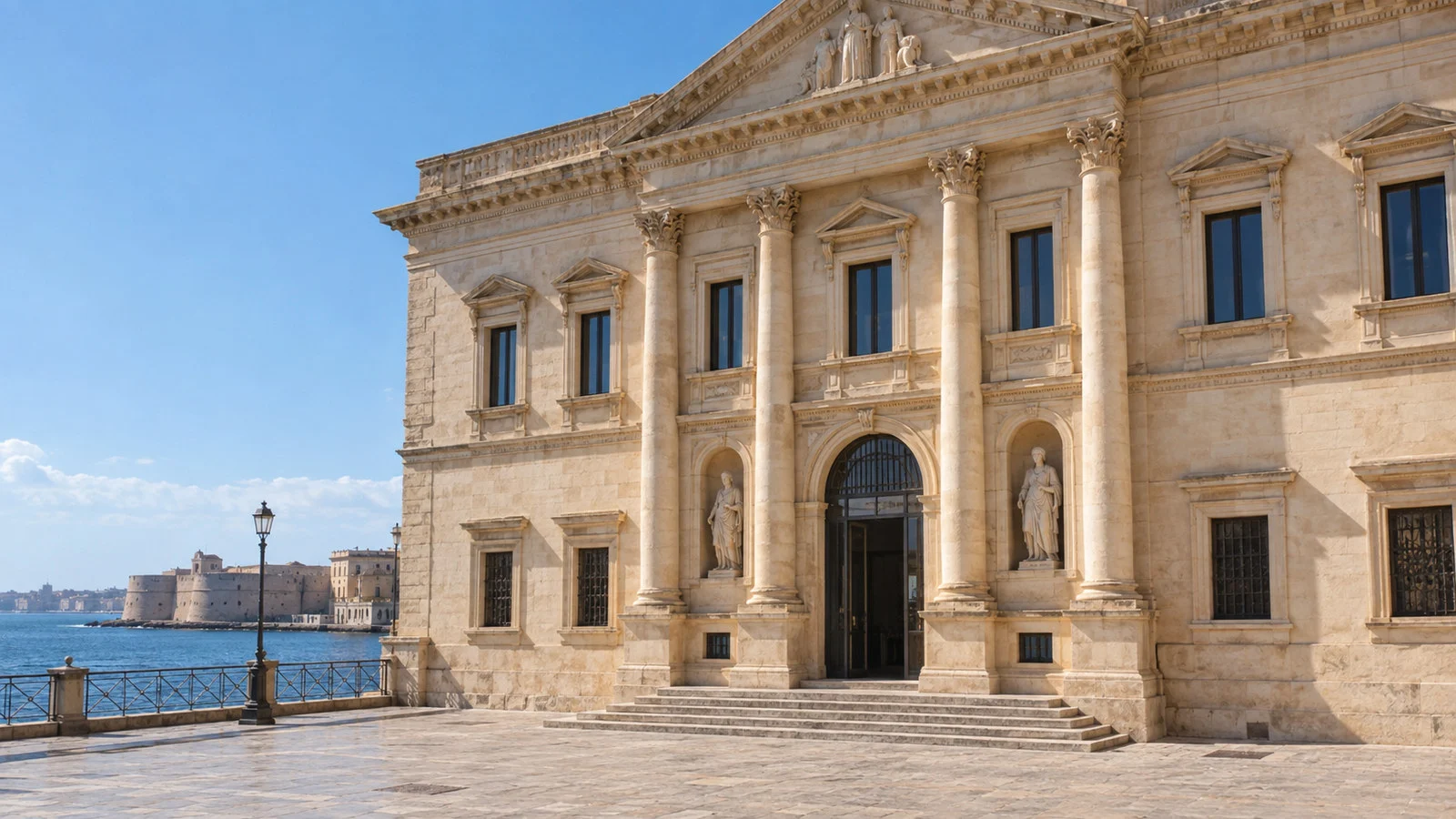
The Museo Archeologico Nazionale di Taranto, commonly called MArTA, holds one of the city’s most important collections. Highlights include material from Greek Taras, funerary contexts, ceramics, sculpture, and celebrated gold objects.
Check the museum’s official site for current hours, ticketing, closures, and accessibility. Italian state museums may alter access on holidays, free-entry days, or during special events.
Allow at least 60 to 90 minutes for a focused visit. The collection can absorb much longer, so choose priority galleries if the ship call is short.
MArTA lies in the newer city beyond the swing bridge, making it easy to combine with the castle and an old-town walk. Plan the order around timed entry and castle availability.
Photography and bag rules can change by gallery. Follow the staff rather than assuming every object permits the same treatment.
Mar Piccolo and mussel culture
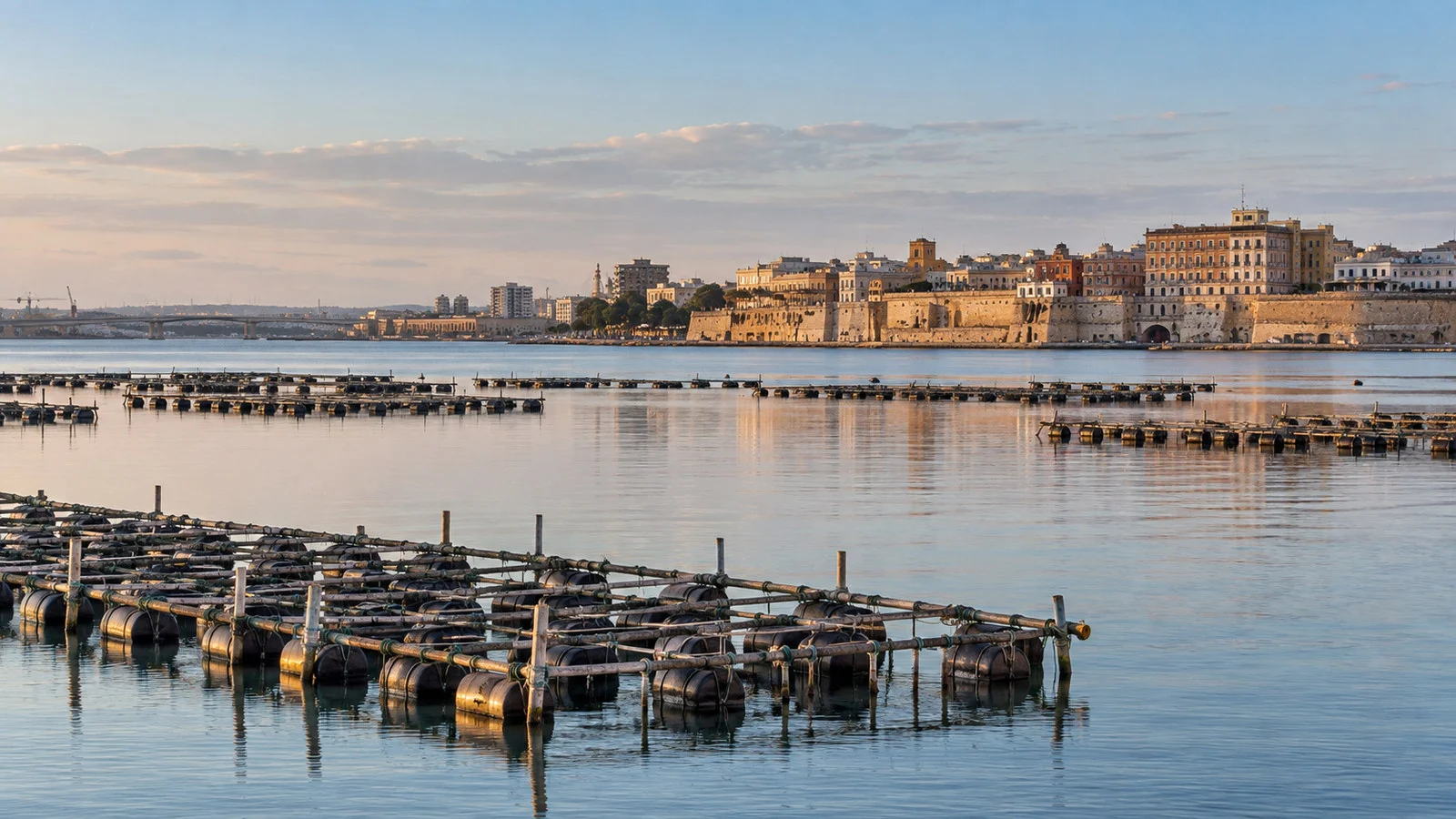
Mar Piccolo is the inner body of water behind the old town and is closely associated with mussel farming. Freshwater springs and local conditions contribute to a distinctive marine environment.
Choose seafood from a reputable restaurant and check current food-safety advice. Never buy or consume shellfish from an unlicensed informal source.
A harbor or boat excursion can help explain the two seas, aquaculture, bridges, and naval presence. Confirm the operator and return time before booking independently.
Do not photograph military installations from restricted areas. Follow signs and crew instructions on any boat tour.
Alberobello as an excursion
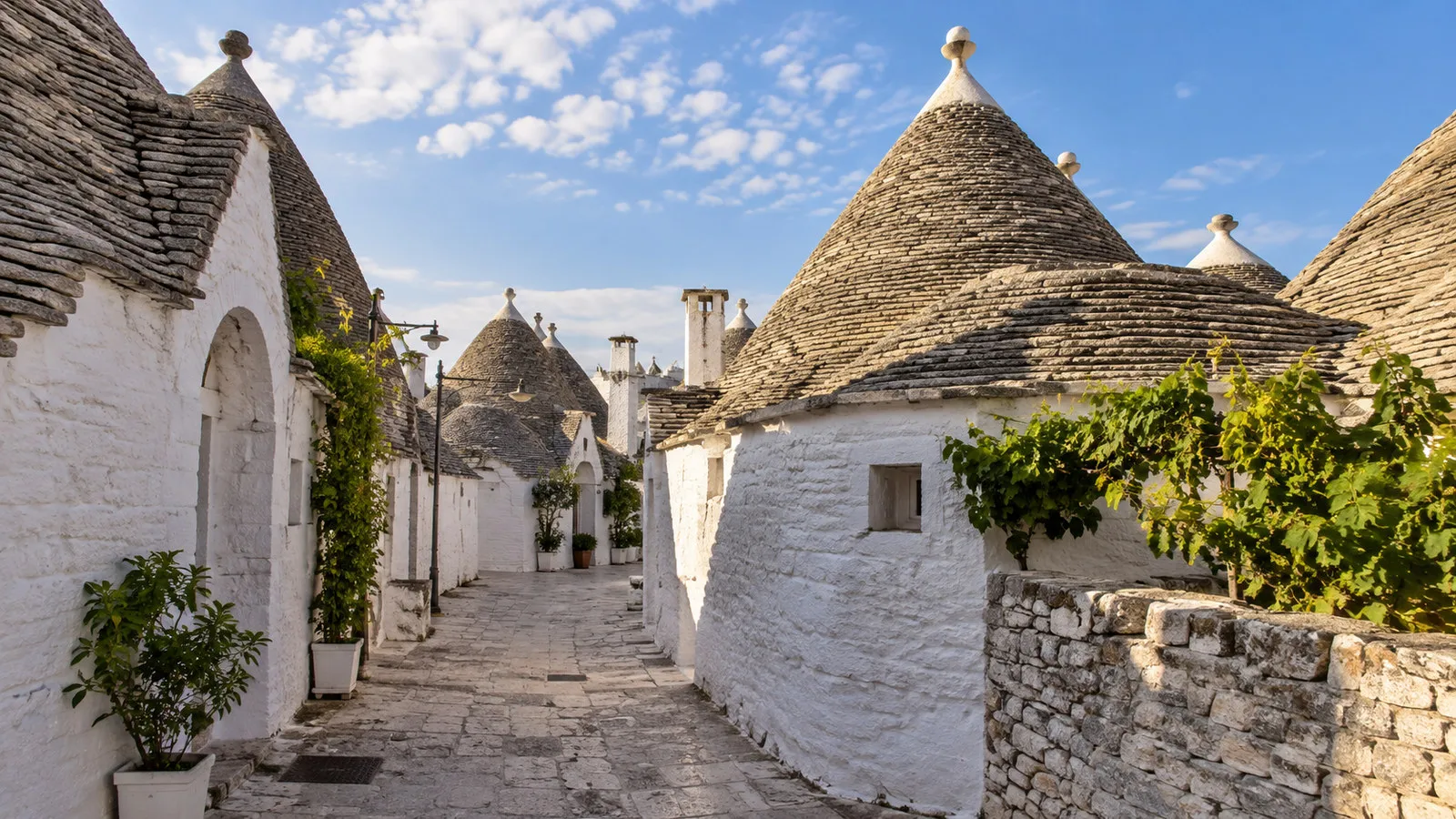
Alberobello’s trulli are a popular Puglia excursion from Taranto. Road time makes it a better fit for a ship tour or a firmly booked private vehicle than for improvised public transport.
The UNESCO-listed districts can become crowded, and walking includes slopes, steps, and uneven stone. Read the activity details rather than treating the stop as a simple coach panorama.
A private driver should know the ship, secure-port return point, and all-aboard time. Build a generous traffic buffer.
Travelers who have already seen Alberobello may get more from Taranto’s Greek and naval history. Staying local also removes much of the return risk.
Matera and longer road trips
Matera is another possible regional excursion, but it requires more road time and a physically demanding historic setting. A short cruise call may not support a satisfying visit.
The Sassi include slopes, stairs, polished stone, and limited vehicle access. Mobility needs should be discussed before booking.
Use the ship excursion when Matera is a must. An independent visit needs a professional driver and a conservative schedule.
Do not combine Matera and Alberobello unless the itinerary explicitly provides enough time. Racing through two major sites reduces both experiences and increases return risk.
Ship excursion or explore independently?
Explore independently for the castle area, old town, cathedral, Doric columns, and MArTA. These form a coherent central day after the port transfer.
Choose the ship excursion for Alberobello, Matera, countryside wine, or another distant destination. Road travel is the main reason to pay for return protection.
A guided Taranto walk can still be worthwhile for ancient history and urban context. Select one with clear meeting and ending points.
If the castle tour is unavailable, shift time to MArTA rather than waiting. The museum provides the strongest backup for understanding ancient Taranto.
Accessibility and mobility
The newer city generally offers broader pavements than Città Vecchia, but curb cuts and surface quality vary. The old town contains steps, slopes, narrow passages, and uneven stone.
Ask the cruise line about the accessible shuttle from the berth because walking through the port may be prohibited. Do not assume an ordinary taxi can reach the gangway.
The castle and MArTA should be contacted for current access routes, elevators, and restroom details. Historic structures may have partial access even when staff can offer an alternate route.
A panoramic vehicle tour can reduce walking, but coaches often have high steps. Request the exact vehicle and stop surfaces.
Heat, weather, and safety
Summer in Taranto can be hot, humid, and bright. Carry water, wear sun protection, and schedule indoor museum time during the hottest hours.
Spring and fall are often more comfortable for walking, but wind and rain can affect the waterfront. Shoes with grip help on old paving.
Use ordinary city precautions in busy areas and around transport stops. Keep valuables secure and stay on well-used public routes.
The working port and naval areas have real restrictions. Never cross barriers or follow a map through a closed gate.
For emergencies in Italy, call 112. Carry the ship’s contact details and the Italian name of the return point.
Food and practical stops
Taranto’s food identity includes mussels, seafood, orecchiette, vegetables, and Puglian bread. Choose a restaurant that can serve within your available time.
Italian lunch service can be leisurely. Tell staff when you must leave before ordering multiple courses.
Cards are widely accepted, but a small euro backup helps at minor businesses. Keep receipts and verify prices before agreeing to an informal service.
Public restrooms may be limited outside museums, cafés, and designated facilities. Use the ship before a long old-town walk.
Return timing
Aim to reach the authorized port return point at least 45 minutes before cutoff, or earlier if the cruise line instructs. Security and shuttles add time beyond the walk.
Allow a wider margin from Alberobello, Matera, or the countryside. Traffic incidents and roadworks can make a normal estimate unreliable.
The swing bridge may open for naval traffic, so do not leave the final crossing until the last minutes. Know an alternate route or follow official directions.
If the shuttle has a last run, photograph the timetable. A late taxi may not be allowed through the secure gate.
How Taranto fits an Italy cruise
Taranto may appear with Brindisi, Bari, Sicily, or Adriatic and Ionian ports on a southern Italy itinerary. Its character is more industrial, naval, and Greek than a typical resort call.
The city also offers a different route into Puglia’s inland sights. Whether to leave town depends on how much Greek history and urban texture interest you.
For a first visit, the castle and MArTA create a complete day without a long bus ride. Repeat visitors can use the call for a carefully planned regional excursion.
Quick answers
Do cruise ships dock in Taranto?
They normally use direct commercial-port berths, but the exact quay and passenger exit vary. Follow the current port map and ship instructions.
Can I walk to the old town?
Often the central sights are walkable after leaving the secure port, but a shuttle may be required for the port section. Confirm the authorized route.
Can I visit the Aragonese Castle?
The Italian Navy offers controlled visits when operations permit. Check current times and security requirements.
Is MArTA worth the time?
Yes, especially for Greek Taras and the museum’s major archaeological collections. Allow at least an hour.
Should I visit Alberobello?
Choose it if trulli are a priority and the call supports a protected road excursion. Stay in Taranto for a lower-risk day focused on history.
What is the best short plan?
See the castle exterior, cross the swing bridge, walk part of Città Vecchia, and choose either the cathedral or MArTA. Return with time for port security.
The last word
Taranto rewards passengers who look beyond a polished cruise façade. Its castle, two seas, Greek past, and working old town form a distinctive southern Italian call.
Follow current directions from the ship, port, Navy, museums, and city authorities. If access changes after your visit, our editorial policy explains how to send a correction.