Nelson Cruise Port: Small Ships, Shuttles and Abel Tasman
Nelson is the sort of port that quietly rewards anyone tired of being marched toward the biggest attraction on the map. A working harbor, compact city center, galleries, gardens, cafes, a cathedral, and a deep community of makers all sit close enough for a day that never feels like a race.
Abel Tasman National Park is the famous temptation, and it can be magnificent with the right booking. The honest version includes a road transfer, a precisely timed boat or walk, and a protected return to the ship, so this is one place where the logistics matter as much as the scenery.
My quick take
Nelson is an excellent city day and a demanding national-park day. Choose one, then give it enough time to feel like something more than a transport connection.
I would take the free shuttle into town, explore on foot, and save Abel Tasman for a ship excursion unless the call is long and every transfer is confirmed in writing. Small-ship intimacy is not permission to arrive late at a working port.
Quick Facts
- Port: Port Nelson in Whakatū Nelson
- Arrival: Normally alongside at a working commercial wharf
- Into town: Free shipside shuttle or an authorized 2 km walking route when open
- Port’s walking estimate: About 20 minutes to the city center
- Currency: New Zealand dollar
- Languages: English and te reo Māori
- Best easy sights: Nelson Provincial Museum, cathedral, galleries, gardens, and markets when operating
- Major excursion: Abel Tasman National Park with prearranged transport
- Main planning issue: Matching road, boat, trail, and ship times
Where cruise ships dock in Nelson
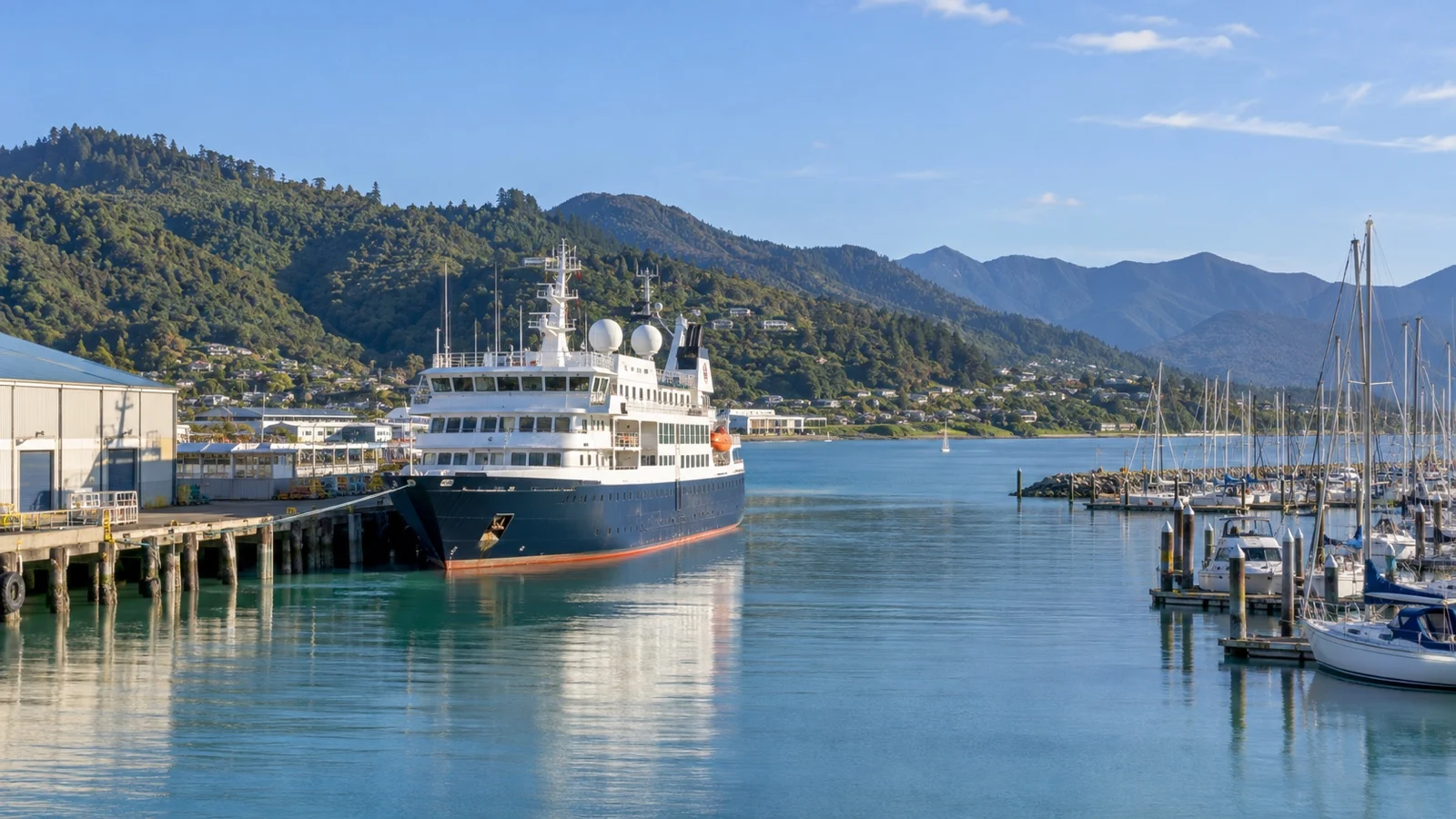
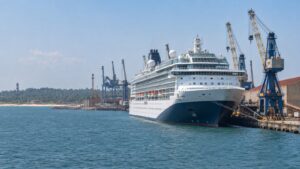
Cruise ships use Port Nelson’s commercial wharves, sharing an active area with cargo, fishing, and marine services. Do not expect a purpose-built cruise terminal or permission to wander wherever a map shows a gate.
Port Nelson says it regularly provides free city shuttles from shipside to central Nelson. It also gives the route as 2 km, or about a 20-minute walk, but passengers must use only the walking path authorized for that particular call.
Cargo operations and berth assignments can change the safe exit. Follow ship and port staff even when an online map appears to offer a shorter route through the secure area.
The port attracts a limited number of cruise calls compared with New Zealand’s major gateways, and the published schedule often features smaller premium and expedition vessels. That pattern is not a guarantee about future ship size, so check your own sailing rather than relying on a general label.
The shuttle or the walk
The free shuttle is the dependable first choice, especially in rain, with limited mobility, or when the port changes the pedestrian route. Ask where it stops downtown, how frequently it returns, whether it is accessible, and when the final run leaves.
Walking can be pleasant when the route is open, the weather is settled, and you are comfortable covering the distance. Stay inside marked corridors and assume every unmarked lane belongs to trucks or port equipment.
Take a photograph of the shuttle stop and note the last return time before exploring. A small city can still have several pickup points that look similar after a long lunch.
Taxis are useful for fixed bookings beyond the center, but supply can tighten when a ship arrives. Reserve ahead and give the driver the berth or official port return point, not simply Nelson waterfront.
Central Nelson on foot
Central Nelson is compact, low-rise, and easy to explore without a rigid route. Trafalgar Street, side lanes, civic spaces, galleries, cafes, and shops fit naturally into a loop that can expand or contract with the ship’s clock.
The city carries both its English colonial name and the Māori name Whakatū. Look for interpretation that acknowledges mana whenua and the longer history of Te Tauihu rather than beginning the story with European settlement.
Nelson’s creative reputation is visible in working studios, jewelry, ceramics, painting, glass, textiles, and design. Ask who made an item and where, because locally sold and locally made are not the same claim.
Nelson Provincial Museum
Nelson Provincial Museum, Pupuri Taonga o Te Tai Ao, is the best grounding for the region’s natural and human stories. Its central location makes it easy to pair with the cathedral, shopping streets, and a relaxed lunch.
Exhibitions and opening hours change, so check the museum’s current official site on the day of your call. A regional museum may be compact, but the right temporary exhibition can easily deserve more time than a rushed circuit allows.
Follow all photography restrictions and treat taonga, or treasured cultural objects, with the respect requested by the museum and iwi partners. Do not reduce Māori material to decoration without reading the names, histories, and cultural context provided.
Christ Church Cathedral and the Church Steps
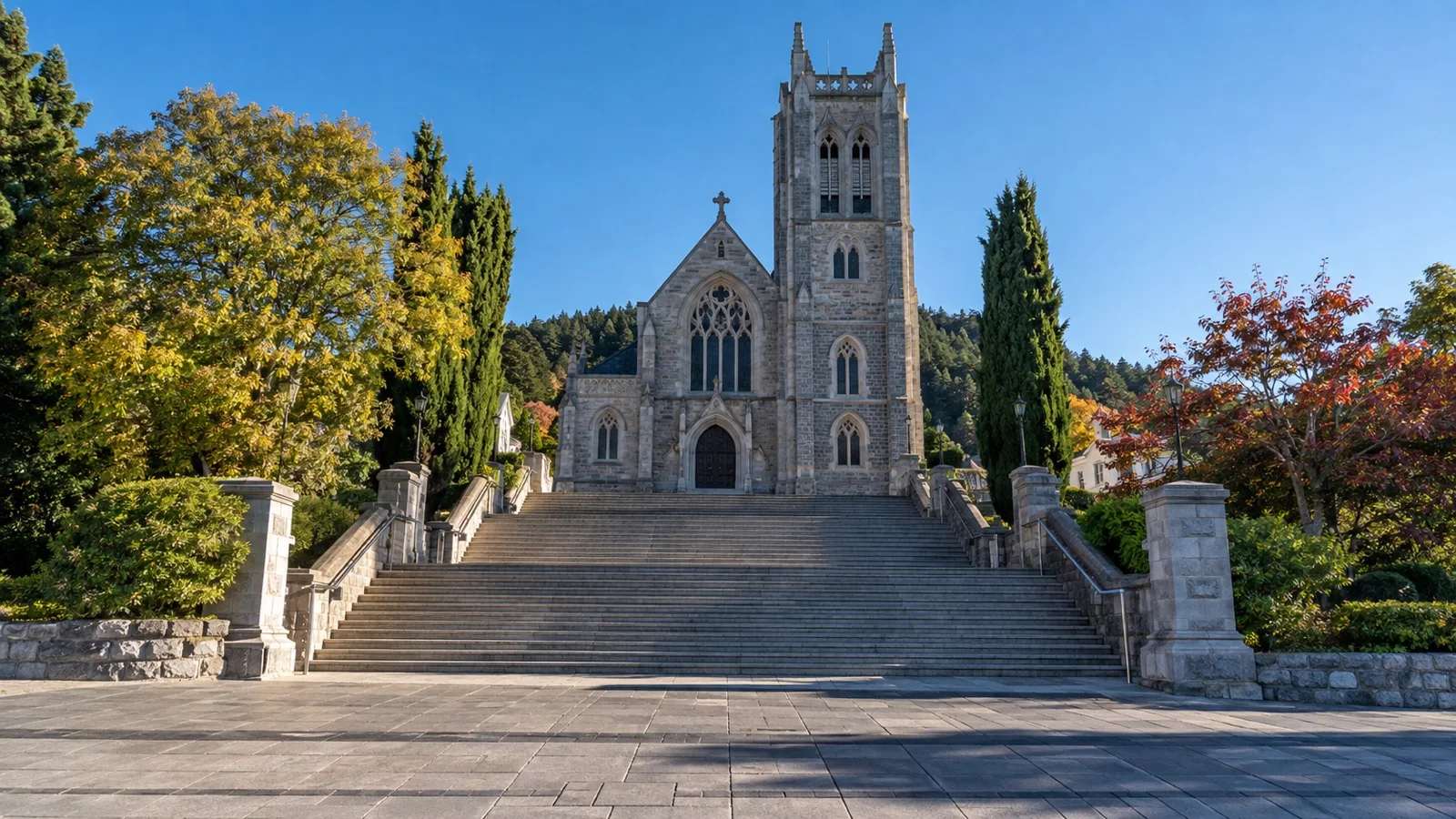
Christ Church Cathedral rises above the head of Trafalgar Street, reached by the broad Church Steps that form one of Nelson’s defining city views. The hill gives the center a clear focal point and a useful orientation marker.
The cathedral is an active place of worship rather than a guaranteed visitor attraction. Enter quietly when open, avoid services and private ceremonies, and ask before photographing people.
Travelers who cannot manage the main steps should investigate the road approach around the side. Confirm the accessible entrance rather than assuming the grand stair is the only way inside.
The Centre of New Zealand walk
A hill above the Botanical Reserve carries the marker popularly called the Centre of New Zealand. The title comes from an early surveying reference point rather than a modern claim to perfect geographic centrality, but the harbor and city views are the real reason to climb.
This is a proper uphill walk with uneven or slippery sections, not an extension of a flat downtown stroll. Wear shoes with grip, carry water, and turn around early if heat, rain, or fatigue begins stealing the return margin.
Allow time to descend carefully because downhill slips happen when people are watching the clock. If the trail is wet or your balance is uncertain, choose a city garden or waterfront walk instead.
Markets, food, and local makers
Nelson’s markets are lively introductions to regional produce, prepared food, crafts, and community life when your call matches the correct day. The well-known Saturday market cannot help a ship that arrives on Tuesday, so check both date and current operating location.
The region is associated with orchards, hops, wine, seafood, and small-scale food production. Ask what is seasonal and local rather than ordering from a checklist assembled for the entire country.
Restaurants and cafes can become busy when a ship adds several hundred visitors at once. Eat a little earlier than the main rush or choose a place one block from the obvious shuttle stop.
New Zealand biosecurity rules are strict, and food that is fine to eat ashore may not be appropriate to carry onward. Keep packaging, declare anything required, and follow the ship’s instructions about bringing fresh food back aboard.
Abel Tasman National Park is not beside Nelson
Abel Tasman National Park protects a celebrated coast of forested headlands, golden beaches, tidal inlets, and clear water. The images are seductive, but the practical cruise gateway is reached by road from Nelson before your park experience begins.
Marahau and Kaiteriteri are common starting areas for walks, kayaks, and boat services, while more distant park locations require still more time. Department of Conservation guidance should be checked for access, track conditions, alerts, tides, and rules before departure.
The key calculation includes the port shuttle or exit, road transfer, operator check-in, water taxi or cruise, any walking segment, the return boat, road traffic, and port security. Reading only the advertised time on the water creates a dangerously incomplete plan.
A ship excursion is often worth its premium because it controls that chain and communicates with the vessel. An independent operator may be excellent without having any ability to delay your ship.
Choosing an Abel Tasman experience
A scenic boat trip
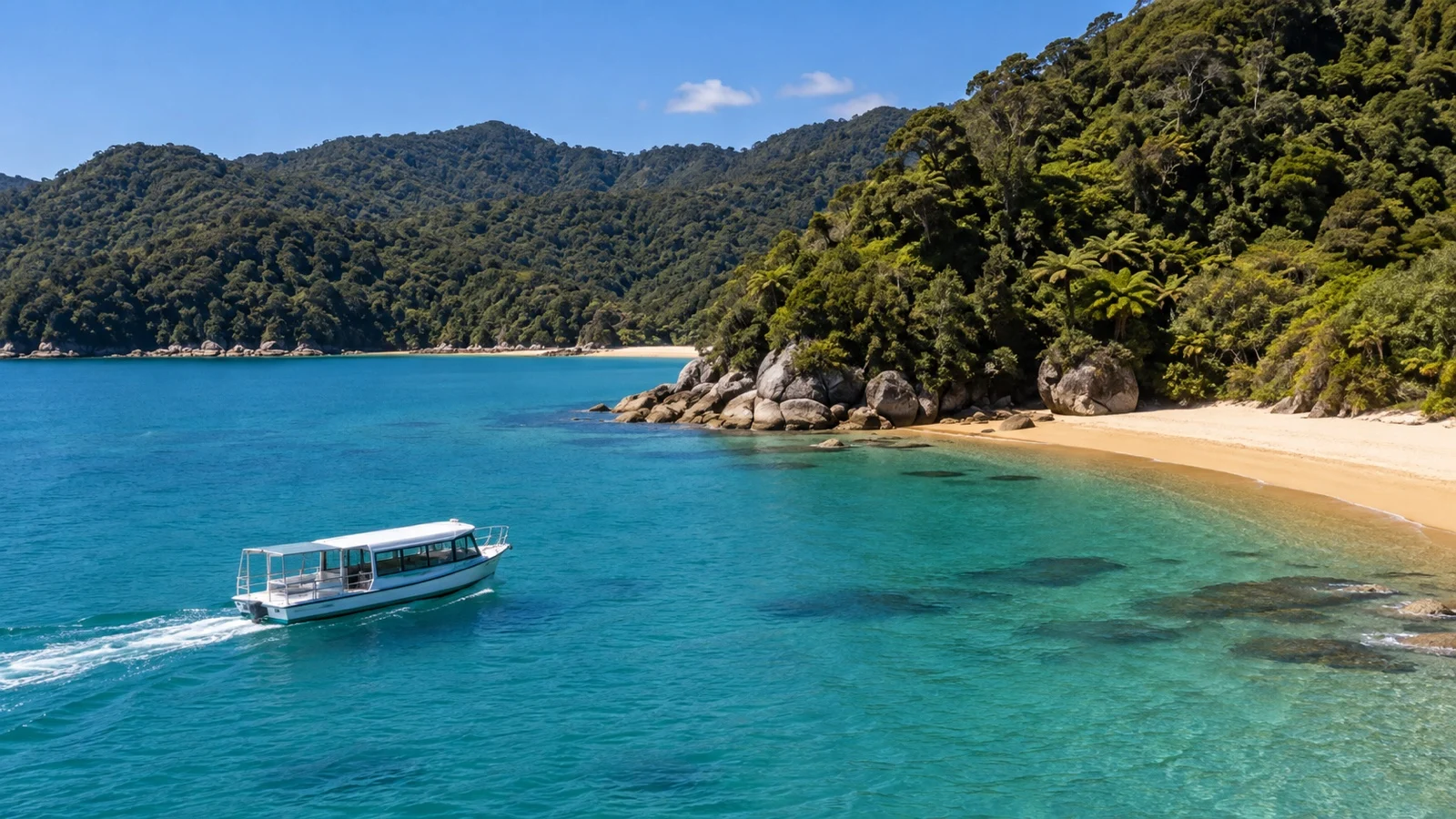
A coastal cruise gives you beaches and headlands without committing to a long trail or kayak. Choose a departure and return that account for the Nelson transfer, and confirm the exact check-in point because operators may use different bases.
A boat and walk combination
A water taxi can drop you at one bay and collect you after a track section, creating a memorable half-day or full-day. It also creates two time-critical marine connections, so the route is only sensible when the operator has matched the walk to your ship-aware schedule.
Sea kayaking
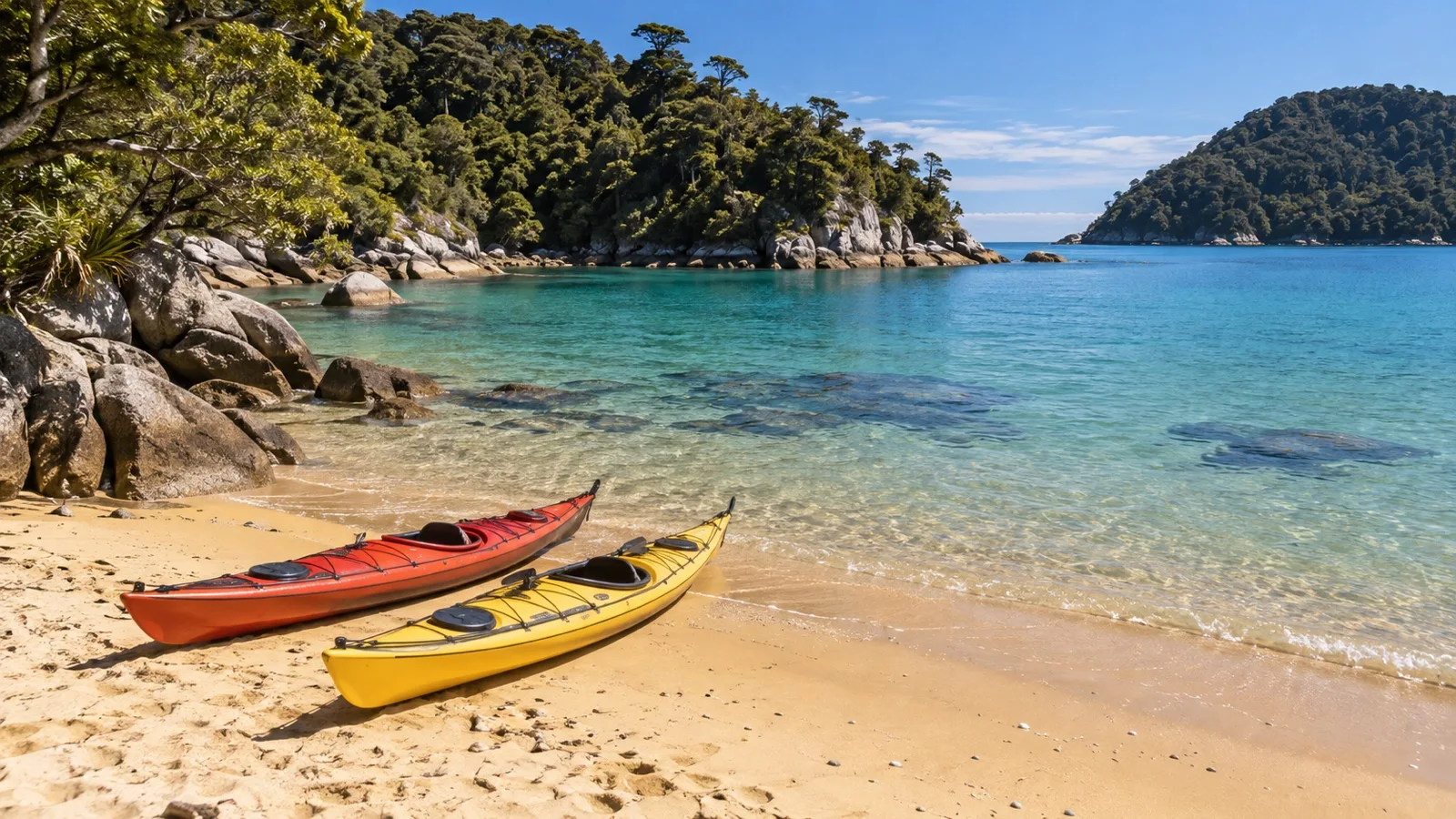
Guided kayaking can be wonderful in settled conditions, but wind, tide, cold water, and group pace all matter. Use a qualified operator, disclose medical or mobility concerns, wear the provided safety gear, and accept a cancellation when conditions are unsuitable.
A beach stop
A simple beach visit still involves transport and sometimes a boat landing. Bring sun protection and water, keep belongings above the tide line, and never assume a scheduled pickup will wait because you walked to the far end of the bay.
Tides, weather, and water taxis
Abel Tasman’s tides affect estuary crossings, beach landings, and some walking routes. A track that appears continuous on a map may include a tidal section with a safe window determined by the day.
Use official track information and your operator’s instructions rather than calculating from a generic tide chart. If a boat time changes, confirm how that affects every land segment before setting out.
Weather can be sunny in Nelson and rougher on exposed water, or the reverse. Let the operator modify the route when necessary and keep a city alternative ready.
Mobile coverage is not continuous through the park. Download tickets and route details, then understand that a phone cannot summon an instant boat to every beach.
Founders Heritage Park and Miyazu Japanese Garden
Founders Heritage Park presents local history through collected and recreated buildings, exhibits, workshops, and community activity. Its exact attractions and heritage-rail operation vary by day, so check the current program before taking a taxi or bus.
The nearby Miyazu Japanese Garden offers a quieter outdoor alternative and reflects Nelson’s sister-city relationship with Miyazu. Garden paths and seasonal conditions should be checked if accessibility is important.
These stops work well for a passenger who wants more than the central shopping streets without committing to Abel Tasman. They also leave a much safer return buffer than a remote coast trip.
The waterfront and marina
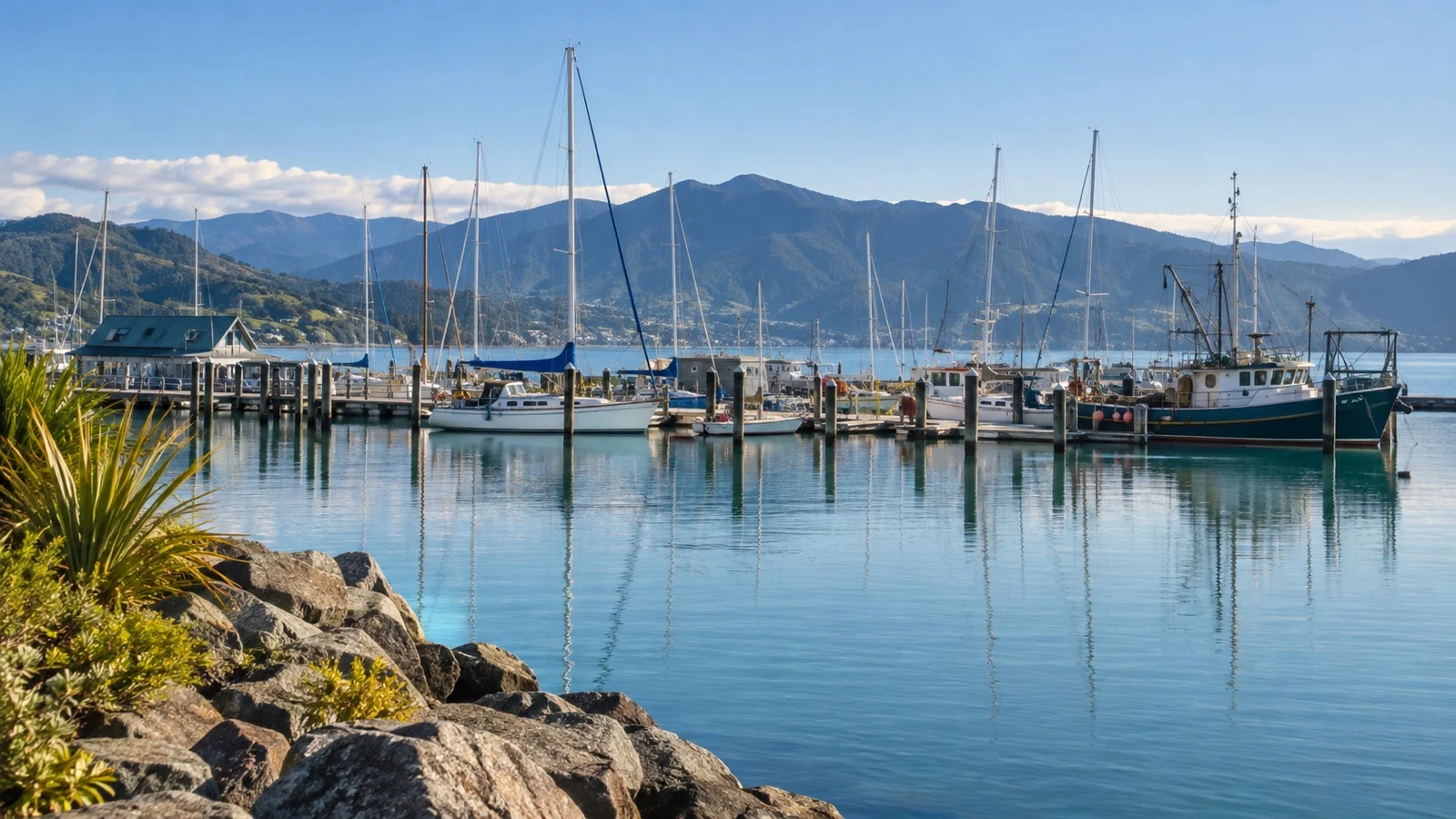
Nelson’s waterfront and marina reveal the working relationship between the city and Tasman Bay. Walking routes may offer views toward the Boulder Bank, the long natural formation that helps shelter the harbor.
Stay out of operational marina areas and never climb gates or step over lines for a photograph. Ask locally which public path is open, since construction and marine work can alter access.
A waterfront cafe can be a pleasant final stop before the shuttle, but verify the return pickup first. The city shuttle may not collect from every marina venue.
Boulder Bank and the lighthouse
The Boulder Bank stretches across Nelson Haven and forms one of the harbor’s most distinctive natural features. Its lighthouse and exposed landscape look close from the port while requiring a specific authorized approach by land or water.
Do not attempt to improvise access through working harbor land or across sensitive habitat. Use a recognized tour or local guidance, and respect closures designed to protect navigation, wildlife, and the structure.
The view from the city and harbor is rewarding without turning the bank into a mandatory landing. A distant landmark can still explain the shape of the port.
Money, language, and connectivity
The currency is the New Zealand dollar, and card or contactless payment is common in central Nelson. Carry a second card and modest cash for a market stall, small operator, or connectivity failure.
English is widely spoken, while te reo Māori place names carry meaning and deserve careful use. Listen to local pronunciation and use macrons when they are part of the written name.
Download offline maps, booking confirmations, and park instructions before leaving the ship. Keep the port contact and shuttle point in a screenshot that does not depend on a signal.
A portable battery protects your navigation, tickets, photographs, and return alarms. Do not let a full morning of camera use drain the phone holding the water-taxi confirmation.
New Zealand entry and biosecurity
Entry permission depends on nationality and can involve a visa or New Zealand Electronic Travel Authority. Use Immigration New Zealand and your cruise line’s route-specific instructions, not a passenger’s experience from a different passport.
Biosecurity rules cover food, plants, animal products, soil, and outdoor equipment that may carry contamination. Declare what the official form requires and make sure boots, walking poles, tents, and similar gear are clean before arrival.
Never guess when you are unsure whether an item must be declared. Asking an officer is safer than concealing something and hoping its packaging makes it acceptable.
Park visitors should also prevent seeds, mud, and pests from moving between natural areas. Clean gear before and after the trip and follow Department of Conservation notices.
Accessibility and mobility
An alongside call avoids tendering, but the gangway and working wharf still require individual assessment. Ask the cruise line about gradient, assistance, surface, distance to the shuttle, and whether your device can board the vehicle.
Do not assume the free shuttle has a lift or secure wheelchair space. Confirm the actual vehicle used for your sailing and arrange a backup taxi if necessary.
Central Nelson is relatively compact, with many paved routes, but the cathedral steps and Centre of New Zealand trail create obvious barriers. Museums and gardens should be contacted for the current accessible entrance and restroom details.
Abel Tasman introduces road transfers, boat boarding, beach landings, tidal surfaces, and trails. Ask the operator to describe the complete curb-to-boat route rather than accepting a broad statement that the tour is suitable.
Weather and what to wear
Nelson’s cruise season falls through the southern summer, when warm, bright days are common. Strong ultraviolet exposure, sudden rain, wind on Tasman Bay, and cooler boat conditions still require preparation.
Wear light layers and carry a waterproof, wind-resistant shell. Add a brimmed hat, high-protection sunscreen, water, and shoes suited to the actual walk.
The sun can burn quickly even when the air feels mild. Reapply protection after swimming or sweating and seek shade during the strongest part of the day.
Check both Nelson and park-area conditions before an Abel Tasman trip. The ship, road operator, and boat company may each make separate decisions when weather changes.
Three realistic Nelson days
The relaxed city day
Take the shuttle into town, visit the museum and cathedral area, browse galleries and shops, and have a leisurely local lunch. Add a garden or waterfront walk only after confirming the return stop.
The active local day
Explore central Nelson, then walk toward the Centre of New Zealand or visit Founders Heritage Park with confirmed transport. Keep the route local enough that weather or fatigue cannot threaten the ship.
The Abel Tasman day
Book a ship excursion or a complete private package that includes named road transfers and a cruise-aware return. Do not assemble a same-day chain from unrelated bus, water-taxi, and trail times unless every connection leaves a generous backup.
Quick answers
Can I walk into Nelson from the ship?
Port Nelson says the authorized route is 2 km and about 20 minutes when it is open. A regular free shipside shuttle is the dependable alternative.
Does Nelson use tenders?
Cruise calls normally berth alongside at a commercial wharf. Ship and port operations still control the gangway and exit route.
Can I visit Abel Tasman on a port day?
Yes, on a sufficiently long call with prebooked road and boat logistics. The park is not beside the port, so compare total elapsed time with all-aboard.
What if my call is not on market day?
The museum, cathedral, galleries, cafes, gardens, and waterfront still support a full city day. Never build the itinerary around a market without checking the weekday and operating notice.
Should I rent a car?
A prearranged driver or excursion usually protects the schedule better for a distant outing. Same-day rental paperwork, navigation, parking, and return fueling all consume port time.
My last word
Nelson is not merely the place you leave on the way to Abel Tasman. It is an artful, food-minded, compact city that offers exactly the kind of unforced day a long New Zealand itinerary often needs.
Go to the park when the complete chain is secure, not when one beautiful photo has overwhelmed the clock. Otherwise, take the shuttle, follow your curiosity through Whakatū, and return to the ship without having spent the afternoon calculating miles.
How this guide was researched: No firsthand Nelson port visit is claimed. This guide was checked September 12, 2026 against current official information from Port Nelson, the New Zealand Department of Conservation, and Nelson Provincial Museum; berths, port walking access, shuttles, park alerts, boat schedules, attraction hours, and biosecurity rules can change, so confirm every time-sensitive detail for your sailing.