Husavik Cruise Port: Whales, Berths and Tenders
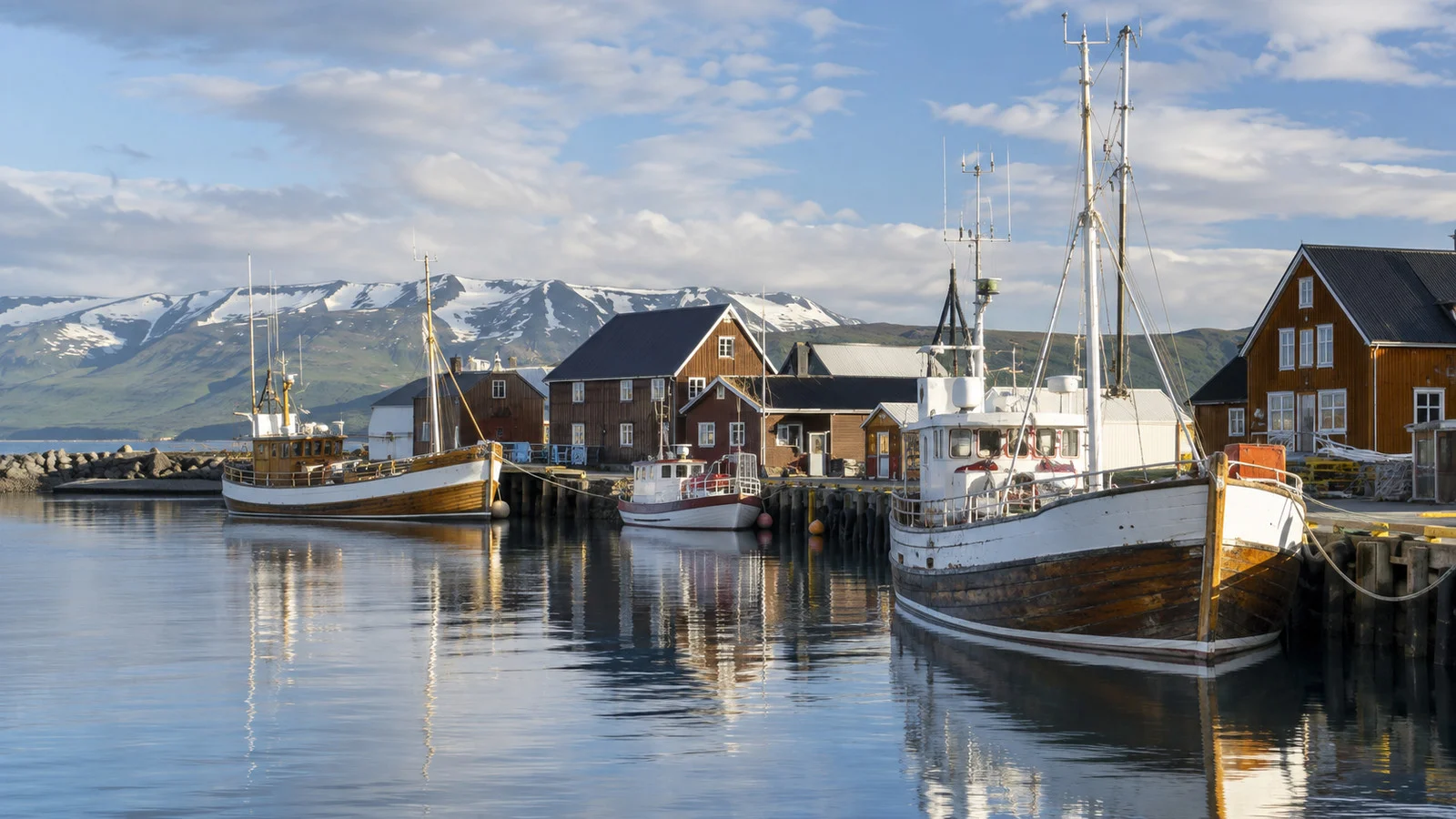
Húsavík is a compact harbor town on Skjálfandi Bay, and a cruise call can be wonderfully simple when the ship berths alongside. Larger vessels may anchor and tender, so the day’s landing plan matters before you commit to a timed whale-watching trip.
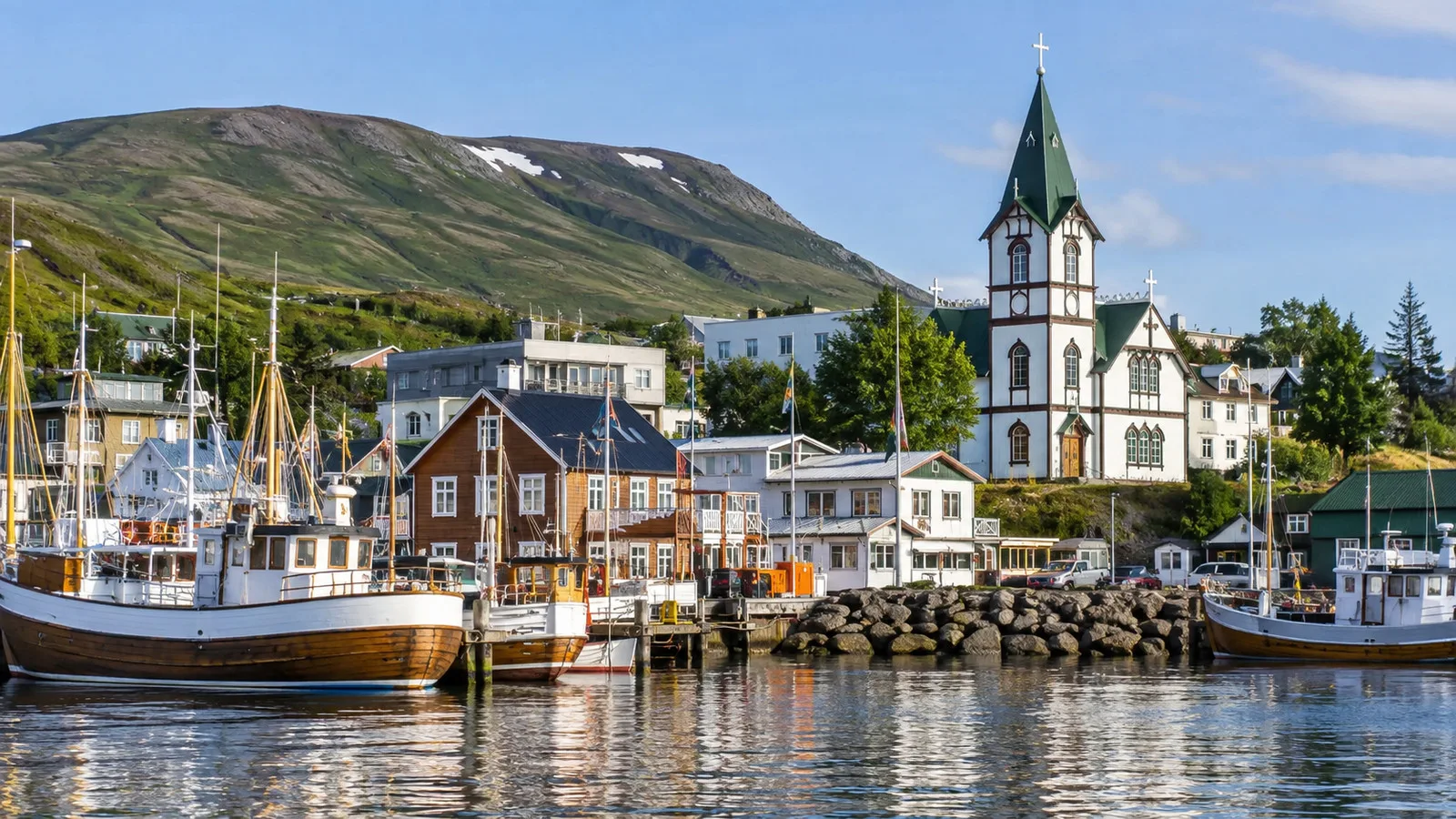
The harbor, whale boats, Húsavík Whale Museum, cafés, and wooden church sit close together. GeoSea is higher on the headland, while Ásbyrgi and Dettifoss belong to a longer road excursion.
Quick Facts
- Primary cruise berth: Bökugarður, the port’s largest pier
- Largest published berth capacity: Ships up to 220 meters long with a draft of 10 meters
- Tender facilities: Two docks inside the harbor for ships anchored offshore
- Walk into town: The harborfront attractions begin within minutes of the landing
- Currency: Icelandic króna
- Language: Icelandic, with English widely used in tourism
- Time zone: UTC year-round
- Best for: Whale watching, harbor walks, museums, and geothermal bathing
- Planning priority: Confirm alongside or tender status before booking an independent boat tour
My quick take
Húsavík earns its reputation as a whale-watching town because the boats leave from the same harbor cruise passengers use. If the call is short, I would choose one whale trip plus a harbor walk rather than spending the day on a long bus loop.
A rough bay can cancel a small-boat tour even when the cruise ship remains safely alongside. Keep the Whale Museum and the harborfront as your calm-water backup, because Icelandic weather is not impressed by a color-coded itinerary.
Alongside or tender: how the port works
The Port of Húsavík lists Bökugarður at about 220 meters long with approximately 10 meters of depth. The port also lists Norðurgarður at 132 meters with about 8 meters of depth and Þvergarður at 90 meters with about 6 meters of depth.
Those published dimensions describe the facilities, but they do not guarantee a berth to any particular ship. Vessel length, draft, traffic, weather, and the harbor master’s assignment all shape the actual operation.
Ships that cannot berth may anchor in Skjálfandi Bay and use one of the port’s two tender docks. Tendering adds queue time, a moving-boat transfer, and the possibility that wind or swell will delay or suspend service.
Listen for the onboard announcement rather than deciding from the view outside your cabin. A ship can appear close to shore and still need a carefully managed sequence of tender runs.
From the gangway to the center
When the ship is alongside, the harborfront is immediately useful. Whale-watching offices, the Whale Museum, restaurants, and the route toward Húsavíkurkirkja are all close enough for an easy independent walk.
The waterfront itself is relatively level, but the town rises away from the harbor. GeoSea and some lodging sit uphill, so a short map distance may require more effort than the harbor view suggests.
On a tender day, photograph the landing and note the correct return dock. Two small passenger docks can look remarkably alike when several boats are moving and everyone is wearing the same sensible waterproof jacket.
Whale watching from Húsavík
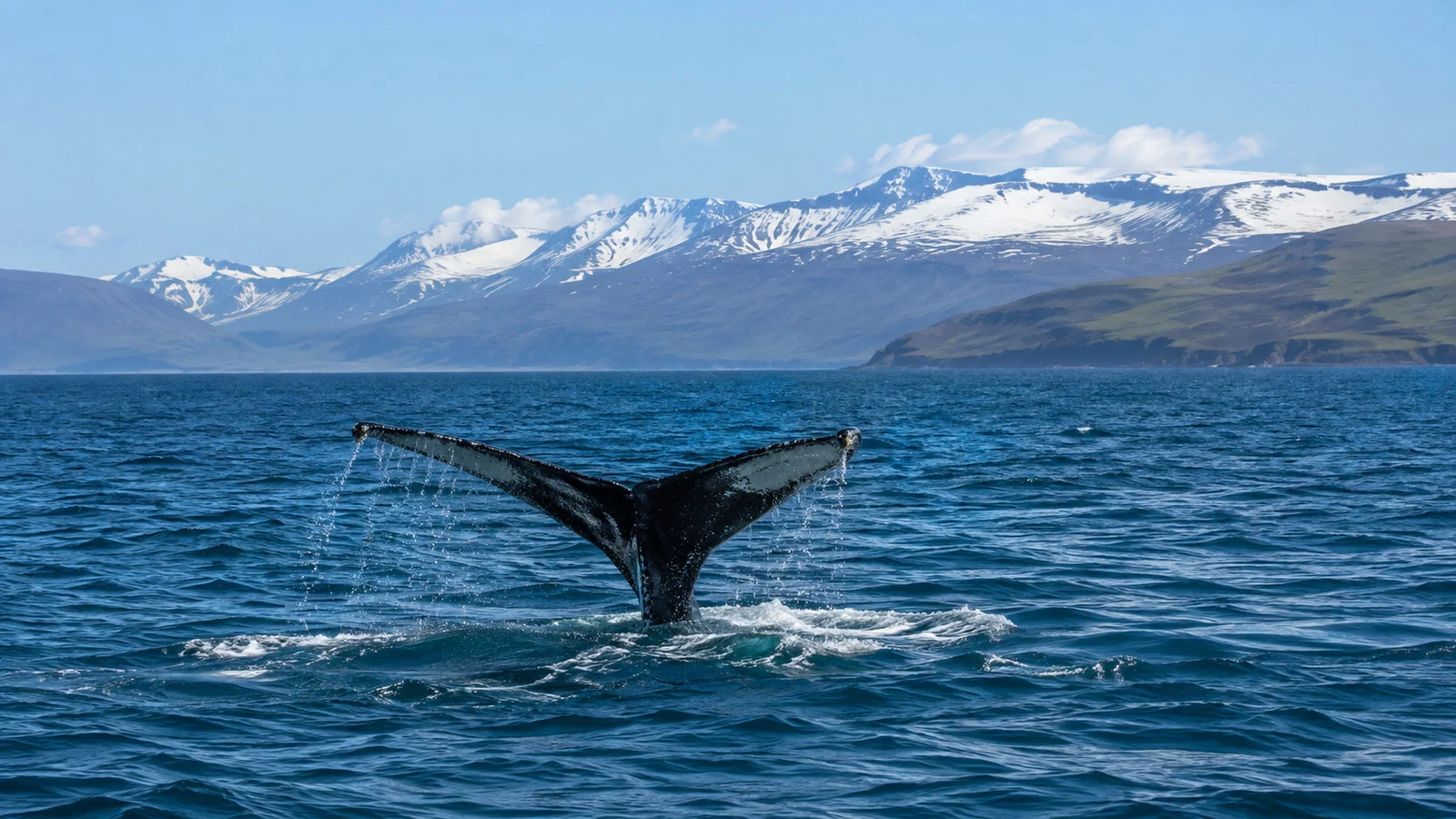
Whale watching is the signature activity, and several operators leave directly from the harbor. The experience usually involves open water, cold wind, spray, steep boarding steps, and a return time that must fit the ship’s schedule.
North Sailing’s Original Húsavík Whale Watching tour is published at about three hours and operates seasonally. The operator provides warm overalls and raincoats when needed, but you should still wear layers, closed shoes, gloves, and a secure hat.
North Sailing publishes an average whale-sighting success rate above 97 percent across recent decades. That is an operator statistic, not a promise for one departure, and every wildlife trip remains subject to animal movement and weather.
Humpback whales, minke whales, dolphins, porpoises, and occasional blue whales may be seen in the bay. Let the crew manage distance and approach, and choose an operator that follows responsible whale-watching practices.
For an independent booking, choose a departure that returns at least 90 minutes before all aboard. Add more margin when the cruise ship is tendering, because the whale boat’s safe return does not guarantee the ship’s tender service is running on the same rhythm.
Passengers prone to motion sickness should speak with a clinician before travel and follow the product directions for any medication. Looking toward the horizon, staying in fresh air, and avoiding a heavy meal immediately before departure can also make the ride more comfortable.
Húsavík Whale Museum
The Húsavík Whale Museum sits on the harborfront and makes the easiest indoor companion to a boat trip. Its collection includes 13 real whale skeletons plus exhibits on biology, behavior, conservation, and Iceland’s whaling history.
The museum publishes longer hours from May through September and shorter hours from October through April. Check the current schedule and ticket page on the day, especially if your ship arrives early or late.
Allow about an hour for a focused visit and longer if you enjoy natural history. The skeletons give useful scale to animals that can look surprisingly modest when only a back and blow appear above the bay.
This is also the strongest fallback when weather cancels whale watching. You still leave with a better understanding of Skjálfandi Bay rather than only a refund receipt and a damp hat.
GeoSea geothermal sea baths
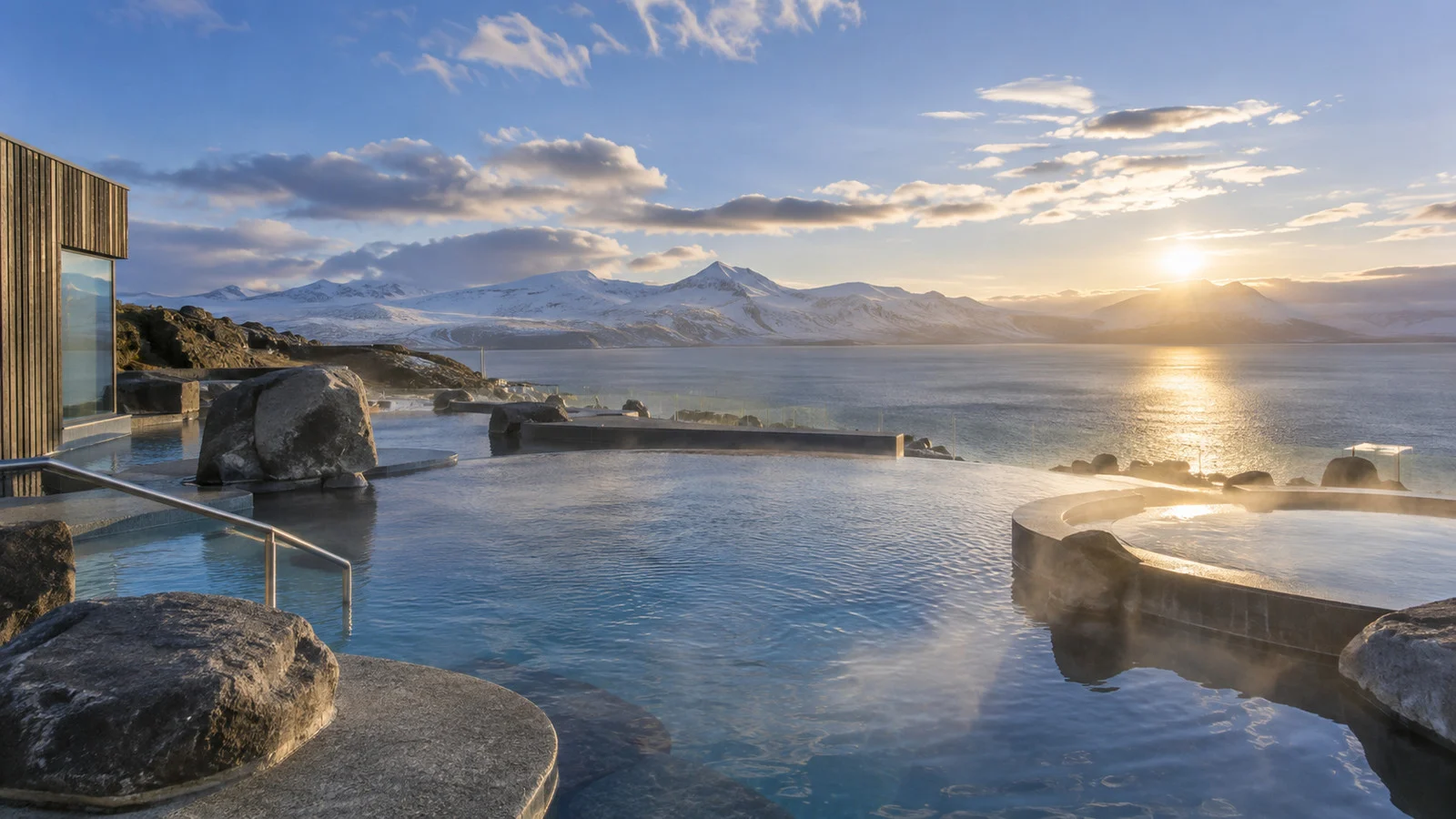
GeoSea overlooks Skjálfandi Bay from the headland at Vitaslóð 1. Its pools use mineral-rich geothermal seawater, combining a warm soak with wide views of the bay and mountains.
The official GeoSea site publishes current opening hours, prices, and booking availability. Hours can differ by season, and a morning port call may begin before the baths open.
The uphill location makes a taxi sensible for travelers with limited mobility or little time. Confirm the pickup plan before bathing, because walking downhill in wet hair while watching the ship is a poor way to test your schedule.
Bring a swimsuit and follow the required shower procedure before entering the pools. Reserve only when the cancellation terms and return margin work with the cruise call.
Weather and a sensible backup plan
Skjálfandi Bay can look calm from the quay while wind is building farther offshore. Check the Icelandic Meteorological Office forecast, then rely on the captain and local operators for the final decision.
Dress for the water rather than the town thermometer. A windproof outer layer, warm midlayer, gloves, and shoes with grip remain useful even in midsummer.
If the whale boats cancel, combine the Whale Museum, harborfront, church, and a relaxed meal. GeoSea can work if spaces and opening hours align, while a long road excursion should not be improvised after a late cancellation.
Do not assume the cruise ship will cancel because a smaller boat does. Different vessels have different operating limits, and an alongside ship may remain secure while harbor excursions pause.
Ásbyrgi, Dettifoss, and the Diamond Circle
Ásbyrgi canyon and Dettifoss are major North Iceland sights, but they are not harborfront attractions. They require road transport and enough time for weather, road conditions, parking, walking, and a protected return.
A ship excursion is the practical choice on a normal port day because the line controls the transportation and can adjust the group around its schedule. An independent rental car only makes sense on a long call with confirmed availability and generous spare time.
Check the current Vatnajökull National Park visitor information and Iceland’s official road conditions before departure. Seasonal closures, snow, construction, and surface conditions can change the route even when the harbor is bright.
Choose either a local Húsavík day or a Diamond Circle excursion, not both. The whales do not coordinate their surfacing with a bus timetable, which is rude but ecologically reasonable.
Accessibility from ship to shore
An alongside call can be manageable because Bökugarður is a working concrete quay and the harborfront starts nearby. The ship’s gangway can still be steep, and its slope changes with vessel position and water level.
Tendering presents a different challenge because passengers may need to step into a moving small boat. Cruise lines set participation rules based on sea conditions, transfer design, and the crew’s ability to assist safely.
Ask whether a wheelchair or scooter can cross the gangway, whether it must fold, and whether lifting is required. Confirm the complete route from cabin to quay rather than relying on a statement that the town itself is accessible.
The Whale Museum is close to the harbor, but step-free entry, elevators, and restroom access should be confirmed directly for your date. GeoSea should also be asked about the entrance, changing rooms, pool access, and transportation from the quay.
Historic streets may include uneven paving and inclines. A taxi can conserve energy for the attraction that matters instead of turning the hill into the main event.
Money, connectivity, and practical details
Cards and contactless payments are widely used in Iceland, but carry a backup card and know its PIN. Prices for tours and attractions can change, so use official booking pages rather than relying on an old screenshot.
Mobile service is generally useful in town, though coverage at sea can vary. Download booking confirmations and the ship’s contact details before leaving the harbor.
Public restrooms, cafés, and visitor services cluster around the waterfront. Opening times can be seasonal, so an early or late call may offer fewer choices than a midday visit.
Safety on the quay and water
Stay behind barriers and away from mooring lines, loading areas, and moving equipment. Working harbors look photogenic precisely because work is happening, and the ropes do not become safer when the light is excellent.
On a whale boat, keep one hand available, follow crew instructions, and move slowly when the vessel rolls. Secure phones and cameras with straps, but do not tie yourself to fixed boat fittings.
Never climb down an unstaffed ladder or try to board a tender outside the organized operation. If conditions worsen, return early and let the ship manage the final transfer.
Three realistic port-day plans
Short call or uncertain weather
Walk the harbor, visit the Whale Museum, see Húsavíkurkirkja, and stop for coffee or lunch. This plan stays flexible and keeps you close to the ship.
Whale-focused day
Take one three-hour whale-watching trip, then leave time for the museum or harborfront. Book the boat early enough that weather delays and tender queues do not consume the return margin.
Long call with an organized excursion
Choose a Diamond Circle route to Ásbyrgi, Dettifoss, or another inland sight if the ship offers it. Accept that this plan trades independent harbor time for distance and scenery.
Quick answers
Do cruise ships dock in Húsavík?
Some ships berth at Bökugarður, while larger vessels or ships without an assigned berth may anchor and tender. Confirm the day’s operation onboard.
How far is town from the port?
The harborfront is part of town, and the Whale Museum, church, restaurants, and whale boats are close to the landing. Uphill destinations take more time and effort.
Can I book whale watching independently?
Yes, if the departure returns with a generous buffer before all aboard. Tender calls need extra time because two separate small-boat operations are involved.
What happens if whale watching is canceled?
Use the Whale Museum, harbor walk, church, cafés, or GeoSea if its hours and availability fit. Keep one flexible backup rather than trying to build a new cross-country plan at the last minute.
Is Húsavík suitable for limited mobility?
An alongside call and harborfront visit may be manageable, but the gangway, tender possibility, uneven paving, and hills need individual confirmation. Ask the cruise line and each attraction about the complete route.
The last word
Húsavík is at its best when you treat the harbor as the destination rather than the starting line for an overfilled map. Whales, a thoughtful museum, good food, and the town’s wooden church can create a complete day within a compact area.
Confirm whether you are alongside or tendering, choose one priority, and keep a weather-proof backup. The bay will make the final decision, and a good Húsavík plan leaves room for it.
How this guide was researched: No firsthand visit is claimed. Port dimensions and tender facilities were checked September 12, 2026, against the Port of Húsavík, while tour, museum, bath, park, road, and weather guidance was checked against the official sources linked above.
Berths, schedules, prices, wildlife, weather, and accessibility can change, so confirm them before travel.