Chandannagar River Cruise Port: Strand, French Heritage and Landings
Chandannagar is a Hooghly river call with landing conditions shaped by tide, vessel, and operator rather than a permanent cruise terminal. Confirm the gangway, Strand route, museum and church hours, India entry permission, heat, mobility, and return before treating every mapped jetty as usable.
My quick take
Chandannagar is an active 2026 lower Ganges call and one of the easiest heritage stories to grasp in a single morning. The Strand, French-era buildings, church, riverfront ghats, and two very different museums sit in a compact urban core.
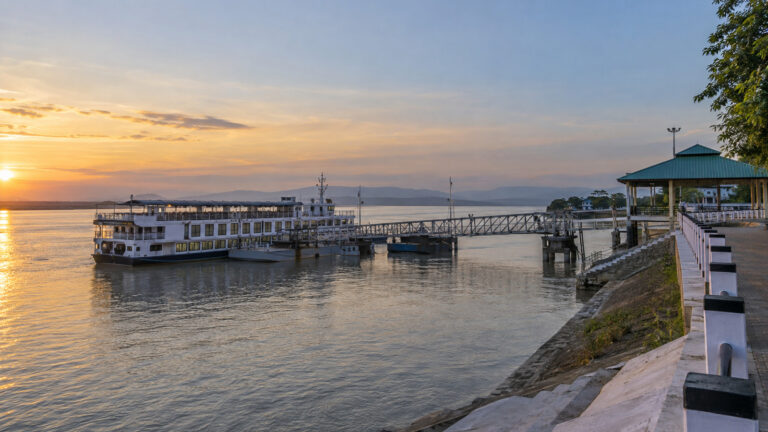
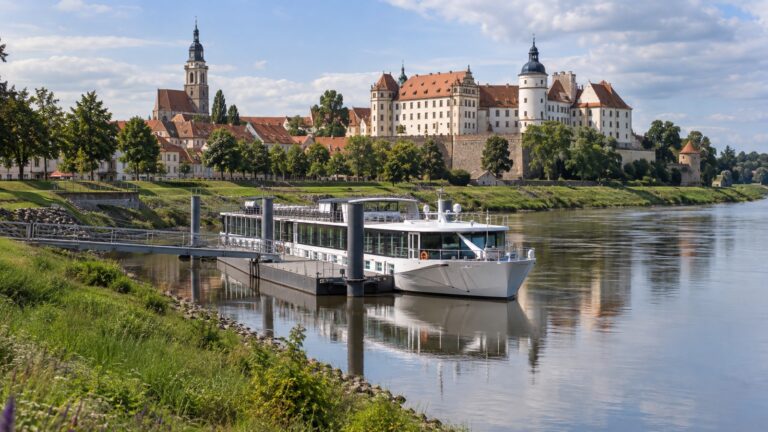
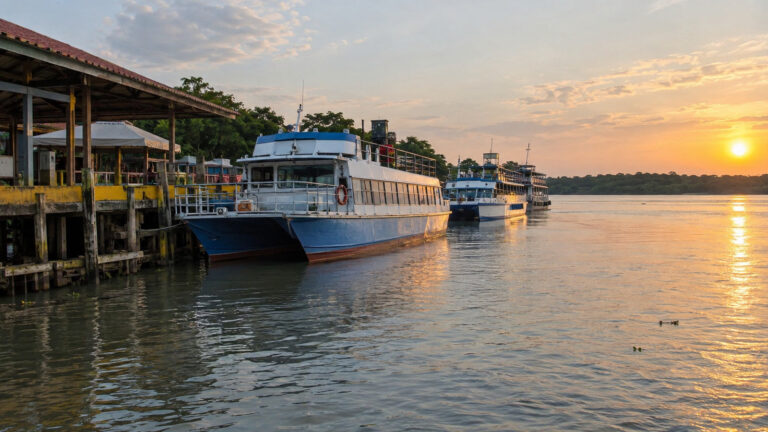
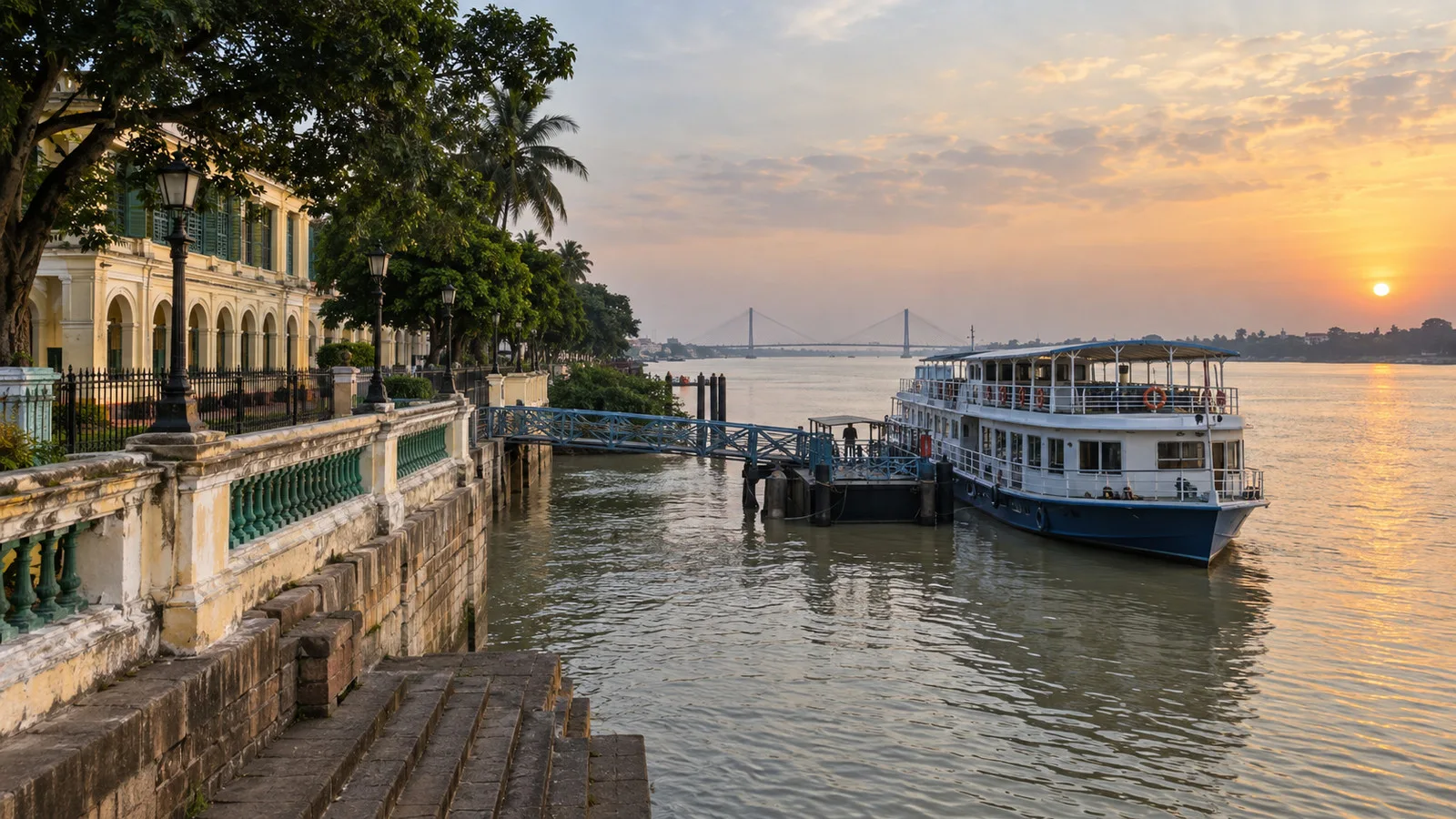
It is not a fixed-terminal port, even though the city has public ferry ghats. Your ship may use a crew-arranged gangway or a jetty boat, and its safe landing can change with tide, traffic, depth, and bank conditions.
I would take the included walk and pay close attention to which museum is named in the daily program. Uniworld’s current excursion points to Chandernagore College Museum, while other itineraries may use the Institut de Chandernagor, also called Dupleix House.
Quick facts
- Into Town: A crew-arranged gangway or jetty boat should land near the waterfront; the Strand heritage core is then explored on foot.
- Currency and Language: Indian rupee and Bengali. Hindi is widely understood; English is useful at museums and on organized tours.
- Time Zone: India Standard Time, UTC+5:30 year-round, with no daylight saving time.
- How Often the Call Is Missed: Not published. Tide, fog, river traffic, water level or landing conditions can move, shorten or replace the call.
The city, waterway authority and cruise lines do not publish an audited port-specific missed-call rate. A different landing or shortened visit may occur without the whole call disappearing.
Is Chandannagar an active river cruise port in 2026?
Yes. Uniworld’s 2026 Sacred Ganges itinerary includes Chandannagar on its Mayapur day, with a current excursion devoted to the city’s French colonial heritage.
Uniworld also lists the itinerary for 2027 and 2028, supporting Chandannagar’s continuing role as a lower Ganges call. Its published schedule does not assign one permanent berth to every vessel.
Chandannagar is usually near the beginning of an upstream itinerary or near the end of a downstream one. It can be paired with Mayapur, Hooghly, Chinsurah, or Barrackpore depending on direction and how much sailing the operator schedules that day.
For the full sequence, the Ganges River cruise ports guide separates the lower Hooghly and Bhagirathi stops from the much longer route through Farakka toward Varanasi. That distinction matters when comparing two cruises both sold as “the Ganges.”
Where does the ship land?
No current public source documents a dedicated Chandannagar cruise terminal or one compulsory river-cruise berth. Operators sell a heritage visit and leave the exact landing to the vessel team and local arrangements.
Uniworld has described using a jetty boat carried alongside its Ganges ship to take passengers ashore at smaller calls. A shallow-draft vessel may also approach a suitable bank or landing closely enough to use a gangway, so the method can differ by ship and river condition.
Rani Ghat is a recognized public ferry access point, but that does not make it the guaranteed cruise landing. The Government of India’s Museums of India directory lists ferry access through Rani Ghat for independent museum visitors, not a universal berth assignment for river ships.
This is therefore a “listen to tonight’s briefing” port. Ask whether you will step onto a pontoon, bank, ghat, or small transfer boat, and wear shoes that can cope with damp steps rather than shoes chosen exclusively to admire themselves.
Why the tide matters here
Chandannagar lies on the Hooghly below Nabadwip, within the tidal part of National Waterway 1. The Inland Waterways Authority of India defines the route as the Ganga-Bhagirathi-Hooghly river system between Haldia and Prayagraj.
Tide changes the height difference between ship, boat, and shore during the day. A gangway that looks almost level at arrival can become steeper by departure, while a launch step can shift as both boats move.
Season adds another layer. Monsoon rain can raise flow and carry debris, while leaner periods expose silt and reduce the useful depth near a bank, so captains may favor a different landing without changing the advertised city.
That flexibility is normal river operation, not a bait and switch. The site’s river cruise water-level guide explains why a changed gangway or launch point often preserves the excursion rather than cancels it.
Can you walk from the landing?
The heritage core is compact enough for an organized walking tour once you reach the Strand area. West Bengal Tourism places the Strand, Dupleix museum, and Sacred Heart Church together along or just off the riverfront.
Walking time from the ship cannot be guaranteed because the landing itself moves. Ask the crew how far the day’s landing is from the central Strand and whether a jetty boat is involved.
A ship can arrange local road transport if the safe landing falls outside the most convenient stretch. Follow the daily briefing rather than a fixed map estimate.
Independent passengers arriving by train or road have different logistics from cruise guests. Chandannagar has suburban rail and road links to Kolkata, but neither helps when your all-aboard time is tied to a launch controlled by the ship.
The Strand is the organizing spine
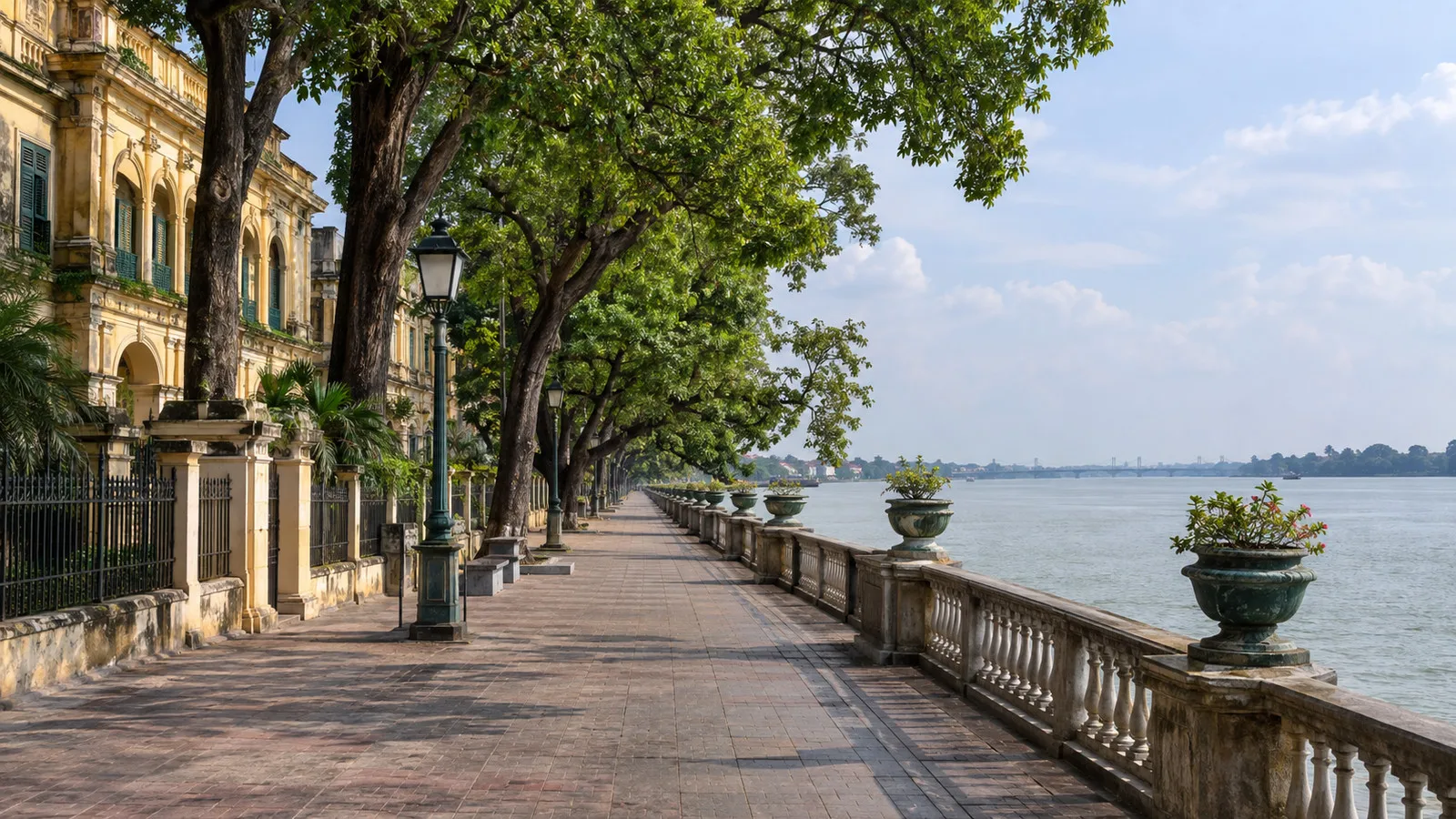
The Strand is a broad riverfront promenade lined with mature trees, ghats, monuments, institutions, and surviving French-era architecture. It provides the cleanest walking line through the city and the easiest place to understand why European trading powers wanted this river bend.
West Bengal Tourism calls it one of the Hooghly’s most beautiful stretches and highlights the Durgacharan Rakshit Ghat, whose ornament combines Indian and French influences. The official tourism page also places the museum and Sacred Heart Church within this core.
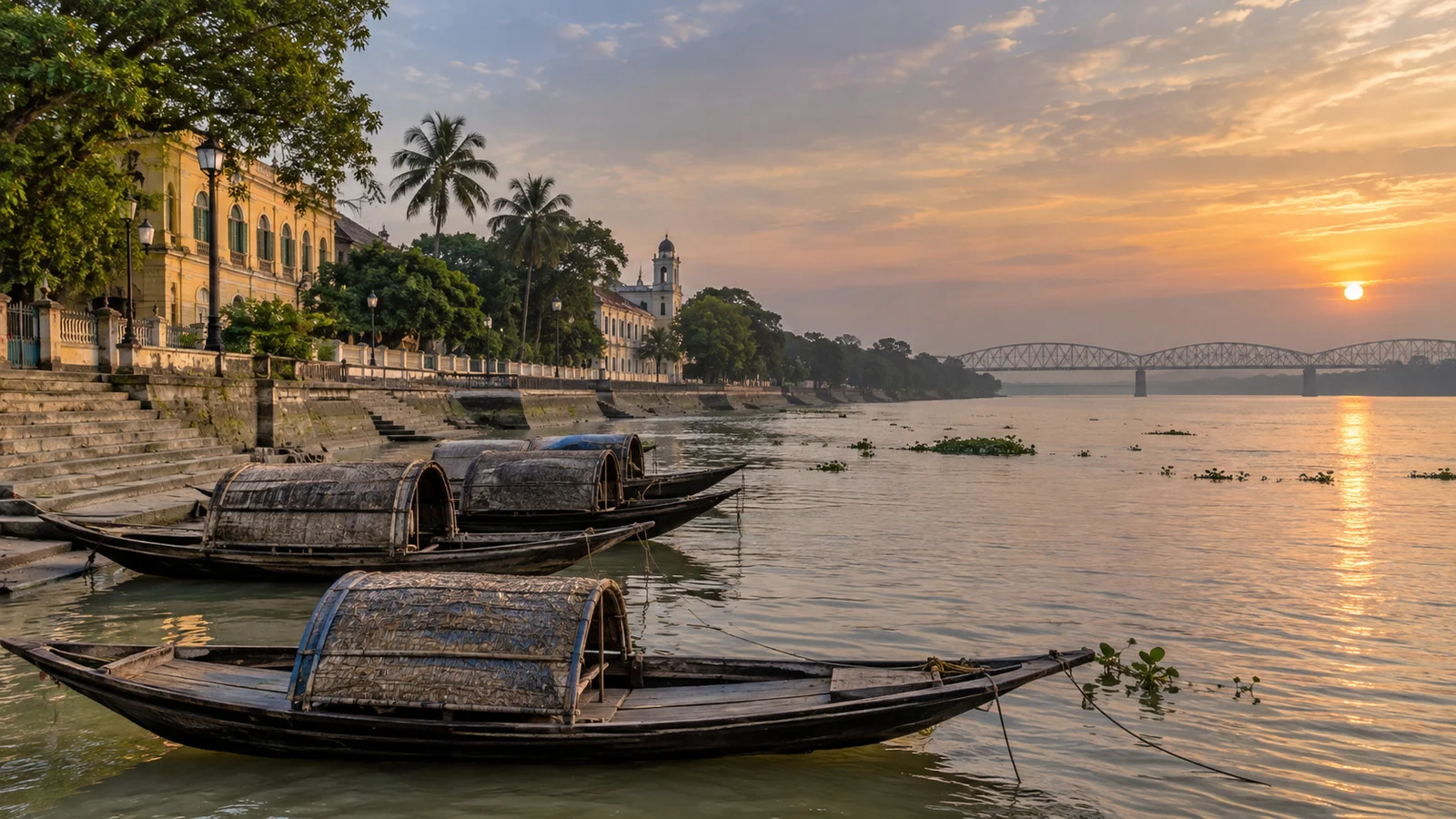
Look toward the water as often as you look at the facades. Passenger ferries, working boats, silt-colored current, and the opposite bank explain the city more effectively than a decorative plaque ever could.
The promenade is generally the easiest portion of the visit, but “flat” should not be translated as “perfectly step-free.” Paving joints, curb changes, crowds, ghat steps, heat, and a potentially awkward landing remain part of the route.
French history without the postcard shorthand
French commercial activity took root here in the late seventeenth century, and the settlement developed separately from nearby British-controlled Kolkata. Chandannagar remained linked to France after Indian independence and was integrated into India in the early 1950s.
The surviving architecture is not a preserved French theme park. It is a layered Indian city where colonial buildings, Bengali religious traditions, colleges, markets, homes, and ferry traffic continue to share the same streets.
That makes the heritage walk more interesting than a simple “little France” label. The French trading story sits beside the history of anti-colonial resistance, which is why the two museums emphasize different chapters.
Institut de Chandernagor, also called Dupleix House
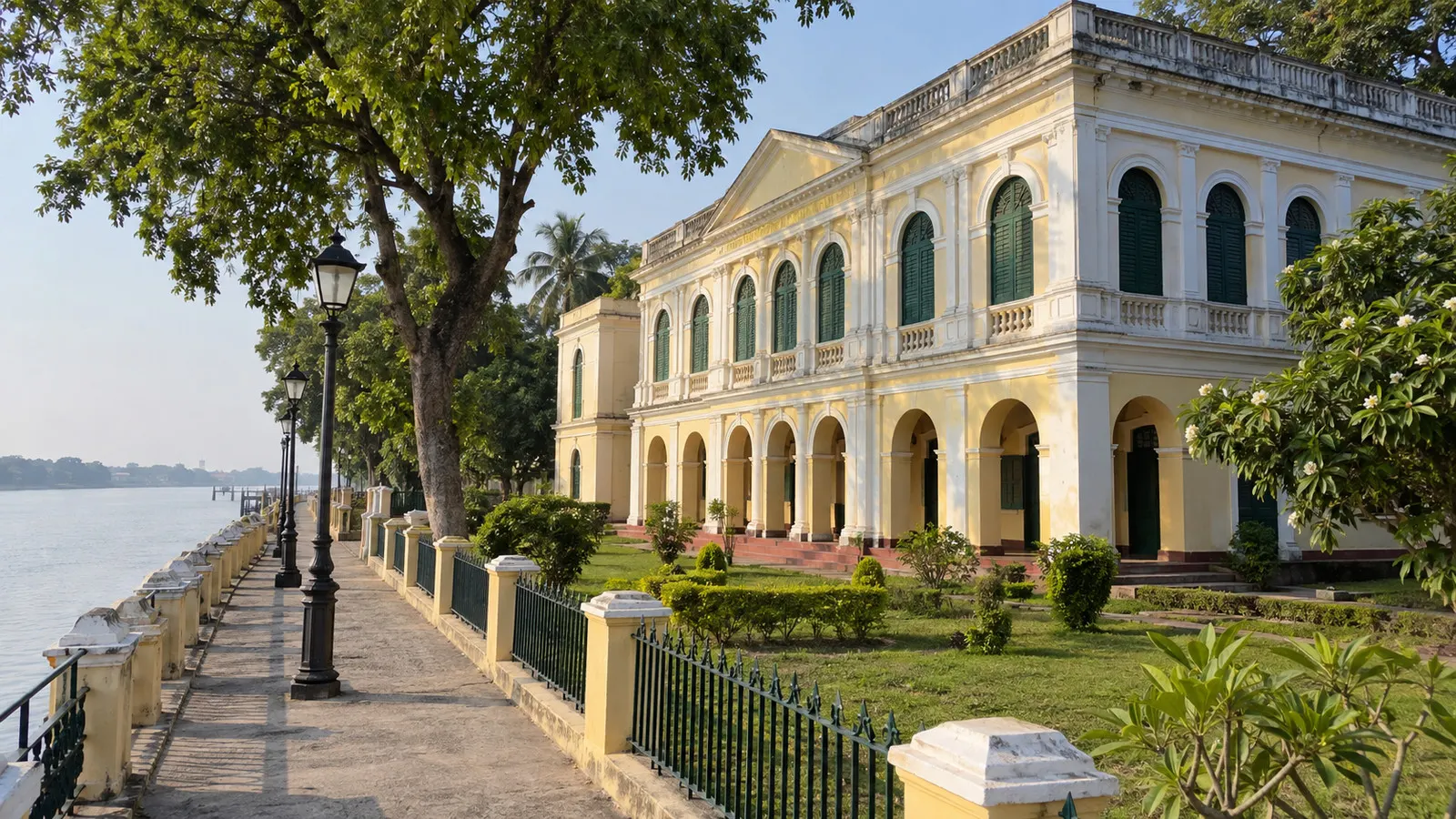
The Institut de Chandernagor is the older French-history museum on Strand Road, often called Dupleix Palace or Dupleix House in cruise material. The Government of India’s museum directory describes French antiques, furniture, manuscripts, military objects, and personal material associated with French administrators.
The same directory currently lists opening from 11:00 in the morning to 6:30 in the evening on Sunday through Wednesday and Friday. Thursday, Saturday, and public holidays are listed as closed.
Those hours can change, and a cruise operator may arrange access differently or substitute another site. Check the day’s program before promising yourself an interior visit, especially on a Saturday or during a public holiday.
The directory marks the museum wheelchair friendly and lists a restroom, drinking water, parking, and guided tours. That rating applies to the museum facility, not the ship-to-museum route or the river landing.
Chandernagore College Museum is a different museum
Uniworld’s 2026 excursion names Chandernagore College Museum, not the Institut. The college’s official museum page explains that its five rooms focus on the city’s evolution, architecture, freedom movement, revolutionary figures, local weaving, cultural traditions, and the history of the college.
The museum occupies the college’s heritage building on Strand Road, an approximately two-hundred-year-old French structure. It is especially valuable for balancing the colonial trade story with Chandannagar’s role in the struggle for independence.
Do not use Dupleix House and Chandernagore College Museum as interchangeable map labels. They are distinct institutions, and your operator may visit one, the other, or both depending on the excursion.
The college’s official campus page documents a ramp and elevator in its newer administrative building, but it does not confirm an end-to-end step-free route through the heritage museum. Guests with mobility needs should ask the operator specifically about the museum entrance being used.
Sacred Heart Church
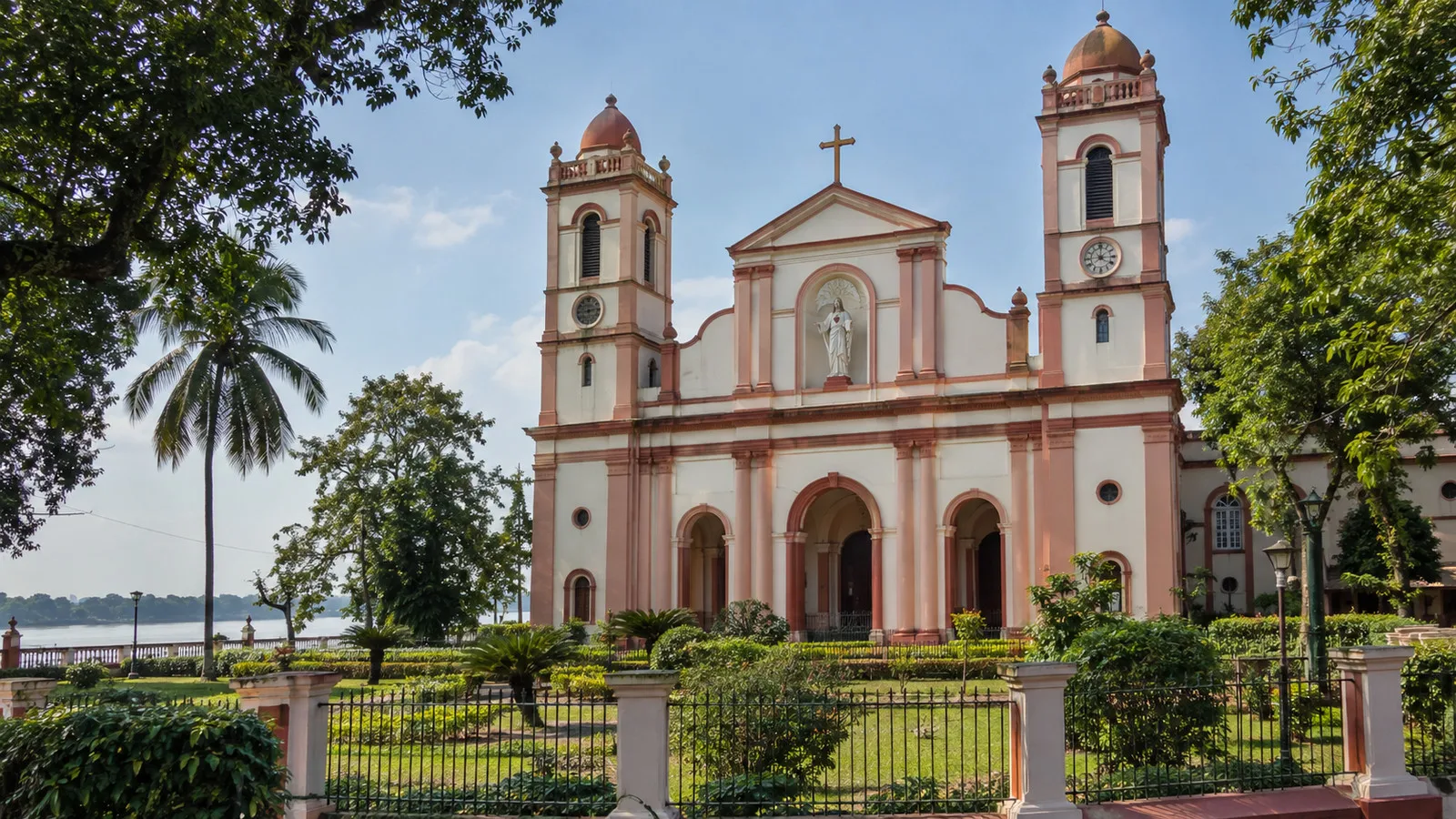
Sacred Heart Church sits just off the Strand and appears in both West Bengal Tourism and current cruise-line heritage routes. Its facade, interior proportions, and stained glass make it a natural short stop between riverfront landmarks.
It remains a place of worship rather than a museum set. Cover shoulders and knees, lower your voice, avoid flash, and accept that a service or church event can limit sightseeing access.
Published descriptions do not always agree on the church’s date. This guide treats it simply as a historic French-era Catholic church and leaves the disputed date out.
What else fits into a short call?
Durgacharan Rakshit Ghat is the easiest architectural pause on the Strand, with no major detour. The river view also gives you a useful rest even if the tour is moving briskly.
The Patal Bari, an unusual riverside house with lower rooms extending below street level, is associated with Rabindranath Tagore and often appears on longer heritage walks. Interior access should not be assumed, and it may sit outside a short cruise-line route.
Nandadulal Temple adds Bengali religious architecture to a day otherwise marketed through French heritage. It is better treated as an optional extension than a guaranteed included stop unless named in the daily program.
A sweet shop break can be more realistic than squeezing in another museum. Ask the guide for a well-regarded local option, carry small rupee notes, and remember that the ship is probably serving lunch with impressive punctuality.
A realistic accessibility check
Chandannagar is more manageable than a small earthen-bank village, but it is not reliably accessible from ship to sight. The largest unknown remains the landing, especially if a jetty boat, moving step, ghat staircase, or steep gangway is involved.
The Strand itself offers the best chance of a relatively level route, with places to pause and a direct line between several landmarks. Side streets can be busier and less even, and curb cuts should not be assumed at every crossing.
Ask whether the small boat is mandatory, how many landing steps are expected, which museum is included, and whether a vehicle can meet the group near the Strand. Also ask about an accessible restroom, because a listing at one museum does not help if your tour visits the other.
Power chairs and heavy scooters may be impossible to transfer safely into a jetty boat. The river cruise accessibility guide explains why crew assistance cannot replace a ramp, lift, or stable landing.
Weather, fog, and what to wear
Most lower Ganges cruises favor the cooler months after the monsoon, but the river remains humid and sun can feel strong on the open Strand. Lightweight clothing, sun protection, water, and shoes with grip are the sensible combination.
Monsoon weather can bring heavy rain, faster current, debris, and slippery paving. Winter mornings can bring haze or fog that slows navigation, although a delay does not automatically mean Chandannagar will be canceled.
Carry a compact rain layer rather than an umbrella large enough to duel with the rest of the walking group. A small crossbody bag also leaves both hands free if you board a launch.
How I would plan the visit
Take the included heritage walk, confirm the museum name, and photograph the Strand early before the route becomes busy. Save the church interior and museum galleries for the guide, because context matters more here than racing through a list of objects.
If the Institut is closed on the scheduled day, do not treat a college-museum substitution as a downgrade. The college collection offers a stronger freedom-movement narrative and may be the better counterweight to the French architectural story.
Build one short pause into the Strand rather than filling every minute. Chandannagar works because river life and heritage occupy the same frame, and that is hard to notice while sprinting toward one more doorway.
For other Indian ports before or after the cruise, the India cruise ports guide compares river calls with the country’s coastal terminals. The logistics at Mumbai, Kochi, Chennai, and Mormugao are entirely different from this compact river landing.
Quick answers
Is Chandannagar a tender port?
Not in the ocean-cruise sense. A river ship may use a direct gangway or its own jetty boat, depending on vessel, tide, depth, and the assigned landing.
Is the Strand walkable from the ship?
Usually from a nearby operator-arranged landing, but no universal berth is published. Ask the crew for the day’s distance and whether a boat transfer is required.
Which Chandannagar museum will my cruise visit?
Check the daily program. Uniworld’s 2026 excursion names Chandernagore College Museum, while another itinerary may use the Institut de Chandernagor, also called Dupleix House.
Is Institut de Chandernagor open every day?
No. The current government museum directory lists Thursday, Saturday, and public holidays as closed, but operator-arranged access and hours should be reconfirmed.
Is Chandannagar wheelchair accessible?
Only in parts. The Strand is the easiest section and the Institut is listed as wheelchair friendly, but the ship landing and complete route are not verified step-free.
Can I explore independently?
The compact core makes independent walking possible only if the cruise director confirms free time and return logistics. Never miss a ship-controlled jetty boat because you found one more French balcony.
How I would use the Strand as the simple backbone
Follow the cruise company’s current landing because tide and bank access can move the gangway. The Strand, Sacred Heart Church, and official heritage museums form a compact route only when their date-specific opening hours align.
Use West Bengal Tourism and the institutions themselves for current access, and do not merge the Institut de Chandernagor with the college museum. Prioritize one museum rather than racing between locked doors.
Verify India entry requirements through official government guidance and follow the ship’s stated return time. Tide-related gangway grades, uneven sidewalks, traffic, heat, museum thresholds and limited accessible toilets deserve separate checks.
The last word
Chandannagar earns its place on the lower Ganges itinerary by being more complicated than its “French town” nickname. The Strand gives you the colonial facade, while the museums supply the trade, education, resistance, and local culture behind it.
Confirm the landing, confirm the museum, and let the riverfront do the rest. This is a port where a slow walk and a good guide beat a heroic checklist every time.
How this guide was researched: No firsthand Chandannagar visit is claimed. Active 2026 calls and excursion details were checked against Uniworld.
Heritage and access facts were checked against West Bengal Tourism, Chandernagore College, the Government of India’s Museums of India directory and the Inland Waterways Authority of India. Operational facts were reviewed September 12, 2026.
See the CruisePorts.co Editorial Policy.