Australia or New Zealand: Which Half of the Itinerary Matters More
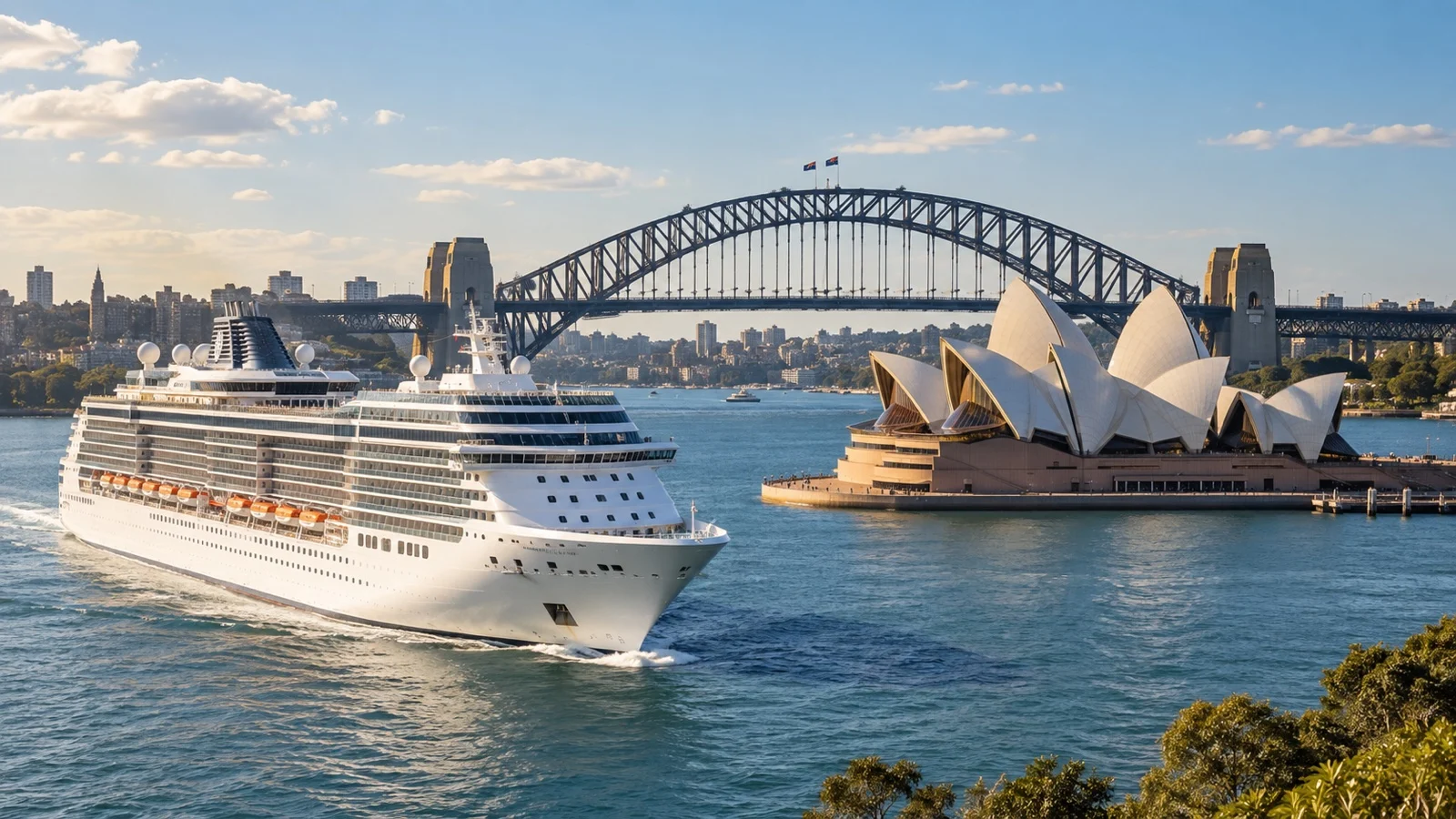
Most people book this cruise for the Sydney Opera House and come home talking about a fiord they never set foot in. The itinerary you pick decides which country gets the good days, and the two halves are not equally replaceable.
My quick take
Weight the itinerary toward New Zealand. Australia’s cruise ports are mostly big, comfortable cities that you can fly to and visit properly on their own, while New Zealand’s best stops are scattered, awkward to reach independently, and much better delivered by a ship.
I would still keep Sydney on the route, because it is one of the great arrival ports anywhere and the terminal you draw changes the whole day. But if a line offers me two versions of the same trip and one has four New Zealand calls instead of two, I take the one with four every time.
The quick facts
- Season: The region sails roughly October to April, with the busiest and priciest weeks from December to February.
- The crossing: Sydney to Auckland is usually two or three days of open Tasman water, and it is not always a calm two or three days.
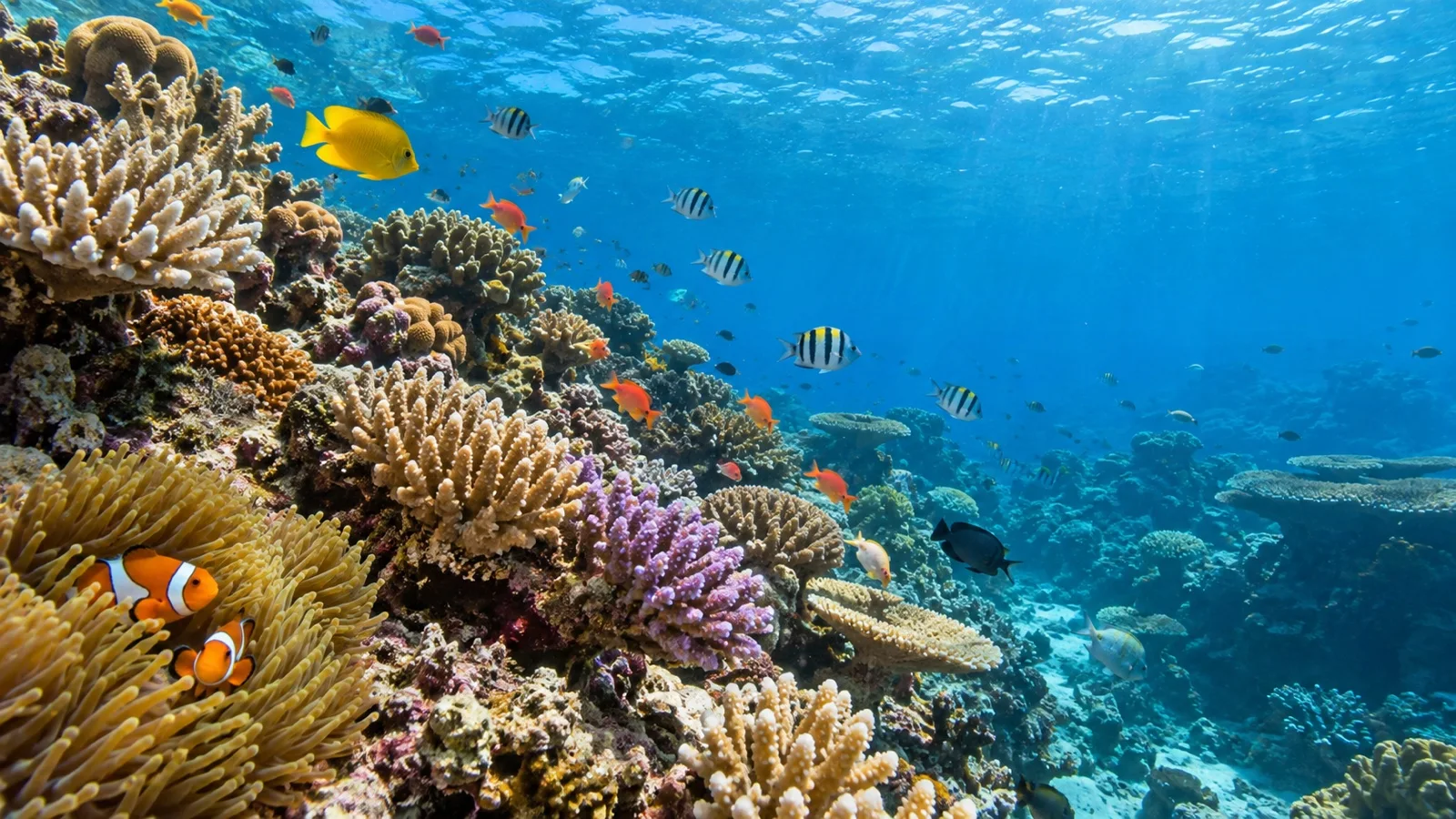
- The reef: The marine park runs about 1,400 miles (2,300 km) down the Queensland coast, and you will see a very small slice of it.
- The fiords: Fiordland scenic cruising is a deck day, not a port call, with no gangway and no ticket to buy.
- Flights: Figure roughly fifteen hours in the air from the West Coast to Sydney, plus a day lost crossing the date line.
What an Australia weighted itinerary actually is
The Australia heavy version is usually a round trip from Sydney or Brisbane, running up the Queensland coast or down to Tasmania. You get city ports, one or two reef ports, and a lot of coastline that looks similar from the rail.
The main season is the Australian spring and summer, roughly October through April, and the site’s rundown of every Australian cruise terminal lays out which cities act as homeports and which are only ports of call. Sydney, Brisbane, Melbourne, Adelaide and Fremantle are the ones that start voyages.
These itineraries are easy. Almost everything is walkable or a short taxi, English is everywhere, and you do not need a single organized excursion to have a good day.
What a New Zealand weighted itinerary actually is
The New Zealand heavy version is either a round trip out of Auckland or a one way sailing between Sydney and Auckland, and the one way routings tend to carry more New Zealand calls. The typical shape is Fiordland from the deck, then up the South Island and North Island coast over a week or so.
New Zealand’s season matches Australia’s, roughly October to April, and the guide to every main New Zealand stop covers nine of them from the Bay of Islands down to Dunedin. Most voyages start or finish in Auckland.
These days are less walkable and more excursion driven, which is exactly why the ship earns its money here. Getting to a royal albatross colony or a geothermal valley on your own is a real logistics problem, and the ship solves it.
The reef is bigger than one port day, and that is the problem
The marine park covers some three thousand individual reefs spread along the Queensland coast, and the scale of the whole system is genuinely hard to picture. Your ship gives you one boat trip to one pontoon or one dive site.
Cairns is the best of the reef ports for logistics, because the terminal sits on the city waterfront and the walk into town is about five minutes. The trade is that a reef day eats the entire port call, and the practical timing of a Cairns reef trip is tighter than most people expect.
I would book the earliest boat of the day, every time. The version where you take a late boat and watch the clock on the return crossing is not a relaxing snorkel.
Fiordland is the thing you cannot buy anywhere else
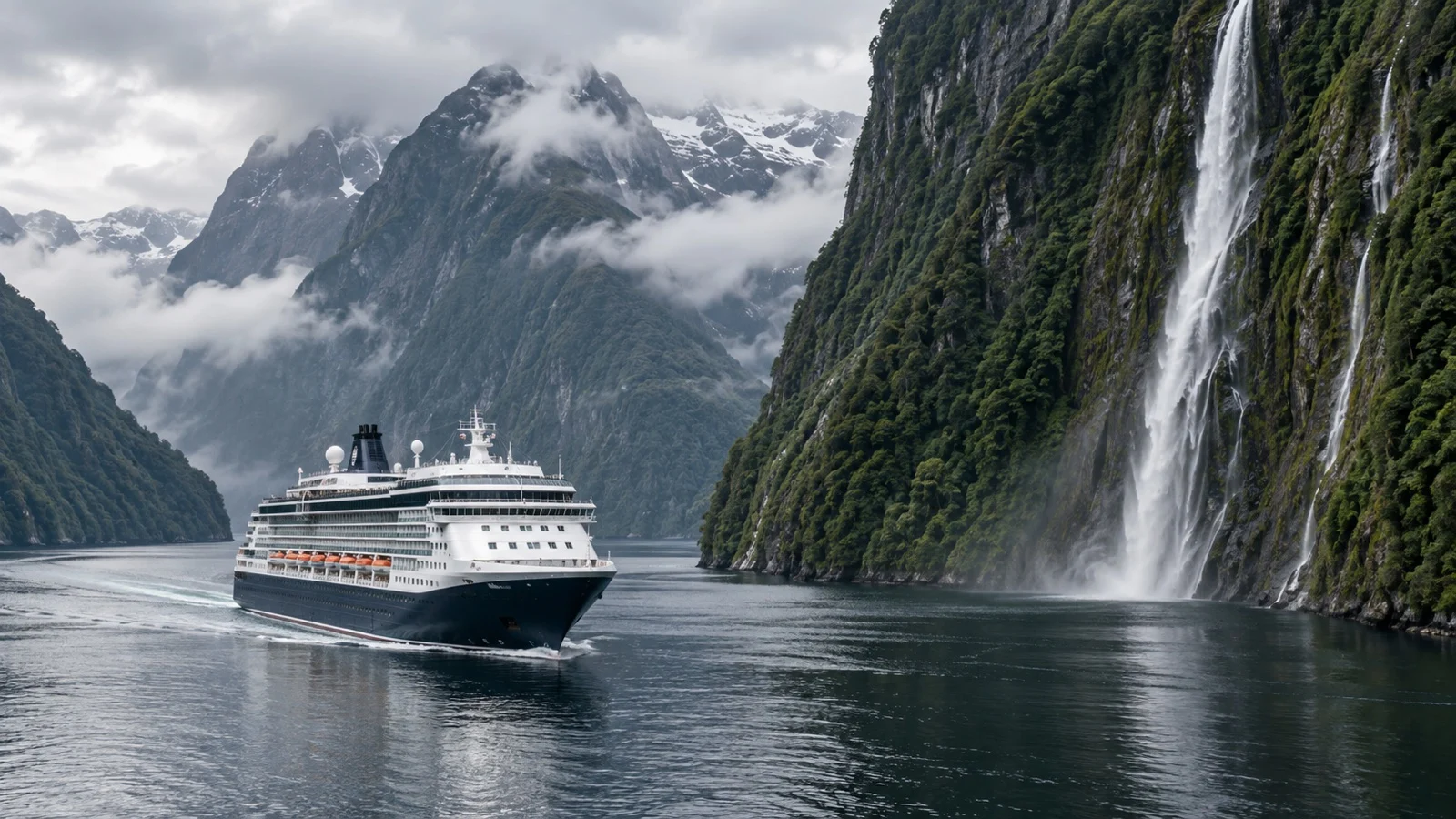
Fourteen fiords cut into the southwest corner of the South Island, and some of them reach around 25 miles (40 km) inland from the open sea. Your ship sails into them, turns around, and sails back out.
Mitre Peak stands just over a mile straight up out of the water at Milford, and the ship passes close enough that you run out of lens. There is no tender, no ticket and no excursion to book, which makes it the best value morning on the entire itinerary.
The practical guide to a Fiordland scenic cruising morning makes the point I would make: rain improves it. Wet weather turns every cliff into a waterfall, so a gray forecast is not a reason to stay in bed.
The Tasman crossing, honestly
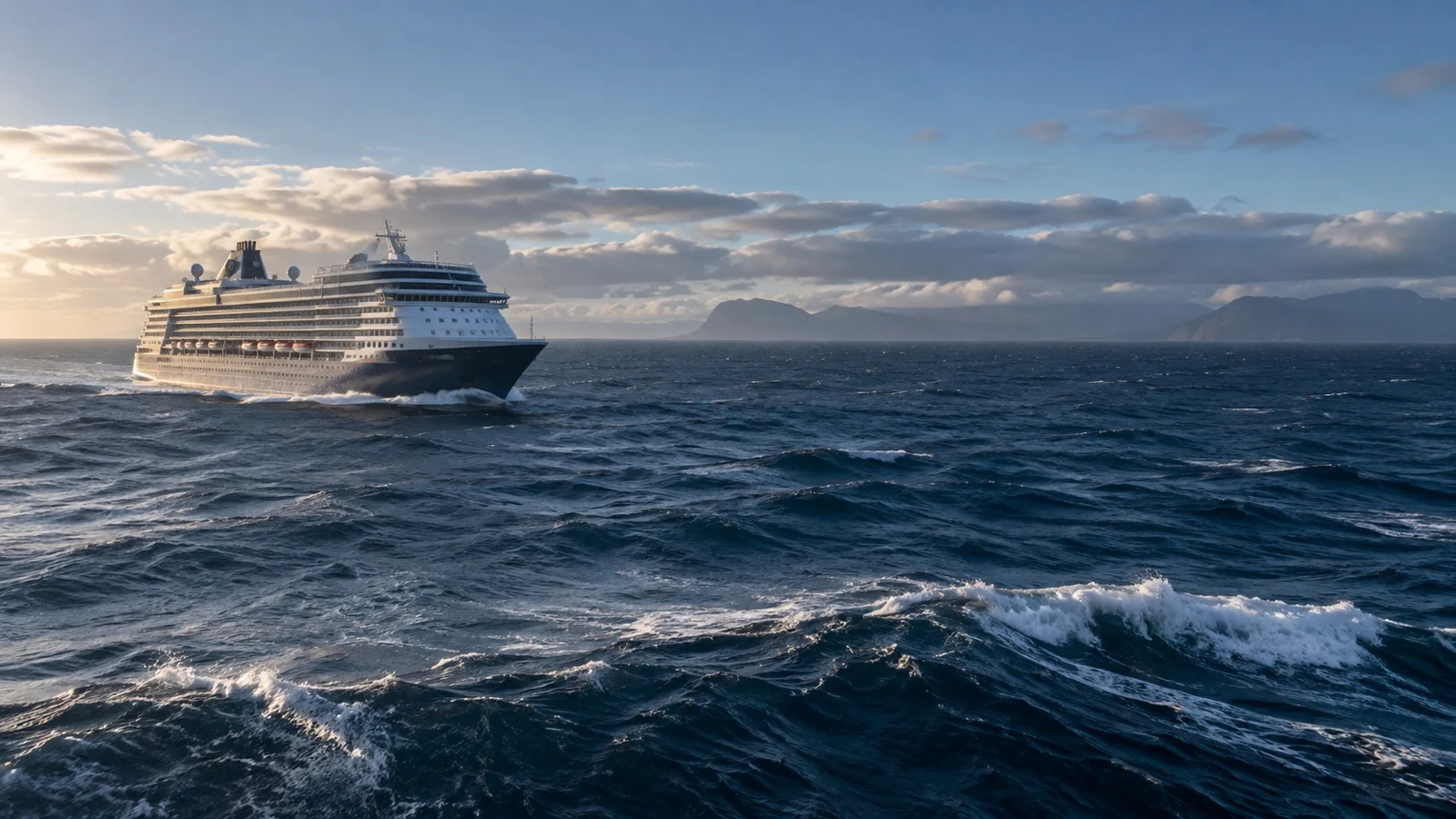
Between the two countries sits open ocean with nothing upwind of it for thousands of miles. Low pressure systems track through the Tasman all year, and the sea state can go from flat to genuinely unpleasant inside a day.
Most crossings are fine. Some are not, and the ones that are not tend to involve a couple of nights where you hold the handrail on the stairs and skip the buffet.
If you are prone to seasickness, this is the single biggest argument for a round trip within one country instead of a crossing. Take the remedy before you feel bad, book midship and low, and understand that a two day crossing is part of what you are buying.
Season, and the trap hidden inside it
The regional season and the tropical Queensland season do not line up, and this catches people. Cruise ships run this coast from October to April, but the northern reef ports are at their driest and clearest from around May to October.
That means a January sailing puts you in Cairns during the wet season, which is also marine stinger season in Queensland ocean waters. Reef operators handle it with suits and briefings, but it is not the postcard version of a reef day.
New Zealand does not have this problem. December through February is genuinely its best weather, which is also when the fares and the crowds peak, so I would look hard at late October, November and March instead.
The flights decide more than the fare does
This is roughly fifteen hours in the air from the West Coast to Sydney and a little less to Auckland, plus whatever it takes you to reach the gateway airport. You cross the date line going out, lose a calendar day, and get it back on the way home.
An open jaw ticket, into one country and out of the other, is what makes a one way itinerary work. It usually costs more than a round trip fare, and it is still almost always cheaper than adding a domestic Australia to New Zealand flight yourself.
Fly in at least two days early. There is no version of this trip where landing the morning of embarkation after fifteen hours is a good plan.
The Australian ports you actually get
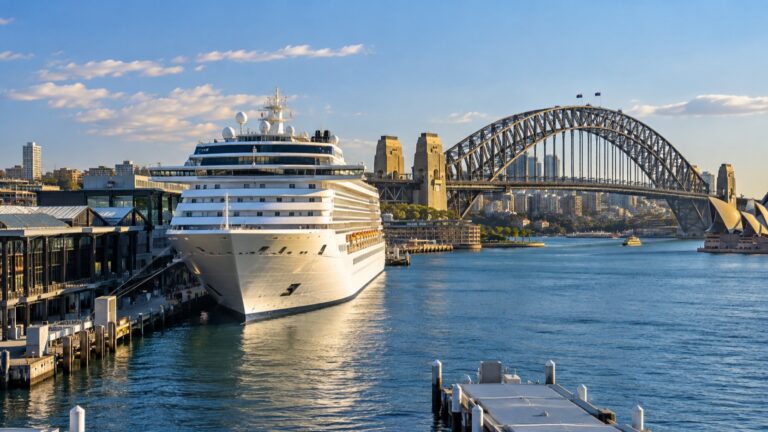
Sydney has two terminals and they are not close to equivalent. The Overseas Passenger Terminal at Circular Quay puts you about 1,500 feet (460 m) from a train station and in the middle of everything, while White Bay sits around 3 miles (5 km) west with no rail and no pleasant walk into the city.
Berths get assigned by size and schedule rather than by a fixed rule, so read your documents rather than assuming, and the breakdown of what each Sydney terminal means for your day is worth ten minutes before you sail. Melbourne uses Station Pier with a tram into the city, Brisbane’s terminal has no public transit at all, and Hobart puts you within walking distance of the waterfront.
Airlie Beach is a tender port for the Whitsundays. That is one more reason a reef day there needs an early start and a tolerance for lines.
The New Zealand ports you actually get
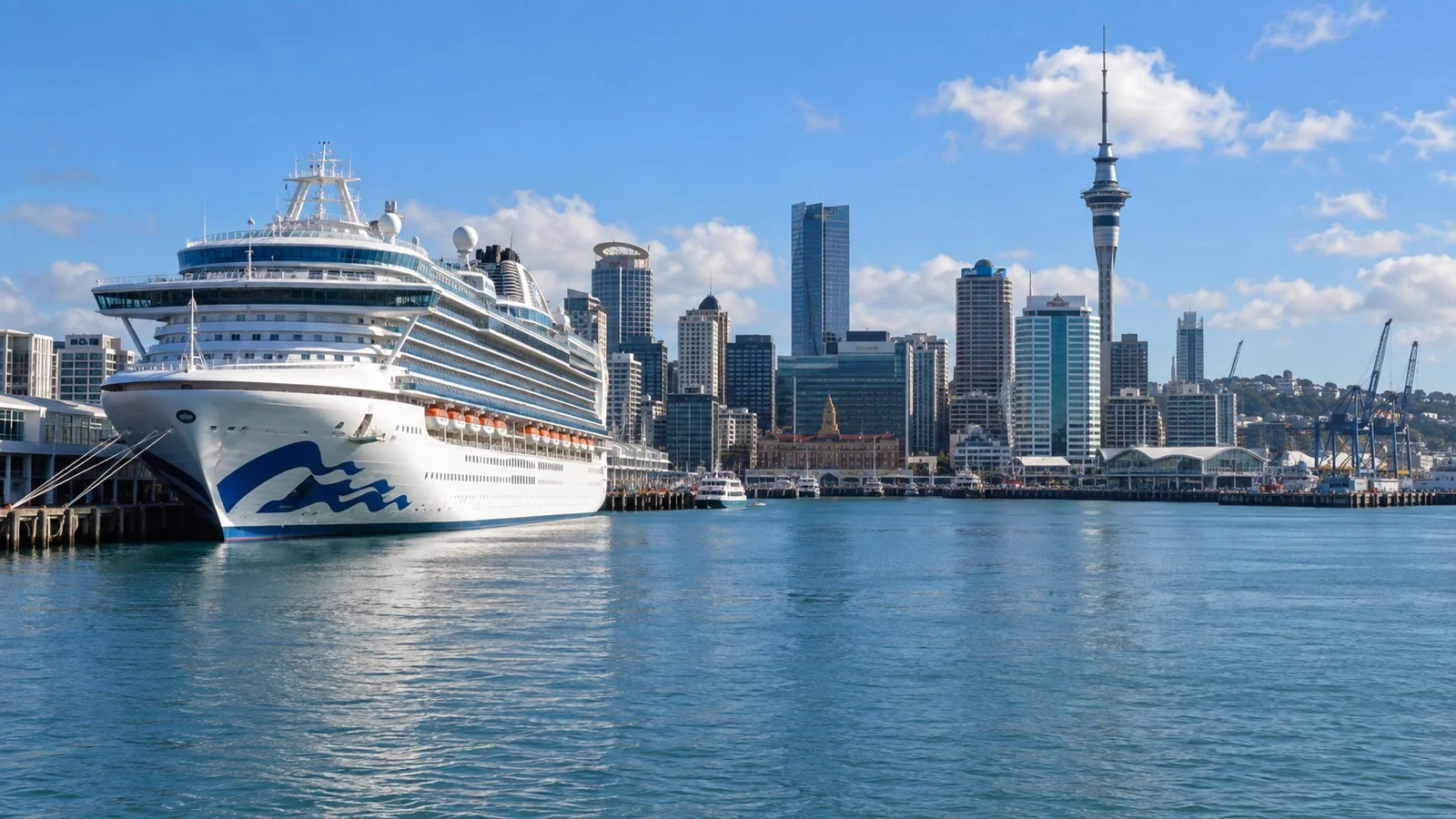
Auckland berths centrally at Queens Wharf and is the hub where most voyages begin or end. Tauranga is the gateway to Rotorua and Hobbiton, Napier is a walkable art deco town rebuilt after an earthquake, and Wellington gives you a museum, a cable car and a harbor walk on foot.
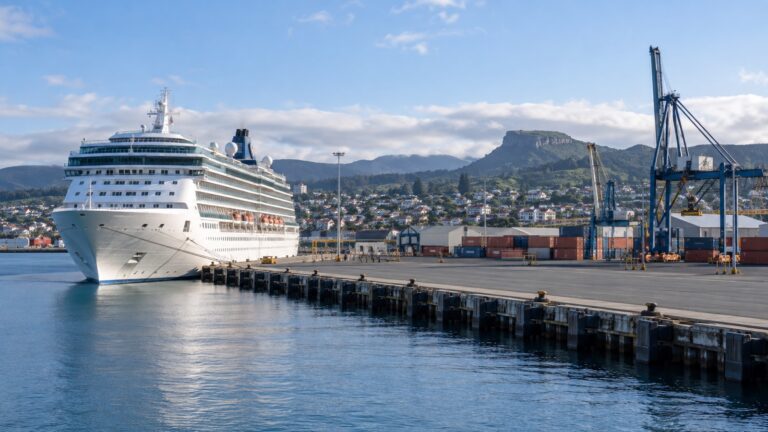
Dunedin is the one I would build a day around. Ships tie up at Port Chalmers about 9 miles (14 km) from the city, and the peninsula beyond it holds the only mainland breeding colony of northern royal albatross anywhere in the world.
Two of the good ones are tender ports, the Bay of Islands and Akaroa, which means weather can take them away from you. That is worth knowing when you compare two itineraries and one of them has a docked Lyttelton call instead.
Which half people wish they had given more days to
It is New Zealand, and it is not close. I have never heard anyone come off one of these itineraries wishing they had spent an extra day in Brisbane.
The reason is structural rather than sentimental. Australia’s cruise ports are large cities that reward three or four days on land, so a single port day there always feels like a sample, while New Zealand’s stops are compact enough that a full day genuinely finishes them.
There is also the density argument. New Zealand’s ports sit close enough together that a week there delivers five or six calls, where the same week on the Australian coast can hand you three calls and three sea days.
Where the money actually goes
The cruise fare is rarely the deciding number on this trip. Airfare, two pre cruise hotel nights and the excursions you cannot skip in New Zealand usually add up to more than the difference between two itineraries.
Excursion spend is genuinely higher on the New Zealand side, because more of those days need a vehicle and a guide. Budget for it rather than being surprised by it on day four.
Neither country expects tipping the way the United States does, which claws a little of that back. Prices are high in both, and I would not expect either one to feel cheap.
Paperwork and biosecurity, briefly
Australia expects most visitors to hold an electronic travel authority before arrival, which allows stays of up to three months per entry within a twelve month window. Check which authority your passport qualifies for well before you sail, not the week before.
New Zealand runs its own scheme, and the request stays valid for two years for travelers, including passengers arriving by ship. Apply early, because the processing time is not instant.
Both countries take biosecurity seriously and they are not joking about it. Declare anything organic, do not carry fruit off the ship, and clean the dirt off your hiking boots before you pack them.
What people get wrong about this choice
The first mistake is treating the reef as the anchor of the trip. One port day gives you one site, and if the sea is up or the boat is full you may not get the day you pictured at all.
The second is assuming the Tasman crossing is dead time to be minimized. Those sea days are how you get from one country to the other without a separate flight, and on a good crossing they are the most restful part of the vacation.
The third is booking the shortest option. A ten night sailing forces the line to cut New Zealand calls first, because the crossing and the Australian homeport are fixed and the New Zealand coast is where the flexible days live.
What I would book
Twelve to fourteen nights, one way between Sydney and Auckland, with Fiordland plus at least four New Zealand calls. That gives you the crossing, the fiords, a proper spread of New Zealand ports and one great Australian city at the end you fly into.
If someone in your party cannot handle open water, book an Australia round trip instead and go to New Zealand another year. That is a better outcome than two miserable nights in the Tasman followed by a week of resentment.
Quick answers
Is Australia or New Zealand better on a cruise?
New Zealand delivers more per port day, because its stops are compact, scenic and hard to reach on your own. Australia’s cruise ports are big cities that reward a separate land trip more than a single day off a ship.
How rough is the Tasman Sea crossing?
It varies a lot and it can be genuinely rough, since low pressure systems track across it all year. Most crossings are unremarkable, but plan for two or three nights of motion and bring something for seasickness.
When is the best time for an Australia and New Zealand cruise?
The season runs roughly October to April, and late October, November and March give you decent weather with lower fares than the December to February peak. Midsummer is the best New Zealand weather and the worst value.
Do I need a visa for an Australia and New Zealand cruise?
Most visitors need an electronic travel authority for Australia and a separate travel authority request for New Zealand, and both apply to cruise passengers. Sort both out months ahead rather than in the final week.
Should I pick a round trip or a one way itinerary?
One way sailings between Sydney and Auckland usually give you more New Zealand and the Tasman crossing, which is the better trip if you are a decent sailor. Round trips avoid an open jaw airfare and are the safer choice for anyone who gets seasick.
Final word
Both countries are worth the flight, but they are not worth the same number of port days. Australia’s headline cities will still be there on a land trip, and its reef gives you one narrow window whatever you do, while New Zealand hands the ship a coastline it is uniquely good at delivering.
Pick the itinerary with more New Zealand in it, accept the crossing, and get up early for the fiords. That is the version of this trip people talk about years later.
How this guide was researched: Terminal locations and transfer distances for the Australian and New Zealand ports named here, the season and reef park figures, the scale of the Fiordland sounds, and the entry authority rules for both countries were checked in November 2026. Itineraries, terminal assignments, excursion timings, fares and entry requirements change from season to season, so confirm the details against your own sailing before you book. See our Editorial Policy.
More on this topic: browse every guide on choosing a cruise.