Germany Cruise Ports: The Complete Guide to Every Stop
Germany’s cruise ports are easy to underestimate because the city name often hides the real passenger journey. Hamburg can mean several different terminals, Kiel spreads ships around its inner fjord, Warnemünde is a seaside district of Rostock, and Bremerhaven’s cruise center sits apart from the museum waterfront.
The good news is that German rail and urban transit make independent travel realistic when you start with the correct berth. The bad news is that a perfect plan for one terminal can be completely wrong for another in the same city.
Quick Facts About Germany Cruise Ports
- Main ocean cruise ports: Hamburg, Kiel, Warnemünde, and Bremerhaven
- Currency: Euro
- Border area: Germany is in the Schengen Area, with cruise procedures depending on the itinerary
- Best city break: Hamburg
- Best compact embarkation town: Warnemünde
- Best Baltic homeport: Kiel
- Best maritime museum day: Bremerhaven
- Golden rule: Confirm the exact terminal or berth before booking transport
How to Plan a German Cruise Port
Start with the official port schedule and your cruise line’s final documents, then write down the terminal name, address, ship, arrival window, and baggage instructions. Do not stop at a map result labeled Hamburg cruise port or Kiel harbor.
Long-distance trains usually bring travelers to a central station, while the final leg may require S-Bahn, tram, bus, ferry, shuttle, or taxi. Leave room for platform changes, elevators, construction, and the time needed to move several cases through a busy station.
Germany’s best-known cities can also create excursion traps. Berlin is a long journey from Warnemünde, and Hamburg is not a quick side trip from every northern port, so match the day to a radius you can return from comfortably.
Every Germany Cruise Port, Compared
Bremerhaven Cruise Port
Best for: Emigration history, maritime museums, and North Sea departures
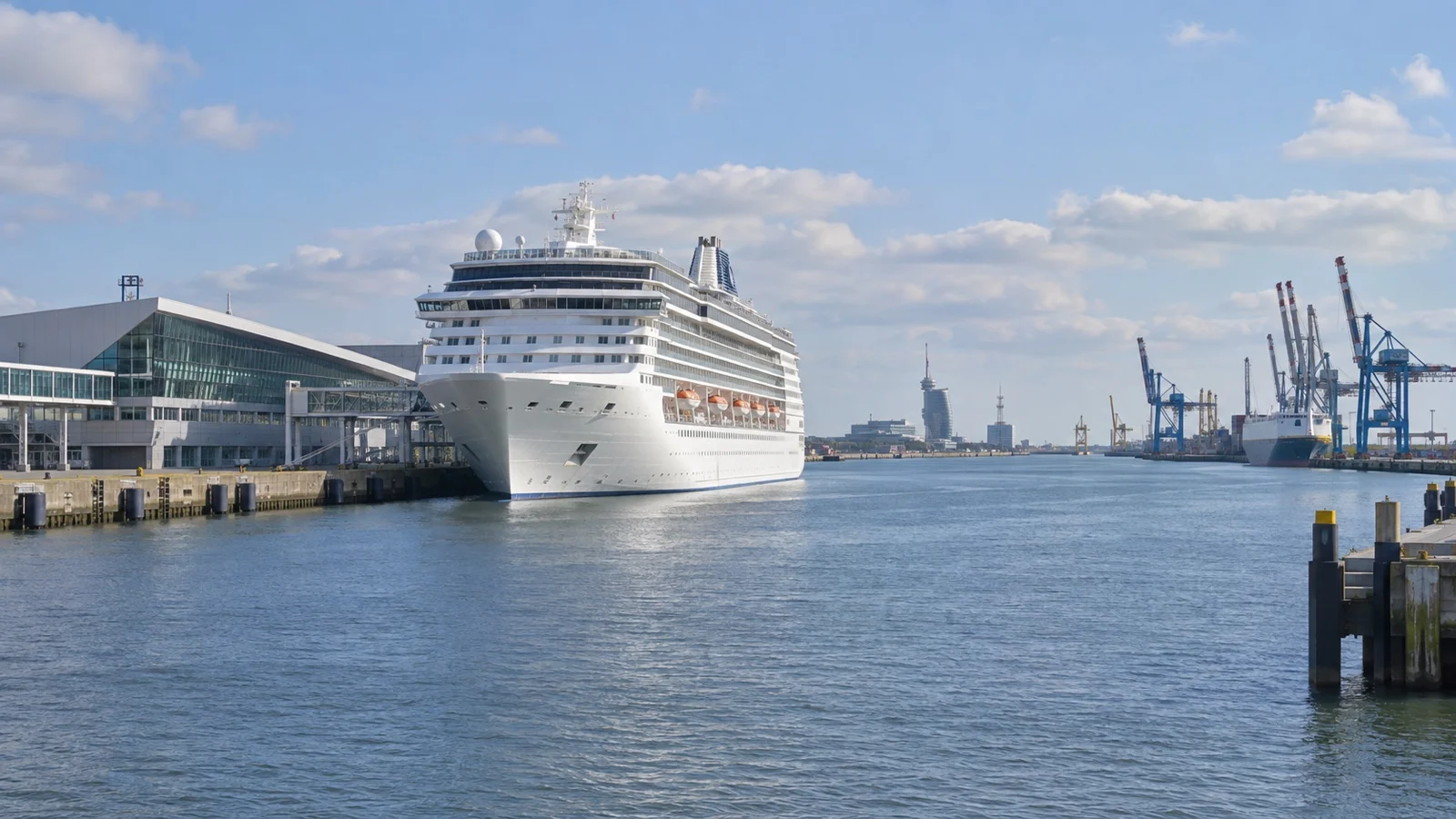
Main cruise facility: Columbus Cruise Center at Columbuskaje
Planning style: Arrange the link between terminal, station, and city attractions
Bremerhaven has one of Europe’s deepest maritime stories, and the German Emigration Center and German Maritime Museum make an excellent pre-cruise or port day. The museum district is compelling enough that you do not need to leave the city.
The Columbus Cruise Center occupies the historic Columbuskaje area north of the central attractions. It is not the same place as Bremerhaven Hauptbahnhof or the Havenwelten museum waterfront, so check the port’s current shuttle and taxi information.
Most long-distance travelers connect through Bremen, then continue by regional train to Bremerhaven. From the station, use the cruise transfer described by the line or a taxi rather than assuming a public bus will accept all your luggage comfortably.
Bremen can be a rewarding excursion, but it adds a rail journey and city transfer. I would keep the day in Bremerhaven unless the ship provides enough time and you are comfortable navigating independently.
Hamburg Cruise Port
Best for: A major city break, harbor culture, architecture, and museums
Main terminals: HafenCity, Altona, and Steinwerder, subject to the live schedule
Planning style: Build the final transfer around the named facility
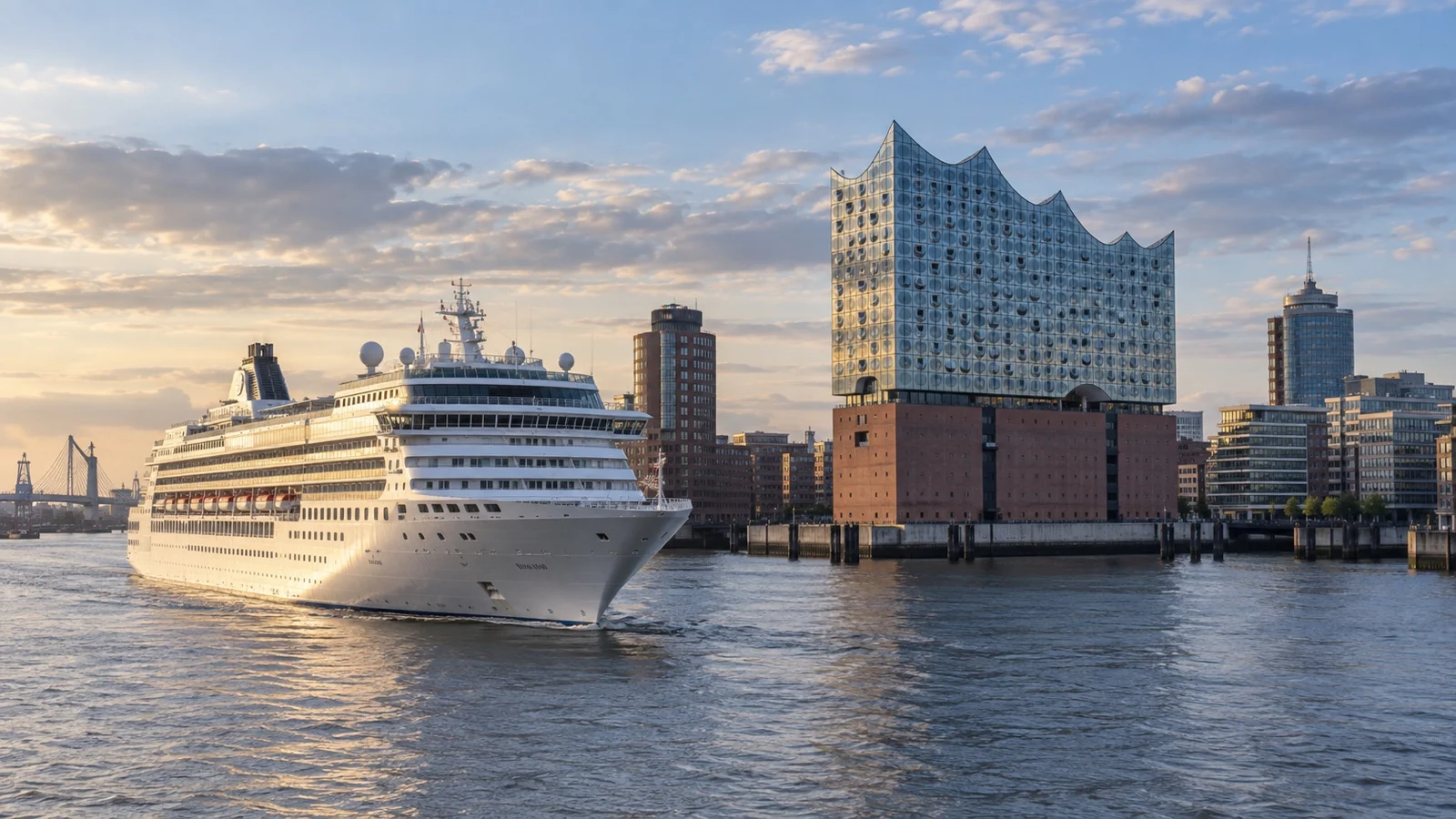
Hamburg is the most complete destination on this list, with the Elbphilharmonie, Speicherstadt, canals, markets, museums, and a working port that never feels like scenery alone. Arriving two nights early is easy to justify.
The terminal is the crucial detail because HafenCity, Altona, and Steinwerder require different transport plans. A hotel that is excellent for one can be inconvenient for another, especially when luggage makes ferry, bus, or station changes harder.
HafenCity places passengers near the modern waterfront and central attractions, though the active terminal entrance and construction patterns must be checked. Altona sits west of the center along the Elbe, while Steinwerder is across the river in a more industrial port setting and usually favors a shuttle, taxi, or arranged transfer.
Hamburg Airport connects with the city by S-Bahn, but the airport train is only the first part of a cruise-terminal journey. If several people are traveling with large cases, compare a direct taxi with the cost and effort of multiple transit tickets and transfers.
For a port day, a harbor boat ride, Speicherstadt walk, and one major museum are more satisfying than crossing the city repeatedly. Watch the return route because large events and harbor traffic can change travel times.
Kiel Cruise Port
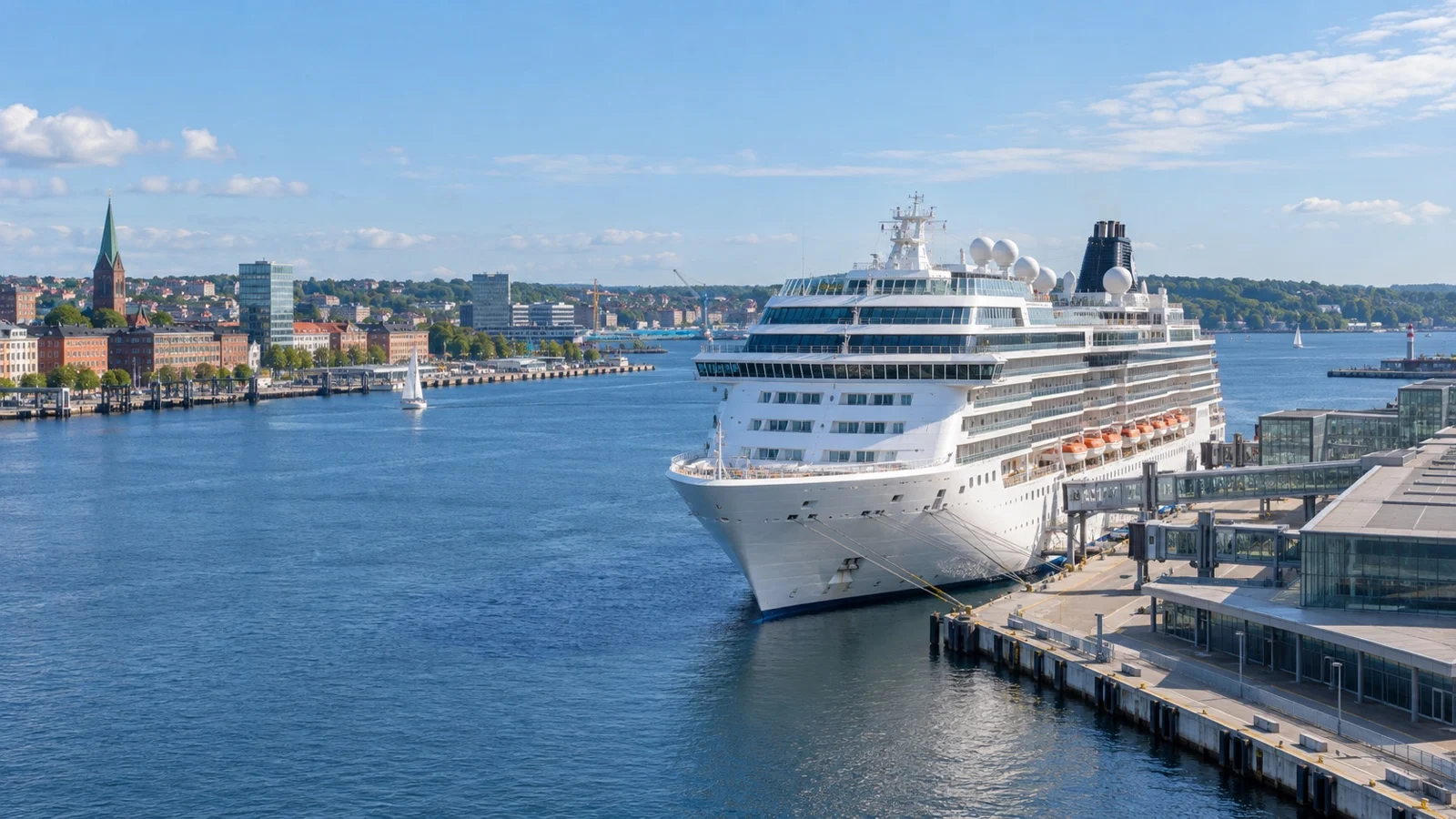
Best for: Baltic embarkations, a compact waterfront, and canal-related excursions
Main facilities: Ostseekai, Schwedenkai, Norwegenkai, and other port terminals as assigned
Planning style: Confirm which side of the inner fjord and rail station you need
Kiel is a true working passenger port, with cruise and ferry traffic close to the city center. Ostseekai is wonderfully central for many travelers, but not every ship uses it and the terminal names are not interchangeable.
Schwedenkai and Norwegenkai serve passenger operations in different positions around the inner harbor, while Ostuferhafen lies farther from the central station. Follow Port of Kiel instructions and never ask a driver for the port without showing the terminal.
Kiel Hauptbahnhof is a convenient rail gateway, with frequent connections through Hamburg and regional Schleswig-Holstein. The final leg may be walkable for some central terminals, though luggage, weather, construction, and accessibility should control the decision.
The Kiel Canal is an engineering landmark, but a cruise call does not guarantee a canal transit. If you book a lock or countryside excursion, verify the tour’s meeting point and avoid relying on a precise ship-passing time.
Kiel itself offers the fjord, maritime history, shopping, and ferries across the water. It is a pleasant independent day when a distant excursion would create more transport than enjoyment.
Warnemünde Cruise Port
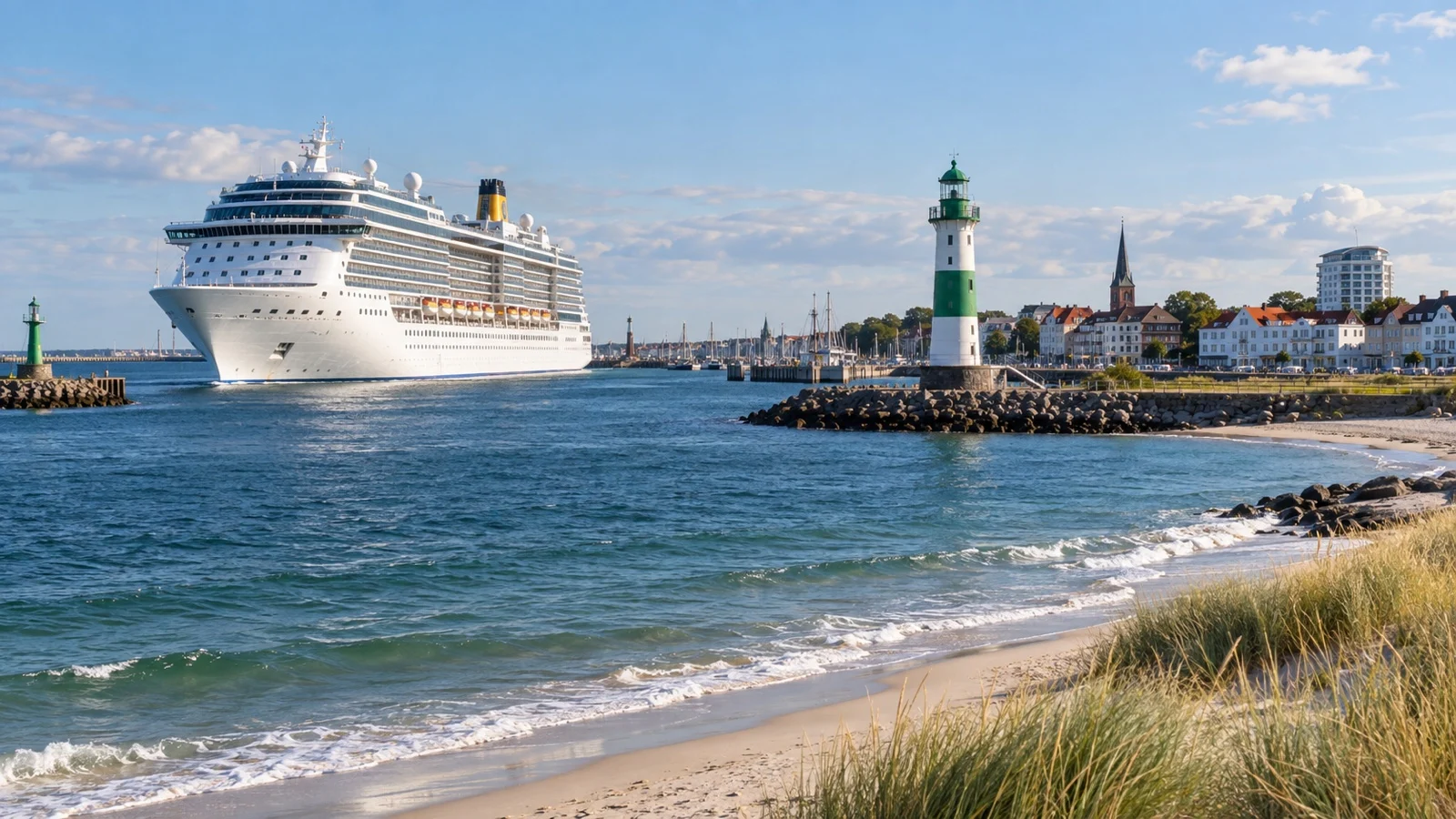
Best for: A Baltic beach town, Rostock, and rail access near the passenger quays
Main cruise area: Warnemünde Cruise Center and nearby assigned berths
Planning style: Choose between a local coastal day and a very long Berlin excursion
Warnemünde feels almost designed for a gentle port day, with Alter Strom, fishing boats, the beach, lighthouse, and train station in one compact district. It is also a popular embarkation point, so the town can become busy when several ships arrive.
Passenger berths around Warnemünde Cruise Center are generally close to the station, but the actual route depends on the live assignment. Confirm the berth on Rostock Port’s schedule and use a taxi when cases, bridges, or access routes make walking unkind.
Rostock is an easy regional alternative with brick Gothic architecture, markets, and more urban life. The local S-Bahn links Rostock and Warnemünde, making an independent half-day straightforward when service is operating normally.
Berlin is possible only as a long, tightly managed day and should never be described as the nearby city. A ship excursion offers the strongest schedule protection, while an independent rail plan needs backups, generous margins, and acceptance that much of the call will be spent traveling.
How I Would Choose the Itinerary
Choose Hamburg when you want a major European city before or after the cruise. Its airports, rail links, and hotel inventory make it the easiest place to add several nights.
Choose Kiel for a focused Baltic homeport and relatively direct rail access through Hamburg. Choose Warnemünde for seaside charm and Rostock, especially if Berlin is not the point of your day.
Bremerhaven is the specialist choice for maritime museums and North Sea departures. It pairs well with Bremen, but the cruise terminal needs its own final transfer plan.
Docking and Getting Around
These German ports generally use fixed berths rather than routine tendering, but that does not mean every ship parks beside the old town. Industrial port zones, security gates, shuttle stops, and terminal construction can lengthen the journey.
Public transit is excellent for travelers with manageable luggage and confidence using apps, ticket machines, elevators, and platform signs. A taxi becomes better value when several passengers share the fare or mobility equipment needs more space.
Download the local transit app and Deutsche Bahn journey details before leaving the ship. Screenshots help when mobile service is weak or a live timetable changes.
Airports and Rail Connections
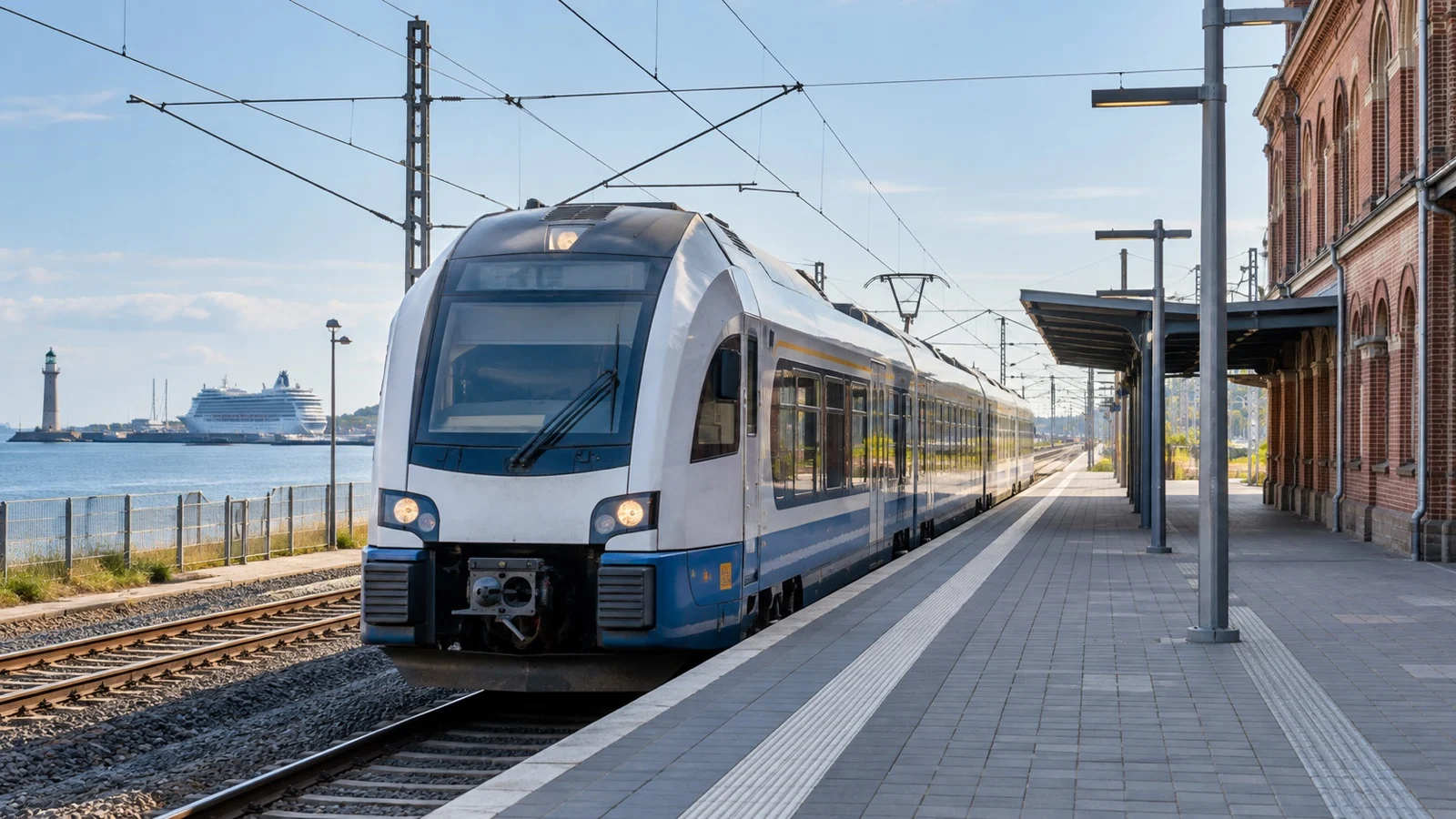
Hamburg Airport is the most useful aviation gateway for many northern German cruises, but Berlin Brandenburg, Bremen, Hannover, and other airports may appear in broader itineraries. Use the airport code on your ticket and calculate the complete journey to the exact terminal.
Deutsche Bahn connects the major cities, yet delays and construction are normal possibilities rather than rare disasters. Arrive at least one day before sailing and avoid a final train that leaves no recovery option.
Regional and local tickets can have rules about train type, validity, and passenger groups. Use the official journey planner, confirm whether a ticket covers urban transit, and validate any ticket that requires it.
When to Cruise Germany
The main northern cruise season runs from spring through fall, with long summer evenings and the broadest sailing choice. Winter calls and holiday-market voyages can be atmospheric but demand warmer clothing and closer attention to daylight.
North Sea and Baltic weather can change rapidly, bringing wind, rain, or cool temperatures even in summer. Dress in layers and carry a compact waterproof shell rather than trusting a morning forecast.
Major festivals, trade fairs, football matches, and school holidays can pressure hotels and trains. Flexible bookings help when cruise schedules or event calendars move.
Accessibility and Lower-Energy Planning
Modern German terminals and trains often provide accessible infrastructure, but the complete route still includes curbs, gangways, station gaps, elevators, and possibly a shuttle. Request cruise-line assistance and rail mobility service early, then verify each connection.
Hamburg’s harborfront, Kiel’s inner waterfront, central Warnemünde, and Bremerhaven’s museum district can all support rewarding lower-energy days. Choose one compact zone and use transit between major sights instead of building a marathon walk.
Travelers with scooters or wheelchairs should tell taxi companies the device dimensions and whether it folds. A standard sedan that technically accepts passengers may not safely carry the equipment.
Port-Day Planning That Works
Photograph the terminal exit and return stop, save the ship’s emergency contact, and set a turnaround alarm earlier than all-aboard. German punctuality does not protect you from a cancelled train, full shuttle, or wrong platform.
Carry a payment card and some euros, especially for small purchases or unexpected transport. Restrooms may require payment, and not every machine accepts every foreign card.
Long excursions deserve ship protection or an operator with a written return policy. Local museum and city days are easier to manage independently because they keep your recovery options close.
Germany Cruise Port Questions
Which German cruise port is best for a first visit?
Hamburg offers the richest city experience and easiest multi-night extension. Warnemünde is the most charming compact port day, while Kiel is an efficient Baltic homeport.
Can I explore independently?
Yes, especially in central Hamburg, Kiel, Warnemünde, Rostock, and Bremerhaven once you understand the terminal connection. Use official transit planning and protect the return margin.
Which calls benefit most from an excursion?
Berlin from Warnemünde and other long-distance trips benefit most from ship-organized transportation. Local city days rarely require a guided tour unless you want deeper context or accessible transport.
How early should I book?
Reserve accessible vehicles, long excursions, high-speed trains, and limited-capacity attractions as soon as plans are stable. Keep cancellation flexibility around any port detail the cruise line has not finalized.
What if weather changes the plan?
Ships and ports can adjust arrival or departure for wind and maritime safety. Keep indoor museum options ready and follow onboard instructions rather than an old online schedule.
My Final Take
Germany rewards precision before spontaneity: confirm the terminal, protect the rail connection, and then enjoy the city without staring at the clock. Hamburg, Kiel, Warnemünde, and Bremerhaven each offer a distinct trip, and none should be reduced to a gateway for somewhere else.
This guide was independently checked on September 11, 2026, using official information from Cruise Gate Hamburg, Port of Kiel, Rostock Port, Bremerhaven port and tourism authorities, and current cruise-line instructions. Reconfirm the ship’s terminal, rail or shuttle service, attraction access, weather, accessibility, and all-aboard time before committing to nonrefundable arrangements because live operations can change.