Walvis Bay Cruise Port Guide: Berth, Dunes & Lagoon
Walvis Bay is one of those cruise calls that changes character within a few miles. Your ship arrives at a serious working harbor, yet the lagoon, flamingos, massive dunes, and Atlantic surf are all close enough to shape a rewarding port day.
The trick is choosing one main experience and respecting the logistics around it. Secure port rules, coastal fog, tide conditions, and desert terrain matter more here than squeezing another pin onto a map.
What the cruise arrival is really like
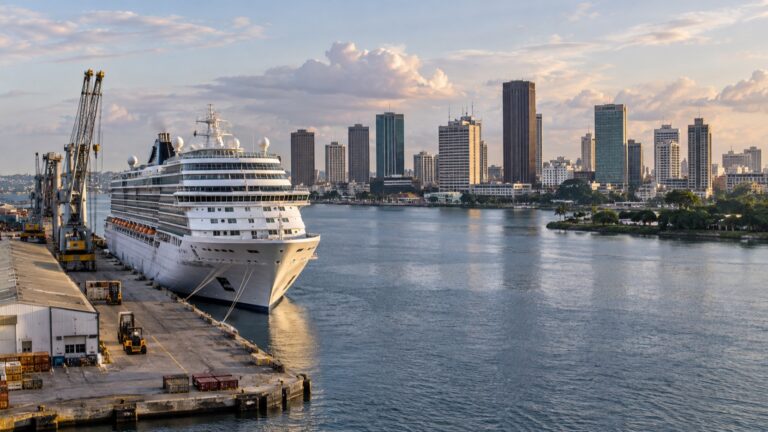
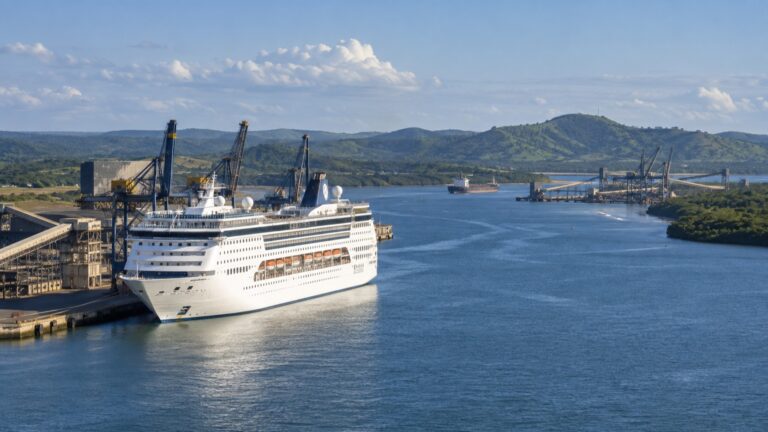
Walvis Bay is Namibia’s principal commercial port, and the harbor remains busy with cargo, fishing, and marine services while cruise passengers come ashore. Cruise ships normally berth alongside at the assigned passenger-capable quay, often identified in cruise materials as Berth 9, but the day’s operational assignment always takes priority.
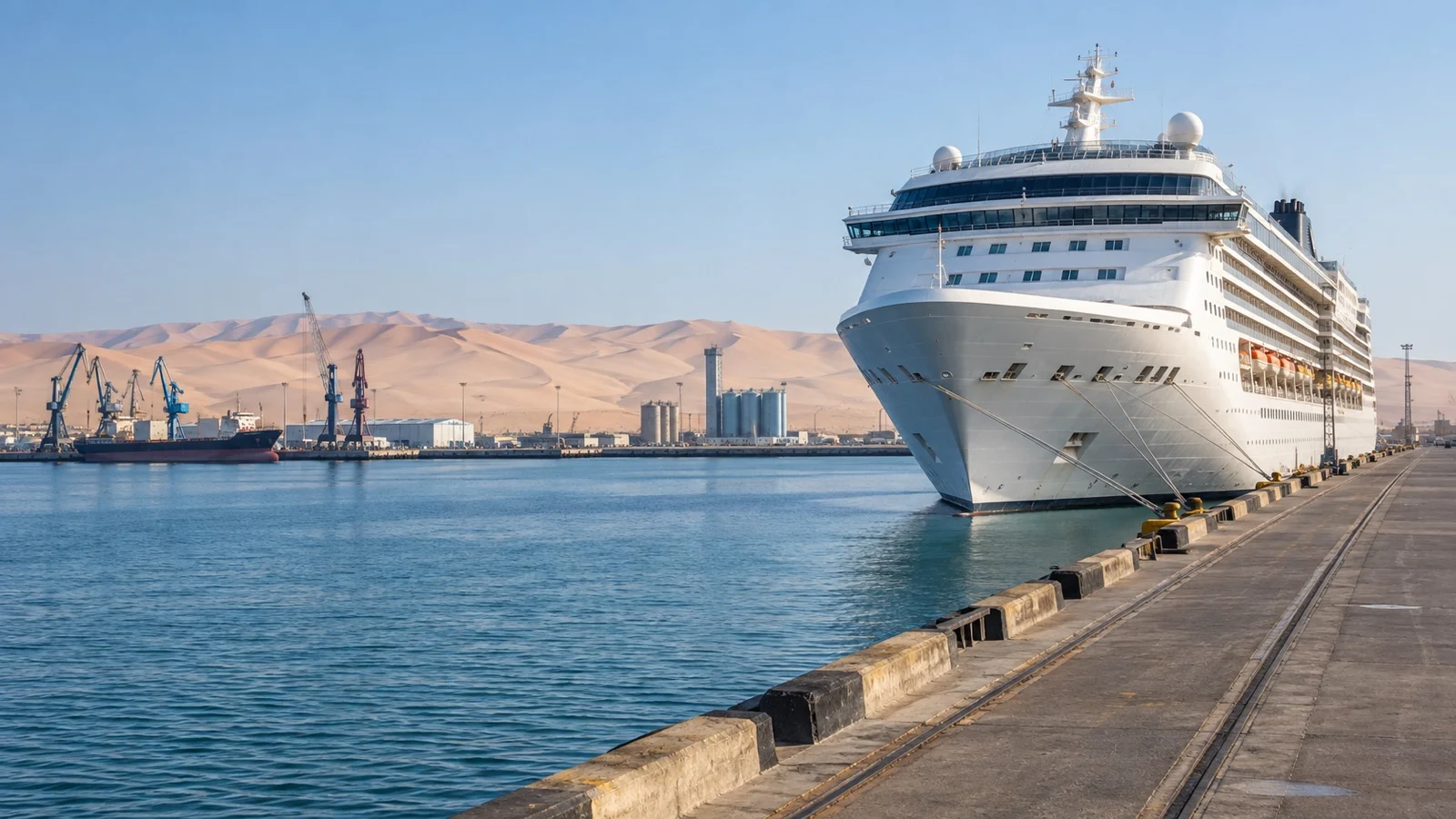
This is not a pier where you should expect to wander freely through the industrial area. Follow the ship’s instructions for the authorized shuttle, escorted transfer, or approved vehicle pickup point, and do not build an independent plan around walking through the port gates.
An alongside berth removes the uncertainty of a tender ride, but it does not eliminate gangway or mobility considerations. Tide level, security procedures, and the position of the gangway can still change how easy it feels to get on and off the ship.
Quick Facts
- Port style: alongside berth in a secure, working commercial harbor
- Independent walking: begin only after using the authorized port transfer to the public side
- Best easy outing: Walvis Bay Lagoon and the waterfront
- Signature adventure: guided 4×4 trip toward Sandwich Harbour
- Classic desert stop: Dune 7 and the surrounding dune belt
- Popular alternative: Swakopmund for museums, cafes, and coastal architecture
- Currency: Namibian dollar, with South African rand commonly accepted at equal face value
- Road rule: traffic drives on the left
- Weather pattern: cool fog and wind on the coast, with warmer conditions inland
- Timing rule: leave a generous return margin for road, tide, and port security variables
Start with the lagoon if you want an easy day
The Walvis Bay Lagoon is the simplest way to meet the landscape without committing to a long vehicle journey. Its broad, shallow water and salt influenced habitat support an internationally important wetland recognized through the Ramsar Sites Information Service.
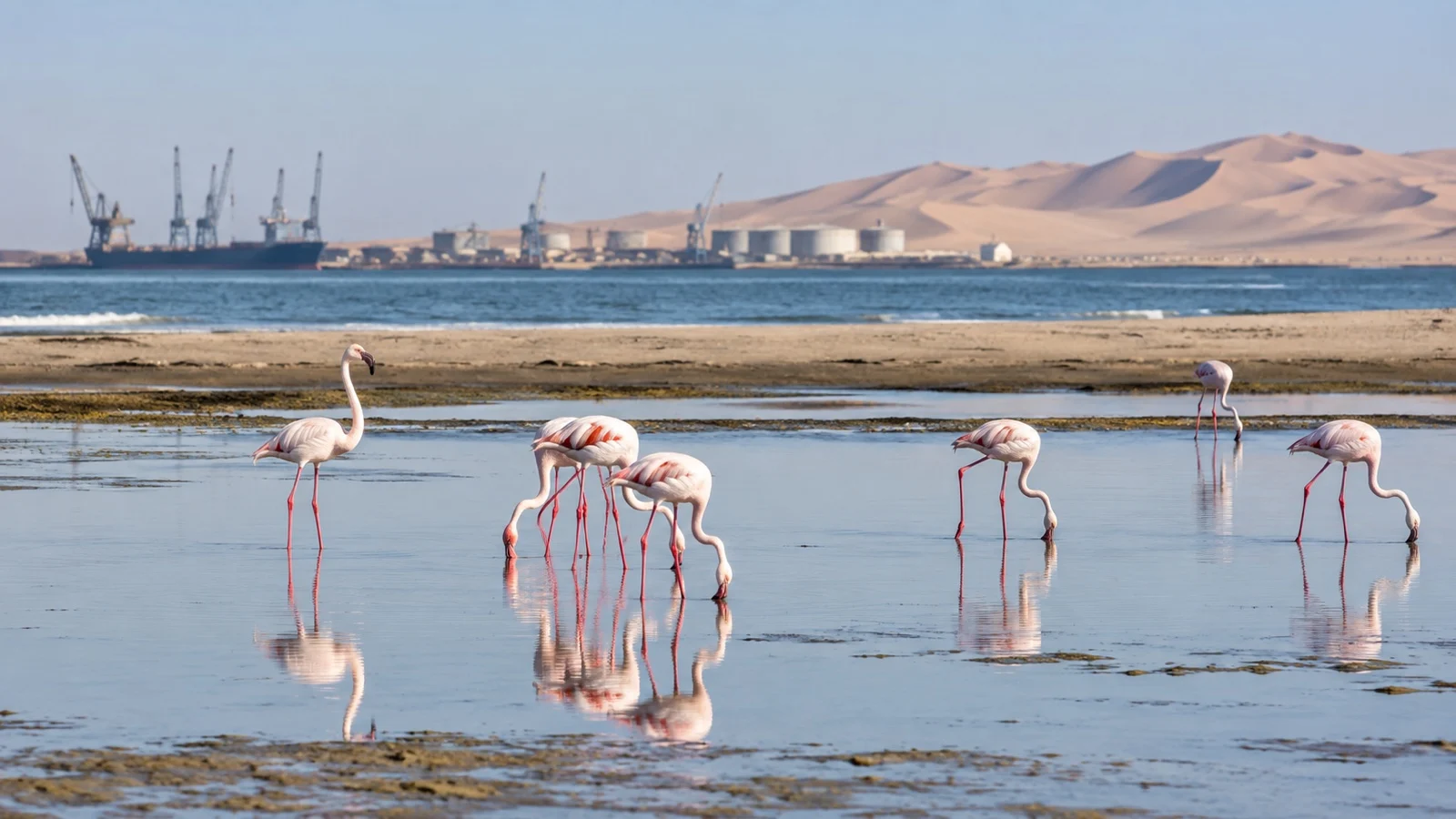
Flamingos are the headline, but they are wild birds rather than scheduled performers. Numbers and viewing positions shift with water, food, weather, and season, so bring binoculars and treat any close sighting as a gift.
The public waterfront and lagoon edge work well for travelers who like an unhurried walk, a coffee, and time to watch the light change. Ask the shuttle team where public drop offs are operating on your particular call, because cruise arrangements can vary with the berth and security plan.
Keep a respectful distance from birds and never push into feeding or resting groups for a photograph. The lagoon is most beautiful when you slow down enough to notice the smaller waders, pelicans, salt pans, and mirrored desert sky.
Dune 7 is the compact desert option
Dune 7 offers the quickest visual leap from harbor town to the Namib. It sits near Walvis Bay within the coastal dune environment, so it can fit a shorter outing more comfortably than a full Sandwich Harbour expedition.
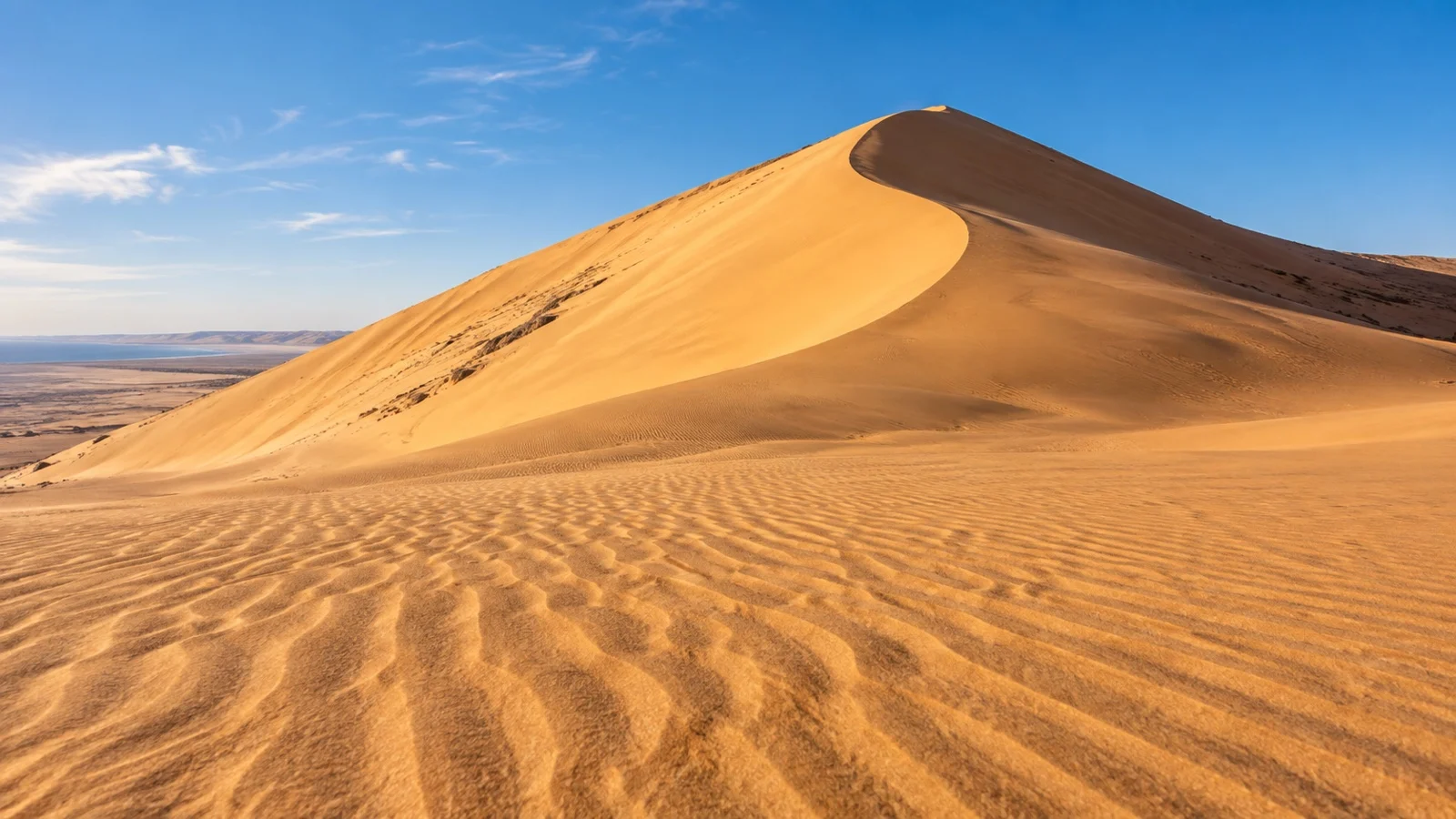
The steep sand looks playful, but a climb can be harder than the distance suggests. Soft footing, wind, glare, and inland heat can turn a casual scramble into real exertion, so carry water and stop well before fatigue becomes the story of your day.
A viewpoint visit is worthwhile even if you never aim for the crest. Travelers with knee, balance, cardiac, or respiratory concerns can enjoy the scale from firmer ground while companions test the slope.
Sandwich Harbour deserves its own decision
Sandwich Harbour is the spectacular choice, where high dunes press toward the Atlantic and the route itself becomes part of the experience. It lies in a protected coastal landscape connected with Namib Naukluft National Park, so access is not a casual beach drive.
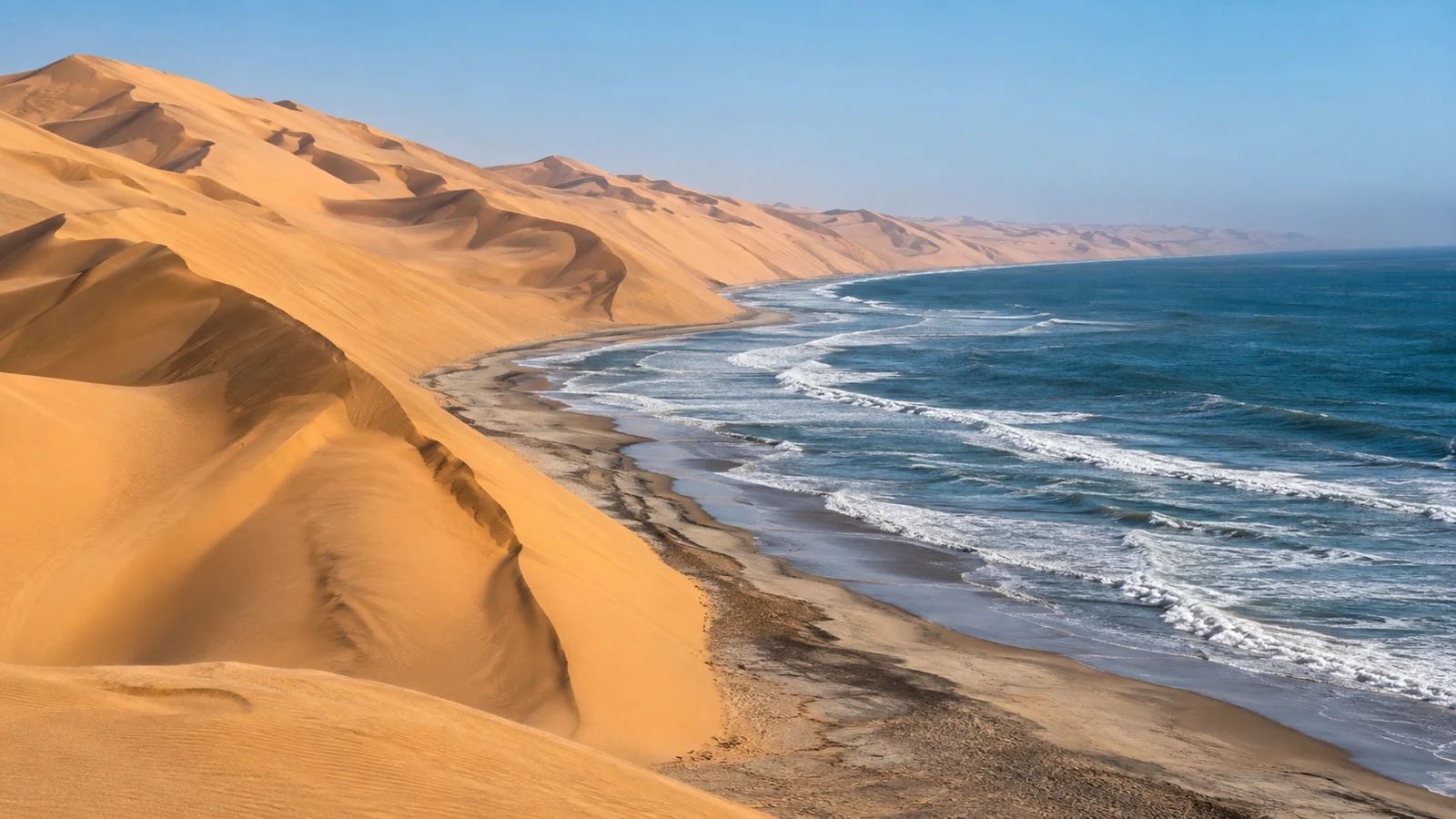
Book a properly authorized operator with the permits, vehicle, and local experience required for the day’s conditions. Namibia’s Ministry of Environment, Forestry and Tourism explains that permits help protect wildlife and natural resources, which is exactly why the rules here should be treated as part of the experience rather than an inconvenience.
Tides, sand, visibility, and access decisions can change the route or prevent travel along particular sections. A responsible guide may substitute a high dune viewpoint, shorten the drive, or turn around, and that judgment is more valuable than forcing a promised photograph.
This excursion can involve steep dune faces, sharp vehicle angles, prolonged vibration, and difficult boarding. Anyone with back, neck, pregnancy, balance, or motion sensitivity concerns should discuss the exact vehicle and route before committing.
I would favor a ship sponsored option or a local operator that clearly understands cruise all aboard times. The best tour is not the one with the boldest itinerary, but the one that builds a conservative return plan around permits, tides, and the secure port reentry.
A marine cruise shows the bay from water level
Catamaran, boat, and kayak outings reveal another side of Walvis Bay, with Pelican Point, seals, seabirds, and possible dolphin sightings shaping many routes. Wildlife is never guaranteed, and ethical operators should let animals choose the distance rather than baiting or crowding them.
Ask where the boat departs, how you will transfer from the cruise berth, and whether the excursion includes any beach or vessel boarding. A floating pontoon or moving deck may be manageable for one traveler and unsuitable for another, so specific answers matter.
Coastal air can feel cold even when the desert forecast looks warm. A wind resistant layer, sun protection, and a secure hat are far more useful than dressing for a generic idea of African heat.
Walvis Bay or Swakopmund
Swakopmund is the natural urban alternative, north of Walvis Bay along the coast. Its museums, shops, cafes, beach frontage, and German influenced streets offer a gentler counterpoint to the dune adventures.
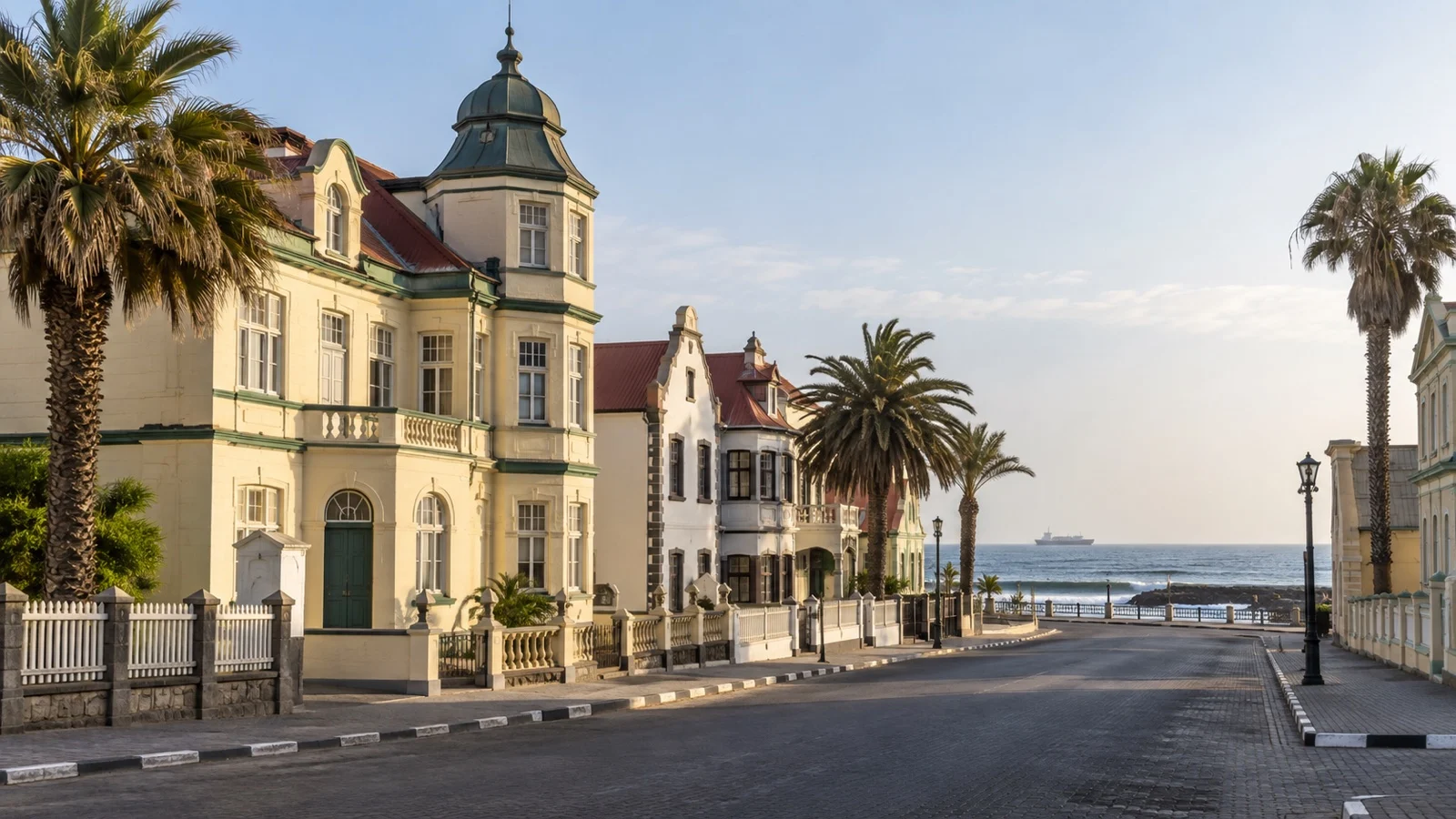
The towns look close on a map, but a port day still needs transfer discipline. Fog, road work, traffic, and a late departure from an attraction can erase a comfortable margin, so agree on the return time before leaving Walvis Bay.
Choose Swakopmund if you want architecture, local history, and an independent town atmosphere. Stay in Walvis Bay if lagoon wildlife, the waterfront, or a shorter and simpler day matters more.
Some tours combine Swakopmund with the Moon Landscape or a stop to see Welwitschia plants. Those additions reach fragile desert areas and may require permits or specific routes, so confirm exactly what is included and resist treating protected plants as photo props.
Four realistic ways to use the port day
The gentle lagoon morning
Use the authorized port transfer, continue to the lagoon or waterfront, and spend your energy on birdwatching and an easy meal. This plan offers the best flexibility if the ship has a short call or if walking endurance is limited.
The compact sand sampler
Pair a lagoon stop with Dune 7 through a prearranged driver or excursion. You get water, birds, and the visual shock of the desert without accepting the greater tide and terrain demands of Sandwich Harbour.
The signature 4×4 day
Make Sandwich Harbour the main event and keep everything else optional. If conditions shorten the route, enjoy the guide’s alternative rather than asking to sacrifice the return buffer.
The coastal town alternative
Travel to Swakopmund for a museum, a walk, and lunch, with a firm departure time back to Walvis Bay. Do not add distant desert stops unless the operator has planned them inside a cruise appropriate schedule.
Transport rules that prevent expensive mistakes
The first transport question is not the price of a taxi but where the driver is allowed to meet you. Secure commercial ports often separate ship side access from public pickups, and only authorized vehicles may enter controlled areas.
Confirm whether your ship supplies a shuttle, where it ends, how frequently it runs, and what happens near final return time. Save the port agent and ship contact details offline, since a phone signal is not a substitute for a sound plan.
When hiring a driver, agree on destination, waiting time, currency, and return point before departure. A day rate can be sensible for a lagoon and Dune 7 loop, but only if the vehicle is suitable and the driver understands the ship’s all aboard deadline.
Namibia drives on the left, which matters if you are considering a rental car. For a single cruise day, a guided vehicle is usually the cleaner choice once port access, navigation, permits, fog, sand, and timing are considered together.
Accessibility requires a route by route check
An alongside arrival is helpful, but wheelchair users still need current information about gangway slope, shuttle lift capability, curb heights, and accessible restrooms. The cruise line can confirm ship equipment, while the excursion operator must answer for the vehicle and terrain.
The lagoon and parts of the waterfront can suit a lower impact plan, although surfaces and drop off positions vary. Dune sand, boat boarding, and 4×4 excursions introduce much greater barriers and should never be described simply as accessible without details.
Travelers who cannot transfer independently should ask whether mobility devices can remain assembled and secured. Foldable equipment is easier for some vehicles, but that does not make a high step or rough ride safe.
Weather can change within the same excursion
Walvis Bay sits where cold Atlantic water meets the Namib, creating a coastal climate that can feel surprisingly cool, damp, or foggy. Drive inland and the air may become brighter, hotter, and drier within the same outing.
Dress in light layers, add wind protection, and carry sunscreen, water, and eye protection. Fine sand reaches cameras and phones quickly, so use a closable bag and change lenses only when sheltered.
Fog is atmospheric, but it can reduce road visibility and delay marine or desert operations. Let the operator adjust the plan rather than measuring the day against a fixed brochure sequence.
Safety in town, port, and desert
Walvis Bay is an active community rather than a cruise attraction built behind gates. Use ordinary urban awareness, keep valuables discreet, and choose official transport instead of following unsolicited offers near a busy pickup point.
In the desert, the larger risks are environmental and logistical. Heat, dehydration, vehicle trouble, changing sand, and poor communication become serious far faster than they do on a city sightseeing loop.
Share medical needs before an adventurous tour and carry essential medication with you. Do not leave prescriptions, identification, or your ship card in a vehicle that might separate from the group.
Build a return buffer for the place you chose
A lagoon walk near town can tolerate a smaller buffer than a distant 4×4 route, but every independent plan must account for the port shuttle and security checkpoint. Arriving at the public gate at all aboard time is already too late.
Sandwich Harbour needs the widest margin because access depends on nature as well as traffic. Swakopmund needs a road buffer, while marine excursions need time for docking, disembarkation, and the transfer back to the ship.
Tell every independent operator your all aboard time, not merely the sailing time. Then set a return target earlier than the operator’s optimistic estimate and protect it from one last shopping stop.
Passport, money, and practical preparation
Entry and immigration procedures depend on nationality, itinerary, and the ship’s clearance arrangements. Use the cruise line’s current instructions and consult Namibia’s official immigration guidance before travel rather than relying on an old port review.
Cards are useful in established businesses, but carrying a modest amount of local currency can simplify small purchases and tips. Ask before assuming another currency will be accepted, and avoid changing more cash than a short port call requires.
Download maps, confirmations, and operator phone numbers before arrival. Also take a photograph of the daily program showing the port agent details, then keep the original ship card and identification secure.
How to choose the right Walvis Bay excursion
Start with the experience you would regret missing most: wildlife, dunes, adventure, or town life. Then remove any option that conflicts with your mobility, comfort, or the time available, even if it dominates social media.
Check the Namibian Ports Authority for the port context, the environment ministry for protected area and permit guidance, and the Namibia Tourism Board for current destination planning. Reconfirm operational details with your ship because berth access and shuttle arrangements belong to the live call, not a timeless guide.
Walvis Bay rewards a focused plan more than a crowded one. Give the lagoon, dunes, or ocean enough time to feel enormous, and the port day will make sense long after the sand has left your shoes.
Choose one horizon, protect your return margin, and let local conditions shape the details. That balance turns a complicated working-port call into one of the most distinctive days on the African coast.