Mahón Menorca Cruise Port: Berths, Harbor Lift and Island Trips
Mahón begins before the gangway, with a long sail through cliffs, islands, forts, villas, and improbably calm-looking water. Once alongside, you meet a city arranged in two layers: harbor life below and the historic center on the plateau above.
The quick facts
- Where you land: usually the city-side passenger quay around the Estació Marítima and Moll de Ponent on Menorca, Spain, directly below the old town. Some calls are assigned to the Cós Nou commercial area instead, which is being rebuilt under the Ports de Balears Port Maó 2030 program. Ciutadella, about 28 miles away on the west coast, is a separate Menorca port rather than another Mahón berth.
- Dock or tender: Mahón is planned as a docking call and almost always is one; a ship can anchor and tender when berths, dimensions, or operations require it.
- Into town: The lower harbor starts at the quay.
- Currency and language: The euro (EUR), with Catalan and Spanish spoken and English common in visitor services.
- Time zone: Central European Summer Time (CEST, UTC+2) during the cruise season, Central European Time (CET, UTC+1) in winter.
- How often the call is missed: Low (roughly 1 to 2%): the sheltered berth is rarely limited by local weather.
The sail-in is part of the port day
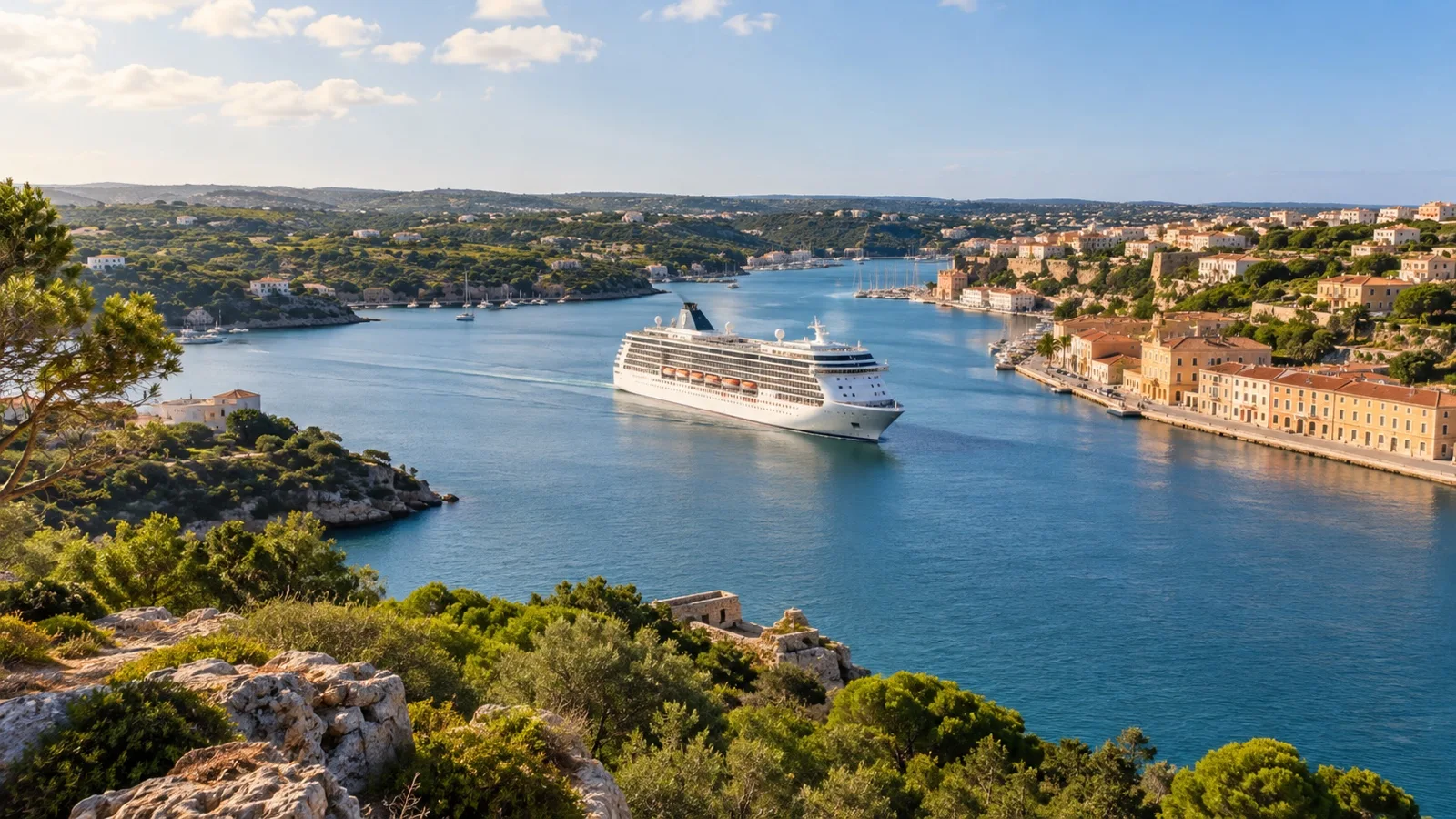
Port Mahón extends for roughly 4 miles from the Mediterranean into Menorca, creating one of the region’s most distinctive natural harbors. The Ports de Balears overview of Maó confirms its mix of cruise, passenger, freight, and nautical traffic.
Be outside well before arrival to see La Mola fortress, the harbor islands, Es Castell, old military sites, and the city rising at the inner end. Departure repeats the show in reverse and costs nothing, which is an unusually attractive price for a panoramic harbor tour.
Wind, vessel dimensions, traffic, and maritime instructions determine how far a ship enters and where it berths. A scenic route shown on yesterday’s tracking app is interesting, not a guarantee for your voyage.
Exactly where might the ship stop?
Moll de Ponent and the city-side passenger quay
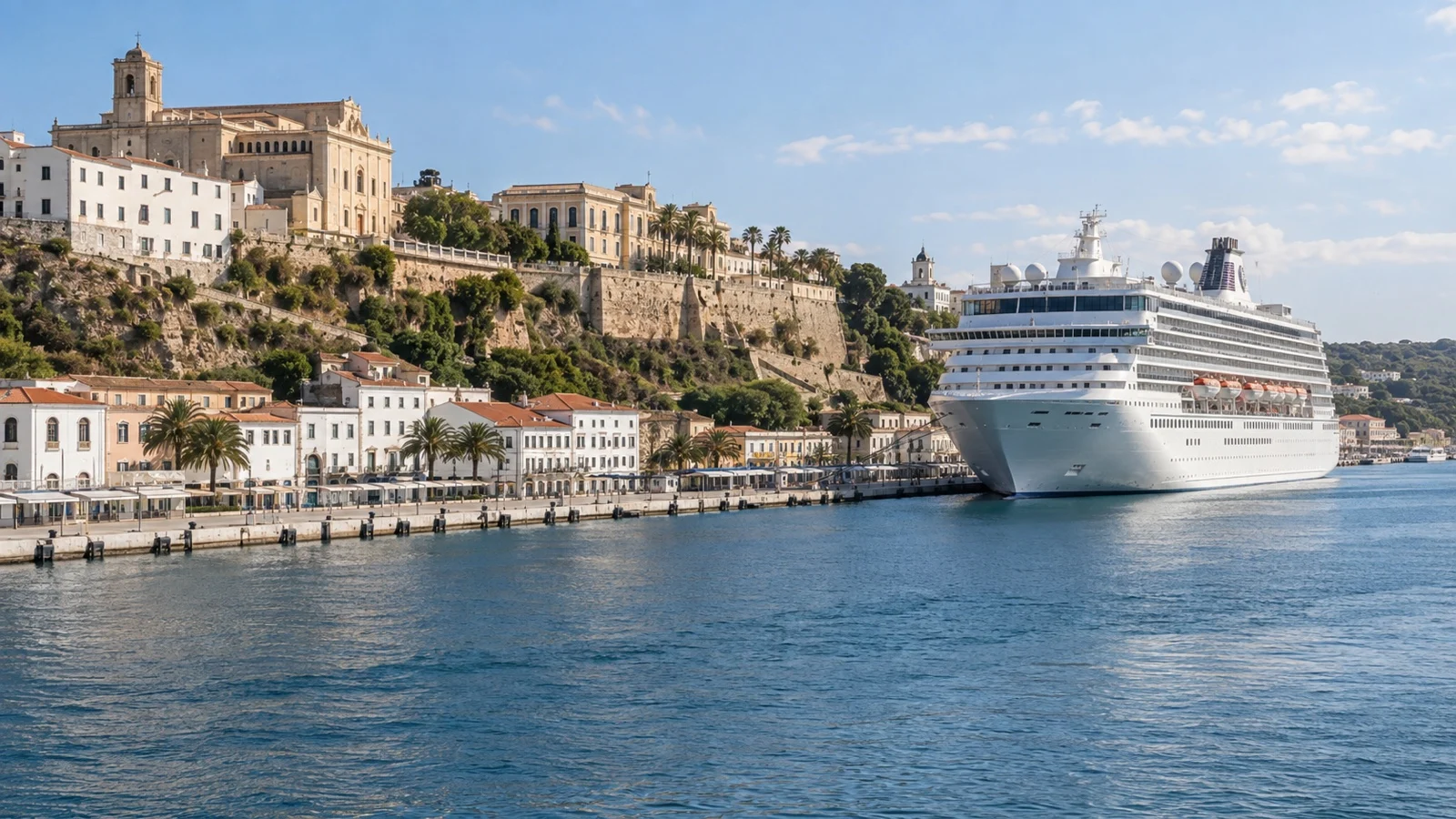
Most cruise passengers experience a central berth around the Estació Marítima and Moll de Ponent waterfront, directly below the old town. Restaurants, harbor excursion boats, shops, and the waterside promenade begin near the quay, so no shuttle is needed merely to enjoy the lower harbor.
The exact berth line may extend along the city waterfront, changing the walk by several hundred feet or more. Use the gangway position in front of you rather than quoting a single universal distance to the center.
Cós Nou
Cós Nou is the port’s commercial and passenger-operating area, separate from the convenient old-town quay. Ports de Balears began a major redevelopment in 2025, with a new Cós Nou maritime station planned through 2027.
If your daily program names Cós Nou, ignore central-berth walking estimates and use the ship’s shuttle, arranged motorcoach, or taxi. Construction phases and secure port roads can alter the pickup point, making improvised walking a poor strategy.
Anchorage, tender, or another Menorca port
A ship can anchor and tender when berth availability, dimensions, or operations require it, although Mahón is primarily planned as a docking call. Tender landing details are voyage-specific, and mobility rules depend on the ship and sea state.
Some Menorca itineraries call at Ciutadella instead of Mahón, particularly smaller vessels. Ciutadella is about 28 miles away on the west coast, not an alternate Mahón terminal, so check the actual port name before planning any walk.
Two Mahóns stacked vertically
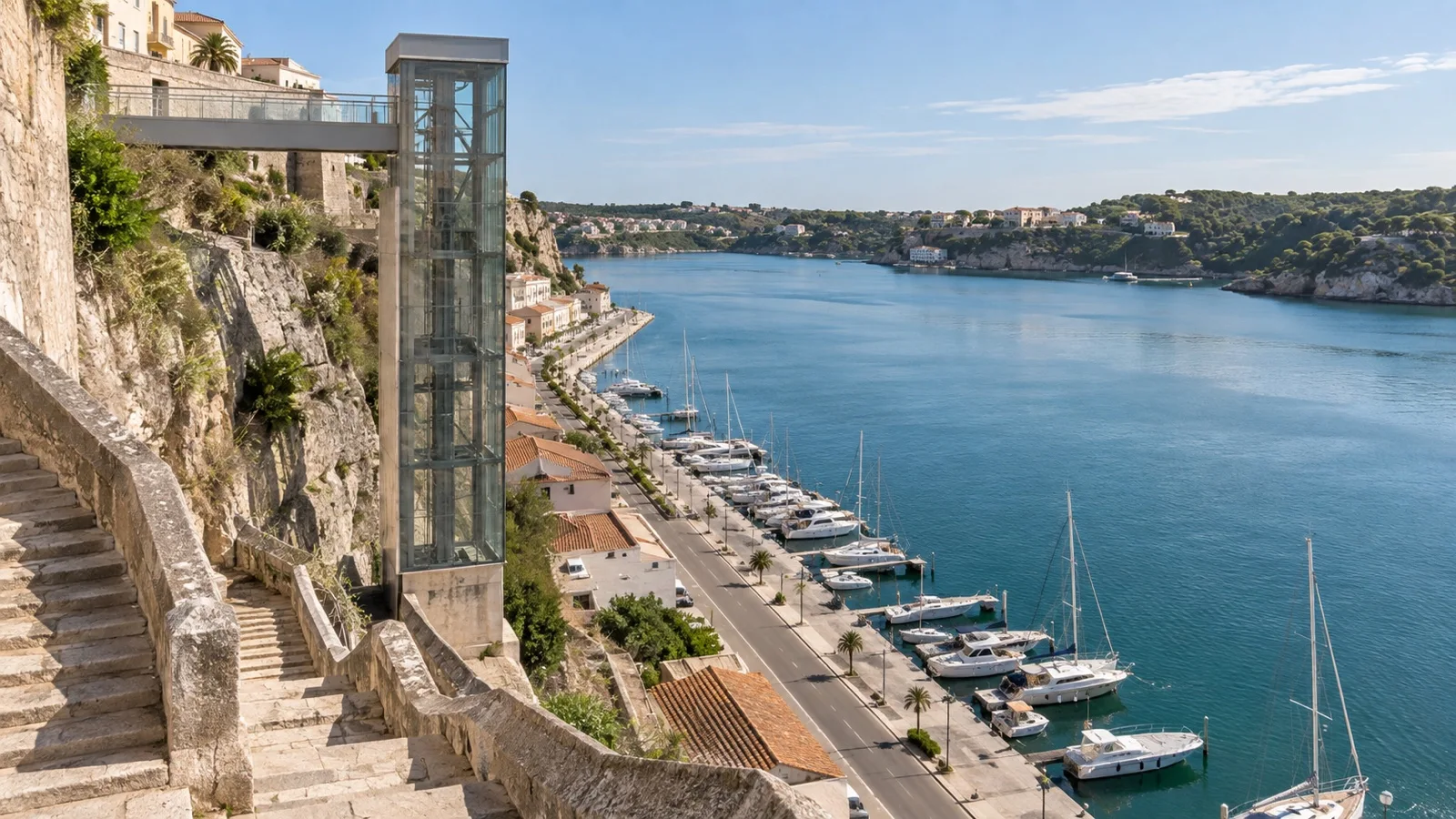
The lower harbor is long and mostly level, while the historic center sits above it. From the central passenger-quay area, follow Moll de Ponent toward the Costa de ses Voltes access, where a public glass elevator normally helps with the climb.
Stairs and sloping streets provide alternatives, and a taxi avoids the ascent entirely. Allow 10 to 20 minutes from a central gangway to the upper center, depending on berth position, walking pace, elevator operation, and how quickly the harbor view persuades you to stop.
Check the elevator before relying on it for the return because maintenance or operating hours can change. The main island bus station is near Plaça de s’Esplanada in the upper town, which adds a climb or taxi ride to any independent regional bus trip.
A city loop with excellent proportions
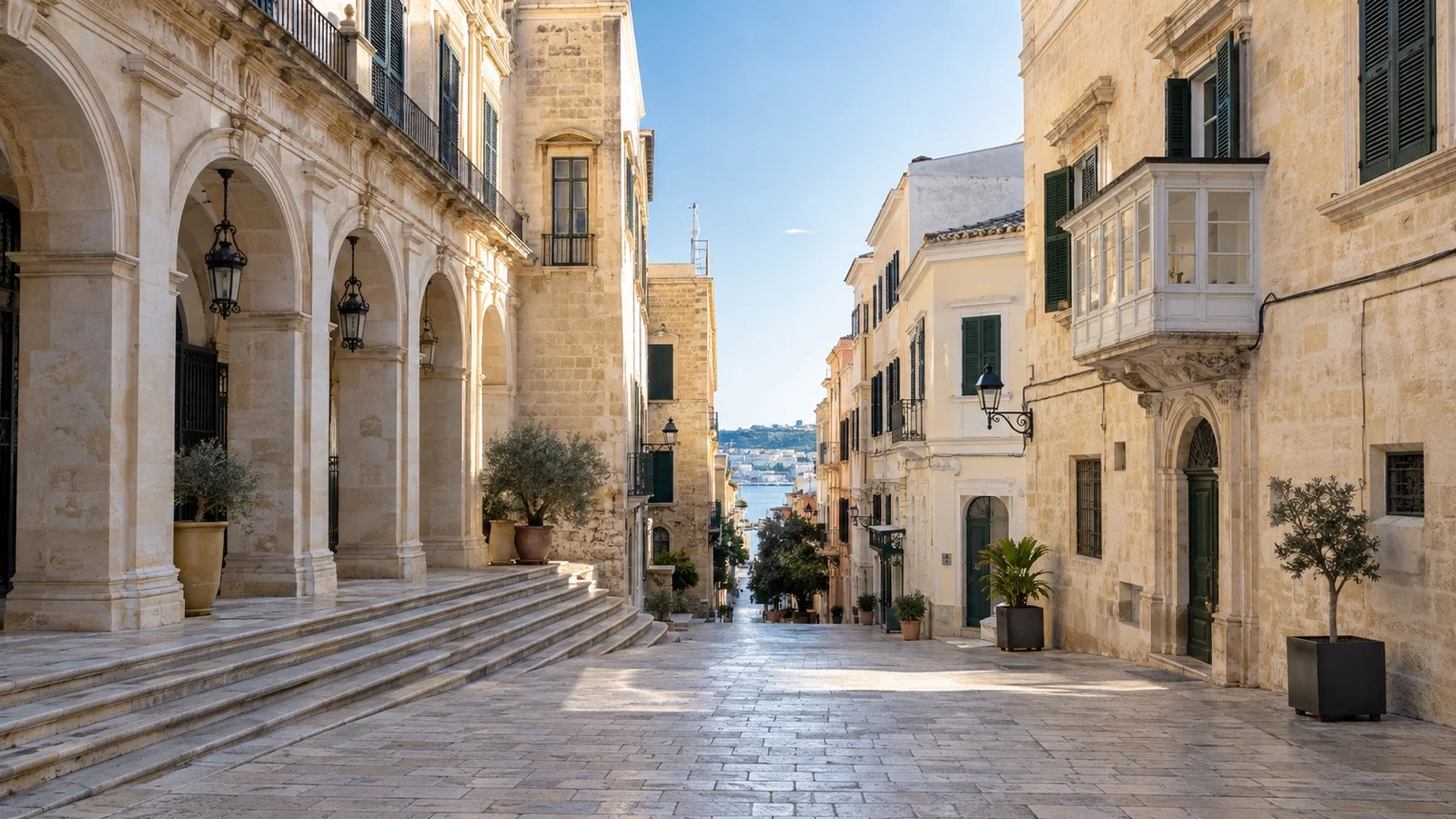
Begin in Plaça de la Constitució with Santa Maria Church and the town hall, then wander through the lanes toward the Mercat des Claustre. Mahón’s architecture includes clear British-period influences, giving sash windows and Georgian restraint a Menorcan setting.
The organ at Santa Maria is famous, but concerts and interior access follow their own schedules. Check the day’s program rather than assuming a cruise call triggers an organ performance on command.
Continue to viewpoints over the port, browse the market, and visit the Museu de Menorca if its opening hours fit. Descend by elevator or a different set of lanes, then finish along Moll de Llevant or Moll de Ponent with lunch.
Mahón rewards the same unhurried city approach as Palma de Mallorca cruise port, but on a far smaller scale. You can see the center properly without treating every square as a timed attraction.
Let the harbor be the excursion
One-hour sightseeing boats usually leave from the city-side harbor and explore fortifications, islands, coves, and military history. Schedules are seasonal and weather-sensitive, so choose a departure that returns well before all aboard.
Illa del Rei combines an eighteenth-century British naval hospital complex with contemporary art at Hauser & Wirth Menorca. Its official seasonal boat information lists departures from Moll de Llevant 61 and a roughly 15-minute crossing.
The island outing needs more than the crossing time because exhibitions, gardens, and the historic site deserve at least one to two hours. Check the return schedule first, and do not use a late boat as your only route back to the ship.
La Mola fortress sits near the harbor entrance and can be reached by road or selected seasonal boat products. A taxi or organized excursion is more reliable when opening times and the ship’s clock do not match a public boat.
Beyond the harbor: prehistoric Menorca or Ciutadella
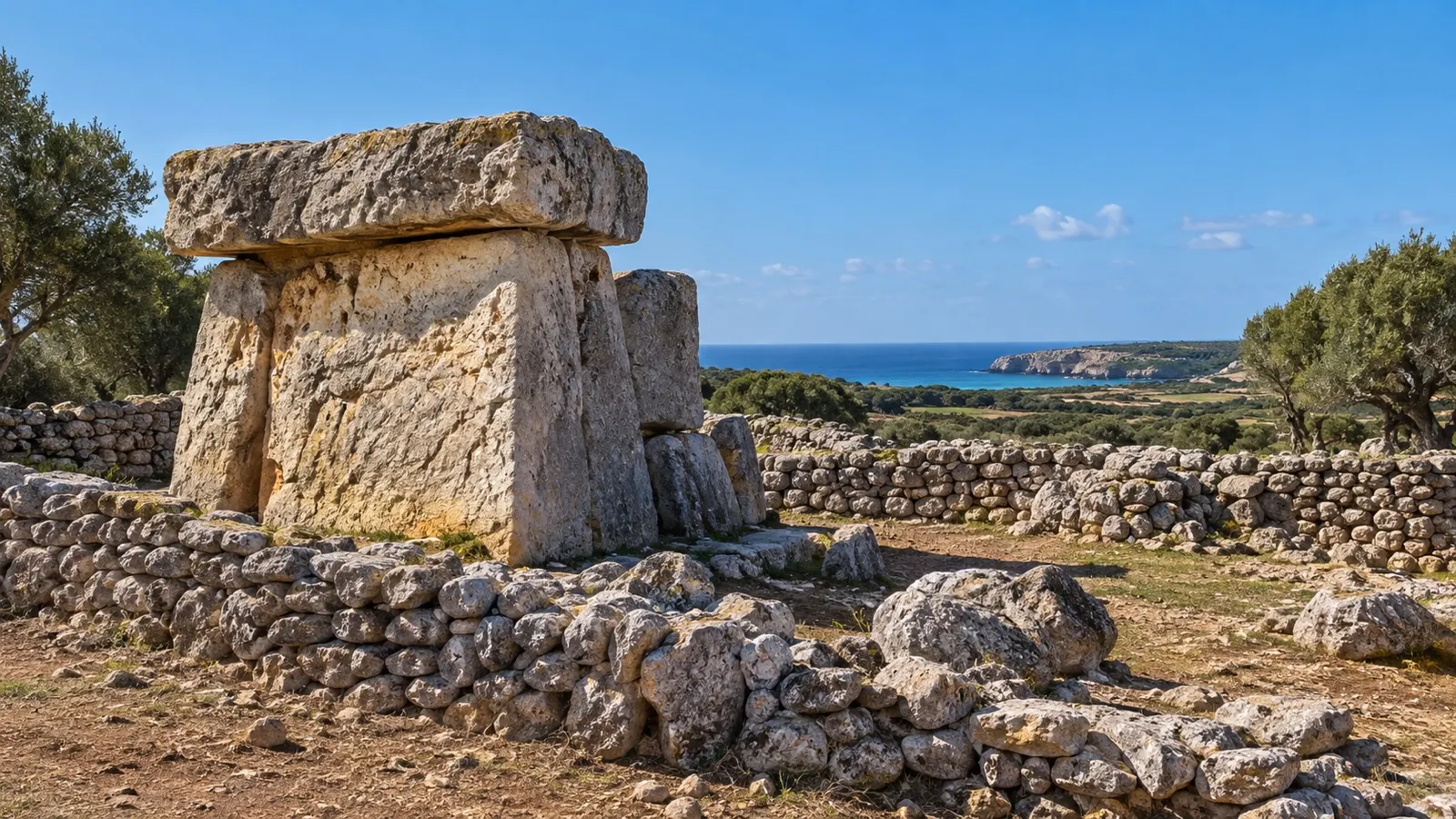
Menorca’s prehistoric stone sites are not minor curiosities. Talayotic Menorca is a UNESCO World Heritage property comprising settlements and burial landscapes with monumental dry-stone structures from the Bronze and Iron Ages.
Trepucó lies close to Mahón and suits a shorter taxi outing, while Torre d’en Galmés and Torralba d’en Salort create a fuller archaeology day. Confirm current opening, shade, restrooms, paths, and return transport because many sites sit in rural landscapes.
Ciutadella offers a handsome old center and small harbor on the opposite side of the island. Direct regional buses can work on a long call, but the central Maó bus station is above the cruise quay and service frequency varies by season.
The Island Council’s official Mou-t Menorca transport portal provides current route and road information. Protect at least 90 minutes between your planned return to Mahón and all aboard if traveling independently across the island.
Travelers who already have a full historic-town day at Barcelona cruise port may prefer Menorca’s harbor or prehistoric landscape. The island’s quieter scale is an asset, not an invitation to drive through every municipality.
We cover that separately in our guide to Madrid Cruise Extension.
Let the berth decide the size of the day
Mahón’s central quay, Cós Nou, and an anchorage create three different port days. Do not reserve an early boat or island bus until the cruise line confirms which one applies.
Central passenger quay: Walk the lower harbor, test the public elevator before depending on it, then explore the upper center. A taxi is the reliable backup when the lift is closed or a steep return is a poor fit.
Cós Nou: Use the ship shuttle or arranged vehicle through the commercial-port route and photograph the return stop. A map’s straight line to the old town does not show secure roads or construction detours.
Tender call: Treat the ship’s final tender as the deadline and ask about mobility-device rules before paying for a second harbor boat.
Island trip: Use the current Menorca transport planner for Ciutadella or a prearranged driver for rural archaeological sites, then reach Mahón at least 90 minutes before all-aboard.
The harbor and old town are the best short-call recommendation because they remain worthwhile even after a late clearance. Choose Ciutadella or a prehistoric-site circuit only when the call is long enough to absorb seasonal service gaps in both directions.
Four good ways to spend the call
Mahón only: ride the elevator, explore the market and old center, then descend for lunch and a harbor walk. This fits even a short usable window and carries very little transport risk.
Harbor immersion: combine central Mahón with a one-hour harbor cruise or Illa del Rei when seasonal boats align. Keep the final two hours close to the ship.
Talayotic Menorca: reserve a taxi or guide for Trepucó plus one larger site, then finish with a brief upper-town loop. Archaeological context makes the giant stones far more rewarding than a rushed photo stop.
Ciutadella: choose it as the day’s single distant headline on a long call. Do not add a beach and two prehistoric sites unless you would like your Menorca memory to be mostly vehicle upholstery.
Accessibility depends on the berth
A central alongside berth removes the tender barrier, but gangway slope and quay distance still vary. The lower harbor promenade is the easiest terrain, while the public elevator can make the upper center practical when it is operating.
Old-town curbs, paving, gradients, and building thresholds require route-specific checking. If the ship uses Cós Nou, confirm whether the shuttle has a wheelchair lift or ramp and whether mobility devices need advance registration.
Harbor boats differ significantly in gangway, seating, restroom, and wheelchair access. Ask the operator about the exact vessel, not the company in general, and reserve adapted taxis before the ship arrives.
Rural archaeological sites often combine gravel, grass, exposed stone, and limited shade. A driving tour with a few verified accessible stops may be more satisfying than a famous site whose final path is impossible.
Menorca’s weather has a windy streak
Summer is typically hot, sunny, and dry, while spring and autumn are milder with a greater chance of showers. The Tramuntana and other winds can affect the harbor entrance, boat excursions, beaches, and how cool the quay feels.
Wear grippy shoes, carry water and sun protection, and bring a light wind layer for the sail-in. A compact rain shell earns its space during shoulder season.
Mahón is generally comfortable to explore, but watch belongings in busy markets and keep out of cycle and traffic lanes. Spain drives on the right, emergency number 112 applies, and swimming flags at beaches should be obeyed.
After a city day, reach the correct quay 45 to 60 minutes early; after Ciutadella or a rural circuit, aim for 90 minutes. If your itinerary continues to Alcúdia cruise port, remember that it is a separate Mallorca call, not another Menorca berth.
Mahón cruise port FAQs
Can you walk from the cruise ship into Mahón?
Yes, from the usual central passenger quay the lower harbor is immediate and the upper center is about 10 to 20 minutes away. Use the public elevator, stairs, sloping streets, or a taxi depending on mobility and berth position.
Where do cruise ships dock in Mahón?
Most calls use the city-side passenger-quay area around Moll de Ponent, below the historic center. An assignment at Cós Nou or an anchorage changes the transfer, so check the daily program.
Does Mahón have a tender?
Docking is normal, but anchoring and tendering can occur for operational, traffic, weather, or vessel reasons. The ship will provide the landing point and mobility rules.
Is the harbor elevator always open?
No public elevator should be treated as guaranteed because hours and maintenance can change. Check it on arrival and keep a taxi or sloping-road alternative for the return.
Can I reach Ciutadella independently?
Yes, regional buses or a taxi make it possible on a long call, but crossing the island takes roughly 45 to 60 minutes each way. Verify the current schedule and return with a generous buffer.
Why this port feels special
Mahón lets the port itself become the destination: a spectacular sail-in, a walkable waterfront, an elevator to a compact city, and enough island history to support several completely different days. The winning plan starts with the assigned berth, then stays faithful to one theme.
We cross-check port, transport, destination, and heritage authorities under our Editorial Policy. Before stepping ashore, verify the berth, shuttle, elevator, boat schedule, attraction access, weather, and your ship’s return instructions.
How this guide was researched: Unless a first-hand visit is explicitly identified above, this guide is based on independent research using official port, tourism, transit, government, and attraction sources where available. Details were checked against Ports de Balears and UNESCO; logistics and time-sensitive details were reviewed in September 2026; see our Editorial Policy.