Thessaloniki Cruise Port: Terminals and Walkable City
Thessaloniki is the cruise port that saves its grand reveal for after the gangway. Step through a working harbor and Greece’s second city unfolds around you, with Roman ruins, Byzantine churches, food markets, waterfront walks, and one very famous white tower.
What arrival looks like in Thessaloniki
Cruise ships dock within the Port of Thessaloniki, close to the historic center rather than at a remote coastal terminal. The Thessaloniki Port Authority cruise page currently lists three berthing positions, two passenger terminals, space for 70 motorcoaches, and free Wi-Fi.
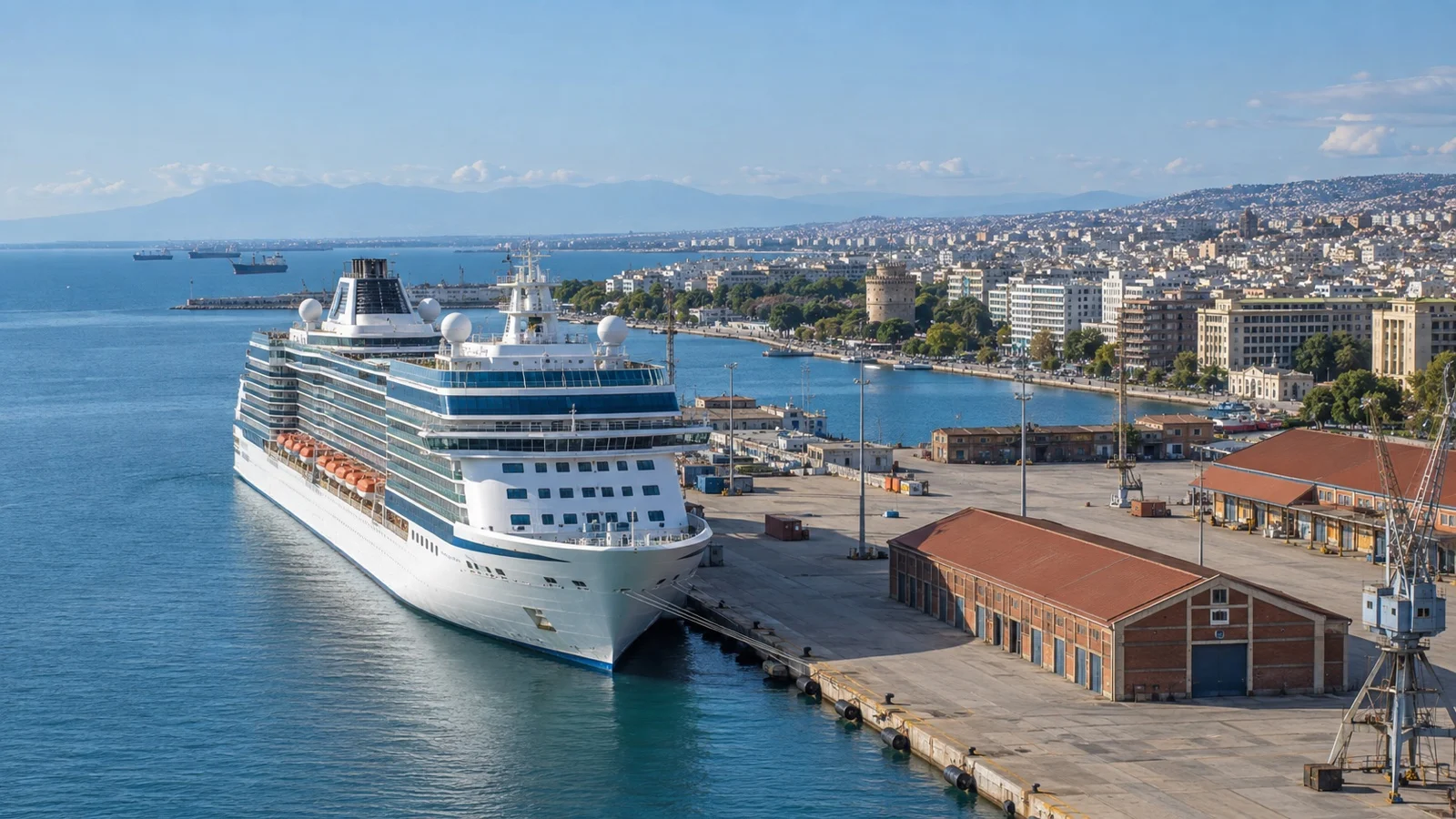
The passenger facilities are associated with Piers 1 and 2, including the newer Alexander the Great terminal at Pier 2. That does not guarantee your ship a specific berth or building, because call size, port operations, and other vessels determine the daily assignment.
The port authority opened Alexander the Great terminal in November 2023 for homeport and transit operations. Follow ship signs from your actual gangway rather than navigating toward the terminal name you saw online.
There is a full rundown of where to stay in our hotels near Thessaloniki cruise port guide.
Best easy plan: Ladadika, Aristotelous Square, the Roman and Byzantine landmarks, and the waterfront.
Major challenge: a complete city walk becomes long, hot, and uphill toward Ano Poli.
Return: at least 60 minutes before all aboard after a city day.
The quick facts
- Where you land: a cruise position at Pier 1 or Pier 2 inside the Port of Thessaloniki, including the Alexander the Great terminal opened in November 2023. The Thessaloniki Port Authority cruise page lists three berthing positions and two passenger terminals, all within the city itself.
- Dock or tender: Scheduled calls berth alongside in the commercial port, though the pier and terminal building vary by day.
- Into town: Roughly a 15 to 25 minute walk from most cruise positions to Ladadika and Aristotelous Square, once you have followed the controlled exit route.
- Currency and language: The euro (EUR) and Greek, with English widely spoken in the center.
- Time zone: Eastern European Summer Time (EEST, UTC+3) during the cruise season, Eastern European Time (EET, UTC+2) in winter.
- How often the call is missed: Low (under 1%): the sheltered berth is rarely limited by local weather.
Can you walk from Thessaloniki cruise port?
Yes, many independent passengers can walk into the center, but the exact distance begins at the gangway rather than the map pin. From many cruise positions, allow roughly 15 to 25 minutes to reach the Ladadika or Aristotelous Square area after following the controlled exit route.
A far berth, summer heat, mobility needs, or road crossings can make a taxi the better start. The city’s official tourism site also emphasizes that the port sits in the heart of Thessaloniki, but “central” does not mean every landmark is beside the gate.
A city walk that tells Thessaloniki’s story
Ladadika and the waterfront
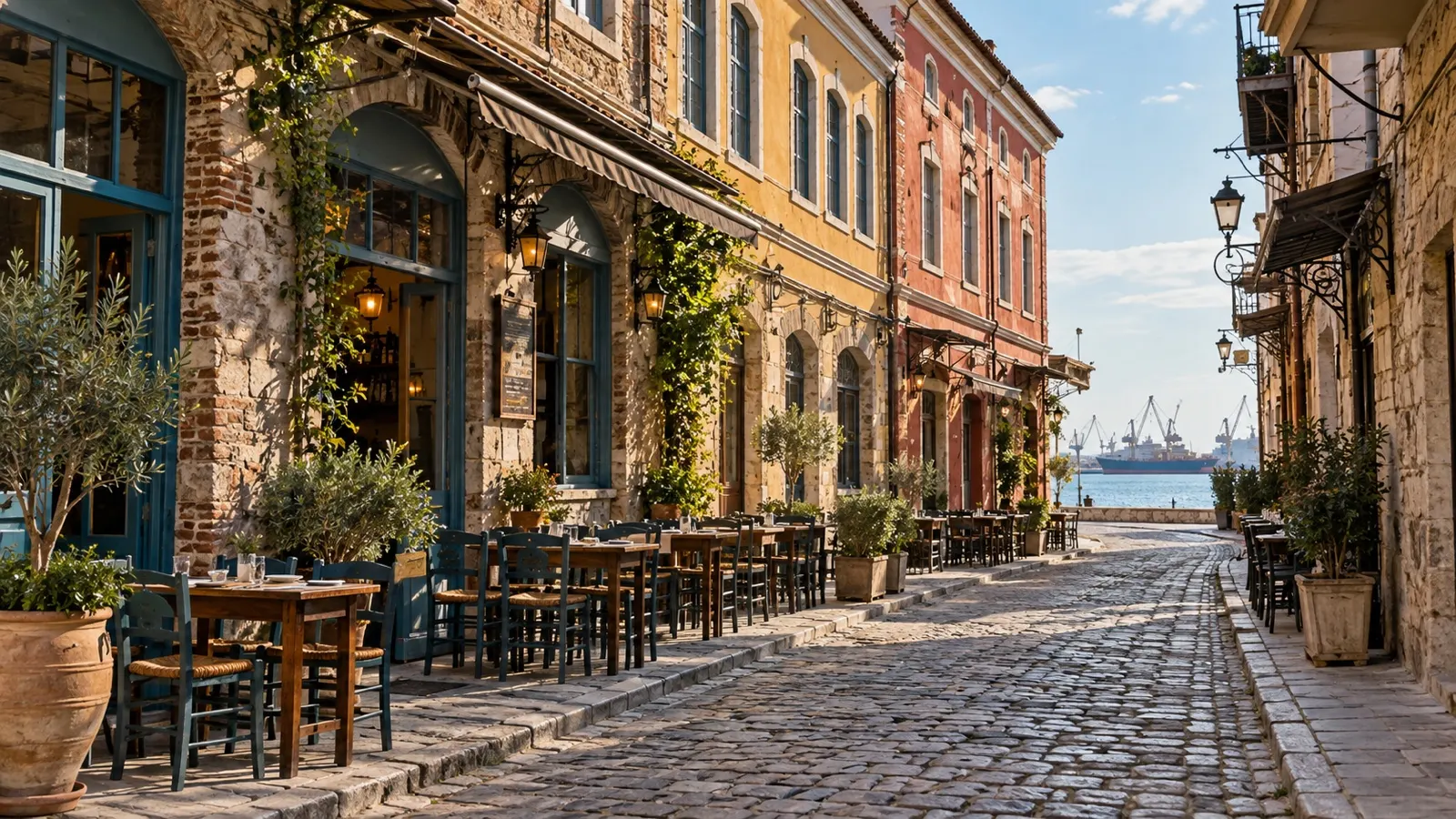
Ladadika sits near the port with cobbled streets, restored warehouses, tavernas, and evening energy that begins more quietly in the morning. Walk through it toward the broad waterfront rather than stopping at the first menu waved in your direction.
Aristotelous Square and the market streets
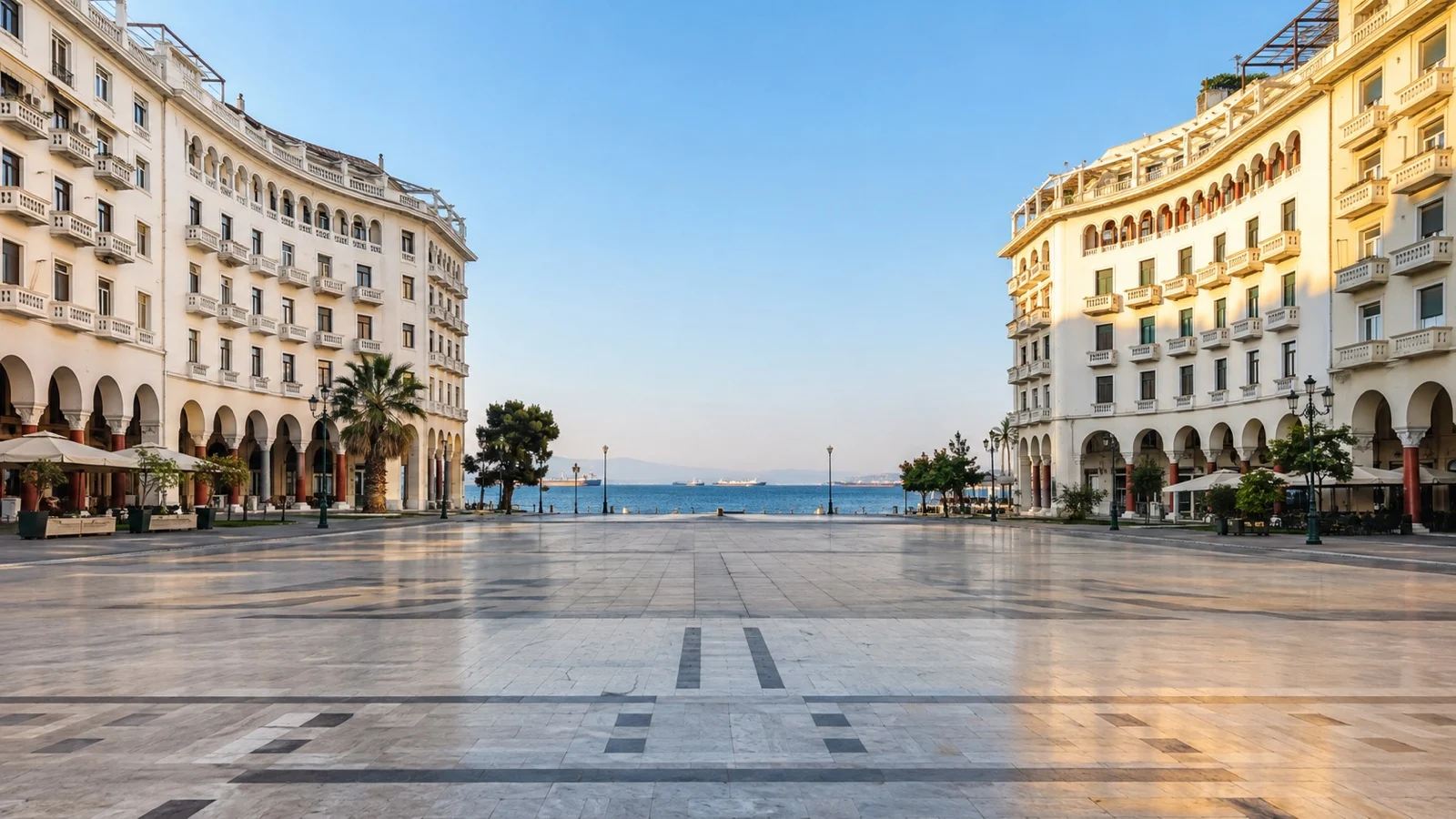
Aristotelous Square opens the city toward the sea with arcades and monumental facades. North of the waterfront, shopping and market streets reveal Thessaloniki as a working food city, not an outdoor museum assembled for your ship.
Browse Modiano Market and the surrounding food district according to current operating hours. If a particular hall is closed or quiet, the neighboring streets still offer bakeries, spice shops, cafés, and enough pastry temptation to test any breakfast restraint.
Roman Forum, Agios Dimitrios, Rotunda, and Arch
The Roman Forum lies uphill from the central market area, while the Church of Agios Dimitrios anchors the city’s Byzantine identity. Continue toward the Rotunda and Arch of Galerius only if walking stamina and time remain healthy, because these sights spread across the center.
Religious sites require respectful clothing and may restrict access during services. Thessaloniki’s tourism organization offers a useful UNESCO monument walk, but trying to collect every listed church in one cruise call turns history into cardio.
White Tower and the long seafront
The White Tower stands east along the waterfront and makes a natural endpoint for a lower-city walk. It is farther from the port than Aristotelous Square, so allow for both the outward distance and the return rather than treating it as a quick gate-side photograph.
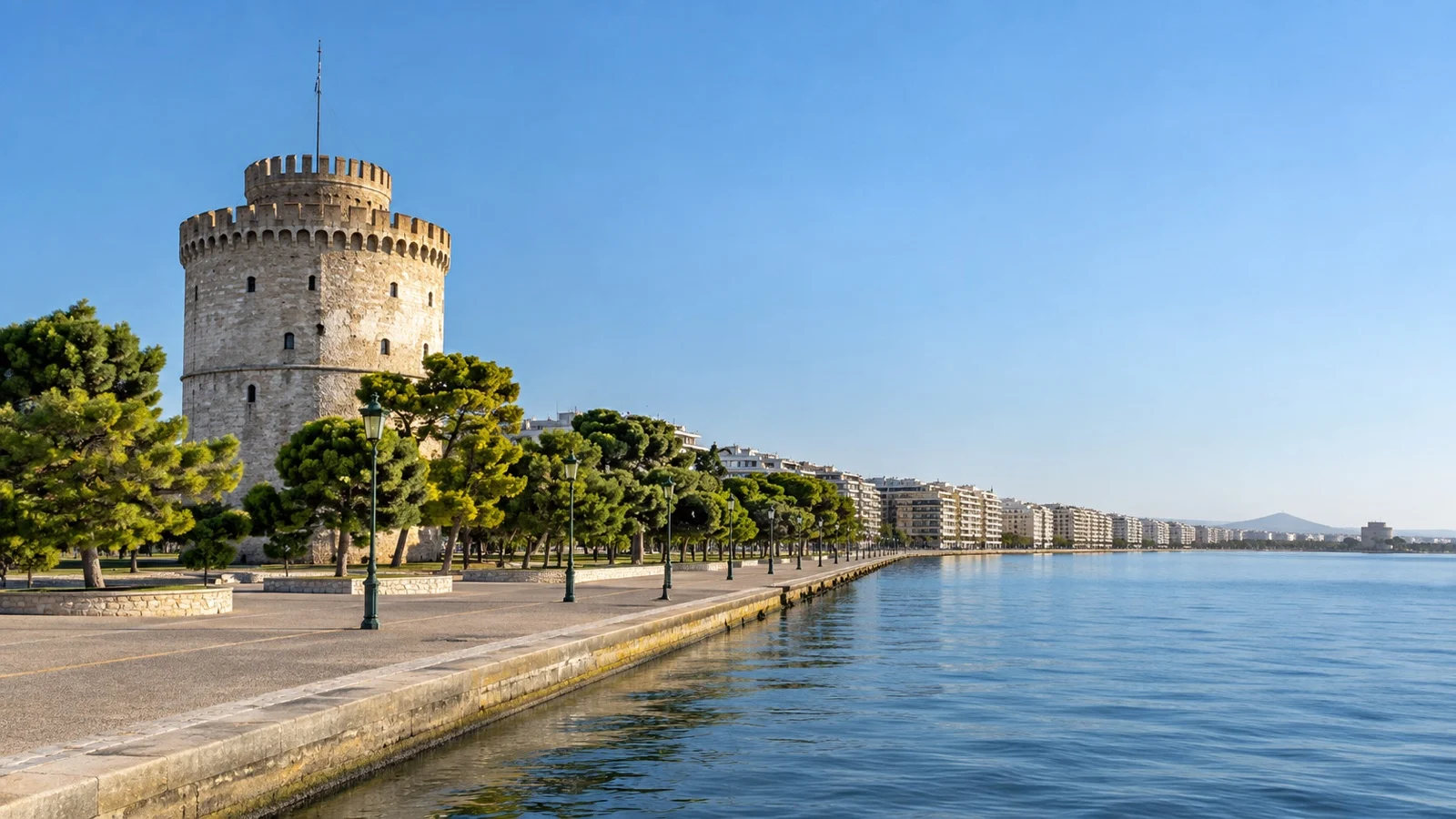
The promenade itself is mostly level and pleasant, with sea views and frequent places to pause. Summer sun reflects off the paving, and shade can be scarce during the middle of the day.
Ano Poli is worth a tactical taxi
Upper Town, or Ano Poli, preserves walls, traditional houses, Byzantine churches, and wide views across Thessaloniki. The approach is steep enough that taking a taxi uphill and walking down can be much smarter than earning the panorama the hard way.
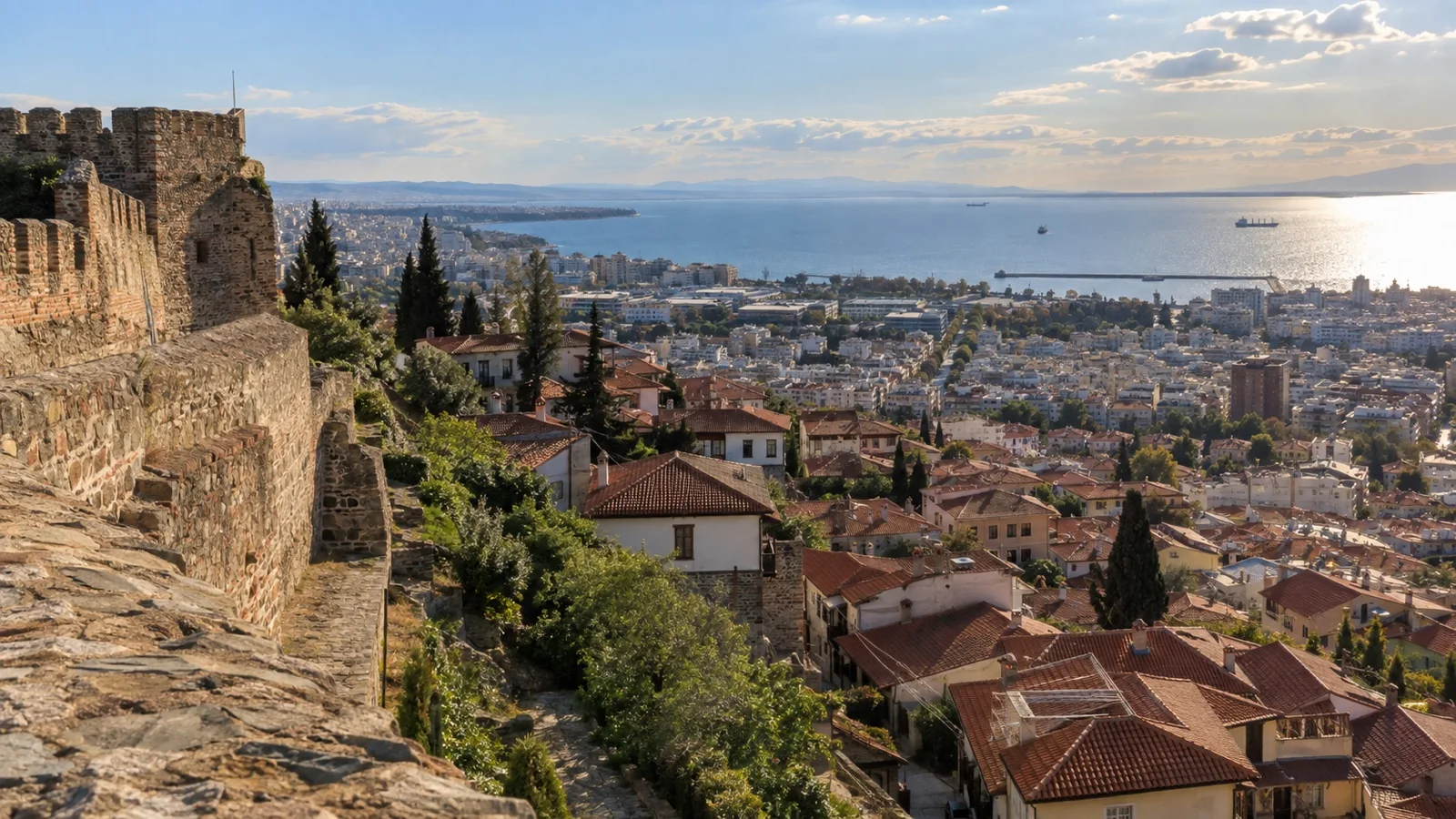
Ask the driver for a clear drop-off near the walls or a named landmark, then navigate downhill through planned stops. Travelers with knee or balance concerns should keep the taxi for both directions because cobbles and gradients continue within the district.
Using Thessaloniki’s metro and buses
The metro can help with sights deeper in the center, although most passengers will first walk or taxi away from the port. Venizelou and Agias Sofias are useful central stations, and the best choice depends on the route you have actually planned.
The official Thessaloniki Metro site provides current operating information, station details, and service notices. Its accessibility guidance states that stations and trains include features for passengers with mobility, visual, and hearing needs.
City buses operated through OASTH cover a much wider network, but routes and stops can feel less intuitive during a short call. Use the operator’s live information, validate any required ticket, and do not save your first attempt for the final journey back.
Choose the transport chain before the sights
Thessaloniki rewards a simple one-way shape more than a day of repeated uphill and downhill transfers. Start with the ship’s actual gate, because the port has three cruise positions and two passenger terminals rather than one universal map pin.
Lower city: walk from the controlled port exit through Ladadika, Aristotelous Square, the markets, and the waterfront. This is the easiest independent plan and can be shortened without sacrificing the city’s character.
Ano Poli: take a taxi uphill first, agree on the drop-off, and walk down through selected Byzantine sights. This suits travelers comfortable with slopes, steps, and uneven paving, while a taxi both ways is kinder to limited stamina.
Metro or bus: use the official metro information or live bus planner for a specific gap, not as a last-minute return experiment. Validate the correct fare product and identify the port-side exit before boarding.
Pella or Vergina: reserve a ship excursion or vetted driver, confirm which site entrances are included, and require a return to the port area at least 90 minutes before all-aboard.
For a first visit, my practical choice is an uphill taxi to Ano Poli followed by a mostly downhill city walk. Stay entirely in the lower city when heat, mobility, or a short call makes that the more enjoyable plan.
Choose one of these day shapes
Food and lower city
Walk through Ladadika, Aristotelous Square, market streets, and the waterfront, then settle into a good lunch. This is the easiest independent day and stays reasonably close to the port.
Roman, Byzantine, and waterfront highlights
Start with the Roman Forum and Agios Dimitrios, continue to the Rotunda and Arch of Galerius, then finish at the White Tower. Use a taxi for one leg if the day is hot or the distances start eating the lunch budget.
Upper Town plus selected center sights
Taxi uphill to Ano Poli, walk down through one or two Byzantine stops, and end around Aristotelous Square or Ladadika. This route uses gravity as an unpaid tour assistant.
Pella and Vergina are significant day-trip destinations, but each needs a ship excursion or reliable private transport with a protected return. Do not attempt to combine both with central Thessaloniki unless the call is unusually long and the logistics are professionally managed.
For the regional picture, browse our Greek cruise ports guide and Mediterranean ports overview. Thessaloniki is unusually city-first, while many Greek calls revolve around island transfers or tender boats.
Eat like the city expects you to
Bougatsa arrives as flaky pastry with sweet custard or savory cheese, and koulouri is the sesame bread ring found across the city. Soutzoukakia, grilled meats, seafood, meze, and rich trigona pastries can turn a modest tasting plan into a full committee meeting.
Thessaloniki’s food culture reflects Greek, Ottoman, Jewish, Balkan, and Asia Minor influences. Ask what a shop does best, order fewer things at first, and leave room for the next bakery.
Accessibility without vague promises
The port has modern passenger terminals, but actual gangway angle, terminal route, and distance to the exit depend on berth and vessel. Arrange ship assistance in advance and verify whether the port shuttle or transfer, if offered, can take your equipment.
The lower waterfront is mostly level, while central sidewalks vary in width and quality and busy crossings require care. Ano Poli is steep and uneven, so a taxi-based visit is far more realistic for many wheelchair users or travelers with limited stamina.
The metro is designed as an accessible system, but reaching a station from the port still matters. Our guide to cruise port planning with limited mobility helps assess every link from gangway to attraction.
Weather, street smarts, and return time
Summer can be hot, bright, and humid, while winter calls may bring cold wind or rain off the Thermaic Gulf. Carry water and sun protection, but add a light layer outside peak summer.
The city is generally comfortable for visitors, with the usual need to secure valuables in markets and crowded transport. Watch traffic at larger avenues and take extra care on worn paving after rain.
After a central walking day, aim to pass the port gate at least 60 minutes before all aboard, allowing more from White Tower or Ano Poli. From Pella, Vergina, or another regional excursion, protect at least 90 minutes and use a provider that understands ship time.
The berth-specific route back to the gangway may be longer than expected inside the working port. See our guide to safe cruise return timing before setting your personal cutoff.
Thessaloniki cruise port FAQs
Do ships dock or tender?
Scheduled cruise calls normally dock alongside within the Port of Thessaloniki. The exact berth and passenger terminal vary, so follow the information for your sailing.
Is the port near the city center?
Yes, the port is close to Ladadika and the lower historic center. Walking time depends on the assigned berth, controlled exit route, and your destination.
Do I need a tour?
No tour is necessary for the central city if you are comfortable walking and navigating. A tour makes more sense for regional archaeological sites or anyone wanting transport between spread-out landmarks.
Can I see Ano Poli and the waterfront?
Yes, but take a taxi uphill and limit the lower-city stops to protect time and energy. Walking the whole route in both directions is ambitious in hot weather.
What currency is used?
Greece uses the euro, and cards are widely accepted. A little cash remains useful for small bakeries, church donations, or a ticket machine that declines a foreign card.
Give the city room to breathe
Thessaloniki rewards a focused route more than a heroic one. Pick food and waterfront, history and White Tower, or Ano Poli and selected center sights, then enjoy the fact that your ship is docked near a real, lively city.
Source note: Berths, terminal routes, transit, and attraction access can change. The verification approach in our Editorial Policy supports this guide, while your cruise line and local operators control the practical details on arrival day.
How this guide was researched: Unless a first-hand visit is explicitly identified above, this guide is based on independent research using official port, tourism, transit, government, and attraction sources where available. Details were checked against Thessaloniki Port Authority cruise page and UNESCO monument walk; logistics and time-sensitive details were reviewed in September 2026; see our Editorial Policy.