Akureyri Cruise Port: A Cruiser’s Guide to Iceland’s Northern Capital
Akureyri is compact enough for an easy town day and important enough to launch half the excursions in northern Iceland. That combination is excellent until several ships arrive and every taxi, minibus, rental car, and sensible plan disappears before breakfast.
Most vessels dock near the center, but the exact pier still matters. Confirm the berth, book any big outing early, and keep a town loop ready for weather that declines to cooperate.
First check the pier and the company count
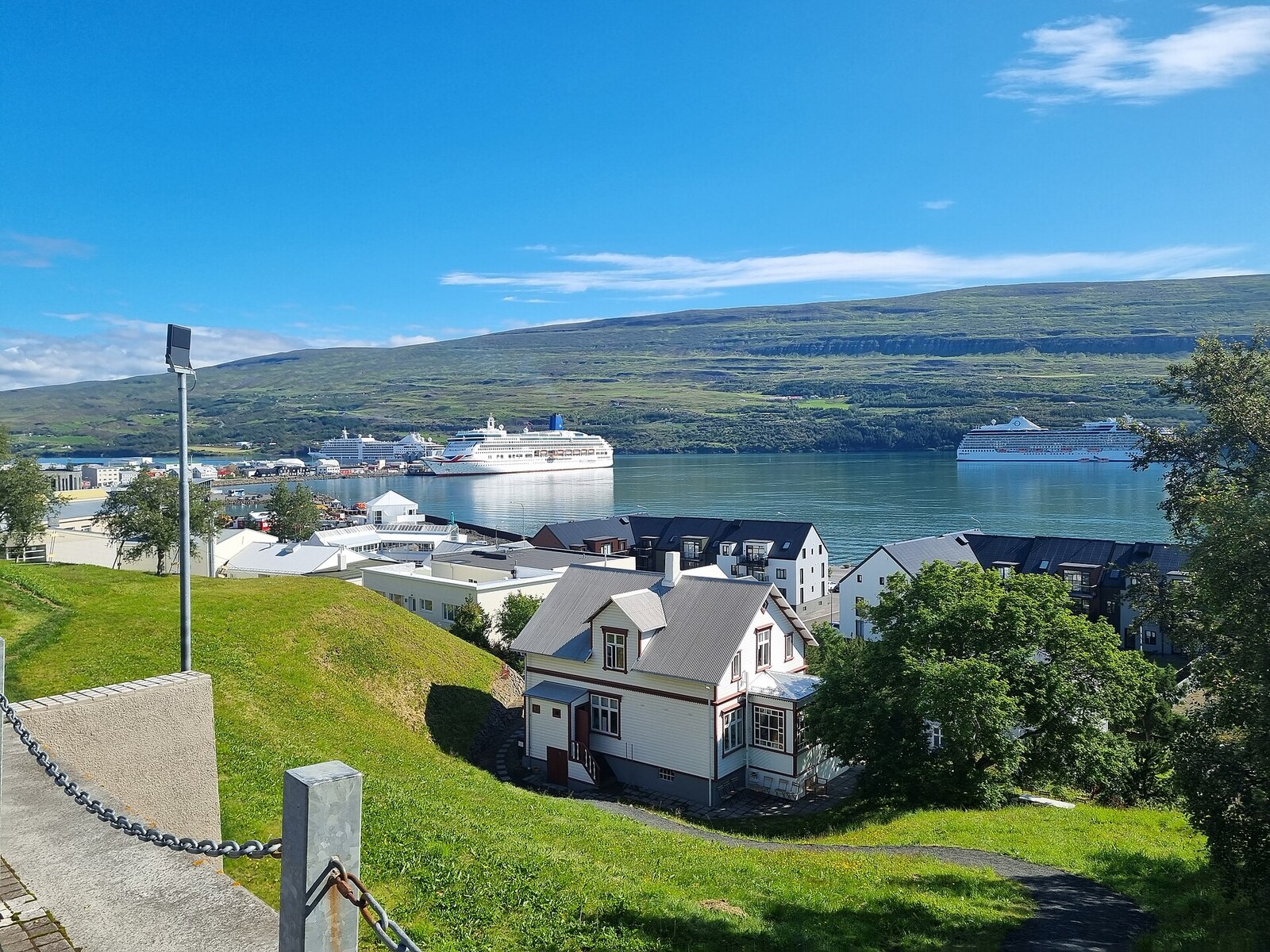
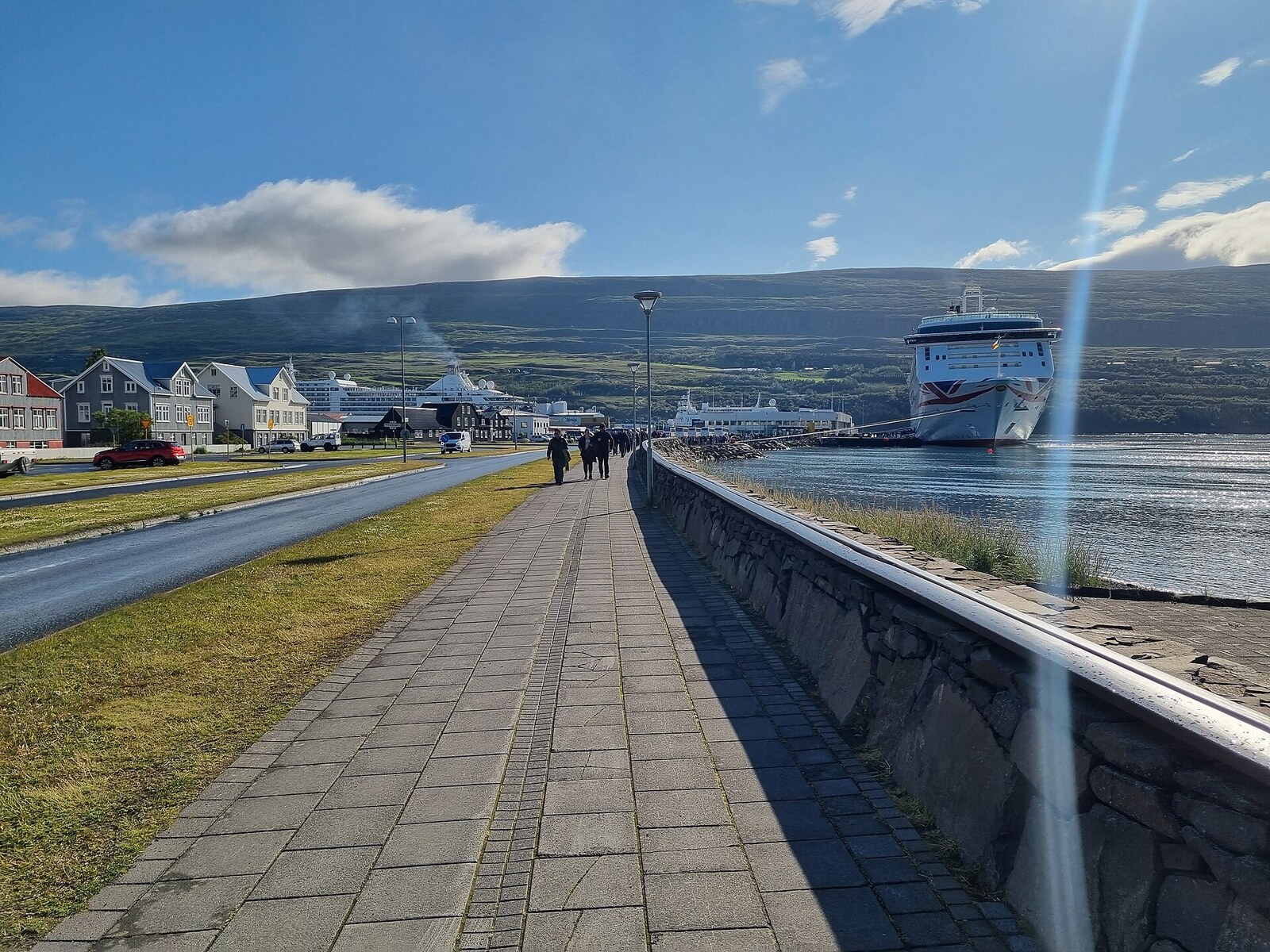
The Port of Akureyri operates several cruise-capable berths around the inner waterfront. Most ships dock close to the center, often within a short walk, but distance and pedestrian routing vary by assigned pier.
Use the official cruise visitor guidance and port schedule shortly before arrival. A day with multiple large vessels can put unusual pressure on tours, taxis, rental cars, restaurants, and attraction capacity.
Complimentary port Wi-Fi is available at Tangabryggja and Oddeyrarbryggja according to the destination’s current pre-arrival information. Connectivity elsewhere can vary, so download tickets and meeting instructions rather than planning a dockside email excavation.
Akureyri belongs in our Iceland cruise ports guide and walkable cruise ports roundup. Its center is simple on foot, while the famous landscapes beyond town require more discipline.
Quick Facts
- Where you land: one of the Port of Akureyri quays on the inner Eyjafjörður waterfront, most often Tangabryggja or Oddeyrarbryggja, both roughly 1/3 mile from the town center. Check the assigned berth in the official cruise visitor guidance before arrival.
- Dock or tender: Most ships use an alongside berth near the center, but confirm the assigned quay and any transfer instructions for your sailing.
- Into town: About a 5 to 10 minute walk from the central berths to Hof and Ráðhústorg.
- Currency and language: Icelandic króna (ISK) and Icelandic; English is widely spoken and card payment is near-universal, so you can get through the day without cash.
- Time zone: Greenwich Mean Time (UTC+0) all year.
- Operational caution: Fog, wind, marine conditions, road status, and the ship’s operating plan can change the day, so check current notices.
The key choice: town, Goðafoss, or Mývatn
Stay in town for a short call, uncertain weather, or a relaxed day. Choose Goðafoss for one major natural sight with a manageable road journey.
Choose Lake Mývatn only with a long call and confirmed transport. The region contains several separate attractions, and a proper circuit consumes most of the usable day.
Whale watching is a fourth choice rather than a small add-on. Trips leave near central Akureyri, but duration, weather, sea conditions, and wildlife determine the experience.
Trying to combine Mývatn, Goðafoss, whale watching, the botanical garden, and a geothermal bath creates a fine itinerary for a person with two days. Cruise passengers generally receive one.
A town loop that survives bad weather
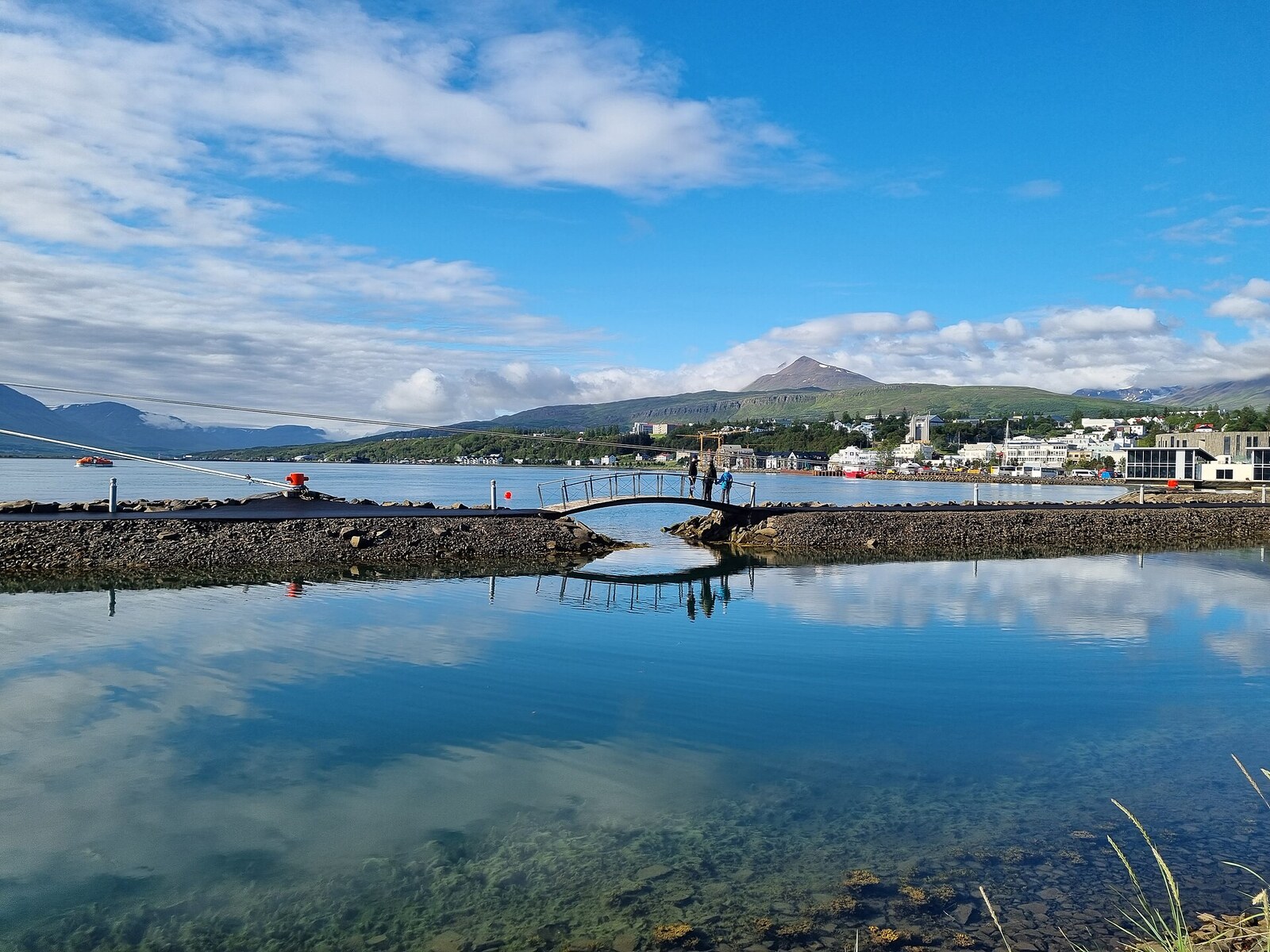
Begin along the waterfront near Hof Cultural and Conference Center. The building houses tourist information and sits close to whale-watching departure points and the central bus area.
Walk into the compact center around Ráðhústorg and Hafnarstræti. Cafés, bakeries, bookstores, design shops, and ordinary local businesses make this a useful base rather than an attraction corridor.
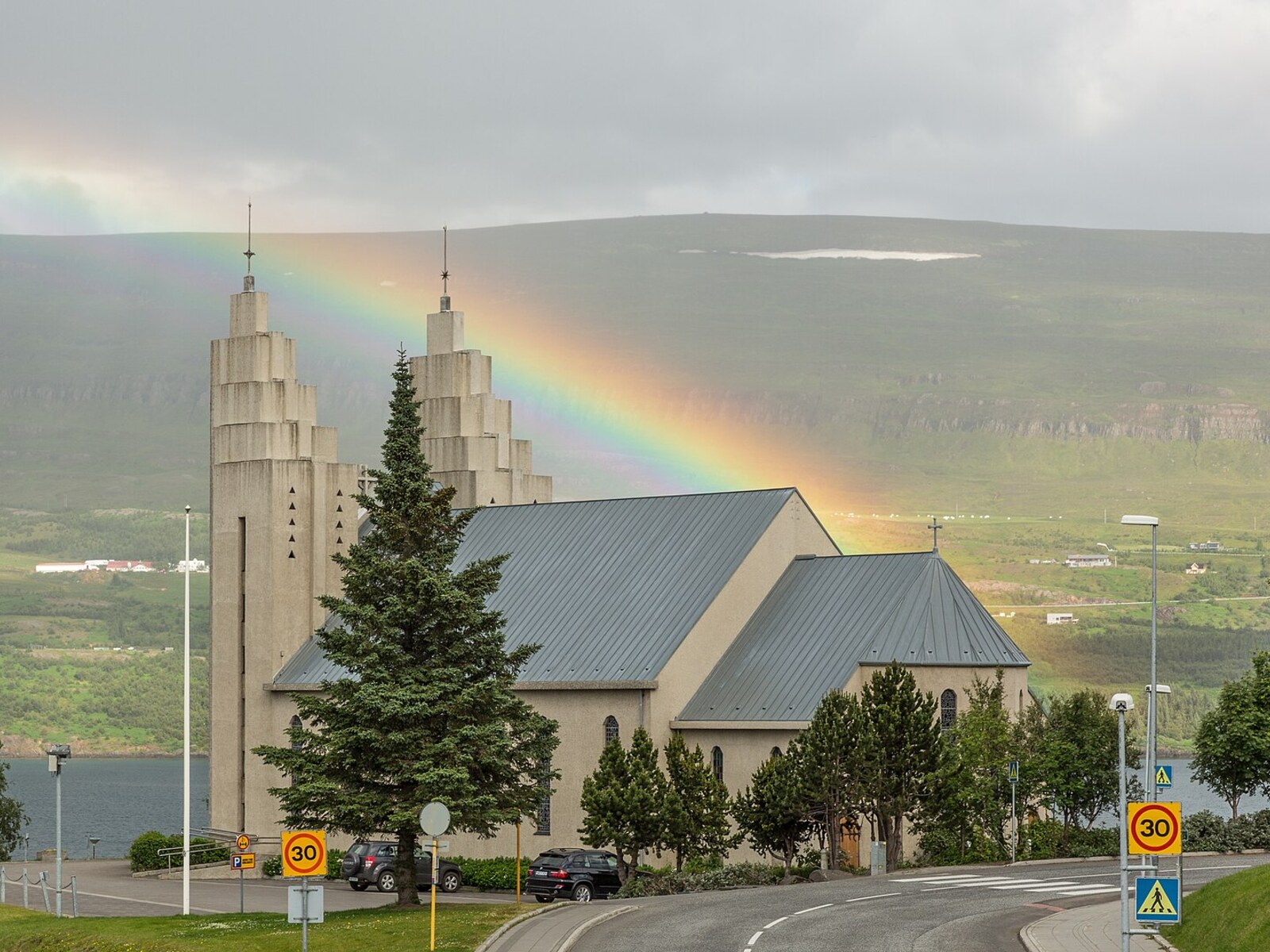
Climb toward Akureyrarkirkja, the town’s landmark Lutheran church designed by Guðjón Samúelsson and consecrated in 1940. The famous staircase provides a strong harbor view, but an alternate road approach can reduce steps without eliminating the hill.
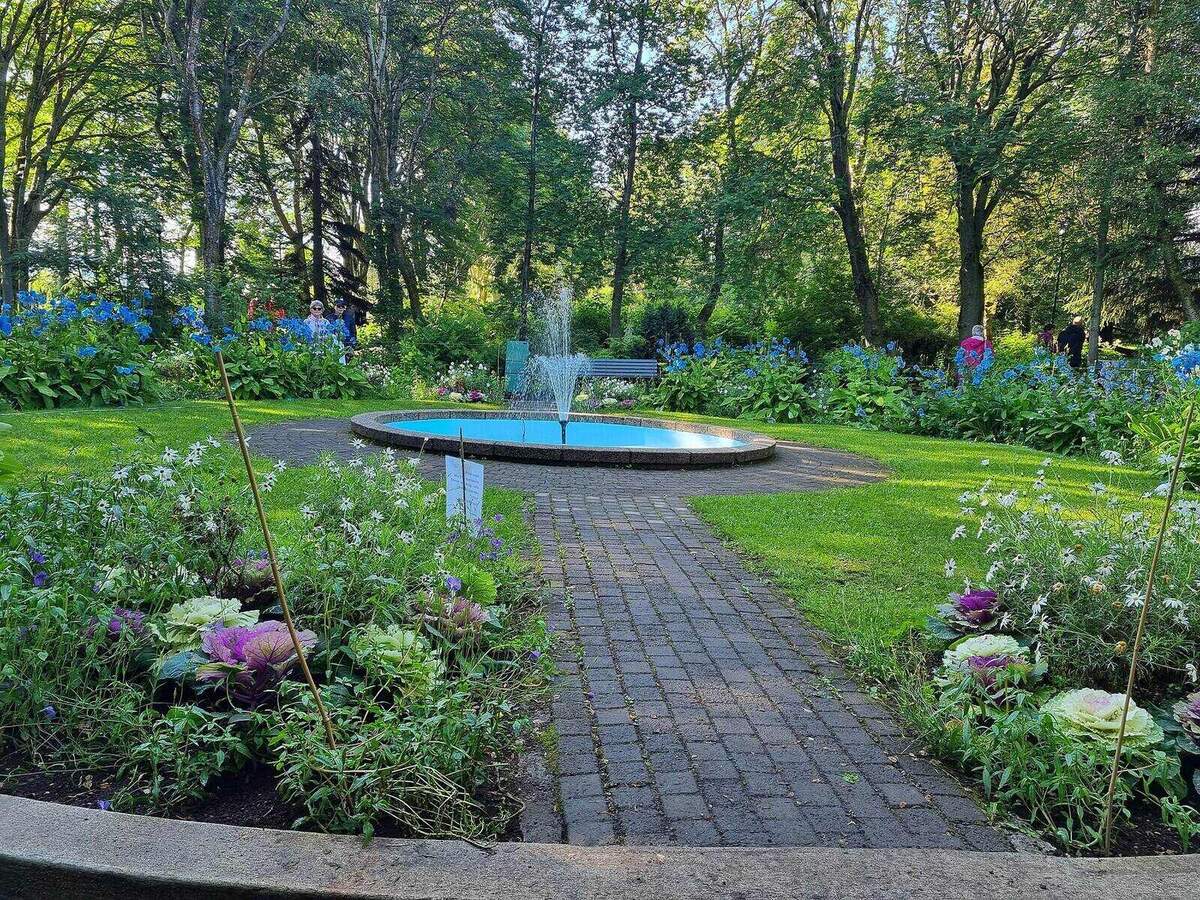
Continue toward the Akureyri Botanical Garden. The city describes it as a public park founded in 1912, with the botanical section added in 1957 and an extensive collection adapted to its northern setting.
Loop downhill through the older southern part of town, where museums and historic houses are spread along the road. Select one if open rather than marching past all of them in pursuit of completion.
End at the waterfront or Akureyri swimming pool. The pool offers a more local geothermal soak than a destination spa, but current public hours and maintenance should be checked.
Why the botanical garden works so well
The garden sits within walking distance of central Akureyri and is open as a park beyond the most formal summer visitor season. Plant displays change rapidly with weather and month, so a June visit will not resemble late August.
Its appeal is not only the claim of growing plants near the Arctic Circle. It also offers shelter, benches, paths, and a green pause after the church hill.
Some paths are firm and manageable, while gradients and surface conditions vary. Snow, ice, rain, or maintenance can alter access outside summer.
The garden restaurant follows its own schedule. Treat coffee as a pleasant possibility, not emergency infrastructure.
Goðafoss is the cleanest excursion choice
Goðafoss lies about 22 miles from Akureyri near Iceland’s Ring Road. The Skjálfandafljót River drops across a broad curved ledge, with maintained viewpoints on both sides.
The official Goðafoss page notes that the shortest walk to the falls is from the west side. Both banks offer views, but seeing both takes more time and may involve weather-exposed paths.
The story connecting the waterfall with Iceland’s adoption of Christianity around the year 1000 is presented as legend. Guides often explain that Þorgeir Ljósvetningagoði supposedly cast images of the old gods into the water after his conversion.
Organized transfers operate on selected cruise dates, and public bus route 79 can serve the Goðafoss stop. The public vehicle has limited capacity and cannot be reserved according to the destination’s current guidance, so it is a risky foundation for a tight port day.
A ship tour, prebooked local excursion, or rental car gives more control. Drivers must still check road and weather conditions, especially outside summer.
Do not stand beyond barriers or on wet edges for a photograph. Spray, wind, ice, and slippery rock do not become safer because the waterfall is broad rather than tall.
Lake Mývatn needs the full window
The Mývatn region lies farther east and includes a lake landscape, pseudocraters, lava formations, geothermal areas, and bathing facilities. Those places are separated by road, and “Mývatn” is not one attraction with a single parking lot.
Common circuits may include Skútustaðagígar, Dimmuborgir, Hverir, viewpoints, and a geothermal bath. Site access, trail conditions, volcanic hazards, and road routing can change.
Use a ship excursion or reputable prebooked operator on busy days. Visit Akureyri specifically warns that tours, taxis, and rental cars can be hard to find when cruise demand is high.
Do not attempt the region as an improvised public-transport trip. Limited schedules and scattered sites make the return vulnerable to one delay.
The downside of a full Mývatn loop is spending little time in Akureyri itself. That is a fair trade for geology lovers, but it should be a deliberate one.
Whale watching without promising a whale
Operators depart from the pier near Hof and search Eyjafjörður. Humpback whales are a major focus, while other cetaceans may occur in the fjord.
The official destination listing identifies current operators and departure locations. Book the exact sailing that fits your ship and confirm check-in time, duration, clothing, accessibility, and cancellation policy.
Wildlife sightings are never guaranteed, and sea trips can change or cancel in poor conditions. Choose the excursion because you also want the fjord, guide, and time on the water.
Bring warm layers even when the town feels mild. A moving boat on an Icelandic fjord can turn optimism into wind chill remarkably quickly.
Do not combine a standard whale trip with Mývatn on an ordinary call. Each activity needs a buffer, and weather has no obligation to respect the neat gap between them.
Geothermal water: local pool or Forest Lagoon
Akureyri’s public swimming pool provides heated outdoor water, hot pots, and community atmosphere close to town. Icelandic pools require a thorough soap-and-water shower without swimwear before entry.
Forest Lagoon sits across the fjord in wooded surroundings and requires road transport. Prebooked visitors may have access to the facility’s current shuttle arrangement, which should be confirmed directly.
The public pool is more flexible and usually easier to combine with a walk. Forest Lagoon offers a destination-spa experience but introduces a reservation and return transfer.
Bring a swimsuit rather than relying on rental stock. Drying a wet suit in the cabin afterward is less glamorous than the soak but considerably easier than improvising one ashore.
Free buses help inside town, not everywhere in the north
Akureyri city buses are free and operate circular routes beginning and ending near the center. Current schedules differ between weekdays, weekends, and public holidays.
The official transport page provides links to live schedules. Use local buses for neighborhoods, museums, or tired legs, not as proof that regional travel is free too.
Regional buses charge fares and run limited schedules. Goðafoss may be technically reachable, but seat limits and the inability to reserve make a cruise-day return less secure.
Taxis operate in town but can sell out during high-demand calls. Prebook any ride that determines whether you reach an excursion or the ship.
Three plans that fit the clock
Under four hours
Stay in Akureyri. Walk the center, church area, and botanical garden, then choose a bakery or the swimming pool.
This plan remains satisfying if the ship is delayed. It also avoids placing the whole visit on one unavailable taxi.
Five to seven hours
Take a prebooked Goðafoss transfer, then spend the remaining time around town. Reach the pier 60 minutes before all-aboard from central Akureyri and 90 minutes early after Goðafoss, Mývatn, whale watching, or Forest Lagoon.
Alternatively, book one whale-watching departure and use the town as the flexible half. Do not stack both excursions.
A long call
Commit to Mývatn with an organized operator, or take a longer Goðafoss and countryside loop. Return to Akureyri early enough for a short walk rather than scheduling the last attraction against all-aboard.
A rental car can work, but reserve it ahead and study roads, fuel, parking, and the Vaðlaheiði tunnel payment process. The registered rental company may add handling fees if a toll remains unpaid.
Accessibility and physical effort
The port-to-center route is short and mostly level from common berths, though the exact surface and gangway depend on pier and tide. Church and garden routes climb away from the waterfront.
City buses can reduce hills, but vehicle accessibility and stop location should be checked in the live system. Our wheelchair-friendly cruise ports guide offers a useful comparison.
Goðafoss has maintained paths on both sides, yet snow, ice, gravel, slopes, and spray can affect them. Ask a tour operator which side it uses and how close the vehicle reaches the viewpoint.
Whale boats differ significantly. A large vessel may have easier boarding and shelter than a rigid inflatable, but only the operator can confirm ramps, restrooms, seating, and wheelchair capacity.
Geothermal facilities require attention to wet floors, changing rooms, pool elevators, and transfer edges. Contact the chosen pool before booking if assistance is needed.
Road closures and official hazard notices outrank the itinerary, especially around Mývatn in winter or volcanic and geothermal areas at any time. Check road.is and SafeTravel Iceland before an independent drive, and never cross a barrier for a closer geothermal photo.
Weather, daylight, and money
Most cruise calls occur from May through September, though the port can receive ships outside that period. Weather may shift among sun, rain, wind, fog, and cold within hours.
Check the Icelandic Met Office and road conditions before any independent drive. A clear harbor does not guarantee clear roads or visibility at Mývatn.
Iceland uses the króna, and card payment is widespread. Carrying a physical card remains wise even when a phone normally handles everything.
Visitors on darker shoulder-season calls may hope for aurora, and our northern lights cruise ports guide explains the necessary darkness and weather. No port call can promise a display.
My recommendation
For a first visit of six hours or more, I would prebook Goðafoss and keep the rest of the day for Akureyri’s garden, church area, and cafés. It gives one defining landscape without turning the port call into a continuous motorcoach ride.
Choose Mývatn only when the call is long and the excursion is secured. Akureyri’s great strength is having a good Plan B within walking distance, which is exactly what northern Icelandic weather deserves.
How this guide was researched: Unless a first-hand visit is explicitly identified above, this guide is based on independent research using official port, tourism, transit, government, and attraction sources where available. Logistics and time-sensitive details were reviewed in September 2026; see our Editorial Policy.