California Cruise Ports: How to Choose Between LA, Long Beach, San Diego and San Francisco
California gives you four cruise home ports and one port of call, and they are not interchangeable.
Where you sail from decides your airport, your parking bill, and whether you get a city worth arriving early for.
Start with the itinerary, not the city
Almost everyone picks a California port the wrong way round. They choose the city that is easiest to fly into, then find out what sails from it.
Do it the other way. Mexican Riviera and Baja sailings cluster in Los Angeles, Long Beach and San Diego, while the Pacific coastal runs and the occasional Alaska repositioning favor San Francisco.
Here is the short version if you want to stop reading now. San Diego is the easiest arrival, Long Beach is the cheapest and most self-contained, Los Angeles has the most sailings, and San Francisco is the only one where the city itself is the reason to come.
Los Angeles: the biggest, and the one people get wrong
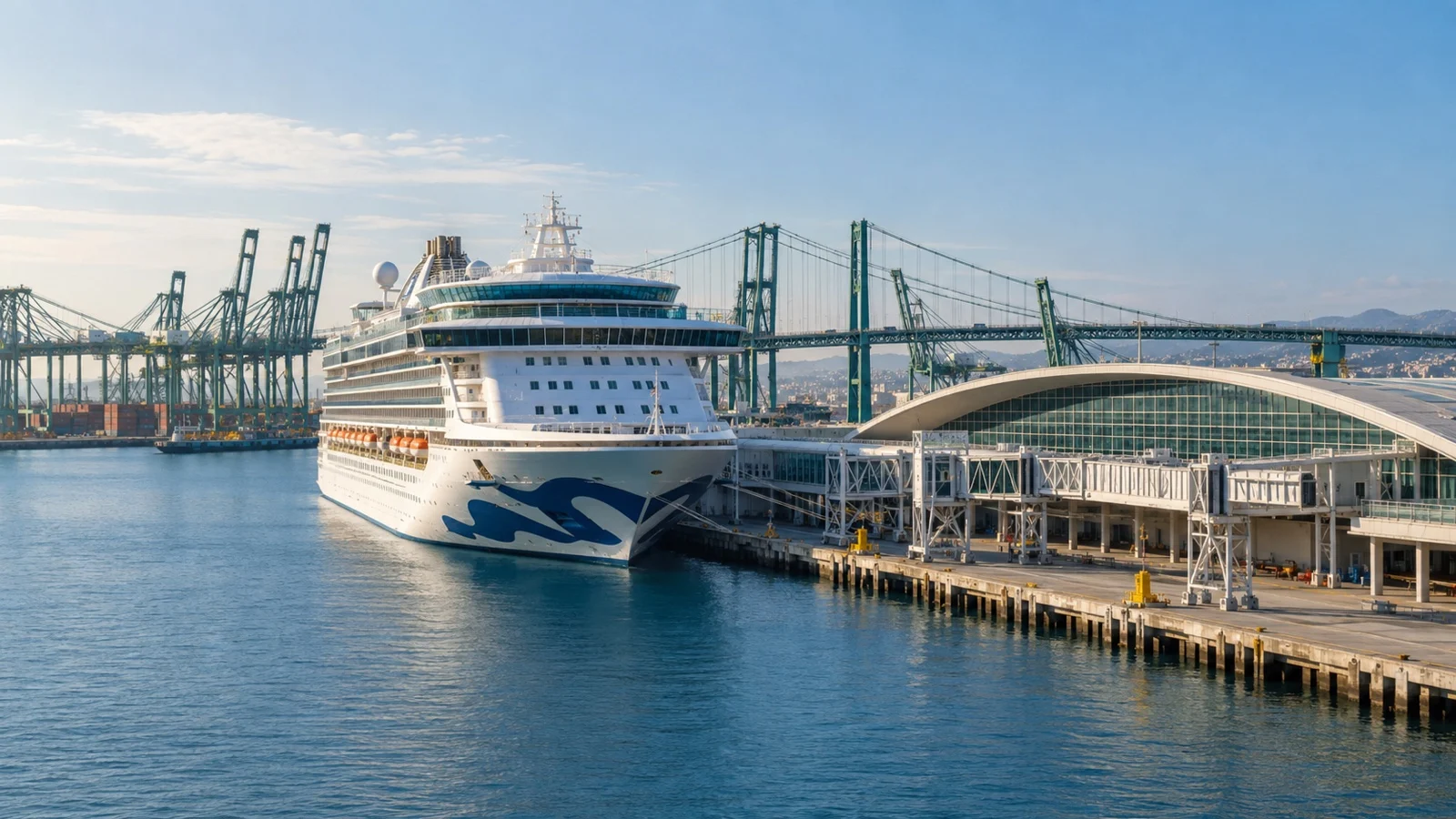
The Los Angeles cruise port is not in Los Angeles in any way that matters to your morning. It is the World Cruise Center in San Pedro, at 100 Swinford Street, roughly 25 miles (40 km) from downtown.
That gap is the single most expensive misunderstanding in California cruising. People book a hotel near Hollywood, look at the map, and assume it is close.
The terminal itself is genuinely good. The Port of Los Angeles runs berths 91 to 93 across 18 acres with more than 100,000 square feet of processing space, so two ships can turn around at once without the crush you get at smaller terminals.
Parking is on site and reasonable by California standards, at $2 per hour after a free first hour and capped at $23 per day for a standard vehicle. Oversized vehicles pay up to $40, and there are around 2,560 secured spaces.
LAX sits about 18 miles (29 km) away, which sounds fine and often is not. I would not plan on less than an hour for that drive on a weekday, and I would double it if you land in the late afternoon.
If Los Angeles is your port, our Los Angeles cruise port guide goes deeper on the berth layout and the traffic patterns that actually matter on sailing day.
Long Beach: the one I recommend to nervous first-timers
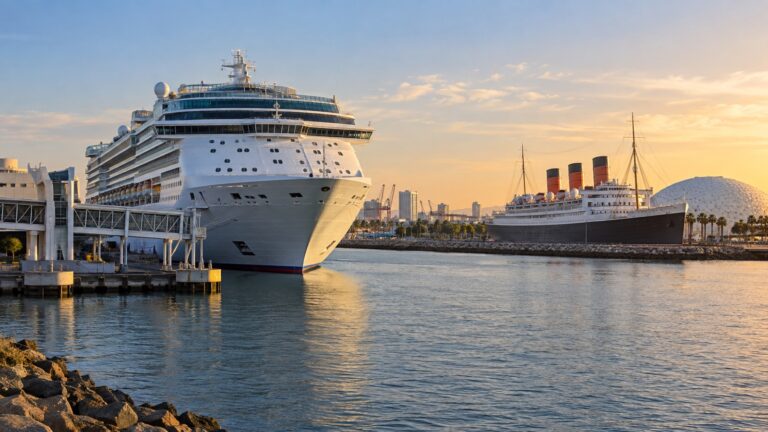
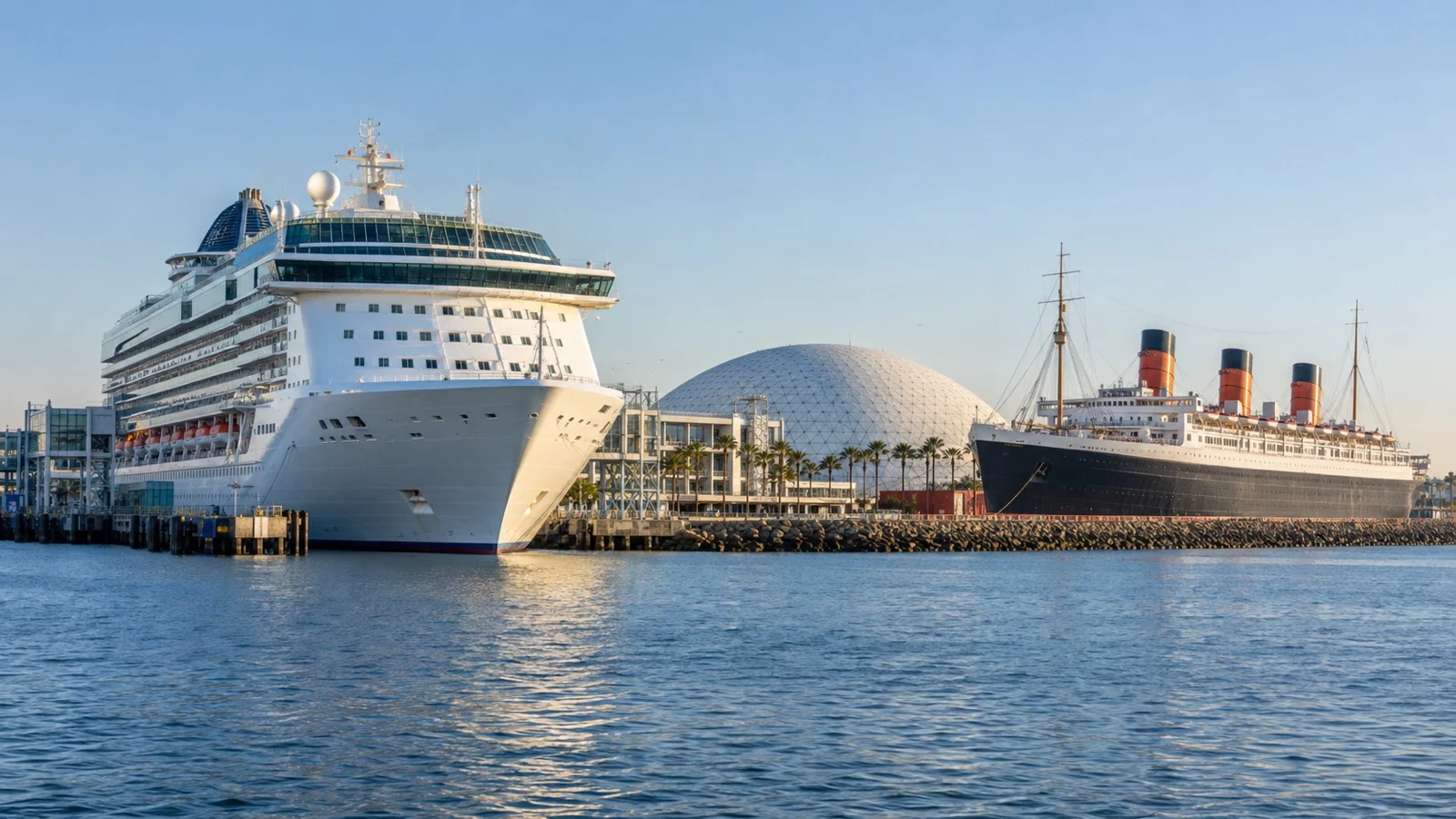
Long Beach is Carnival’s California home, and the terminal is the geodesic dome that once housed the Spruce Goose. It sits right beside the Queen Mary, which makes it the most photogenic embarkation I know of in the United States.
It is also the most contained. You park, you walk, you are on the ship, and nothing about the process asks much of you.
Parking runs about $23 per day according to Visit Long Beach, with short stays priced by the hour. Check your vehicle height before you commit, because the garage clears only 7 feet (2.1 m) and that rules out a lot of roof boxes and raised trucks.
The catch is that Long Beach is a one-line port in practice. If you are not sailing Carnival, the decision is usually made for you.
San Diego: the easiest arrival in California, by a distance
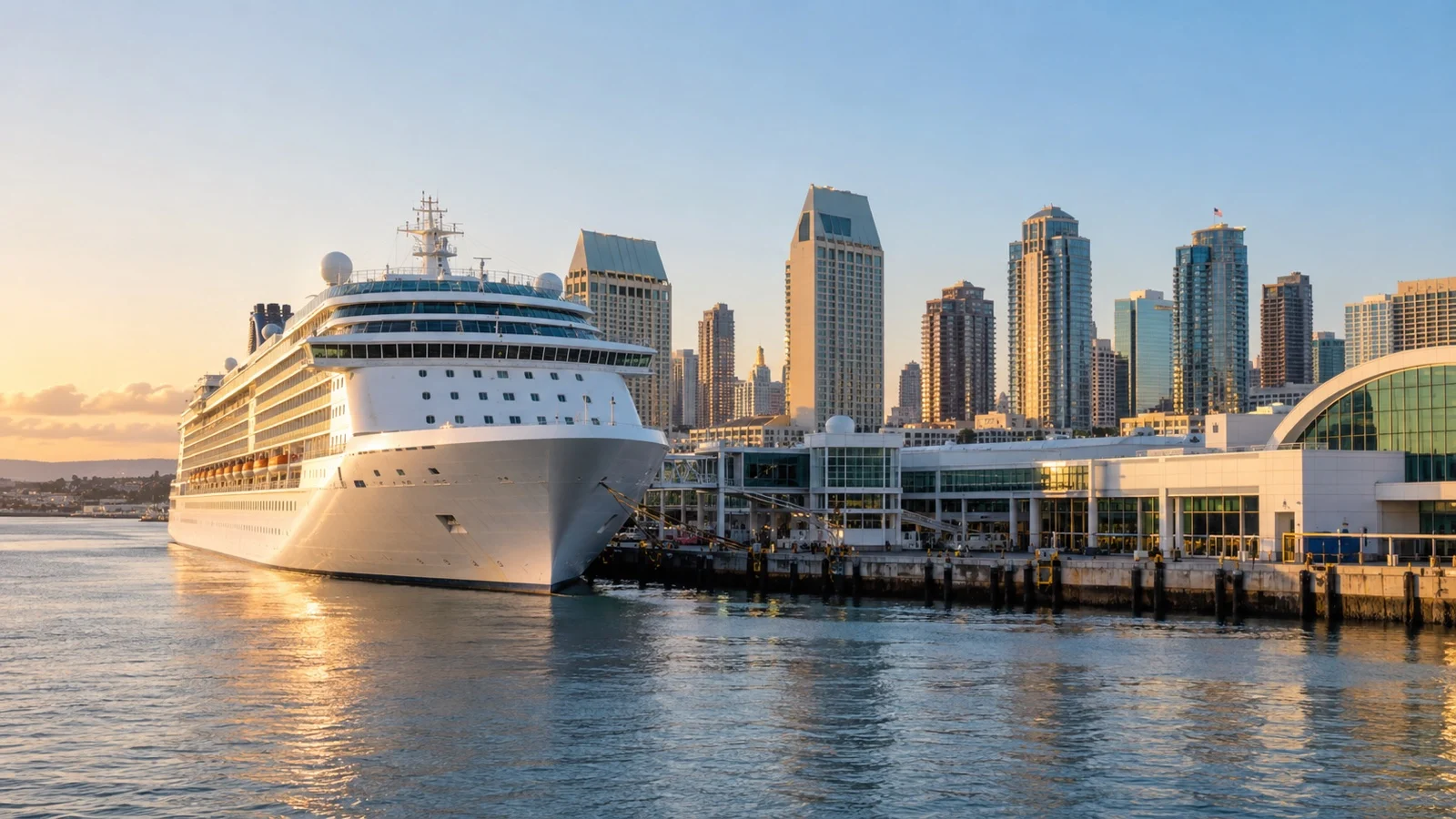
San Diego wins the logistics argument outright. The airport is about two miles (3 km) from the pier, which is close enough that you can watch planes land while you wait to board.
Ships use two facilities on the downtown Embarcadero. The B Street Pier terminal at 1140 N Harbor Drive handles most arrivals, with the Port Pavilion on Broadway Pier at 1000 N Harbor Drive taking the overflow.
Both sit on a walkable two-mile stretch of waterfront, and the Santa Fe Depot train station is two blocks east. That combination makes San Diego the only California port where arriving without a car is genuinely easy.
One thing to plan around: the Port of San Diego does not let you park on the pier during your cruise, so long-term parking needs booking in advance somewhere nearby.
Bring a passport if you are sailing to Mexico, which most San Diego itineraries do. Our San Diego cruise port guide covers the terminal split and what an easy day ashore looks like on either side of the sailing.
San Francisco: the port worth arriving three days early for
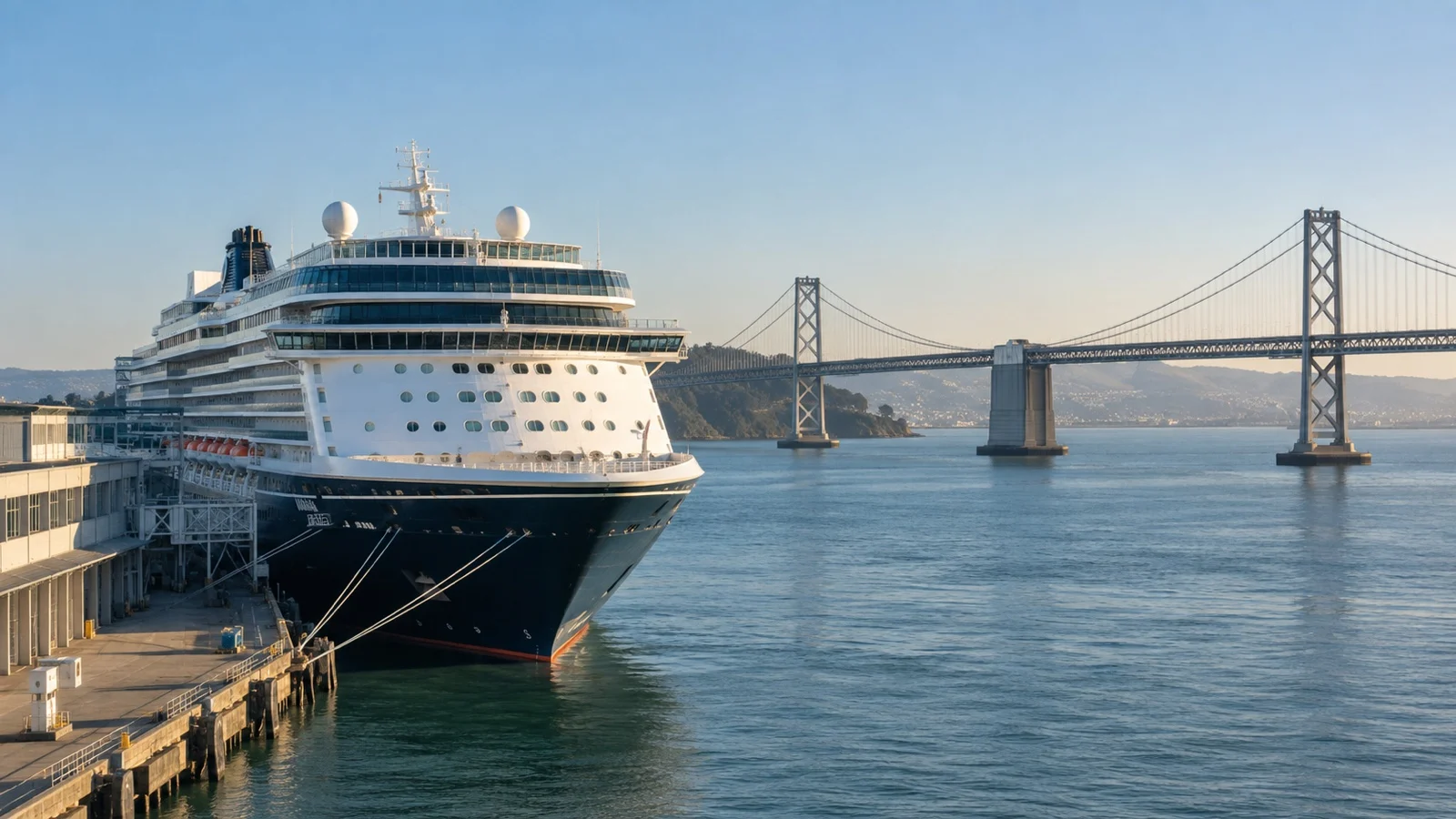
San Francisco is the only California cruise port where I would build a proper trip around the embarkation city. Sailing out under the Golden Gate Bridge is one of the genuinely great departures anywhere in the world.
Ships use the Pier 27 James R. Herman terminal, which opened in 2014 on the northern Embarcadero. Pier 35 takes some traffic too, and it sits six to eight minutes further north on foot.
The terminal has a 12 megawatt shore power system, so ships plug in rather than running engines at the dock. Your practical takeaway is a quieter, cleaner wait than you get at most terminals.
Parking is the weak point. The Port of San Francisco provides no overnight parking at the terminals, so you are booking a garage on Francisco Street and walking, or you are arriving by taxi.
Pier 27 is about 20 minutes on foot from the Embarcadero BART and Muni station, which is fine with a backpack and miserable with two suitcases. The streetcar stop at Embarcadero and Sansome is the better plan.
Avalon: California’s only real port of call
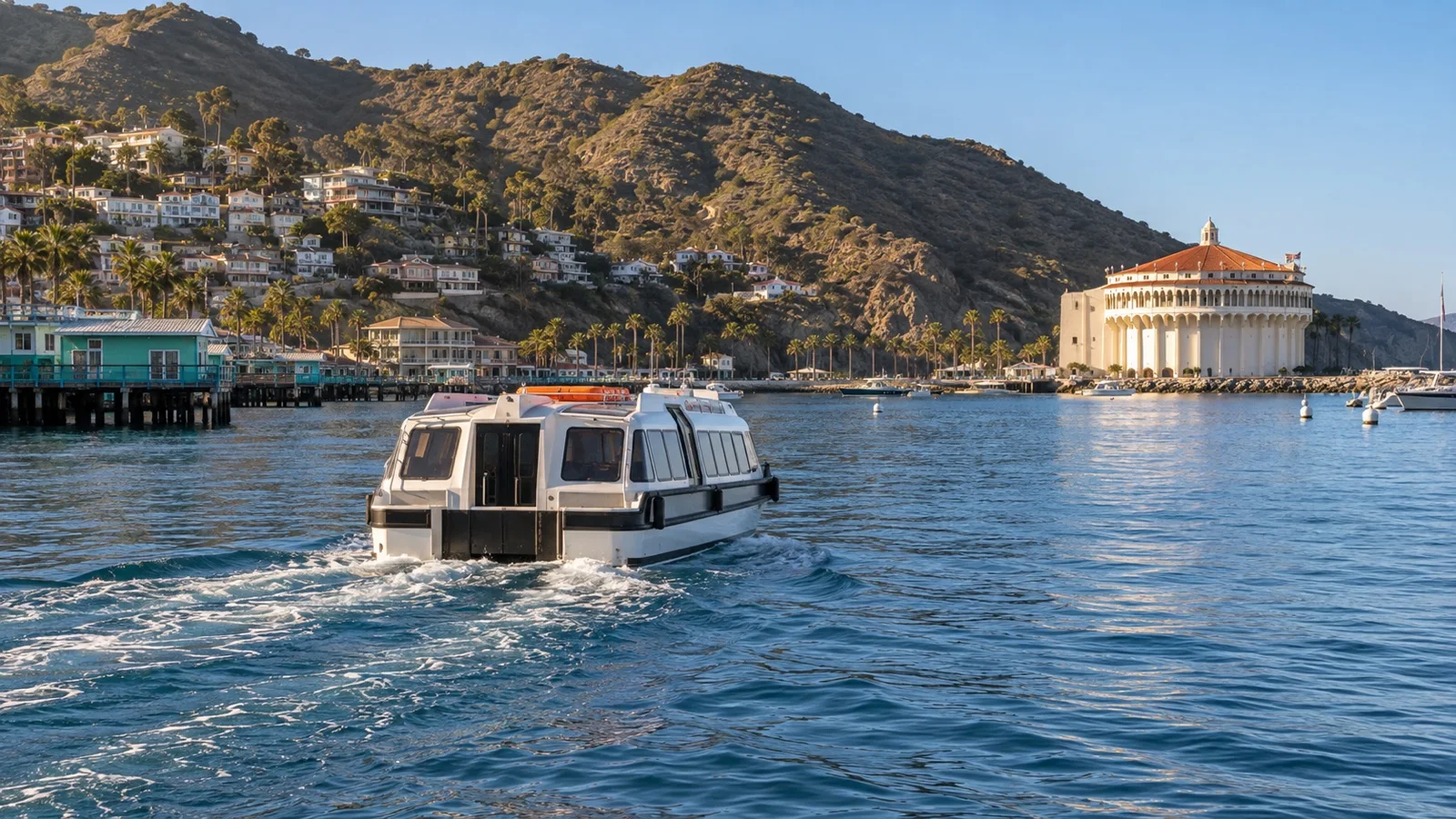
Everything above is a place your cruise begins. Avalon on Catalina Island is the one California stop you actually visit mid-voyage, and it is a tender port every single time.
That matters more than it sounds. Tendering shortens your day ashore at both ends, and Avalon is small enough that arriving late costs you a real share of it.
The town is tiny, walkable and genuinely charming, with golf carts instead of cars and a waterfront you can cover in an hour. Our Avalon Catalina Island cruise port guide covers the tender setup and how to spend the time you actually get.
Monterey and Santa Barbara appear on some coastal itineraries as well, and both tender. Neither is guaranteed, because both cancel for swell more often than anywhere else on the California coast.
Choosing between them, honestly
If you are flying in the same day, pick San Diego and stop deliberating. Two miles from the airport removes the single biggest source of embarkation-day stress.
If you are driving and want the simplest possible morning, pick Long Beach. Park, walk, board, done.
If you want the widest choice of ships and sailings, Los Angeles has the volume. Just book your hotel in San Pedro rather than anywhere with Los Angeles in the name.
If you have four days to spare and want the trip to start before the ship does, San Francisco is the answer and it is not close.
Combining two California ports in one trip
People ask about this more than I expected, usually wanting to fly into San Francisco and sail from Los Angeles. It works, but respect the distance.
San Francisco to San Pedro is around 380 miles (610 km) and a full day of driving. The Coast Starlight train is prettier and slower, and it is not something I would attempt on embarkation day.
Los Angeles to San Diego is the pairing that actually works, at roughly 120 miles (195 km) with frequent Pacific Surfliner trains. I would still give it a night rather than doing it the same morning.
For the wider picture of how California fits against Seattle and Vancouver, our West Coast cruise ports guide lays out which coast port suits which itinerary.
What sails from California, and when
The Mexican Riviera season runs heaviest from fall through spring, sailing to Cabo San Lucas, Mazatlan and Puerto Vallarta out of Los Angeles, Long Beach and San Diego. These are the bread and butter of California cruising.
Short Baja sailings are the other staple, usually three or four nights to Ensenada. They are cheap, they are busy, and they are a reasonable way to test whether cruising suits you.
Our Ensenada cruise port guide covers what to do with a day there, because it is the stop people most often write off too quickly.
Spring and fall bring the repositioning traffic, when ships move between Alaska and Mexico and call at Monterey, Santa Barbara or San Francisco on the way. These are the most interesting California itineraries and the least predictable.
Hawaii sailings leave from all four ports at various points in the year. They are long, they are mostly sea days, and they suit a very specific kind of cruiser.
Quick answers
Which California cruise port is closest to its airport?
San Diego, at about two miles (3 km). Nothing else in the state is close to that.
Do I need a passport for a California cruise?
For sailings that touch Mexico, yes, bring one. Rules on closed-loop sailings vary, and the terminal is a bad place to discover you guessed wrong.
Is Los Angeles or Long Beach better for a Mexican Riviera cruise?
They sail nearly identical routes, so it comes down to your cruise line and your parking situation. Long Beach is simpler, Los Angeles has more options.
Can I walk to anything from the cruise terminals?
San Diego and San Francisco, yes, both drop you into a real downtown. San Pedro and Long Beach have pleasant waterfronts nearby but you are not walking into a city center.
The last word
California is unusual in giving you four credible home ports within a few hours of each other, which means the choice is genuinely yours rather than dictated by geography.
My honest ranking for a stress-free start is San Diego, then Long Beach, then Los Angeles, then San Francisco. My ranking for the best trip overall flips that order almost exactly, and I think that tension is the most useful thing on this page.