Worst Weeks to Cruise With Kids, Plus Quieter Alternatives
Cruising with kids is easiest when you know which school breaks pile families onto the same sailings. The trick is that a ship can be full in any month, while the number of school-age children onboard changes sharply with the calendar.
This guide ranks the riskiest weeks, explains the tradeoffs, and points to quieter alternatives. Treat the dates as planning windows, then check your district, destination, and exact sailing before you pay.
My quick take
If you want fewer school-age children around, be most cautious with sailings that span December 24 to January 1, the core summer overlap from late June through early August, and your region’s spring-break weeks. Thanksgiving week belongs on the list too, especially for short cruises from U.S. homeports.
My first alternatives would be early May after local spring breaks, early December before winter recess, or a September European sailing after schools reopen. None guarantees an empty ship, and September Caribbean bargains come with Atlantic hurricane-season risk.

The quick facts
- Spring break is not one week: U.S. districts scatter recesses across late winter and spring. New York City Public Schools lists a February 15 to 19 midwinter recess and an April 22 to 30 spring recess for 2026–27.
- Easter moves: Easter Week falls in March or April, and major celebrations can fill streets and reroute walking plans in parts of Europe and Latin America.
- March can be busy at a homeport: Port Canaveral recorded 925,994 passenger movements in March 2025, 16% more than March 2024. That measures all cruise movements, not children onboard.
- The summer collision: Late June through early August is the broadest overlap between northern districts that finish late and southern districts that restart early.
- Christmas and New Year act like one block: Many school calendars close across both holidays, concentrating family demand on sailings that cover December 24 through January 1.
- Youth programs use age groups: Carnival’s current Camp Ocean page groups ages 2 to 5, 6 to 8, and 9 to 11. Capacity and enrollment procedures can vary by ship, line, and session, so check your line rather than assuming a place is guaranteed.
- The quietly good candidates: Early May, early December, and September in Europe often avoid the broadest U.S. school-break overlap. They can still coincide with local holidays, charter groups, weather risks, or a sold-out ship.
1. Winter recess: the tightest family overlap
The sailing that covers Christmas Eve through New Year’s Day deserves the strongest caution. Families in many districts share that same break, and holiday sailings are attractive even to adults without school calendars.
New York City’s official 2026–27 calendar, for example, closes schools from December 24 through January 1. That example does not create a national rule, but it shows why this period has less calendar spread than spring break.
Expect family spaces, pool decks, elevators, and popular dining times to be under more pressure. Cruise lines do not publish a comparable weekly child count or child-to-crew ratio, so anyone claiming an exact “busiest kids week” is estimating rather than reading a public industry dataset.
If the holiday atmosphere is the point, book it proudly and plan early. If it is merely the only week you checked, price the first half of December and the first school week of January before deciding.
2. Core summer: late June through early August
Summer family demand is broadest when districts with late June endings overlap those that return in early August. New York City Public Schools lists June 28 as its last day in 2027, which is a useful reminder that “summer break” does not begin everywhere on Memorial Day.
Middle-of-summer sailings are not bad cruises, but they leave less room for spontaneity. Reserve must-do excursions and preferred dining early, then plan shade and water breaks for hot ports.

If teenagers are the reason you are sailing in July, choose ports with enough to absorb a busy day. This guide to the best cruise ports for teenagers is a practical place to start.
3. Spring break: a wave, not a date
There is no national U.S. spring break. A single district can even have a February recess and a separate April break, as New York City’s published 2026–27 calendar does.
That makes “avoid March” too blunt and “book the first week of April” too confident. Pull the calendars for your district and two or three large districts near the departure port, then look for dates that do not overlap.
Port Canaveral’s 925,994 passenger movements in March 2025 show that March can be a huge cruise month, but the number is not a spring-break or child count. Use it as evidence of overall demand at that homeport, not proof that every March sailing everywhere is packed with children.
4. Easter and Holy Week: check the port day
Easter moves between March and April, so it can overlap different school breaks each year. In ports with major Holy Week traditions, the bigger planning issue may be ashore rather than onboard.
Spain’s official tourism site describes processions and street activity in cities including Málaga, Cartagena, Seville, and Salamanca. A procession can be the day’s highlight, but it can also block a stroller route or change access to the attraction you planned.
Check the exact port date, municipal event route, attraction hours, and transit schedule. The companion guide to local holidays that affect a cruise port day covers the wider holiday-calendar problem.
5. Thanksgiving week: the overlooked contender
Thanksgiving week is a compact U.S. school break that the old version of this guide missed. New York City lists November 26 and 27 as its 2026 recess, while other districts may close for more of the week.
It is particularly relevant to three-, four-, and seven-night cruises from U.S. homeports. Compare the same itinerary one week before and after, because a short calendar shift can reveal a large demand difference even when the weather is similar.

The quieter alternatives, with honest caveats

Early May: This can work well after your region’s spring breaks and before Memorial Day, especially in the Caribbean. Check Easter, local holidays, and the cruise season for your region before treating it as a universal sweet spot.
Early December: The first part of the month usually sits before U.S. winter recess, and some ships may already have holiday decorations. It can mean fewer school-age children, but it does not guarantee low occupancy or low fares.
September in Europe: School is back in many places and peak summer tourism has eased. Weather, daylight, and seasonal attraction hours vary by route, so check the exact ports rather than booking on the month alone.
September in the Caribbean: Lower prices can reflect weather risk, not an empty ship. NOAA defines the Atlantic hurricane season as June 1 through November 30, and an itinerary can change when tropical weather threatens.
How to choose your week
- Start with your school calendar. Mark midwinter recess, spring break, Thanksgiving, winter recess, and the first and last school days.
- Add calendars near the homeport. Large local districts can influence which nearby sailings attract families.
- Add Easter and destination holidays. A quiet ship does not help if the port attraction you promised the kids is closed.
- Compare the same itinerary across three dates. Check your preferred week plus one earlier and one later, including airfare and hotel costs.
- Check the line’s youth-program process. Complete any online steps the line offers, then confirm current hours, age groups, capacity rules, and sign-in requirements.
- Reserve the true must-dos. Dining, childcare sessions, and excursions vary by line, so book only what the line lets you reserve and verify the rest after boarding.
- Read the port schedule. Several ships arriving together can make a normally easy port feel busy, regardless of the school calendar.
A realistic word on accessibility
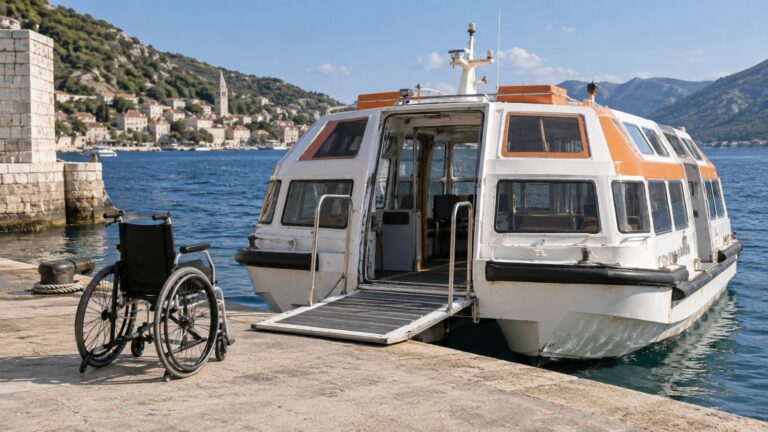
Peak family weeks can add elevator waits, crowded gangways, and fewer choices for accessible cabins or excursions. If an accessible cabin, lift-equipped transfer, or adapted vehicle is essential, reserve it early and get the arrangement in writing.
Holy Week processions and holiday crowd-control barriers can also change step-free routes. Ask the cruise line’s accessibility team and the local operator about the exact port date, vehicle, walking surface, and backup plan.
The roundup of wheelchair-friendly cruise ports can help narrow the itinerary before you compare weeks.
Weather belongs in the decision
Fewer children onboard does not automatically make a date better. Summer Mediterranean heat, shorter shoulder-season daylight in northern Europe, and tropical-weather risk in the Caribbean can outweigh the crowd advantage for your family.
For Atlantic itineraries, NOAA’s official season runs from June 1 through November 30. Review the cruise contract and travel-insurance terms, because a changed port is not automatically covered as a canceled trip.

Quick answers
What is the worst week to cruise with kids?
If your goal is fewer children and less pressure on family spaces, the sailing spanning December 24 through January 1 is the clearest caution window. It overlaps a common school-recess block, but cruise lines do not publish weekly child totals that prove a universal winner.
Is all of March bad?
No. Spring-break timing varies by district, so compare school calendars near your homeport and your own child’s calendar instead of rejecting the whole month.
Does a quiet week mean an empty ship?
No. It means the calendar creates less concentrated family demand, while the ship may still sail full with adults, groups, or international travelers.
Can kids’ clubs fill up?
Policies and capacity controls vary by cruise line, ship, age group, and session. Check the current line instructions and complete any offered preregistration, but do not assume that online enrollment guarantees every session.
Should I take my child out of school for a cheaper cruise?
That is a family decision governed by your school’s attendance policy. Check the policy first, then weigh the price difference against missed class time without assuming every shoulder-season sailing will be cheaper.
The last word
The hardest family weeks are the ones where several school calendars and a movable holiday overlap. The best workaround is not a magic date, but a three-date comparison using the calendars that matter to your exact sailing.
If you want fewer school-age children around, begin with early May, early December, or September in Europe, then test the weather, port schedule, and price. Confirm everything before booking, because school calendars and cruise schedules change.
How this guide was researched: Unless a first-hand visit is explicitly identified above, this guide is based on independent research using official school-district, port-authority, government, tourism-board, and cruise-line sources.
Calendar examples were checked against the published 2026–27 New York City Public Schools calendar; port volume against Canaveral Port Authority; Atlantic season dates against NOAA; Holy Week activity against Spain’s official tourism site; and youth-program age groups against Carnival Cruise Line. Reviewed in September 2026.
Cruise-line policies, school calendars, fares, and schedules change without notice, so reconfirm current details with your school district and cruise line before booking. See the Editorial Policy and browse more accessible and family cruise planning guides.
More on this topic: browse every guide on accessible and family cruise planning.