Belem Cruise Port: Amazon Delta and Ver-o-Peso Guide
Belém often gets filed as “the Amazon port,” but it is a large Brazilian city on Guajará Bay in the lower Amazon delta region rather than a deep-jungle landing.
The water your ship sails on is not the main Amazon channel either. Belem sits on Guajará Bay, part of the Pará River arm of the delta, which meets the Atlantic about 75 miles downstream.
My quick take
Belem rewards people who treat it as a city stop, not a jungle stop. Save the rainforest excursions for a dedicated Amazon call and spend your hours here on the market, the restored docks, and the historic center.
If you are weighing Belem against Brazil’s other cruise calls, I have written a full guide to Brazil’s cruise ports that puts this one in context. It also helps to see where it fits in my wider South America cruise ports guide.
Quick Facts
- Where you land: at a call-specific central quay, Icoaraci, Outeiro, or an anchorage in the Belém port area. The assignment determines whether downtown is close or a 45 to 60 minute road transfer away.
- Dock or tender: Some ships berth alongside while others can anchor and tender, so use the cruise line’s call sheet rather than a generic port map.
- Into town: A central berth can be near Estação das Docas and Ver-o-Peso, while Icoaraci or Outeiro needs cruise transport or a prearranged ride.
- Currency and language: Brazilian real (BRL) and Portuguese.
- Time zone: Brasília Time (BRT, UTC−3).
- Call reliability: Weather and operations can affect the berth, anchorage, tender, or transfer plan, so confirm the live call sheet.
How I would confirm my own berth or dock
Belem’s port complex has multiple terminals spread along Guajará Bay. The main passenger quay sits alongside several cargo-focused piers elsewhere in the system, so I would not assume which one my ship uses without checking.
Check your cruise line’s port information a few weeks out to confirm the exact berth and whether the call is a short stop or an overnight. Overnights are common when Belem is the start or end of a river itinerary, so it is worth knowing whether excursions leave straight from the pier or need a shuttle into the city center first.
Getting around
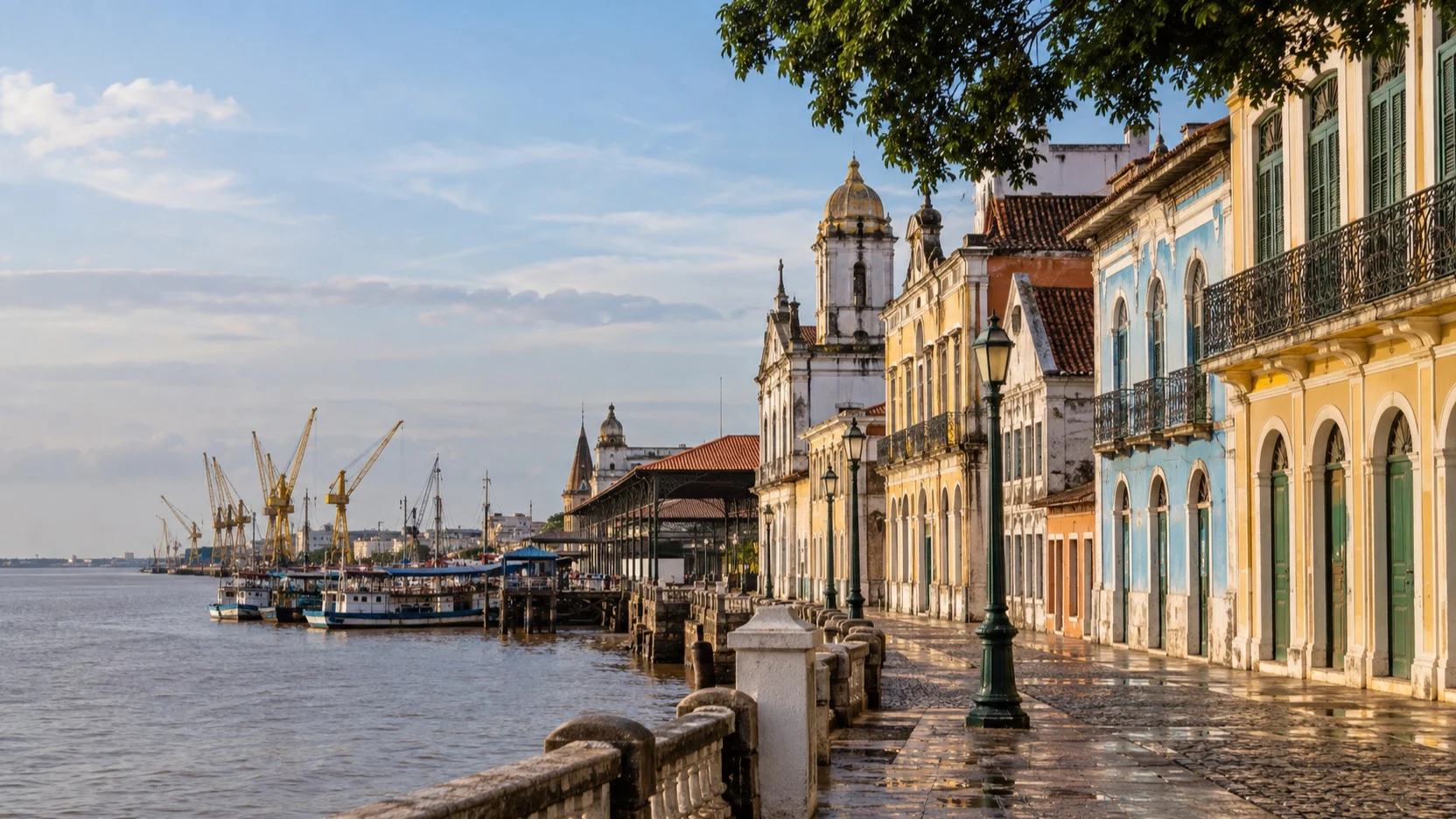
Central Belém is walkable once your shuttle or vehicle reaches the waterfront. Do not assume the ship itself is central because Icoaraci and Outeiro are well outside the historic district.
Taxis and ride-shares are easy to find right at the pier for anything farther out, like the Basílica de Nazaré or Mangal das Garças. Sidewalks in the historic Cidade Velha district are uneven in places and the humidity is real, so I pace a walking day rather than trying to cover everything on foot.
For anyone tempted by an actual rainforest excursion from here, know that it is a longer haul than it looks on a map. The closest jungle lodges and river-island trips typically run a half-day or more round trip, which is part of why I treat Belem as a city call rather than an Amazon-jungle call.
Understanding the delta before you dock
One striking thing about Belem is how much water shapes the city without the classic rainforest scenery. The Pará River here is enormous and brown with sediment, but the banks are lined with docks, warehouses, and mango-shaded streets rather than untouched jungle.
Marajó, commonly described as one of the world’s largest river islands, is roughly the size of Switzerland and shows the scale of the delta. Knowing that helps set the right expectation for an urban call rather than a walk into jungle.
The stops I would actually spend time on
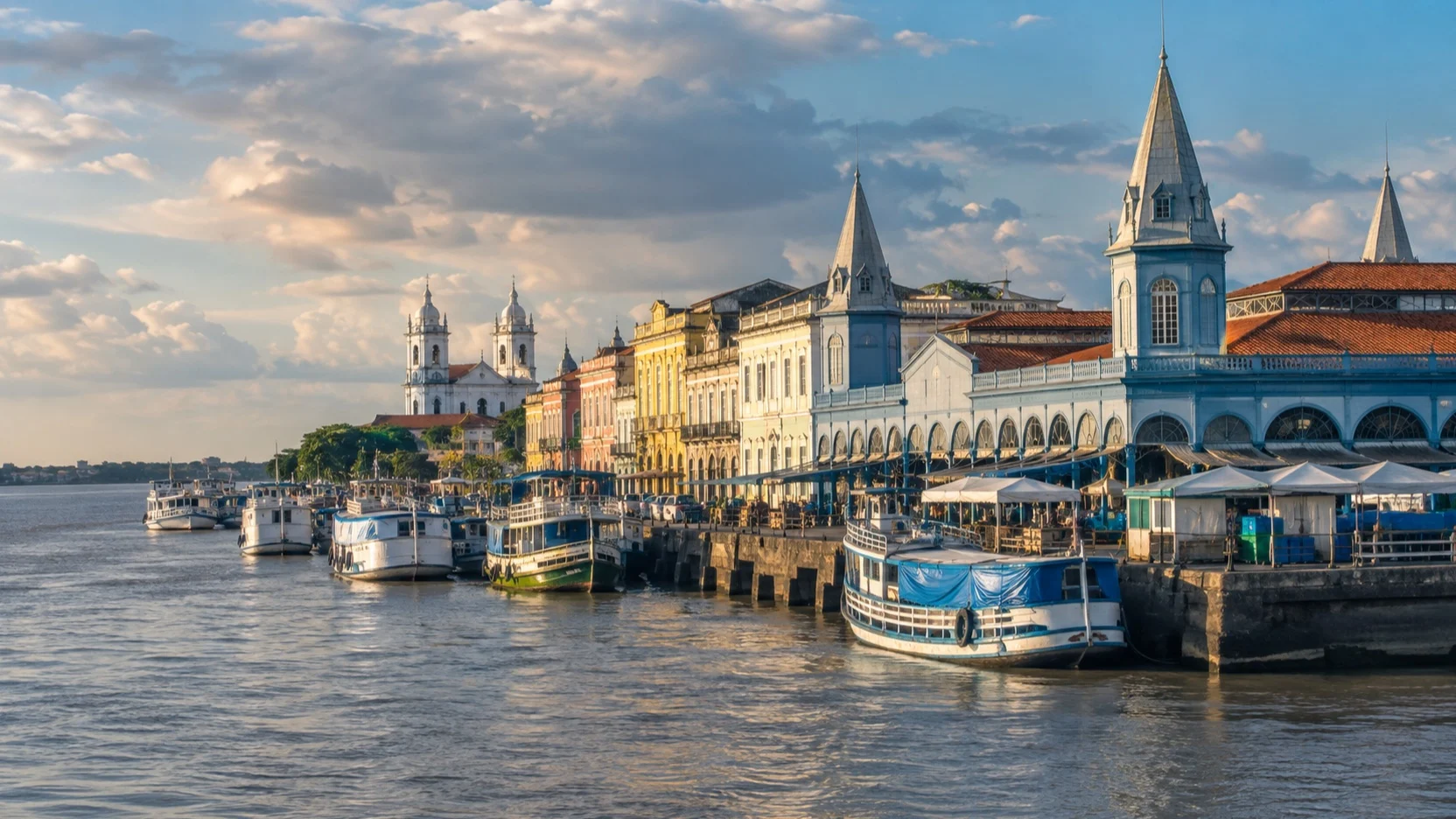
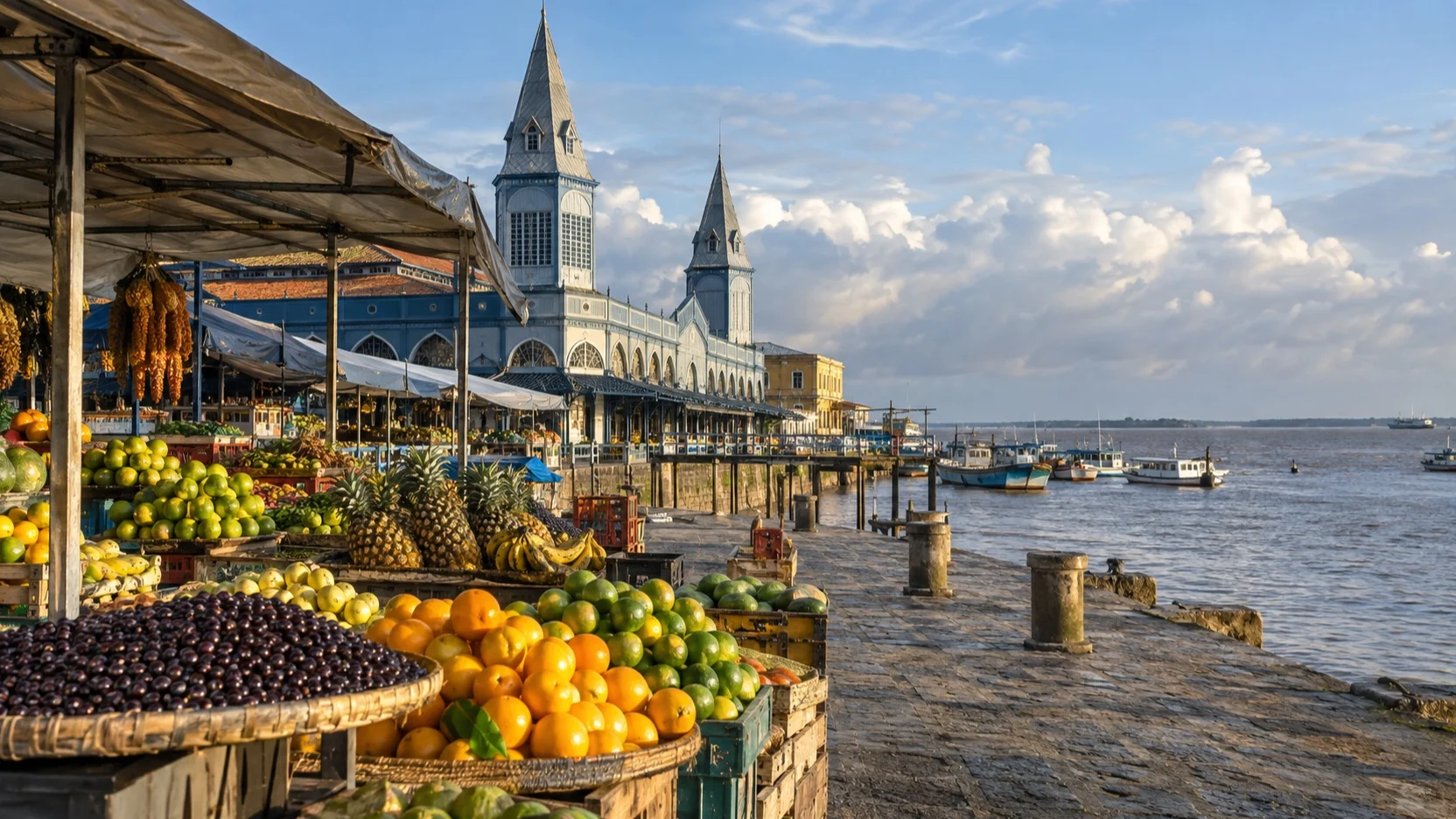
Ver-o-Peso market: the city’s immense open-air market along the Guajará Bay waterfront, selling everything from fresh fish and Amazonian fruit to herbal remedies and crafts. Fun fact: the market complex was declared a national heritage site by Brazil’s historic preservation institute (IPHAN) in 1977.
Estação das Docas: three 1909-built cargo warehouses on the port’s old English ironwork docks, converted into a riverside complex of restaurants, shops, and cultural space. Fun fact: it reopened as a cultural and dining complex in May 2000, giving the historic port warehouses a new public life.
Theatro da Paz: a neoclassical opera house built during the rubber-boom era and opened in 1878, still used for concerts, theater, and performances in Pará today. Fun fact: it once hosted Russian ballerina Anna Pavlova, and you can check current programming on the official Theatro da Paz site.
Basílica de Nazaré: a neoclassical basilica modeled on Rome’s Basilica of Saint Paul Outside the Walls, with construction starting in 1909 and Vatican basilica status granted in 1923. Fun fact: it is the endpoint of the Círio de Nazaré, a vast October procession through Belem that is recognized as UNESCO intangible cultural heritage.
What I would eat before heading back
Belem has one of the most distinctive food cultures in Brazil, built on Amazonian ingredients you will not find further south. This is the home of açaí served the local way, thick and unsweetened in a bowl, often eaten with fish and cassava flour rather than as a dessert.
Tacacá is a standout local dish, a hot shrimp and jambu-leaf soup that leaves your mouth pleasantly tingling. You will find it at street stalls and at Estação das Docas, where it pairs naturally with the riverfront setting.
For fruit, look for cupuaçu and bacuri at Ver-o-Peso, both Amazonian flavors that rarely travel well and so are best tasted right here. Brazil’s national tourism board keeps a useful overview of the region’s food and festivals on its official Visit Brasil site if you want to read up before the call.
How I would plan the day
Short on time (2 to 3 hours): use the official shuttle or a licensed ride to Ver-o-Peso, then finish at Estação das Docas. Attempt this only if the outer-port transfer still leaves a safe return margin.
A full day (5 to 7 hours): add a guided tour of Theatro da Paz and a taxi out to the Basílica de Nazaré in the morning, then work your way back toward the port through the market and docks in the afternoon, timing a late lunch at Estação das Docas.
If you have an overnight: this is the call where a proper river excursion makes sense, whether that is a boat trip on the bay, a visit to a nearby river island, or a stop in the Combu Island forest, since you are not trying to squeeze it into a single port day.
A realistic word on accessibility
The port area and Estação das Docas are flat, paved, and manageable for most travelers, including wheelchair users. Ver-o-Peso is the trickier stop, a dense working market with narrow lanes, uneven paving, and puddles after rain, so I would not count on an easy pass-through if mobility is a real concern.
The Basílica de Nazaré has broad, level plazas outside but can get crowded on weekends. If accessibility is a priority, I would focus the day on the docks and the market’s outer edges rather than pushing deep into the stalls.
When to go, and the weather
Belem sits almost on the equator, so it is hot and humid year-round, with highs typically in the upper 80s Fahrenheit. What actually changes is the rain.
The wetter season runs roughly December through May, when short, heavy afternoon downpours are close to a daily occurrence. June through November is drier and generally more comfortable for walking around outdoors, though I would still expect at least a brief shower most days and pack accordingly.
The berth decides the whole day
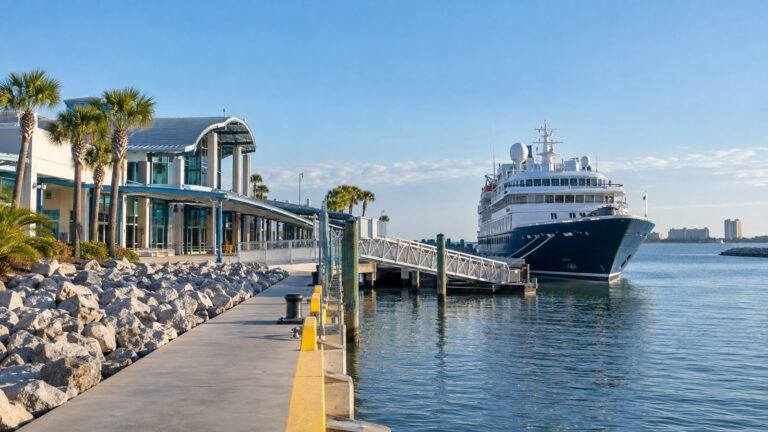
Belém is not one uniform cruise landing. A smaller vessel may use a central quay, while an ocean ship can be assigned to Icoaraci, Outeiro, or an anchorage, each requiring a different shuttle, tender, or road transfer.
Read the cruise line’s call sheet for the exact landing before booking anything independently. Icoaraci is roughly 13 miles from central Belém and road traffic can make the ride 45 to 60 minutes, while Outeiro is farther out, so neither supports a casual walk to Ver-o-Peso.
For a central day, use a licensed guide or authorized ride to link Ver-o-Peso, Theatro da Paz, and Basílica de Nazaré, then finish at Estação das Docas. Keep valuables out of sight, avoid quiet side streets, and do not promise yourself a long river excursion unless the ship stays overnight.
At the market, wear closed shoes and ask before photographing vendors; wet floors, heat, and crowds slow the route. Start back at least 90 minutes before all aboard from central Belém, or earlier when your return includes both road transport and a tender.
Quick answers
Is Belem actually in the Amazon rainforest? It is a coastal-delta city on the Pará River arm of the Amazon system, not deep jungle, and the rainforest is a boat ride away rather than a walk from the pier.
Do I need a visa? That depends on your nationality and changes over time, so I would check with the Brazilian consulate or embassy for your country before you travel rather than relying on older advice.
What currency should I bring? The Brazilian real is the official currency, and small bills help at market stalls and with licensed taxis even when cards work at larger venues.
Is Belem safe to explore on foot? Use normal big-city precautions even in the central visitor areas: keep valuables out of sight, use licensed transport, stay on busy streets, and avoid walking after dark.
What should I eat here? Try tacacá, açaí the local savory way, and an Amazonian fruit like cupuaçu, all of which you can find around Ver-o-Peso and Estação das Docas.
How long do I need in port? Two to three hours covers the market and the docks, while a full day lets you add Theatro da Paz and the Basílica, and an overnight opens up a real river excursion.
If you are piecing together a wider Brazil itinerary, Belem is the coastal bookend to a much wilder call further upriver. I would compare it against Manaus, a genuine jungle river port a thousand miles inland.
Together they show the two faces of an Amazon cruise, one a delta city and one deep in the forest. My broader Brazil cruise ports guide shows how a delta city like this one fits alongside Rio’s beaches and the country’s other stops on the same trip.

How this guide was researched: Unless a first-hand visit is explicitly identified above, this guide is based on independent research using official port, tourism, transit, government, and attraction sources where available. Logistics and time-sensitive details were reviewed on September 11, 2026; see our Editorial Policy.