A Coruna Cruise Port: The Ultimate Guide
A Coruña is one of the easiest ports in Spain to love: your ship ties up in the city itself, and the old town, the Marina waterfront, and Plaza de María Pita are all a short walk from the gangway. Here is how I would spend the day.
Conditions that change the recommendation
Atlantic rain makes the old town’s stone and the Tower headland slick, while wind can make the exposed seafront uncomfortable. When surf or beach flags are unfavorable, treat Riazor and Orzán as walks rather than swim stops.
Families often get more from the aquarium and beach promenade than a long Santiago coach day. Travelers with limited mobility should favor María Pita and the Marina, then use an accessible taxi for the Tower and confirm elevator status before buying an interior ticket.
Build the full transport chain
For a city day, walk from the Transatlantic Quay to María Pita and the old town, then take a taxi or city bus toward the Tower of Hercules if the round-trip walk would eat too much time. On a different berth, use only the shuttle or gate route named in the daily program.
Santiago requires a transfer from the pier to A Coruña rail station or a coach pickup, roughly an hour of travel each way under normal conditions, time in the old town, and the complete return. Rail is comfortable but offers no ship protection, so choose a departure that leaves a later backup train and gets you to the pier 90 minutes before all aboard.
Best easy first visit: Combine the old town, María Pita, the Marina galleries, and one seafront stop.
Best landmark day: Pair the Tower of Hercules with the aquarium, using a taxi in one direction if time or energy is limited.
Best for pilgrims and cathedral fans: Choose Santiago on a ship coach or carefully buffered train plan, accepting that you will skip most of A Coruña.
My quick take
A Coruña rewards walkers. You can cover the Tower of Hercules, the Ciudad Vieja, and a city beach on foot, or trade it all for the classic day trip to Santiago de Compostela.
If this is an early stop on a European itinerary, it is one of the most relaxed. For more ports you can do on foot, see my walkable cruise ports guide.
If you are flying in the night before, our guide to hotels near A Coruna cruise port compares the options by distance from the terminal.
Quick Facts
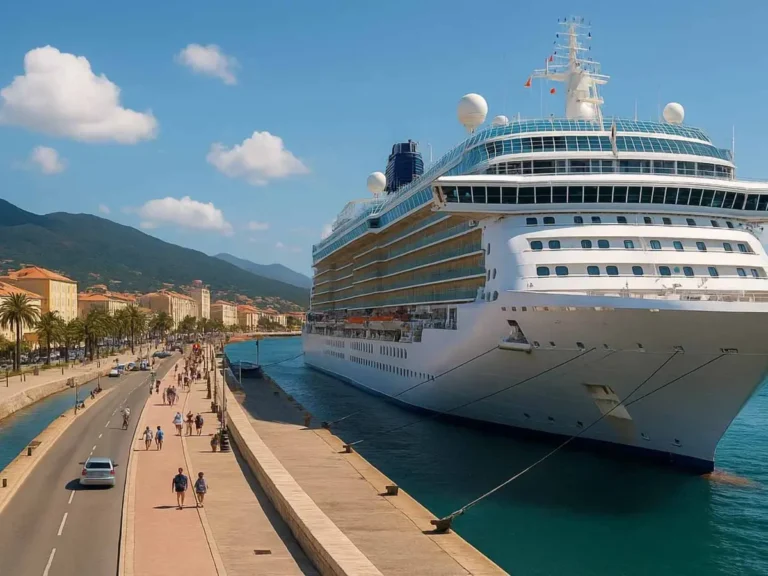
- Where you land: the city quays, usually the Muelle de Trasatlánticos (Transatlantic Quay), run by the Port Authority of A Coruña, right beside the marina and the glass-galleried Marina promenade.
- Dock or tender: It is an alongside berth in the city, so you walk off, with no tender normally.
- Into town: You are already in town.
- Currency and language: The euro (EUR); Spanish and Galician are both official here.
- Time zone: Central European Summer Time (CEST, UTC+2) through the main cruise season, dropping to CET (UTC+1) from late October.
- Operational caution: Atlantic weather, port traffic, and the assigned quay can change arrival details.
How I would confirm my own berth
A Coruña is a working commercial port, so on a busy day a ship can be assigned a slightly different quay. The central Transatlantic Quay is the walkable one.
Check your ship’s daily program for the exact berth and any shuttle. If you land away from the marina, it is a short taxi to the María Pita area.
Getting around
Walking is the honest answer for the city center. The old town, the Marina galleries, and Plaza de María Pita all sit within a few minutes of the quay.
The Tower of Hercules is about a 40 to 50 minute walk along the seafront, or a quick taxi. Taxis wait near the port and are metered.
For Santiago de Compostela, most cruisers take a ship excursion or a coach. Trains also run from A Coruña station; check times with Renfe before you commit.
The stops I would actually spend time on
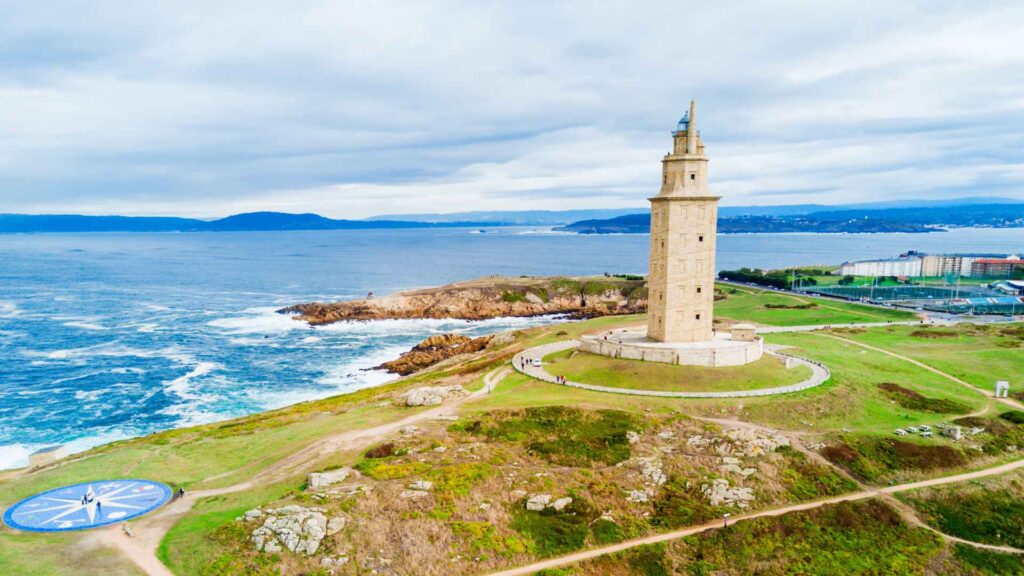
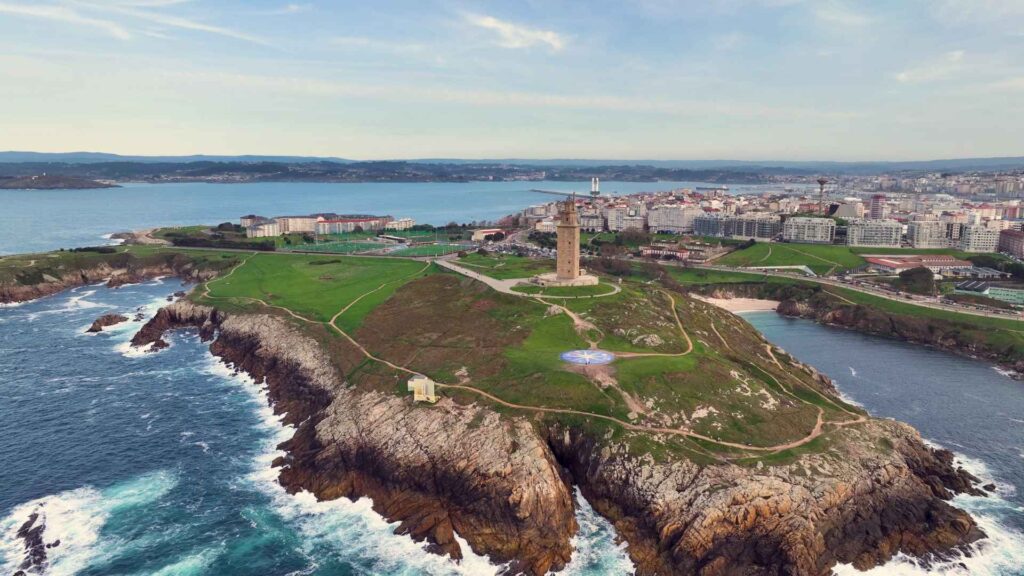
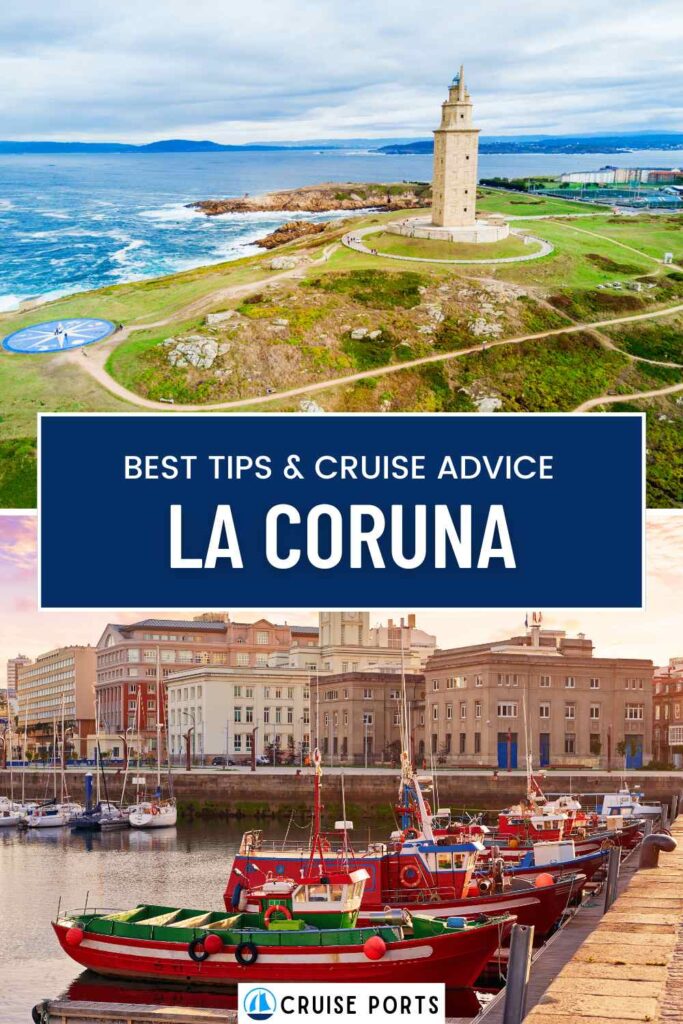
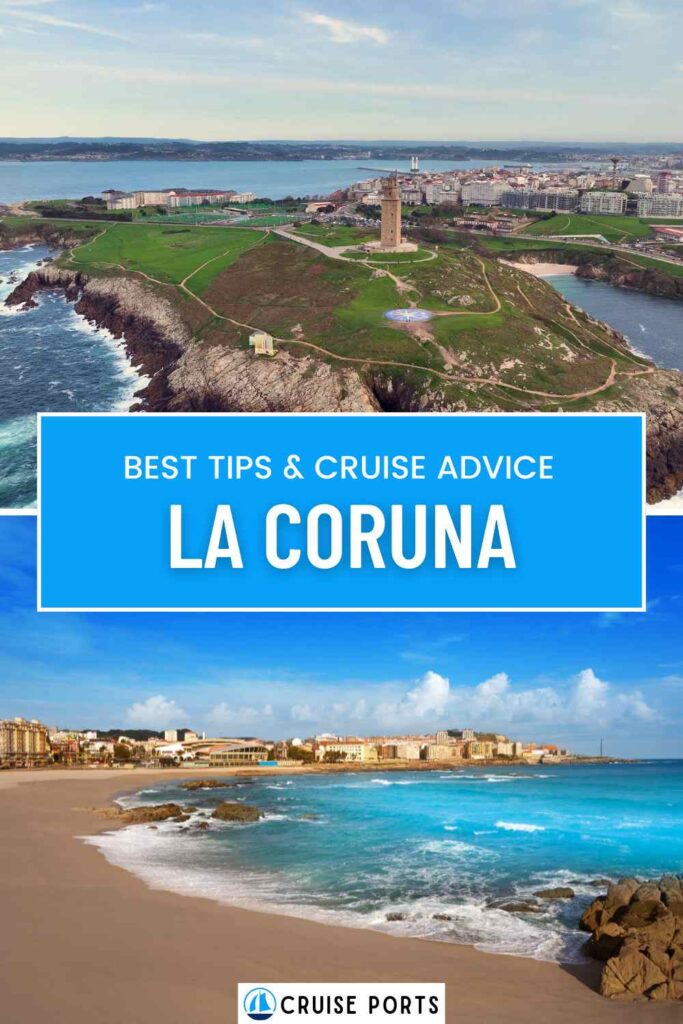
Tower of Hercules, or Torre de Hércules: The city’s symbol is, according to Spain’s official tourism board, the only working Roman lighthouse in the world. It has guided ships into this harbor for close to 1,900 years and is a UNESCO World Heritage Site.
Ciudad Vieja, the old town: This compact tangle of granite lanes and quiet plazas holds the 12th century Church of Santiago and Santa María del Campo.
Plaza de María Pita: The grand main square is framed by the domed early 20th century Town Hall. It is named for the local heroine who rallied the city’s defense.
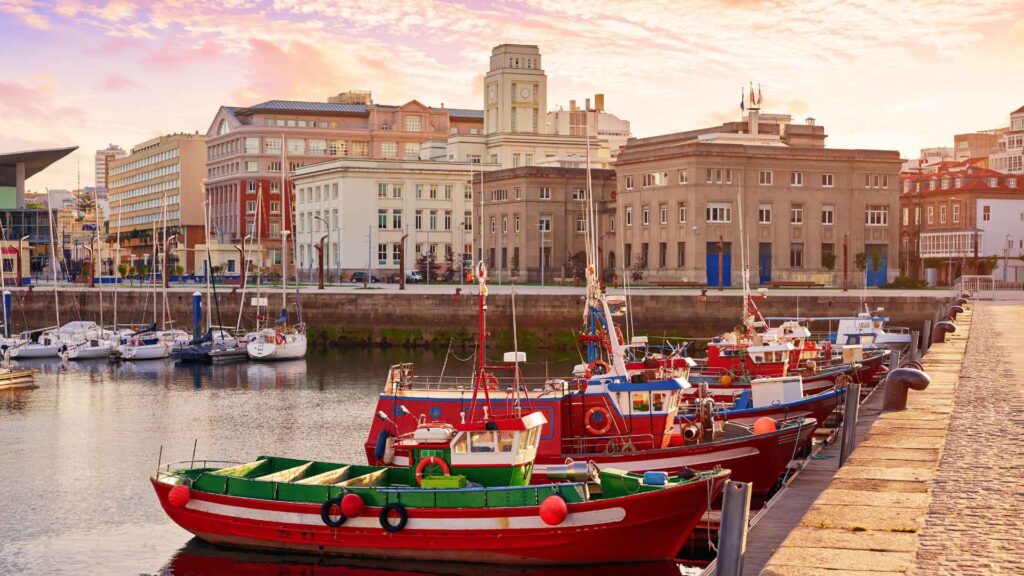
The Marina galleries: These white glass-enclosed balconies along the waterfront earned A Coruña its nickname, the “Glass City.” The galerías are a 19th century response to the damp Atlantic weather.
Riazor and Orzán beaches: These two wide city beaches on the far side of the isthmus create a walkable stretch of sand right in town.
Aquarium Finisterrae: One of Spain’s largest aquariums stands near the Tower on the same seafront walk.
Domus, or House of Man: This striking headland science museum is devoted to the human being and forms part of the city’s museum trio with the Science Museum and Planetarium.
Castle of San Antón: This 16th century island fortress in the harbor now houses the Provincial Archaeological Museum.
Santiago de Compostela day trip: The end of the Camino de Santiago is a UNESCO World Heritage city whose cathedral is associated with the tomb of the apostle Saint James. Pilgrims have walked here for over a thousand years, and UNESCO has protected the old town since 1985.
How I would plan the day
Short on time (about 3 hours): Walk into María Pita, loop the old town, then stroll the Marina galleries and a market. Easy, all on foot, back aboard with buffer.
A full day in town (about 5 hours): Add the seafront walk out to the Tower of Hercules, and pair it with the Aquarium Finisterrae or a spell on Riazor beach.
The big excursion (about 8 hours): Use a ship coach or a preplanned train to Santiago for the cathedral area and old town, then return with at least a 90-minute pier cushion. Do not improvise the outbound train after leaving the ship.
Whichever you choose, leave at least an hour of slack. On a Santiago day, build in more for traffic.
A realistic word on accessibility
The good news is that the parts nearest the ship are the flattest. The Marina promenade, Plaza de María Pita, and the seafront path are level and paved.
The old town has gentle slopes and some cobbles, and the Tower of Hercules sits on a rugged headland with steps. Gangway steepness varies with the tide, so confirm specifics with your cruise line.
When to go, and the weather
Galicia is green for a reason. The climate is mild and damp, so a light rain layer earns its place in your day bag even in summer.
What to eat near the quay
The lanes between María Pita and the Marina make an easy lunch zone because they keep you within a short walk of the ship. Look for a clearly priced menu and leave enough time for table service, which can be leisurely even when the dining room is quiet.
Galician specialties include octopus served feira-style with olive oil and paprika, savory empanada, local cheeses, and seafood from the Atlantic coast. Shellfish availability changes with season and supply, so ask what is fresh rather than building the day around one particular dish.
For a tighter schedule, choose a café snack or a market stop before returning along the waterfront. Keep the final meal close to the marina on a Santiago day because a delayed train or coach can erase the buffer you protected earlier.
Most cruise calls fall between spring and autumn, when days are long and mild. Comfortable shoes matter more than anything for the old town and the seafront walk.
Quick answers
Is A Coruña walkable from the ship?
Yes, the old town and María Pita are a roughly 5- to 10-minute flat walk from the Transatlantic Quay.
Should I stay in town or go to Santiago de Compostela?
Choose Santiago for the iconic cathedral and pilgrimage story, or A Coruña for a relaxed city day with far less transport; first-timers can also read my first-timer cruise ports guide.
How do I reach the Tower of Hercules?
It is about a 40 to 50 minute seafront walk from the marina, or a short metered taxi, and it pairs well with the Aquarium Finisterrae nearby.
For a sunnier Spanish contrast, compare Málaga and Lisbon.
How this guide was researched: Unless a first-hand visit is explicitly identified above, this guide is based on independent research using official port, tourism, transit, government, and attraction sources where available. Logistics and time-sensitive details were reviewed in September 2026; see our Editorial Policy.