Torgau River Cruise Port: Castle, Old Town, and Elbe Day
Torgau is a compact Elbe stop where a Renaissance castle, a handsome market square, and one of the defining encounters of World War II fit into an easy half day. The town works best when you focus on those essentials instead of trying to fill every minute.
My quick take
Torgau is a strong walking port for travelers who enjoy history but do not want a complicated day ashore. Hartenfels Castle is the headline sight, while the riverside Elbe Day memorial gives the visit a second story that feels unusually important for such a small town.
The practical advantage is scale. Most central sights are close enough to combine on foot, though cobblestones, stairs, and changing castle opening hours deserve a little planning.
Use the ship’s daily program as the final word on the berth and all aboard time. Elbe operations can change with river conditions, so a flexible plan is more useful than a minute by minute itinerary.
Torgau quick facts
- Best for: Renaissance architecture, Reformation history, World War II history, and a relaxed old town walk.
- Main landmark: Hartenfels Castle, including its courtyard, Great Spiral Staircase, chapel, exhibitions, and bear enclosure.
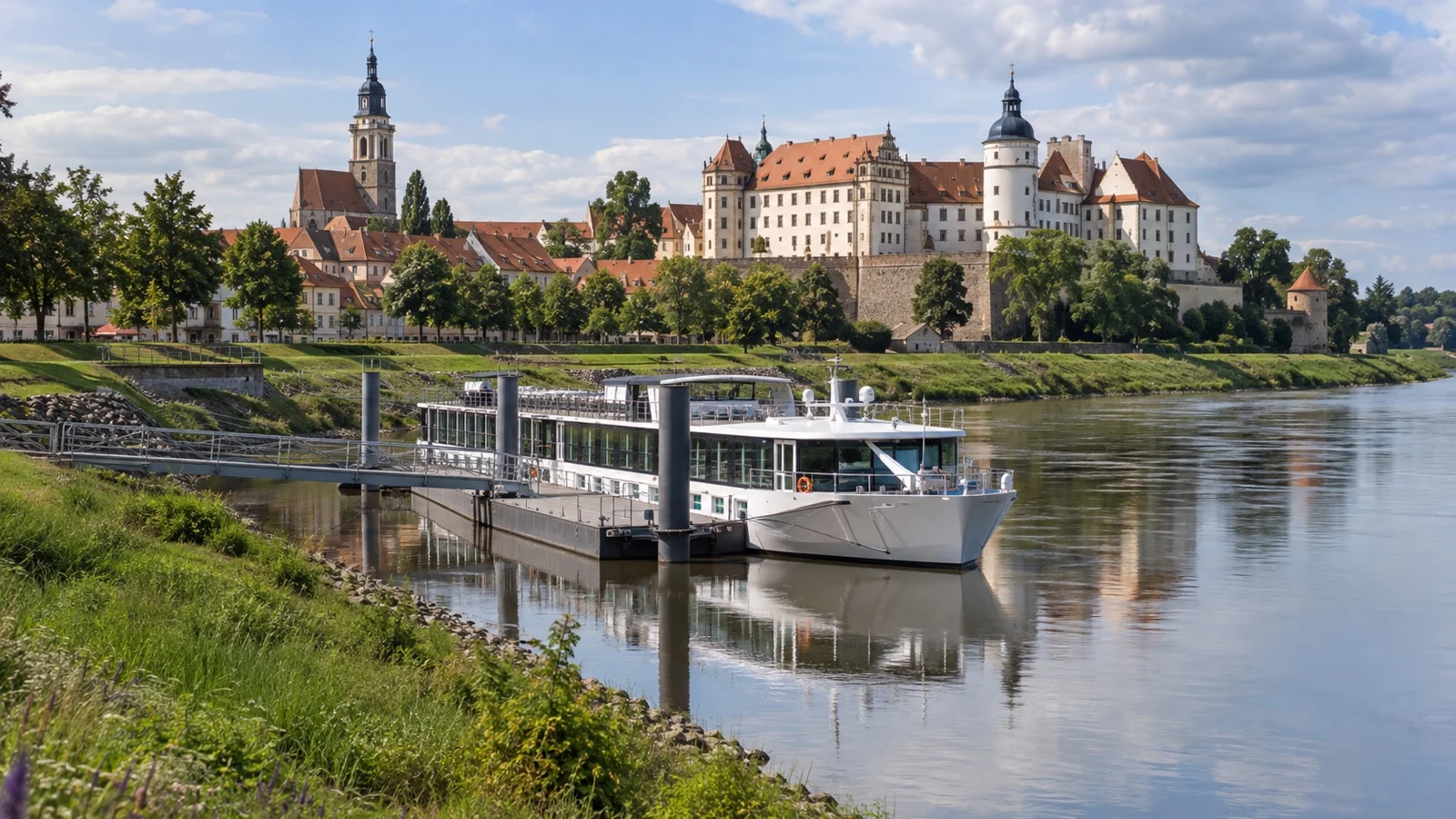
- Historic center: The castle, market square, St. Mary’s Church, and Elbe Day memorial form a compact sightseeing area.
- Currency: Euro. Carrying a small amount of cash is useful for small purchases even when cards are accepted.
- Time zone: Central European Time in winter and Central European Summer Time during daylight saving months.
- Planning caution: Confirm the berth, castle access, and all aboard time on the day because river conditions and venue schedules can change.
Where river cruises stop in Torgau
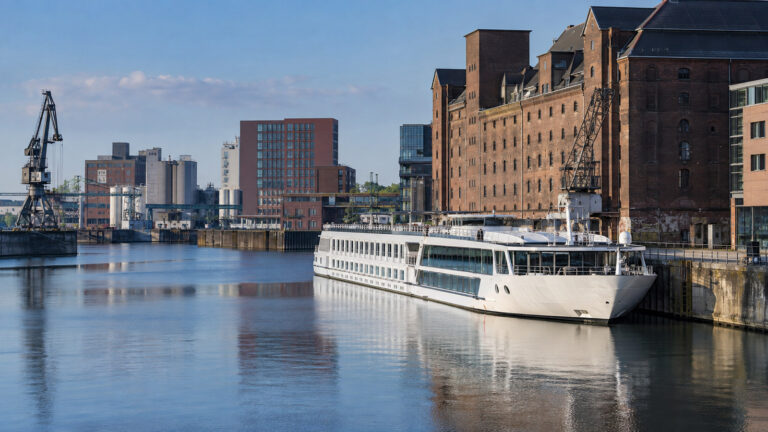
Torgau sits directly on the Elbe, with the historic center rising close to the river. There is no reason to expect the infrastructure of a large ocean cruise terminal, so follow crew directions from the gangway and note exactly where the ship is tied up.
The final mooring point can vary, and an itinerary may use coaches if navigation conditions require an operational change. Do not rely on an old map pin or another traveler’s berth location when your daily program provides current instructions.
Before leaving, photograph the gangway area and the ship’s contact information. That small habit is especially helpful in a river town where several stretches of waterfront can look similar on the return walk.
Walking from the river to the old town
The center is compact, and independent sightseeing is usually the simplest approach once the crew confirms the route from your berth. Hartenfels Castle, the market square, and the main historic streets are close enough to link without public transportation.
Expect a mix of paved surfaces and historic cobblestones. Supportive shoes are a better choice than smooth soles, particularly after rain or if you plan to explore castle interiors.
The market square is a useful orientation point because the Torgau Information Center is inside the town hall at Markt 1. Its official visitor site lists current opening hours, tours, exhibitions, and local events.
If your call is short, ask the information center or your cruise director which castle areas are open that day. Several attractions inside the complex keep different schedules, so one blanket opening time can be misleading.
Hartenfels Castle
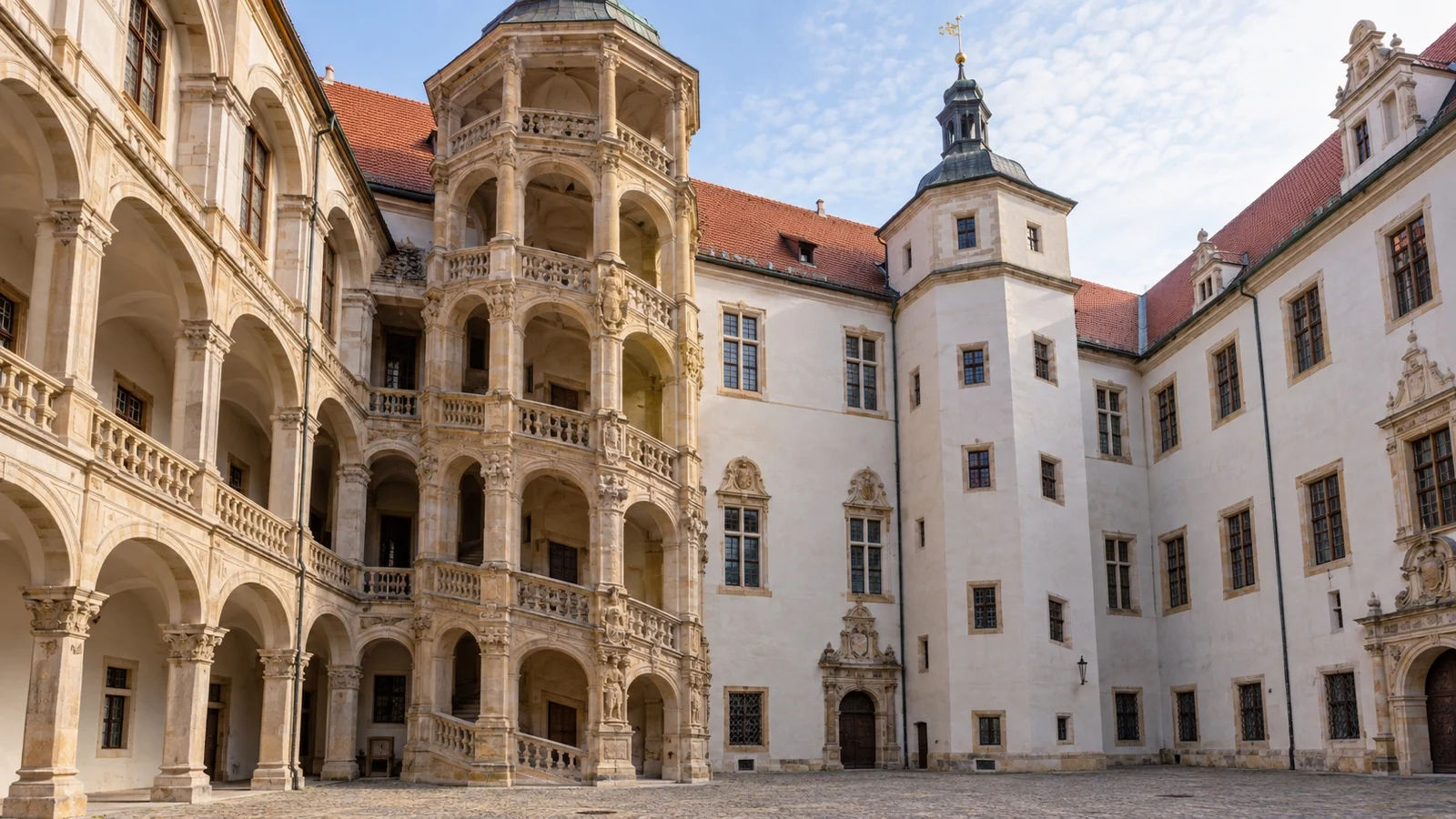
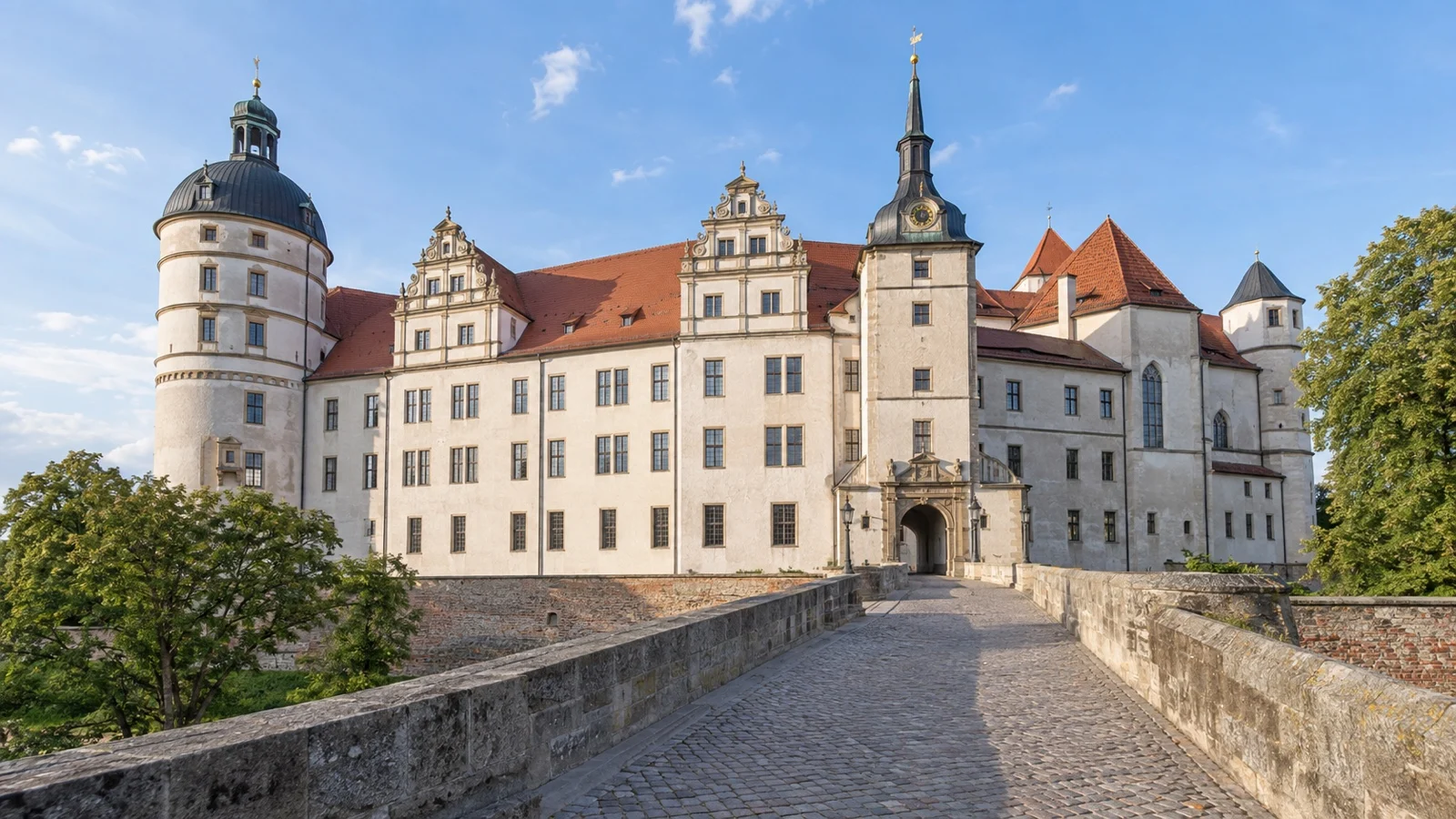
Hartenfels Castle is the essential Torgau sight and one of Germany’s major surviving early Renaissance palace complexes. The official tourism office describes it as a fully preserved example of the period, centered on an impressive courtyard and the freestanding Great Spiral Staircase.
The staircase, known as the Grosser Wendelstein, is the architectural showpiece. Its open spiral construction rises without a central supporting column, making the courtyard worth visiting even when you do not have time for every exhibition.
The castle chapel is central to Torgau’s Reformation history. According to the official castle site, Martin Luther dedicated it on October 5, 1544, and it is the only newly built church he personally consecrated.
The castle also houses permanent and temporary exhibitions covering the Saxon electors, the Reformation, art, and political imprisonment. The Torgau Memorial’s permanent exhibition examines persecution, imprisonment, and resistance under several German dictatorships, which adds a serious modern history layer to the visit.
Families may enjoy the bear enclosure, where brown bears remain part of the castle tradition. The rose garden is another pleasant pause in warmer months, especially if the interior rooms feel busy.
Opening patterns vary by season and by attraction. The castle’s official hours and prices page currently shows separate schedules for the courtyard, chapel, exhibitions, memorial, and lapidarium, along with temporary closures.
Check that page shortly before your visit instead of building the day around a tower or room that may be unavailable. The courtyard and Great Spiral Staircase generally offer the most dependable taste of the site when time is limited.
The Elbe Day memorial
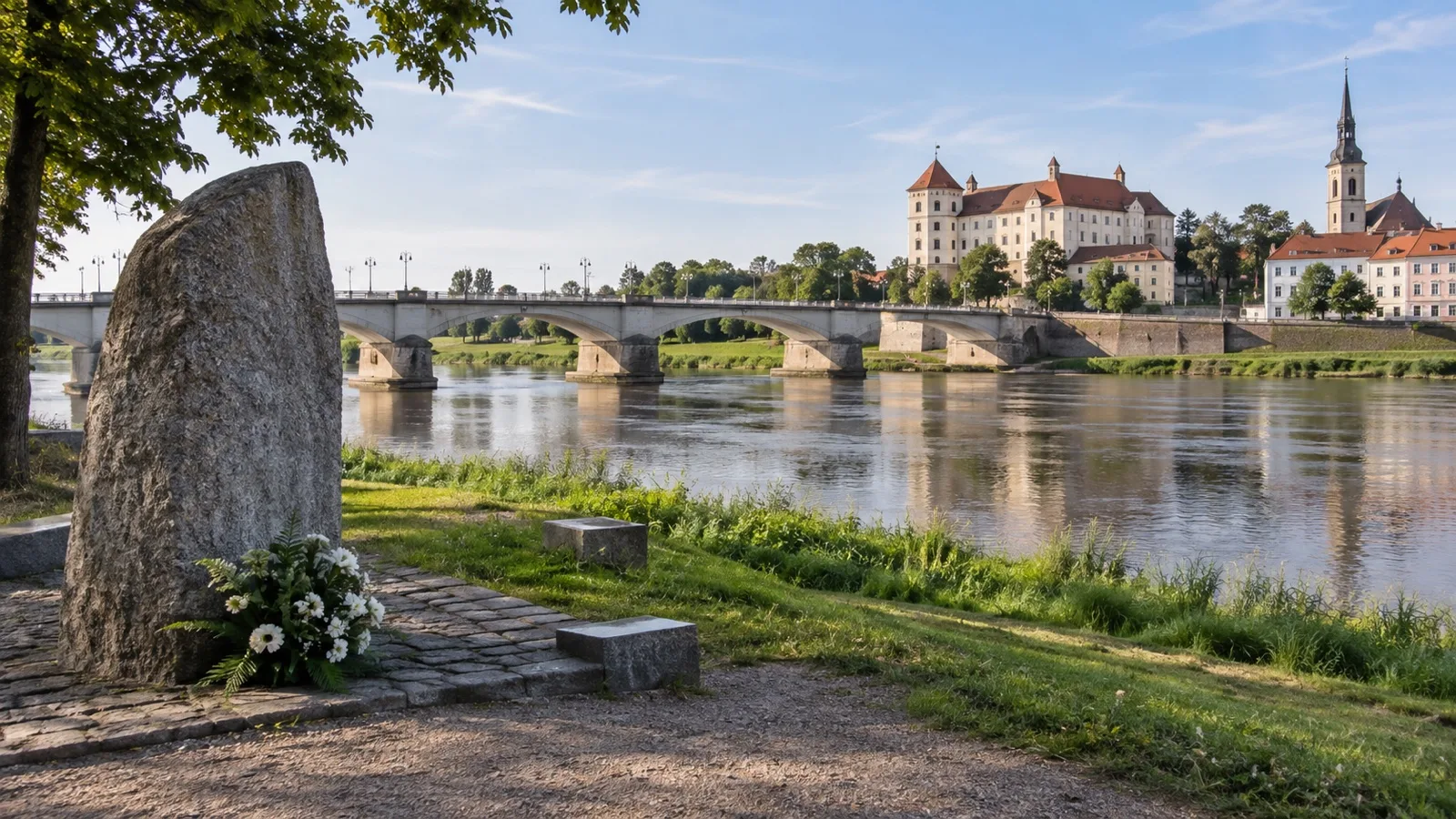
On April 25, 1945, American and Soviet troops met at the destroyed Elbe bridge in Torgau as Allied forces converged in the final weeks of the war in Europe. The meeting became known as Elbe Day and remains a symbol of cooperation at a moment when Nazi Germany was being divided by the advancing armies.
The riverside monument marks this history without requiring a long museum visit. It is worth stopping long enough to read the inscriptions and look across the river, since the landscape makes the event easier to understand than a quick photograph alone.
The City of Torgau’s Elbe Day page documents the annual commemoration and the continuing emphasis on peace and understanding. If your call falls near April 25, check the municipal event program because ceremonies and public activities may affect the waterfront.
Historical accounts distinguish between the first contacts elsewhere along the Elbe and the famous Torgau meeting at the ruined bridge. For a short port visit, the practical point is that Torgau’s memorial represents the best known public image and remembrance site associated with the event.
Market square and St. Mary’s Church
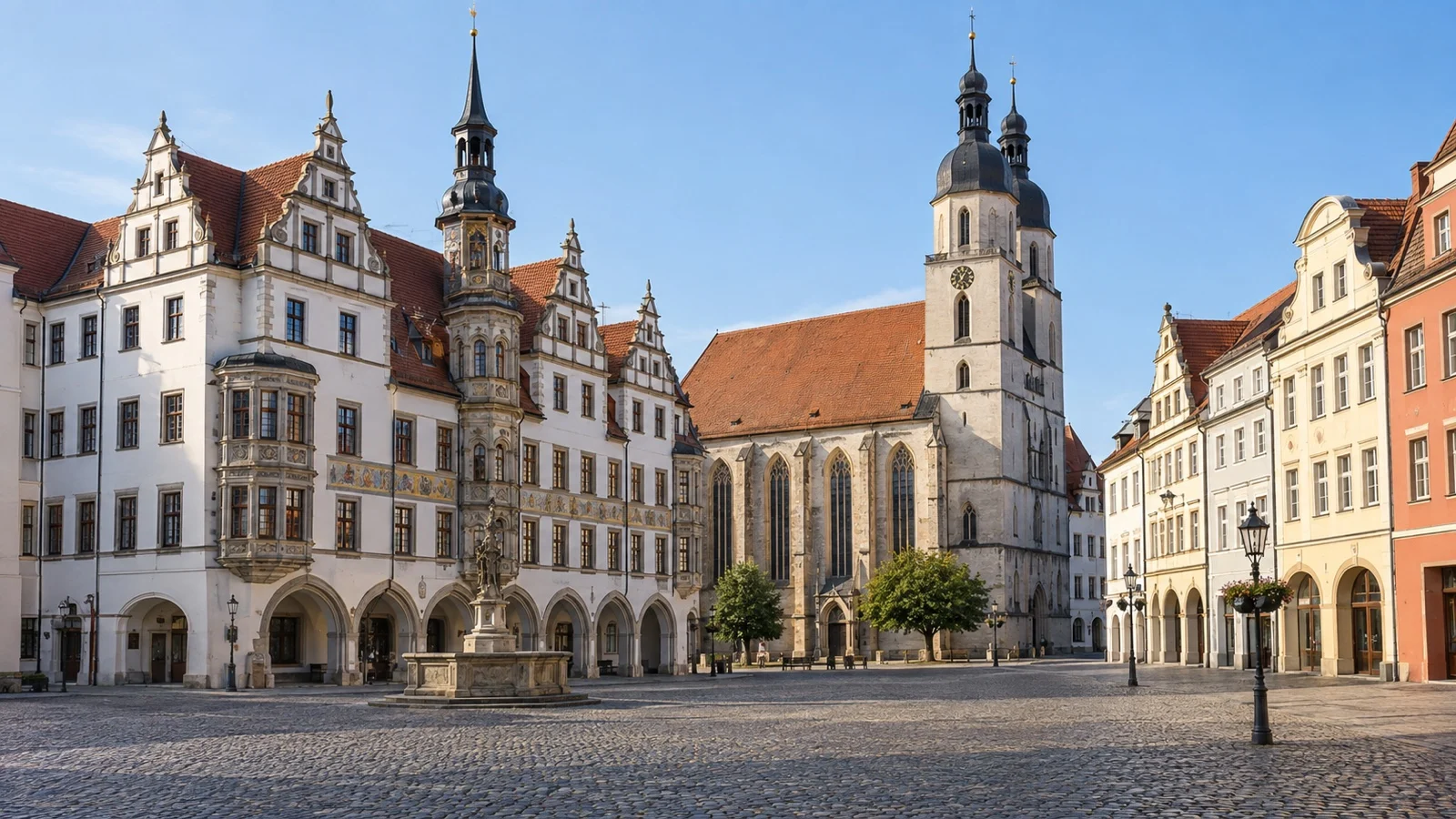
Torgau’s market square provides the easiest change of pace after the castle and memorial. The town hall and surrounding Renaissance facades create a compact center where you can pause for coffee without committing to a long detour.
St. Mary’s Church, often identified by its German name Stadtkirche St. Marien, is closely connected with the Reformation. Katharina von Bora, Martin Luther’s wife, is buried there, making the church a logical addition for travelers interested in the people behind Torgau’s religious history.
Church access can change around services, concerts, and private events. Treat any interior visit as a welcome bonus rather than the single point on which your day depends.
The old town also rewards simple wandering between the square and castle. Look up at the decorated facades and portals, but keep your route compact if the ship has provided an early departure time.
A practical half day plan
Start with Hartenfels Castle because its interiors have the most complicated hours. See the courtyard and Great Spiral Staircase first, then add the chapel or one exhibition if it is open and matches your interests.
Continue to the market square for the town hall and a brief refreshment stop. From there, visit St. Mary’s Church if accessible, then finish at the Elbe Day memorial before returning to the ship.
This order protects the highest priority attraction while leaving the open air memorial for later. If your berth makes the memorial more convenient at the beginning, reverse the route without changing the basic priorities.
Travelers with more time can choose a deeper castle exhibition, a guided city walk, or a short section of the Elbe cycling route. Trying to do all three usually adds more rushing than value.
Guided tour or independent visit?
An independent walk is a good fit for travelers who mainly want the castle courtyard, market square, church, and memorial. The layout is manageable, and the official tourism site provides current visitor information.
A guided tour earns its place if you want the connection between the Saxon electors, Martin Luther, and the events of 1945 explained in one coherent story. The tourism office advertises themed city and castle tours, while cruise lines may arrange their own departures.
Before buying a ship excursion, check what is actually included. A tour that combines transport, an interior castle visit, and guaranteed return timing offers more practical value than a group walk covering places you could easily see alone.
Accessibility and mobility
Torgau’s short distances help, but historic surfaces can still make the outing demanding. Cobblestones, curb transitions, gradients near the castle, and stairs inside older buildings may be more important than the number of miles walked.
The castle courtyard can provide a satisfying visit even when some interiors are impractical. Ask staff which route is step free on the day, since access can vary by exhibition and temporary building work.
Wheelchair users and travelers with limited stamina should tell the cruise line before arrival. That gives the operator a chance to confirm gangway conditions, berth access, coach arrangements, and whether a companion is required for a particular excursion.
Leave more return time than an able bodied walking estimate suggests. Wet stone and uneven paving can slow the trip even when the distance is short.
Food, money, and practical stops
Cafes and restaurants around the market square are the easiest choice for a short call. Ordering a full meal can consume a large share of a half day, so confirm service speed before sitting down.
Germany uses the euro, and payment habits differ among smaller businesses. Carry a modest amount of cash while using cards where accepted, and never depend on a single payment method.
The information center in the town hall is the best place for a current map, event advice, and tour details. Public restroom information is also available through the city’s visitor resources, which is useful before starting the return walk.
Weather and what to bring
Elbe weather can shift quickly, and much of the route between the waterfront, castle, and memorial is outdoors. A light waterproof layer is useful even when the morning forecast looks settled.
Summer calls for water and sun protection, while cooler seasons reward layered clothing. Choose a small day bag that leaves your hands free for railings on steps and uneven streets.
There is no need to overpack for a compact stop. A phone, offline map, ship contact card, water, weather layer, and a little cash cover most practical needs.
River levels and itinerary changes
The Elbe is more sensitive to changing water conditions than many travelers expect. Low or high water can affect sailing, berth assignments, excursion timing, and whether a visit is made by ship or coach.
A change does not automatically mean Torgau disappears from the program. Operators may adjust the sequence, use alternate transport, or shorten the time ashore, so wait for the cruise director’s specific plan.
Keep independent bookings flexible and avoid nonrefundable arrangements with tight meeting times. The broader guide to river cruise low water explains why day by day decisions can be necessary.
Returning to the ship
Set your own turnaround time before you leave the central area. The ship’s all aboard time is the deadline that matters, and it can be earlier than the departure time printed in a sales itinerary.
Allow a generous buffer for photos, a wrong turn, slippery paving, or a relocated gangway. If the vessel will move during your visit, follow the cruise line’s written instructions rather than returning to the original berth.
Do not assume a small town guarantees the ship will wait. River vessels often operate to locks, bridges, and tightly timed sailing windows.
How Torgau fits an Elbe cruise
Torgau often appears alongside larger cultural stops such as Dresden and Reformation destinations such as Wittenberg. Its appeal is different because the principal sights are concentrated and the pace can remain relaxed.
Independent travelers extending before or after a cruise can check regional rail options through the official Deutsche Bahn journey planner. Always search the actual travel date because engineering work and timetable changes can alter connections.
If you must choose only one interior, make it the castle area that best matches your interests. Architecture fans should prioritize the staircase and chapel, while modern history travelers may prefer the Torgau Memorial exhibition.
Quick answers
Can I see Torgau without a cruise excursion?
Usually yes, because the historic center is compact and the main sights can be linked on foot. Confirm the day’s berth and gangway conditions before setting out independently.
What should I see first?
Begin with Hartenfels Castle because its interior areas keep separate schedules. The market square and Elbe Day memorial are easier to fit around whatever is open.
Is the castle free?
The courtyard and some areas can be visited without the same ticket required for exhibitions, while individual attractions have their own prices. Check the official castle page for the current combination ticket, free areas, and temporary closures.
Is Torgau suitable for limited mobility?
The short distances help, but cobblestones and castle stairs can be limiting. Ask about a step free route and allow extra time for the waterfront approach.
What is Elbe Day?
Elbe Day commemorates the meeting of American and Soviet troops on April 25, 1945. Torgau marks the event at a riverside monument and through an annual public commemoration.
The last word
Torgau delivers an unusually complete port day in a small area. A focused route through Hartenfels Castle, the market square, and the Elbe Day memorial covers Renaissance, Reformation, and modern history without requiring a long transfer.
Keep the plan flexible, check which castle spaces are open, and protect the return buffer. Those simple choices let Torgau feel thoughtful and unhurried, which is exactly where this Elbe stop is strongest.
How this guide was researched: Unless a first hand visit is explicitly identified above, this guide is based on independent research using official tourism, municipal, transit, and attraction sources where available. Logistics and time sensitive details were reviewed in September 2026. See our Editorial Policy.