My Tho River Cruise Port Guide: Mekong Delta Boats and Pagoda
My Tho is one of the practical gateways between a Mekong river cruise and Ho Chi Minh City. Some travelers only pass through during embarkation or disembarkation, while others use it as the starting point for pagodas, islands, narrow canals, fruit gardens, and small workshops.
The key is to know which kind of My Tho day you actually have. A transfer-day schedule and a sightseeing call can share the same place name while requiring completely different plans.
How cruise lines use My Tho
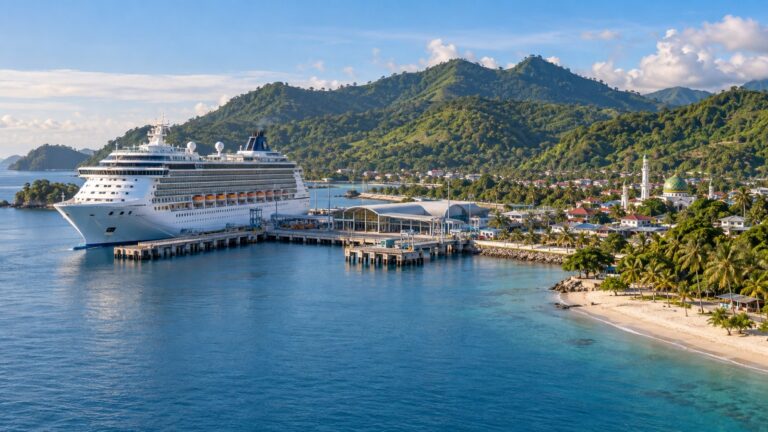
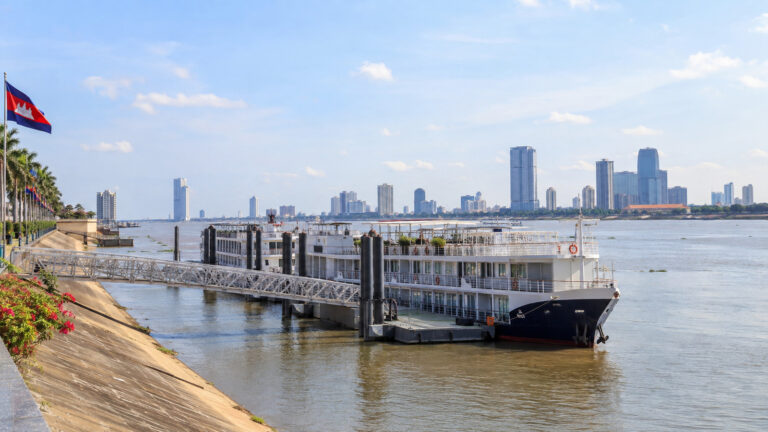
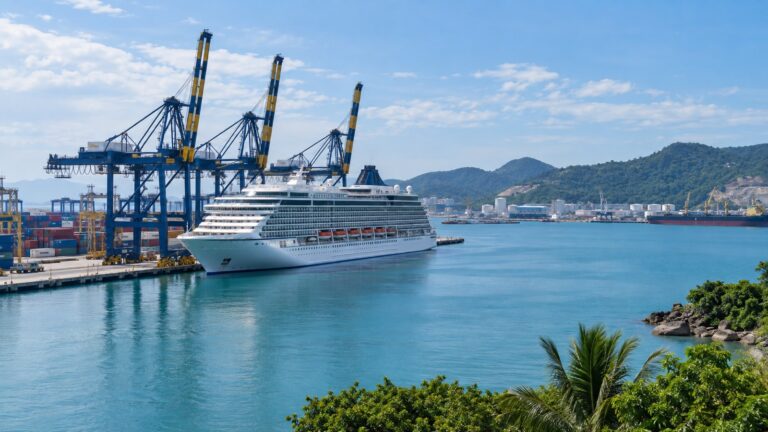
My Tho can function as a river port, an excursion gateway, or a transfer point for Ho Chi Minh City. Current AmaWaterways information, for example, shows passengers disembarking at My Tho Port before a motorcoach transfer to Ho Chi Minh City on its Riches of the Mekong itinerary.
That does not mean every line uses the same pier or follows the same sequence. Vessel size, river conditions, local operations, and itinerary direction can change where passengers step ashore and whether a smaller boat or coach connection is involved.
Check your final documents for the exact landing, meeting point, included transfer, and baggage instructions. An old map pin labeled My Tho Port is not enough information for a time-sensitive cruise day.
Quick Facts
- Role: Mekong Delta sightseeing base and transfer point for Ho Chi Minh City
- Arrival: Local landing arrangements vary by vessel and itinerary
- Headline sight: Vinh Trang Pagoda
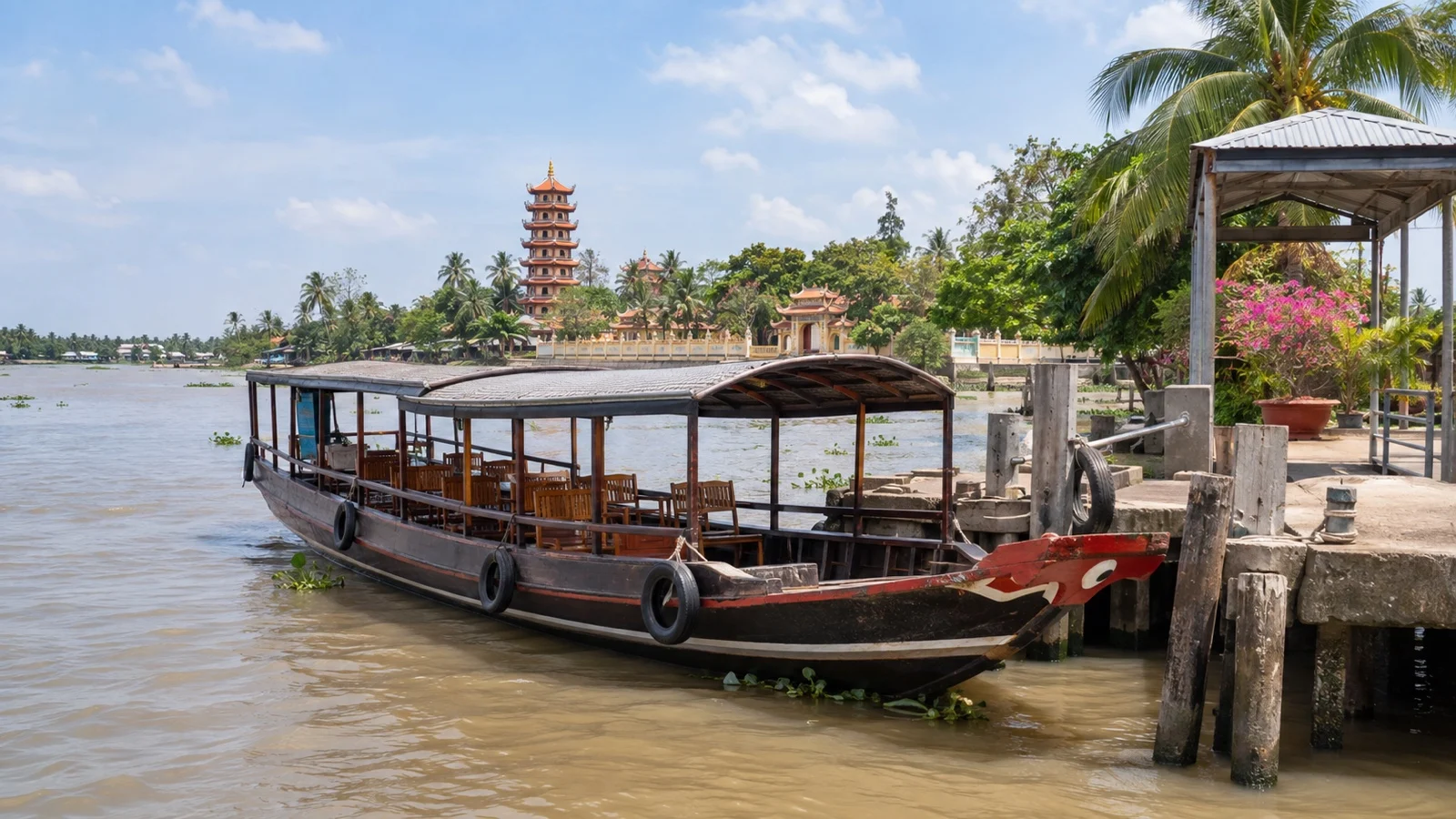
- Classic excursion: Main-river motorboat plus a smaller sampan in a narrow canal
- Local specialty: Hu tieu My Tho rice-noodle soup
- Currency: Vietnamese dong
- Time zone: Indochina Time, UTC+7 throughout the year
- Best planning rule: Confirm every boat and road transfer before leaving the vessel
First confirm your landing
There is no single walking-distance answer that applies to every My Tho cruise arrival. Your vessel may use a local riverside facility, connect by a smaller craft, or send guests directly into a scheduled coach transfer.
Ask the cruise director for the pier name, the transportation sequence, and whether the vessel will remain at that location. On river itineraries, the ship may move while guests travel overland and meet it later.
Save a screenshot of the day’s instructions and carry the local contact number supplied by the cruise line. Mobile service is not a substitute for having the meeting point written down.
Follow crew directions through any controlled or working area near the landing. Do not improvise a shortcut across a quay just because the road or town appears close on a map.
Vinh Trang Pagoda
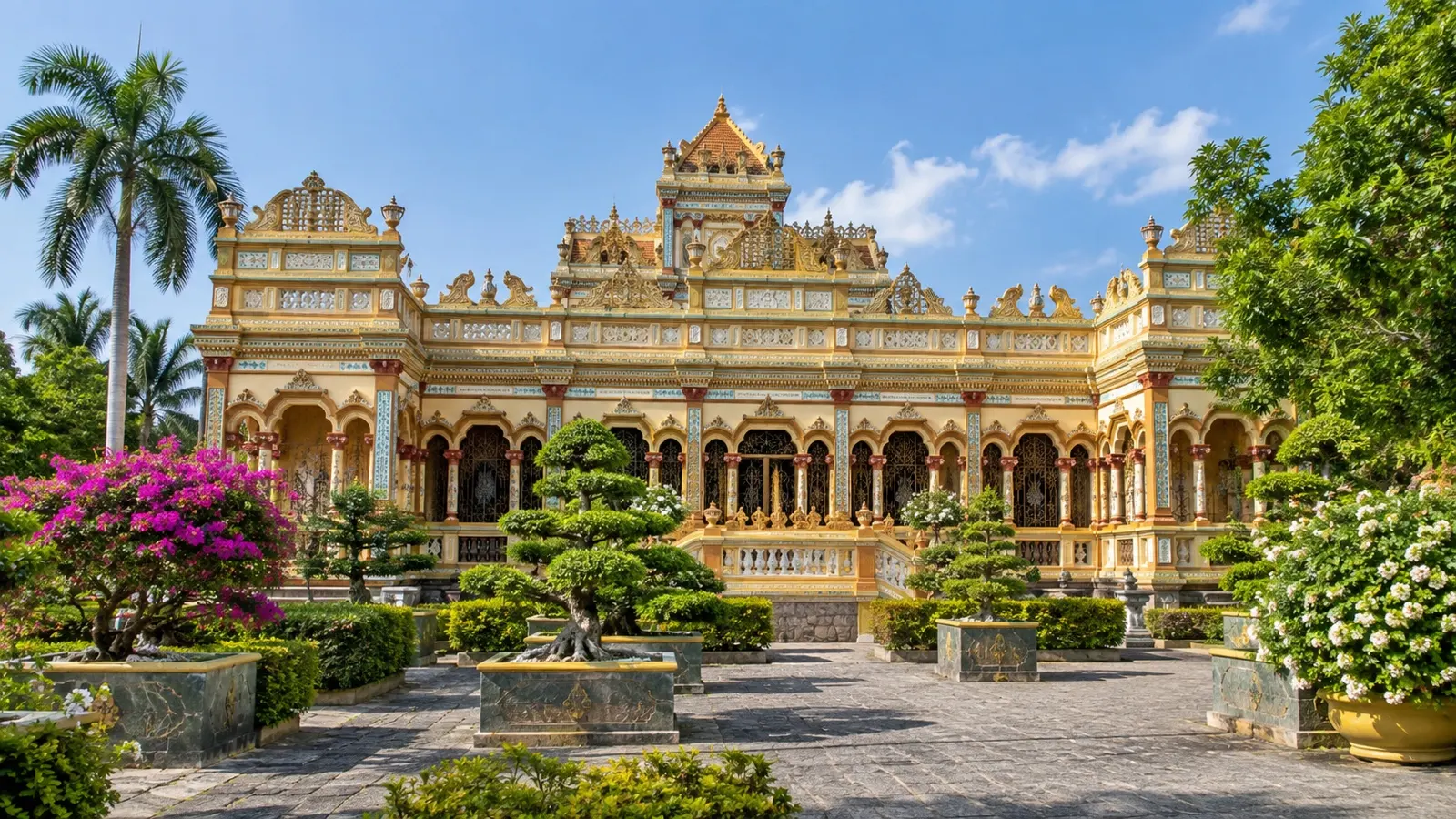
Vinh Trang Pagoda is the easiest major cultural sight to pair with a My Tho visit. The active Buddhist complex is known for its nineteenth-century history, landscaped grounds, large statues, and architecture that combines Vietnamese traditions with decorative influences from elsewhere in Asia and Europe.
Come dressed for a religious site rather than a beach excursion. Cover shoulders and knees, remove shoes where requested, speak quietly near worshippers, and follow any local photography restrictions.
Allow enough time to look beyond the largest statues and explore the complex at a calm pace. Ceremonies, maintenance, and local operating decisions can affect access, so treat published hours as something to confirm rather than a permanent guarantee.
Vinh Trang is also a sensible fallback if canal conditions change or a narrow-boat transfer is unsuitable. It gives the day a clear cultural anchor without requiring a chain of water transfers.
Thoi Son and the island excursion
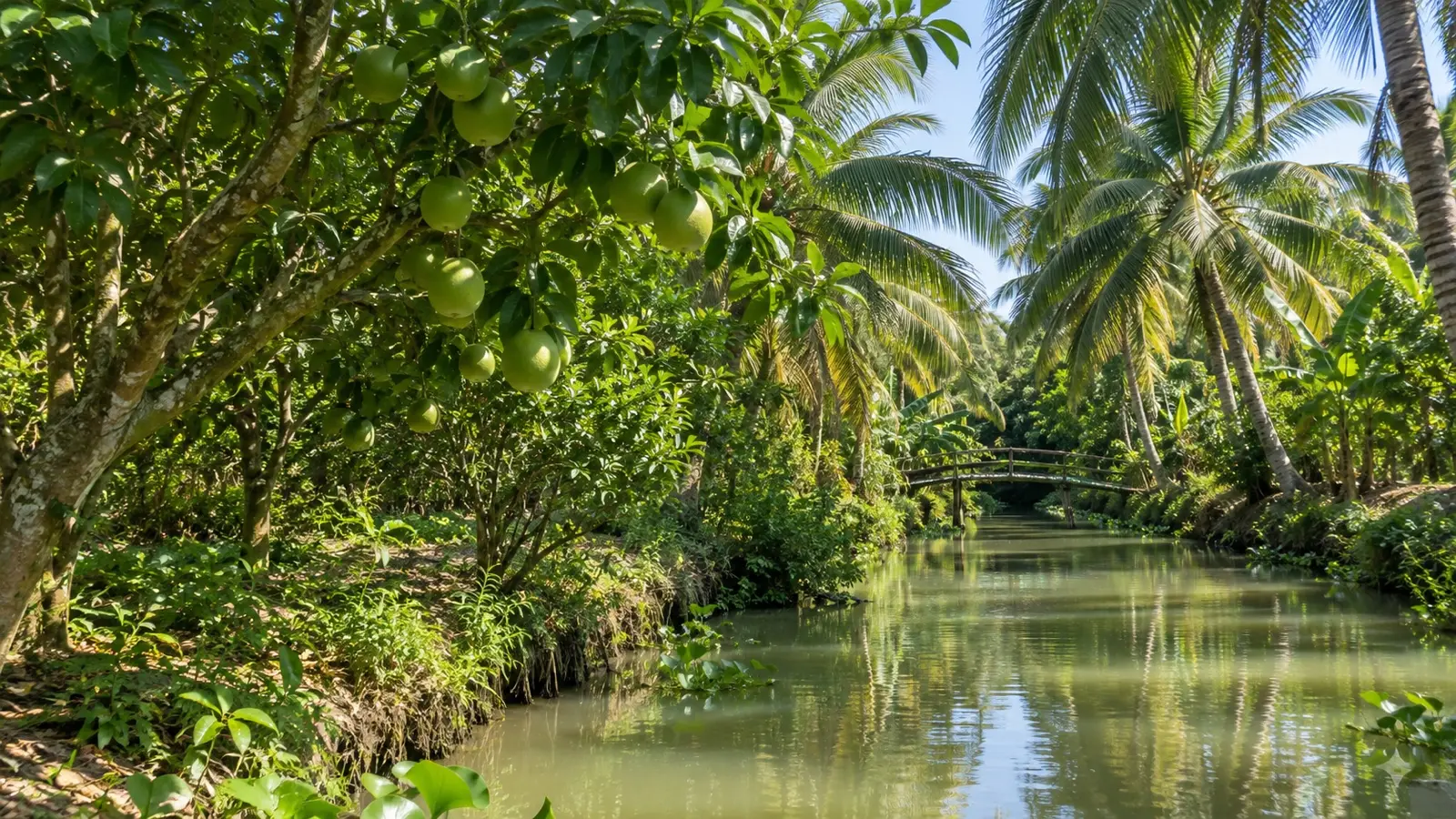
Thoi Son, often called Unicorn Islet, is part of the classic My Tho sightseeing circuit. Tours may combine a larger motorboat, village paths, tropical fruit, traditional music, honey products, small workshops, and a hand-rowed sampan.
The exact order and inclusions vary widely, even among departures sold under similar names. Read the current cruise description and listen for changes announced onboard rather than expecting every stop shown in a promotional photograph.
Some presentations can feel commercial because hosts naturally hope visitors will buy local products or leave tips. Enjoy what interests you, decline politely when it does not, and keep the group’s departure time in mind.
Ask before photographing people at close range, especially performers and workers. A village excursion is more respectful when residents are treated as hosts and professionals rather than scenery.
The canal sampan ride
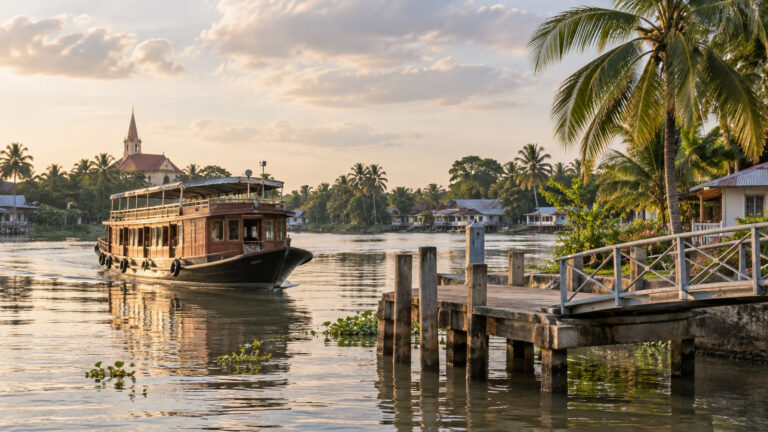
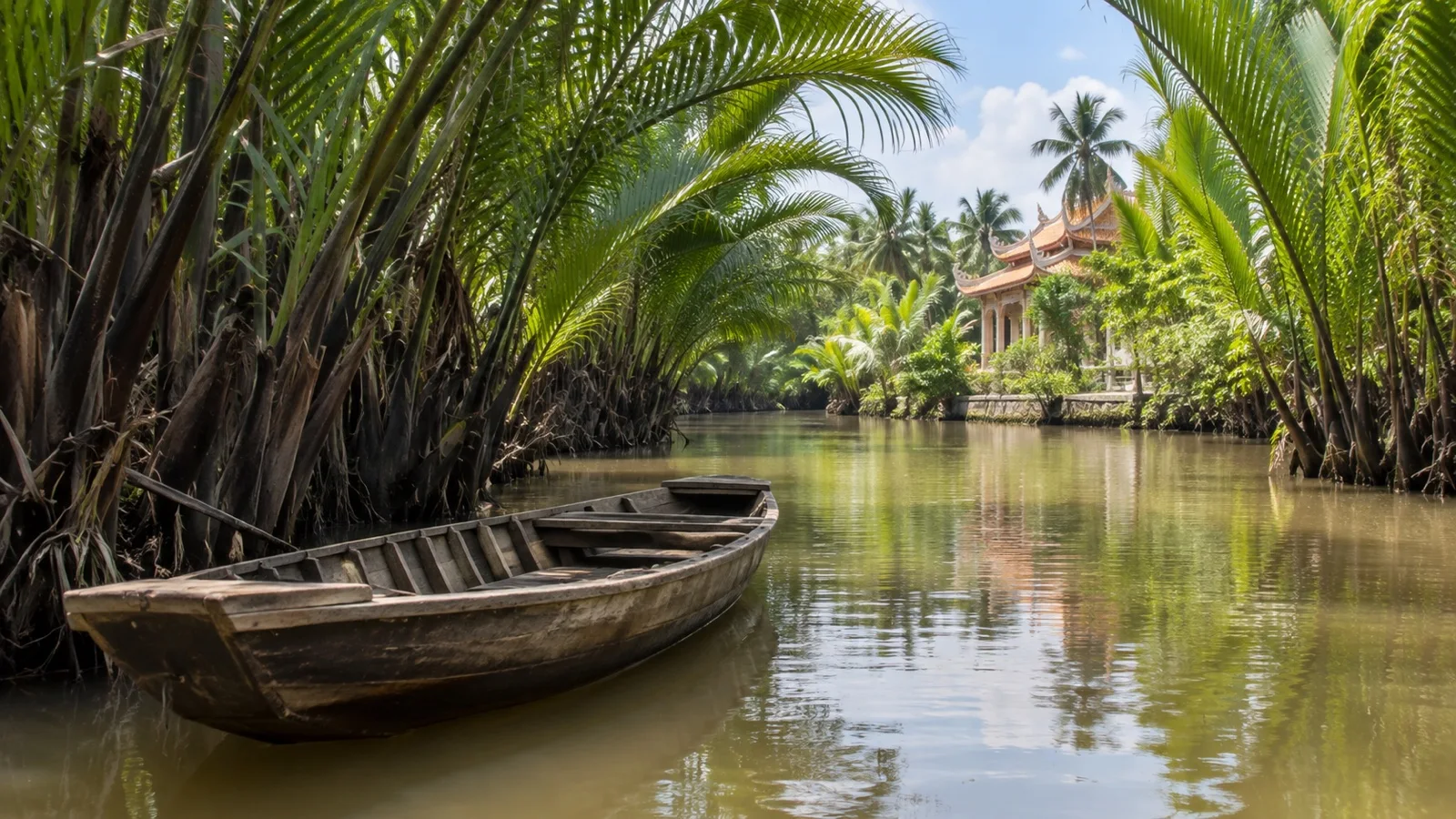
The narrow sampan is often the most photographed part of a My Tho excursion. Passengers sit low in a small boat while a local rower guides it through a palm-lined canal.
Boarding can require a large step down, turning your body, and moving across a gap without a level platform. Keep both hands free, wait for the crew’s instruction, and remain seated once your position is set.
Closed shoes with grip are safer than loose sandals on wet landings. Put your phone in a zipped or waterproof pouch before boarding so a sudden wobble does not send it into the canal.
The ride may be short and the canal can become busy when several groups arrive together. Focus on the changing light, vegetation, sounds, and boat handling instead of worrying about whether the experience lasts as long as a video suggested.
If you cannot transfer safely, ask about remaining with the larger boat or following a vehicle-based alternative. Do not let anyone rush you into a small craft after you have explained a genuine mobility concern.
Coconut candy and delta workshops
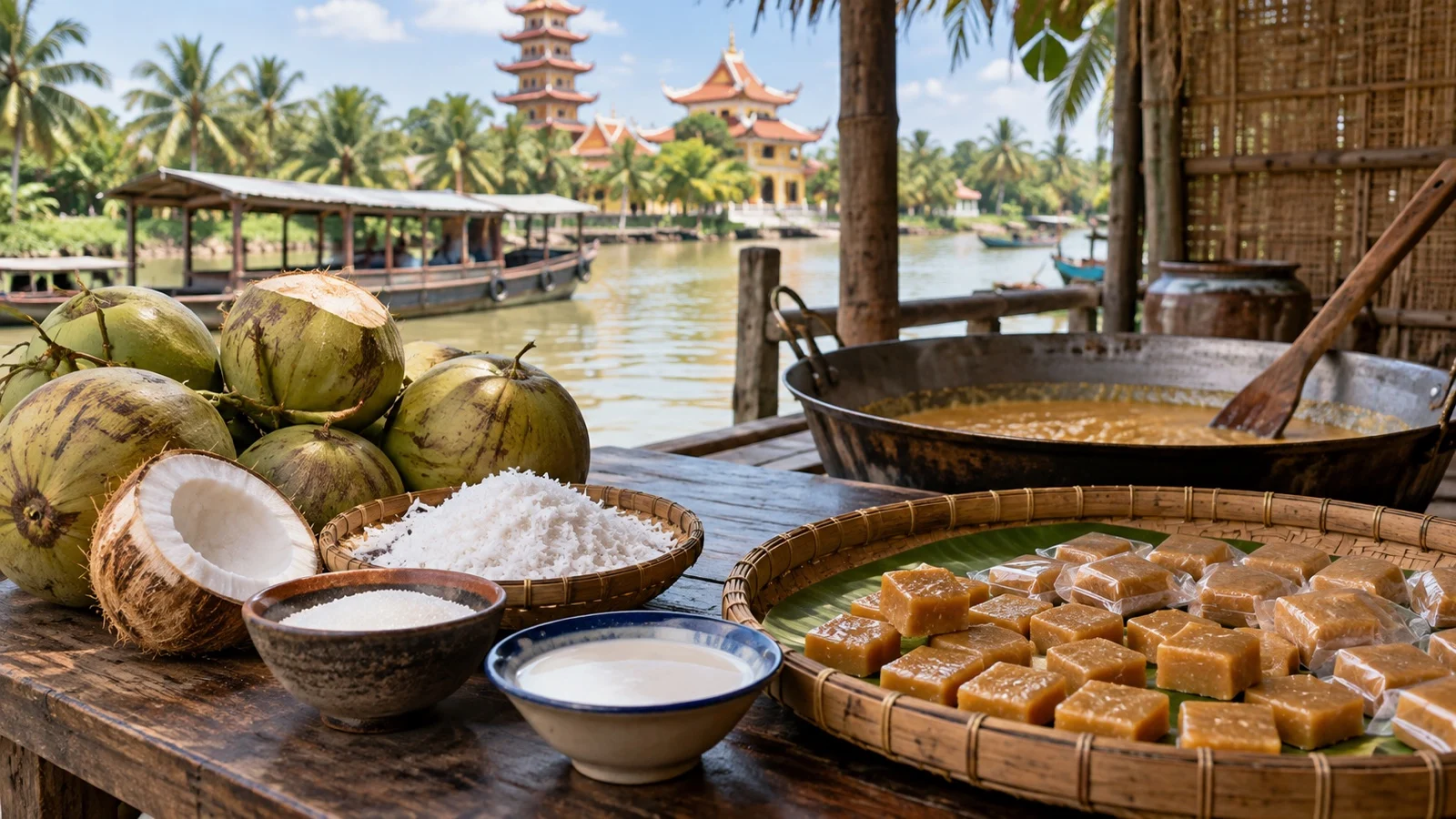
Coconut candy is most strongly associated with neighboring Ben Tre, and many delta circuits cross waterways or roads to include a workshop. A My Tho excursion may offer a demonstration and tasting, but it is not automatic on every itinerary.
Watch the process, ask about ingredients, and check for milk, peanuts, sesame, or other allergens before tasting. Wrapped candy travels better than fresh products, but import rules at your next country or home airport still apply.
Other stops may feature honey tea, fruit, rice paper, or handicrafts. Prices can be part of the experience, yet there is no requirement to buy something at every demonstration.
Carry small amounts of Vietnamese dong for inexpensive purchases and tips. Do not assume an island stall can accept a card or break a very large banknote.
Ship excursion or independent plan
Choose the ship excursion when the day involves multiple boats, islands, and a road transfer. Coordinating those moving parts is the service you are paying for, and the operator knows how the group reconnects with the vessel.
An independent plan is more realistic for Vinh Trang Pagoda, a meal, and a limited town visit. Arrange a licensed car through a reputable source, agree on the route and waiting time, and set a return deadline earlier than all aboard.
I would not build an independent port day around finding a boat after arrival. Similar-looking tours can leave from different wharves and may not match the cruise ship’s schedule or final location.
Motorbike taxis add unnecessary risk on a short call, particularly for travelers unfamiliar with local traffic. A car with a confirmed return is easier to manage and more likely to match travel-insurance conditions.
A practical sightseeing plan
For a coordinated excursion, let the cruise line manage the sequence and concentrate on the two experiences that matter most to you. I would prioritize the canal ride and Vinh Trang, then treat product tastings as pleasant additions.
For a town-focused day, visit Vinh Trang first while energy is high and timing is predictable. Follow it with hu tieu My Tho, a market stop, or a brief waterfront look that keeps you near the confirmed return route.
Do not chase every islet name on a short call. The delta is a living water network, and a slower look at one canal or neighborhood is more rewarding than collecting rushed transfers.
Keep the final portion flexible in case rain, traffic, or water levels alter the schedule. A good My Tho day should finish with time to spare, not with a sprint across a wet pier.
Food to try in My Tho
Hu tieu My Tho is the local noodle dish to seek out when your schedule allows a proper meal. Versions vary, but the regional identity comes through rice noodles, broth, herbs, and combinations of meat or seafood.
Choose food cooked thoroughly and served hot, drink sealed or safely treated water, and wash or sanitize hands before eating. A crowded stall can be interesting, but popularity alone is not a food-safety guarantee.
Fruit tastings are common on island tours and can be a highlight. Follow the operator’s guidance and be cautious with anything that has been cut and sitting in heat for a long time.
Tell the guide about allergies before the excursion begins, not when a tray appears. Translation and shared preparation surfaces can complicate last-second questions.
Markets and local shopping
A local market can show more of everyday My Tho than a souvenir stop, but expect wet surfaces, narrow aisles, scooters, and active deliveries. Keep valuables zipped and step out of the traffic flow before examining an item.
Ask before taking a close photograph of a vendor. A smile and a simple request communicate more respect than pointing a camera across someone’s work space.
Buy shelf-stable goods only after considering customs rules for later destinations. Fresh fruit, plants, seeds, meat, and some animal products can be restricted even when a shop is happy to sell them.
Accessibility and mobility
My Tho accessibility depends on the complete transfer chain, not the name of the excursion. A gangway, local pier, motorboat, uneven path, coach step, and narrow sampan may all appear in one day.
Ask the cruise line for the number and approximate height of steps, presence of handrails, path surfaces, vehicle type, and whether your mobility device can travel with you. A general moderate rating does not answer those practical questions.
Water level can change the angle and height of a boat transfer. Even strong assistance from crew does not make a transfer step-free, so decide based on your ability rather than social pressure at the landing.
A vehicle visit to Vinh Trang may work better than the island circuit for limited mobility, although thresholds and temple grounds still need confirmation. Contact the line’s accessibility team before sailing whenever a wheelchair, scooter, or walker is involved.
Weather, mosquitoes, and river conditions
Southern Vietnam is hot and humid, with seasonal periods of heavier rain. Bring sun protection, water, insect repellent, and a light rain layer on the same outing.
The Mekong River Commission monitors a basin affected by floods, droughts, and changing flows. Let the captain and local operators decide whether a landing or canal route is suitable on the day.
Rain can make wooden steps, boats, and packed-earth paths slippery within minutes. Slow down, use handholds, and keep electronics and medication in a waterproof pouch.
Use repellent on exposed skin and consider light long sleeves near vegetation and still water. The CDC’s current Vietnam traveler guidance is a better health-planning source than a general cruise article.
Money and connectivity
Vietnamese dong is the practical currency for small vendors, local food, and tips. Cards may work at established businesses, but island stops and small workshops can be cash only.
Carry smaller notes and count change without displaying all your cash. Keep a separate emergency payment method in a secure place.
Do not depend on mobile data for directions or the day’s schedule. Save the landing, ship contact, port agent, and all-aboard time as screenshots before leaving.
A translation app with Vietnamese downloaded offline can help with a driver or market purchase. Show place names in Vietnamese when possible, including My Tho as Mỹ Tho and Vinh Trang as Vĩnh Tràng.
Transfer to Ho Chi Minh City
My Tho often connects to Ho Chi Minh City by motorcoach at the beginning or end of a cruise. Road distance is only part of the calculation because urban traffic, luggage handling, group boarding, and airport procedures all add time.
Use the cruise line’s scheduled transfer whenever it matches your plans. Confirm whether it ends at a hotel, meeting point, or airport before buying a flight around the word transfer.
Do not book a tight same-day flight based on a mapping app’s best-case drive. Follow the cruise line’s published flight-time guidance and add a personal buffer for delays.
Keep medication, documents, valuables, and a change of clothes in your hand luggage during the coach journey. Checked bags may be stored underneath and inaccessible until the group reaches its destination.
Safety and health
Use normal precautions around valuables, road traffic, crowded markets, and boat transfers. The greatest everyday risks are often heat, slips, and traffic rather than dramatic crime.
Vietnam’s emergency numbers include 113 for police, 114 for fire, and 115 for ambulance. In a cruise context, the guide, cruise director, or port-agent contact may be the fastest first call unless immediate local emergency help is required.
Check the current State Department Vietnam page for entry rules, local-law guidance, and the latest travel advisory. Requirements and official advice can change after this guide is published.
Carry routine medication in original packaging and bring more than the excursion’s scheduled duration requires. A delayed road or river transfer should not become a medication emergency.
Getting back to the vessel
Confirm whether your group returns to the same landing or meets the ship farther along the river. This single detail matters more than memorizing the outward route.
Stay with the group during an island circuit and note the guide’s meeting instructions at every transfer. A boat may look interchangeable with the next one while actually serving a different operator.
For an independent town visit, set a return target well before the official deadline and include time for traffic, port access, and security. Ship time may differ from a phone’s automatic local setting, so verify which clock controls all aboard.
If delayed, contact the number provided by the cruise line immediately. Do not wait until the deadline passes before telling anyone that your driver or boat has not arrived.
Is My Tho worth extra time?
Yes, when your itinerary includes a real sightseeing window rather than only a transfer. Vinh Trang, the waterways, regional food, and island visits offer a clear introduction to the Mekong Delta close to Ho Chi Minh City.
The stop can feel packaged when several groups follow the same circuit, but the landscape and boat travel still explain how water shapes life here. Look beyond the tasting tables and pay attention to the working river.
My preference would be a coordinated canal trip paired with Vinh Trang, provided the transfer is physically suitable. If the day is mainly disembarkation, I would save ambitious sightseeing for a separate delta stay and protect the connection to Ho Chi Minh City.
Before you leave the ship
Confirm the landing, final meeting point, number of boat transfers, accessibility details, luggage handling, all-aboard time, and Ho Chi Minh City transfer destination. Pack small dong notes, water, sun protection, insect repellent, grippy shoes, and waterproof storage for essentials.
Then let My Tho do what it does best: turn a line on the itinerary into a close look at the delta’s waterways, faith, food, and everyday movement. The day works when the logistics are settled early enough that you can stop thinking about them.