Santa Bárbara de Pinto River Cruise Port: Village Landing Guide
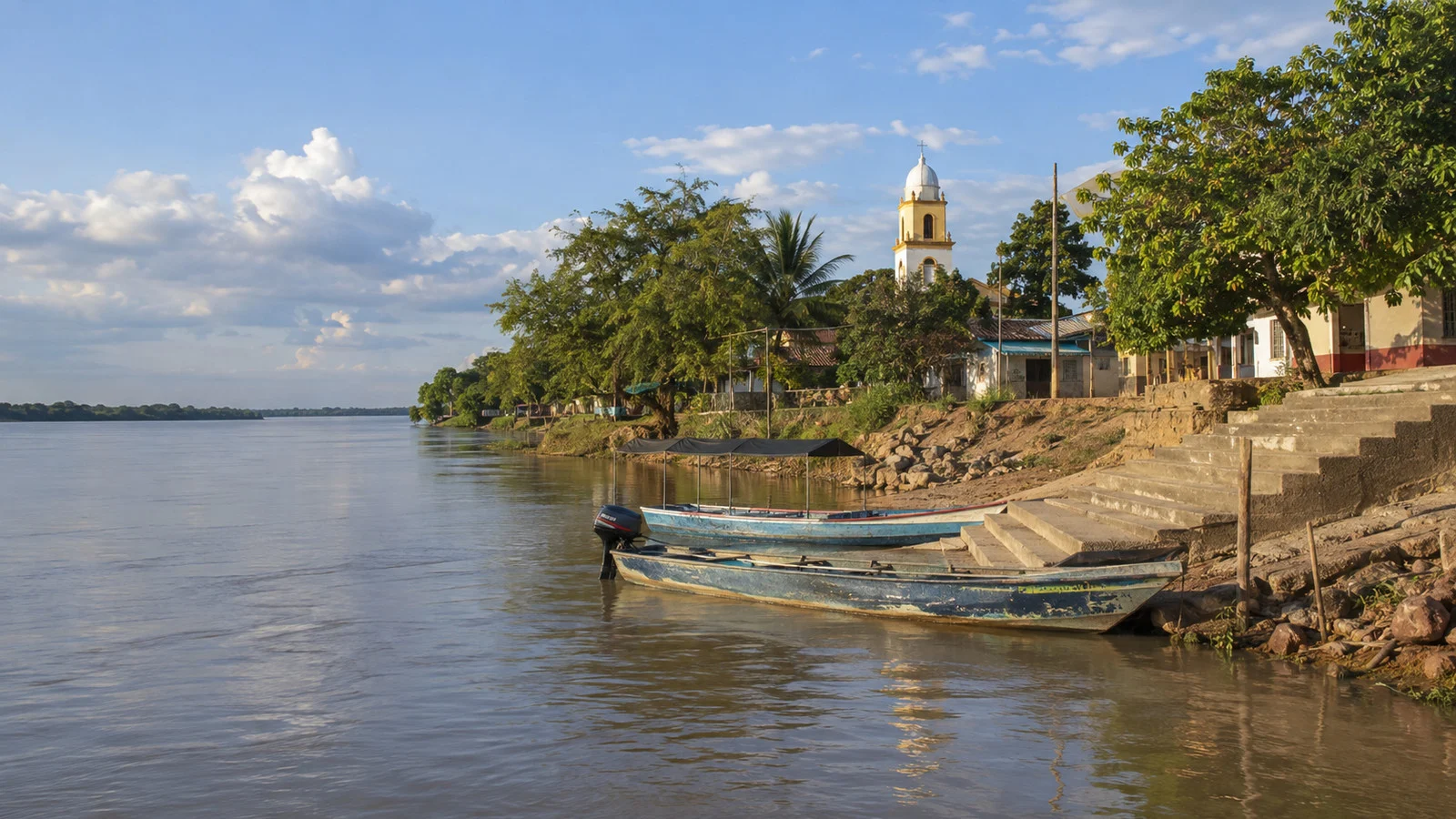
Santa Bárbara de Pinto is the kind of river cruise stop that makes even a small river ship feel almost conspicuous. The village sits beside the Mompox arm of the Magdalena River, where fishing nets, tobacco leaves, pastel facades, and daily river traffic supply the sightseeing rather than a row of ticket booths.
This is an active call on AmaWaterways’ 2026 Colombia cruises, but it is not a conventional terminal stop. The operator specifically says guests board private excursion boats to reach the village, which is the detail to remember before imagining the main hotel ship tied to a downtown quay.
Quick take
Treat Santa Bárbara de Pinto as a guided community visit, not an independent port day. The interest comes from meeting makers, seeing fishing-net weaving and tobacco rolling, walking past the church and traditional houses, and understanding how a small river town works.
The standard cultural experience is the sensible choice for most travelers. A guided hike may suit active guests, but heat, humidity, small-boat boarding, and the day’s landing conditions matter more here than the distance shown on a map.
Keep your expectations small in the best possible way. There is no grand terminal, no souvenir gauntlet, and no need to manufacture a checklist when the village itself is the point.
Quick facts
- Into Town: AmaWaterways uses private excursion boats for the village visit; the exact landing and walking route depend on river level and local operations.
- Currency and Language: Colombian peso and Spanish. English-speaking guides accompany AmaWaterways excursions; small peso notes help for crafts, snacks, and tips.
- Time Zone: Colombia Time, UTC-5 year-round, with no daylight saving time.
- Call reliability: Water level, current, weather, pier access, or itinerary changes can shorten the visit or replace the village landing. No audited local missed-call rate is published.
Is Santa Bárbara de Pinto an active river cruise call in 2026?
Yes. AmaWaterways’ live 2026 Wonders of Colombia itinerary includes Santa Bárbara de Pinto between the Mompox portion of the voyage and scenic cruising toward Sitio Nuevo.
The operator describes boarding private excursion boats to visit the community on the Mompox arm of the Magdalena. Its “Traditions of Pinto” experience includes fishing-net weaving, hand-rolled tobacco, a historic church, local wares, and the village’s pastel-toned Spanish architecture.
A guided hike is offered as the more active alternative on listed departures. Direction and sequence can vary, so Santa Bárbara may appear before or after Mompox rather than on one permanently fixed cruise day.
The call is part of a functioning modern cruise operation, not a proposal left in a tourism brochure. Colombia’s Ministry of Commerce, Industry and Tourism documented the launch of luxury cruising on the Magdalena in 2025, while AmaWaterways continues to sell 2026 sailings.
AmaWaterways lists AmaMagdalena as a 60-passenger ship with 30 cabins. That modest size suits the river, but the published Santa Bárbara visit still relies on smaller excursion boats for the final approach.
Where is Santa Bárbara de Pinto?
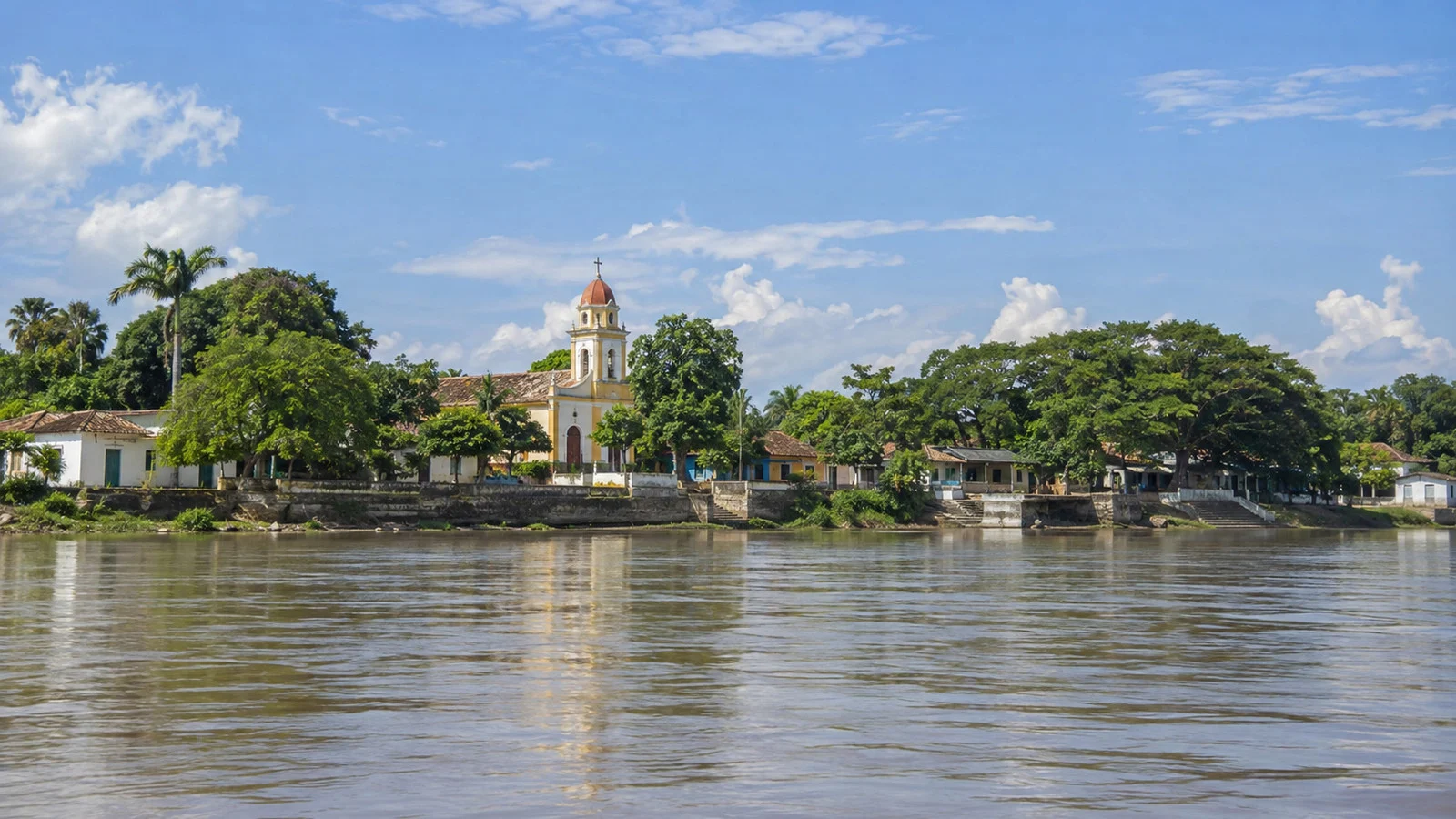
Santa Bárbara de Pinto is in Colombia’s Magdalena department, inland from the Caribbean coast. It fronts the Brazo de Mompox, translated as the Mompox arm or branch, within the lower Magdalena’s broad system of channels, islands, wetlands, and floodplain communities.
This distinction is more than map trivia. The main ship is navigating a dynamic river network, while the village visit requires an additional boat movement into a smaller-scale landing environment.
Travelers researching the wider route can use our Magdalena River cruise ports guide to place Santa Bárbara between larger destinations. It also explains why “river port” can mean everything from a city quay to a carefully managed village transfer.
Where do passengers land?
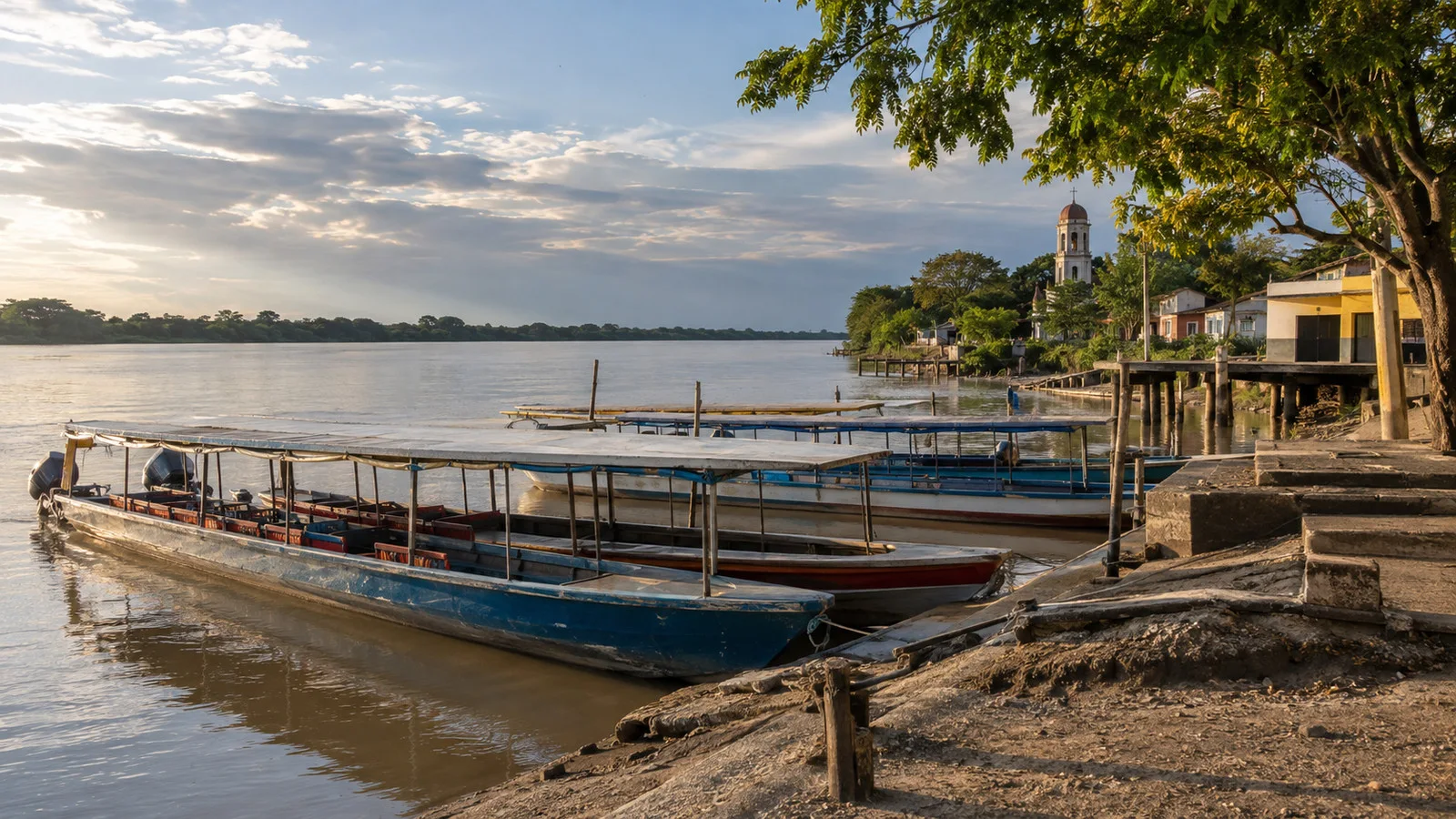
AmaWaterways does not publish a universal street address for the Santa Bárbara landing. It does publish the important operational fact that guests use the line’s private excursion boats, so follow the cruise director’s instructions rather than treating any visible pier as your appointed arrival point.
There is now stronger public landing infrastructure in the municipality. In April 2025, national river authority Cormagdalena formally delivered a floating pier in Santa Bárbara de Pinto, designed to adjust to changing river levels and improve passenger and goods transfers.
That official pier is evidence of a real, current public landing, but it is not proof that Ama’s hotel ship docks there. It also does not prove that every private excursion boat uses the same pontoon on every sailing.
The likely sequence is main ship, excursion boat, selected village landing, then guided walk or vehicle staging if required. Exact transfer duration is not published, so any timetable offered before the crew’s briefing would be guesswork wearing a lanyard.
Why a floating pier helps, but does not remove every step
A floating pontoon rises and falls with the river, reducing the dramatic height mismatch that a fixed quay can create. Cormagdalena says the Santa Bárbara installation was designed for safer embarkation and disembarkation in different seasons.
The connecting ramp can still become steeper as water and bank relationships change. Passengers may also encounter a step into the excursion boat, moving water, narrow boarding points, wet surfaces, and an uneven transition from pier to village street.
Ask before the excursion whether crew can assist, whether the boat can carry a folding mobility device, and whether a no-step route exists that day. “Floating pier” is useful information, but it is not the same as a formal accessibility certification.
What you actually do in the village
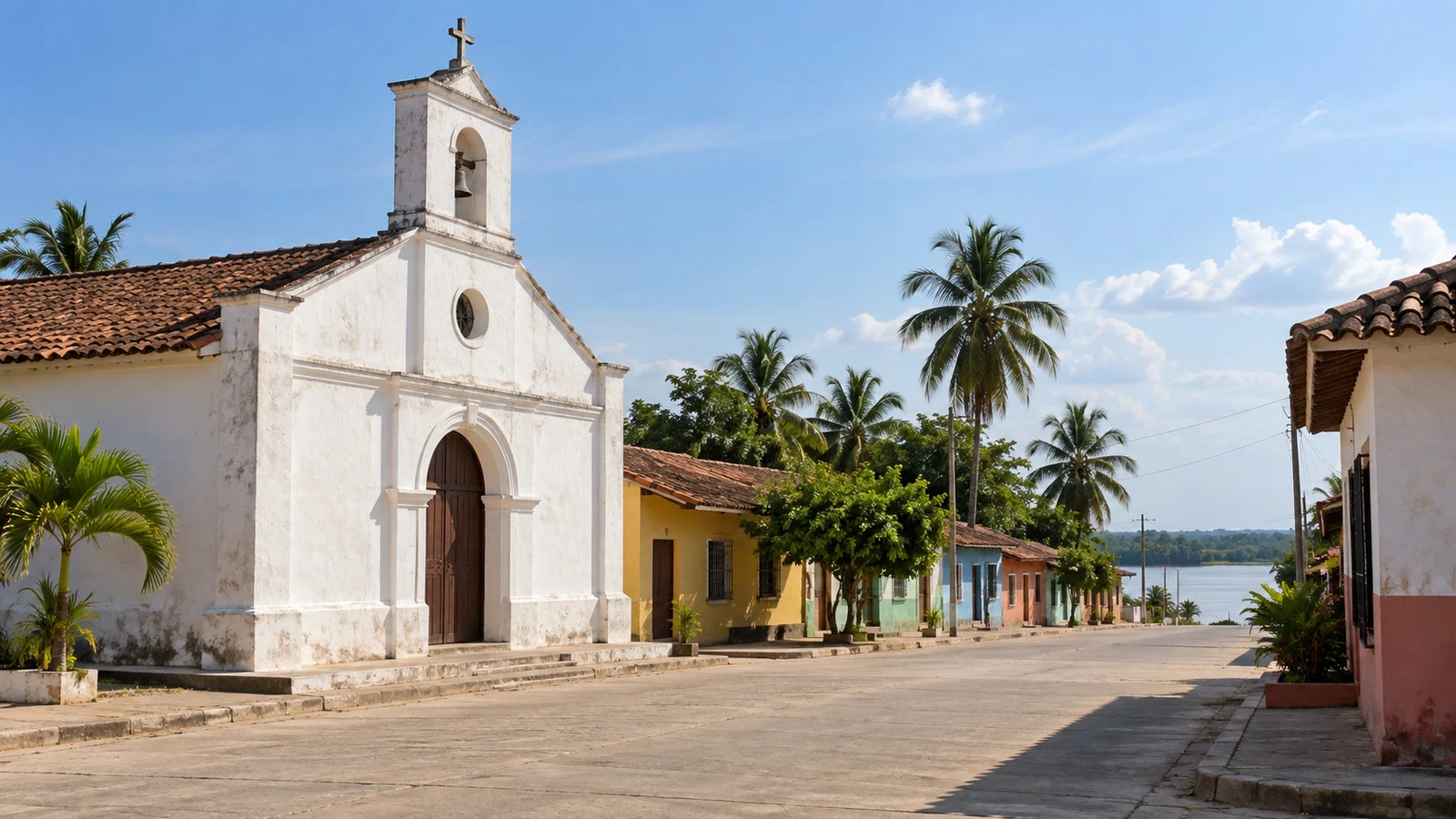
The Traditions of Pinto program is about local skills and everyday culture. Ama’s published outline highlights people weaving fishing nets, artisans rolling tobacco by hand, handmade goods, a historic church, and a walk among soft-colored facades.
That may sound modest beside a cathedral or fortress tour, but it is unusually relevant to the place. Fishing equipment tells a river story, craft sales put money closer to local hands, and the streets show how a community lives with both seasonal water and tropical heat.
Stay with the guide unless the cruise team explicitly permits independent time. A small excursion boat may need to leave promptly, and the main ship can reposition while the group is ashore.
Fishing-net weaving is not decorative theater
Handmade nets are working tools in a community connected to river fishing. Watch the repeated knots, spacing, repairs, and practiced hand movements, then ask the guide how local fishing seasons and permitted methods shape their use.
Do not touch tools or half-finished work without permission. Photographs are best requested through a smile and a clear question, especially when a demonstration happens near someone’s home rather than on a formal stage.
If handmade items are for sale, pay the stated price unless bargaining is clearly expected. A tiny purchase can support a maker, but courtesy is the part that costs nothing and travels best.
The tobacco-rolling demonstration
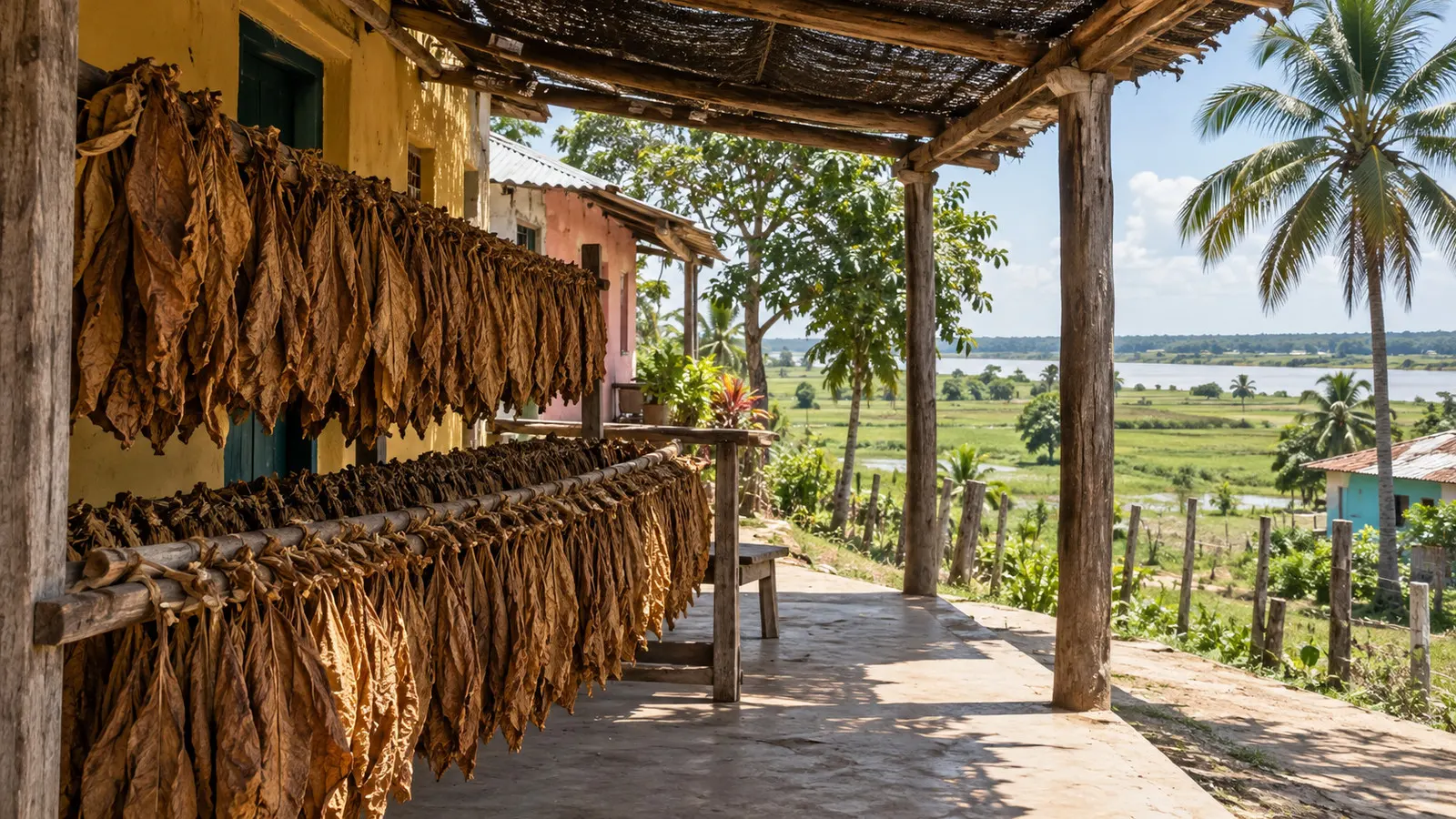
Ama includes hand-rolled tobacco among the village traditions presented to guests. The demonstration can illuminate plant preparation, leaf handling, rolling technique, and the social history of a regional crop without requiring anyone to smoke.
Travelers with respiratory sensitivities should ask whether lighting tobacco is part of the session and stand where air moves freely. Buying or importing tobacco is governed by destination, airline, and home-country rules, so do not assume a craft purchase can simply follow you through customs.
The visit is more interesting when tobacco is discussed as labor and livelihood rather than treated as a novelty prop. Ask who grew the leaves, who prepared them, and how long the roller has practiced the skill.
Church, streets, and architecture
The operator promises a look at the historic church and pastel-hued Spanish architecture, not guaranteed access to every interior. Religious services, community events, maintenance, or local decisions can limit entry, so consider the exterior and village setting the dependable experience.
Dress lightly for the heat while keeping shoulders and knees reasonably covered if an interior visit is planned. Move quietly during worship, avoid flash, and let the guide indicate whether photography is welcome.
The streets are part of the tour rather than filler between stops. Shaded doorways, bright walls, motorcycles, bicycles, children, dogs, river cargo, and neighbors conducting ordinary business make this a living community, not a preserved film set.
Should you choose the guided hike?
The hike is the active alternative on Ama’s published program, but the public itinerary does not promise one immutable trail, distance, grade, or surface. Route selection can depend on weather, ground conditions, guide judgment, and local access.
Ask the wellness or excursion team for that sailing’s distance, elevation, shade, pace, footing, and restroom plan before choosing. A flat-looking floodplain can still deliver mud, exposed sun, roots, ruts, insects, and a heroic amount of humidity.
Closed shoes with grip are the sensible default. Bring water, sun protection, and any personal insect precautions recommended by your clinician and current official health guidance.
Accessibility and mobility planning
The village cultural program is likely more manageable than the hike, but it still begins with a small-boat transfer. Boarding assistance, seat height, handholds, gangway slope, device storage, and the ability to transfer independently should all be discussed before departure.
Once ashore, expect some uneven paving, thresholds, drainage edges, limited curb cuts, and heat exposure. Walking from a central landing into the core village may take roughly 5 to 15 minutes as an editorial estimate, but the selected pier and tour route can change that.
Request the shortest available cultural route, opportunities to sit, and a return option if fatigue builds. A boat cannot always shuttle one passenger back on demand, so the practical escape plan should be clear before the group leaves the waterfront.
Travelers comparing access across the country can start with our Colombia cruise ports guide. For any essential accommodation, obtain confirmation from the cruise line in writing rather than relying on a general destination description.
Heat, rain, and river conditions
Expect tropical warmth and humidity, with limited shade on parts of the route. A hat, breathable clothing, sunscreen, and water matter even on a short village walk because exertion can arrive faster than the landmarks do.
Rain can make boat floors, pontoons, ramps, and streets slippery. Thunderstorms, strong current, floating debris, low water, high water, or reduced visibility may cause the captain and excursion team to delay, shorten, move, or cancel a landing.
The floating pier’s ability to adjust vertically helps with changing levels, but it cannot cancel river physics. The main ship’s navigation and the excursion boat’s safe transfer must both work within the conditions present that day.
Can you explore independently?
Not in the usual “walk off whenever you like” sense. Since Ama describes a private excursion-boat transfer, the village visit is tied to organized transport, local guides, and a return schedule.
There may be a little guided free time for crafts or photographs, but do not wander beyond the agreed area. Confirm both the meeting point and the departure time, since being able to see the river does not mean you can hail the correct boat.
Bring small peso notes if the operator recommends cash for local purchases, and keep valuables discreet. Mobile payment and card acceptance should never be assumed in a small community.
Responsible visiting in a small community
Santa Bárbara de Pinto is someone’s home before it is anyone’s shore excursion. Ask before photographing residents, especially children, workshops, or domestic interiors, and accept a refusal without turning it into a negotiation.
Buy directly from identified makers when possible and ask what was made locally. Avoid distributing candy or cash to children, which can create awkward expectations and bypass community-led ways of sharing tourism income.
Listen when guides explain fishing, agriculture, flooding, and transport challenges rather than steering every conversation back to vacation logistics. A good community visit should leave residents with dignity and economic benefit, not merely leave passengers with portraits.
Three realistic ways to handle the call
First visit: choose Traditions of Pinto
Take the standard cultural program, watch the net and tobacco demonstrations, see the church exterior, and leave time to examine local wares. It offers the clearest sense of why the itinerary stops here.
Active day: take the guided hike
Choose the hike only after confirming current distance, surface, heat exposure, and transfer requirements. Carry water and do not mistake a short mileage figure for an easy tropical walk.
Lower-energy day: ask for a shortened route
Request the cultural visit with minimal walking, seating where available, and assistance at both boat transfers. If the day’s landing cannot support your needs safely, staying aboard is a sensible decision rather than a failed port day.
Treat the village landing as a hosted visit
AmaWaterways uses private excursion boats for Santa Bárbara de Pinto, so the day begins with a transfer whose landing and slope vary with the river. Confirm life jackets, steps, handholds, seating, and the final return boat before choosing the longer village route.
Fishing-net weaving, tobacco work, homes, and streets are parts of a living community rather than staged exhibits with fixed opening hours. Stay with the local guide, ask before taking close photographs, and buy crafts directly without turning a short visit into bargaining theater.
The guided hike adds heat, mud, uneven ground, and exposure beyond the compact village walk. Choose the traditions program on a first visit, and request a shaded shortened route when endurance or mobility matters more than covering every stop.
Colombian entry rules are passport-specific, and water, current, rain, or pier access can replace the landing. Carry only what you can manage in the excursion boat, protect medicine from water, and follow the line’s return and security instructions.
Quick answers
Does AmaMagdalena dock in Santa Bárbara de Pinto?
AmaWaterways says guests use private excursion boats to visit the village. The line does not promise that AmaMagdalena or AmaMelodia will tie directly to one permanent Santa Bárbara berth.
Is there a real pier?
Yes. Cormagdalena delivered a new public floating pier in April 2025, but the published sources do not guarantee that every cruise excursion uses it.
Is the stop active in 2026?
Yes. Santa Bárbara de Pinto appears on AmaWaterways’ live 2026 Magdalena itineraries, with both cultural and active excursion choices.
What should I bring ashore?
Bring water, sun protection, closed or stable shoes, insect precautions, and small Colombian peso notes if your cruise team recommends them. Carry only what you can manage comfortably during the boat transfer.
Can a wheelchair user take the excursion?
Do not assume it. The trip can involve a small excursion boat, a floating pier and ramp, variable gangway angles, uneven streets, and limited accessible infrastructure, so obtain sailing-specific confirmation.
Will I have time to shop?
The Traditions of Pinto description includes local handmade wares, but shopping time and payment methods can vary. Follow the guide’s schedule because the private return boat will not operate like a city bus.
The last word
Santa Bárbara de Pinto works because it does not pretend to be a miniature Cartagena. It offers a closer look at how craft, fishing, faith, heat, and river transport fit together in one small Magdalena community.
Go ashore ready to listen, ask before photographing, and take the boat logistics seriously. The reward is a port call that feels specific to this river rather than imported from a generic excursion catalog.
If your sailing begins on the Caribbean coast, our Cartagena cruise port guide explains the ocean-port side of the journey before the Magdalena adventure begins.
How this guide was researched: No firsthand visit is claimed; current itinerary, ship, landing, and infrastructure details were checked against AmaWaterways, Colombia’s Ministry of Commerce, Industry and Tourism, and Cormagdalena. Operational and time-sensitive details were reviewed September 12, 2026.
Confirm the live landing, daily program, entry rules, accessibility, and cancellation terms before travel; see our Editorial Policy.