Parintins River Cruise Port: Tender, Boi-Bumbá and Amazon Guide
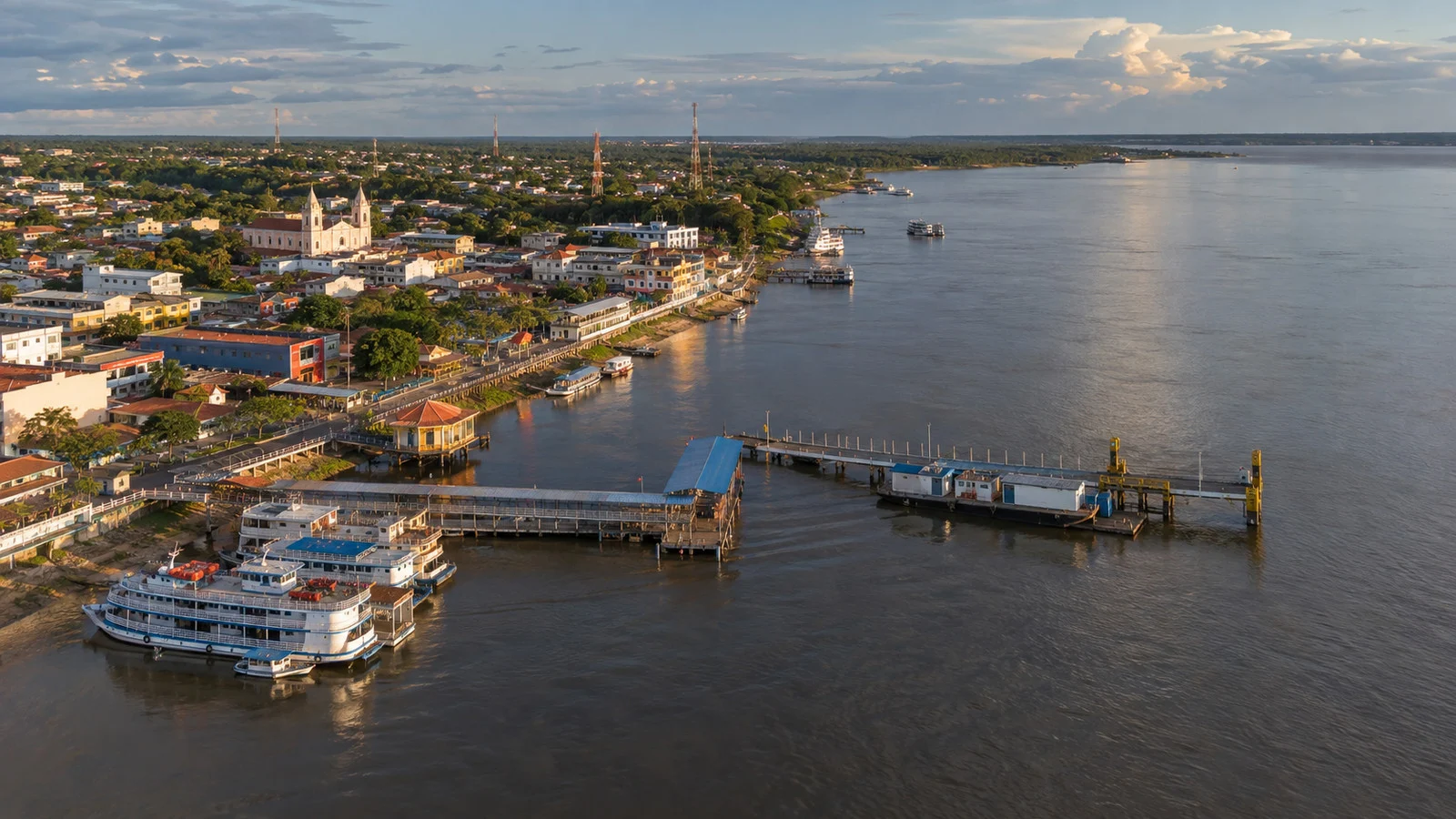
Parintins is the Amazon port that can turn a five-hour call into a small explosion of drums, feathers, red, blue, and gleefully competitive civic pride. It is also a working island city where the river is the highway, the passenger terminal handles daily life, and your route ashore may begin with a tender rather than a gangway.
That distinction matters in 2026. A new heavy-buoy mooring system was designed to improve large-ship access, but no honest guide can promise that every cruise vessel will dock directly or use the same landing.
Parintins River Cruise Port Quick Facts
Into Town: The central port or tender pier is usually 5 to 15 minutes from downtown sights. Exact landing and ramp change with river conditions.
Currency and Language: Brazilian real. Portuguese is official; English is limited outside organized tourism, so download Portuguese and carry small cash.
Time Zone: Amazon Time (AMT), UTC-4 year-round. Parintins does not observe daylight saving time.
Call Changes: No reliable public cancellation rate is available. Strong current, extreme river levels, mooring limits, storms, visibility, or tender conditions can cancel or shorten the call.
No port authority or cruise line publishes a reliable Parintins missed-call rate. A failed landing or shortened tender window may be more likely than the destination disappearing from the planned itinerary, but no trustworthy percentage can be assigned.
Do Cruise Ships Still Call at Parintins?
Yes. Holland America lists Parintins on its 2026 and 2027 Legendary Amazon Explorer program, and Silversea schedules Silver Nova here on January 23, 2027.
The city’s own 2025 and 2026 reception plan named Volendam, Insignia, Hanseatic Spirit, and Marina calls. That is unusually useful evidence because it proves an active cruise destination without forcing a local sightseeing-boat schedule to do a job it cannot do.
Parintins is normally a port of call, not the international embarkation point. Most travelers join an Amazon itinerary elsewhere, often in Manaus, Barbados, Rio de Janeiro, or Florida, depending on the cruise.
If Manaus is part of your journey, our Manaus Cruise Port guide explains its terminals and city logistics. Parintins is smaller, more intimate, and much less forgiving of assumptions about where the ship will stop.
Where Do Cruise Ships Dock in Parintins?
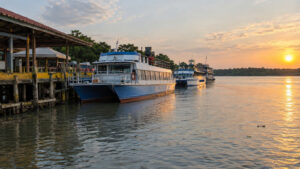
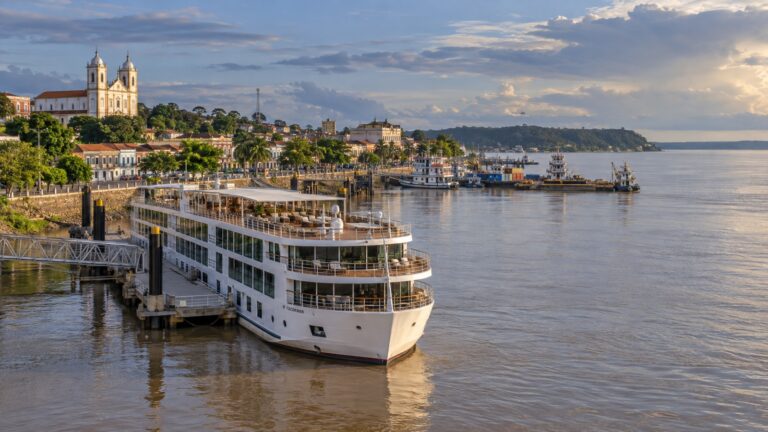
Large cruise ships have commonly anchored in the river and moved guests by tender or local shuttle boat to a floating pier. Current Seabourn material still describes a private cultural presentation near the floating pier, while recent Silversea excursion information specified a brief tender transfer to Parintins pier.
The city announced a major change in March 2026. Its new mooring system uses heavy submerged blocks and buoys intended to let large transatlantic vessels secure more safely, with Hanseatic Spirit expected to be the first user on April 11.
The municipality estimated that the system could improve the likelihood of passenger landing by as much as 85%. That is the city’s projection, not an audited landing-success rate, and we found no later official notice confirming that every planned commissioning step occurred exactly on schedule.
For passengers, the sensible conclusion is encouraging but conditional. Your ship may moor at the new system, anchor and tender, or change its landing plan according to vessel size, river stage, current, berth traffic, captain’s judgment, and port approval.
Even a direct call here will not necessarily resemble a stone quay in Europe. A vessel secured beside a floating passenger structure may still use a sloping ramp or gangway whose angle changes with the river.
Ask onboard where you will land, whether a tender is required, and when the final boat returns. A taxi driver told only “Parintins port” cannot solve a mismatch between the public hydro terminal, a floating cruise landing, and a temporary tender point.
A Working Amazon Port, Not a Cruise Bubble
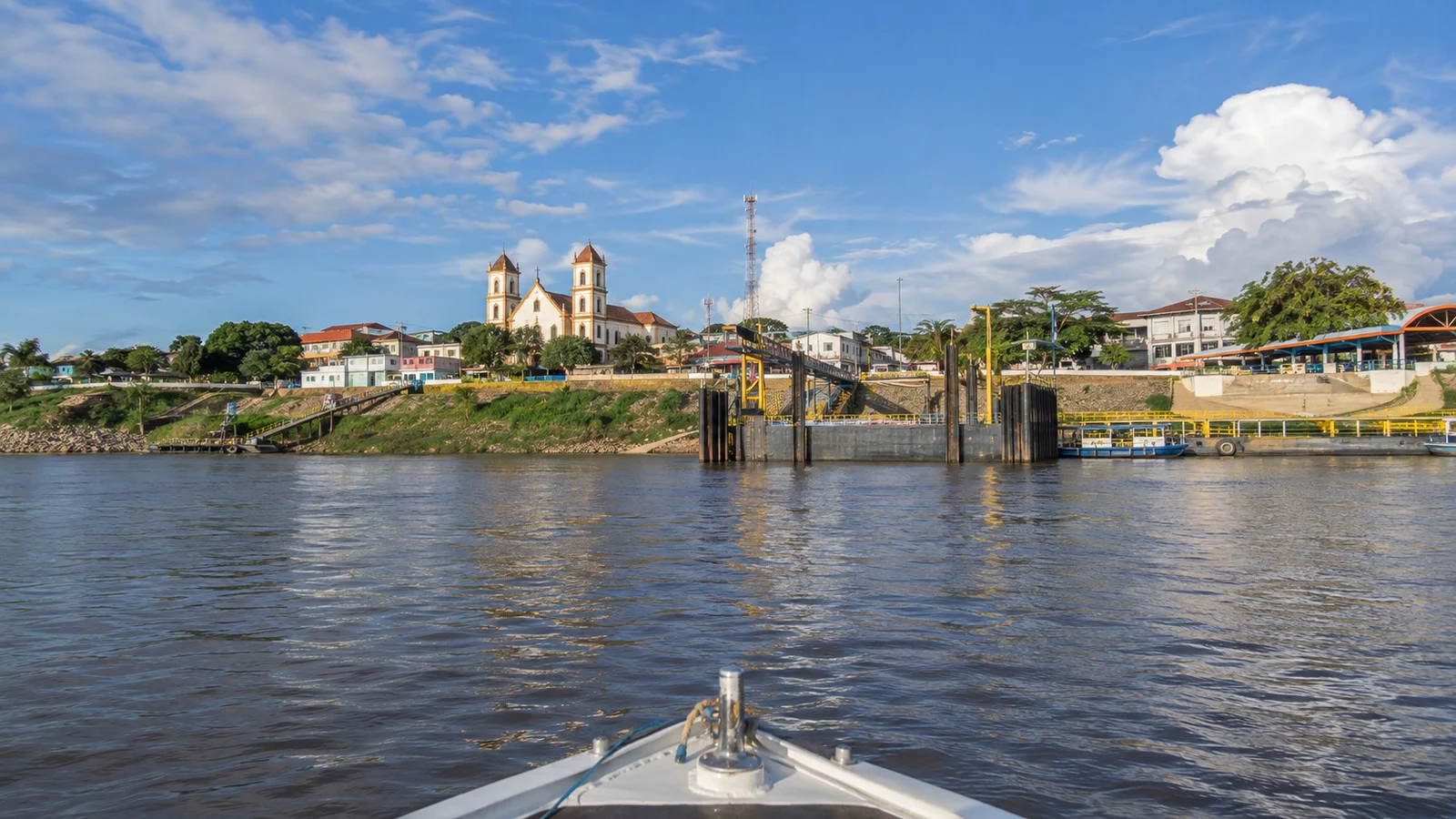
Brazil’s National Department of Transport Infrastructure reopened the Parintins hydro terminal after mooring repairs in 2023 and calls it Amazonas state’s second-largest waterway terminal. Local passenger boats, cargo movements, families, vendors, cruise excursions, and port staff can share the same waterfront ecosystem.
The federal transport ministry’s 2026 account of Parintins describes the port as a daily lifeline rather than a decorative gateway. High water can simplify some movements, while the dry season slows boats and exposes more of the riverbank.
Stay inside signed passenger routes, keep clear of cargo handling, and do not wander onto another vessel’s ramp for a better photo. Wet metal, moving boats, hot railings, ropes under tension, and strong current make this a workplace with a very pretty background.
How Far Is Downtown?
From a central tender pier or hydro-terminal area, the cathedral square and central commercial streets are generally about 5 to 15 minutes away on foot. The Bumbódromo may take roughly 15 to 25 minutes, depending on the actual landing, heat, crowds, and route.
Those times are editorial map-based estimates, not ship-door guarantees. A relocated tender, festival closure, group assembly point, muddy bank transition, or slow floating ramp can add time before the walk even begins.
Parintins is fairly flat, which helps, but shade can be scarce and sidewalks are inconsistent. Heat and humidity turn a modest distance into real exercise, so take water and resist the urge to sprint after a triciclo as if it owes you money.
Boi-Bumbá Is More Than One Cruise Show
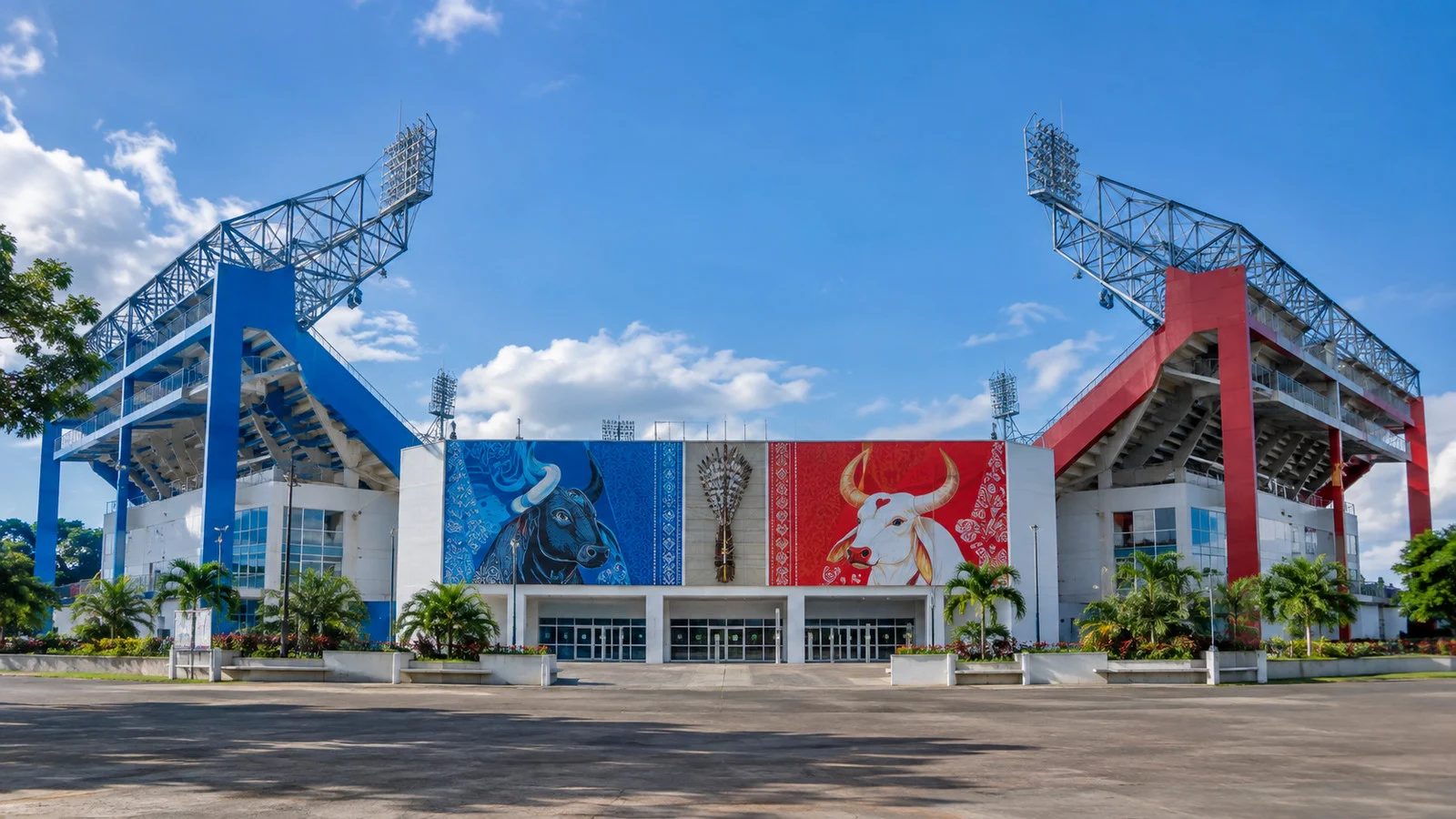
Parintins is famous for the rivalry between Boi Caprichoso, represented in blue, and Boi Garantido, represented in red. During the annual festival, the two associations present elaborate competitive performances over three nights in the Bumbódromo, with jurors deciding the champion.
Brazil’s National Institute of Historic and Artistic Heritage registered the broader Boi-Bumbá cultural complex of the Middle Amazon and Parintins as Cultural Heritage of Brazil in 2018. Its traditions include street and community forms, the symbolic death and resurrection of the bull, and several island groups beyond the two arena giants.
That broader context keeps the story from becoming “red bull versus blue bull” with a soundtrack. The performances carry local memory, popular devotion, neighborhood identity, satire, craftsmanship, Amazonian themes, and generations of creative work.
Arena presentations also use Indigenous imagery and narratives, but a staged show is not a substitute for learning from a specific Indigenous community. Describe performers and traditions precisely, ask before close-up photography, and avoid treating living cultures as festival props.
The Private Cruise Show Is Not the June Festival
Most cruise calls do not coincide with the three-night festival in the last part of June. Operators instead arrange a shorter Boi-Bumbá presentation created for visiting passengers, sometimes at the Convention Center, Cidade Garantido, another team venue, or a space near the floating pier.
Holland America, Seabourn, and Ponant currently promote versions of this cultural experience, and Seabourn explicitly labels its presentation private. The performers, music, costumes, and traditions may be local and genuine, but the event is a compressed showcase rather than the judged overnight competition.
Do not assume your fare includes the show merely because another line includes one. Check the excursion title, duration, transport, seating, steps, restroom access, photography policy, and whether independent guests may buy entry.
A late-June festival visit is a completely different logistical animal. Arena admission, seating allegiance, boats, hotels, airport capacity, street controls, huge crowds, and long nighttime performances require specific plans made well ahead.
A cruise itinerary that says Parintins does not automatically include a festival ticket. Festival imagery in a brochure also does not guarantee your January call will find the Bumbódromo glowing at midnight.
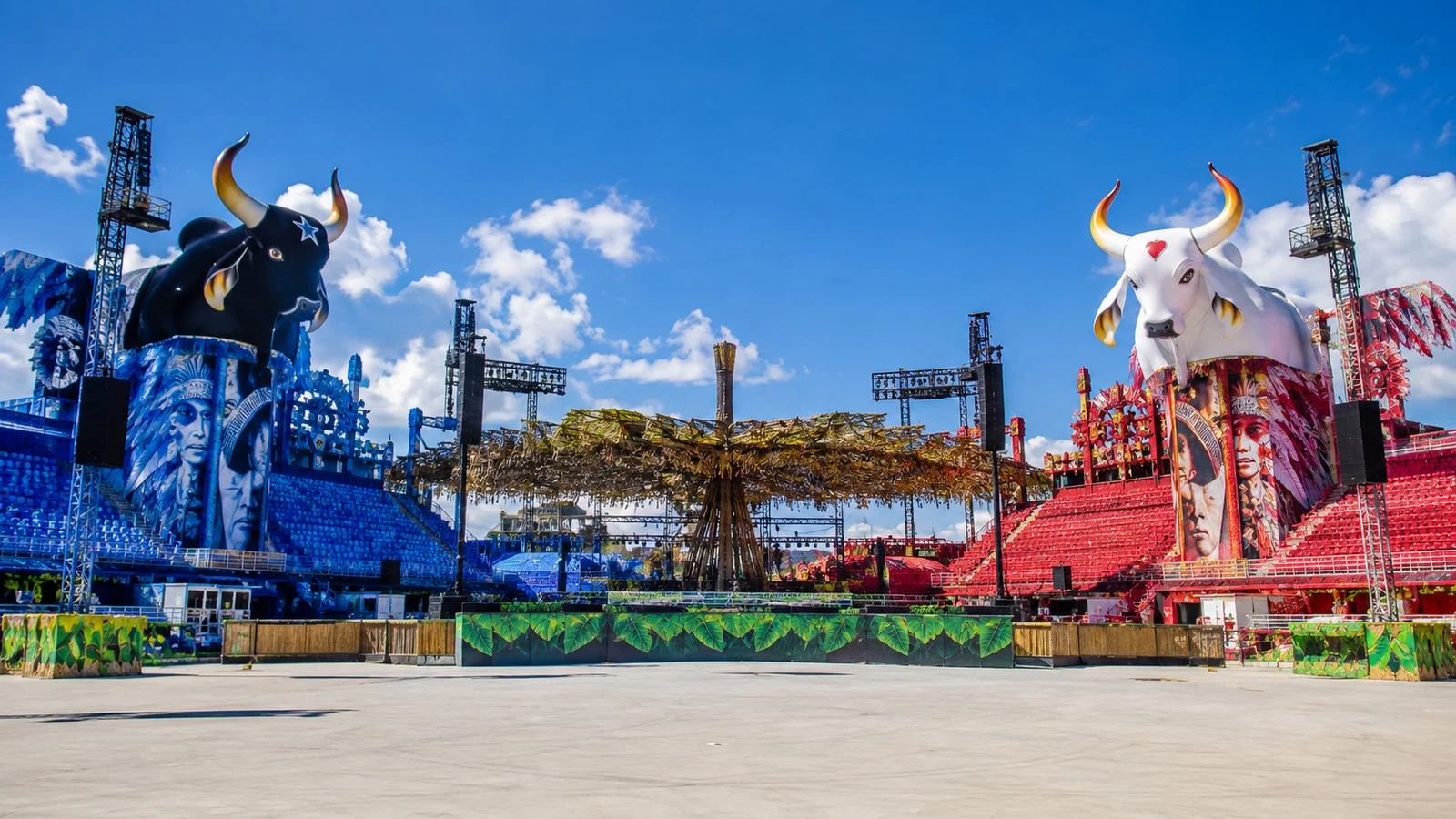
Can You Visit the Bumbódromo?
The Bumbódromo, officially Centro Cultural e Esportivo Amazonino Mendes, stands near the city center and is shaped around the bull theme. It is worth seeing from outside for travelers interested in how one arena anchors such an enormous cultural rivalry.
Interior opening hours, rehearsal access, exhibitions, construction, and event preparation can change. Unless the cruise line or municipal visitor service confirms entry for your date, treat an interior visit as a welcome possibility rather than a port-day entitlement.
Festival week changes every calculation. Security zones, lines, heat, noise, tightly packed seating, and late hours can make an apparently short outing difficult for a traveler with limited stamina, sensory sensitivity, or mobility needs.
A Simple Independent Walk
Start at the confirmed landing and head toward the Cathedral of Our Lady of Mount Carmel and its square. The church is an active place of worship, so services, private events, and local practice should outrank sightseeing plans.
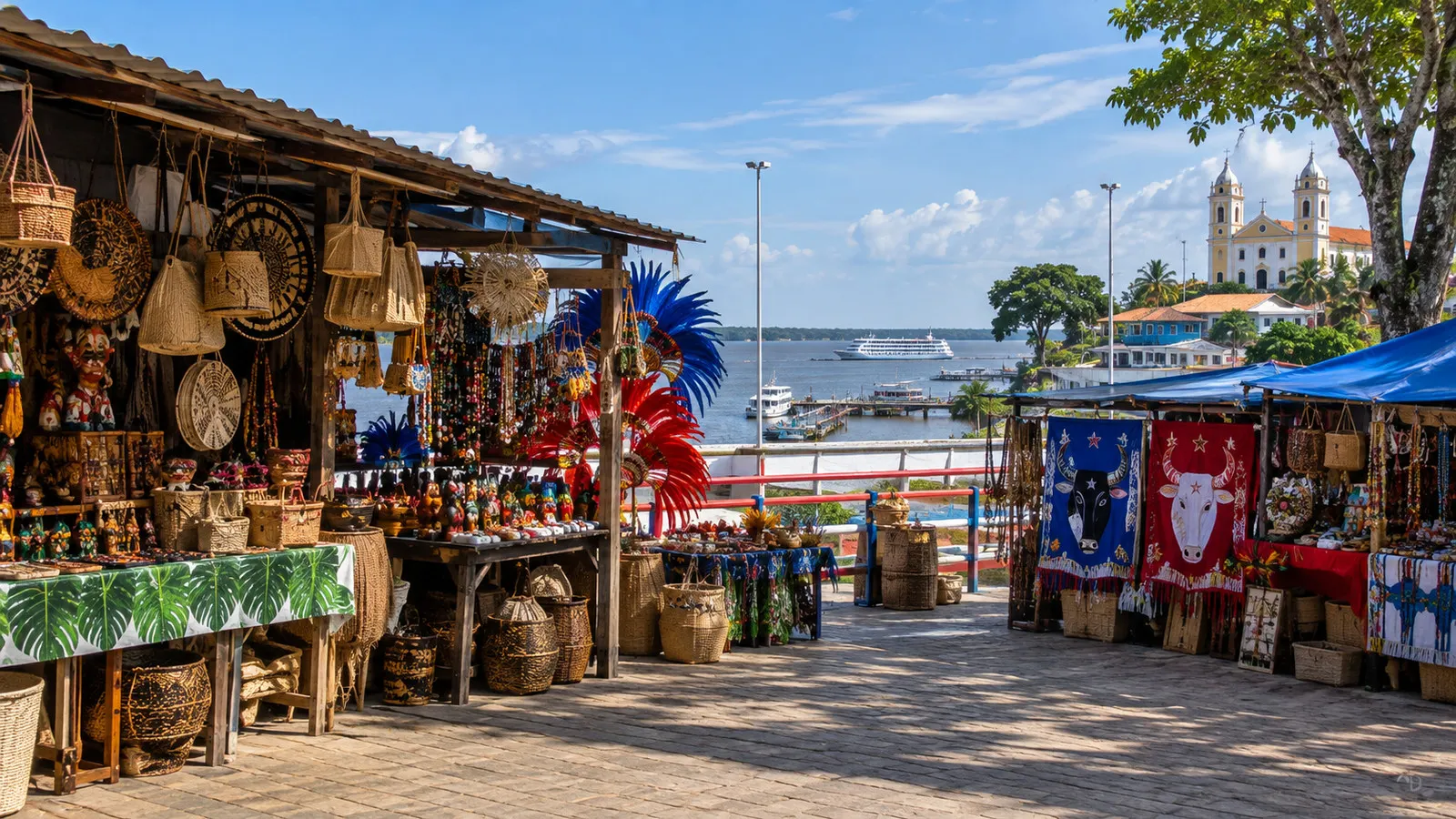
Continue through the central streets toward the Bumbódromo, pausing at public art, artisan sales, and team colors along the way. If time and confirmed hours cooperate, municipal visitor listings also identify the Parintins Culture and Memory Center and Casa da Cultura Mestre Jair Mendes.
Do not build a tight itinerary around a museum’s unsourced opening time. Small cultural spaces may adjust hours, especially on Sundays, holidays, performance days, and around festival preparation.
Allow 90 minutes for an unhurried exterior loop with brief stops, then protect the tender buffer. If your cruise includes a private show, make that the day’s anchor and fit the town walk around it rather than gambling the main event on tropical timekeeping.
Touring by Triciclo
Several cruise lines offer a local triciclo tour, usually using a three-wheeled vehicle for a compact look at central neighborhoods and cultural landmarks. It can be fun, breezy, and practical when the heat has already begun negotiating against your walking plan.
Vehicle design, motorization, shade, step height, seat width, route, and capacity vary, so “triciclo” is not an accessibility specification. Confirm the price and currency before an independent ride, agree on the route, and keep enough time to return to the correct pier.
Traffic becomes much heavier during the festival, and road closures can make the cruise version of a neat little loop impossible. Follow the operator’s current plan rather than a review written for an ordinary-season visit.
Crafts, Food, and Respectful Spending
Parintins rewards travelers who spend with local artists and small businesses rather than hunting for a generic Amazon souvenir. Look for named artisan stalls, ask who made an item, and request permission before photographing a seller or performer at close range.
Avoid wildlife products or feathers unless legal origin is clear, because a good story from a vendor is not an export permit. Wood and plant materials may also face agricultural restrictions when you return home.
Regional tastes can include grilled river fish, tacacá, guaraná drinks, and açaí prepared less sweetly than many North American bowls. Choose busy vendors with clean handling, use safe water, and leave adventurous stomach decisions for days that do not end with a tender ride.
Accessibility at Parintins River Cruise Port
The first accessibility question is not whether downtown is flat. It is whether your specific mobility device and transfer ability are compatible with that day’s tender, floating ramp, gangway, and pier.
Ask the cruise line in advance about manual and power wheelchairs, scooters, crew-assisted transfers, lift availability, tender steps, ramp slope, accessible transportation, and restrooms at the performance venue. Confirm again onboard because river conditions can replace the planned landing.
The 2026 mooring project may improve reliability, but it is not proof of an accessible, level gangway. Water stage changes ramp angles, while crowds, wet surfaces, curbs, broken paving, heat, and limited shade remain meaningful obstacles.
A triciclo may require a high or narrow step and may not carry a folded chair. Festival crowds magnify nearly every barrier, so request designated seating and transport details before buying a ticket.
Weather, River Level, and What to Wear
Expect tropical heat, high humidity, intense sun, and sudden rain throughout the year. Lightweight breathable clothing, strong sun protection, water, insect repellent, and a compact rain layer earn their luggage space.
The Amazon rises and falls seasonally, but rainfall across the huge upstream basin prevents a perfect port-by-port calendar. Higher water often arrives around late spring and early summer, while lower levels are common later in the year, but each season can behave differently.
River level affects current, exposed bank, tender steps, floating ramps, and the safe distance between ship and shore. Thunderstorms, wind, visibility, and strong current can shorten tender operations even when the itinerary still shows a full call.
Wear closed shoes with grip rather than planning around smooth hotel-lobby floors. Do not swim near the port, where current, vessel traffic, submerged hazards, and water quality are serious concerns.
Health Planning for the Brazilian Amazon
The U.S. Centers for Disease Control and Prevention recommends yellow fever vaccination for travelers nine months and older going to Amazonas, although Brazil does not require it for entry. The CDC also identifies malaria transmission throughout Amazonas and advises travelers to discuss prescription prevention with a clinician.
See a travel-medicine professional at least a month before departure when possible, because health history and medication interactions matter. Mosquito avoidance remains necessary even with vaccination or preventive medication.
Use repellent as directed, cover exposed skin when practical, sleep in protected accommodations, and seek prompt medical advice for fever during or after travel. Cruise staff should know about a medical problem early, not after an independent passenger has become an urban legend at the missing-tender briefing.
Safety and Staying Oriented
Use normal precautions with phones, wallets, and cash, especially in port crowds and during the festival. Keep the ship’s emergency contact, landing name, return time, and a screenshot of the map available offline.
English is limited outside organized tourism, so a translation app and written Portuguese destination help. If you hire an independent vehicle, agree on price, waiting time, and return point before leaving.
Brazil’s emergency numbers include 190 for police, 192 for medical emergencies, and 193 for fire and rescue. For a late return, changed tender, or wrong pier that is not an emergency, call the ship or local agent first.
Airport and Independent Arrival
Júlio Belém Airport serves Parintins, but scheduled service can be limited and festival capacity changes substantially. Amazonas tourism planning documents mention Manaus links, while the municipality was still negotiating broader weekly and festival flying in April 2026, so verify the exact flight for your date.
Allow roughly 10 to 20 minutes by vehicle between the airport and center as an editorial estimate, then add festival traffic and road controls when relevant. There is no normal road journey to Manaus, so air and river transport organize island travel.
Do not book a tight self-arranged connection after a cruise call. Tender delays, river changes, a shifted departure, limited flights, and festival congestion can combine with remarkable efficiency.
A Practical Parintins Port-Day Plan
With two hours, choose the included cultural show or a short central walk, not both at a gallop. Visit the cathedral area, see the Bumbódromo exterior if time permits, and return with a generous tender margin.
With four to five hours, combine the operator’s show with a town loop or confirmed triciclo ride. Plan to be back at the landing at least 45 to 60 minutes before all aboard when tender lines are involved, unless the ship gives an earlier deadline.
With a longer call, add a cultural center only after confirming opening and transport. Parintins succeeds as a cultural port, so there is little wisdom in spending the day chasing a distant generic nature excursion merely because the river is famous.
For a wider itinerary comparison, see our Brazil Cruise Ports guide and South America Cruise Ports guide. They help place this intensely local call within a much larger continental route.
Final Verdict
Parintins is a memorable Amazon call because the city does not need monumental stone architecture to put on a monumental performance. Its strongest experience is cultural, close to town, and tied to communities that keep Boi-Bumbá alive beyond the famous three nights.
Confirm tender or gangway, distinguish the private cruise show from the actual festival, and leave room for the river to edit the day’s choreography. The drums may be impeccably timed, but the Amazon has never accepted an all-aboard calendar invitation.
Treat the tender, show, and festival as three separate things
Parintins may use a mooring system, floating landing, public hydro terminal, or tender depending on the vessel, river, and port approval. Ask where the final boat leaves and whether mobility devices can transfer because a flat downtown map does not solve the ship-to-shore step.
A cruise-line Boi-Bumbá presentation is not the three-night June festival and does not include a Bumbódromo festival ticket unless the itinerary says so. Enjoy the shorter show for what it is, and buy any annual festival ticket only through a current official channel with transport and return confirmed.
Brazilian entry rules are passport-specific and can change. Check Brazil’s official consular system, then discuss the CDC’s yellow fever and malaria guidance for Amazonas with a clinician before sailing.
Heat, rain, crowds, tender queues, floating ramps, and triciclo steps can make a short call tiring. Keep the independent walk central, agree any ride price first, carry small reais, and return at least one tender earlier than necessary.
How We Researched This Guide
This guide was researched and fact-checked on August 20, 2026 using current Holland America, Silversea, Seabourn, and Ponant schedules; Parintins municipal cruise and festival notices; DNIT port records; federal transport reporting; IPHAN cultural-heritage material; and CDC health guidance.
Walking and transfer times and likely landing scenarios are explicitly editorial planning estimates; no numerical missed-call rate is claimed. We do not claim a personal visit, and we distinguish the municipality’s projected benefit from the new mooring system from verified universal ship access.
Berths, river levels, tenders, shows, museum hours, flights, health guidance, and excursions can change after publication. Our Editorial Policy explains sourcing, corrections, and how we label desk research.
How this guide was researched: This guide was checked against current official port, waterway, immigration, transit, attraction, operator, and weather information. Operational and time-sensitive details were reviewed September 12, 2026; confirm the live berth, daily program, entry rules, accessibility, and cancellation terms before travel.
See our Editorial Policy.